Review – Carter, “The Politics of Rage”

Dan Carter, “The Politics of Rage: George Wallace, the Origins of the New Conservatism, and the Transformation of American Politics” (1995) – Split the difference: I still think Lynyrd Skynyrd is a good band, but I change the channel for “Sweet Home Alabama.” For one, it’s massively overplayed, for another, Watergate wouldn’t bother my conscience, not because I voted for their fucking fascist governor but because I’m the son of McGovern voters, McGovern activists, thank you very much.

There’s a story of how George Wallace was a racial liberal before losing an election to someone who just screamed the notable anti-black slur (I’m fine not using it, but I hate using the “letter-word” formation like a child), and then vowed to never be out-slurred again. This is about half-true. He did lose his first election for Governor to a candidate with Klan support. And, more importantly, Wallace’s central drive always was power for its own sake, and, if historian Dan Carter is correct, power for the sake of gaining more power, always moving, always forging ahead, seldom even seeming to enjoy it. 

Wallace was born into circumstances that were lower-middle-class by early 20th century Alabama standards and poor by most American ones, in the Alabama black belt. “Child makes the man” is always a risk in these big biographies, but Carter clearly did the legwork and everyone agrees: little George was a dynamo of energy and ambition, and did not have a lot of shame or honesty hedging him in, more or less from the beginning. Another way the old story is half-right: Wallace’s first real political mentor was “Big Jim” Folsom. Folsom was a back-slapping, mildly corrupt progressive in a certain Southern mold: he wasn’t going to seriously shake up the racial order, but he was going to try to materially improve things for the citizenry as a whole, including the black citizenry, and he condemned the more violent aspects of racism as a way of keeping Alabama poor and subject to the whim of landowners and big business interests. He made wry jokes about how there was plenty of integrating going on in Alabama, after dark. He was quite popular. 

There’s a lot of back and forth about populism these days. It doesn’t help that some academic and political elites have chosen to make it the go-to term for everything they don’t like, from Corbyn to the alt-right, and it further doesn’t help that their critics have since insisted that whatever they think ur-populism is is never wrong and the elite critics only lump in “the bad kind” to discredit a threat to their regime. More heat than light! Let’s put it this way: Folsom can be seen to represent both the strengths and the limitations of a populist approach, defined broadly and generously as “advocating for the material interests and attempting to uphold and represent the cultural values of the common people in a given constituency.” Folsom did do some good things for the people of Alabama, building roads, schools, hospitals, etc. He also was crushed after the Brown v Board of Education decision came down, and “massive resistance” to school desegregation became the order of the day throughout the South. The last straw was a picture of him having a drink with black congressman Adam Clayton Powell. He was out, and that whole generation of Southern populists, an under-appreciated support for the whole New Deal order (the literature shows a lot of how Southern racist bourbons supported the New Deal, and they did, with conditions, but so too did Southern populists), was out too. To me, that sums up much of the problem of populism: if it were that easy, it would have already happened. It isn’t, alas.

Whether or not he actually breathed the promise not to get “out-(slur)’ed” into the open air, Wallace from then on made his career in opposition to the black freedom struggle, and anything he could memetically link to it. We don’t need to rehearse how things went in Alabama, except to note that whatever has gone down into conventional history, things were likely worse. Birmingham was, for a while, the bombing capital of the world- an industrial town, there were many men there who knew how to handle explosives. Carter uncovers very, very short links between murderous klansmen and Wallace, including at least one meeting Wallace directly took with the National State’s Rights Party, an openly fascist goon squad that sought to prevent even notionally-integrated Alabama schools from opening up by having adult thugs attack the schools directly. 

With all this massive resistance stuff, I always wonder… what did they think they were going to accomplish? Integrated schooling is now the law of the land in Alabama just as it is Minnesota, and so is one-man, one-vote without poll taxes and so on. Except… well, you have to figure what at least some of this did was provide delay and cover. On the other side of the coin, Malcolm X used to say people would talk to King because they didn’t want to talk to them. There was a dynamic where figures like Nixon, and eventually Reagan, seemed like more palatable versions of Wallace, better attuned to national audiences, knowing when to say the quiet part quiet… and in war, you can never underestimate the element of time. The period of chaos that came with massive resistance and all that came with it in the South gave southern white supremacists time to adjust, to figure out workarounds to maintain their power, so there was still a deeply unequal society with whites on top in the end. Would it have worked that way if the southern “moderates,” the deal-makers, had been in charge from the beginning, without the terror? I’m not sure it would. 

There were points where it was easy to write Wallace off as an atavism, a figure of the old south risen to scare the country again (1995 would be one of those times, so credit to Carter he doesn’t take that tack). It’s a lot harder, post-Trump, but that was well down the line. The sense that the future was 180 degrees away from everything Wallace represented was a major factor in his ability to succeed, when he left Alabama to run in Democratic primaries for president, and then as an independent candidate in 1968. Wallace found that his message resonated in the north, especially when he broadened it to include attacks on bussing for integration, welfare programs, student protestors, anyone opposed to the Vietnam war. King discovered something similar, in the negative, when he went to Chicago and encountered hate as fervent or more as he did in Selma. This not only shows that Wallace’s politics, the politics of white resentment, had a future, but that its past wasn’t so remote as all that, either. Wallace was always a thoroughly modern figure.

Who knows how far Wallace could have gotten — probably not the presidency, but he could perhaps have thrown an election into the House of Representatives and make some kind of grubby 1876-style deal — if not for two things. The first was nominating Curtis LeMay, founder of the Strategic Air Command, as his VP candidate. LeMay talked about using nukes, which scared people, he talked about abortion being ok as population control (he was a population control/ecofascist psycho on top of it all), which offended people, and he was just generally weird and off-putting. This restricted Wallace’s ability to throw the 1968 election. The other was a would-be assassin, the guy Robert DeNiro’s character in “Taxi Driver” was based on, shot and paralyzed him during the 1972 campaign. That dude was an avant-la-lettre incel and had all the ideology of a magic 8-ball, but hey… 

Wallace tried to clean up his act and repent some, towards the nineties, apparently. A hustle, or sincere? Who knows, and really, who cares? Carter doesn’t fall in love with his subject like a lot of biographers do. Wallace was an asshole who made his wife run for governor so he could be her puppet master (all she wanted to do was fish) and then abandon her for the presidential trail when she had the cancer that would kill her. He had admirable qualities, but not the redeemable kind- his humor and indefatigable work ethic mostly went towards advancing his own power and aggravating white supremacist violence. All around, a grim story, one that only gets grimmer reading it post-1995. ****’

Review – Carter, “The Politics of Rage”

Review – Gottfried, “After Liberalism”

Paul Gottfried, “After Liberalism: Mass Democracy in the Managerial State” (2001) – I am, once again, behind on reviews. I finished this a while ago. Paul Gottfried got my attention, and that of other antifascists, when journalists pointed to him as a substantial influence on Richard Spencer and the altright, including, possibly, coming up with the term “alternative right,” as in alternative to the neoconservative ascendancy that was just about to reach its peak around the time this book came out. It’s murky, how much Gottfried actually knew Spencer, but they traveled in similar paleoconservative circles before Spencer became briefly prominent. Gottfried has gone on record abjuring the altright, saying their project is not his.

Unlike most of these distancing maneuvers, this one comes off as reasonably legitimate. There are two main reasons for this. One is that Paul Gottfried is a Jew. There’s no shortage of right-wing Jews out there, and I’ll talk about the antisemitic cast of Gottfried’s main argument, but I don’t think Gottfried is the particular kind of craven that would cause a Jew to make common cause with Nazis, and he’s not the sort of Jew Nazis would necessarily let in (Spencer might, but he’s a fancylad with a following he can count on the fingers of his hands, at this point). The other, more substantive, reason is that Gottfried seems to come from the branch of paleoconservative that is deeply and sincerely opposed to the sort of mass political mobilization and rapid sweeping political changes that help distinguish fascism from more normative conservatism. 

Among other things, Gottfried sticks to something more closely resembling the historical and the empirical in this book than is common on the contemporary right (or, for that matter, among ideologues across the spectrum). As far as Gottfried is concerned, by the turn of the twenty-first century, the verdict was in, and the more pessimistic predictions of the founding fathers and assorted classical liberal figures were correct: let the mass of people participate in politics, and they will just vote rich people’s money into their pockets. Race enters into it less than one might think, except as something to potentially break the spell of welfarist lassitude- more anon. This is just democracy, Gottfried sighs, it’s the role of the statesman to see his way forward despite it. 

So, unlike fascists, Gottfried doesn’t really believe in the volk. There’s a little bit of that thing you see in right-wing writers ranging from Nock to Kirk to Rothbard, a certain nostalgia for simple folk and their (supposedly) unquestioned hierarchy, but like those three, that nostalgia is also a nostalgia for the (again, supposed) quietude of that past. But at the same time, Gottfried speaks well of populism. This is where Gottfried does, in fact, link up with fascism, and why Spencer et al would have found his work useful to them. 

What’s his motivation, you might wonder- if the volk aren’t noble, and in any event the damage is done, what is Gottfried bothering with? It’s because he hates the managerial elite who supposedly brought this state of affairs about. He spends almost half of the book trying to definitively delink the liberalism of most twentieth century figures from “classical liberalism,” and I tend to think that he did this less because it mattered so much — he resignedly calls the likes of John Dewey, Herbert Croly et al “liberals” in spite of all — but because it lets him obsessively pore over the rhetoric of the progressive movement, the new dealers, the great society types, and social liberals of his own time, and the awfulness and strangeness of their creed(s). The managerial elite overthrew the old capitalist elite, and with it the latter’s (notionally) purer liberalism. They bribe the volk with welfare and sap their values and vitality, in the name of their odd cosmopolitan value set, somewhere between antinomianism and Gnosticism. We know this story. 

What little hope Gottfried sees — and where he links up with fascism, where he really did influence or at least prefigure how the altright and numerous other far right formations today understand and pursue their project — is in hitting the managerial class where it is, supposedly, weak: culture. The cultural rules of the managerial elite become more important and more flagrantly arbitrary as their power grows, Gottfried argues. The real nature, the kind of Fabian/gnostic elitism of our educated credentialed elites, comes to the fore, and as Pat Buchanan showed, you could rally the good salt of the earth folks to object to…

The funny part is, the thing that impelled Gottfried to write this was the defeat of Bob Dole at the hands of Bill Clinton in 1996. Talk about distinctions with little difference! I guess Clinton was “more PMC,” to be reductive, a baby boomer, a philanderer, an erstwhile protester with an ambitious wife. What were the good right-populist folk supposed to be objecting to, then? What were the secretly radical managerial elite foisting on them? Meaningful advances even in bourgeois assimilationist gay rights, like marriage equality, were years away from being on the table, and the black freedom movement was an increasingly bitter (and bowdlerized) memory. The late nineties were not a time for the coddling of criminals, so we don’t get the kind of panic around that reactionaries made use of before and after. Gottfried grumbles some about how “government” never shrinks, employs too many people even as Clinton is gutting social services, but you can tell his heart is barely in it, compared to undoing the social and cultural power of the managerial elite.

No, it’s the usual peccadilloes that make it impossible to fully respect paleocons, even when they make a positive contrast with neocons in some areas. Gottfried is offended by the idea of civil rights, and raises the specter of hate crime laws. Beyond being wrong (and wrong-headed- “law and order” types should beg for hate crime legislation, especially if they’re also traditionalist conservatives ie people who want to legislate affect and feeling, but we know why they don’t), it’s honestly just kind of lame. What kind of pathos are we expected to take from business owners no longer being able to legally visit police and/or personal and/or mob violence on customers for being the wrong race? Why is that a “freedom” we should give a damn about, even in the most abstract way? 

Well, bigotry is certainly a part of it. I don’t know how personally bigoted Gottfried was or is (I believe he is still among the living). He doesn’t go on as much about the behavior of black people, sexual minorities, immigrants etc as you might expect. Bigotry, and the enforcement of a world defined by personal and sectarian ascriptions, was part of the power displaced by the professional managerial elite that serves as Gottfried’s great bugbear. The lord of the manor, or the planter, or the ward heeler, or whoever, should be allowed to enforce his bigotries and make use of the bigotries of his underlings to enforce his rule. Take that off the table, and you get the rationalism of the H.R. manager (which most often serves to sweep subtler, but ubiquitous and powerful, bigotries under the rug). The way to break the power of these managers is to mobilize these bigotries — often channeled against the openings that liberal managerial hypocrisy leaves wide open and unguarded — which are held to be the true feelings of “the people.” People power, if you will.

And this is where the antisemitism that Gottfried doesn’t deploy, but which is endemic to the far right and which his epigone Spencer has put so many chips on, comes in. You need to have a super-group to explain why the “naturally” superior, however defined — the aryans, the aristocracy, the landowner/industrialist/capitalist elite that the likes of Gottfried and Nock seemed to prefer — ever lost power. For most of them, it can’t be the real agency of the subordinate classes, otherwise they’d have to admit that the subordinate are powerful, capable of making their own decisions, and therefore do not deserve to be subordinate. There has to be some counter-elite. Because they are, in some sense, white, and because of longstanding prejudices and myths, Jews fit that role almost uniquely. Eric Voegelin, and a small school that follows him, puts Gnosticism in that same role. Gottfried comes close to that, not exactly summoning Basilides the False but basically making contemporary liberalism a sort of semi-esoteric cult, working in secret. But that’s usually several degrees too complex for people, especially because even a madman like Voegelin couldn’t bring himself to say that progressives were literally gnostics, with a lineage going back all the way. So, Jews it is, and even if it starts out targeting someone else, the Jews invariably get dragged in.

The version of this Trump, numerous right-populists the world over, and the altright has been pursuing is generally less well thought out than Gottfried’s version. You have to figure the old fucker probably furrowed a brow to see that one of the earlier instantiations of this dynamic involved a fight about video games and how many boyfriends a lady game designer had or did not have. But for all Gottfried’s erudition and delves into the history of liberal ideology, the whole edifice was always in the service of things just as stupid and small — petty bigotry, the personal domination of small-scale tyrants, silly grudges, pedantic rules-lawyering, the martinet’s dread of liberation — as “ethics in video game journalism.” As above, so below, or something. ***’

Review – Gottfried, “After Liberalism”

Review – Thiel, “Zero to One”

I tried to get Dall-E to make the Angel of death greeting Peter Thiel, but this was the best it could do

Peter Thiel, “Zero to One: Notes on Startups, or How to Build the Future” (2014) – This is the last book I read of a series of seven unconventional right-wing books, books that in some sense were off the beaten path of conservatism, but reflected or were influential or parallel in some way… or anyway, a projected series. There doesn’t seem to be a good English translation of alleged Chinese state authoritarianism apologist Wang Huning out there, and the Unabomber Manifesto is really more of a pamphlet than a book, no more within my ambit of reviews than any single article.

I say all that to say this: Peter Thiel is probably the slimiest motherfucker out of those seven with which I started, which include a slavery apologist in the person of Thaddeus Russell and an actual murderer in the person of Ted Kaczynski. The depths to which Thiel would sink to accomplish his ends reach far below what a middling scribbler like Russell could manage, and his capacity for destruction is much more real than anything Kaczynski could have dreamt. And yet, I was probably the most on board with Thiel as I was with any of the writers I read in this series… for the first, maybe, quarter of “Zero to One,” his business manifesto, assembled out of notes his catamite and potential Arizona Senator Blake Masters took when Masters sat Thiel’s tech business class at Stanford. 

At this point, contrarianism-posturers – and there is arguably no bigger or more historically important claimant to the throne of contrarian-philosopher than Peter Thiel – have to overcome reflexive skepticism from anyone who has noticed how contrived their postures and goofy their claims often are. But Thiel did manage some actually good and, in some ways, genuinely contrarian, in a good way, points, early in the book. The big one is that competition is not the boon to innovation that people think it is. Market competition does not lead to the best products- it leads to the products that can beat others at market, which is not the same thing. “He overstates his case,” I thought, reading it, “I know a lot of nerds and that’s just how they talk,” I reasoned, going over his pro-monopoly arguments. Monopolies can focus on their task, not on competition, and therefore prevent themselves from either pursuing illusory goals or simply competing away their whole profit margin. “If he could get that profit in and of itself is in large part the problem, we’d really be getting somewhere!” I figured. 

ANNH! Buzzer noise, around a third or a quarter of the way in. It turns out that market competition is a bad way of assigning value not because of the warping effects of profit-taking, but because it involves the preferences of everybody, i.e., the stupid little people who don’t care enough about space travel and life extension technology. What you need are small, dedicated, elite bodies – like the founding core of a tech startup, Thiel tells us – willing to flout rules and conventions, truly “think different” (about things like “the diversity myth,” the title of another Thiel book, or obeying safety regulations), and achieve monopoly power. Only such people can get us out of our current demoralizing state, with ever-improving gadgetry and entertainment options, but basic needs failing to be met… that is, the basic needs of Peter Thiel. Peter Thiel needs space travel, because he’s a nerd, and he needs life extension, because he’s one of those chickenshit, profoundly hard to respect nerds who are terrified of natural death. What’s the matter, Pete? Death will eliminate the source of all your problems, the irritation you can’t be rid of despite your billions of dollars- it will eliminate you. Once it takes that turn, the book is useless, except as a guide to the thought of a man our society, in its wisdom, has imbued with absurd amounts of power and money. As far as I’m concerned, the closer the day he meets that big fear of his, the better. It certainly won’t leave the written word any poorer. *’

Review – Thiel, “Zero to One”

Review – Russell, “A Renegade History of the United States”

Yeah, I’ve used this before. I’ve read shitty books before!

Thaddeus Russell, “A Renegade History of the United States” (2010) – We’ve burnt through hyperbole like fossil fuels, and it too creates an obnoxious smog: this is the worst, that’s the best ever, etc etc. That said, on careful consideration, I am pretty sure this is the single worst work of history I’ve ever read, certainly the worst work of history by a historian serious people have praised to me. One of the smarter people in my grad program had “Big Bad Thad” (as she informed he was nicknamed) Russell as an undergrad instructor. She disagreed with his politics — back then, near when this book came out, more or less down-the-middle libertarianism, strolling down history’s lane to its rendezvous with Trumpism — but thought he was a good instructor and that his book sounded interesting.

Well, I could kind of see the instructor thing. Russell’s out of the academy now, a podcaster, looks like he’s backed by someone’s money, and given that he’s tight now with “Moldbug” Yarvin, it’s probably Peter Thiel’s money. He’s trying to be some kind of “intellectual dark web” don, sitting his high table with “race realists,” various reactionary mystics, and other purveyors of the “renegade” and forbidden. I haven’t listened, but there’s certainly a tone in this book of his — conversational, imaginative, committed — I could see getting across to both podcast audiences and undergrads.

In that year of years 2010, Russell published this history that purports to tell the history of the United States from the perspectives of “renegades.” This isn’t any Howard Zinn stuff, though, or a retelling of slave rebellions and labor uprisings. Russell, as it happens, did write an earlier book on the labor movement- specifically, about how Jimmy Hoffa was actually a great labor leader, more or less because was a crook. “A Renegade History of the United States” is about, more or less, how laws regulating various pleasurable activities rose and fell over the course of US history, specifically from the point of view of the “renegades” who did not allow “reformers” – here understood as a straight up pejorative – who would regulate them to do so easily.

Would it be possible to write a good history from this perspective? Good histories have been written from worse ideas, or anyway, readable and informative histories, histories that reflect some kind of thought worth having. There’s definitely a lot of historical material in the political battles over assorted recreational activities in American history, and you can probably do a good synoptic history of that, too- I bet someone has. But that’s not quite what Russell did here. In attempting to tell this story as the story of American history, he is trying to advance various deeply stupid and tendentious ideas, where the stupidity and tendentiousness involved reenforce each other in such ways that you probably couldn’t get anything like a good work of history out of Russell’s project. 

The bullshit begins in the presentation. You don’t want to be a dweeb, do you? A bluenose, all offended at the raunchy pleasures of the poor? Do you want to be like John Adams, the fattest and least glamorous of the founding fathers, who Russell depicts for us walking through Philadelphia circa 1787 and wrinkling his nose at all the wonderful sin Russell details- the taverns, the brothels, the streets full of glorious, dirty, interracial life? You don’t want to be like the right or the left, right, with their self-righteous insistence on their moral values? You’re smarter than that- importantly, you’re cooler than that. You’re a renegade. 

Don’t buy it. Never buy it. Because if you have a brain in your head, you know what’s next, the same kind of come on that untold generations of hucksters and missionaries have been using forever. That inevitable “therefore…” To the extent Russell has a claim on anything other than a line of shit that can hook undergrads and “intellectual dark web” habitues (I wonder if he cried when that stupid Times article about the IDW didn’t mention him…), it’s a slightly more adept shell game than many libertarian ideologues… back then, at least, I think he’s gotten less subtle as time has gone on. Accepting his positive vision is comparatively unimportant, and mostly an easy ask- after all, Prohibition was a bad idea, a lot of regulators of public behavior were bigots or petty tyrants, etc. But the idea is to slide in his negative vision with the positive vision: that anyone who has politics beyond “let me smoke weed and/or pollute this river in peace” is a nasty regulator type, an enemy, and moreover, an enemy sans any pathos, almost sans humanity. 

And that regulator type extends to just about anyone pressing for any kind of power, regardless of the power differentials involved. It’s not just John Adams and J. Edgar Hoover. As elsewhere in this book, tendentiousness and sloppiness reinforce each other. So the abolitionists were just out to ruin everyone’s good time on the plantation (the opening riff of The Rolling Stones’ slave-rape anthem “Brown Sugar” kept coming to my mind unbidden in that section- though at least the Stones were talented) and the civil rights movement was the same but with ghettos, largely through the device of defining both movements through decontextualized moral exhortations by some of the preachers involved. He extends that game to just flat out ignoring any movements for suffrage, including the extension of the suffrage to poor people, who presumably could have used the vote to stop the busybodies from telling them not to be drunk all the time? 

I tried to get at this in one of my birthday lectures (I should have read this book for that- I didn’t realize quite what it was at the time), but there is a sort of countercultural take on American history that holds that the American past was not just more free than its present – this is common enough, mostly with conservatives, and has been almost since the country’s founding – but also weirder, funkier, looser. Russell also despises the counterculture, because it was anti-consumerist and consumerism is one of the pleasures he goes to bat for, but he gets at the mood of this school of thought, and really, it was always about mood more than anything. Russell wants to get across the idea that everyone was just getting down, drinking and fucking and spending money, in the taverns, men and women and white and black having a true, unforced equality in the absence of formal rules or even serious discussion about the matter. Anyone who brings up power or organization or anything like that, it’s like a record scratch ending the party. “Aww man, who invited this square?!” 

It’s stupid, but it’s not an altogether uninfluential vision of history. That Russell manages to export this vision, always questionable, to goddamn slave plantations… whatever else it is, this book represents what happens when tendentious assholes with stupid ideas they’re trying to get over on suckers walk through the doors opened by scholars with naive ideas about structure and power. Like a completely open internet forum, it gets taken over by racists and creeps. 

All of this, with the sloppy argumentation and sourcing of an undergraduate term paper and a tone by turns smug, revelatory (he really thinks he did good spadework here, but relied largely on other secondary sources), and faux-outraged by the depredations on freedom by the political types of the world. I can do evil, and I can even do stupid if it’s interesting enough, but every aspect of this that’s morally and politically bankrupt hooks into some aspect of the book that is stupid and sloppy. It’s no good saying I’m not a bluenose, because you automatically are to Russell or anyone who takes him seriously if you object to anything they say, but frankly, after this, I kind of want to be. No more whiskey and squalor for you fucks, because we know what the likes of Russell and his masters will use the nth-generation copy of a copy of a bad understanding of what that looked like to convince people that black people don’t really need to vote. Especially when you consider Russell defends possibly the least compelling set of pleasures imaginable, i.e. those preferred by American blockheads – bashing your own brain in with booze, sex with equally gross and poorly-bathed people, spending money on shit you don’t need and that doesn’t generally work as advertised – the spiteful position is awfully tempting.  

Russell is pals these days with Yarvin and other open racists and homophobes (had both Red Scare gals, individually! He’s definitely the type of older Xer know-nothing who goes gooey eyed over nothings like them) now, but still postures as though he’s the defender of the little guy against. Generally, the trash bigots he has on are the kind who like to pretend they want what’s best for those lesser types (invariably, the opposite of what said types fight and struggled for, historically). I haven’t bothered to listen to his podcast, but I feel I can almost see through some shitty version of The Force that he got “redpilled” by people like me not immediately giving him all of the awards for his book on pleasure (though he got serious historians, like Alan Brinkley and Nancy Cott, to blurb it, along with historical trailblazers like the guy who wrote “The Politically Incorrect Guide to American History”). Who could be against pleasure, and a book defending it? Who wants to be a dweeb? Globalists with agendas, that’s who! Well, honestly, I’d be down to play the villain if this pathetic charade is what needs heroes to save it. ‘

Review – Russell, “A Renegade History of the United States”

Review – Douthat, “Privilege”

The LAST guy you’d want to see in a darkened common room

Ross Douthat, “Privilege: Harvard and the Education of the American Ruling Class” (2005) – It’s too goddamned hot and I read this too long ago to do a deep dive on this. We all know what Ross Douthat does, if we’ve made the foolish life choice to know about the sort of people who opine in newspapers for a living. He’s an “intellectual conservative,” big time Catholic, hates Trump, chin-strokingly curious about social policy, etc etc blah blah blah.

He went to Harvard in the nineties and aughts and didn’t like it, or anyway didn’t find the disinterested aura of scholarship and bonhomie that he craved. Instead he found privileged kids who cared about maintaining their privilege and having some kicks with the years they were allowed them. No shit, Sherlock. Was this a surprise in 2005 (or 1905, for that matter)? They’re mostly liberals so uh, checkmate, egalitarians! His anecdotes are exercises in pointlessness, meandering yarns that he clearly thinks make solid points about things like meritocracy and race/gender relations and the like. They don’t, not on their own terms, and you really get the idea that they’re not especially thoroughgoing accounts either, for all their length (helps that this is memoirs, not history or journalism- we only get Ross’s word). 

He’s not the worst prose stylist out there, but really all that means is he’s not screamingly painful to read throughout. He does get across the idea that life at Harvard manages to be neither elitist fun or egalitarian goodness but basically the worst of both worlds, and he’s almost admirable in the way he admits his adolescent self was still attracted to it, the insularity and the feeling of eliteness, but again, so what? Maybe this just seems pointless because the sort of conservative anti-elitism Douthat delicately pursued in some dumb Evelyn Waugh way got it’s money took by Trump, so this is at best a time capsule, and not a very informative one. My attitude towards this book now is somewhat worse than the star rating I wrote down. Who knows, who cares. **’

Review – Douthat, “Privilege”

Review – de Maistre, “St. Petersburg Nights”

Joseph de Maistre, “St. Petersburg Nights: Or, Conversations on the Temporal Government of Providence” (1821) (translated from the French by Richard Lebrun) – Insofar as Joseph de Maistre has a reputation in the anglophone world, it’s as the arch-orthodox monarchist conservative. No sentimentality, no Whig background like his British opposite number, Burke: this is the dude who wrote a rhapsody to the hangman as the basis of the social order. Isaiah Berlin wrote an essay about Maistre as forerunner of fascism (Maistre might be “fash” but not like that); Hari Kunzru had his altright TV writer villain insert Maistre speeches into the mouth of his renegade cop character. An air of limpid, cultured menace — think Hannibal Lecter — lingers around him.

Well, here’s a weird one- this supposed arch-orthodox, who was, by all accounts, a sincere and fervent Catholic, was also an “Illuminist” and a member of a Masonic lodge. This is an odd one. Catholic reactionaries aren’t supposed to like the Masons. In the anglophone Protestant countries, that’s mostly down to Masonic anti-Catholicism- I remember older Catholic relatives (not reactionaries) telling me if I had to join a fraternal order, it should be the Knights of Columbus, not the Masons. In continental Europe it’s a little more complicated. By and large, French reactionary culture has despised the Masons and the Enlightenment culture it was tied to. The Vichy regime had to be asked by the Nazis to round up French Jews, but they went after the Masons all on their own. At the same time, you do get groups like the P2 Masonic lodge, which assisted neofascist coup attempts in Italy, and Maistre’s lifelong involvement with Masonry and other mystical strains that weren’t exactly Catholic. Some of Maistre’s works made their way to the Vatican’s naughty list, even as Catholic presses translated and published his works. 

“Soirees de Saint-Petersbourg” was, I’ve read, the work Maistre was most proud of, his last statement. Beyond that hangman spiel, which comes from one of the early dialogues in this book, most of his work that gets circulated in academic circles is his earlier, more directly political stuff, regardless of what the man himself thought. This is probably in part because the dialogues here are… odd. Take the subtitle. “The temporal government of providence” – maybe it’s just grammatically awkward, and means “the way divine providence governs the affairs of time,” but as read in English, makes it sound like a time-bound governance system for the divine. That doesn’t make a lot of sense- as far as I can tell, one of the basic elements of divinity is that it’s not time-bound, not in the way human life is, at least. 

That’s just the subtitle. The dialogues themselves are a discussion between three dudes: a young, somewhat naive but polite “Chevalier,” a somewhat sententious but right-headed older “Count,” and “the Senator,” and when he starts talking, The_Wisdom_Dispenser has logged on. The Senator is Maistre, explaining how despite how it all looks, God has it all in hand. But not in some easy peasant way! It’s not all rainbows and meeting your pets in heaven. It’s closer to a state of divine justice, everything working out according to God’s plan, in much the same way as the existence of the hangman, however repellent — because repellent! — holds up the social order, so does suffering hold up the general temporal order. Maistre never quite gets at why this supposedly all-powerful, all-good God decided to make a universe with sentient beings destined to run afoul of his rules and suffer for it. Presumably, if the Chevalier bothered to ask that, rather than just tell Senator Maistre he’s a genius after every answer, Maistre would do a shell game involving causality or something. The usual mystic stuff.

The theology isn’t interesting, though it is weirdly off in places, for this supposed arch-Catholic, and most of the weirdness comes from Maistre’s insistence that, on earth, it actually does all make sense. That seems to be where his “illuminism” comes in, though I’ll admit, I’m a neophyte with this stuff. A lot of mystics – from Renaissance magicians to the Freemasons (back before they became a social club) to the Five Percenters – seem to understand the principle of “as above, so below” (never got why that was so compelling to people) implied that just as heaven is rightly ordered (again… why?), so too is Earth, if only we could see it. Oftentimes, they imply that happiness, peace, even superhuman power comes with somehow “grokking” this truth in its fullness. No waiting for divine redistribution of fates in the afterlife! It’s interesting, but also sad, mostly in the way it asks a sad question… which is more pathetic? Thinking that a divine figure will arrange things just so, make things somehow make sense, after you die, or thinking that you will, learn, magic your way to making this world make sense while still in it, the way God supposedly wants you (and really only you, and other people cool enough to do the thing) to do? I’ll punt to where I usually do: at least orthodox religion, with its series of IOUs payable on some judgment day, have substantial real estate portfolios on this earth, more than most of the heterodox can say. 

What intrigued me most about the Nights wasn’t its strangeness, but its continuities with other thought. Here, I’m influenced by a book I read back in my comprehensive exams days, when I ambitiously looked into all kinds of stuff my professors didn’t recommend or even know about, because, I don’t know, I did. One was a book on de Maistre’s influence by one Carolina Armenteros. It was a strange, fascinating book, that insisted that far from being a lonely figure on his mountain of Catholic reactionary obscurantism, Maistre was actually profoundly influential on French social and historical thought throughout the nineteenth century. Moreover, his influence was less straightforwardly counter-enlightenment, in some easy “revolution and democracy equals bad, religion and monarchy equals good” kind of way, though he did believe those things. Rather, Maistre was important for his methodologies and research agendas, that generally complicated, and in some ways ran alongside, Enlightenment methodologies of social thought, rather than simply opposing them. 

And in these dialogues, you can see it. Maistre despised most of the lumieres, the Rousseaus and Voltaires, but he did not altogether abandon their methods in favor because… what other options were there? He was too old and unadaptable for the Romantic route, like fellow French Catholic reactionary Chateaubriand would take (one of the reasons Berlin’s Maistre takes were so blazingly wrong- he places Maistre in his hall of fame of Romantic, anti-rational bad guys, and that dog won’t hunt). He wasn’t going to get over with his reactionary thought that way. He’s a little bit closer to Burke in this respect, in that he tries to lay down an alternative path to collecting, refining, and disseminating knowledge that will work for a literate public to whom you can’t simply wave a cross or a flag as an explanatory method. Burke is closer to romanticism, even populism, encouraging his epigones to try to track the capillary methods through which the “little platoons” create – maybe congeal is the right word, or generate, if we’re being more generous – the great organic tree of society. 

But that’s not quite Maistre. In one sense of the word, Maistre was a rationalist: not in the degraded sense of “reasonable” (they’re not) but in terms of rationalist versus empiricist, working from first principles as opposed to from collecting observations. More than Voltaire or other salon Clever Dicks, Maistre hates Francis Bacon. But this isn’t for the usual “God is higher than Science” reasons we’re used to- it’s because Maistre believes he has a counter-science, a rationalist understanding of the universe superior to empiricism (not unlike Lyndon LaRouche, in this!). In his way, he was as devoted to the systematic exploration of the implications of his understanding as were any Enlightenment philosophes for theirs. This, presumably, is why the Soirees was his favorite work. 

French historians and social scientists – Chateaubriand, Comte, Saint-Simon – did not reject Enlightenment empiricism as thoroughly as de Maistre did. It’s also possible to overstate de Maistre’s rejection of facts- he clearly was a great reader and collector of information, such as he had access to. What he had in common with later French historical social thought was a way of arranging his facts, using facticity strategically to counter other schema of thought, specifically, the Enlightenment thought of the revolutionary era, which threatened to become hegemonic in France, arguably in Europe. Later French social thinkers could, like de Maistre, take on board the trope of empirical facts pointing to a hidden hand, to forces that aligned human societies and history that can only be seen by a sort of negative inference, what the record shows is possible (and, more to the point, impossible). It’s not quite Hegel’s dialectic, or Smith’s invisible hand- it’s altogether woolier and, well, more esoteric than that- the idea that the scholar’s role is to uncover these esoteric forces (later given a boost by the ways in which stuff we can’t see, from germs to electromagnetic waves, really do affect our lives). They presume a hidden hand- maybe not Maistre’s divine providence, but something. Later social scientists could turn these intellectual practices towards goals that, had they been alive to see it, Maistre might disapprove and his lumiere enemies might like better, such as Comte’s rational society run by sociologist-priests. But they are still living in, attempting to explore and articulate, a world where knowledge makes itself known via the application of value-laden rationalistic schema giving order to the welter of fact. You can see how that might find itself even further down the road, with your Foucaults and LaTours, though I’d tend to think that would be more a legacy de Maistre left on French thought rather than direct influence. 

Anyway! Who knows how much all of that really means. I do like spooky-ing up the French rationalist tradition. It’s no good taking people at their self-assessment without thorough examination, and the idea that the French really are more rational-as-in-reasonable than us Anglos never really washed. Rational as in schematic, sure… but their schemes might be weirder than all that. Among other things, rather disenchants our reactionary Lecter figure, too… That’s what allowed me to enjoy this as much as I did. Your mileage may vary. ****

Review – de Maistre, “St. Petersburg Nights”

Review – Chafkin, “The Contrarian”

Max Chafkin, “The Contrarian: Peter Thiel and Silicon Valley’s Pursuit of Power” (2021) (read aloud by Will Damron) – I’m a little behind on reviews. This was a pretty good audiobook about a juicy subject, but god help me if I’m not stuck on one weird thing. Journalist Max Chafkin, in relating the story of billionaire tech investor and political wirepuller Peter Thiel’s childhood, to portray the boy Thiel as bullied. California in the seventies, Peter Thiel a weird, hostile, skinny nerd, not hard to believe. That said, the one example anecdote Chafkin could pull out was some of Thiel’s high school classmates going around their town, stealing “for sale” signs, and setting them up on Thiel’s house’s front yard in the night. They then asked Thiel when he got to school “hey, you’re moving?!”

I mean… that doesn’t sound that bad? That actually doesn’t sound bad at all? Sounds kind of goofy? Maybe if there was an implied threat, like, “you better leave town,” but Chafkin didn’t imply there was, and probably wouldn’t leave it unsaid if there was. 

Beyond it just sticking in my head, why do I lead with this? Ultimately, I tell this story because it illustrates the ways in which Thiel was shaped — and then went on to shape himself — the myths and lacunae of late capitalist culture in the US. More than a bullied kid, Thiel seems like one of those kids who just doesn’t like anything, someone who never outgrew a sort of infantile colic (I’ve known kids like that- and other kids do wind up bullying them, in part because damn near any interaction with kids afflicted that way turn out to be experienced as bullying). It’s not quite depression, at least not as I know it, just a general disdain for and dissatisfaction towards the world. His parents, German immigrants, sound unpleasant, but not abusive. Who knows how people get that way? But “bullied nerd makes good, takes revenge” is part of the Silicon Valley myth. Thiel probably believes it- Chafkin, normally pretty perceptive, might have gotten taken for that ride, too. 

I’ve been thinking a lot about Generation X lately, for my birthday lecture. They all thought they got dealt a pretty shitty hand, and it didn’t help that many of them came of age during the recession in the late eighties/early nineties, but really, it was about as good a time as any for a superficially smart white American with ideas and grudges. Thiel didn’t start out as a tech guy. He started out as a politics guy. In eighties Stanford, he edited a review, like the ones Anne Coulter had at Cornell and Dinesh D’Souza had at Dartmouth, dedicated to ponderous conservative essay-writing next to brazen bigoted provocation. More than promoting any policy agenda, Thiel just hated the culture around him, though even that is more myth than reality. Thiel said his issue was the permissiveness, hedonism, and lack of standards supposedly inherited from the sixties counterculture. But like… at Stanford? The most preppy school in Northern California? It wasn’t that countercultural, never was. Maybe hedonistic, in a lightweight collegiate way, but still. The point is, Thiel hated, and put himself in the script that allowed that hate to flourish. 

He became a corporate lawyer in New York and tried to get into higher-end political law by clerking for federal judges. At some point he got sick of it, went back out west, and started a hedge fund. This was the mid-nineties, and one of his investment fields was online payment systems. You could say Thiel has a decent nose for opportunities. You’d probably be right, but again, it’s possible to overstate, and he’s banked on some weird shit over time too. Part of his motivation to look into moving money online was his anti-statism. He was a big fan of Neal Stephenson’s “Cryptonomicon,” all about daring tech entrepreneurs chasing gold to make a non-state crypto-currency (I read that book myself several times as a teenager- these days, I’d say it’s mid-rank Stephenson). Eventually, all of this led to PayPal.

One interesting point Chafkin makes is the inflection point Thiel’s rise represents in internal Silicon Valley culture. There was always a ruthlessness there- it’s capitalism, and the military-industrial complex always had a major hand in the tech industry. But it was, if not tempered, then modulated by countercultural values and promises. Hippie bullshit didn’t stop Steve Jobs from being a dick to all and sundry (until some genius convinced him he could stop cancer with juice); it did stop him from crowing about it, and perhaps inflected the culture around his businesses, making for a mellower corporate culture. Chafkin depicts Thiel, whose original bugbear was hippies, as leading the turn away from this ethos, to the “move fast and break stuff” era. The counterculture-cyberculture lineage had a vision of a sort of techno-pastoral idyll as the end point – the anarcho-capitalist Thielian vision is more like rolling around a blasted Earth in a robot body, absorbing hippies and other lesser breeds for the energy in their blood. Ironically, both are meant to be visions of liberation. 

Chafkin entertainingly relates the twists and turns in Thiel’s career. He fucked over Elon Musk — Musk spoke on the record about Thiel to Chafkin, seemingy in tones of wistful regret “but make it stupid” — and Meg Whitman at Ebay and whoever else he felt he could get a dollar out of. It’s a mistake to make too strong of a distinction between the hacker as hippie and the hacker as hateful nerd: both take glee in breaking rules, and Thiel certainly did plenty at PayPal. Say what you want about Apple, but it did and does make a product that people want, that’s different from what came before. Thiel was a pioneer of that other way to make a bundle: backdoor deregulating an industry, destroying competitors through the competitive advantages unpunished rule-breaking gives you, and establishing a monopoly. That’s what PayPal did, up to and including facilitating fraud and burning through millions of dollars of venture capital to lose money to hook people on their product. This is what a number of later Silicon Valley unicorns, most of which Thiel invested in, did and do as well- Uber, Airbnb, on and on. 

It’s another myth, the myth of disruption. Disruption “works” in the sense of “succeeds” — within the structures we live in, you can make a lot of money doing it. Maybe that’s the typical Gen X thing- acting like exploiting what we already have is the supreme genius, and that trying to create something fundamentally different is the ultimate stupidity. In any event, Thiel also sought to “disrupt” politics. He took the same view of establishment politics as he did of the likes of Meg Whitman- Thiel may be pro-capitalism, but he hates most successful capitalists for being office creatures, not Randian entrepreneurial supermen like himself. There’s a conspiracy, you see, of intellectuals and administrators — the bad kind of nerds — to lord it over both normal people and, crucially, entrepreneurs and visionaries (good nerds, for those keeping score) through rules, regulations, and encouraging cultural values inimical to the people who (supposedly) create value. Thiel, and other Silicon Valley right-wingers like Balaji Srinivasan and Thiel’s court philosopher, Curtis “Mencius Moldbug” Yarvin, think they can disrupt this government/academia/corporate complex the same way Uber disrupted taxis. 

As it turns out, Thiel could do a lot in that vein, but not enough to satisfy. He could destroy Gawker for its cheek in covering him negatively (also, for violating his privacy in the matter of his sexuality — he was partially in the closet when Gawker publicly wrote about him being gay — but it seems clear he would have gone after them anyway). And he invested in Donald Trump’s political career back when everyone thought the alliance between the Silicon Valley giants and the Democratic Party would last forever. That’s one of his bigger “everyone thought he was crazy but he was right” moments. He celebrated the victory alongside his friend, openly racist blogger Moldbug Yarvin. 

It wasn’t really to be, though. Disrupt something big enough, and you can’t control it. Something the old hippie capitalists could have told Thiel- at times, you need to surrender control, blah blah surfing, etc etc taoism. Needless to say, Trump’s personal style and that of Thiel did not mesh. Thiel didn’t succeed in his big goal of appointing his people on to various regulatory boards, in order to “destroy the administrative state” or whatever, really stick it to those bad nerds. You have to wonder… does he really not notice how sickly the regulatory state was already? Maybe half a regulatory state makes people even madder than a real one… but in any event, Trump couldn’t do whatever it is Thiel wanted him to do. 

The world still irks Thiel. It makes sense, because the world still has the source of all of Peter Thiel’s troubles in it, in the form of Peter Thiel. He can’t understand that, though, so he has to pour everything into narcissistic fantasies: New Zealand bugout bunkers, seasteading, life extension. Thiel’s on record as saying that he sees death as the ultimate evil. Revealing my own personal biases, there are few postures I respect less than an exaggerated fear of natural death. Especially from someone, like Thiel, who quite clearly does not actually enjoy life! So yeah, uhh, this dude sucks. The way he sucks is interesting, somewhat. One funny thing about contemporary life: we’ve put so much power at in the hands of so few people, and have ensconced hierarchy and elitism so thoroughly in the structures of life, that there’s a certain extent to which a few key people really are crucial to the functioning of many key bodies, organizations, and movements. Get rid of Trump, Musk, Thiel, and it’s pretty clear there’s no replacement, not really- someone can take their offices, but not their mana. It’s not because they’re actually that smart, talented, or even charismatic. It’s just a function of how power works, now. You’d figure people would draw some obvious strategic conclusions from that… but that’s not Chafkin’s job, here. ****’

Review – Chafkin, “The Contrarian”

Review – Kirk, “The Conservative Mind”

Russell Kirk, “The Conservative Mind” (1953) – There’s a big pull quote on most editions I’ve seen of this book — and there’s been lots, conservative presses keep it in print — by William Buckley, saying something like that the modern conservative movement would be inconceivable without Russell Kirk, and “The Conservative Mind” in particular. Like much of what Buckley says, it’s neither quite true nor quite lie. Russell Kirk was a funny little nerd, an accomplished horror writer, wikipedia tells me, along with being a conservative ideologue. His ideas on what conservatism meant were sufficiently heterodox that a lot of big names on the right registered serious disagreement with him, and with this book in particular. You have to figure the right-wing juggernaut of the second half of the American twentieth century could have missed one divisive nerd.

That said, there is some truth here. The fifties were a good time to be an anglophone pedant with a systematizing streak. A country that not twenty years earlier was suffering a massive depression and ideological ferment which led right, left, and center to borrow like mad from foreign sources was now, all of a sudden, the center of the world, the source of authority and economic value. That’s a weird set of circumstances to adjust to, and it was the guys on the spot — not necessarily the smartest guys (gendered pronoun used advisedly) with the best ideas — who got to take advantage of sitting on the commanding heights. On the liberal side of the fence, structural functionalist social scientists like Talcott Parsons were, so they thought, comprehending social reality and finding that it looked a lot like fifties America. Among leftists… well, there weren’t a lot left. 

With conservatives, guys like Buckley’s pal Kirk had a similarly wide-open field to define conservatism. It might look like a thankless effort at the heyday of the liberal postwar order, when liberal social scientists like Daniel Bell were proclaiming “the end of ideology” and Lionel Trilling was calling conservatism less an ideology and more “an irritable mental gesture.” But it wasn’t. Buckley wasn’t as smart as he thought he was, but he was cunning, and he knew plenty of people hungered for the old prejudices, and that the liberal order had holes in its game a mile wide (if your best defenders are guys like Bell and Trilling, you’re in trouble). Arguably, the biggest problem he had was that the whole right of the political spectrum was associated with the Nazis, and in America with opponents of the New Deal and other popular liberal reforms, many of whom liked the Nazis until the Nazis forced them to pretend otherwise. You can go back and forth on whether Gore Vidal was right to call Buckley a “Nazi” (I typically don’t seriously call people that unless they hate the Jews- “fascist” does just as well). But it wasn’t a good look. 

Russell Kirk, in what I imagine was a gormless, pedantic way, helped give Buckley and his coterie an out. Kirk waved his hand at the whole tradition of conservative, reactionary, and counter-revolutionary thought since the French Revolution and said that pretty much only the British and the Americans count. He lets Tocqueville in the door, an honorary Anglo-American, but that’s it. Hegel and anything he touches- out, his impious dialectics too divorced from traditional life, or something. Frenchmen like Maistre? Right out. A nice nod near the beginning and then shown the door. Certainly, no fascists need apply (in keeping with the custom at the time, and with Buckley’s own program, he could be more “nuanced” in support of slavery and the Confederacy), what with their “totalitarian” designs. The point of conservatism is to “CONSERVE,” remember??

Corey Robin tee’d up on this book and knocked it down so hard there’s very little redeeming any of its central arguments. The title of Robin’s breakout book, “The Reactionary Mind,” is a play on Kirk’s title, and gets at what actually animates the right: not “conserving” anything, but reacting to advances on the part of the lower orders of society. Robin did most of his work through the simple expedient of a thoroughgoing reading of figures Kirk thought he had a near-monopoly on, like Edmund Burke, and broadening his scope a smidgen to include people outside Kirk’s large but limited hall of fame. There’s a reason, between Robin’s work and the time that it reflects, the era between 9/11 and the Trump election, that “the point is to CONSERVE, it’s there in the NAME,” went from being common sense to a joke to everyone except a small clique (including a disproportionate number of op-ed writers, alas) of liberal-conservative dead-enders.

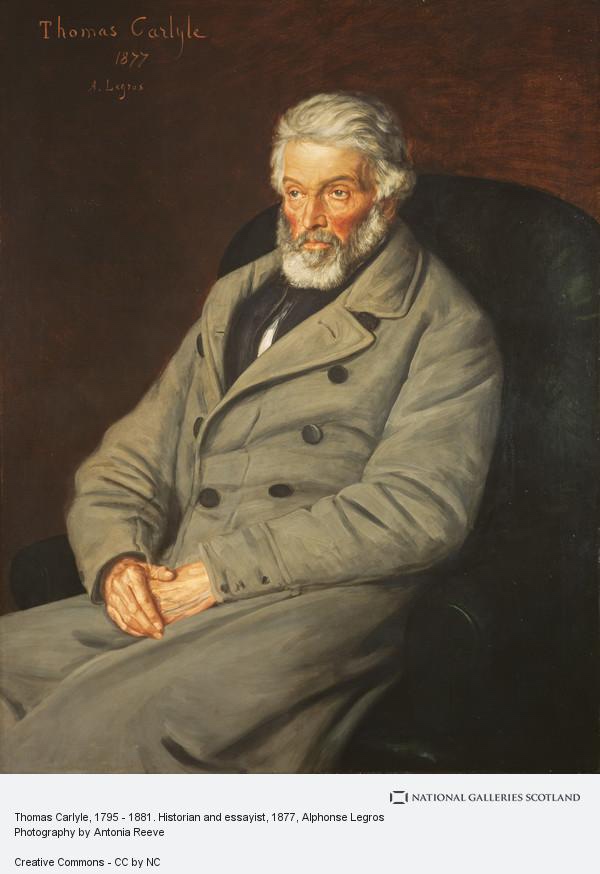
Well, that lonely gal Minerva’s owl tends to fly at dusk. To bring in another animal metaphor, Robin shut the barn door after the horse got out (arguably, in an effort to get us to… not ride horses? What would the metaphor here even be?). It’s unlikely that Kirk did it all on his own. Not that many people read his ponderous tome. But it helped establish a foothold for the idea that conservatism was genteel, thoughtful, and not at all scary, violent, or fascistic like the experience of the thirty or so years before 1953 might indicate. He defined the Scotsman in such a way that Buckley’s new club could deny entry to anyone who would make the new conservative movement look bad (including actual Scotsman and major right-wing thinker Thomas Carlyle- kind of hard to imagine a meaningful history of conservatism without him, but people like Isaiah Berlin were saying he was a fascist progenitor at the time, so best to leave him out). 

Mutatis mutandis, “The Conservative Mind” presents conservatism as the sort of thing Buckley could sell to Anglo-American audiences at the time, a collection of gentlemen standing athwart history yelling “stop!” No-good philosophers, soulless bureaucrats, and the dumb masses that follow them want to tear down all that’s good in the world and replace it with abstractions, which inevitably leads to terror. What’s needed is a few good men grounded in reality to fight a rearguard action against them and salvage what they can to keep civilization going. How to create a whole ideology out of the particulars of a given reality that spans time and space? Well, Kirk doesn’t really answer that very well. Mostly he punts to religion, which is a non-answer as his conservative minds, if they were born two hundred years earlier, would have been co-signing the slaughter of their fellow conservatives because they called it “church” instead of “mass.” But this was Eisenhower-era America, which saw the promulgation of “Judeo-Christianity” as a bulwark against the left. It could play then. And Kirk also throws out enough stuff about how conservatism promotes individuality, and liberalism/leftism supposedly doesn’t, that it fit in with Buckley’s aim to make American conservatism seem cool and rebellious. It played- it shouldn’t have, but it did. 

You’d think a book with this kind of agenda, and that was wrong about its major points, and that was written by a man motivated by deep pedantry and ideological fervor, would be bad. Well, in many respects it is. But I actually enjoyed a lot of it. Kirk really did go deep, in his vein. He told interesting, if often bathos-laden, stories of interesting figures. Being forced to stick to Brits and Americans, he had to go rummaging around to fill the bench out. So we get the stories of weirdos and assholes like John Randolph of Roanoke, Fisher Ames, Orestes Brownson, assorted Lords who farted out some essays about how revolutionary France was bad before overdosing on laudanum and beef. They’re genuinely interesting. He sent me to wikipedia time and again to learn what this or that old-timey politician, philosopher, or faction was. I like that kind of read (I never get why people nowadays have an issue with references to figures or words they don’t know, when they carry the internet in their pocket). 

That’s not to say that “The Conservative Mind” also didn’t irritate me. I’m also a pedant and have trouble sitting through presentations of dumb ideas peaceably. Kirk tries to carry his argument with a high-serious tonality — another artifact that reminded me of the War on Terror era — and yields a patronizing head pat from anyone who knows better. And, of course, he was writing this as the Civil Rights struggle started. He sort of waffles about slavery. He was a northerner, he doesn’t find it good, and he embraces at least some anti-slavery figures, including John Quincy Adams. But he puts himself in the hands of the Dunning School — abolitionists were fanatics, ala the sans-culottes, and Reconstruction was a corrupt failure — and trusts the cliches Dunning at al taught to generations of American schoolchildren to get him through to his readers. I imagine they heard him loud and clear. 

But my star ratings come from goodreads, originally, and goodreads says they’re based on enjoyment. I put this in a similar category to David Hackett Fischer’s “Albion’s Seed.” Every now and again people ask me if I’ve read it. As the askers are perhaps impressed by the book’s heft and range of research, I have to let them down gently when I tell them that its thesis — that American culture, from 1609 on down, is defined by four (4) British subcultures with no meaningful change or even mixture or adaptation in the intervening four centuries of epochal historical change — is ludicrous, the kind of thing Fischer could not have published even ten years later. But- I keep my copy of it around, because it’s kind of a fun “let’s dip in and see how Scots-Irish ‘folkways’ surrounding childcare differed from equivalent Quaker ways” sort of book. Just don’t take it seriously. It’s the same here. Read for the stories of drunken swaggering “orator” John Randolph of Roanoke or T.S. Eliot transforming himself from Tom from Saint Louis into aged sage Tiresias, you probably don’t need to take the whole thing at one go. ****

Review – Kirk, “The Conservative Mind”

Review – Carlyle, “The French Revolution”

Thomas Carlyle, “The French Revolution: a History” (1837) – I don’t know, man. I’m not sure what I’m supposed to get out of this (he said, about the book he assigned himself). Apparently this was a standard work once! It doesn’t surprise me that a round denunciation of the French Revolution would become a standard anglophone work on it- that’s still viable today. I guess I’m a little surprised that this massive, discursive mess that takes for granted a pretty substantial knowledge of the players going in was as big a deal as it was. Because Carlyle, romantic elitist sage that he was, does nothing so pedestrian as “begin at the beginning” or “explain the significance of any of the people in the narrative” or “have a written thesis.” He just blusters. He blusters learnedly, with some good turns of phrase, and an impressive ability to project his feelings (almost always disdain), but still. Shows how relatively unlearned even educated people are now! Barely anyone knows who Madame Du Barry was, or why she was important, or the Necker affair or whatever. I know the French Revolution pretty well for a nonspecialist but would still get lost sometimes.

Still and all, frustration won out over intellectual insecurity in reading this. Carlyle doesn’t argue, really, but he gets his point across- disdain, universal disdain, disdain given just enough contrast to some theoretical world of worth to even exist, an oxygen to fuel Carlyle’s smoky peat fire of secular damnation. That dingdong Curtis “Mencius Moldbug” Yarvin cites Carlyle as his intellectual master and you can see why, not that that fatuous nerd would be fit to edit Carlyle’s copy on one of the Scottish prick’s bad days. Carlyle could make a point when he wanted to. He was quite explicit about what he thought about black people and slave emancipation, for instance. He used the bare minimum of wordy bush-beating that a Victorian sage could get away with there! He was pithy with Margaret Fuller when he insisted she accept the universe (his, though, it went without saying, not her Yankee vibration). 

But I notice one bunch who our enterprising Scot seemed kind of leery of, even though he blames the French Revolution and whatever came from it on them: the philosophes. I came in expecting some good, ripe Frenchie-smarty-pants punching, and I did not get it! Many lesser lights have made Rousseau, Diderot, Voltaire and company rhetorical pin cushions. They’re not hard targets! But while Carlyle, in as close to a real argument as he comes, strongly implies that it was the philosophes who ushered in the “age of paper” that allowed the sans culottes to run wild and cause all the problems, he never really comes to grips with them, never gives them a real working over. Was he… scared? Did he figure that argument by implication — “we all know what was wrong with philosophy, guys” — would play better? Probably a reasonable assumption in his time and place. Who knows! Maybe I’ll read a Carlyle biography someday and find out. I hear he had a peach of a marriage! **’

Review – Carlyle, “The French Revolution”

Review – Dugin, The Fourth Political Theory

“Russia can have a leeeetle fascism… as a treat”

Alexander Dugin, “The Fourth Political Theory” (2009) (translated from the Russian by, like, a dozen people, who cares) – Let’s get one thing straight from the start: Vladimir Putin needs a ponderous ex-punk ex-dissident “Traditionalist” to tell him to be a prick and invade places like he needs a hot shovel. A few years back, around the time of the Trump election, US media started noticing Alexander Dugin, and some floated the idea he was “Putin’s Brain.” This is typical American provincialism, applying our situation — in this case, an extremely narrow scenario, the fact that we had a president for eight years who was so stupid that people like Karl Rove and Paul Wolfowitz had to do his thinking for him — blithely to very different arrangements abroad. I’m no Russia expert, but it seems supremely unlikely that the ex-KGB siloviki and the gangster oligarchs that run the show over there really care that much about what any philosopher says. Things do have a tendency to get stupider and stupider in this timeline, so maybe more Russians who count are actually listening to people like Dugin. One thing this Ukraine situation has shown us is that the delusion some of us anti-imperialist leftists held, that powers like Russia, cruel though they may be, are at least smarter and more rational than the US, doesn’t hold up as well as we’d like, so that would fit. I’m aware that Russian state media has some kind of employment situation going with Dugin. It’s the job of major state cultural/intellectual apparatus to keep a variety of pedants and ideologues on staff in case they’re handy. We’re cheap. That doesn’t mean people like him (or me, lol) really decide anything.

Dugin has been on my radar for a long time. I had actually planned on running him in the election he swept for my next “reading on the right” well before the Ukraine crisis. If you read about contemporary fascism, traditionalism, or red-brown cross-over, his name comes up a lot. This, along with his association with Russia, a country that brings out the bullshit in Anglo-American writers, means there’s a lot of dumb agendas not so much surrounding Dugin, as much as surrounding the discourse around the topics that Dugin bridges. You can find waltzing pairs of bullshit slingers along every axis touching the man: those who think he’s Putin’s brain versus those who know he isn’t; those who sound the alarm on red-brown (that’s alliances between anticapitalist leftists and fascist right-wingers, for the uninitiated) coalitions versus those who insist any mention of that is crying wolf; those who want to defend the honor of the sort of occultism/traditionalism Dugin claims versus those who think it’s all fashy rot. I do think there are rights and wrongs, here. I also think that many involved on all sides over-generalize and press their arguments further than they will go, seemingly out of spite a lot of the time.

So, let’s go to the texts, shall we? I mean the text of Dugin’s writing, and the text of his life, most of which might as well be his writings because he’s the main source of information here. The story we’re told is that Dugin came from a family reasonably high-up in the Soviet hierarchy- his dad was a general. Dugin was a rebel- maybe this is just crossing the streams of things I’ve been thinking about recently, but he does seem a bit like a classic early-Gen-X type, a rebel of the kind that valued posturing and shock over anything else (the Soviet context was different enough from the Western to seriously complicate that read, I know). He got into rock music, satanism and other aspects of the occult, and Hitler. Supposedly, he found some Julius Evola in the Lenin Library in Moscow and that was all she wrote- he was now a Radical Traditionalist. I can basically rattle off my spiel explaining what Traditionalism is (and isn’t) from memory, since my 2018 birthday lecture, in my opinion my best one. I’m sick of doing it. Just know that when guys like Dugin say tradition, they mean initiatory occult knowledge, and know that like any magician, they rely on misprision and slips to get over with audiences. This includes the verbal slip between Tradition like they mean it and tradition like we mean it, the actual traditions of actual people. 

The biggest gap I see in Dugin’s biography is that between the fall of the Soviet Union and about 1997, when he wrote his book on “geopolitics.” That’s the book that got the west’s attention, after it was adopted by the Russian military colleges as a textbook. Where did he make enough money to sit around, write, and get involved with Eduard Limonov’s Nationalist Bolsheviks? The legacy of Limonov — people whose opinions I take seriously say he was a great writer, and I intend on reading him some day — and the NatBols motivates a lot of the bullshit slinging in this story. Here, I’m more interested in the context. The Soviet Union collapsed, the economy went into freefall, everyone was scrambling, and I wonder where Dugin (and to a lesser extent Limonov and other NatBols) found material support… really, more for my own picture than because I think such support would necessarily translate into allegiance. Nice complete picture, that’s what I’m about. 

Anyway- Dugin’s thoughts on geopolitics got people’s attention. If there is any parallel between Dugin and the neocons as implied by the “Putin’s brain” thesis, it is this: both were late twentieth century ideological entrepreneurs shilling some Risk-board nonsense to fill the hole where people like them thought a sense of national mission should be. They’re both parodies of an already degraded form of thought, the two classical schools of International Relations theory. Neoconservatism is a hyper-charged, violent Liberal Internationalism; Dugin’s Eurasianism, where he calls for Russia (and maybe China, if they’re on side) to lead a solid bloc in, you guessed it, Eurasia, is a parody of foreign policy Realism. 

Dugin, for his part, follows in the long… well, post-1945 long… tradition of fascist pedants magpie-picking from amongst the few fash left standing after the big blowout for ideological inspiration. The unlettered skinhead mooks did Hitler-manquery; the ones with that critical bit of grey matter go looking for somehow who didn’t shit the bed and die in 1945. That’s how Evola got a postwar rep- he was still alive, because nobody trusted him with anything important. That’s why you still see Strasserites, despite Strasser being as scabrously anti-semitic as the Fuhrer who offed him, because he, being dead, wasn’t so thoroughly associated with ignominous defeat. Figures like Mosely and Yawkey were, ironically, protected by the rules of liberal democracies, and they have their little followings. Dugin is an Evola disciple but for his geopolitics, he borrows heavily from Karl Haushofer, a German practitioner of the school of “geopolitics” that came about in the early twentieth century. Like a lot of haut-bourgeois thought, geopolitics is a way of thinking about something real — the way geography influences, sometimes determines, politics — without taking most of the realities on board. Geopolitics is high-flown, if taken seriously it’s high stakes, and just bullshit enough for someone to be able to say anything at all they want under its auspices (dialectics has sometimes played a similar role, if you think I can’t pick on Marxists too!). It’s perfect for an ideological hustler like Dugin.

Because that’s what the Fourth Political Theory is- a hustle. Dugin, above all else, is a performer. Take a look at his videos. Big old gray beard, English pronunciation and cadences somewhere between Zizek and a Bond villain. I could, potentially, see his geopolitical and “Eurasianist” stuff having something closer to meaningful content (that’s saying a lot, for a field and an ideology I hold in low regard). But what you see in this, his effort to encapsulate his broader political ideas, is a transparent snow job resting on sleight of arthritic hand. 

Dugin’s theory is the Fourth theory, you see, because there were already three: Liberalism, Communism, and Fascism. Fourth theory is none of the above, he’ll have you know, regardless of how Fascist it looks (or its fond words for the worst parts of the Communist legacy)! The three previous theories were all modern, in that they believed in progress. The Fourth theory is both pre- AND post-modern, and doesn’t! But it still partakes of a dialectic, because Liberalism’s victory ushered in postmodernism, which the Fourth theory would take advantage of to be Liberalism’s eventual gravedigger. Fourth theory is related to conservatism, Dugin tells us, especially traditionalism, your Evolas and your De Maistres (the latter not a formal Traditionalist but a believer in similar ideas). But it’s smarter, cooler, newer. 

Here’s a good tell: Dugin claims to have made a workable politics out of the thought of Heidegger. I’m actually of two minds about this. On the one hand, I actually rather appreciate the cheek of someone willing to take this awful wizard-gnome and his pronouncements as something so mundane as a political program. No seminar table intimidation for old Doogs! On the other, even I know claiming to wield “dasein” like a fucking… ruler, or wrench, or pointer, is definitely not what the old fucker had in mind and points to the larger incoherence of the whole project. The whole point of Heidegger is to be anti-programmatic. Dugin says he is too- he, like his co-thinker and fellow half-smart Eurotrash Guillaume Faye, insists he is ultimately a radical pragmatist, concerned with what works. Then goes on to make a program of it. To affirm a programmatic — which is not to say well-considered — list of goals, most of which conform to what his idea of what a Russian meathead wants out of life: more power for Russia, no gay pride parades, etc. 

You see the same thing with his definition of postmodern… and of most other things. More than anything I’ve read in theory, or heard from a professor, what the whole thing reminds me of is the calvinball discursive games assorted half-read kids (invariably boys) have tried to get me to play with them. “How do we know X ACTUALLY isn’t Y??” And, invariably, you could see what they were driving at. At the very least, they were trying to get social points over you, prove you wrong or insufficiently broad-minded somehow. Usually, they had some bigger point, at least bolstering some kind of ethos. Dugin is doing the same thing. He wants something just as slippery and open-ended as any college sophomore philosophy major. It’s just more violent (he soft-sells the violence and racism, but given how prominent a place “ethnocentrism” plays in his system…). 

Ultimately, stupid and pointless though this book was, it was a reasonably smart read to undertake. Coming in 2009, this is a pretty good sample of the kind of competitive scrabbling for position you saw various far-right ideological entrepreneurs engage in as it became good and clear that the End of History was ending. Dugin had some advantages and some disadvantages, and they tended to run along parallel lines. He’s clearly better-read than a lot of his rivals and co-thinkers. Richard Spencer always came off like a grad student who didn’t do the reading and was trying to get by in colloquium with bluster; Dugin did some of the reading but “realized” no one cared, it’s all just symbols and branding anyway. But, he’s also Russian, and so has a more limited audience… but, he’s Russian, so has a smaller pond to try to dominate. I kind of thought I’d rate this one higher, but the book gets repetitive and his act gets old. When I came to give a “bullshit” tag in my shelving system, I couldn’t actually make myself call it “fascist bullshit.” It is that. But more than that, it’s “post-bullshit,” my category for books that take the category confusions and other lacunae of theory to smuggle nonsense and, often enough, the lies of the powerful into print. I wouldn’t be surprised if Dugin’s patrons in the Russian ruling class reach more for ideological explanations ala this book as the Ukraine situation sucks more and more, for them and for the world. I’m not looking forward to it. *’

Review – Dugin, The Fourth Political Theory