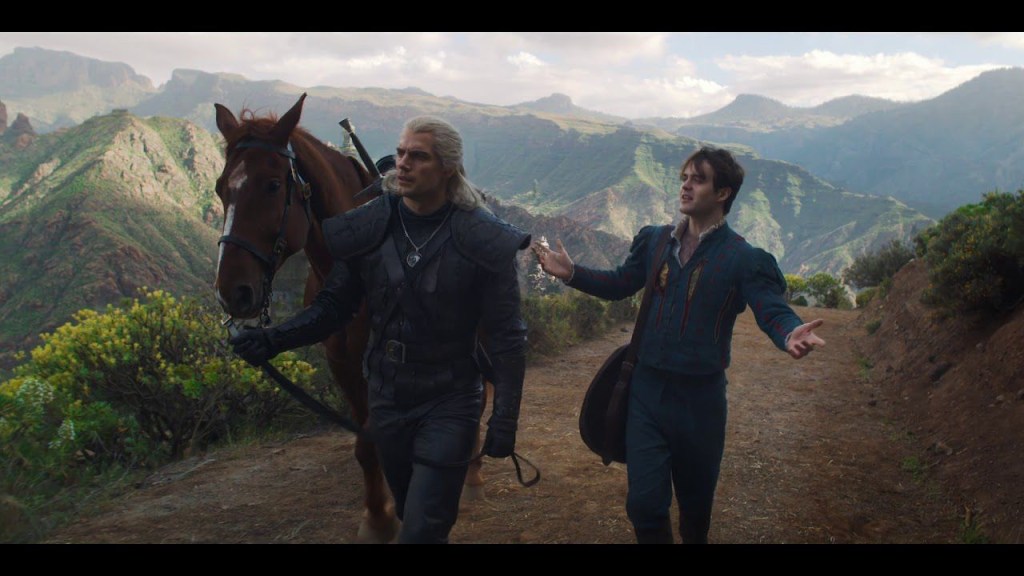
Andrzej Sapkowski, “Blood of Elves” (1994) (translated from the Polish by Danusia Stok) (read aloud by Peter Kenny) – Three possibilities, here: the first is that you really should read the Witcher short stories before starting this, the first novel in the Witcher series, the Polish fantasy epic that has taken the world by storm via video game and netflix adaptation. The second possibility is that Andrzej Sapkowski just really expects you to be very heavily invested in his characters, especially titular Witcher (freelance mutated monster hunter, more or less) Geralt of Rivia (pronounced like a townie saying “Revere”) and his sometimes lover, the enchantress Yennefer, and that reading the previous short stories won’t really give you much more reason to care about them. There’s also the possibility of “both” – the earlier stories will give you more background, and Sapkowski has an exaggerated idea of how compelling his characters are.
In any event, “Blood of Elves” could probably use more context than I had to fully enjoy, but I also admired that it didn’t hold the reader’s hand too much. You get plunged into… I’m not sure that the world or part of the world in which it is set has a name, or if I just haven’t remembered, but anyway, a continent sort of like a mish-mashed medieval Europe. People describe the Witcher series as based in Slavic myth- I don’t know enough Slavic myth to say, but it makes sense, though from the names, institutions, etc., it doesn’t seem like Sapkowski is shy of dashing in cultural influences from all over Europe. It’s a fractured land with many kings ruling minor principalities, and there are also elves, dwarves, gnomes, and other sentient fantasy creatures running around, living in uneasy peace with the humans who are relative newcomers to the land. Looming over it all (like how Russia and/or Germany have loomed over Poland, historically, one is tempted to say) is Nilfgard, which tried to take over the whole area a few years back and did a lot of damage in failing to do so.
There’s a little girl, Ciri, who’s a refugee from the last war, and heir to the throne of one of the kingdoms (since occupied by Nilfgard). For both reasons of state – others of the royal lines want to use her as a symbol, or marry her into their families to establish a claim to her former realm – and reasons of prophecy, she is a Special Child. She hangs out at Witcher academy for a while, which is where we run into Geralt. She gets trained in Witcher stuff, like fighting, but they don’t zap her with mutagens to give her Witcher powers, super strength etc., and also the Witcher’s separation from humanity. She also trains some in magic with Geralt’s on-again off-again lover, the enchantress Yennefer.
There’s a lot more training, scheming, and portents – a lot, a lot of divining portents, most of them to do with Ciri’s special destiny and how it relates to Geralt – than there is real action, here, which again, might have been cooler had I done the preliminary reading. Geralt swears to protect Ciri, and there’s something about Ciri being “promised to him” in prophecy, and it’s unclear whether that means marriage or protection or what (the former is a little creepy because she’s a kid, and Sapkowski doesn’t stint on grown-up characters commenting on her “development” as she enters adolescence, which is about as fun to listen to as it sounds). One of the portents means she has to leave Witcher academy, though I’ll be damned if I could figure out why. They have to travel through a countryside with a pretty well-depicted guerrilla insurgency/counterinsurgency war going on between elves and humans who used to be chill together. Geralt has to do some derring-do monster fighting on a boat, and some spy stuff. Then there’s more portents and that’s more or less it.
There’s cool stuff in here but it doesn’t really gel- though again, I’m not sure if that’s the style, or if I’m just missing the context of the earlier books, like if I tried to start “The Lord of the Rings” with the second or third book. I kind of doubt it would blow me away anyway, but it’s fun enough to pick up the series again sometime, this time, at the proper beginning. ***’
Stan Parish, “Love and Theft” (2020) (read aloud by Angelo DiLoreto) – Fun fact: I found this book while searching to see if there was an audiobook version of the classic history of blackface minstrelsy of the same title! There isn’t, for now, but there is this. This was a pretty fun heist novel! Alex is a classic “dadcore” heist dude, a smooth consummate professional who keeps it tight and keeps it cool- no random violence (not that he can’t get down if he needs to!), no unplanned jobs, no big talk. After a bold, motorcycle-based Las Vegas jewelry heist, Alex goes to suburban New Jersey to lay low for a while and attend some ketamine parties (??). At one, he meets Diane, a pretty lady, and they get into each other real fast.
Also, it turns out they knew each other during dirtbag eighties days in Atlantic City! This was the beginning of Alex’s career in high end crime, and Alex got out of town fast after his best friend (and Diane’s babydaddy!) got killed. Alex, guided by some Mexican smuggler friends, got into heists, Diane got into catering and raising her kid, who turned out to be an ok young man by the time Alex shows back up.
It’s a whirlwind romance, of the type pursued by people who get bored of their adopted upper middle class circumstances! They go to Tulum, on the Mexican coast, for vacation. Alex wants to give up the life, especially because Diane, you know, she’s cool but not that kind of cool. His friends, mostly gay ex-cop fixer Ben, are cool with that, more or less. But another Alex — well, Alejandro — has other plans. Alejandro runs the coast for one of the cartels. His bosses need Alex to do a boss, taking down a Chinese fentanyl manufacturer as he meets with some Russian exporters in a Spanish beach town (got all that?). You can probably figure out what Alejandro uses to force Alex into the job!
Parish is a good action writer. That’s not as easy as it sounds. He has a lot of moving parts in some of these sequences, and I’m not going to say it’s always possible to keep track of who is doing what, where, but it’s still fun. The twist end was… decent. Well-done, but you knew it was either DEFINITELY going to be it or definitely NOT, if that makes sense…
It’s a fun, though often odd, book. Like Michael Mann — there’s a lot of Michael Mann here — Stan Parish likes to linger in the worlds of the contemporary globalized rich, these nether-spaces devoted to commodity fetishism. Parish (and Mann, and a lot of thriller writers/filmmakers)treats this as almost the only world, even as their character despise most of its habitues- the rich are the geeks, gawking at the show and stuffing their faces, Mann and Parish’s criminals and cops are the ones running behind the scene and occasionally causing bloody disruption to it all. Let’s be honest- who’s ever been anywhere even as fancy as the Natick Collection and —hasn’t— wanted to see some chaos break out?
There is a part of me that rather wishes that Parish (Neal Stephenson, now that his characters and one suspects he himself hangs out in the anodyne world of the crazy rich, too- Mann’s another story because of his visual chops) would get a bit weirder with it. Let’s put it this way- Alejandro is the most interesting character, because he’s both out of fits into the story, and he hints at a world outside of it: he’s a former yoga instructor and a Mayan, his people having lived on that coast from time immemorial, who got involved with the cartel to keep the riff raff off the land, and who accepted everything that came with that deal. Things don’t need to utterly abandon verisimilitude for random bullshit (like, it seems, some online critical subcultures suggest) to let in some of the world outside of what you’d see at a high end airport lounge. The world is big! If nothing else, as someone who moves in this world, among others who move and occasionally do a thing, for reasons other than money or sociopathy, it’d be nice to see that reflected… but I can’t complain if thriller writers don’t anticipate my self/friend-insert desires. ****
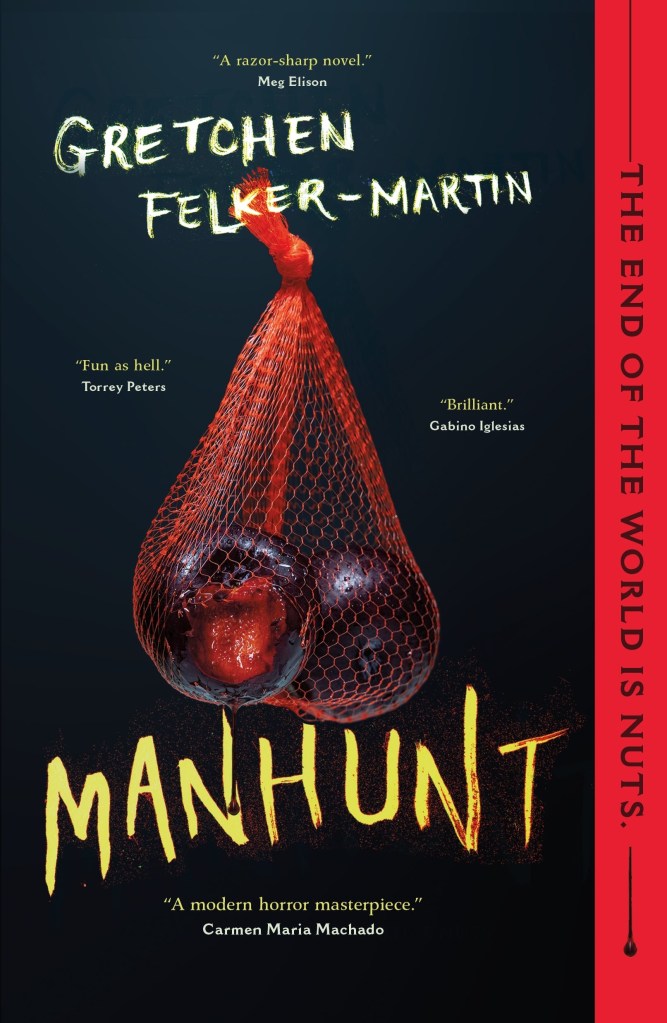
Gretchen Felker-Martin, “Manhunt” (2022) – This book has made quite a splash! It’s a post-apocalyptic horror novel where the three most prominent characters are all trans (two trans women and one trans man) who have to make their way in a world ravaged by “T-Rex,” a disease which causes anyone with enough testosterone to turn into ravaging mindless mutants. A lot of the reviews of this book put their emphasis on the bloodiness and violence in it. Surely, a story where two of the main characters hunt zombified men and cut their testes off to extract the estrogen they need for them and other trans women to avoid turning into said zombies (I’m enough of a dummy about endocrinology I didn’t even know you got estrogen from testes! Learning!) can be said to be pretty choice as far as violence is concerned. I’m a dude who doesn’t quail from written, or most visual, depictions of violence, especially violence in the heat of combat, so that didn’t bother me too much. Body horror does gross me out more, and Felker-Martin, herself a trans woman, does fine work with the particulars of the T-Rex disease, the semi-conscious cancers, the way it deforms men (and trans women who cannot get what they need in time).
Considerably more interesting to me than the blood-and-guts horror elements are the political and interpersonal horrors of the world Felker-Martin makes. She says she wanted to dramatize – she uses the word “melodrama” as a compliment – what trans women face in the world, the ways their bodies can turn against them in visceral, horrifying ways, and the ways others seek to harm them. With the others, there’s a quite strict gender line in terms of how the cis express that sadism: men are mindless mutants who rape, kill, cannibalize- you can almost feel bad for them, they just can’t help themselves. Women, for their part, have chosen to imitate pre-T-Rex men, their exclusions, their hierarchies, their militaries and religions, their secret police, and aim all of that towards trans women. The real villains in the piece are TERFs, Trans Exclusionary Radical Feminists, who form fascist militias who look to make themselves queens of the wasteland. Felker-Martin, in the fine tradition of Sun Tzu (and Tony Soprano’s reading of same!), has found the most choleric opponent of all time, the online “gender critical” types, and has irritated the shit out of them. They’re mad, folks! I’m not sure if we’ve heard about the book from the other type of woman Felker-Martin paints in vivid, spiteful (in the most complimentary sense of the word) colors, rich, vaguely-progressive, kind of Elizabeth Holmes-style girl-boss types, but they probably don’t read the same social media feeds that TERFs do.
For most of the book we follow Beth and Fran, a pair of trans women who used to know each other in high school, and who now wander the New England countryside trying to survive. Beth is a big tough former jock type who’s handy with a bow, Fran is a pretty, petite gal with the medical training to help keep them alive and find the stuff they need. The body horror can be gross, the horror of being hunted is tough, but really, the grimmest stuff for me was the inter-trans interpersonal stuff, the fraught relationship between working-class Beth, who cannot pass as a cis woman, and the more middle-class Fran, who can. Everybody talks about doing the right thing, being there for each other, respecting each other’s identities until the chips come down, and then it turns into gender essentialism, heartbreak, people getting brained by falling air conditioners, and other things no one wants to think about. Things get more complicated still when Robbie, a trans man who’s been wandering around sniping rampaging cis men, and Indira, a cis woman who’s their friend and a skilled scientist (she turns the balls into estrogen), enter the picture. It’s “found family” but not in the lame Joss Whedon sense- it has all of the claustrophobia and barely-suppressed despair of real found family, found under the circumstances such families are generally found: a struggle for survival. People pair off, off and on, in ways that make some happy and some less so, all in the context of this awful situation.
On the run from the TERFs, led by an enforcer with a bad habit of sleeping with trans sex workers, the foursome take a job with a “bunker brat,” the aforementioned girl-boss, who took her family money and built a GOOP-ified survival bunker into the New Hampshire hillsides. Naturally, the bunker turns out to suck pretty bad, but equally naturally, it also dangles the sorts of promises that such setups do to get people involved- money, safety, acceptance (for some). In the end, the characters need to battle both the bunker brats and the TERF militia for survival and for a potential future where they could thrive.
So… this is “taking the eagles to Mordor” level criticism, but my cis self did wonder the whole time… Beth and Fran are worried that if they don’t get enough estrogen, they will get T-Rex and face a fate worse than death. They’re trans women. Why don’t they remove their testes? Fran is at least partially motivated to do some bad things when the bunker brat holds out genital replacement surgery to her. Removing testes is a lot easier, people did it all the time back when before antibiotics etc. We learn that at least some people do that, and that the TERFs actually make boys who are young enough not to have enough testosterone to get T-Rex either get castrated or get killed. I figure that’s a hint- that the TERFs do it, they create a kind of caste of jannissaries out of emasculated boys, so it’s probably bad. I’m not sure I get why? I’m a cis man. I want to have my male genitalia. If it were a choice between not having them and still having them but becoming a disgusting mindless zombie, I’d choose the former! I’d straight up Thomas Aquinas the situation. But then again if I have to live in a shitty post-apocalyptic world, I’d probably just choose a quick death before either…
So, we run into the limits of experience, here. I do not know what it’s like to be trans. And I try to learn about it without asking a bunch of specific, prying questions, so, I tend to learn things in kind of an indirect way, among other things by trying to listen to trans people (and other people with radically different life experiences) in my life. I wonder if that’s what makes people mad about Felker-Martin’s work- an unapologetically trans voice, one that conjures a world where trans people are at the center, not marginal figures for pathos or diversity points, and not needing to over-perform — to avoid tweaking the irritable, for instance, or to answer every question a dumb cis dude reader might come up with — to establish validity. It doesn’t make me mad- I like to see it. Some of what comes with it leaves me wondering, but that’s not too bad, and it’s an inevitable companion of the limits of experiential knowledge.
We also run into the limits of horror, or, horror and me. I’m not a big horror guy! Like anime, video games, and numerous other cultural touchstones of the people around me, horror and me passed like ships in the night. At the end of the day, any type of writing is selling something. Nonfiction tends to sell a thesis. Fiction tends to sell feelings. Probably, due to a mixture of scaredy-cat-ness and pedantry, I often don’t buy the feeling of horror, at least not in a thrilling way. I’m a reasonably smart boy, dealing with this stuff at a remove, so I can say stuff like, “well, plenty of eunuchs got along just fine back in the day, I’d just lop my balls off!” A bit like a golden age scifi hero of instrumental rationality (except their authors usually were anything but- you figure a Heinlein hero would torch galaxies rather than slip that girdle over his oat tote), and ultimately just as out of tune with what anybody wants to hear… but, here I sit.
But that’s not to say that nothing in books scares me. Maybe this is trite, but the interpersonal (and, to an extent, the political/social collapse stuff) is scary, and Felker-Martin does as well with that as the writers whose stuff in that vein makes up part of my personal canon. Felker-Martin loves melodrama more than John Kennedy Toole, Charles Portis, James Cain, Doris Lessing, and other favorites of mine who explored the impossibilities and imprisonments of communication, desire, the condition of being human with other humans… but then again, Toole and Cain surely weren’t strangers to a more grand guignol style of emotional failure and cruelty… anyway! A fine, compelling work, even if it’s a genre the offerings of which I’m less receptive to than others. ****’
Elmore Leonard, “Get Shorty” (1990) – I remember seeing ads for the movie adaptation of this as a child! “This is what a certain kind of grown up is like,” I thought, looking at the posters with John Travolta and company in their matching black clothes, sunglasses, and cool expressions. “This is what I have to look forward to,” I thought with a certain ambivalence. I have not seen the movie.
They say Elmore Leonard is a master of tight plot. Split the difference- there is a pretty neat pinballing character to the action in the two books of his I’ve read so far, as the action sets various colorful shady characters in motion, colliding them against each other and a variety of plot elements. To me, a lot of Elmore’s strength (again, in two novels, this one and “Maximum Bob,” out of his massive oeuvre) is in the moments where his characters breathe, chat, establish themselves. I think he’s a better master of scene-setting and characterization than of plot. In fact, I think sometimes his passion for the one detracts some from the other. The plots may be tight, but the pacing generally strikes me as somewhat “off.”
Anyway! Chili Palmer is a loan shark out of Miami. He goes to Las Vegas and then LA to chase down a debt. It’s a funny kind of debt, because the guy who accrued it faked his death, with the help of the crash of an airplane into the Everglades- he was supposed to be on it. He stays underground, gets his wife to get the settlement money, then runs off to nurse his gambling problem and delusions of grandeur. Chili goes out after him- not only can he get his relatively small debt back, but he can get some of that settlement money. Chili’s an entrepreneurial type, so while he’s not quite nailing his mark in Vegas, a casino owner contracts him to collect a debt from a b-movie director in LA. And from there, Chili gets into some shenanigans involving the director, the director’s attempts to break through to respectable filmmaking via a good script, some drug dealers who had been funding the director who now want in on the script, a thespian they’re trying to get to act in it, some horniness for a scream queen, an old mob rival of Chili’s coming to town, etc.
Lots of ingredients in the stew! It comes out pretty well, but one weird thing with Leonard – or, again, the two I’ve read of him so far, both from the same era of his long career – is that it never feels that tense. Sometimes that’s a good thing- that sort of “lived in” quality to the books I mentioned. Chili, especially, likes to wax expansive. Sure, he’s a loan shark, but he’s not an animal. Mostly he makes his way with confidence and a refusal to take bullshit, and he helps people get credit who couldn’t otherwise! An interesting look at the era immediately before decades of cheap money and the expansion of credit card usage. Also, it’s always interesting to see the ways in which given eras depict criminals as heroes. The sixties and seventies went in for criminals who really were at odds with social norms, like Bonnie and Clyde just spraying bullets everywhere and crowds of arthouse viewers applauding every shot. By the nineties, you have the idea of the good criminal as, essentially, a better upholder of social codes – not necessarily the social codes most people live by, but some kind of code – than hypocritical straight society. Chili Palmer is that kind of guy. His main criminal rivals are a little less honorable but not awful, and his criminal foils are the two kinds of bad criminals, as far as crime writing then (and, basically, now) are concerned- psychos and phonies.
Truth be told, I was more invested in thinking about how Leonard thought about character, place, crime, etc than I was in the plot. This is often the case for me and crime writing, but the gap is usually a little smaller. Still and all, this was a pretty enjoyable book. I’m still waiting for Leonard to really rock me with one of his books, but I don’t mind going through them until that happens. ****
Andrew Vachss, “Strega” (1987) (read aloud by Phil Gigante) – Andrew Vachss died last November. He was a weird, interesting guy. In some ways he had a personal story more interesting than the stories in the two novels of his I’ve so far read. He worked as a community organizer with Saul Alinsky, then went out to Biafra to try to deliver relief to the rebels that the Nigerian government was then starving out. Some point after that, he made child protection his great cause- he ran a facility for juvenile offenders (no abolitionist, he), eventually becoming a lawyer who only took on cases for children, and wrote numerous novels, including the best-selling Burke series. He swanned around with an eyepatch like Moshe Dayan, and was given to proclamations like “I only have one god: revenge.” He was obsessed with karate and menacing dogs. As my friend and podcast cohost pointed out, there’s more than a little of what would go into QAnon here… but as listening to this book helped bring home for me, it’s a flipped QAnon, not quite a left-wing QAnon (as I know some very online leftists seem to pine for, a way to “get the shit-munchers on side), but a worldview based on the centrality of evil, represented by the sexual exploitation of children, with many of the valuations of QAnon reversed.
But that’s getting ahead of ourselves. This is the second installment in Vachss’ flagship series depicting the deeds of unlicensed private eye/child avenger Burke. Burke and his chosen family of renegades work the streets of pre-Giuliani period New York, doing scams and stick-ups targeted at other low-lives and “freaks.” While Burke has contempt for the milieu in which he works, he has even more for the square world, which threw him into the maw of the system as a baby and made him, and most other “freaks,” what they are- all while piously denying the impulses that drive squares to take part in the freak world’s illicit pleasures. . Burke’s crew includes a homeless guy, a deaf-mute Mongolian martial arts master, a reclusive Zionist genius junk-tinkerer, and what is, for the time and the genre, a really sensitively-portrayed trans woman. Burke doesn’t mess up the she/her pronouns of his friend Michelle, who specializes in surveillance, sleight of hand, and taking care of kids! What’s your excuse? That alone inverts a major contemporary reactionary value, hatred of anyone who challenges gender norms. If a QAnoner might be along for the ride of violently punishing “freaks,” they’ll be outright shoved out of Vachss’ moving car by his violent disregard for the sentimental version of suburban normalcy at the heart of their worldview.
Alas, as yet, the actual stories Vachss tells are generally less interesting than the world he builds. Burke gets contacted by a Mafia don he knew in jail to help the don’s niece, a femme fatale who wants to find a dirty picture of a friend’s kid getting sexually assaulted by an adult. There’s a lot of child psychology here, and I don’t really know anything about that- would it make sense that a kid would feel better about getting molested if a grown-up tore up a picture of the child’s abuse in front of him? That’s the kind of question you have to think about, reading a Burke story. Burke doesn’t really want to take the case, despite his feelings about protecting kids. He doesn’t want to get in hock to the Mafia (he occasionally rips off their couriers with his friends for quick cash), the femme fatale gets on his nerves, and it seems like an impossible case, finding one picture (likely reproduced!) in an ocean of filth. But they get to him, so he and the team get to work. He works various underworld connections, with varying degrees of success. His best lead is with a prison gang clearly meant to be the Aryan Brotherhood, but not given that name, which allows flashbacks to the time Burke and other characters have spent on jail, and the indulgence of that peculiar queasy fascination people have with white gangs.
It’s not terrible and it’s plotted a lot better than the first installment. But Vachss still spends way more time on the details of Burke’s lifestyle — the minor schemes he does to make money outside of “the system,” his various personal security measures, stuff he does to avoid search and seizure issues, etc. — than I found interesting. Crime stories like this, with little in the way of “whodunnit” mystery, rely on conjuring a world defined in part by the interesting techniques of people from the other side of the legal divide from the standard square reader. Think heist movies- they can be fantastic (the Oceans movies) or (pseudo)realistic, like Michael Mann’s crime dramas, but they always focus on the ways and means. But Vachss does too much of it, too unrelated to the story, and it’s usually too low stakes. Similarly, many of his characters are such ludicrous stereotypes that the emotional weight they are meant to carry falters. This is especially true of Max, the deaf-mute borderline superhuman karate master, and the femme fatale. You see the big reveal about her miles away, and while her relationship with Burke is grimy and scummy in a way that does help drive the plot (and guarantees she goes away in time for a new girl in the next installment, ala Bond), it’s also hard to wring that much of it at this late date. Still- there’s enough here to sustain some interest. ***’
Frank Herbert, “Dune Messiah” (1969) – I like Dune! It’s ridiculous, but good. This is the first time I tried the first sequel. Different friends of mine say that different of the sequels are good, but disagree on which, and no one I know seems to think that all of the sequels Frank Herbert wrote are good… or that the many more written by his son, Brian, are any good at all. But I figured the only way to do it, if I was going to do it at all, was to begin with the beginning, so when I found “Dune Messiah” on a free pile, I picked it up.
It’s twelve years after the end of “Dune,” and Paul Atreides rules most of the human-inhabited galaxy (and if there are aliens, we don’t see them, though some of the humans get freaky enough). The Harkonnens, the evil clan that killed his dad, is foiled. The imperial family has been thrown down and forced to give one of their princesses to Paul in marriage (not that he does anything with Princess Irulan, only having eyes for his Fremen lover Chani). Paul’s Fremen warriors, the baddest dudes around, have spread the word of the Maud’dib in a jihad that has killed around sixty billion people. Most of the remainder worship Paul as a messiah, the Kwisatz Haderach (say what you want about Frank Herbert, he comes up with cool names for things and people), and he has some pretty cool powers, like being able to see into the future. His sister, Alia, can not only see into the future but also has had full knowledge of the lives of all of her ancestors she was in the womb! So she’s fourteen but, you know, more or less omniscient except when the plot dictates she not be.
The previous power players in the galaxy are upset by the rise of Paul. The Bene Gesserit sisterhood, to which his mother belonged (and she’s just in the wind somewhere), had put the pieces into place to make Paul the Kwisatz Haderach, but he refuses to do what they want. The old noble families, including the imperial family through his wife Irulan, feel dissent for obvious reasons. Less obvious are the motivations of the freaky specialized mutants, the Spacer’s Guild, who are like weird spaceship fishmen who take the Spice drug to steer ships through hyperspace, and the Tleilaxu, weird biotech people who make zombie-clones and often “bio-hack,” as people now say, themselves. I guess the Spacers want an independent source for Spice, rather than letting Paul keep his Arrakeen monopoly, but Herbert both makes them a pivot of the plot, but they’re also definitely the bad guys he respects the least.
Between them, these players hatch a plot to do in Paul and Alia. The plot is really complicated, and moreover, to the extent it plays out at all – to the extent that the good guys don’t use their prescience to see through them, and all the measures they took to prevent the prescience from doing just that – it mostly does in drawn-out, boring conversations. Paul is in a snitty little mood throughout. It turns out he doesn’t like being the Maud’dib that much. He doesn’t like being worshiped, or constantly having to deal with conspiracies, and is less than thrilled over how many people have been killed in his name by his followers. He doesn’t want to just let the noble houses/Bene Gesserit/Spacers and whoever win, especially because they want to kill him and others close to him. But in many ways, he wins via the expedient of staying alive long enough to walk away, and become a different kind of legend.
But like I said, until some assassination attempts towards the end – which themselves are repeated, almost beat for beat, with different zombie-cyborg-assassins made out of friends of the family, if I remember right? – a lot of what happens in this book is conversation. The original Dune was also a bit slow and wordy. But there was more going on, and everything felt fresher. The strings show more here, the strain of a decently smart guy trying to depict a story of epochal geniuses with minds expanded beyond where humanity could go. In Herbert’s mind, that involves a lot of circular conversations made up of declarative sentences and high-nonsense philosophical aphorisms about power, fate, etc. Herbert had a better bag of tricks than others purporting to depict genius – Isaac Asimov, Orson Scott Card, Tom Harris from the thriller side of things – in that he stocks a lot of the genius less in what people say and more in how they observe things due to their super special vaguely-cybernetic training… but that can get a little old, too, especially when the plot does not move at the sort of pace you’d like. So this is a sort of middling effort. I’m thinking about whether it’s worth continuing, or just reading the wikipedia entries. ***
E.C. Tubb, “The Winds of Gath” (1967) – I picked this up, one half of an Ace Double, a “flipper” which features two novels in one volume- you flip the book over when you finish and you’ve got another scifi novel. It’s also the first of a thirty-odd volume space opera series by Edward Charles Tubb, an English scribbler from mid-twentieth century. The series stars Earl Dumarest, a space wanderer from Earth, considered a lost planet by the interstellar human diaspora. Presumably, him trying to find Earth again, and the circumstances of his leaving in the first place, will unspool as the B-plot across series, which usually have some planetary adventure, it seems, as their main thing.
The first outing for Dumarest isn’t bad, but is a tad derivative. The beginning is probably the best part. Dumarest is basically an interstellar hitchhiker, part of a subculture who wander from planet to planet, staying on a given planet only long enough to save up enough cash to get into spaceship-steerage again to see the next place. Someone outbids the ship Dumarest is on, so it doesn’t go to the destination he thought it would, but rather, to a weird backwater called Gath. In the grand space opera tradition, Gath is a whole planet defined by a small set of characteristics. It’s positioned such that at certain times of the year, you can hear “the music of the spheres,” the interstellar wind, or something. Other than that, it’s a barely-inhabitable dump. Getting stranded there sucks, because it’s basically a planet for very rich, very bored tourists, and it’s hard to get your stake to leave.
Dumarest, of course, being a scifi protagonist and only Earthman around, is resourceful and independent. It’s interstellar wind season, so a lot of tourists are around, and he tries to make some money and/or connections with them. The depictions of being down and out in space are kind of cool, well-conveyed- I wonder if Tubb maybe hadn’t been a stranded hitchhiker before. But the rest of the world-building Tubb does here really borrows a lot, a lot, from then-recent scifi hit “Dune.” Among the tourists are a matriarchal clan of kind-of-ok people and a clan of evil sadists. There turns out to be a resource on the planet that could break the monopoly on necessary scifi business held by creepy interstellar humanoid mutants. Single combat proves important. There’s dudes whose brains are computers and wouldn’t you know it, they have agendas. Along with the Dune derivations, the interstellar winds of Gath turn out to be kind of lame, not even up to Frank Herbert level trippiness- you just wind up seeing your past and it freaks you out, also, it rains real hard. The depictions of the rain were more interesting than the depictions of the more psychical phenomena. I’ll probably give this series a second try if I find the next book somewhere in my wanderings, as this one wasn’t wholly without interest, but a somewhat uninspired first out. ***’
Rachel Sharona Lewis, “The Rabbi Who Prayed With Fire” (2021) – This was a pretty fun crime novel about a mystery-solving rabbi! Inspired by a mystery series from the mid-20th century starring a rabbi, we have Vivian Green, who just started at Providence’s Beth Abraham congregation (I think it’s Conservative but not certain). It’s a fairly typical staid Jewish congregation, losing members out of an aging demographic, unsure what to do about it all. Vivian wants her congregants to get more involved in local social justice causes. Her boss, senior rabbi Joseph, supports her in theory but much less so in practice. For instance, it looks like most of the congregation will back the establishment Dem candidate in the next election for mayor, despite there being alternatives in the form of a smart, vaguely Warren-esque policy lady and a firebrand young Dominican-American man out to fight police injustice.
And then some of the temple burns down! No one is hurt but everyone is scared. Among other things, it encourages the congregation to withdraw further into the defensive shell that Vivian (and, one suspects, the author) sees as the characteristic issue in American Jewish life today. Assuming anti-semites are out to get them — knowing, in fact, that some are, despite a lack of evidence that they had anything to do with the fire — the congregation gets closer to the police. This is the same police that brutalized the son of the temple groundskeeper, and who Rabbi Joseph refused to say anything about when they did. The groundskeeper, pretty much the only black person involved with the Beth Abraham community in any capacity, was also the last person seen at the site of the blaze before it went up. To pay for the damage, the congregation eyes selling off some of its real estate to luxury developers, making even worse the gentrification issues that, in turn, enable further police abuses.
It’s a mess! Vivian tries to figure out what’s going on while also fulfilling her clerical duties, and as someone who has known a fair number of people in similar roles, Lewis accurately depicts the endless round of the conscientious mediator between mundane and divine. In the course of trying to figure stuff out, Vivian does have time for the occasional brunch with fellow lady clerics (a Unitarian and an Episcopalian, if anyone is keeping score), and strikes up a romance with the lady who runs the establishment candidate’s establishment-ass, “smart growth” mayoral campaign. Eventually, her poking around gets noticed, and she has to deal with some tense situations before any kind of resolution comes together.
It’s pretty good! Especially considering this is a first novel. The pacing and plotting works well, and while the book wears its politics on its sleeve, it’s never didactic. I will say that for me, one of the most important elements of any crime fiction is compelling villains, and in this one, the villains are not very well fleshed out. I wonder if the author preferred to dwell with more savory characters- other than a few out and out bad guys, most of the characters, even when they’re wrong, are very much human, acting out of credible motivations, and are very much distinguishable. The bad guys here act out of the most credible, as in believable if you know anything about the world, motives imaginable, but don’t have a ton of character or distinguishing features to them. But maybe we can get more of that on Vivian’s next outing, which I hope Lewis will write soon! ****
John Scalzi, “Redshirts” (2012) – Fun (?) fact: John Scalzi is one of the last white men to have a work nominated for the Hugo Award for best novel! This was in 2018, and he shares this distinction with Kim Stanley Robinson. From a cynical perspective, you can say the two men represent the two “acceptable” faces a white male writer can present to the SFF world, at least if you want awards. Robinson has the wonk face, the thoughtful digester of papers and reports about space technology and climate change, a leftist but a thoughtful (read: not especially revolutionary) one. You can also call it “the far face” – it almost certainly helps that he’s been in the field since the eighties, hasn’t thrown racial slurs or weird sex stuff around in his books, and is not on twitter. Scalzi has the nerd face, a sort of Joss Whedon figure (but, doing scifi novels instead of TV and films, does not squat atop our culture in quite the same way Whedon does), lots of quips, lots of genre self-awareness, you can map his work, bit by bit, on TVTropes. His is the near face- he’s on twitter, a lot, and seems to have a well-considered idea of where to stick the knife in, on there- into anybody who kicks against the idea that current scifi (that is, the scifi scene that has made him at least somewhat rich and famous) is the best scifi we could hope for, at least those with the temerity to kick on Al Gore’s Internet. I shouldn’t have to say this, but seeing as this is going out notionally public: I don’t think white men are oppressed, or have bad chances in contemporary SFF, I think the SFF scene as it exists now has prescribed roles for everyone, including women, PoC, etc., and for in-the-club white dudes, the above seems to describe the workable roles. Not my fault!
I’m probably making this more about internal SFF scene politics because A. I’m trying to figure what, if anything, it all means myself, as a pretty outside observer and B. the book itself does not bear that much interest. It’s not a bad book, but it suffers in comparison to an earlier work with similar ideas and energy, namely, the movie “Galaxy Quest.” Like in “Galaxy Quest,” a cheesy scifi space-exploration show – like Star Trek at its most pro-forma – intrudes on the real world. In “Galaxy Quest,” there’s a pretty clever explanation as to why: an alien civilization gets our TV signals, sees the cheesy show, and bases its space exploration on it. “Redshirts” starts out with a somewhat more ambitious premise: the characters lives are being written, as they live, on Earth, as a cheesy scifi serial. So the characters – who are the sort of disposable lower-ranking officers who can be disposed of by scifi writers to show the danger of a given planet or other away team mission, the titular “redshirts” – go through some sort of wormhole and wind up in Hollywood, begging a bunch of low-rent network producers for their lives.
Scalzi’s not a bad storyteller, structurally speaking, does decent action scenes, brings the “mystery” of why the ship is so strange and so many people die along pretty well, and obviously knows his tropes. The problem is, he has too many indistinct characters and none of them really land. There are more redshirts in “Redshirts” than are necessary, except maybe insofar as to give them analogs in the real world and therefore cross-dimensional storylines- this one gets swapped out for a producer’s dying son, that one falls (platonically?) in love with the actor who plays him in our world, etc. I suppose it makes sense that only a few of the characters on the ship have any character – the main characters on the show, who survive numerous terrible incidents while the redshirts die all around them. But it’s a bit of a problem when the less fleshed-out characters are the characters in your book! And there’s seemingly at least one, upwards of three too many!
Those dorky little aliens in “Galaxy Quest” weren’t, like, Ibsen characters or something, but they had characteristics. The washed-up TV stars they drafted into helping them were pretty cliche, but they were well-written and funny. This is more than Scalzi manages for any of his characters in “Redshirts.” I’m probably making it sound worse than it is. Like I said, it wasn’t utterly without good characteristics. But if you’re going to work in a story groove that’s already been pretty well-worn – especially by one, well-loved work like “Galaxy Quest” – you really need to distinguish yourself, and “Redshirts” doesn’t do much to do that. But I guess that’s what the SFF public – or anyway, the SFF scene loudmouths who edit, publish, review, and give awards to books – want! ***
Avram Davidson, “The Mirror and the Phoenix” (1969) – This was fun. Apparently, during what I’m told I’m not supposed to call “The Dark Ages” (though honestly, considering all the shit people say about the twentieth century, which say what you want about it, but cured a lot of diseases and put a man on the moon…), many Europeans believed that Virgil, the poet of the Aeneid, was a wizard of some renown! Old SFF hand Avram Davidson took that idea and made this story around it. Not only does he depict Vergil (he uses that spelling, apparently it’s gone back and forth) as a wizard, he depicts the world as a whole as having the confusion and geographical/historical inconsistency that a half-literate scribe scratching away in tenth-century Thuringia might give to it.
Vergil gets a job from a high-end lady: find her daughter, who went missing on the way to becoming an imperial concubine. To sweeten the pot, the lady steals Vergil’s potency! He doesn’t like that. He’s motivated. He has to create a mirror, and not just any mirror- a “virgin speculum.” This bronze mirror needs to be made in such a way that in the very instant of its ability to reflect light, Vergil can cast a spell and see where the daughter went. Mirrors were tricky enough for the ancients, I’m told, but a virgin speculum! That’s a whole thing. Vergil needs to secure tin and copper because normal bronze won’t do it, he needs his own bronze. Tin is a monopoly of Cornish chieftains, copper only comes from weird degenerated Aphrodite-worshiping Cypriots, the “Sea Huns” have given up their horses and taken to terrorizing the Mediterranean, so it’s pretty hard to get all that stuff. Meanwhile, there’s all kinds of mysterious hints as to where the daughter might be, and Vergil’s Phoenician friend who sails him around acts increasingly weird.
This is an agreeably shaggy, ponderous work, especially for a fairly short novel. It’s not hard to tell what’s going on but there’s also not the kind of handholding one gets used to in secondary world fantasies, especially contemporary ones. The world feels not just like there’s magic, but that it runs according to a magical logic. All too many stories with magic – and I can’t help but notice how the turn in this dynamic seems to have come with the popularization of games with magic systems, like Dungeons and Dragons – make magic seem like technology, a set of tools to use like any other, possibly dangerous but not really irrational, the world still works according to rules a Galileo or a Descartes could describe. It’s fun to see a world that isn’t like that, especially based on history. ****’




 Too Much Berard