Joseph Hansen, “Death Claims” (1973) – Murder and insurance fraud in rundown California beach towns and amongst used booksellers — fancy first edition types, not the kind of places I frequent — is the order of the day in this second in the Dave Brandstetter mysteries. Dave is an insurance investigator- tough, cynical, honest, and gay. Hansen was the first big openly gay American crime writer, and Brandstetter walks in the shoes of hardboiled private eyes like the Continental Op and, especially, Philip Marlowe. Ray Chandler didn’t like gay people much- to the extent Chandler was a leftist, he was very much in the old west coast, Jack London mold that saw deviation from the norms of white working class masculinity as a threat. But I think Hansen saw in Marlowe, the archetypal detective hero Chandler created, a way to explore gay themes. Chandler might not have liked the gays but he made a hero out of a loner with sensitive perception, fine taste (Marlowe is forever judging clothes and interior decor), and a code of honor which he rigorously adheres to despite it being at odds with the society around him… perhaps that sounded familiar to Joseph Hansen.
In any event- John Oats, life insurance policyholder, goes for a swim in the ocean during unlikely weather and drowns. There’s a variety of people around him — a new young lover, an angry ex-wife now shacked up with his former partner in bookselling, a squeaky-clean cowboy actor — but signs point to his son, with whom he was close. Brandstetter unknots the mystery through persistence and perceptiveness, and it helps he sees things — especially certain aspects of relationships — that are opaque to others, especially cops. In the end, we wind up with a tale of opiate addiction and blackmail, and there wind up being plenty of candidates for who took John on his final swim. On top of it all, Dave has his own domestic issues to worry about, as both he and his boyfriend are in love with dead men. This was by and large pretty good, though I could see it getting a little tired, over the course of ten or twelve books, Dave solving these mysteries basically using gaydar. But they’re decent crime novels and an interesting depiction of gay life just before Stonewall- “Death Claims” is set in 1968, and I’m curious if subsequent installments will deal with the increased prominence of gay people and their claims for rights. ****’
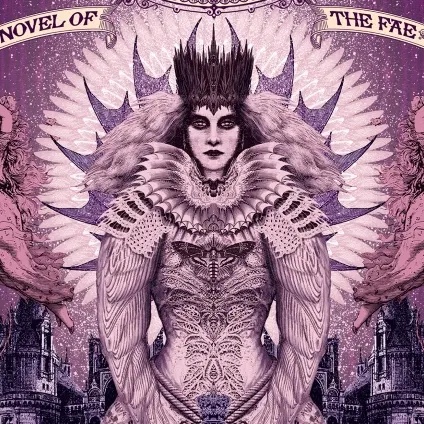
Jeannette Ng, “Under The Pendulum Sun” (2017) – A friend of mine who read this book and didn’t like it described it as “claustrophobic.” Amusingly enough, so did one of the quotes from a positive review put on the back of my copy of the book! Well, I agree with both of them. This dark fantasy novel, about a Victorian lady who goes to the realm of the Fae to find her brother, a missionary who went to spread the word of the Lord to the fair folk, does indeed summon the feeling of the walls closing in. The lady, Catherine, has to stay in a creepy old house. Stuff shifts around. No one talks normal. Eventually her brother comes back but he’s cold and probably traumatized. Also, a weird fairy queen takes up residence in the house. It’s ominous!
It’s an interesting concept but also a little bit of a strange call to have this whole fantastic world of fae and restrain most of the action to one creepy house? Moreover, the world of the fae, what they can and cannot do, is so arbitrary it’s often hard to get a grip on the stakes of the narrative. I get that it’s hard to make irrationality, like what the fae represent, consistent while maintaining its essence, but if you can’t figure it out, you should go back to the drawing board rather than writing a novel about the fae. Ng, one of the big liberal social media firebrands of current SFF, also partakes of the idea that the Victorians were so stupidly fanatical they’d try to convert, in this instance, — nonhuman people. — Fanatical, sure, stupid, no- when Victorians threw their lives away, they usually had a reason, and they could be pretty canny about their use of the God stuff, even when they wholeheartedly believed in it. There’s a predictable twist and some weird sex stuff and ultimately it just wasn’t that interesting. I can’t actually remember why I put this book on my list, I’m not normally into goth-y stuff, but I’ll try not to judge the aesthetic as a whole by this lacking representative. **’
James S.A. Corey, “Nemesis Games” (2015) (narrated by Jefferson Mays) – Ehhhhhh I did not like this one as much. It feels like the Coreys have gotten sick of the workaday space world of “The Expanse” series and are throwing it away. I guess that’s not that bad- the world is fine but not something to which I feel great attachment. But in this one they tried to do too much with too little and it just wasn’t that great.
To explain what happens in “Nemesis Games” I’ll need to talk more about the spaceship crew-ersatz family at the core of the Expanse series. I haven’t done this before because most of the characters involved are boring. Admittedly, I’ve written about main character perspective-dullard Holden in these reviews, but he’s unavoidable. Like the Game of Thrones series, all of the chapters in the Expanse books are told from the perspective of a rotating set of characters. Each book has Holden as a perspective character, plus a few new ones. This one retains Holden, but the other perspective characters are the other crew on his ship, the ragtag chosen family of the “Rocinante.” There’s his girlfriend Naomi, his engineer/go-to thug Amos, and his pilot Alex. Naomi is strong and sensible in that stock scifi lady way, Amos is a tough guy who has “no moral core” save for loyalty to the crew and sentimentality about kids (which is to say he has all the moral core readers expect), Alex has… a Texas accent, because Texans settled Mars early? You can see why I didn’t dwell on them before. They’re fine for what they are but you don’t read these books for the character study.
We start off with everyone scattering! Doing errands. Naomi has a mysterious summons to her Asteroid Belt home. Alex goes to Mars to say sorry to an ex. Amos departs for Earth to bury one friend and visit another in jail. Holden is left alone out in space to bother people. Then some shit goes down! But alas, other than a sense of general frenetic activity, this shit is not well laid out. Someone’s stealing spaceships, and someone wants Naomi to do something sketchy, and then asteroids start landing on Earth! It’s all connected, somehow. Shit is getting ugly!
The problem is, none of it feels earned. I don’t want to say “real,” though verisimilitude can be an issue too. The main thing is this- the baddies (spoilers, if you care) are rogue militant Asteroid Belt settlers and some dudes from the Martian space navy. To the extent this has any basis in what came before in the books at all, it’s in one of the weakest points of the Coreys worldbuilding. Earth, Mars, and the Belt are depicted as all basically having Earth-country-style nationalisms. The Belters in particular feel put upon by the Earthers and Martians. But it always felt superficial- the Belters have silly argot and accents, part Hispanic, part South Asian, and are portrayed as hardscrabble due to living on asteroids and space stations. Especially now that the “gates” opened in previous books and settlers can go to other solar systems, the whole Belt way of life looks pointless, as does terraforming Mars. Well… it’s hard to suspend disbelief when you realize that such programs were always pointless, given that they were supposedly impelled by “overpopulation” and welfare statism on Earth. The Coreys just kind of hand-waved most of that away with stuff about the innate desire for “frontier living” etc.
I didn’t buy it, but I didn’t have to for most of the books. In this one, I was much more pressured to buy, because it formed the motivation for this random Belt faction coming out of nowhere and pulling off all kinds of crazy shit and doing genocidal asteroid damage to Earth. It strained credulity in other ways, too. We’ve followed the head of the “Outer Planets Alliance,” a Belter terrorist group turned political party, since the first book, and now we’re supposed to believe this wise, badass warrior could get completely flummoxed by the existence of a splinter faction? It’s hinted that this faction had some kind of major outside help, and I guess it’s from the Martian navy? But beyond similar hard-to-believe politics stuff (that, again, happens under the nose of their government and takes them completely by surprise), there’s no set up. It’s just kind of lame, and even hard to follow at times.
The book’s not all bad. There’s some decent action sequences. The stuff with Amos on Earth, where he needs to survive the apocalypse alongside a girl who tried to kill his whole crew a few books back, was fun. In general, it was ok seeing some of the old viewpoint characters again, as they get swept into the big drama. The sense of scale is admirable. I’m glad the Coreys decided to be ambitious. It just seems their eyes were bigger than their stomachs. Their sense of big picture just isn’t there, and it reminds me of George R.R. Martin, their maitre, in a bad way. I wonder if there’s a genealogy- the coup/conspiracy-based strategizing of the likes of French revolutionary Louis-Auguste Blanqui and the “propaganda of the deed” of turn of the century anarchists, which gets bowdlerized into the deeds of villains in early pulp fiction, which turns into an understanding of how villainous plans and politics just work… because none of it really passes muster.
Neither does the philosophizing about human nature, it’s supposed tribalism, etc., that the Coreys put in assorted characters’ mouths. It’s a funny coincidence that those memes with Vin Diesel going on about the power of Family came out when I was listening to this, because to the extent the series has a message, it’s basically the message of those memes. The ultimate bad guy (introduced in this book out of nowhere) is someone who doesn’t understand, who corrupts, family (and is Naomi’s abusive ex, natch- the Coreys don’t do the worst possible job with that relationship but it feels as pro-forma as a lot of the rest of the setup here). That’s fine for an end-of-movie/book/season speech you can zone out for. It does not for great scifi plotting make. ***’
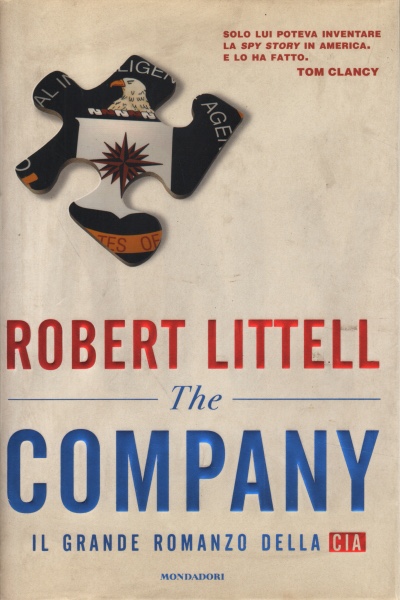
Robert Littell, “The Company” (2002) – You know, the right work could make me eat my words, but I feel confident in saying that eight hundred pages is too long for a spy novel. I picked this book up because of the name- Jonathan Littell wrote a great book called “The Kindly Ones” and I was curious if Robert was related. He is- Jonathan’s dad, and an experienced spy fiction writer and journalist. I bought it because I am interested in the history and culture of the CIA, and like a good spy story. I guess it boils down to a long-term interest in the ways in which culture informs strategy. The CIA had (to an extent, has) a weird WASP-y culture, the kind of guys who care about abstract expressionist painting while also having relatives on the United Fruit board. Spy agencies in the Anglo world are basically where rich establishment families drop off sons who are too dumb for the family business, too weird for politics (back when that was a consideration), and too hyper for the Protestant clergy. A subculture worth examining!
Well… I think Littell tries, on both the cultural end and the genre goods end. A generous reading would say he falls between the two stools, but I think that’s a little too generous. For one thing, he definitely buys the supposed pathos of the Cold War-era CIA. Smart, soulful men (and the occasional woman), seeking truth via a mission to expand freedom, getting their noses rubbed in the grim realities of politics and espionage and waxing lyrical about it over the inevitable cocktails… give me a break.
The funny thing is, Littell could not convincingly get across the idea that his characters were that smart. He accidentally undermined his own premise, but not enough to save the novel. The closest to a main character we get is Jack McAuliffe, recruited into the Company off the Yale rowing team in the fifties. He’s a dashing, horny Irish-American who’s portrayed as a natural spy but who actually fucks up a lot and is poorly-written to boot. His WASP and his Jewish friend — covering the bases — aren’t much better, as spies or as characters. Harvey Toritti, a pastiche of various real spies, is maybe a little better — not quite as motivated by his dick, as various tedious schools of mid century pop psychology insists men, especially men of action, are — but is also a ludicrous spy, a swaggering Falstaffian gunslinger and whiskey swiller who is also magically right about nearly everything. But Littell clearly thinks of them as tragic heroes. They’re not. They’re farcical goons. You could make a good story out of that — the Coens did, in “Burn After Reading” — but not if you don’t see them for what they are.
The plot is basically the Cold War’s greatest hits, except skipping over a bunch of the stuff that would depress someone who sees the Cold War as basically noble, like the Vietnam War. The characters all take part in things like the exposure of the Cambridge spy ring, the suppression of the 1956 Hungarian uprising, the Bay of Pigs, the attempted coup against Gorbachev, etc. Littell gets some stuff right, like the Kennedys as feckless dilettantes, some stuff crashingly wrong, like when he has Dulles refer to Mossadegh as a “Muslim fundamentalist.” The CIA seeing the progressive modernizer Mossadegh as a fundamentalist… well, they could get facts that wrong, but in the fifties, the CIA would be about as scared of a Muslim fundamentalist as they would be of a vodou houngan, probably a little less. And he gets more stuff just silly, mainly as the rest of the world becomes a reflecting pool for sad American men. The Hungarian uprising is a good example. A tragedy, no doubt, bound to end badly- Imre Nagy, the socialist reformer, probably would have gotten it in the neck from Magyar fascists if the Soviets didn’t brutally crush the whole thing. But it’s played mainly as a heroic, last of the Mohicans stand that makes one spy big sad.
To the extent the Russians feature, it’s as a mirror to the Americans. There’s a KGB spy who’s kind of an alternate-universe McAuliffe, an adventurous nomenklatura fuckboy being played around by forces bigger than him as he seeks meaning through action. Russians can be tragic, too. Except all the Russians are ordered around by an antisemitic (of course) pedophile (you know, so you know he’s bad) master spy. Russia’s “natural” authoritarianism allows them to play the long game, you see, so this dude weaves various generational plots to bring down the CIA, the shield of America, etc etc. One way he does that is by encouraging the paranoia of James Jesus Angleton, a real guy and a real freak. Again, it could be kind of funny and interesting, but played for tragedy — and without dynamic enough action to keep it interesting on that level — it just does t work. Especially not for eight hundred damn pages! I might try one of Daddy Littell’s earlier spy novels, I’m told they’re slimmer and faster, but this one was pretty bad. **
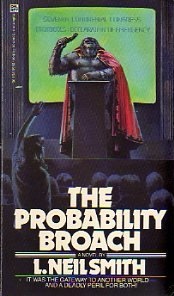
L. Neil Smith, “The Probability Broach” (1979) – A friend of mine who is a recovering “anarcho-capitalist” tried reading this, a depiction of an alternate-history free market utopia and one of the flagship works of libertarian scifi, during the height of his belief in its ideology, and couldn’t get through it, he found it was so bad. Well, now that I’ve read it, I can understand why. Boy howdy, was this a stinker.
A twist on one of my usual disclaimers: I’d love to find really batshit visions I disagree with explored in writing, and I’m not a stickler for plausibility in alternate history stories. I mean, I sort of am for myself, because I think it would be interesting to get a really rigorous, critical-historical take on the exercise, but I’ve obviously not accomplished that. Actually good alternate history stories like “Fire on the Mountain” and especially “The Man in the High Castle” have historical dynamics in their backstories that don’t really wash. But that’s all right. Alternate history stories are, naturally, more about us than about the past or it’s possibilities.
So it’s not really the implausibility of either the world Detective Win Bear goes to, not the one he leaves behind, that bothers me, though the patterns of implausibility in both cases indicate larger problems, like that the author is a dumbass ideologue of a dumb-assed ideology. Win Bear (he’s a Native American, always good to have them on side when you’re trying to make some fatuous settler point) works for the Denver PD in a 1987 that sucks pretty hard, because it’s a conservstive libertarian fantasy of what they thought Carter-Mondale style liberalism was doing to the country. Everyone’s broke, you can’t smoke, maybe some other stuff that rhymes, bureaucrats everywhere, etc. Win has to investigate a murder of a physicist, then some people try to murder him, then of course the physicist was doing alternate world stuff, so he winds up in an alternate world. No one knows about cops, or Denver, in this alternate world! People are happy, and also, for some reason, chimpanzees and gorillas are people and they’re happy too! Everything is privatized, no one pays taxes, everyone is armed.
Do I sound tired to you at this point of the review, dear reader? That’s because I am. The problem with this book was less the world building and more just the complete shit quality of the prose, characterization, plotting, and exposition. Exposition is often a problem in scifi, and especially alternate history, so that’s relatively forgivable. Win has a tendency to get shot, and so while he’s healing up, he has people tell him about the alternate timeline he’s in. The “point of divergence” is that Albert Gallatin, known in our world as an ethnographer (i.e. had a creepy fixation on Native Americans) and Secretary of the Treasury, sides with the Whiskey Rebellion against George Washington’s efforts to enforce tax payments. They win, kill Washington, and almost literally everything is hunky-dory from that day onward. No more constitution (and I will say it is refreshing to encounter an American winger who doesn’t slavishly worship that document, not that what he wants is better), no more taxes, really no more government. Jefferson (!) fixes slavery with moral suasion. The Native Americans gladly sell their land (?!) to western settlers and assimilate. Canada and Mexico join up, voluntarily. The only problem is that followers of the exiled Alexander Hamilton, arch-governmentalist, occasionally show up and do a terrorism, and that provides what skeleton of plot exists in this book.
I would say some of that stuff — especially about race — borders on the offensive, and the offensively stupid. But that’s not really why the book is so bad. It’s an ideological Marty Stu story, which is the real problem. The expression “Mary Sue story” comes from fan fiction, where it was common for writers to insert idealized, flawless versions of themselves on the bridge of the Enterprise or whatever (and it was gendered- women writers were called out for it more often, even though the male equivalent, the Marty Stu, was probably just as widespread if not more so). That’s one of the sad things about really thoroughgoing, join-the-party stockpile-gold libertarianism- the only meaningful conflict they understand is, basically, “normal people versus busybodies.” This is probably one of the reasons why libertarians so often become bigots and fascists- the explanation to the question “of libertarian paradise is the default, why does it exist nowhere?” can very easily become “the Jews, duh,” because it’s not like there’s any other good explanation of what binds “the busybodies” together, especially if you explicitly reject class analysis. It’s one way in which libertarianism really is “classical liberalism” — that ideology’s refusal of conflict and tragedy, well after most liberals got the memo that “freedom” can’t fix everything and adapted.
That’s tragedy, maybe, but “The Probability Broach” is farce, and not a funny one. Statist terrorists keep trying to mess stuff up, both in our world and the libertarian paradise, and keep failing. They’re meant to be extraordinarily dangerous, but are also ludicrously incompetent- after all, if they were competent, they’d be libertarians, right? Compounding this, Smith is a terrible action writer. It’s an art, writing action scenes, and one Smith hasn’t learned. He mostly substitutes gore and endless gun pedantry (he is, of course, a gun pedant, the creepy kind who talks about defending women, when he also delights in depictions of women being harmed, because of a lack of guns, of course) for an ability to write action. It’s a detective story in which no detecting takes place, just bad guys falling into the hands of Win and his new alternate universe friends.
I gotta say, I never expected to find myself wishing I was reading Ayn Rand. But at least she could inject some passion into her work, whatever her many failings as a writer and thinker. Smith can’t even manage that. His writing has the tone of the asshole at the end of the bar who’s figured everything out so hard he never has to do anything, never leaves his hometown or does anything with his life because it’s all bullshit anyway. Give that asshole free reign of his resentments and a very odd historical education, and you’ve got this book. *
James S.A. Corey, “Cibola Burn” (2014) (narrated by Jefferson Mays) – Back to the Expanse! This time the drama takes place on a planet on the other side of an ancient alien wormhole. But humanity doesn’t leave the cynical maneuverings that characterize the Coreys’ (its two guys, James Corey is a nom de plume) gritty workaday space solar system as established in the previous four volumes. Some squatters, survivor of the collapse of a colony on Ganymede that we saw a book or two back, went through the wormhole first and settled a seemingly earth-like planet. Alas, according to the rules, an Earth-based megacorp has dibs. They can’t even agree what to call it! The megacorp wants to call it New Terra, the squatters call it Ilus. In any event, they start fighting. Who’s called in to mediate but Jim Holden, space-dad and classic perspective-dullard, the protagonist who has less character than all the others but whose dogged insistence on heroic goals drives the story forward?
This one is pretty fun, taking as its motto the old writing workshop advice, “chase your characters up a tree, and once they’re there, throw rocks at them.” The corporate security people and the settlers do tit-for-tat terror on each other. The settlers are desperate for a place to live, and the leader of the corporate team is depicted as a kind of Colonel Kurtz psychopath, except speaking in corporate tough talk rather than whatever Brando was doing, so Holden can’t get them to knock it off. In the midst of all this, the planet turns out to be less a planet and more a planet-sized factory made by the same long-dead intergalactic alien civilization that made the wormholes… complete with defensive systems. These systems go off one by one, creating additional headaches for Holden et al at an agreeably frantic pace.
The other perspective characters include Elvi, a naive corporate scientist with a big-girl crush on Holden, Havelock, a corporate security guy, and Basia, an accidental (he only wanted to do property damage!) settler terrorist. I guess talking about them is as good a place as any to talk about this book and colonialism. Various people have told me the show is a good, “subversive” take on the difficulties of colonialism. I haven’t seen the show — I want to get through the books first — but that’s not really how I see this book. The actual issues of colonialism aren’t really here, because there is no indigenous culture (unless you could the long-dead builders of the planet). There is some racism on the part of the corporate security people, who are mostly from cushy, established Earth, and the squatters, who are hardscrabble Asteroid Belt types, but that’s about it. If anything, there’s more of your classic inter-settler squabbling, like Elvi the scientist earning the ire of the settlers for trying to get them to do less mining (and pooping) so she can do more science on a fresh, untainted biosphere. The violence of both sides is understood as being about greed, sociopathy, and in-group loyalty, the kind of thing basically-good people like Basia and Havelock can transcend, not really about power and who wields it for whose benefit.
There’s still enough of the Coreys’s master, George R.R. Martin, here to make any politics beyond “people are generally bad, except for your (often chosen) family, who you should be good to and open to expanding” supremely unlikely.But that’s ok, as far as I’m concerned, because it’s fine for a scifi adventure to be a scifi adventure without a scathing political critique behind it. It’s almost heartwarming, seeing the authors gesture at a broader point but landing on the usual bromides about family and empathy… anyway, I actually think the Coreys best Martin in terms of delivering on promises, and I’m not just talking about that last ASoIaF book we’re not getting. I mean resolving plots in a satisfactory number in an acceptable span of verbiage, balanced worldbuilding — the concept of the Expanse is about as thin, conceptually, as that of Westeros, but the Coreys haven’t built as much on such shaky foundations as Martin has — and not automatically going for the most cynical/grimdark resolution every time and calling it “tragedy.” Elvi gets over Holden and it’s fine- in Westeros, presumably she’d die horribly. Havelock learns some lessons without getting tortured. Even Holden’s girlfriend, Naomi, a cardboard Strong Female in most instances, shows some vulnerability in a human kind of way. All in all, not bad. ****’
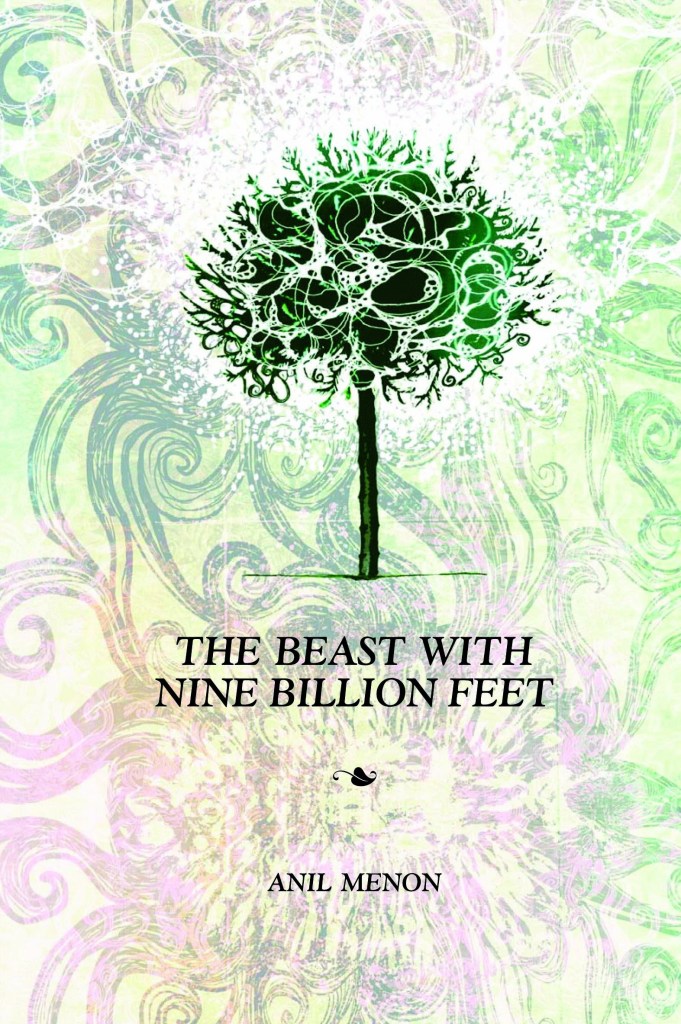
Anil Menon, “The Beast With Nine Billion Feet” (2009) – It’s actually almost pleasant to read a book that’s just not very good because it’s not very good, without some additional factor- disappointment, ideological madness, ubiquity. Upon googling the book a little more, it appears that it is meant to be a “young adult” novel. What does that even mean considering how many grown-ass adults read “YA”? But it makes sense. The protagonists are two kids growing up in Pune, India in 2040, and the prose is indeed simple enough for middle schoolers to get through probably (not that that isn’t true for plenty of adult novels, or that there aren’t smart middle schoolers, etc etc conceptual problems). Googling late informed me of the YA nature of this book, and googling (but apparently not enough) got me into it- specifically, googling “Indian science fiction.” I’m curious about scifi from outside the usual Anglo-American context, and reading the great Liu Cixin whetted my appetite further. This book came up.
Tara and Aditya are two kids growing up in future-Pune, thirteen and sixteen respectively. Their dad is a brilliant geneticist who had to go on the run because he supported a sort of free-software regime for genetic modification. Truth be told the future isn’t all that different. There’s more gene modification but nothing that freaky- smart parrots, designer kids. Virtual reality is pretty big. India is still recognizably India, Tara wonders if she should gene-modify her dark skin. She meets some creepy twins who don’t have belly-buttons and their sinister mom. She befriends the twins despite their creepiness. Meanwhile, Aditya is a gene-hacker but gets in various kinds of low-grade trouble. The dad comes back. The creepy mom wants to do in the dad, somehow, or get him involved in her bad patented-gene schemes.
None of this coheres very well. Menon can’t quite nail where to set up his looming threats for best effect, like an earnest but incompetent haunted house manager. I’d say it “keeps you guessing” except it’s hard to be bothered. It also seems to be setting up for a sequel, but it’s been eleven years so who knows if it’s coming? And he doesn’t even tell you what the beast with nine billion feet is. I give it an extra half star because of my inability to judge YA but I’m pretty sure this isn’t a great example of that, either. **’
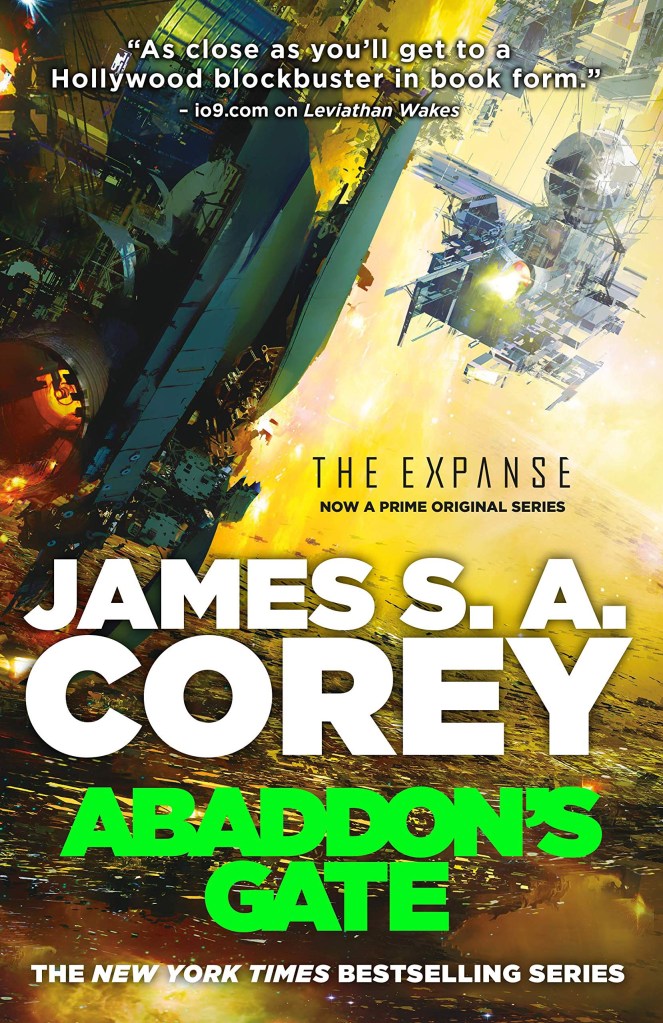
James S.A. Corey, “Abaddon’s Gate” (2013) (narrated by Jefferson Mays) – Book Three of the Expanse! It’s getting downright… expansive! That rascally protomolecule has set up a portal of sorts at the edge of the solar system. What’s on the other side of the portal? Is it a sort of… star… gate?
Forgive my levity! This is a pretty good scifi novel. It doesn’t try anything crazy or innovative but that’s basically fine- it delivers the good. The workaday, no-lightspeed-travel spacefaring world the Coreys (its two guys, it’s a trade name) set up threatens to become a little less workaday as a result of the doings of the protomolecule. The protomolecule started out as an alien weapon, first zombifying people, then becoming a weird space-station sized intelligence, then becoming a star gate. All the space navies of the system — Earth’s, Mars’s, the rag-tag Asteroid Belt — are there to try to figure out what it’s deal could be.
Of course, perspective-dullard Jim Holden and his crew get sent out to do a thing out there. It turns out it’s all part of some setup a new perspective character has to ruin his reputation and do him in! She has money, a willingness to murder many people, and special combat glands. But the universe — and the protomolecule — have plans of their own. Holden’s ship gets sucked into the gate, and a bunch of navy ships, including one with the perspective-villainess, follow.
“Time moves at a different speed in the nether zone,” as Jez put it on “Peep Show.” The gate turns out to be a kind of cosmic foyer. If you know how, you can use it to get to other solar systems. But you can’t fly too fast! There’s a sort of monitor-station in the middle that can alter the laws of physics. One rule is if you go too fast it stops you, hard. After trying to clear his name from the perspective-villainess’s frame up, some space marines shoot a grenade at Holden on the monitor station, so the monitor decides to slow down the speed limit even further, severely donking up all the ships and killing many.
No one knows what to do! Except the perspective characters and their friends, when put in combination. These include Holden, the woman trying to destroy Holden, a Methodist preacher-lady, and the security head on the biggest ship, an Asteroid Belt rebel ship they stole from some Mormon settlers. They’ve all got their own problems. Holden is always getting visited by the ghost of Miller, a grizzled cop protagonist from the first book whom the protomolecule uses as a messenger (Miller wasn’t that compelling the first time around, but whatever). Clarissa, Holden’s nemesis, has to try to kill Holden and then (spoiler alert) makes good. Ana, the preacher, and Bull, the security guy, deal with the grisliest beast of all- internal spaceship politics. Holden receives information from the interstellar civilization that made the gates and the monitor that if the humans keep fucking up, the solar system is toast. But of course, humans being human :world-weary, writerly sigh: they keep fucking up, and the protagonists need to stop them.
There’s a fair amount of cool stuff here. I like internecine struggle in space, the madness of type-A motherfuckers in tin boxes in a vacuum going nuts at each other over their desperate plans. The villains are ok, though I kind of spoiled it for myself by learning that the big villain was played on the tv show by David Strathairn, who’s great, but it’s definitely typecasting. The fucking-with-physics is cool, though goes against the “this is HARD scifi, no magic here!” thing the series’s boosters promulgate. The battles get a bit confused, trying to keep track of who’s where on this huge ship. The Coreys, like their maitre George R.R. Martin, are at their worst when they try to make points about humanity, but they don’t intrude too badly here. We’ll see how it goes with the next one, when humanity starts star-gating around. ****’
M.A.R. Barker, “The Man of Gold” (1984) – A small but persistent minority of Citizens wanted me to read this book, so read it I have! It took a while. I usually read a chapter before going to bed. The chapters are short but dense.
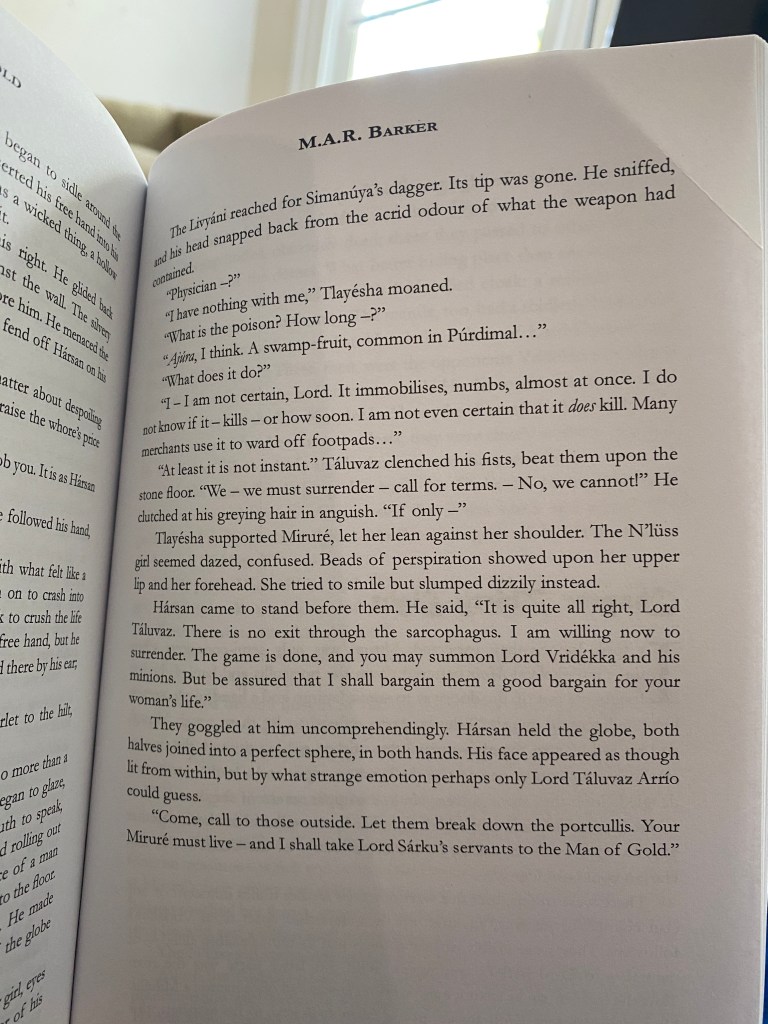
His fans call M.A.R. Barker “the American Tolkien” because like the grand old man of high fantasy, Barker was a linguist, working in both Native American and South Asian languages. And it shows! Those short chapters weren’t dense with ideas or involved prose- they were packed with references. Nothing on the planet of Tekumel is just an animal or plant- it’s a “dri-ant” or a “whatever-fruit.” Every page is packed with proper nouns and not just that of characters- gods and clans and cities and empires. Seemingly every word in all of the several Tekumel languages has an accent mark in it (I haven’t reproduced that here because they’re redundant and annoying). The picture I’m going to use to accompany this review on my blog (and maybe I’ll include it on fb and the newsletter?) is a picture of a random page in the book. Truly random- I entered “356” for the number of pages into random.org and produced a page number. Page 307 is the end of an action scene, not exposition-heavy as far as the book goes, and get a load of all the names and proper nouns and accent marks! It reminds of late-era Magic card expansions- they can’t get away with calling something “warrior” anymore, so it has to be “X-civilization’s warrior,” etc.
Look, I like world-building. I like Tolkien, I like multi-layered worlds with lots of history, especially if someone tries to rigorously construct them according to some kind of logic. I wrote a novel and there is too much world-building in it so I have more or less given up on it. But there’s such a thing as too much, too quickly, and too poorly-distinguished. That’s a place where Tolkien’s oft-lamented slowness as a writer comes into its own. He introduces you to the many-fold nooks and crannies of Middle Earth slowly, “organically” even. Not so in “The Man of Gold” – Barker just throws words and concepts at you in an exhausting fusillade.
It’s not an altogether bad world, Tekumel. It’s pleasingly asymmetrical and complex. It seems like it was a colony planet of Earth, thousands of years ago, and degenerated from several eras of high-tech into a kind of medieval situation, except they can’t even figure out iron, just bronze and copper like jerks. Humans live in byzantinely complex hierarchical societies. People belong to temples of one of twenty-odd gods (who might have once been powerful technologists? Or aliens? Or something?), most of whom seem to have multiple mythic aspects as well as their main names. People also belong to clans (which don’t have Tekumel-language names, but names in English, which is both confusing and a relief) and the clans have some relationship to the temples? Then there’s kingdoms and empires, and various non-human races, lizardfolk and mantis-folk, etc. Magic exists, mostly access to ill-understood ancient technology. A lot of it has a Central Asian/Indian imperial vibe, as understood by a midcentury white scholar, to me- layers of history, people bound by multiple codes meant to respond to transhistorical imperatives, ornate flowery language to go with ornate social arrangements, etc. “Orientalist,” probably, but that’s fantasy fiction for you.
The story is pretty basic fantasy boilerplate. A young scholar, Harsan, in the temple of the scholar-god discovers an ancient secret during his linguistic research (like the author, he’s a linguist). He’s sent off on a quest to explain this secret to his superiors. He gets whisked off on various adventures as different factions try to use his knowledge. He has the key to some kind of ancient weapon (the titular Man of Gold) that can defeat another ancient weapon, but can’t consciously access it. All the different factions, most of them vying for the imperial throne, want it. He gets seduced by a lady from the sex-goddess temple. Death-god cultists mess with them. They get shanghaied by slavers. He meets another lady and escapes into ancient labyrinths of ruins to find the titular McGuffin, all while being pursued by various groups. With pluck and fortitude, Harsan survives, averts disaster, and winds up with two wives! Score!
All this is in fairly basic high fantasy prose. That’d be fine, but if you’re going to have that many groups running around, it’d be good to be able to distinguish them more, and Barker either didn’t have the chops or the inclination to do so as much as he perhaps should have in this one. Probably his best creation in this one is the death-cult, classic lawful-evil well-mannered horror villains with all manner of gross undead critters to menace the heroes with. But they also just kind of reminded me of Jack Vance, who did worlds like these but with a much defter hand. Vance often had nigh-indistinguishable factions hating each other in stagnant worlds- but that was the point, that their hates were petty, and he did as much prose-wrangling to get that across and no further. Barker, I think, got lost in the love of Tekumel. Apparently, he was a great dungeon master on the early role-playing game scene: Dungeons and Dragons co-designer Dave Arneson apparently said Barker was his favorite DM. I could see that. But as a novel… well, I’m curious enough to maybe try out another Tekumel book. But ultimately, this was more of a slog than I was thinking it might be. ***
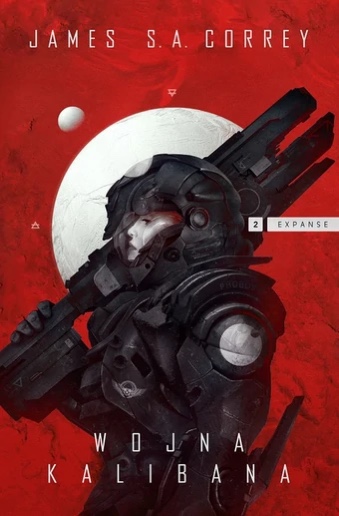
James S.A. Corey, “Caliban’s War” (2012) (narrated by Jefferson Mays) – The second installment in the “Expanse” books marks a substantial improvement from the first, which wasn’t bad itself. The improvements in this yarn of adventure in a human-settled frontier solar system will make me explain parts of the world! Which I didn’t feel that much compelled to do in reviewing “Leviathan Wakes.” I guess the important thing to mention here is that the big plot point in “Leviathan Wakes” was that an evil megacorp recovered an alien weapon called the “protomolecule.” The protomolecule is like a germ that kills anything it touches and then reanimates it, but all mutated and fucked up. At first I kind of rolled my eyes at what seemed an obvious zombie play- 2011 being around high zombie season. But to the authors’ credit, the protomolecule is weirder than that- it disassembles life and reassembles it into strange shapes, towards some unknown purpose it is pursuing methodically.
We shouldn’t make more of this than it is- in the first book, it was mostly an occasion for zombies and some body horror. In the second, someone has weaponized the protomolecule to make monstrous super-soldiers. They’re pretty “Alien”-y — silent, black, big heads, big claws — but why mess with a proven concept? At the beginning of the book, one of these monsters takes out a bunch of up-armored space marines on Ganymede, one of Jupiter’s moons. This causes Earth and Mars, the two big solar system superpowers with interests on Ganymede, to get in a shooting war, because each thinks the other fragged its guys.
This leads to a chain of reaction we follow through our viewpoint characters, most of them new to the series. Martian space marine Bobbie survives the Ganymede monster attack, but through various circumstances winds up in fish out of water situations working for Earth-bound UN (the UN runs Earth, a bit of a laugh but whatever) apparatchik Avasarala, another viewpoint character. Ganymedan botanist Prax finds his daughter kidnapped just as stuff collapses on his moon- coincidence?! No, obviously. And of course, there’s Holden, captain and dad-figure to a crew of misfits on the space corvette Rocinante. They all find themselves in assorted races against time — stop the Mars-Earth war, stop the polymolecule which even those who want to weaponize can’t control, find Prax’s daughter. Naturally, these all come together, as do the characters.
The new characters are a mix. A lot of Bobbie’s character is “she’s a woman, and a badass, and physically huge!” which is cool but not a big deal. Prax is analytical, unused to adventure, dedicated to finding his kid, the kind of NPC you need to keep safe on escort missions in a lot of video games. I liked Avasarala, it was cool to have an old lady bureaucrat as a main character in this kind of story, doing political machinations and shit. She wore a little thin as the book went on — we know, she swears a lot and likes her husband — and she’s basically beat for beat Olenna Tyrell from “Game of Thrones” (one of the writers was George R.R. Martin’s assistant!), but is still pretty good. There’s more of a wrinkle to Holden — being involved in violence messes with him — than in the first book but he’s still what I think of as a “perspective dullard.” Ever notice how often main characters are way dull? Harry Potter is the king of perspective dullards, but they’re everywhere, and Holden is one.
That’s fine, though, I’m not here for a character study. I’m here for action, and the authors — “James Corey” is a pen name, it’s two dudes — deliver pretty well. The action isn’t all violence, either. Prax is at his best showing us Ganymede experiencing an ecological collapse after Mars and Earth start shooting each other in its atmosphere- turns out, space colonies are fragile! Avasarala does some fun political maneuvering with people (men, mostly) who underestimate her, but not so much as to make her actions low stake. Bobbie is slower to come to her own but does in the end, with some pretty cool space/Jovian moon battles. And Holden ties it all together, a little tiresome at times, but shepherding the action out to the moons of Jupiter for a big showdown. Then there’s a pretty good sting at the end to set up the inevitable sequel. All in all, a good ride.
There’s a bit of the “Chamber of Secrets” problem here. The first two Harry Potter books ended with confrontations with various manifestations of Voldemort in the school basements. So far, every Expanse book ends with a raid on a remote protomolecule-infested lair. I remember wondering if Harry Potter books would always end that way, then I read “Prisoner of Azkaban,” the best Harry Potter book, which broke the mold. “Abaddon‘s Gate,” the next Expanse book, should maybe mix it up, but the action in “Caliban’s War” beats anything Rowling came up with. ****’



 Too Much Berard