Review – Peters, “Detransition, Baby”

Torrey Peters, “Detransition, Baby” (2021) (read by Renata Friedman) – Torrey Peters has said in interviews that she has structured this, one of the major contemporary trans novels that I know about, like a soap opera, with twists and turns and reveals paced for the sort of drama marketed towards the women to whom Peters dedicated this book: divorced cis women. It’s an interesting gambit, and echoes something that comes up a lot in this book and that I’ve thought a certain amount about.

Peters has virtually all of her characters, most notably trans woman Reese, detransitioned Ames (he lived as a trans woman for some number of years, in a relationship with Reese for most of that, before deciding to live as a man), most of their trans friends, and most cis people in the book, refer to trans people by a term I have had numerous trans and non-binary people inform me, mostly via social media, is a slur. No, not the short nasty t-word, but an earlier and vaguely medical-sounding term that most of my trans friends and associates have overthrown in favor of “transgender.” When I’ve discussed this book with people more knowledgeable about this stuff than me, they have told me this is reflective of a generational divide. Trans people roughly my age or younger are more likely ok with the word; younger trans people (and most of the trans people I know are younger than me, typically by ten years or more) are more likely to insist it’s a slur and use “transgender.” 

I say all that to say this: Torrey Peters is doing a bunch of stuff in this novel, and one of them is at least somewhat ironically overdone but also sincerely meant generational war. Reese, in particular — and there are three people who could be called main characters in Detransition, Baby, but as the omniscient third person narrator would probably agree, Reese is the star — has no patience for what she refers to as “Twitter girls,” women, almost always trans women, who promulgate ideas and/or exhibit cultural styles associated with online social justice stuff. Reese, and that omniscient narrator when she weighs in doesn’t really disagree with them on the points, but she just has another way of being who she is that she feels cramped by their indignation. Reese doesn’t want to lead a revolution. She doesn’t want to assimilate, either, like the assimilé cis gay men and lesbians we see in the book. What does she want, then?

Well, it seems, mostly she wants to be a woman. This might sound trite, but I think is quite in keeping with how Peters describes Reese’s mental state, to say she wants to achieve the high scores in the most conventional, one might even say stereotyped, versions of womanly achievement. This gets into some questions I’ve never fully understood — that I generally haven’t pursued that much, because they’re delicate topics and I don’t want to hurt anyone with my critical poking and prodding — related to gender as performance. Arguably, some of what Reese gets into is reflective of another generational divide- Reese understands trans womanhood as a reflection, or an apotheosis even, of womanhood as established by normative cis culture. A lot of the trans people I know — and here it is worth noting I know a high portion of these friends and acquaintances from radical left-wing politics — are often defiantly uninterested in conforming to cis ideas of what gender looks or acts like. 

That is not Reese’s way. Reese wants to own womanhood, wants to experience it as it has been sold to her on tv, though given some spins by trans experience and consciousness. Often, this takes the form of a competitiveness with the cis womanhood she looks to as a model, as in, “see how many of your alpha cis straight dude bros want to sleep with me, as opposed to you, cis lady.” 

Maybe a point of convergence, though- motherhood. Above all Reese wants to be a mother, which she sees as the ultimate in womanhood. I could see younger trans people less invested in binary understandings of gender getting that, even if the concept they’d more immediately grasp for might be “parenthood,” which is not quite good enough for Reese. Reese would like (unaffordable) bottom surgery. Reese needs to be a mother, and has screwed up chances to be one with other selfish behaviors (seemingly driven by her need to prove her womanliness by having affairs with bad men? Or is that a bad read? You gotta understand my understanding of romantic relationships is pretty minimal). 

She gets her chance! Sort of. In a miracle of unlikelihood, her ex-lover, Ames — who she knew as Amy — despite having his hormones and sperm count messed with by transitioning and detransitioning — manages to impregnate his boss, Katrina, a cis lady with whom he was having an affair. Katrina’s a divorced lady who has had a miscarriage, and she wants to be a mom but questions the conditions. She questions them even more when she finds out Ames had a past as a trans woman, and drunkenly outs him to coworkers, which leads to some grimly amusing scenes of HR managers at their ad firm trying to figure out whether they need to retool their bathrooms, etc. Ames, for his part, has been borderline crippled by his ambivalence towards his several dilemmas: “live his truth” as a woman despite the terrors of his trans life versus an easier life as a man, raise a child he’d maybe only stay with out of duty and loneliness, etc. 

Ames comes up with a plan! Bring in Reese as a co-mother! By the time the plot unfolds, Reese and Ames had been broken up for years, the arc of their relationship told in flashbacks. Everyone involved with this scheme is skeptical. Katrina is thrown by this sudden prominence of trans-ness in her life, and takes it with what strikes me as a realistic mixture of efforts at understanding and bad mistakes. Reese doesn’t trust Ames or Katrina at first, and figures she’d just be some weird add-on to their ménage, not a “real” mother, and that this is some bass-ackwards scheme for Ames to both get her back and continue to deny his trans-ness.

After some ups and downs, the three come to some understandings. If nothing else, Reese and Katrina have a shared hobby of owning the hapless Ames (non-sexually, in Reese’s case, at least at that point in the narrative). Katrina learns some about trans and queer culture. Reese patrols the boundaries, attempting to keep Katrina from merely appropriating queer culture (the sort of phrase, if uttered by a “Twitter girl,” would probably make Reese scoff, but she does not enchain the hobgoblins of foolish consistency, Reese) and making Reese into a kind of prop. 

Ultimately, it’s that dynamic that proves to be their undoing in the last part of the book, which has some strong points and some less strong points. Reese’s past experiments in hyper-womanhood come back to haunt her in the form of a bad man at the wrong place at the worst time. Katrina judges Reese’s behavior for both sensible reasons (facilitating cheating) and bad (AIDS panic). People make various dramatic choices. One of the key images of the novel comes when Reese adopts a method she finds on YouTube for dealing with grief, that gets confused for suicide (a tragically common fate for trans people). That her most dramatic moment comes via a YouTube video she watched with a mediocre cis dude hookup is pretty funny and poignant and feels real. Given the centrality it takes on, it feels like it would have been better introduced a little earlier? Workshop criticism, I know, but there it is. Katrina, Ames, and Reese all wind up together, in some sense, in the end, but in a deeply ambiguous and ambivalent manner. 

This was good! It has sound story-telling fundamentals, a story worth telling, a sense of humor, a definite perspective. There’s real limits to how much I can say in terms of how it depicts trans life. I can say more about how it depicts millennial life, I think, even if it’s millennial life socially proximate but… ontologically distant from my own. It does that quite well, I think. I can recommend it pretty highly for people who want to read contemporary literature. ****’

Review – Peters, “Detransition, Baby”

Review – Lispector, Complete Stories

Clarice Lispector, “The Complete Stories” (2018) (translated from the Portuguese by Katrina Dodson) – I think I get it. This isn’t really “for me.” Clarice Lispector is hot new shit in certain literary circles, despite (?) having been dead since 1977. Born into a Jewish family in the Ukraine, Lispector’s family made the smart move of getting the hell out of there before the wheels came completely off, and Clarice was raised a middle-class Brazilian. She became a literary success early on, and a social one too, moving in Brazilian high society and marrying a diplomat. The biographical details are mainly relevant insofar as they inform the glamour that has wrapped around Lispector’s name, first in her native Brazil, and then in anglophone literary circles as her work came to be translated. I’m trying to find a generous way to say it, but basically, I think there’s a lot of hype here. Divide Latin American literary hype — breathy, exotic, not your granddad’s dour (or sappy) northern hemisphere literature — by the sort of hype that surrounded the recently-deceased Joan Didion (harshly “literary,” and a beautiful elegant woman readers can project themselves on to) and you’re more or less there.

Well, I read Lispector’s short stories, supposedly her most accessible works- apparently she really gets into some modernist weeds in her novels. They weren’t bad, necessarily… or maybe they were and I’m just trying to be “nice.” They were mostly tales either of cities being weird and surreal, or women dealing with bad men, or both. The language is supposed to be “lush” but I can’t say I experienced it that way. The stories are more notable for what they lack- no moral or “point,” especially not a political one, and you have to imagine contemporary literary readers breathing a sigh of relief on that score. Not much in the way of character, often anonymous men and women described by surface characteristics and behaviors. You can’t really get avant garde points with a focus on character, anyway, or plot, which the stories don’t really have either.

What do they have? Well, a vague air of tropical decadence- cf my notes about “Latin American literary hype,” anglophone and Western European readers have been looking to Latin American writers for that at least since “The Boom” in the mid-twentieth century. It’s ushered great writers onto the global literary scene, this literary escapism. Who knows, maybe Lispector is one and I’m too much of a literal-minded lunkhead to enjoy! Kinda sucks that the best they can find to renew that source of interest in world letters has been dead longer than the people “discovering” her have been alive, but thems the breaks, I guess. I was never that much of a stickler for “show don’t tell” but Lispector does a lot of telling about people’s inner states. There isn’t much here that sustains my interest, I’ll admit.

Shot in the dark- as Dril put it, “this whole thing smacks of gender!” Not in the sense that Lispector’s work is where it is because she’s a woman or something stupid like that. I mean in the sense that many of these stories comment on gender relations in a groove well worn by millennial thought on the subject. The bad men with whom Lispector’s protagonists deal aren’t dissimulators or opportunists like many abusers. They advertise themselves as the nihilists they are, the protagonists find themselves irresistibly drawn into their orbit, and are usually changed in some way- and callooh, callay, a miracle! In the differently-moraled global south they don’t jump immediately to “the woman gets murdered” to send the point about bad men home. In fact, they seem empowered by the experience, to use a term Lispector would probably stick her arm in a bear trap rather than use. Not by sticking with the bad man, oh no. Just in general. They’re badder and vaguely witchier.

From the cheap seats of cis manhood, it appears the great comic theme of millennial women’s writing — and men, especially straight men, keep saying things but have less and less to say that transcends the level of overly-elaborated grunting, so most writing these days is done by women — is that you can be gay! The comedy of errors that is compulsory heterosexuality straightens, if you will, itself out and everyone can go off and be happy. The central tragic theme of millennial women’s writing is that most of the time, they either love, or have loved, or will love, a man or men, alas. Lispector stories show the shiftiness of loving men, but, like certain genres less of literature (though it’s there) and more of music and social media aesthetics, depicts a ability one might have to have one’s cake and eat it too by emerging from the tragedy of dealing with our dumb male asses stronger and more independent. Well! I’ve heard worse visions. ***

Review – Lispector, Complete Stories

Review – Coetzee, “Disgrace”

J.M. Coetzee, “Disgrace” (1999) – This is my first go at one of the living Anglo Nobel Prize winners in literature. Coetzee had moved to Australia by the time the Swedes bestowed the big medal on him, but lived most of his life in his native South Africa, and life in that country seems to be the subject of most of his literary work. A sensitive soul (you’d figure more writers would be, but they’re not), the contradictions and tensions of his homeland press themselves, along with other dilemmas that haunt writerly types, upon his consciousness and that’s how we get this novel.

The main character, David Lurie, is a mediocre man convinced that greatness, at least by association, is his due. A professor at a university in Cape Town, he lectures indifferent students, writes books about poetry which nobody reads, and carries on affairs. His inner space, as related by third person narration, is the endless self-justifying monologue of the overeducated, but not necessarily that bright, man with the usual banal urges for sex, power, and sexualized power. Most of this comes via bowdlerized applications of the ideas and life events of the romantic poets, especially Byron, to his own seedy situations. Eventually, he sleeps with one student too many, and gets the boot. Having no one else in his life, he heads to rural East Cape, where the adult daughter of one of his failed marriages lives on a small farm.

David loves his daughter, Lucy, but doesn’t understand her and is a little bored with her (not unlike how Byron grew bored of one of his own daughters, produced by one of his affairs, and packed her off to a nunnery to die of malaria). We only have David’s judgments to go on, but it seems she’s something of a hippie, a back to the land type, and I don’t know a lot about the course of the counterculture in South Africa. She grows flowers, goes to market, sells them. She partners with African farmers nearby and volunteers to raise and kennel dogs. Apparently roving stray dogs is, or was, a problem in East Cape?

It doesn’t seem too bad, but the air of dread Coetzee continuously conjures doesn’t allow for an idyll. A small gang attacks the farm, steals a bunch of stuff, and rapes Lucy. The attackers are black, and David is convinced that they had help from one of Lucy’s African neighbors. Lucy provides just enough assistance to authorities to make an insurance claim and then clams up, doesn’t make rape charges, doesn’t inform the police when one of the attackers shows up at her neighbor Petrus’s housewarming party. She has decided to blank the whole thing. She won’t change, she won’t move away to somewhere safer, and all of that means working hand in glove with neighbors who tacitly (perhaps actively) helped her rapists.

David decides this is her form of reparations, her way of adjusting to post-apartheid South Africa and expiating her guilt (this is before “privilege” talk became common). Lucy isn’t saying- she knows the old bastard won’t listen or get it anyway. David, with nothing else to do, winds up staying in the little town as well, strumming a toy banjo as he tries to summon up an aria for an opera about one of Byron’s lovers and helping an animal shelter dispose of dead dogs.

Bleak stuff! Some of the critical comments on the back talk about Coetzee “weaving light into the darkness” or words to that effect. I think they’re either wrong or just talking about the prose. Everything is pretty wretched. All the characters are tragic, not just in the debased sense of “quite sad” but in terms of existing in boxes of misery they helped create for themselves. This aspect is amplified by the ways in which David views things from a (self-serving version of) romantic ideology which, if it ever fit any time, does not fit nineteen-nineties South Africa. Even when he makes something like an understandable call it’s for dumb reasons that make you hate him again. When a commission at his university comes together to investigate his harassing a student (and maybe sweep it under the rug), he immediately admits to what he did and accepts the consequences… because of some nonsense about the priority of eros or whatever. Coetzee underscores the uselessness of everything that the academic/intellectual tradition brings to most situations.

Coetzee was vocally anti-apartheid, at least according to online sources, but not especially political- this scans, according to the bleak vision of life presented here. He’s gotten in some trouble with political figures in South Africa who like to paint him as an out-of-touch white man slandering post-apartheid black self-assertion as sexual violation. Well, white self-assertion in the person of David Lurie doesn’t look too great, either, and reaches well into sexual assault territory as well. I do think Coetzee chooses to twist knives sometimes (though, in keeping with highbrow literature, he doesn’t get especially graphic) to get his points across. It’s hard to say what would produce a better situation in his home country (Coetzee has said he moved to Australia in part because of the crime situation in South Africa) and it’s made harder by the way people, mostly on the right but in other political directions too, turn what happens there into a referendum on black-white racial politics more generally. One wants to rattle off the usual solutions, and they’d probably help more than most things. But “Disgrace” hits, at least in part, because of how unflinchingly it looks at the types of inhumanity that seem ineradicable, maybe inseparable from humanity itself. ****’

Review – Coetzee, “Disgrace”

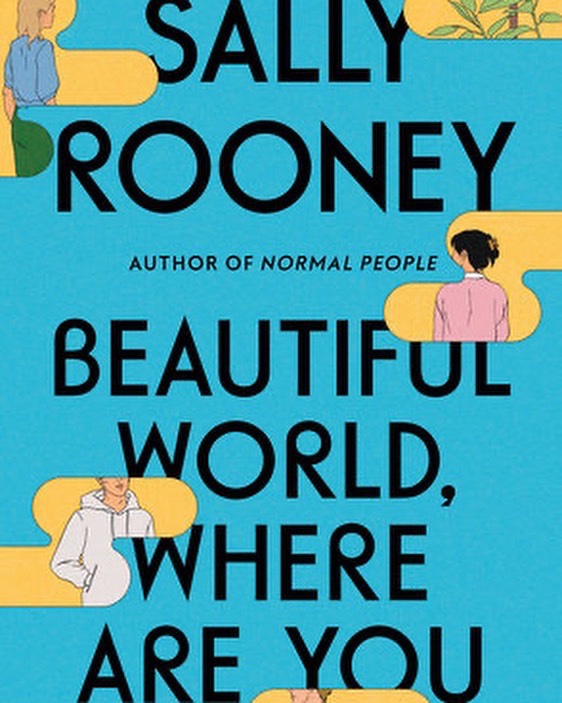
Review – Rooney, “Beautiful World, Where Are You?”

Sally Rooney, “Beautiful World, Where Are You?” (2021) (read by Aoife McMahon) – What does Sally Rooney, the great hope of Millennial letters, have for us this time? Well, once again, a story of two contemporary young Irish people having a mostly bad time. And once again, it’s pretty good. Does it live up to the hype (that Rooney makes plain in this book she wishes she didn’t have surrounding her)? Who’s to say?

As people have pointed out, this one is a little more directly autobiographical, as one of the two main characters, Alice, is a successful novelist, with many identifiers connecting her to Rooney herself. There’s also been speculation on some critics’ part that making Alice so baldly similar to herself was Rooney’s way of maliciously complying with critics who insist most of her female leads are self-portraits. The other main character, Eileen, is not a successful novelist, but toils away at a Dublin literary magazine. They write each other long emails about all kinds of stuff. I used to do similar email chains with people! Maybe, some day, again.

They both have men in their lives, and the men and their reactions to them and the men’s reactions to their reactions cause a lot of grief. Alice moves to the countryside after a nervous breakdown and starts hanging out with Felix, a working class guy. Eileen, for her part, is just one lover to Simon, a childhood friend who is very attractive and has lots of lovers, but both clearly want something more but various things keep them from getting it.

I gotta hand it to Rooney- she really does nail a lot of the neuroticism, here defined as psychological inability to get what one wants, that defines a lot of millennial life, among really verbal people. Felix isn’t as formally educated as the other three but he’s smart and online a lot, so approaches things in somewhat similar ways. All of them somehow manage to think themselves into misery and inability to reach for things, mostly meaningful, honest contact with others. Alice and Felix circle each other like new cats, each convinced the one looks down on the other (and like cats, both are right). Eileen invests tremendous meaning into her relationship with Simon, to such an extent she scares herself into acting indifferent, which then “let’s” Simon go date much younger beautiful women, despite the fact it doesn’t make him happy and a real relationship to someone who knows him well might. What a set of predicaments! They’re not the most exciting or original emplotments in the world. But there is a reality to them I recognize in the people I know, complete with self-aware self-hatred of these predicaments, and how it doesn’t help). Like a lot of stuff I both read and encounter in the emotional life of my age group, there’s a there-but-for-the-grace-of-God (well, really, medicine and “finding my people” early and holding on to them)-go-I quality. It’s tough out there.

Rooney arranges some decent set-pieces- bad parties, bad parties where some good stuff happens, travel. There’s some good will they or won’t they. It’s less will they or won’t they bang — they all have sex, that part is understood — but will they or won’t they make an actual effort to be with someone who makes them happy? For a little while, I was wondering if Felix was a hustler, looking to get money out of Alice, maybe Rooney being a little self-consciously outrageous by summoning up the shade of the class-inappropriate lover. But no, nothing like that. The book was sufficiently interesting and well-written, in a spare and matter-of-fact sort of way, that I wasn’t disappointed that Rooney missed the turn-off into Crime Fiction Land.

Alice and Eileen email back and forth about the Bronze Age Collapse, and how it resembles our times, and how irresponsible it is for them — and for culture — to obsess over individual feelings and relationships when the world is at stake. One of them reads something other than the Wikipedia article on said collapse, and finds that a lot of people in the Eastern Mediterranean probably barely knew it when the palaces who took some taxes from them collapsed, or were occupied by new Sea People or whatever. They went on living their lives. The four protagonists more or less figure their shit out. She doesn’t come out and say it, but each relationship has one person with a lot of money (Simon comes from money), so, that helps with the whole moving-on-in-life thing. Anyway! This book was pretty decent. I don’t think Rooney has to save literature, or be the great leftie millennial writer. She can just keep doing what she’s doing as far as this rando is concerned. ****’

Review – Rooney, “Beautiful World, Where Are You?”

Review – Naipaul, “Miguel Street”

V.S. Naipaul, “Miguel Street” (1959) – This is one of Naipaul’s earlier novels, depicting life on the titular slum street in Port of Spain, capital of his native Trinidad. Slum life depictions can get real dicey, real fast, between catastrophizing and sentimentalizing and tortured oscillations between the two. Naipaul, even that early in his career, craftily avoids both. In what I suspect is a riposte to left-leaning “social” writers, he makes an apostrophe early on against those who depicts areas like Miguel Street as “just slums,” just poverty and degradation, but he doesn’t make the lives of its inhabitants out to be constant sunshine and roses. It is a fairly typical Naipaul world, perhaps a little more honest than most in that few really pretend to believe the lies everyone tells, more for amusement than for anything else. People are self-serving, but insufficiently consistent to be called truly selfish much of the time. They pursue drives that make sense in context but probably aren’t “the right play” according to someone sitting in an easy chair in London or America. They’re human, but not in the grottily sentimental way of most humanists (or the equally silly nihilistic way of most anti-humanists).

Most of “Miguel Street” is made up of little vignettes about specific inhabitants. Most of them are about dreams they have to put away, or that blow up in their faces- in the case of a man who dreams of making a living making fireworks displays, literally. They dream of glory, borrowed from afar- boxing championships, American wives, lotteries, passing exams and going away to London (which the viewpoint character, like Naipaul himself, eventually does). When the dreams collapse, as they generally do, they find themselves back with the gang on Miguel Street, not starving or in fear but poor and not doing much, or else they disappear to another island to work in obscurity. Even Hat, who serves as the voice of the neighborhood and something of a Greek chorus, commenting on all of the stories, has his moment where he comes close to going mad when he feels he’s being cheated at gambling, winds up going to jail, and when he’s gone the narrator knows it’s time to make his way out.

Here’s something I found interesting: there’s not a lot of talk about race. Trinidad is a racially divided society. Naipaul is descended from Indians brought to the islands to provide labor post-abolition, most of the rest of the population is descended from black slaves, and there’s a small remainder of white (sometimes “off-white,” like Portuguese or Middle Eastern) people with disproportionate control over resources. Other inhabitants of Miguel Street are referred to as Indian or black or Portuguese or whatever when it’s important to the story- but a lot of the time, it’s not. I’m used to narrators in slum stories informing the reader of the race of every introduced character, unless it’s assumed that most people in a given space they’re describing are one race or another. They do this because it’s central to the dynamics of the interactions. Hell, I’m reading one memoirs set in Chicago in the thirties where the narrator reports the skin shade of every black person who he comes across- and it’s germane to the story, not (or not just) a private fixation of the author. I wonder, was Trinidad just less race-obsessed than the US? I do know Naipaul deeply resented the black power movement that came to Trinidad in the sixties. Anyway! This is a good little book, well worth reading. ****’

Review – Naipaul, “Miguel Street”

Review – Laxness, “Independent People”

Halldór Laxness, “Independent People” (1935) (translated from the Icelandic by J.A. Thompson) – I took my time reading this, and I’m glad I did. Critics complain — I complain — about books, mainly literary fiction, where “nothing happens.” For some critics, this means stuff needs to be as action-packed as a thriller (or incident-packed as a romance novel) to be worth their time. While I do like a lot of action/incident, it’s not a requirement for me, or rather, I might have a broad understanding of incident. This novel of rural life in early twentieth century Iceland does have a few humdinger scenes, like a man who winds up taking an unplanned reindeer-back ride into a just-barely-above-freezing fjord river, but for the most part, the incidents we see are the quotidian ins and outs of just barely getting by on an Icelandic farm. But it’s riveting all the same. It wasn’t (just) poor time management that had me reading “Independent People” mostly in dozen-page dollops- I wanted to savor this book.

To the extent we think about Iceland much these days, we think of it as a quirky tourist destination, conveniently located on the flight path between the northeastern US and Britain. It’s an extension of Scandinavian civilization way up north and west, complete with a high standard of living, stability, democracy, free sexual mores, etc. Well, it is indeed an extension of Scandinavia, settled by Vikings in the late ninth century AD, but that meant something very different from hot spring tour buses and pricey Reykjavik beers for most of its history. It meant profound isolation and poverty. It means a couple-ten thousand descendants of the Vikings stuck on a small volcanic rock, with only intermittent boats back to the distant metropole in Denmark, trying to scrape a living as the rest of the world mostly passed them by. Shit gets weird in that kind of setting.

There wasn’t really a “native” population when the Vikings got there, but there were a few people, most of them Irish monks and other religious hermits who wanted to be well and truly alone to contemplate their dark, moody Celtic variant on Jehovah. Our story begins with the Viking settlers driving off one of these monks from a particular valley, and over the centuries, they expanded his memory into a hiberno-papist demon, Kolumkilli (presumably named after the great Irish hermit saint Columbkille), who curses the valley and anyone who tries to make a go of it. Is it the curse, or just the fact that scratching a living from volcanic rock, cut off from all the trade routes, is a precarious proposition? Icelanders tend not to think in those terms. People leave Iceland — a fair number go to America once that’s on option, often via work on whaling ships — but once you leave, you’re gone for good, as though you’ve died, at least as far as those who remain when this story begins are concerned. This makes the remainders an odd breed.

And Bjartur, the main character of “Independent People,” is odd, but in a relatable way. When the main action of the novel begins, he’s just gotten done with eighteen years of indentured servitude to a landlord, debt peonage still being a major institution in Iceland at the time. He takes his accumulated savings and buys some land smack dab where Kolumkilli supposedly cursed things. He doesn’t care. He bows before neither ghost, gods, or men. He will go to almost any length to maintain his status as an “independent man.”

It’s not just economic dependence, or even primarily economic dependence, even if he avoids debt like the plague. One of Laxness’s master strokes is depicting an actual pedant- which is to say, someone who makes himself and everyone around him miserable on principle, but who doesn’t actually follow through all the implications of those principles (John Kennedy Toole was another master of this). Bjartur’s farm isn’t an autarchy- that’d be borderline impossible. He sells his wool and sheep to a small port town merchant, who advances him the rye flour, preserved “refuse fish” and minor household goods he needs. There’s no getting ahead. But as far as Bjartur is concerned, it’s the natural order of things. His real independence isn’t economic- it’s in his refusal to accept any connection or obligation other than the bare minimum sanctioned by longstanding Icelandic custom as what a man ought to have. And so you have brilliant scenes of Bjartur grudgingly doling out coffee (coffee and tobacco seem to be the only foreign products these people seem to have) by the bucket to his neighbors when they walk or ride by, snidely insulting them all (and receiving insults) the while in between rounds of quoting epic poetry (almost none of them have books, even bibles) at each other and comparing the rate at which their respective sheep flocks are being decimated by intestinal worms.

Family is an obligation, but not the haven from the world that we think of it as today. Bjartur is married to a woman with whom he escaped indentured servitude. She gets pregnant — possibly with a landlord’s kid — and dies in childbirth because Bjartur would rather chase one lost sheep up into the wilderness during a blizzard than stay at home and listen to her talk. The daughter survives, Bjartur wrangles some hired peons for himself, knocks one of them up a few times, and soon has a small gaggle of kids… both because that’s what happens when you have sex, and because he wants and needs the labor. Bjartur and the other adults around — his peon-wife (this was apparently considered normal at the time), other hired long term laborers — aren’t entirely unsentimental about children. He especially loves his oldest daughter, Asta Sollilja, in a way that only avoids being super creepy through Bjartur’s hard-assed personal qualities. But the absolute best Bjartur is going to offer them is the opportunity to replicate his own life- endless, unremunerative toil, and after he dies, one of them (one of the boys that is) gets to call himself “independent” and keep the cycle going. The girls and the other boys can go screw. “It’s no business of mine,” as Bjartur would put it.

Much of the middle of the book is told from the kids’ perspectives, mostly Asta Sollilja’s and that of the youngest boy, Nonni. Both are dreamy children who want to experience worlds beyond the miserable sod croft — building a house is a distant glimmering dream — they’re stuck in. That’s another element of Scandinavian culture, the imaginative flights of fancy, waking dreams of elves, trolls, ghosts, and what might as well fall into that category for a 1910s Icelandic child, “the counties” – anywhere not Iceland (or, I guess, Denmark, which sends officials and takes money). The imagination can be as active as you please, but utter monotony threatens to starve it. It’s hard to imagine just how monotonous it was, and conveying this is one of the miracles Laxness accomplishes. Obviously, there’s no media beyond oral tradition- even newspapers are a thing only the landlords bother with. There aren’t schools except private religious schools Bjartur only sends one daughter to, for a little polish. Beyond that, there’s an extraordinarily deprived “material culture.” There’s just not a lot to work with, considering how poor and isolated the Icelandic countryside is. You see the same shit every day and it’s all the same colors. The natural environment is beautiful, but in a stark (and somewhat predictable) way, with an extremely limited color palate and so few animals that cows are some of the most exciting things you’ll ever see. Nonni, for lack of anything else to imagine, spends hours in bed before rising for his fourteen hour work day to fantasize the small stock of metal goods in the croft — a few pots and pans, a coffee service — talking to each other.

Bjartur (and the circumstances he fights in a never ending doomed war that makes mock of the concept of “independence”) dominates the kids but can’t keep them on the farm forever, especially with the tendency of his wives to die. Nonni gets a relative to send him to America. Asta Sollilja comes back from confirmation school pregnant. Bjartur can’t stand the shame, denounces her as a landlord’s bastard, and casts her out, after which she carries on her own doomed struggle for independent survival as a poor single mother in a small port town.

Laxness also shows what change does to such a situation. Cooperative societies arise, and Bjartur refuses on principle to have anything to do with them, especially because the big shots up the hill who used to employ him as a peon are big coop players. Laxness never gets so lazy as to let either Bjartur or his rivals gain the moral upper hand- the big shots foist a cow on him at one point. The cow changes everyone’s life on the croft with its milk and niceness. Bjartur hates the cow and eventually slaughters it wantonly, and the shock helps kill his second wife. Who’s the asshole? It’s an asshole move to kill your kids one source of food other than rye bread and shitty old fermented fish. But he didn’t want the cow, and in a world where everything runs on debt and clients he (it’s worth noting that some libertarians see the old Icelandic social/political structure as a role model for an “anarchocapitalist” utopia), you can see why he may be leery of his former almost-owners, who are always trying to get him indebted to them, bearing gifts.

Coops get big anyway, with or without Bjartur. Then World War One rolls around and all of a sudden people want Icelandic wool for uniforms and mutton tallow for greasing rounds. Even Bjartur starts to make money. In a pretty classic “stubborn asshole” move he suddenly decides he wants in on the Coop, and it’s lending capacity, to finally build a house (among other things, it might get Asta Sollilja to come back home, not that he’ll admit it). But of course, somewhere between Bjartur’s asshole, standard capitalist bad luck, and living in the valley cursed by Kolumkilli, his house sucks, and the war ends, and the market collapses, and he has to sell out and start all over again, and he’s down to the one “practical” son, who wants to go to America but then falls in love with a rich neighbor girl who hates him.

This is positional economic, social, and existential warfare, and I love it. You’d figure depictions of futility would bother me, given everything, but when they’re honest and well-done, I like them better than almost anything. I was a little cautious coming in, used as I am to sentimental American literary portrayals of rural people by urbanites who shower multiple times a day. Especially because I knew Laxness was a pretty big lefty, and some of the worst excesses of American rural sentimentalizing come from American “popular front” type writers… but no, Laxness neither sentimentalizes, or goes in for Faulkner-style (or the many cheaper kinds on the market) of rural gothic. All in all, a great read, one worth savoring. *****

Review – Laxness, “Independent People”

Review – Cusk, “Outline”

Rachel Cusk, “Outline” (2014) (narrated by Kate Reading) – Other than some stuff I read as part of my efforts to understand the far right, this highly-acclaimed literary novel was probably the least pleasant reading (in this case, listening, but there was nothing wrong with the reader or the audiobook production) experience I had this year. That’s not to say it’s the worst book I read this year (barring chud bullshit), though it is pretty bad. There were just a number of features in this one that made it particularly hard to put up with for its quite limited duration.

One feature is good press. I get that publishers had almost no reason not to praise anything they release in anything less than fulsome terms. I also get that critics, when they like something, also, increasingly, have no reason (other than a professional pride they haven’t seem to got) not to do the same. But there’s praise and praise. Fellow crappy contemporary scribblers Lauren Oyler and Charles Yu are praised in terms that are probably honestly meant but, if you squint, you can see them as being a bit backhanded- they express “their times” or “the experience of being” X, Y, or Z (for Oyler, a woman, notionally smart, or a millennial, for Yu, being Asian-American). Rachel Cusk, on the other hand, gets critics to call her no less than a major force shaping and advancing literature today. While her work is also definitely seen as expressing the experience of being a woman, she is also depicted as making major formal contributions to contemporary literature, in a way critics depict few writers.

Well… they’re not wrong. “Outline” condenses much of what makes contemporary literature distinctive into a product of peculiar purity. The novel consists of an unnamed narrator — a successful female British writer, like Cusk herself — relating stories told to her by assorted interlocutors, mostly in travels to Greece and around London. There isn’t a plot. The language isn’t awful but does not shine. And every single interlocutor — I basically refuse to call them characters — speaks in the same voice, that is, the narrator’s voice. They all relate their life stories — and they’re mostly Greek magnates of one degree or another or Anglo writing pedants — in the language and tone of Cusk herself. You can only tell when one is speaking as opposed to the narrator because of the accents the reader puts on!

Honestly, I can somewhat admire the chutzpah. Bret Easton Ellis and similar writers might have explored nihilistic self-absorption, but they were simple-minded enough to think that meant you just present an inner-monologue of a self-insert narrator. How much more self-indulgent is it to take the stories of others, quite dissimilar from the self, and just… rewrite them to sound like you! If it were Cusk just trying to report what people said, she would, accidentally if nothing else, slip into language other than what passes for high-toned contemporary English. But nope! Even when presented as quotes (as opposed to the narrator relating an interlocutor’s story), they sound exactly like her! It was excruciatingly boring — the only thing that could have saved these miserable stories of divorce and upper class anxiety would have been interesting language which Cusk either cannot or will not use — and when combined with both the knowledge that is considered cutting-edge writing, and the sort of dim knowledge that, yep, you know what, the critics are right, or half-right, it’s not brilliant like they say but they’re right that it is the distillation of contemporary literary fiction… yeah, it was a tough listen.

I don’t expect to read a lot of defenses of Cusk here — not unlike my other major category of unpleasant reads, the words of fascists, I read these shitty literary books so you don’t have to — but I figure if I did, what I’d hear is that this is what it’s like to be a woman. You have men just pouring out personal stories to you, on planes and in dinners, and it’s actually a work of subversion to regurgitate them all in your own voice. Well, maybe! That doesn’t make for a good novel. If that interpretation is correct, that just makes “Outline” similar to a lot of modern art- a joke, a stunt, a dumb point that would warrant, maybe, an essay, not a whole novel, written and read because no one involved has anything to really say but still fells compelled to self-expression. Extra half star for stones, though. *’

Review – Cusk, “Outline”

Review – Rhys, “Good Morning, Midnight”

Jean Rhys, “Good Morning, Midnight” (1939) – There were a lot of ways for your twentieth century to suck. While lacking a certain “genocide” quality, one pretty bad one was to be a talented woman in one of the roughly umpteen “epoch-making” art/culture scenes of the century of my birth. Seemingly all of them, whatever their political pretenses, were real boys clubs, and the only women they wanted around weren’t there for their direct artistic contributions. These scenes tended to be both profoundly socially incestuous while also full of strangers whose best motives were gawking and whose worst were bad indeed Throw pretense, money, drugs, and other twentieth century party favors like intense ideological posturing into the mix along with the misogyny and fame, and it’s not a fun scene.

Jean Rhys did not have a fun twentieth century. She came from a white creole family on the tiny Caribbean island of Dominica, and crossed the Atlantic for education, socializing, and art. Her father died when she was young and she may have made her living as essentially a high class escort — the lines could be blurry (still can, I imagine) — until she had a stroke of luck, of sorts. She started writing and her stories started garnering praise from big shots like Ford Maddox Ford. This was at the height of the Jazz Age, and she lived it up while she could in London and Paris. But she was always a little too stringent for the fizzy/tragic Fitzgerald-esque party, it seems. She didn’t do gazing out at the lights, she did gazing into the black. Her characters didn’t lose themselves- they knew just where they were, and it sucked. She never pretended that money, status, and pain weren’t basic realities of life as she knew it.

This did not endear her or ensure her popularity with readers looking for the usual Jazz Age tropes. She was managing a living with her second husband, looking back at the bad (or anyway, worse- I get she wasn’t happily married exactly) old days when the money started to run out, when she was writing “Good Morning, Midnight” – and, in a struck of bad geopolitical luck, the war hit and no one wanted to read about sad decaying women in a Paris that would soon have bigger problems.

That sucks, because it, and everything I’ve read of her describing life in London and Paris in the interwar period, is great. It’s raw and affecting. The narrator is stuck, stuck by her failed marriages, her inability to do much, the positions both mainstream society and the bohemian fringe assign to women. One of the worst places to be, as far as relatively lucky nationalities like Anglos (not poor inhabitants of the real killing fields in Eurasia, say) at that time was in the declining middle class. You didn’t have any real ability to work for money — you often effectively couldn’t — but you didn’t have enough money to go on, especially if you were on the outs with family.

The narrator has burned every bridge, or someone burned it for her. Every cheap boarding house or dress shop in Paris reminds her of another failure. She meets people, including men who at least pretend to want to help her, but can never know their real motives, and worst of all, she’s starting not to care. She mulls over drinking herself to death, or just making life as tiny as possible — stay in her room, live off of coffee, bread, and regret — not so much as an economizing measure as just to live in accordance with her inner self. It’s a brutal read, but I love it because it seems real in ways that flashier depictions of inner failing and falling don’t. Rhys eventually won international recognition when she was in her sixties for “Wide Sargasso Sea,” a retelling of Jane Eyre from the perspective of the madwoman in the attic (another white creole from the Caribbean who had a miserable time in England). When interviewed about her newfound success, she dismissed it as too little, too late. Ouch. *****

Review – Rhys, “Good Morning, Midnight”

Review – Thelwell, “The Harder They Come”

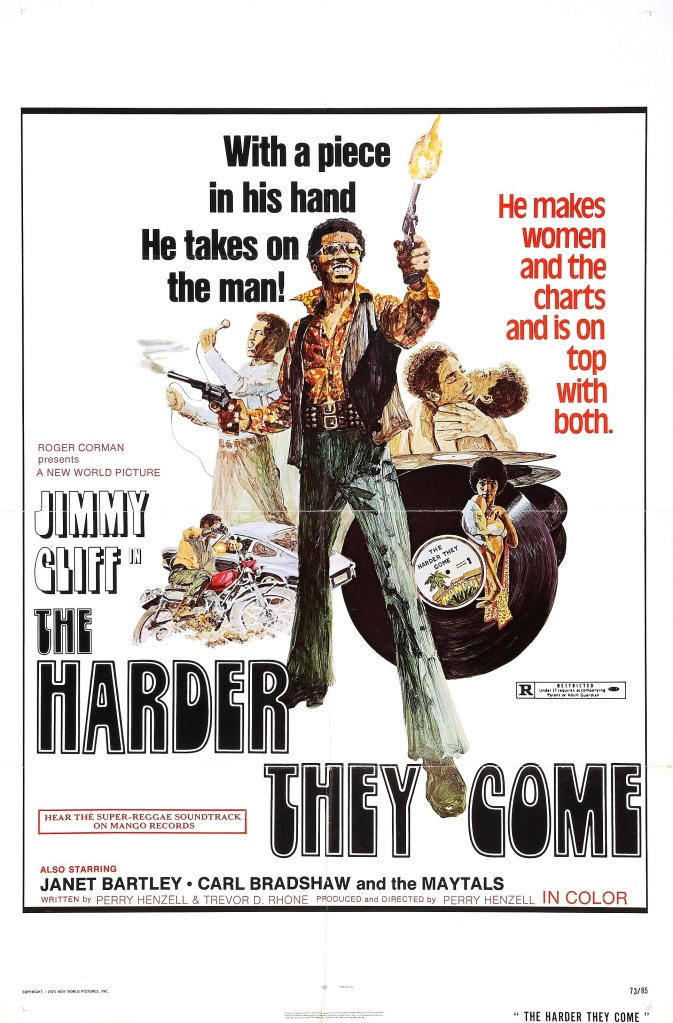
Michael Thelwell, “The Harder They Come” (1980) – A movie novelization praised by Chinua Achebe and Harold Bloom! Well, it makes sense. “The Harder They Come” is an awesome movie (watch it with subtitles), a classic tale of overcoming odds and dying to become a legend, and which helped introduce reggae to global audiences. Michael Thelwell is one of the original Black Studies guys, a civil rights movement veteran, and a friend/editor of Achebe. And as Thelwell points out in his introduction, he does not slavishly follow the plot of the film- among other things, the film runs at a brisk 109 minutes so it’d probably make for a short novel.

Thelwell starts us out in rural Jamaica in the mid-twentieth century. Ivanhoe Martin is a young boy who acquires the nickname “Rhygin” for his “raging” lust for life. He’s always willing to go farther than the other kids- work harder, swim further, jump off higher cliffs into deeper water. His grandmother wants him to follow in her footsteps, farming the green hillside land in a community descended from Maroon slave rebels. But you can’t keep them down on the farm once they’ve heard rocksteady, one of reggae’s progenitors. As a teenager, Ivan moved to Kingston, the big city, and encounters many classic “country bumpkin” pitfalls before starting to lead a dual life- good churchgoing boy, helping repair things around a Baptist compound by day, and “rude boy” by night, running the streets with a gang and watching endless westerns in the movie houses.

Ivan is what I’d (modestly) call “Berard-complete” – a fleshed out character (it was a real risk, too, to turn him into a kind of black Horatio Alger character, but Thelwell knew better) who also isn’t tediously psychologized. His knocks don’t all go into making him a better, stronger person. In particular, Thelwell presents the brutalities of all levels of Jamaican poverty — from wandering the streets of the rich neighborhoods begging for work only to be treated like pests, to the numerous ways the poor rip each other off just to survive, to Ivan getting ripped off by record producers after almost reaching his music stardom dreams recording the titular song — utterly unromantically. It doesn’t make you better. It just sucks.

Eventually, Ivan is hit hard enough he snaps. He cuts up a cruel overseer, gets whipped (Jamaica still used caning as a punishment at the time), and becomes a weed dealer. He gets in with some Rastafarians. The Rastas are a sort of otherworldly presence in the book. Ivan and his friends witness an attempt by Rastas to “take over” Kingston (this happened in real life). Rastas show up at odd points to show a way that black men can be true to themselves in the world. Ivan never becomes one — he loves the flash of the world too much — but they’re an important presence in the book. Eventually, the big fish Ivan works for betrays him and tries to have him killed. This allows Ivan to fully become Rhygin, as he goes on a massive crime spree that makes him a folk hero (and launches his record to the top of the charts). In the end, he’s gunned down by the cops on a beach, calling on them to “send out one man who can draw” so he can fight and die like his cowboy heroes.

It’s an interesting book, written partially in Jamaican patois (with helpful glossary). Thelwell makes good use of the contrasts of types of life- the simple rural life in the villages (which Ivan can’t return to, due to devastating changes while he’s away), life among the “sufferers” of Kingston, glimpses at the nice life lived by exploiters, the mystic experience of the Rastas. One thing I found interesting was the way in which Ivan, in the end, overcame by turning away from his humanity, in large part symbolized by women, especially his girlfriend Elsa who escaped the Baptist compound to be with him. It’s ambiguous whether Elsa betrays him to the police or not- it was either her, or the Rasta partner last seen being tortured by the cops. In any event, turning away from womanhood, with its softness and potential treachery, to finally become the “star-bwai” gunslinger… that seems to be a theme in a fair amount of lore, not unique to Jamaica but pretty common, in my experience, in Jamaican narratives, including reggae lyrics. In Rasta myth (and to a degree, practice) you don’t usually become a gunslinger star, but women very much belong in a separate, subordinate place while men take the “chalice” (weed pipe) and “reason” with each other. Remnant of colonialism, maybe, I’m no expert. Either way, an interesting book. ****’

Review – Thelwell, “The Harder They Come”

Review – Yu, “Interior Chinatown”

Charles Yu, “Interior Chinatown” (2020) (read by Joel De La Fuente) – Another way in which white Americans have been absurdly lucky: many of the “white ethnic” groups came to social acceptance at a time when literature was taken halfway seriously. The most dramatic case in point is the rise of Jewish talent in American literature after World War II (by this time most white American Catholic ethnic communities, after flirting with social realism when that was cool in the thirties ala James Farrell, deracinated all their writers when they produced them at all). Guys like Philip Roth and Saul Bellow came to prominence in an era when you could become famous by writing serious, ambitious literature, and I say this as a guy who doesn’t like Bellow and runs hot and cold on Roth. They could say what they had to say about being an American Jew — it was a lot — and say a lot of other stuff in many different ways, to say nothing of saying it all in a context of broad-based economic prosperity.

None of that holds anymore, and it sucks pretty hard, I’d imagine, for people from ethnic communities that produce a lot of people in a class position to break into literary fame, and for readers more generally. There’s a Tantalus element to the situation. Everyone, notionally, who reads anything other than what Fox News shills at them to fill out cheap ad time, wants to hear about difference from diverse voices. Our universities duly stamp out many many ambitious young scribblers from more and more communities, mostly communities of color (you could argue recent immigrants from Eastern Europe count too, and there are weird quasi-ethnic elements of how literature receives poor whites from some parts of the country). Like Roth’s New York area Jews before them, these writers and their communities have had to make difficult adjustments to American life and constantly second-guess what their (valid, impressive) success means in the face of both racism and life’s general absurdity. All the tools are there in abundance like never before, from word processors and the Internet to every kind of inspiration, every source of color, available at the touch of a button.

All this has been a decent spur to the creation of books- but not, necessarily, to the creation of quality literature, of an exploration of contemporary life and its contexts or of artfulness or experiment in literature, and certainly not the two combined. Newly intellectually prominent ethnic communities are faced with a situation that does not reward literary quality or risk-taking. Publishers are cautious in a way they weren’t during an era of cheap paperbacks and a public that saw the consumption of difficult and/or daring artistic production as a marker of class status. Neither of those were necessarily noble (well, cheap paperbacks are, in my opinion), and the stuff that came out of it wasn’t always great. But it was different. It’s ironic that writers today can now be lumped into the category of “content providers” when, in fact, the actual content of their works is of decreasing relevance. What matters is what boxes they can tick off for the company producing them and the readers consuming them. This does not for quality literature make- you get a lot of secular sermons, a lot of try-hard bullshit, and a lot of not-try-hard-enough bullshit, too. A lot of the better fiction writing that pertains to ethnicity comes from writers immersed in genre, like Carmen Maria Machado and Stephen Graham Jones.

Maybe it’s the Marxist in me, but I have to think the class positions involved have something to do with it, too. Roth, Bellow, Vonnegut (not a Jew, but with German roots when that meant something), none of them were exactly poor or working class. But class divisions, especially within expanding postwar universities, were less salient (especially among white people- more of their/our infernal luck) than they are today. Look up the biographies of contemporary literary lions who write about their ethnic experiences and they’re pretty impressive- fancy schools, often fancy jobs they did before writing, prizes of all kinds. That these are in no way representative of their communities as a whole — couldn’t possibly be, Harvard doesn’t have enough dorm space for it — is part of the problem. That being a winner from a marginalized (but, key, internally stratified) group now means something different than it did in the mid-twentieth century seems to be part of the problem.

All of which is a very long way of getting to a profoundly mediocre — I’d go ahead and say bad — book that has gotten a lot of good press, Charles Yu’s “Interior Chinatown.” How much of this is marketing, how much any of it will last beyond a season, it’s hard to say, but this has been hailed as a definitive statement in the literature of one of the largest (and most diverse- more on that anon) groups I’m talking about, Asian-Americans. Yu is very much in the category of ultra-impressive resumes you get on writers these days, and worked in a white-shoe law firm before deciding to write full time (he’s not a bad looking guy, either, another recent development in authors- they tend to have it going on, physically, these days). Big, or anyway highly credentialed and talked up, talent, community that wants to be heard, surely he has something to say?

Well… yes and no. Let’s get a description out of the way first, which among other things gets into Yu’s forms, which to the extent there’s a selling point here beyond “big Asian-American literary statement,” is it. This is the story of a guy who goes through most of the book being called Generic Asian Man. He’s called this because the novel takes the form of a screenplay! All the world’s a stage, or anyway, a production set for a hacky police procedural. The main character is forced to play Generic Asian Man over and over again in role after role. Yu is not shy about making this the central problem of Asian-Americans, especially Asian-American men (women are “The Girl With the Almond Eyes” until they become “Old Asian Woman”). He does that thing you get in metafictions where the whole thing is an obvious metaphor, but the author escapes from the obloquy assigned to allegory (never got why allegory gets such a bad wrap, and from Tolkien too!) by keeping it vague as to whether the action in the novel is meant to be taken at all literally. But in any event, we see some of his life as he gets the chance to play an important side-character in a hacky cop show called “Black and White” (can you guess the races of the protagonists?), marries and screws up his marriage, but also has various surreal encounters culminating in being arrested for some sort of Generic crime and having to defend his Asian-Americanness in court, or something.

If there is a central problem in contemporary anglophone literature (and peeking over the Anglo fence to figures like Michel Houellebecq and Karl Ove Knausgaard, I’m not sure it’s much better in other languages), it’s an utter inability to commit to anything worth committing to- and this includes committing to the bit. It’s funny- comedians can do it, in some cases to the point of monstrosity. But with all the political and social change we’ve seen since the return of history circa 2001-2008, and with seemingly good intentions on the part of so many expensively educated people, literature can’t seem to nail commitment.

So, “Interior Chinatown” does not commit to the “all the world’s a stage” bit. It is, in fact, highly self-serious (for all of its jokes, few of which land) and ends in a long long sermon (there’s a kung fu fight after the sermon, which is both Yu’s best joke and a transparent toss to whoever has to make a movie out of this lame book). Some of the better sections of the book, in fact, describe Generic Asian Man’s parents’ lives, back in that generally-more-literary midcentury period. Yu unrepentantly milks the experience of midcentury Asians for pathos in what is, let’s recall, the story of a contemporary Generic man (who… may or may not work fairly successfully in show business? I guess Yu was trying to say he does, this might not have been the best choice for audiobook), despite the profound differences in situation between him and them.

What would a story of Generic Asian Man trying to become his beau ideal — Kung Fu Guy! the best Hollywood offers Asians! — look like if it committed to the bit? What would it be without the descent into family story, the stuff about divorce, and the speechifying about why Asians aren’t considered real Americans in the end? Well, it would be… a light novel! Perhaps not unlike that other Asian publishing phenomenon, “Crazy Rich Asians,” in that regard- self-aware, more formally experimental (though not in a way a sitcom couldn’t reproduce, and has), but mostly farcical. Yu isn’t quite funny enough to pull that sort of thing off, but light novels are quite honorable- arguably, that’s what P.G. Wodehouse, one of the all time greats of English language literature, produced.

The problem here isn’t Yu’s descents into pathos on their own, or even the ineptitude with which he shifts into these descents (though the latter is a problem). There’s some serious, serious lumping involved, on axes of class — Yu the white shoe lawyer/bestselling author speaking for a community whose working class majority faces much bigger problems than getting cast in cool roles — and origin — something tells me him claiming to speak for literally every American with roots in Asia, including casually throwing in South Asians and Middle Easterners into the malaise he fights, flies more with white readers than anyone else — but you could still make a decent novel with ideological holes. Hell, a lot of great novels are, like, eighty percent ideological holes!

I guess what makes this novel lousy is a gestalt of all of these problems and a general lack of funniness in the supposedly funny bits or interest in the bits that aren’t supposed to be funny. Maybe it’s also disappointment. There was a point, a sort of first draft of multiculturalism, where it seemed like diversity might actually improve American literature on some axis other than bare representation (which is an improvement! If dull writing is going to be a thing, people of color deserve the same chance to be rewarded for being dull as us whites!). Ishmael Reed, for instance, went out of his way to promote writing from outside establishment circles on every ethnic and class basis he could. He did this because he thought it would transform American literature in terms of form and content beyond the representational benefits- he could be cruelly cutting towards writers of color who he thought carried establishment writers, and he made a lot of enemies that way. Enemies or no, he was pretty successful, helping launch the careers of writers who did pretty well… for a while. But you can’t waltz into Harvard Books and grab a copy of a Shawn Wong novel (I’m sure the employees would order you one that’d be there in a week or two, but you know what I mean). Reed won in that he survives at all- he lost, in that the culture went in an altogether different direction. “The armies of this age are weak,” to quote another guy who literature also didn’t follow, but could have, to our benefit.

We’ve lost so much in the last few decades that we’ve lost the dream that we can get something other than sitcom material or rich kid masturbation in serious literature. That one of the central dreams we lost is also the name of a godawful sitcom that people pat on the head for formal experimentation that would have seemed crusty in Reed’s heyday — “Community” — is just an ironic insult to add to our injury. It’s pointless to pick on Yu in particular for these problems. “Chinatown Interior” is a symptom, not the disease itself, and there’s way worse out there. But I read it and it sucked and here I am. I’m not in charge of what any community, certainly not the Asian-American community, should like or want, but, from the cheap seats, it deserves better than this. **

Review – Yu, “Interior Chinatown”