Review- Hurston, “Their Eyes Were Watching God”

Zora Neale Hurston, “Their Eyes Were Watching God” (1937) – I’m pretty sure I’m allowed to like or dislike, in my heart of hearts, anything. It appears that the various Internet-based dispensations about artistic taste and personal virtue mostly only apply to public utterances. I recently had an acquaintance tell me it was important that I see a given pop star’s work as superlative, but that’s one of the few times lately I’ve had my internal headspace even lightly patrolled by woke types. To throw a somewhat inappropriate metaphor in there, most of us accept that individuals are the princes that decide on the religion of the subjects of their individual opinions in the feudalities of their minds- cuius regio, eius religio. Of course, the failures of that system led to the ghastly Thirty Years War, but what the hell, it’s just a metaphor.

But we are not concerned with my heart of hearts, here, because I express my opinions about books in public for all to read. I become “fair game.” This worried me, some. Humans are gregarious mammals and while I can shrug off abuse from strangers and enemies (there should be a good example of that up tomorrow, preview!) I don’t like to disappoint friends. So as I started “Their Eyes Were Watching God,” I began to worry. What would the consequences be of publicly disliking this book? What are the consequences for publicly disliking a black women writer, besides the usual exceptions of your Candace Owens and Condoleezza Rices (Zora Neale Hurston’s politics weren’t great, either, but seemingly people don’t care)? What are the rules re black writers and women writers more generally? I found myself thinking about previous instances- I’ve disliked plenty of white women writers, like Sheila Heti and Sylvia Plath, with limited backlash, none of it moral/political. I’ve been critical of black male writers like Ibram Kendi and Colson Whitehead and it went fine. I haven’t read a ton of black women writers and I’ve liked most of them, especially Toni Morrison, Elaine Brown, and Octavia Butler. Hurston was by no means popular in her own time — Richard Wright and Ralph Ellison both denounced the book as patronizing to black people when it came out — but was rediscovered by seventies feminists.

As it turns out, I didn’t need to worry (probably didn’t need to in any event, but hey, worry keeps me on my toes). I wound up neither really liking nor really disliking this book. Part of my early worry was my pedantic dislike for the title. What else would they be watching God with? Their feet? I’ll also admit I wasn’t crazy about Hurston’s decision to write the vast majority of the book in southern black dialect orthography, including the first person singular becoming “Ah.” It made it more difficult to read, and if it were written by a non-black person, it would sound a lot like minstrel dialogue. I’ve seen examples of similar dialogue done better, but Hurston was something of a pioneer as a black writer writing black dialogue in literary fiction, so she sort of made the road.

Anyway- what is the book about? It is about a young black woman named Janie who wants more out of life than early twentieth century America wants to allow for black people, women, or especially black women. She wants independence, love, the simple pleasures of life. Her grandmother marries her off to a shitty dude. She runs off with another dude to Florida, where said dude becomes a big wheel and also turns out to be shitty, wanting her to be somewhere between a work mule (lots of mule imagery here, and pear trees- I never did like pears that weren’t caramelized, another innocuous feature conspiring against my enjoyment of this book) and a trophy wife. Said dude pops his clogs and Janie runs off with a younger man, nicknamed Tea Cakes. He’s the best of a bad lot. He’s fun, at least, and seems to sincerely like Jamie. He also steals from her and beats her at least once. The way Hurston depicts gradations of domestic abuse — she didn’t come out and say Tea Cakes’s beating “felt like a kiss” but it was basically considered “good” domestic violence — is both rough to read and probably reveals, in some backwards way, a truth about bad relationships. But then he gets bit by a rabid dog and gets rabies himself, forcing Janie to kill him. She gets off at her trial and then sets up as an independent lady, having found what happiness she can.

I’m sufficiently interested in experiences dissimilar to mine that “Their Eyes Were Watching God” was worth engaging with in any event. That said, relationship stories need an extra “lift” to get them over on me (“but Peeeeeeter, alllllll stories are relationship stories!” bollocks). This has some lift, mostly towards the end. Hurston can tell a mean hurricane story. And you do wind up rooting for Janie. There’s less in the way of social commentary here than I expected. I tend to think that might be part of why Hurston’s Harlem Renaissance peers didn’t like it in the engagé thirties, and why it’s been an enduring classic since the seventies. White people basically don’t feature (except when white women rally around Janie’s defense after she kills Tea Cakes, an, errrr, interesting turn), and you can see why that would appeal. It’s not about criticizing an unfair society, it’s about relationships and their structural features. You can say there’s no such thing as society in this book, just men, women, and their dreams (not a ton of kids, either!)… but that’s probably the kind of thing that would get me in that trouble I was anticipating… ah, well. ***’
Review- Hurston, “Their Eyes Were Watching God”

Review- Lessing, “Stories”

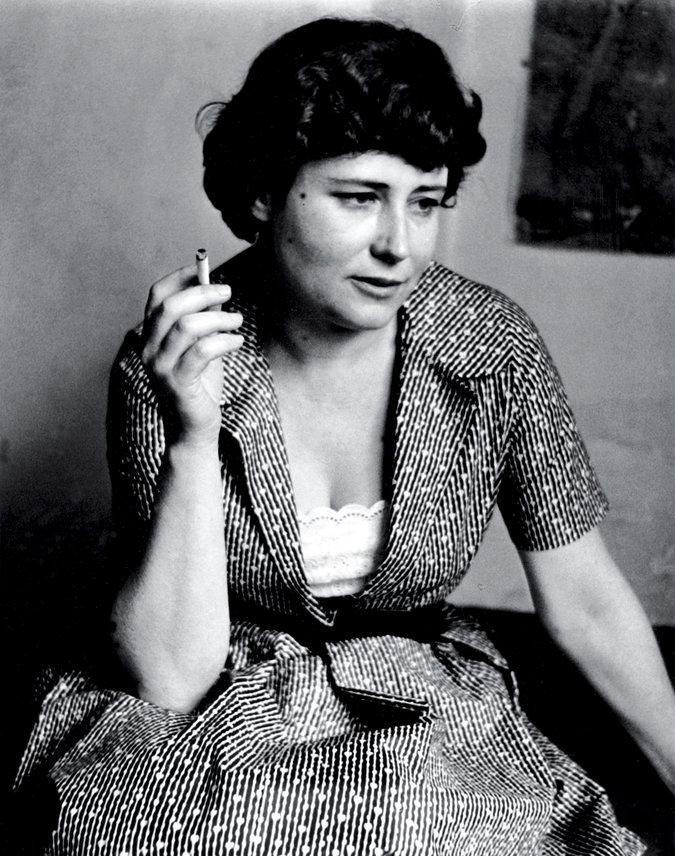
Doris Lessing, “Stories” (1978) – I often find short story collections difficult to review. The lack of a single perspective or narrative thread throws me some, I guess. I also find Doris Lessing a little hard to write well about, which is odd because she is one of my favorite writers. Like a few other great writers I generally write short about — Primo Levi comes to mind — in her realist fiction, Lessing wrote, in direct, compelling language, about what she saw. She appears to have been mostly telling the truth, too, anyway the truth as she saw it. She didn’t have much of an “angle.” She was a feminist, but was never a movement person. She was a leftist, but left the Communist Party in the fifties and never got back into movement politics in that direction either. Her feisty, independent streak and extremely low tolerance for bullshit handicapped her in terms of following the ideologies of the time (arguably, any time). I’ve yet to read much of her science fiction, I plan on getting to that.

This is a collection of her short stories (except those about Africa, where she grew up in a South Rhodesian settler household, for some reason- maybe just length) ranging from a period from the 1950s to the late 1970s. With some exceptions — a great story about a boy determined to swim through a dangerous underwater tunnel, and another great one about British tourists creeped out by postwar West Germans — They cover many of the topics and concerns we see in her longer realist works, such as “The Golden Notebook.” We get some stuff about how being a communist was confusing, a fair amount of material about the hypocrisy and opacity of the British class system to which Lessing was something of an inside-outsider, and more than anything, we get Lessing’s depictions of women’s lives. The compilation includes stories of young women trying to find their way, middle-aged wives and spinsters negotiating the grind of marriage (or lack thereof), old women holding on to their dignity. In all of them, a combination of societal forces, internalized weaknesses, and the actions of inadequate men batter these women about, sometimes to their madness or death.

There are no plaster saints in Lessing’s work, no tiny violins playing for the victims of the world. The women are (almost) as cynical and self-dealing as the men- Lessing knows that oppression does not make saints out of people, it makes messes. Maybe this is one of the reasons I like Lessing so much. There is a lot of feeling in her work — love and it’s attendant miseries, grief, anger, isolation, fleeting stabs of joy — and there is no sentimentality, not even a whiff of it that I’ve noticed. Take, for instance, her notions on child rearing. Marriage has its compensations for women, in Lessing’s world; child rearing, almost none. She finds changing diapers and cleaning up after kids boring, a waste of a smart woman’s talents, and isn’t shy about saying so- wasn’t shy, in her own life, about leaving her children in Rhodesia to come up to London to start a literary career. A contemporary writer either wouldn’t say that, or hedge it in with so much self-analysis and back and forth it’d be rendered meaningless. Lessing says it, plainly, and explores the consequences of its truth. That is worth something, in this world. *****

Review- Lessing, “Stories”

REREAD MINNIT, WITH PETER: Toole, “A Confederacy of Dunces”

Temporal frames distend and collapse when I look at “A Confederacy of Dunces,” one of my favorite novels: the early 1960s, when it was written; the early 1980s, when it was published; the early 2000s, when I first read it; the early 2020s, as I write this. I try to explain the novel to people who don’t know much about it- “the main character, Ignatius J. Reilly, is a gigantic eccentric with a medieval mindset let loose on mid-twentieth century New Orleans,” I’ll say, and the response I’ll get is “oh, he sounds like today he’d be an alt-right forum troll!” It’s a thought I’ve had myself, though these days I’ve been leaning away from that conclusion. Let’s just say I recognize that a character like Ignatius, a fat thirty year old virgin living with his mother and screaming about violations of “geometry and theology” comes off a certain way today for very legitimate reasons… but it’s still wrong, and the way that it’s wrong speaks to the uniqueness of what John Kennedy Toole accomplished.

Maybe a “just the facts” approach to the book is called for here… “A Confederacy of Dunces” follows the doings of Ignatius Reilly and assorted people with whom he is in contact across a few weeks in early sixties New Orleans. Tracking the narrative incident by incident won’t work, too much occurs. Ignatius is ejected from the cozy womb of his house with his mother when she drunkenly crashes their car into a building, causing damages that forces Ignatius into the workforce to repay. Going to work, as far as Ignatius is concerned, is the central perversion of a historical epoch that has only gotten more and more perverse since the pre-Reformation period. He gets a job as a clerk in a pants factory and as a cart-based hot dog man, and is fired from both jobs due to a mixture of spectacular incompetence and sabotage- it’s hard to tell where the one begins and the other ends. His mother, meanwhile, grows concerned about his increasingly erratic behavior and her own shrinking list of options, and egged on by new friends, moves towards decisively ending Ignatius’s free existence.

Each scenario adds new characters with their own trajectories that intersect at various angles to create comedic situations: the proprietress of a dive bar who looks to make a quick sleazy buck any way she can; a hapless policeman; a black man forced to work for sub-minimum wage looking to do some sabotage of his own; the owner of the pants factory and his wife; a member of the city’s gay demimonde; Ignatius’s old college lady-frenemy and civil rights agitator; and a few more.

All of the characters in the book are what I modestly call “Berard-complete”: they are believable characters with motivations but without tedious fleshing out and psychologizing ala mainstream literary fiction. The character who makes the most out of a “rich inner life” is Ignatius, who is at one and the same time something of a wonder of complexity, a complete failure as a human being, and a repudiation of most accepted ideas of “character development” and depth psychology. This approach to character runs into some contemporary issues. Tedious complexity (which usually means inconsistency and unreality, but that’s a story for another day) is the sine qua non for “fleshed out” characters, “fleshed out” characters from marginalized groups is a major progressive literary bona fide and, more to the point, a way to avoid being labeled a “white bro” writer or whatever. Ignatius is fleshed out, figuratively and literally- he overawes other characters and readers with his fleshiness and persona, his sudden shifts in mood and ideas (all explicable within his larger system), with, as he puts it, his “rather grand being.” It’s a good thing for the other characters and the world they live in, I think Toole might argue, that they aren’t. This is just another way reading this book collapses frames of assumption that build up and layer over each other over time.

These descriptions don’t really get across what the book is like. Humor is notoriously difficult to analyze in such a way that the funniness remains intact. Toole uses third person omniscient narration to keep all of these characters in play. He mostly lets the situations spool themselves out but isn’t shy about letting the reader know the dire facts of the situation when it makes things funnier, typically some situation involving Ignatius’s body or a botched attempt at communication. In terms of genre, it’s satire in the old sense of Juvenal and Swift (the title of the book is extracted from the writings of the latter), of holding up a mirror to society and showing its distortions, while at the same time being a comedy in the Shakespearean sense- everyone winds up, if not married, then content enough with their just desserts. One wonders — well, I wonder anyway — if this book being released and becoming a hit when it did, in the early eighties, helped cause the satire-comedy confusion that continues to this day. It seamlessly combines the two and was a hit with the Gen Xers who have done a lot to define humor in the late twentieth/early twenty-first centuries… more funny temporal dilations attributable to this singular novel.

One of the reasons this book is funny with time is because of its unusual path to publication, which isn’t funny at all. Toole finished the book in 1963 and shopped it to publishers. Rejection wasn’t the issue- all writers face that. What Toole got was an extended back and forth with the editor at Simon & Schuster, Robert Gottlieb, a major figure in the industry, best known for having discovered “Catch-22.” Gottlieb kept praising Toole on the one hand and denying him on the other, insisting that in order to be published, the book would need to have “a point.” Toole never satisfied Gottlieb on that score and eventually gave up. After facing a series of further rejections and declining mental health for much of the rest of the sixties, Toole asphyxiated himself with car exhaust in 1969, at age 31. His mother, Thelma, with whom Toole was close (she is, arguably, the model for Ignatius’s mother Irene, an ambiguous tribute if there ever was one), spent the next decade trying to get publishers interested in the manuscript. The foreword to my copy of “Confederacy” is by prominent novelist Walker Percy, who tells the story of how this strange woman shoved her dead son’s book into his hands, how he wanted it to be bad so he could go about his business, but it turned out to be “A Confederacy of Dunces.” Percy shepherded it into print and the rest is history. I’m not the biggest fan of the Percy books I’ve read, but I owe him a debt of gratitude for hearing Thelma out. We can rage at the gatekeepers like Gottlieb, if we want, and I’ve seen some “Confederacy” nerds do so, with more or less justification. But even then, the book and way it plays with time doesn’t make it easy for us- Toole got the last laugh.

It’s a mistake, from what I can tell, to read too much of Ignatius into John Kennedy Toole. Toole could function outside of New Orleans, away from his mother, unlike Ignatius. He had friends and lovers and was apparently a hit at the Tulane cocktail circuit when he taught there. But like Ignatius, he had a lot to communicate and difficulty finding listeners, especially listeners not keen on fitting his words into one or another agenda of theirs. Ignatius could not have written something like “A Confederacy of Dunces” — that took someone who strived, got somewhere, but never truly got himself across (except posthumously), like Toole. Like a lot of great humor, “A Confederacy of Dunces” relies on the necessity and impossibility of communication. We need to say what is going on with us but we can never be sure we are saying it right or are being understood properly. The calamities this causes, the whys and wherefores that can be processed and laughed at from a distance and the immediacy of squirming discomfort great writers and comedians can make you feel witnessing this most basic human problem, is probably my favorite kind of humor, if I had to get analytical (i.e. not funny) about it. This puts “A Confederacy of Dunces” in a third of the classic genres, along with satire and comedy: tragedy, the tragedy of failure to connect or to connect only under false pretenses. Managing to keep the satirical, the comedic, and the tragic ball in the air at the same time is not the least of Toole’s feats.

Did Toole manage to communicate with us, beyond the grave, as it were? There’s near infinite ways to understand (or misunderstand) “A Confederacy of Dunces” — as goofy humor, as southern gothic, as New Orleans tourism ad, as predicting the modern reactionary troll as discussed near the beginning of this piece, as “pointless” like Gottlieb thought, etc. The pedant in me — maybe the Ignatius, though unlike him, I try to treat my dear mother well — wants to say all of those are wrong, that Toole didn’t, couldn’t communicate through the fog of his lacking interlocutors (except maybe to me, the right one). But no- there’s basis for most or all of those, and it’s genuinely a good thing high school kids (like I was when I first read it), New Orleanians, the legion of failed film adaptors (everyone from Jim Belushi to Divine to Will Ferrell has been cast as Ignatius at some point or another) get what they get out of it. Out of the tragedy of the human need to communicate, sometimes, something good grows- and in keeping with its roots in the murk of discourse, it will be something different for everyone. This is the real way to collapse time: to tell stories, always changing but maintaining recognizable lineaments, across the years.

REREAD MINNIT, WITH PETER: Toole, “A Confederacy of Dunces”

Review- Coe, “The Closed Circle”

Jonathan Coe, “The Closed Circle” (2004) – I very much enjoyed Jonathan Coe’s “What A Carve Up!” (published in the US as “The Winshaw Legacy” – I prefer the British title), his breakout novel, when I read it a few years back. I also remember liking “The Rotter’s Club,” his look back at life in Birmingham in the late seventies, right at the precipice of the Thatcher era, though I have to say I don’t remember it that well. It came in handy that this sequel, “The Closed Circle,” came with a brief synopsis of its predecessor.

Coe possesses an Old Labour sensibility and social conscience. If “The Rotter’s Club” presents life on the edge of Thatcherism, “The Closed Circle” takes the same characters into the ideology’s realization, when New Labour institutionalized Thatcherism-with-a-smile as the ruling ethos of Britain at the turn of the twenty-first century. The characters mostly managed to ride the wave of neoliberalism into professional jobs, as accountants, journalists, one of them is a member of Parliament, etc. This isn’t a story of working class devastation, even if plant closures and corporate abuse form an important part of the backdrop. It is a story of distinctly middle-class ennui.

It’s also a story about looking backwards. Benjamin, arguably the main character in the ensemble cast of “The Rotter’s Club,” is obsessed with a teenage fling he had in that book, twenty years later, and can’t move on, even though he’s married to someone else. Another character lives in the shadow of her sister, who disappeared under mysterious circumstances, also in the first book. Characters gain fixations on figures from the school they all went to, and try to track them down. It’s understandable, given that “forward-looking” in Blair’s England seems to mean shallow platitudes covering over base greed and power-mongering, as is the case with Paul, who went from an annoying brat in “The Rotter’s Club” to an unprincipled New Labour MP in “The Closed Circle.”

I intermittently enjoyed reading “The Closed Circle,” but I don’t think it’s as strong as the others I’ve read of Coe’s work. In part, this is due to his choice of topics: gray middle-class Englanders with ennui tend to blend together more than younger adults do. The big surprise ending does indeed “close the circle” of a love mess that makes up one of the central plotlines of the novel, but in a coincidence-heavy way that summons up for me bad memories of Oscar-bait “we’re all connected” movies of the same period, like “Babel” and “Crash.” Coe has chops and his book is better than either of those movies, but the ending really didn’t do it for me. I’ll still keep my eye out for the sequel that came out recently. ***’

Review- Coe, “The Closed Circle”

Review- Heller, “Catch-22”

Joseph Heller, “Catch-22” (1961) – Thirty-five is an unusual age to read this particular classic. In fact, I was given my copy of “Catch-22” roughly half my life ago by a dear friend. I was the right age then, but circumstance intervened: the prose reminded me of the speech of my high school girlfriend, and I put it down. Having now read it, I don’t quite see what teenage me was thinking in that, the memories don’t quite add up- adolescence is another planet. I assumed for years I’d never pick the book up again, and carried it with me through multiple moves mostly because my friend wrote a sweet note to me in it.

Why did I read it at age thirty-five? Well, out of general interest in American literature, is part of the answer. But I pulled the trigger now because I just re-read “A Confederacy of Dunces,” and reacquainted myself with the tortured story of that book’s publication. John Kennedy Toole, author of “Confederacy,” had a long correspondence with Robert Gottlieb, editor at Simon & Schuster and one of the most influential literary editors of his day. In it, Gottlieb repeatedly praised Toole and “Confederacy” but insisted on sweeping changes in the work, and in the end, passed on it. Gottlieb rose to prominence initially on the strength of discovering Joseph Heller and ushering “Catch-22” into print. So I was curious: what was in “Catch-22” that appealed to Gottlieb, that “A Confederacy of Dunces” (supposedly) lacked?

I wouldn’t call “Catch-22” story-driven or character-driven in the usual sense, maybe a little more the latter- I guess I’d call it “scenario-driven.” The scenario is this: in the waning days of World War Two, US Army Air Force bombardier John Yossarian doesn’t want to fly any more missions, because people shoot at him and try to kill him. No one else on his base, set on a tiny Italian island in the Mediterranean, seems to understand this simple concept, except for possibly Yossarian’s friend, the chaplain. Plenty of Yossarian’s fellows look to avoid combat, but primarily because they’ve got other irons on the fire: playing the black market, getting laid, being a nefarious colonel looking to use their men to advance their careers. Realizing that getting in an airplane and flying out to drop bombs on people while other people shoot at you is crazy, as Yossarian does, leads to the original of several versions of the titular “Catch-22:” if you realize what you’re doing is objectively crazy, than you are sane enough to undertake it.

The narrative of the book proceeds non-linearly. We get chapters, mostly named after one or another character, that relate one or another anecdote of life on the base, of missions, or of leave spent in Rome or elsewhere in Italy. They illustrate a whole world of military screwballs, dickering with each other comedically in action that sometimes recalls the Three Stooges and dialogue that is sometimes a little “who’s on first?” Not that either is damning- that kind of humor can be funny, and while I didn’t laugh aloud much I can see why it appeals, especially when it was written. I don’t call the work character-driven because the characters, including Yossarian, are reasonably well-characterized but seemingly thin by design. This makes sense, given the here today, gone tomorrow nature of extended combat tours and the surreal world of the war (what Pynchon called “the zone”) around them. A narrative eventually reveals itself through the non-linear confusion, as we see the missions Yossarian went on, alluded to in previous chapters, that soured him on war, and as the nefarious colonels ratchet up their demands on their men, bringing Yossarian and many of the others to a breaking point. But I’d say the plot isn’t really the point, either.

What, then, is the point? An especially important question to me, as one of the main points Robert Gottlieb made against “A Confederacy of Dunces” was what he saw as the book’s pointlessness. Well, not to be reductive, but it seems to me the main point of “Catch-22” would be “war = bad.” A valid point, and one often eluded in mythology of World War Two, “the good war.” There’s also a fair amount of “bureaucracy = bad,” producing humor about the irrationality of machine society, which reached unheard of potency during the war and looked set to dominate the peace. Also reasonably valid, if overdone in subsequent decades. These points helped make it a favorite of the Baby Boom generation, and the man-vs-sick-society thing still resonates, especially but not exclusively with younger readers. It’s a classic for a reason.

What opened up the book some for me and helped with the “Confederacy” comparison was this simple question: What does Yossarian want? We all know he wants to not fly missions any more. He wants to live. Sometimes, he expresses concern for whether others live, primarily his buddies but also sometimes civilians he’s sent to bomb, but Heller is admirably circumspect in making Yossarian feckless, no paper Christ. What I didn’t know going in was how much Yossarian wants to get laid. Yossarian is both horny (he gets laid a lot with sex workers and nurses, and basically sexually assaults one of the latter with a buddy in a scene played for laughs) and romantic (forever falling in love with one or another of his scores). Other than officers, sex workers are the most prominent occupation of character in the world of the book, and one (mostly referred to as “Nately’s whore”) goes some way towards advancing the action of the plot.

This might be a bit of a reach, but Yossarian’s rejection of the military — an exclusively male institution, inhabited by men who seem to love being around other men, even as many of them also seek out women compulsively — strikes me as another instantiation of a theme in postwar fiction pointed out by academic and critic Michael Trask: a man “coming out as straight,” in opposition to institutional settings that would make him unnatural and queer. Yossarian just wants to be left alone to indulge the appetites every man has- sex with women, and indolence. In this way, Yossarian sets the pattern for the comedic Everyman for generations to come, from the characters in MASH to Homer Simpson. We know Heller influenced these later generations of comic writers- Matt Groening, creator of “The Simpsons,” wrote an amusing comic about meeting Heller, one of his favorite writers. “Catch-22” reminded me of nothing so much as the fourth season of “Arrested Development,” one of my favorite tv shows, and I’d be very surprised if the writers weren’t familiar with “Catch-22.”

From a distance, this doesn’t look all that different from “A Confederacy of Dunces,” which has had its own impact on comedy writing. Ignatius Reilly, the main character, also wants to be left alone, to rot in his room, eating, bothering his mother, writing down his untimely thoughts, and masturbating. Both “Confederacy” and “Catch-22” end with the promise of escape for the main character, flight to a promised land with sexual overtones. But there are important differences. Ignatius may be a slob, but he is no everyman. His sexuality — repressed, violent, fantastic, fundamentally solipsistic — is the furthest thing from the straightforward and frequently-gratified sexuality of a Yossarian. What Ignatius wants — either in his lazier modes or in the manias he goes into for much of the action of “Confederacy” — is not the sort of thing that would be considered normal or noble (those near-homophones!) by most American readers at midcentury.

Robert Gottlieb was (is, he’s still alive) a classic literary gatekeeper. You don’t get to be editor of the New Yorker unless you’re a safe pair of hands. Put it all together and you get a dispiriting picture of why “Catch-22” would appeal to him in ways “A Confederacy of Dunces” would not. You can slap a big moral — “war and bureaucracy = bad” — on “Catch-22” in a way you can’t with “Confederacy.” The non-linear aspect of “Catch-22” makes it more confusing and obscure and hence “literary” than “Confederacy,” which is basically linear in plot. Despite wallowing in death and futility, “Catch-22,” in its apotheosizing feckless everyman Yossarian, celebrates the agreed upon postwar values, at least of the literary set: peace, plenty, and heterosexual intercourse. That, and the moral he could put on it, was the “point” “Catch-22” had for someone like Gottlieb, I think.

“A Confederacy of Dunces” did not have that point and did not reaffirm those values. And those values, relatively recently, were pretty strongly challenged by a serious artistic avant-garde, many of whom chose the wrong side in the war that serves as a setting for “Catch-22.” Along with “Confederacy,” while reading “Catch-22” I kept thinking of the works of Louis-Ferdinand Celine, the French fascist who for my money wrote the best literary depictions of the Second World War. His outlook was at least as bleak as Heller’s and, while not exacting denying himself worldly pleasures, Celine no more thought they justified the world and human existence than he believed in democracy or equality. We know Celine influenced Joseph Heller’s friend and fellow writer Kurt Vonnegut- I wonder if Heller read him? It’s worth noting that both Celine and Vonnegut present a ground-level take on the war (Celine as a refugee, Vonnegut as an infantryman), as opposed to Heller’s air war. The war was dangerous enough for American bomber crews, but you get a whole other look at the world and its quandaries from the perspective of people really in the meat grinder, like a Soviet infantryman, to allude to another ideological side of the war that postwar American literary culture strenuously sought to exclude.

John Kennedy Toole wasn’t a communist or a fascist, but “A Confederacy of Dunces” breathes just a little bit of that mephitic air of the tomb world of non-humanist ideology (reactionary Catholicism as practiced by Ignatius, the real old school stuff not this online “tradcath” horseshit, fits right in there). It emitted enough, I think, to scare someone like Gottlieb. Cynical and dark though “Catch-22” is, it would not ring the same alarm bells. None of this is to say that “Catch-22” is a less genuine book, or that it doesn’t deserve praise. It’s pretty good, though I think “A Confederacy of Dunces” is funnier and better. I guess I’m just interested in how the sausage of canon gets made, and I think the comparison of “Catch-22” with “A Confederacy of Dunces” illuminates the process. ****

Review- Heller, “Catch-22”

Review- Levi, “If Not Now, When?”

Primo Levi, “If Not Now, When?” (1982) (translated from the Italian by William Weaver) – Primo Levi came out of the twentieth century looking pretty good, not an easy feat. He survived the Holocaust and became one of the leading Italian writers of his time. His writing reaches that rare sweet spot of being perfectly clear while never being simplistic or facile. Similarly, his legacy is accessible to anyone who wants to understand the twentieth century or life more generally, while belonging to no one except himself.

Levi’s best known works are memoirs, essays, and short stories, most of them autobiographical, detailing his time in Auschwitz, his career as a chemist, etc. Towards the end of his life he tried his hand at novels and this is one of the results. “If Not Now, When?” is the story of a group of Jewish partisans on the Eastern Front of WWII. Levi himself was briefly a partisan in Italy before getting arrested and sent to the camps. Mendel, a watchmaker by trade and straggler from the Red Army, acts as our main viewpoint character. He wanders along the front, gets kicked out of a Russian partisan band that doesn’t want Jews, and winds up in the Jewish band of the charismatic Gedaleh. After some indecisive and costly engagements alongside the Red Army, Gedaleh and crew decide to start walking west, killing Nazis, liberating prisoners, and trying to reach Italy and from there, Palestine.

Levi’s feel for reality doesn’t abandon him as he takes up the experience of fictional others. The life of a partisan is hard, and in certain respects the Germans are the least of the dangers- hunger, cold, and demoralization are constant threats. Levi conveys the vast, old, bloodied land-sea of Eastern/Central Europe, blasted by war, inhabited by shell-shocked survivors, as real of a post-apocalyptic landscape as anyone has ever seen. The Gedalists believe in a new world, somewhere between Communism and Zionism, but in some respects they have no choice but to believe, given how thoroughly destroyed the old world is. As the book goes on, they come to see their very survival and coherence as a band as the seed of a new world.

I enjoyed the immersion into that world that Levi provides. Partisan and resistance stories always played well for me, and this one has good verisimilitude and the right balance of survival, fighting, and character stuff. It’s interesting to see Levi move out of his main milieu of autobiography, and it comes at at least a minor cost. This book lacks some of the firmness of the others of his I’ve read, verging towards sentimentalism in places. There’s a reason this work was seized upon by the likes of Saul Bellow and Irving Howe, the latter of whom provided an introduction to my copy, the blurb of which makes much of greatest-generation-Jews-fighting-back etc., not the sort of thing Levi really went in for. Still, a fine novel in a worthy genre. ****’

Review- Levi, “If Not Now, When?”

Review- Lermontov, “A Hero of Our Time”

Mikhail Lermontov, “A Hero of Our Time” (1840) (translated from the Russian by Paul Foote) – I was supposed to read this book during my first semester of college! I skimmed it at best- I wasn’t a very disciplined reader at the time, even though this is a slim volume. I guess my old history professor had in mind teaching us something about Russian romanticism and imperialism in the Caucasus. Maybe something about framing devices in literature, too. The book is about an officer named Pechorin- first, another officer relates hearing stories about him, then the officer finds and transcribes Pechorin’s diary after the subject dies.

Pechorin is a Byronic hero (Byron and other British romantics like Walter Scott are referred to throughout the text), a man apart from society, cynical about its pretenses but passionate about his feelings, enamored of big landscapes and death, both of which the Caucasus provides in plenty. He is depicted as being irresistible to the ladies but caring only intermittently about one, who “got away.” Banished from St. Petersburg for scandal(s?), he stirs up trouble amongst the provincial/vacationing society in the Caucasus as well. He seduces a princess (as a lark- he’s basically indifferent towards her), angers fellow officers, fights a duel. The story is basically told backwards, we find out about his last exploit — kidnapping a (local, tribal, this time) princess and marrying her before she gets revenge-killed and he flees for Persia, where he dies — first.

One element of interest here is the self-awareness and even irony of romanticism here. Pechorin knows he’s posturing, based in part off of models like Byron, and so do many of his interlocutors — the officer reading the diary, Pechorin’s second in his duel — but he plays it entirely straight anyway. It seems pretty early in the historical game for Lermontov to be making such a point about romanticism, but I guess Byron had already been dead for a while. It probably helps explain why this work is enduringly popular in literary circles. Lermontov basically lived a Pechorin-type life, dying in a duel (one key difference between him and the character, I guess) at age 26. Even people who can see through some of romanticism’s premises can be sucked in by it, I guess. ****

Review- Lermontov, “A Hero of Our Time”

Review- Achebe, “No Longer At Ease”

Chinua Achebe, “No Longer At Ease” (1960) – I read “Things Fall Apart” something like ten years ago now. Maybe I was just too young and callow for it, but it didn’t feel like that much of a revelation to me- I already knew Africans had complex feelings and thoughts. “No Longer At Ease” is a sequel, following descendants of the Igbo wrestling champion who served as main character in “Things Fall Apart.” The main character in this one, Obi, is sent to England by the village of Umuofia specifically to gain an education, get a good job, and advance the interests of his village in the big city, Lagos. Obi’s grandfather Okwonko struggled against the British in the first book; Obi works with them in this one, though in the framework of gradual decolonization.

How much theorizing has been done about these gradual, mostly peaceful decolonization processes, through which most African countries gained their independence? The more violent struggles get more press, naturally, and I know Fanon basically dismissed the independence of those countries that gained their notional freedom peacefully, insisting they were in neocolonial relationships (not that Kenya or other countries that fought escaped them), but how much more has been said about them?

Like a lot of commenters on the Nigerian scene, Achebe, an Igbo himself, depicts his people as strivers, and Obi strives with the best of them, working hard to meet the approval of both British modernizers and the traditional power structures from his village. Of course, it’s not enough. Maybe if Fanon were there, he could tell Obi to garrotte his patronizing English boss in the educational bureaucracy at which he lands a post-graduation job, Mr. Green, and thereby regain his agency and self-respect and become the new, free, decolonized subject… but Fanon is nowhere to be found. Instead, young Obi falls between the two stools he’s expected to seat. Both modern (he needs a car and a houseboy to keep up appearances) and traditional (less successful people from his village with their hands out) tax his limited financial resources. He can’t marry the girl he loves because she belongs to an out caste. He resists the structure that bridges the traditional and the modern — good old fashioned bribery and influence-peddling — until he can’t anymore, and then they make an example out of him.

This is a short book and Achebe is a masterful prose stylist so it all moves right along. Worse times for the Igbo were coming- Igbo leaders would try to secede from the raw deal they were getting in Nigeria, leading to a grueling civil war that only ended with the Igbo being starved into submission, with British help, naturally. My understanding is that’s what sent Achebe into a long exile. I’ll have to look into his latter books. ****

Review- Achebe, “No Longer At Ease”

Review- Ma, “Harassment Architecture”

Mike Ma, “Harassment Architecture” (2019) – It had been a while since I had a look at any far-right literary productions, so I downloaded this self-published novel (of sorts) that’s been making the rounds. I can’t really say it’s the “hot new thing” among the nazi set, however, for a few reasons. The first is out of the author’s or anyone’s control- the unmerciful pace of events. Back in 2019 or maybe late 2018 when Ma first opened Word Trump-fatigue was cool with younger extremely online reactionaries, “traditionalist” nihilism was in- accelerationism, abandonment of society and efforts to “red pill” others, blah blah. But in 2020 Trump is the door through which reactionaries can walk into their violence fantasies, as embodied in the person of Kyle Rittenhouse, a chubby-cheeked little Trump partisan and cop-lover who probably thinks Julius Evola is a brand of olive oil. He’s done a lot more than the Boogaloo Boys, the right-wing nihilists of the type to maybe read Mike Ma, who must feel a certain impotence and shame that this little dork gets all the acclaim while they stand around in their Hawaiian shirts, scared to do anything.

In a more direct and culpable sense we can’t really call “Harassment Architecture” new or interesting because it reads like nothing so much as certain portions of the edgy internet circa 2002. The racism is less coy here than it usually was back then, and some of the references are different, but otherwise, it’s all the same shit. The philosophical maunderings of a callow young man, characterized in this instance by cheap paradoxes. He’s insincere, but aware of his own insincerity and that abates things somehow. He knows he’s been sheltered, but rages against the conformity and security of mainstream society. There’s a lot of flights of violent fantasy- probably more here as a percentage of the text than was usual back in the old days, but it’s still the same shit. These, along with delighting in bigotry and slurs, are meant to show you that the man narrating is above your liberal pieties, a real badass, though even at this late date Ma indulges in the early oughts edgelord’s game of “do I reallllly mean it or am I just edgy??” They can never commit, even to their own inability to commit. At the core, you see the same dumb paradox born of insecurity: the world is shit, and I’m going to endlessly bitch and moan about it, but I’m still the big winner in all of the conventional senses- Ma goes out of his way to remind you of how much money he has, how many women want him, how much he can lift (pictures of the author show a rather pencil-necked little dipshit, but whatever).

All of which is to say, Ma and the online boys I knew in my long ago youth are/were ripping off the same people- chiefly Bret Easton Ellis and Chuck Palahniuk. Two gay men, for whatever that’s worth. I always preferred Palahniuk out of the two — at least he came up with some entertaining high concept book ideas, more than can be said for Ellis — but with both of them you get the same tired Gen-X wrangle with irony and sincerity. I haven’t kept close track of where Palahniuk has gone with it, but can’t help but notice Ellis has basically gone the way of many edgelords of his generation- finger-wagging the younger generations about safe spaces and trigger warnings, blah blah. In any event, it’s a thin, dry vein for my entire life’s worth of supposedly innovative literary writers to have worked, and no amount of violent posturing from Mike Ma makes him any different from the stupid boys who were doing the same thing he was doing twenty years ago.

At bottom, all of these right-wing edgelords — Ellis, Ma, the ones I knew in the oughts — are prissy little bitches, too, for all their machismo and violence fantasizing. They all want a manager to complain to. Patrick Bateman wants his comped bellinis sent back and/or a God to take away his (completely contrived) pain, Ma whines about how New York smells and how he doesn’t get to live amongst “marble columns” and “great warriors.” I remember a boy who lived to make Jew jokes and show off early-oughts shock sites who was genuinely scandalized by public breast-feeding. They are not getting the consumer experience they were promised from life and raising hell on the yelp reviews. In this, only their self-consciousness separates them from the gormless suburban Kyles and Karens that make up the mainstream right, and mostly just serves to make them less sufferable.

Ma likes to fantasize about the 1990s as the last good time. Nothing really original there, either, the edgelords I knew twenty years ago idolized the eighties and seventies and sometimes even the early nineties too. Moreover, fascists always pine for a time that didn’t exist, and in typical navel-gazing, zero commitment style, Ma admits that his ideal nineties didn’t either, even as he insists people need to die because he didn’t get to experience it. His “traditionalism” is a matter of pining for some mix of the nineties and the ersatz classicism of boys raised with “Assassin’s Creed” and other video game versions of the distant past. I bring it up, out of all the unoriginal elements in this book, because I think it illustrates part of the reason we don’t get good reactionary literary writers anymore. There used to be a lot of them, but it seems the last one, Naipaul, died without an inheritor.

Ma’s pining for the nineties, and his “traditionalism” and that of his peers more generally, are the tell. The entire right, no matter how “intellectual” or “edgy,” certainly in America and possibly world-wide, has been sucked into the cheap nostalgic sentimentality that the likes of Reagan learned to weaponize for electoral purposes. You need some distance from what’s sold to the rubes to do literature, and no matter how hard they struggle to be different, the contemporary far right can no more pull it off than the most abject red state Fox News casualty. “Harassment Architecture” is supposed to be the ne plus ultra of contemporary far-right nihilism and this little shit is getting all weepy and nostalgic for nineties bike rides (never mind the nineties were an era of “stranger danger,” getting things right isn’t his strong suit). Nope, the right and toxic nostalgic sentimentality is stuck together, and good reactionary literature is just one of the many casualties of their union. ‘

Review- Ma, “Harassment Architecture”

Review- Heti, “How Should A Person Be?”

Sheila Heti, “How Should A Person Be?” (2010) (narrated by Allyson Ryan) – This was bad. I get that I’m not the target audience here. I’m a man, for one, and I don’t give a shit about painting or theater, the two arts to which most of the characters are notionally dedicated. How did I come by this book? As best I can piece it together: I had decided to, every third audiobook I listen to, listen to a contemporary big-name literary figure. I got it in my head that Heti was one such based on her being published — excerpts from this book, if I remember right — in n+1. I think seeing her relatively new book about being a mom reminded me of that, and so, there I am. Truth be told, extending “contemporary” to 2010 might be stretching it a bit, but whatever, who do I need to justify these categorization schemes to?

Anyway. This book is about Sheila Heti (the author, or a ~fictional character??~ are you impressed yet??), her inability to write a play, and her friendship with a woman named Margaux (apparently a real painter, but I don’t care). Sheila ponders life, including the titular (stupid) question, and has little vignettes with Margaux, their various artistic friends in Toronto, etc. The closest thing there is to a plot is the rise and fall and resurrection of the Sheila-Margaux friendship.

The characters, including the author’s depiction of herself, are so thinly-drawn that I started to entertain dark, vaguely conspiratorial thoughts (perhaps because nothing else, like the audiobook I was listening to, was entertaining me at the time). Is Sheila Heti a closet reactionary, like an anti-feminist or something, looking to get across an idea of women of her generation (she’s about ten years older than me, a Gen Xer) as vapid, pretentious idiots? That would explain her characterization of herself and Margaux. They get in a nearly friendship-ending fight because they buy the same dress at a boutique! What the fuck is that? Sheila also portrays herself as helplessly dependent on men’s sexual attentions. She has a big fling with a shitty artist named Israel, leading to an extended sequence with her using the phrase “getting fucked by Israel” a lot, which just makes me think of the Gaza situation which only reaffirmed that no, I’m not the reader she presumably had in mind. Target audience or no, I found the “Heti as anti-feminist mole” reading more interesting and in a way, happier, than the “Heti as genuinely this bad of a writer” explanation.

I’ve been thinking about recent intellectual history and the ideas of Gen X lately, and the idea that people are idiots who don’t really deserve rights or a future does seem to be pretty prevalent in that cohort. Of course, very few can really hang with that kind of nihilism- bad for the old career track. The path back to doing all the normal bourgeois shit anyway — work, mate, spawn — is illuminated by self-consciousness: if you’re merely conscious of how fake and shitty everything is, and comment on it ironically, then you’re a superior person who can go forward with things, like how Weber’s Calvinists believed that their ability to make money was a sign their God was ok with them. Even that was too much of a bummer for many, so eventually you got various rainbow-colored versions of the same idea, where I guess we get a future after all despite not deserving it, because dammit, people can LOVE, or something. Heti belongs in that latter category. I wonder if she gets mad when people suggest ways to make things better than can’t be subsumed into a lifestyle change, the way a lot of Gen X intellectuals do? I guess there’s limits to how much I can blame them. No one’s dignified when they’re horny, and no one’s dignified when they’re trying to find their way out of the basic existential quandaries. But all because we all have belly buttons doesn’t mean I have to be interested in the contents of yours.

I can’t really shred the book too much, not because it doesn’t deserve it but because I listened to it and so couldn’t take notes. Truth be told, there’s not much point. Writers like this and their respective readerships (thinking David Foster Wallace here too) just kind of absorb most critiques and are like “well, of course my work was a pointless waste of time, because that’s LIFE, but at the same time it’s BEAUTIFUL and everyone plays SQUASH without keeping SCORE like in the end of this stupid BOOK” etc. etc. Margaux says she’s uncomfortable with the concepts of beauty and ugliness, and you know, I don’t see myself as the authority on those things either, but whatever beauty might be, I’m certain this book lacks it. I’ll give it the extra half star on the idea I’m maybe missing something as a big dumb man, but something tells me I can afford to miss whatever it is on offer here. *’

Review- Heti, “How Should A Person Be?”