Review- Zola, “His Excellency Eugène Rougon”

Émile Zola, “His Excellency Eugène Rougon” (1876) (translated from the French by Brian Nelson) – I’ve been reading Zola’s “Rougon-Macquart” series at the rate of about one a year. This one is the sixth one. I guess I have another fourteen years to go before the thrilling conclusion! This one is concerned with politics in the early years of the Second Empire, when Napoleon’s dumbass nephew, Napoleon III, ruled France. The Second Empire is generally seen as an age of corruption, waste, and nonsense, brought in by Napoleon III ending the Second Republic in a coup and ending in ignominy with the French defeat at the hands of the Prussians.

Émile Zola, a committed republican, was one of the people to hammer this impression home, in no small part through this novel. The titular Eugène Rougon is an authoritarian power-broker who falls out of and back into the center of the power multiple times over the course of the book. He belongs to the Rougons, the nasty family of petty rural landowners that drive much of the action of the series, and represent the resentful petty bourgeois core that drove Napoleon III to power and backed reactionary movements in France (and elsewhere) thereafter. He is blunt in his authoritarianism, unlike the other regime supporters who flitter around him, and the Emperor uses him like a widget to reign in the regime’s enemies as Minister of the Interior. Rougon is surrounded by hangers-on trying to get favors from him, a railroad concession here, employment for a dumb son there. They’re never happy — unsatisfied with his efforts when he’s in power, abandoning him when he’s out — and they represent French civil society at this time. Rougon has a sort of horny-rivalry with a sexy Italian woman, Clorinde, who uses her wiles to influence the political system, at turns helping and hindering Rougon. Clorinde wants to prove to Rougon that women can have power in the political system. Rougon, for his part, just wants to stay in power, and sort of wants to sleep with Clorinde but not as much as he wants the first thing.

I get the picture, at this point in the Rougon-Macquart series, that plot or character is less the point of these books than the construction of set-piece scenes that illustrate this or that point Zola was trying to make about French society. This one includes a charity bazaar put on by various regime bigwigs where everyone is ogling the society ladies in their risque dresses and paying hundreds of francs for a toothpick to get their attention and show what big wheels they are. No one ever accused Zola of being subtle, I don’t think, but the series makes for interesting reads. ***’
Review- Zola, “His Excellency Eugène Rougon”

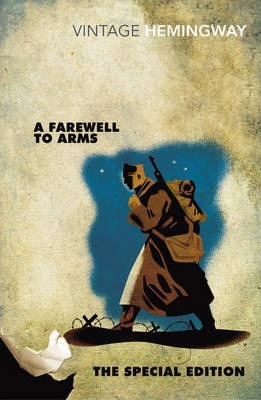
Review- Hemingway, “A Farewell To Arms”

Ernest Hemingway, “A Farewell To Arms” (1929) – Ernest Hemingway! Not quite the figure of opprobrium in contemporary pop-literary circles that, say, David Foster Wallace or Charles Bukowski is, but you do see his name checked in lists of “bro” writers. I reject the entire premise out of hand as a useful way of approaching literature. But you can see why the scribblers of these lists and ironically-named “think”-pieces would include Hemingway. These are more than anything indicators of consumer preferences and I’ve seen Hemingway’s name and big bearded image used to sell products to insecure young men. Moreover, Hemingway, like any writer of semi-autobiographical fiction, was also in the business of selling a particular image of himself. Turnabout’s fair play, I suppose.

“A Farewell To Arms” is based on Hemingway’s experiences as a volunteer Red Cross ambulance driver embedded with the Italian army during the First World War. Starting a little while before the Americans enter the war in 1917, we see the experiences of viewpoint character/Hemingway analog, Frederic Henry, on the stalemated southern front between Italy and Austria-Hungary. We don’t get much about battle — Henry is severely wounded in the leg by an artillery shell in the first battle we see — but we get a lot about the things front memoirs often focus on: meals, mud, chain of command annoyances, drink. The characters are always drinking, on and behind the front. They drink all kinds of things but they often drink straight vermouth, which sounds gross but what do I know? The past is another country.

Recovering from his wound, Henry falls in love with English nurse Catherine Barker. It’s one of those early twentieth century/wartime loves that comes across suspiciously sudden by contemporary standards but which no one really questions. Henry knocks Cat up and is sent back to the front in time for a terrible Italian retreat. They’re executing officers who retreat, so Henry hops a train the hell out of there and reunites with Cat. Presumably, all this is made easier by the fact that Henry is American and can reasonably present himself as a visitor, not an Italian citizen whose place was in the military. I’m not sure what all his status was, anyway, being a non-national volunteer. I don’t think the Red Cross, Hemingway’s employer during the war, comes up in the book- Henry has an Italian army rank, it’s complicated and I guess it doesn’t really matter. Henry and Cat row across a lake to Switzerland and have an idyllic few months before tragedy strikes and the book ends.

The prose in the book isn’t the parody of telegraphic writing we’ve come to associate with Hemingway. It’s not exactly long-winded but it does stop to take in the details of the front and of the Italian and Swiss countrysides. Cat is supposedly based on a real life paramour of Hemingway’s, a significantly older American nurse who helped him when he was wounded. Apparently, she agreed to marry him after the war but reneged and married someone else. Cat’s not an especially fleshed-out character and terrible tragedy befalls her. But that’s true of Henry as well, and all of the other characters. The relationships are wartime relationships, intensely felt but short and often peremptorily cut off. I remember my grandfather, a WWII veteran, trying to find his buddies decades later. He often didn’t know last names- what was the point in the world of landing craft crews, made impermanent both by the whims of military bureaucracy shifting crews around and by death? In any event, the point seems to be that that’s life, for Hemingway’s generation and maybe for everybody. ****

Review- Hemingway, “A Farewell To Arms”

Review- Shakespeare, “As You Like It”

William Shakespeare, “As You Like It” (1599) – Does reviewing a four hundred year old page on my blog make sense? Well, I read it, so I’ll review it. I remember well one of the summers I spent in New York reading many of Shakespeare’s plays, which I would pick up from the sidewalk used booksellers, like Everett in Washington Square. I got this one, if I recall correctly, at a book sale at the Brookline Public Library. All artifacts of the pre-COVID era… I wonder when I’ll next go through a free or one dollar book pile…

Anyway, shenanigans in the greenwood are the order of the day in this pastoral comedy. George Bernard Shaw thought Shakespeare phoned this one in and there is a certain desultory feel to the proceedings, but I thought it was enjoyable. There’s some dukes, one exiles another, there’s some brothers, one exiles another, the bad duke exiles the good duke’s daughter and her attendant, and everyone winds up in the greenwood, where anything can happen.

It’s a Shakespearean comedy, so everyone is married in the end. Rosalind, the good duke’s daughter, pretends to be a man and makes Orlando, the good brother who is also a plus wrestler (has there ever been a pro wrestling themed adaptation of this or any other Shakespeare play?), woo her in her manly guise. Some of Shakey’s most famous speeches are voiced by Jaques, a guy in the woods, like the “all the world’s a stage” bit. Eventually, everyone is reconciled, even people you’d rather see get a bit of comeuppance. All in all, a decent evening’s entertainment. ****

Review- Shakespeare, “As You Like It”

Review- Rushdie, “Midnight’s Children”

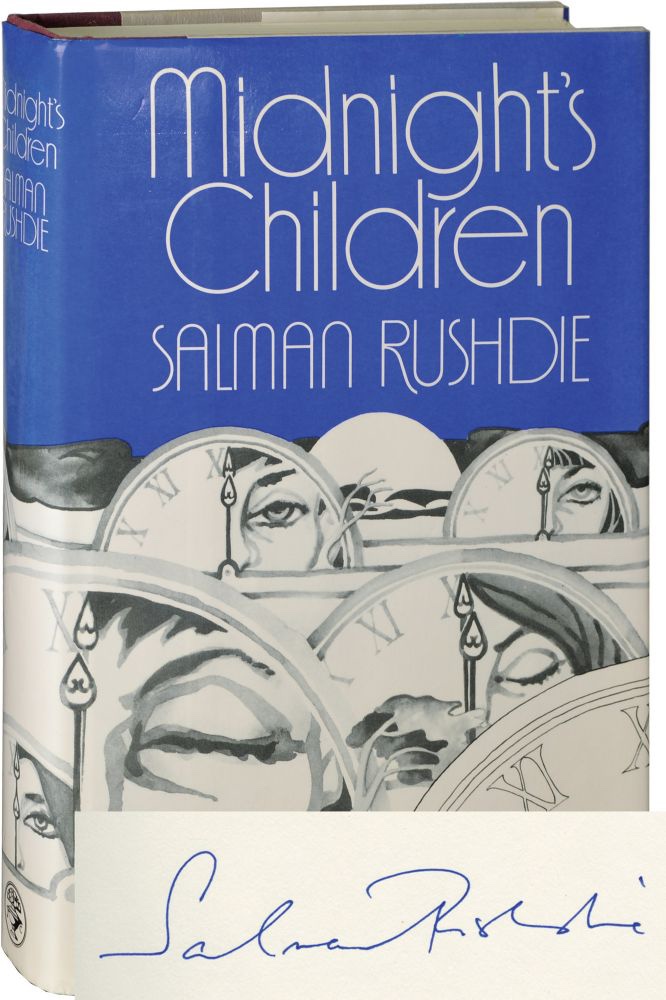
Salman Rushdie, “Midnight’s Children” (1981) – “And good luck with ‘Midnight’s Children,’ heaven knows no one’s ever finished it,” Mark tells another character on one episode of “Peep Show.” Well, I did finish it, though it took a while. What did I get out of it? That, perhaps, is the sort of question that a Rushdie novel seeks to subvert the basis of (conveniently enough, the cynical part of me adds). Should literature be the kind of thing one “gets something out of” or should it be an experience in and of itself? “Midnight’s Children” belongs to the latter category, which is to say that the novel itself is an interesting experience, and also a way of saying that the ending is not noteworthy.

“Midnight’s Children” is the story of Saleem Sinai… or IS it? Is it not the story of post-independence India? Because, you see, Saleem and independent India are born at the very same time, the stroke of midnight on that fateful night in 1947 (also the year Rushdie was born, but not the date). Baby Saleem gets a letter from Nehru marking the occasion and everything. But Saleem (the narrator along with being the main character) doesn’t tell the story beginning with himself. He talks about his grandparents, how they met, his parents, assorted symbolisms and portents in his background, a family habit for being there at key moments in India’s history. The stories are told from the point of view of an older Saleem writing his memoirs and reading them to a paramour, with a lot of asides, glimpses forward and back, etc.

Saleem is very much a literary figure of his or, rather, Rushdie’s time, resembling viewpoint characters found in other magical realist novels like those of Gabriel Garcia Marquez, as well as quasi-fantastic literary recent-historical novels like those of Saul Bellow and E.L. Doctorow. He’s precocious, opinionated, destiny-crossed, bodily-marked (he has a big nose), voyeuristic, and horny. I guess in most of these respects he’s a reflection of the author and the anticipated reader- it’d hardly do to have an incurious unopinionated viewpoint character, unless you were trying something unusual.

He also has a super-power, though it seems to come and go somewhat arbitrarily. He can read minds and have others read his. Through his super-power, he comes to find out that hundreds of children all around India have super-powers, too, and all were born in the midnight hour of India’s birth, just as he was (hence the title of the book). He summons them all to nightly congresses in his mind (which now seem like nothing so much as so many meetings on Zoom, but of course Rushdie couldn’t have known about Zoom or the pandemic which forced its use back then). They don’t come to much — too many kids, too many ideas, too poorly organized — though Saleem does meet his archnemesis, the violent boy Shiva, born at the same time as him, whose super-power is to kill people with his oversized knees? Honestly, not the best or scariest power out there.

Saleem and Shiva share a secret, Saleem wittingly and Shiva unwillingly, related to their respective births and the families they belong to. There’s a lot of switching in this book, family-switching, name-changing, conversions, and Saleem goes back and forth between India and Pakistan as well. Relatedly, you get a lot about the malleability of identity and identifiers like family, religion, nationality. In one of those have-it-both-ways-and-neither-way things you get with a certain kind of literature, Rushdie both plays to the mystification of India in the western mind and critiques it- westerners are both wrong to see India as mystical and ineffable and also wrong to try to understand it rationally on their own terms. Well, it’s a big, old country. Who’s to say there’s a right way to approach it?

One way in which Rushdie is pretty conventional is in his treatment of women. Saleem claims to have been made and unmade by women every step of the way, from before his birth to his finding his super-power to falling in love with his (sort-of-not-really) sister to his misadventure in the Bangladesh War of Independence and on and on. Horniness and sentimentality combine to make seemingly all women alluring mysteries to Saleem. Is this how Rushdie sees things, or just his viewpoint character/avatar for exploring India’s identity? In the end, Saleem is nearly completely undone by the scariest Indian woman of all, Indira Gandhi. Rushdie abandons most of his literary ambiguity here and seems just shit-scared of that particular woman.

I’m probably not selling anyone on this book, but my tone is such in part because I’ve been sleep-deprived for a little while due to what appear to be medical issues, so I’m having trouble mustering up enthusiasm. But I kept reading the nearly 650 pages not out of stubbornness but out of genuine interest. Rushdie is a capable enough prose stylist, even when winking to assorted now somewhat played-out theoretical concerns, that he carries the reader along. It’s a lively book, which is in interesting contrast to the way it’s sort of a monument of world literature, something to be name-checked rather than really engaged with- “lively” isn’t the word you’d usually ascribe to monuments. Another contradiction for the road, I guess. ****’

Review- Rushdie, “Midnight’s Children”

Review- Machado, “In the Dream House”

Carmen Maria Machado, “In the Dream House” (2019) (narrated by the author) – Much of the time, great works come like bolts out of the blue, with no really visible antecedents: “Astral Weeks,” like I talked about last week, DuBois’s “Black Reconstruction.” Other times, they grow out of unlikely hummus. “In the Dream House” belongs, to my mind anyway, to the second category: it is the millennial confessional essay, not a form I generally respond well to, raised to something both beyond and in keeping with the boundaries of the form.

This is an account of Machado’s emotionally abusive relationship with an unnamed woman, written in scores of tiny chapters, some only a sentence or so long. Machado processes what happens to her through the lens of criticism. Each chapter examines her relationship through a genre or trope, all harkening back to a central trope of the “dream house,” the spaces of her relationship, physically split between old houses in midwestern college towns, Iowa City and Bloomington, Indiana and figuratively inhabiting the utopian dream of lesbian relationships- all the good parts of love, none of the bullshit men bring with them.

How much detail of the abuse does it make sense to go into? In one harrowing chapter (there are many), Machado details how she had a sick desire for her abuse to have been more physical, with bruises she could point to. As it stood, the emotional abuse she sustained, the constant undermining of her sense of self and nurturance of a sick kind of dependence on another’s caprice, was bad enough for this reader. Machado manages emotional space in this work like the best prizefighters manage space in the ring. The examination of her relationship through genre and trope would seem to keep the whole thing at least an arm’s length. But, and perhaps this is my own methods of emotional distancing talking, I found the mechanism supremely relatable and capable of delivering devastating emotional payloads. The distancing, and Machado’s honesty about it, is its own form of closeness.

Me and my war and fighting metaphors… In the introduction, Machado writes, “if you need this book, it is for you.” Well, I don’t know if I need this book, or if it is “for me” in the sense that phrase is generally meant these days. Machado was born within a year of me, we are both nerds whose main medium is the English language… and there the resemblances leave off. Beyond the obvious demographic differences, romantic relationships have played a pretty small role in my life. My boundaries are high, and perhaps I’ve traded some degree of interpersonal connection to avoid what seems to me dramatics and irrational behavior. That’s about as confessional as I feel like getting. One of the points of literature is to nurture empathy. Sometimes, this project turns inward, curdles. Sometimes, I resist literature having a point, in part for the same reasons I avoid some kinds of personal connection- a disinclination to having others meddle in my head. All that said, I am glad I opened myself to Machado’s writing to the extent I did. *****

Review- Machado, “In the Dream House”

Review- Waugh, “Vile Bodies”

Evelyn Waugh, “Vile Bodies” (1930) – The Jazz Age, a time period reading Americans instinctively think of as “Great Gatsby” territory, gets the Waugh treatment in this, his second novel. Waugh came out the gate an extraordinarily assured and controlled writer — “Decline and Fall,” his first book, is well worth reading — and while he anchors “Vile Bodies” in pathos (helped by a bit of future prognosticating), it lacks the occasional dip into the bathetic Fitzgerald was known to take, or that his fans have read into him if we’re feeling charitable.

A couple, Adam Symes and Nina Blount, stand as centerpiece of this brief but panoramic view of Jazz Age London society. They get engaged and disengaged as Adam’s fortunes go on a madcap up-and-down run over a period of weeks: getting his manuscript (Adam is a “bright young thing” writer), winning bets, losing checks, gaining and losing newspaper employment, etc. Waugh accompanies this central theme with further illustrations of a society out of kilter, unmoored from traditional verities (he wasn’t lachrymose about the loss- yet). The constant in and out of parties that wander from place to place, a well done (if slightly heavy-handed) public motor race gone out of control, and the occasional brief speech from a savvy Jesuit (this is around the time Waugh converted to Catholicism) underscore the theme of post- (or inter-, anyway) war moral chaos. “Vile Bodies” nails a mixture of humor (Waugh was a cutting humorist, which did not mix with his, err, unfortunate racial opinions well, but it doesn’t come up much here) and angst where the two relieve and enhance each other.

In the end, it’s all pointless, as Waugh prognosticates another, even more destructive war than World War One on the horizon (I don’t think you needed to be a Nostradamus to do that, but it works for Waugh’s purposes). One wonders how long and fervently Waugh hoped for the war he eventually participated in, World War Two, and wrote about extensively… though his war novels never reached the acclaim of his earlier work or of “Brideshead Revisited.” You could call this a search-for-meaning novel, but really, Adam doesn’t want meaning as much as he wants a break on the financial-cum-nuptial front- he’s a reflection of his times, including his time’s self-reflexiveness, not a rebel against it. Those times were well made for Waugh’s critical literary eye. ****’

Review- Waugh, “Vile Bodies”

Review- Mahajan, “The Association of Small Bombs”

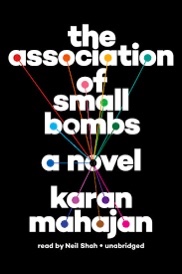
Karan Mahajan, “The Association of Small Bombs” (2016) (narrated by Neil Shah) – To paraphrase Adam Clayton Powell: “I am against the dismal novel of bourgeois angst. But until the dismal novel of bourgeois angst is done away with, I believe the Indian bourgeoisie deserves the same chance to be minutely depicted as the Anglo-American bourgeoisie.” Divorce, the classic subject matter of such novels, now has competition from terrorism, the departure point for “The Association of Small Bombs.” We get to see how a “small” bombing in a Delhi market scarred the lives of a survivor named Mansoor, some of his friends, and the parents of two child victims of the bomb.

I guess I shouldn’t have started on such a down note, this book isn’t great but it isn’t terrible. Predictably, but also aptly, enough the bomb becomes a metaphor for the forces fracturing the marriage of the Khuranas (the couple whose kids were killed), stunting Mansoor’s life, etc. Paul Auster’s problem was a lack of good verbs; Mahajan’s tic is odd adjectives and descriptive language, a less damning flaw but still notable. The worst one that comes to mind is describing a computer keyboard as being made up of “plateaus and inclines” when I think you’ll find your keyboard is actually pretty flat and regular, etc. There’s some interesting interactions between young people over Islam and porn (the two forces battling for the soul of the internet, one says) and a pretty good scene where the dad Khurana tries to show his bratty sons (before they get killed) how the other half in Delhi lives, but the poor aren’t being squalid enough to get his point across. There’s a lot of less interesting stuff about marriage and real estate.

Probably the most interesting part for me wasn’t the Khuranas’ bad marriage and apartment deals but Mansoor and his friend Ayub. They meet in activist circles, trying to resist the Indian police’s unfair treatment of Muslims (including people involved in the bombing that injured Mansoor years earlier). Here, Mahajan takes his place in the long litany of bourgeois writers who depict politics of any stripe, from Gandhian pacifist protest to Salafist terror, as motivated by an individual’s ennui, boredom, and status-seeking, and not by anything like ideas or a genuine desire to see the world different. This facilitates the slide of Ayub from one of those poles to the other- a girl in his activist group breaks up with him, so he joins the Kashmir separatist terrorists. There’s a little more to it than that — Mahajan is nothing if not interested in observing the psychology of his characters — but that’s basically Ayub’s story, which sucks Mansoor in and ends the book. All told, an Indian-American (Mahajan was born and currently lives in the US but was raised in Delhi, I understand) entry into the mold of bourgeois literature, for better and for worse. ***

Review- Mahajan, “The Association of Small Bombs”

Review- Shalamov, “Kolyma Stories”

Varlam Shalamov, “Kolyma Stories” (1972) (translated from the Russian by Donald Rayfield) – Conservative moralists squat on top of the literary memorialization of the Nazi death camps and the Soviet gulag, even though the pair I have in mind, Elie Wiesel and Aleksandr Solzhenitsyn respectively, are both dead. Both are well worth reading but both also seek to isolate their particular instances of evil from history and politics, insisting on their metaphysical uniqueness and priority. This impulse has, ironically, loaned these historical memories to political projects of many blunt, history-distorting, and violent kinds, starting with the totalitarianism school and ranging from Zionism to post-Communist revanchism in Eastern Europe to whatever nonsense Jordan Peterson was selling before he took his current protracted disco-nap.

Wiesel and Solzhenitsyn got the Nobels and, more importantly, sit the perch where one is taught to generations of western high schoolers and undergrads as the definers of totalitarianism. Other voices were always out there and some, like Primo Levi, even had pretty good traction, though no Nobels, for those playing the home game. Gulag memoirist Varlam Shalamov has been published now in English both by Penguin and in those snazzy NYRB Press editions, but to the best of my knowledge hasn’t penetrated the western public that much.

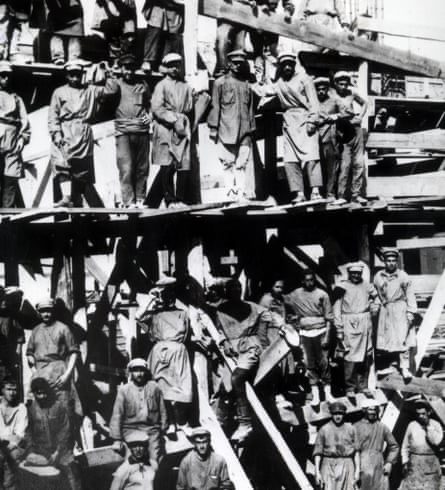
That’s a shame, as he’s a great storyteller. He was a Trotskyite, sent to the Kolyma mining colonies in the far northeast of Russia during the great purges of the 1930s, and stayed out there for seventeen years, until things started cooling off after Stalin’s death. Shalamov credits his longevity to having made it, after a few deathly years in the mines, into a paramedic program, and the stories he began writing after his release have a sort of medical acuity to them, an eye for symptoms and diseases, pain and humor. He gives a depiction of life stripped down its most brutal basics: the hunt for food, warmth, and security in an environment lacking all three. At bottom, he reiterates in several places, the camps strip the humanity from their inmates (and staff, in a different way), leaving only anger out of all the sentiments. His fellow Trotskyites came in already dehumanized from the tortures they experienced before being sent away; others, like the prisoners of war who had the bad luck of escaping from German captivity only to be sent to the Gulag, fought back more. But mostly, these are stories of work, food, theft, negotiation over the stuff of life. 

One obvious difference here with the Solzhenitsyn school of memorializing the Gulag is that Shalamov doesn’t moralize, or moralizes differently. For one thing, he went in a communist and as best I can tell, came out one, just of a shade disapproved of by Moscow. Shalamov harps on two things, and you can tell they were the preoccupations of someone who was still thinking like a camp prisoner: first, don’t romanticize criminals, as Russian (and other) intellectuals are wont to do. The gangsters in the camp made everything worse, an additional transaction tax of shit added to the already shitty situation they were in. Second, nothing about the experience of forced labor was ennobling, as the Soviets insisted on during (and after?) the high point of the Gulag system, and going through it didn’t grant any metaphysical insight. You can see why this appeals to western audiences looking for Cold War or post-Cold War morals less than other writers of the totalitarianism experience, but it also reads true. *****

Review- Shalamov, “Kolyma Stories”

Review- Cossery, “The Jokers”

Albert Cossery, “The Jokers” (1964) (translated from the French by Anna Moschovakis) – If you were ever tempted to believe that a “both sides are bad, real wisdom is a matter of mocking ironic distance” was a new and bold stance… well, chances are some Greek or Roman somewhere would prove you wrong, but definitely French humorist Albert Cossery shows that it’s at least as old as the mid-1960s in this short novel. Egypt-born, Cossery wrote a few novels set in the Middle East, most of them satirical farces from the looks of them, like “The Jokers.”

Everything in the unnamed Middle Eastern city the book takes place in is a joke: the government’s a joke, the rebels against the government is a joke, love is definitely a joke (though in classic French fashion, misogynistic lust is taken pretty seriously). The main characters are part of a coterie dedicated to mocking all and sundry through underground subversions.

The issue here is that this is more of a sketch of a novel than a novel… one is tempted to say like how “both sides-ism” is generally a sketch of an idea more than an actual idea. The government is proven to be bad because it persecutes beggars and other street people- a good start. The actual antics of the joker gang, described as hilarious, are never actually laid out. They make a poster about the virtues of the governor, a grotesque figure they praise in equally grotesque terms- Cossery tells, but doesn’t show us. He doesn’t show them doing anything else funny either. If anything, he comes closer to the hectoring that he claims to despise in revolutionaries, as the jokers try to convince a revolutionary of how revolution is stupid and laughing at everything is cool. The revolutionary does a lot less preaching than the supposedly care-free jokers.

I get that different cultures have different senses of humor. And for all the physical proximity of France to England and England’s sort-of descendant America, the senses of humor are miles apart. Maybe if I were more French I’d find the jokers lusting after women they despise funnier, or find something inherently funny in the situations Cossery doesn’t bother to elaborate upon. Maybe I’m just a thick Anglo who prefers, say, John Kennedy Toole’s baroque literary comedical set-pieces over whatever is on offer here. But if I am, I am, and Cossery doesn’t seem liable to change that. **

Review- Cossery, “The Jokers”

Review- Auster, “The New York Trilogy”

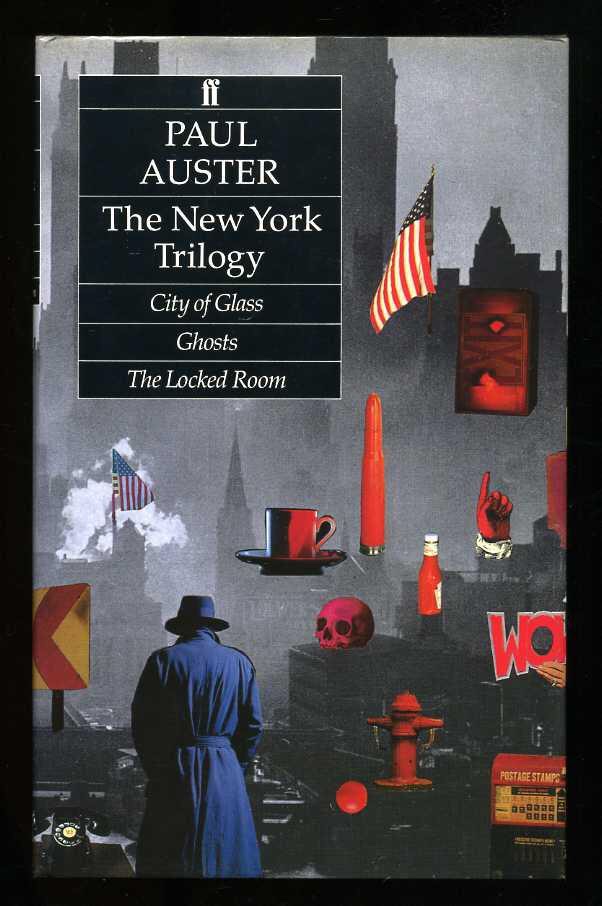
Paul Auster, “The New York Trilogy” (1986) – Every now and again, I look into the whole “big names of contemporary capital-L Literature” thing. I want to say, “just to see if it’s still bad,” but sometimes I find something I like; Sally Rooney’s “Normal People” was pretty good. It’s arguable how “contemporary” “The New York Trilogy” is, given it’s about as old as me, but Auster is still a name I hear get thrown around by literary young people. He doesn’t seem like much too bad a guy, avoiding the bad reputations of other great white chiefs of American literature: Franzen, Foster Wallace, Bellow, etc.

So I haven’t got a problem of ethos or politics with the guy, as far as I know. May he continue his journey in peace. I can narrow down my complaint with “The New York Trilogy” to one word: verbs. There’s a real dearth of good verbs in these three novellas. Especially given that Auster is inspired here from crime fiction, which has a lot of good action words in it if it’s worth a damn, this is baffling. It makes reading a slog. Is he trying to get across something about existential pointlessness this way? If there’s no point in writing, is there a point in reading? Hell if I know.

The best story is the first one, which at least has an interesting antagonistic, an intellectual with peculiar ideas about God, language, and child rearing, but he disappears and that’s that. The other stories lack such interest, and the middle one has this annoying tic of having all the characters named after colors (Brown, White, Blue, etc), and it doesn’t work, even if it did for “Reservoir Dogs.” I understand that they were meant to be slices of a certain kind of New York life… but beyond street names and the occasional conversation about the Mets, there’s not a lot here to distinguish it from any other big city. Maybe there’s a whole lot I’m not getting. But Auster failed to convince me there’s much more to get. **

Review- Auster, “The New York Trilogy”