
Review – McGurl, “The Program Era”

Mark McGurl, “The Program Era: Postwar Fiction and the Rise of Creative Writing” (2009) – The short story workshop! For a certain kind of liberal arts student, no setting conjures up quite that same combination of dread and hope. One such class was the only literature or writing class I took in college. It was my second semester, freshman year. I scribbled some stupid high-concept alternate history nonsense, then a twee family thing. Some other people did some ok stuff. I don’t remember if anyone was particularly nasty. The teacher was a decent sort (he might be reading this!) who seemed to genuinely believe in the type of stories that come out in those “best American short story” books- not that he liked all of them uncritically, just that he believed in the project.

I hadn’t formed an opinion on the project, but I would. I learned literature, to the extent that I have, because I was learning history. I’d say I did it on my own, but that’s not quite right. I did it by the light of a few constellations: sometimes friends and family, but most often, publications like the old Baffler and the Exile. Their style of criticism – erudite but irreverent, aiming to wound and not just to act as an adjunct to the publishing industry – spoke to something in my young-adult soul. I gobbled up their archives, and worked on learning literature along two tracks: their recommendations (and sometimes, their denunciations), and “the canon.” Test and control. Taking this task seriously meant honest, rigorous engagement not just with the works, but with myself, the critics, the world around me. It’s a test, given the many ways all of us can – I think all of us do, however temporarily – decide to lay down in the snow and nap, faced with the blizzard of bullshit and easy outs that surrounds critical discourse, at any time but it feels especially totally now. 

Woof! This took a turn. The point is- all of my teachers after that nice fellow in Dalrymple (who may or may not be reading this- hello if you are!) despise the project of the contemporary establishment literary short story of the kind published in the “best of” series. Most of them despise it hard enough to have developed critical frameworks that also condemn most official alternatives to said establishment- these have a way of getting folded in, after all. Moreover, most of the people I’ve met post-undergrad who participate in literature in any way are also deeply skeptical of the entire literary enterprise as it currently exists. Some have fled for the Croatoan of alternative literature of various kinds, and seem to be doing ok out there. Others keep “playing the game” as best they can, compelled by a love for the act of writing and reading and trying their best to “keep the faith” (and ironic distance). All of them are at the least ironic about contemporary Anglophone literature, and most of them are strongly critical of how it is produced: the publisher, the pitch, the agent, the query, the review, the blog, the tweet, the MFA, and above all, the workshop. 

The workshop has become symbolic for much of what is wrong with contemporary American fiction. Somehow managing to manifest both a gummy sort of Disney-populism (“anyone can write!!”) alongside tacky elitism (“for a price!!”), grad-school pretense and high-school social dynamics, the workshop is widely considered unpleasant to participate in, not notably good at improving people’s writing, deleterious to the quality of American letters, and also a scam. And it’s hard to disagree, really. Look at the state of American literature, and of English language literature in general. It’s really not great! And a lot of the problems do feel pretty “workshop” – self-indulgence, predictability, stylistic conformity. I’ve said so- so have numerous literary friends with many more workshops under their belt than mine (and more to come!). And I mean… a dozen-odd people, mostly kids, who want to be writers, posturing and passive-aggressively sniping at each other, ridden herd by some poor son of a bitch who believes in literature? Woof!

So! Whomst amongst us would defend the workshop, or anyway, the workshop’s centrality to the production of contemporary American literary fiction? It’s too much to say that literary historian and critic Mark McGurl defends the workshop, or the MFA programs that use the workshop as their basis. But he does complicate our critiques – which are borderline received wisdom in critical circles – in the process of illuminating the contours of post-WWII American literary history. 

McGurl begins with that would have seemed – what did seem – like a paradox: programmed creativity, especially in a university setting. The hierophants of literary modernism, especially the Americans, mostly fled universities, which they considered (rightly) to be strongholds of hidebound literary traditionalism. Hemingway hated school; Faulkner spent more time on Hollywood studio lots than in a classroom; everyone who could fled not just American schoolrooms, but America, for Paris. Paris, London, New York- that was the “school” for modernist writers. 

In discussing the history of the writing program, McGurl takes the fiendishly simple step of wondering why the critiques so common to us of program writing would not have occurred to the people who created these programs. More than asking a probing question of the past, McGurl’s move here is a showing up of the anti-program cliches we live with. In other words- it’s not that profound to figure out that critiques like “creativity can’t be taught” would have occurred to Wallace Stegner and other godfathers of the creative writing program, but it is an interesting lacuna that people go on making that criticism as though their interlocutors hadn’t heard it. In many ways, us critics of the writing program have taken its existence, and our antinomy to it, for granted, like it’s always been there, even though the implied teleology of it all – once, there were writers, then the MFA came along to corral them into conformity – implies a “before.”

In short, McGurl is a historicizer, an erudite and witty one, operating in a field that neither its proponents in literature nor critics like me on the outs have really put in its context. He’s got something like a fresh field, and he makes the most of it. As it turns out, very, very few literary writers, even those nursed in its gardens, have unambiguously good feelings about writing programs. The people who founded them, often in a fit of Dewey-an enthusiasm and thinking it would be a good way for returning WWII vets to “process their feelings” and maybe get a start at writing, weren’t sure they would work, and often proved ambiguous about their product. One such was Wallace Stegner, who carried on a long feud with his writing workshop protege, Ken Kesey. Kesey, you’d figure, would be a big critic of programmatic creativity, and he was- but McGurl points to many ways in which the “Magic Bus” experience comes closer to the workshop than anyone would like to admit. Famous writers who supplemented their incomes with workshop money (Roth, Vonnegut), others who got their start with workshops (Momaday, Cisneros), long-time critics (Reed), all of them had careers and writings that defy simple schematization.

This is ultimately because, in McGurl’s take, the writing program is more than just a way of producing literature that one can agree or disagree with, accept or refuse. It is an institution in, around, outside, against, parallel to, perpendicular to, orthogonal to, running screaming away from, has helped define American literature in its period because the concerns with which that literature dealt found echoes in its structures and practices… and vice-versa. McGurl tracks a dozen or more currents or movements within the literature of the time pertaining to “the program,” one way or another, all of them his own invention, at least retooling well-known critical concepts if not making them up himself. Questions of race, class, gender, the role of the writer in public life, the Cold War, capitalism, and more don’t just get isolated chapters like they do in a lot of cultural histories- they are all woven together into a single strand. More than a history of literature (which it is a fantastic example of), “The Program Era” stands as an example of a truly holistic history, a work that understands that protagonists, antagonists, and the entire ecosystem of other actors exist inseparably from each other in any given historical form- absent one, and the form is not that form, but another (systems theory is one of McGurl’s inspirations here). It’s a real bravura performance, and I took my time with it, not just because I was busy but because I was really enjoying it. 

McGurl is probably somewhat more sanguine about American literary fiction of the postwar period (and ours- we are, indeed, post-WWII, but are we still “postwar”?), and the possibilities of the writing program. He doesn’t really take on the literary fiction/genre fiction divide. It comes up but it’s not his subject. If it were… well, it would be that other form I talked about, and the picture might involve more dichotomous antagonisms – the forces that kept scifi, fantasy, crime, romance, etc. on the margins of respectability while creating this vast edifice of literary fiction that now no one knows what to do with, a white elephant from previous generations – than what McGurl wants in this project. Still and all! A fascinating and toothsome read. *****
Review – McGurl, “The Program Era”

Review – Keegan, “Six Armies In Normandy”

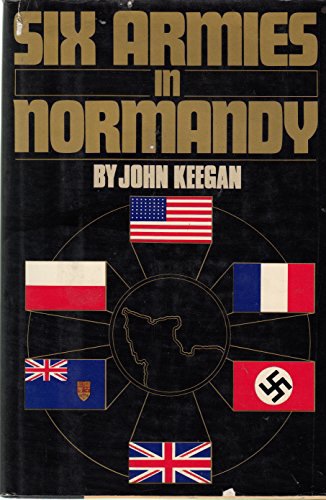
John Keegan, “Six Armies in Normandy: From D-Day to the Liberation of Paris” (1982) (read by Fred Williams) – Sometimes, you give some old school military history a try. I came up in prime D-Day remembrance years, and was an eight year old who loved history stories when the fiftieth anniversary of the invasion came around. My grandfather was there at Omaha Beach; the remembrance stuff, “Saving Private Ryan” and all, played an important role in getting him to talk about it, about the trauma and all. Being a weird little kid, I was always interested in the corners of the war I had heard of but which didn’t get talked about that much. I would alienate other kids at recess when they played WWII by yelling out that I was Free French or Russian or Chinese. As far as the culture around me was concerned, WWII was basically a drive from Normandy to liberating the camps to a pit stop at Hiroshima to coming home for that kiss in Times Square.

Well, I’ve gotten a lot of mileage over the years by cocking my snoot at this mythic version of the war, and I expect to continue to do so. Quite beyond the fact that most Americans didn’t give a shit about the Holocaust and the Soviets freed the six death camps (not that their leadership were so wild about Jewish life and freedom), and that that Times Square kiss was sexual assault… It’s not news to most people reading this that the most consequential fighting of the war took place in the East between the Nazis and the Soviets (and in China, between its people and the Japanese imperialists). Put that in place, and everything looks different. 

But still… there was a reason Stalin came close to begging the western allies to open a real second front in Western Europe starting in ‘42. America and Britain were blessed by geography, as they so often were: the German heartland was a lot closer to Britain than to Russia. The invasion needed to happen. Churchill’s poor strategic sense and his interest in bleeding the Soviets coincided in his decision to delay and do stuff like invade Italy, the supposed “soft underbelly” of Europe that actually had a bunch of mountain ranges and armed Nazis. I’m not enough of an expert on the troop dispositions blah blah to know whether, if the Americans had put their foot down and insisted on an invasion of France in ‘43, it would have worked as well, but it kind of seems like without the Italian diversion they could have done it… maybe the Americans needed “the experience,” it’s not like you can retreat much from an amphibious invasion…

Anyway! Donnish Sandhurst-y military historian John Keegan considered all this in the introduction to this, his breakthrough book, before getting on to which division went where. That’s not entirely fair. Keegan talks a lot about the strategic situation and the social/cultural experiences of the men who fought in Normandy and how that informed their respective military traditions, which was pretty interesting. The six armies from the title are five Allied countries — the Americans, Canadians, and British, who each had beachheads, and the Poles and the Free French, who didn’t but had a lot of troops around — and of course the Germans. He picks each one as a viewpoint for each part of the book- the Americans for the airborne assault, the Canadians for the beachheads (not Omaha Beach, interestingly), the French for the taking of Paris, etc. The Germans had a way of being everywhere, naturally, but their viewpoint thing was how bad Hitler screwed the pooch in the defense, partially, Keegan argues, because he was rattled by being bombed by his officers that time. 

It’s pretty good, for what it is, but, perhaps inevitably, gets bogged down in narrations of maneuver and counter-maneuver, which is a lot less interesting when you can’t get maps or pictures (my fault for picking an audiobook, I guess). Some people really love that scale, bigger than a battle, smaller than a theatre, but I always like either the big picture or granular battle description. Keegan does get some good stuff there. I like descriptions of airborne operations. What a shitshow! Dropped into the dark over Normandy, a lot of them dying or breaking legs — drowned, which horrified me the most, sometimes — getting lost, having to round up the other troops, getting in weird random small-unit fights with the Germans… that was cool. 

Here’s what I found myself wondering most often. Where was the reconnaissance in all this? Seemingly nobody had any but the foggiest idea where anybody was! It was a pretty big and confusing area, all those identification farmhouses and bocage hedge-mazes, but still. They must have had scouts, but it really doesn’t seem they emphasized scouting that much? One of the big questions the smarter analysts of contemporary military analysts ask is- who is the infantry? In a contemporary war, who is willing to do the dirty and dangerous stuff, consistently and competently, that infantry still has to do to win a war? That wasn’t that hard of a question at this period, a high point in state power and organization. Maybe the question was “who are the scouts” – who do you have that can bring you good information? I don’t know. Maybe Keegan just didn’t write about the battle-level intel game because he wasn’t interested! But yeah, this was fine, but wearing, in that way fuss-and-feathers military history can be. ***’

Review – Keegan, “Six Armies In Normandy”

Review – Le Carré, “A Murder of Quality”

John le Carré, “A Murder of Quality” (1962) – A little while back I read “The Spy Who Came In From The Cold” and it was outstanding, so I decided to read all of John le Carré’s Smiley novels, and maybe more of his work after that if I wasn’t sick of it by then. “The Spy Who…” was Le Carré’s third Smiley book. I read his first novel, “Call for the Dead,” a little while later, and that one was pretty good, and now I’ve filled in the gap with “A Murder of Quality” which, when you get down to it, isn’t really a spy novel but a crime novel.

George Smiley, Le Carré’s rumpled, diffident master spy, gets called in for a domestic job by one of his secretaries from the war. This secretary had gotten a job managing a Christian magazine. I assume the Anglican Church probably has a magazine, too, but I knew straightaway it would be a “chapel” magazine, that is, a publication for non-Anglican English Protestants. The secretary wrote the magazine’s advice column, and she got a creepy letter from a subscriber saying she was about to be murdered… then she was! Fuck!!

Naturally, given how weird it all is, she calls on her former boss Smiley, who hasn’t got a lot to do these days so decides to lend a hand. When you’re in the British spy biz you usually have all kinds of hoity-toity connections, and that comes in handy here. Stella, the murdered woman, was the wife of an instructor at Carne, an extremely fancy boarding school, where the brother of one of Smiley’s war friends also works, giving him an in to go investigate. 

Le Carré said this novel was partially inspired by his brief time teaching at Eton. I guess he didn’t like it! He makes Cold War East Germany sound a lot more pleasant than British boarding school. While international intrigue doesn’t really figure into this whodunnit, in a way, it is more of a spy novel than a crime novel. A spy, Smile,  attempts to infiltrate an alien and sinister society and manipulate its ways in order to learn its secrets. He only barely invokes the specter of the rape of minors — the main thing I think of when I think of British boarding schools — to get across how terrible it is! Mainly, everyone there seems to operate on some sick combination of self-loathing and self-love, propelled by institutional inertia and the miracle of compound interest on a foundation started four hundred years before.

I don’t want to spoil it, but what at first seemed like a murder (then murders!) based on class spite come to be based more on individual sociopathy. This was a little disappointing, truth be told. There were some decent exposition-switchbacks in the end but the real story seemed to come out of nowhere. I don’t think whodunnit was Le Carré’s thing, really. But he’s such a master of language, characterization, and pacing, it was still a respectable read, and I look forward to picking up the next Smiley. ****

Review – Le Carré, “A Murder of Quality”

Review – Hazony, “The Virtue of Nationalism”

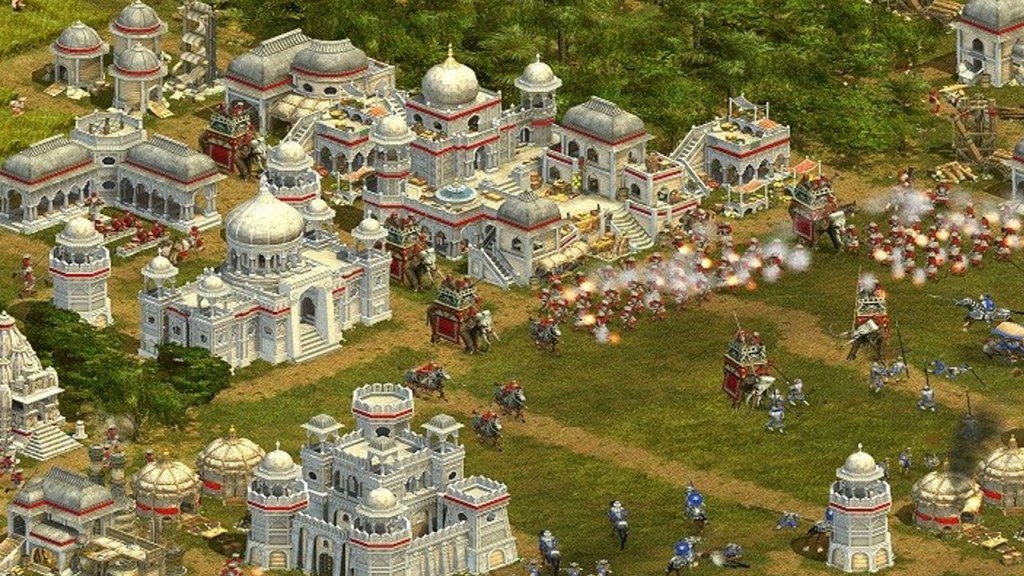
The fatuous, in-app-purchase-requiring 4x game of the contemporary nationalist imagination

Yoram Hazony, “The Virtue of Nationalism” (2018) – I should probably stop reading books on the idea that the contemporary twerp-right is reading them, all on a throwaway line in a half-remembered article in the Atlantic or the New Republic or somewhere, shouldn’t I? I doubt this Hazony guy is really hot stuff on the right, at least the part of it I should pay attention to. Whatever nonsense is in here, Hazony is too moderate, too polisci, and let’s not forget too Jewish for an increasingly bloodthirsty and openly antisemitic right. The kid name-checking him in that article probably just liked the title. I’ve seen a lot of that. You can’t tell me all these idiots on goodreads, or the morons on the other side of the line when we deal with local Nazis, have actually read Evola’s “Revolt Against the Modern World.” They just like the title, and stick with it despite Evola having written numerous books that are also fascist nonsense but are pitched more at their level. This is not a thoughtful time on the right.

Anyway- Hazony plays the usual polisci calvinball of making up whatever categories he wants and foisting them on the entirety of history to make some dumb presentist point. There’s three ways of arranging sovereignty, he informs us: “tribes and clans,” where no one has loyalty beyond an immediate in-group and it’s a war of all against all; nation-states, little culturally-bound units with discrete borders and governments; and empires, which swallow up nationalities and subject all to the rule of some overarching sovereign. The real choice in front of us, Hazony informs us, is between nationalism and imperialism, these days, the imperialism of super-national bodies and ideologies: the EU, global liberalism, Islam, Marxism comes in but more as an example from the past.

Well, this is obviously stupid, and moreover, Hazony seems to get that, does so much hand-waving he could probably fly from his home in Israel to Brussels to tell the eurocrats how naughty they are. One big hand wave is that you only get nation-state status if you’re “strong enough.” Ahh! Well, ok then. That sorts that. He hand-waves the imperialism practiced by more or less every nation-state on earth, sometime in its history and usually in its present. That’s different, and basically ok (“hear that, Palestinians!!”). You get to do that when you’re a political scientist! There’s a huffing and puffing appeal to the “common sense” of people who have grown up with national sovereignty as a basic principle, and pretty gratuitously whacky claims, like that the Old Testament enshrines the nation-state form specifically.

What all this adds up to is one of two things: I think Hazony might have meant it as an appeal to the center; or, part of an intellectual fig leaf for the right, like that boy in the article would have in mind. But the center is shrinking and paralyzed, and increasingly, the right, from the “national conservatives” to open Nazis to Zionism, dispenses with fig leaves altogether. Among other things, they can’t make up their mind between Hazony’s three categories. They say they like nationalism, and some of them do, but seemingly on the basis that nation-states are the playable factions of the 4x or miniature battle game they think life either is or should be. But many of those same people clearly prefer tribal/clan models, or imperial models, or… it’s almost like sovereignty isn’t a “solved problem” with discrete categories but rather a set of techniques and priorities! 

I give Hazony a little credit, but just a little, because sovereignty really isn’t a solved problem. Every now and again, a leftist looking to make a point, and they can come from the heights of the academy or the dregs of the Internet, crops up to crow about our lack of grounds on this issue, like a fat house cat bringing you a rubber band it caught but generally not cute. Well, they’re not wrong, though their solutions, which usually amount to “embrace nationalism, it’s fine,” generally are. At the same time, slapping one category on top of another like a trump — “class beats nationality, haha!” — clearly doesn’t do either. We might want it to be that way but in practice it doesn’t work. Hazony won’t help anyone clarify anything. But, unlike a lot of my readings on the right, especially contemporary ones, he’s at least in the neighborhood of an actual question, and in this category, I take the consolations I can get. **

Review – Hazony, “The Virtue of Nationalism”

Review – Peters, “Detransition, Baby”

Torrey Peters, “Detransition, Baby” (2021) (read by Renata Friedman) – Torrey Peters has said in interviews that she has structured this, one of the major contemporary trans novels that I know about, like a soap opera, with twists and turns and reveals paced for the sort of drama marketed towards the women to whom Peters dedicated this book: divorced cis women. It’s an interesting gambit, and echoes something that comes up a lot in this book and that I’ve thought a certain amount about.

Peters has virtually all of her characters, most notably trans woman Reese, detransitioned Ames (he lived as a trans woman for some number of years, in a relationship with Reese for most of that, before deciding to live as a man), most of their trans friends, and most cis people in the book, refer to trans people by a term I have had numerous trans and non-binary people inform me, mostly via social media, is a slur. No, not the short nasty t-word, but an earlier and vaguely medical-sounding term that most of my trans friends and associates have overthrown in favor of “transgender.” When I’ve discussed this book with people more knowledgeable about this stuff than me, they have told me this is reflective of a generational divide. Trans people roughly my age or younger are more likely ok with the word; younger trans people (and most of the trans people I know are younger than me, typically by ten years or more) are more likely to insist it’s a slur and use “transgender.” 

I say all that to say this: Torrey Peters is doing a bunch of stuff in this novel, and one of them is at least somewhat ironically overdone but also sincerely meant generational war. Reese, in particular — and there are three people who could be called main characters in Detransition, Baby, but as the omniscient third person narrator would probably agree, Reese is the star — has no patience for what she refers to as “Twitter girls,” women, almost always trans women, who promulgate ideas and/or exhibit cultural styles associated with online social justice stuff. Reese, and that omniscient narrator when she weighs in doesn’t really disagree with them on the points, but she just has another way of being who she is that she feels cramped by their indignation. Reese doesn’t want to lead a revolution. She doesn’t want to assimilate, either, like the assimilé cis gay men and lesbians we see in the book. What does she want, then?

Well, it seems, mostly she wants to be a woman. This might sound trite, but I think is quite in keeping with how Peters describes Reese’s mental state, to say she wants to achieve the high scores in the most conventional, one might even say stereotyped, versions of womanly achievement. This gets into some questions I’ve never fully understood — that I generally haven’t pursued that much, because they’re delicate topics and I don’t want to hurt anyone with my critical poking and prodding — related to gender as performance. Arguably, some of what Reese gets into is reflective of another generational divide- Reese understands trans womanhood as a reflection, or an apotheosis even, of womanhood as established by normative cis culture. A lot of the trans people I know — and here it is worth noting I know a high portion of these friends and acquaintances from radical left-wing politics — are often defiantly uninterested in conforming to cis ideas of what gender looks or acts like. 

That is not Reese’s way. Reese wants to own womanhood, wants to experience it as it has been sold to her on tv, though given some spins by trans experience and consciousness. Often, this takes the form of a competitiveness with the cis womanhood she looks to as a model, as in, “see how many of your alpha cis straight dude bros want to sleep with me, as opposed to you, cis lady.” 

Maybe a point of convergence, though- motherhood. Above all Reese wants to be a mother, which she sees as the ultimate in womanhood. I could see younger trans people less invested in binary understandings of gender getting that, even if the concept they’d more immediately grasp for might be “parenthood,” which is not quite good enough for Reese. Reese would like (unaffordable) bottom surgery. Reese needs to be a mother, and has screwed up chances to be one with other selfish behaviors (seemingly driven by her need to prove her womanliness by having affairs with bad men? Or is that a bad read? You gotta understand my understanding of romantic relationships is pretty minimal). 

She gets her chance! Sort of. In a miracle of unlikelihood, her ex-lover, Ames — who she knew as Amy — despite having his hormones and sperm count messed with by transitioning and detransitioning — manages to impregnate his boss, Katrina, a cis lady with whom he was having an affair. Katrina’s a divorced lady who has had a miscarriage, and she wants to be a mom but questions the conditions. She questions them even more when she finds out Ames had a past as a trans woman, and drunkenly outs him to coworkers, which leads to some grimly amusing scenes of HR managers at their ad firm trying to figure out whether they need to retool their bathrooms, etc. Ames, for his part, has been borderline crippled by his ambivalence towards his several dilemmas: “live his truth” as a woman despite the terrors of his trans life versus an easier life as a man, raise a child he’d maybe only stay with out of duty and loneliness, etc. 

Ames comes up with a plan! Bring in Reese as a co-mother! By the time the plot unfolds, Reese and Ames had been broken up for years, the arc of their relationship told in flashbacks. Everyone involved with this scheme is skeptical. Katrina is thrown by this sudden prominence of trans-ness in her life, and takes it with what strikes me as a realistic mixture of efforts at understanding and bad mistakes. Reese doesn’t trust Ames or Katrina at first, and figures she’d just be some weird add-on to their ménage, not a “real” mother, and that this is some bass-ackwards scheme for Ames to both get her back and continue to deny his trans-ness.

After some ups and downs, the three come to some understandings. If nothing else, Reese and Katrina have a shared hobby of owning the hapless Ames (non-sexually, in Reese’s case, at least at that point in the narrative). Katrina learns some about trans and queer culture. Reese patrols the boundaries, attempting to keep Katrina from merely appropriating queer culture (the sort of phrase, if uttered by a “Twitter girl,” would probably make Reese scoff, but she does not enchain the hobgoblins of foolish consistency, Reese) and making Reese into a kind of prop. 

Ultimately, it’s that dynamic that proves to be their undoing in the last part of the book, which has some strong points and some less strong points. Reese’s past experiments in hyper-womanhood come back to haunt her in the form of a bad man at the wrong place at the worst time. Katrina judges Reese’s behavior for both sensible reasons (facilitating cheating) and bad (AIDS panic). People make various dramatic choices. One of the key images of the novel comes when Reese adopts a method she finds on YouTube for dealing with grief, that gets confused for suicide (a tragically common fate for trans people). That her most dramatic moment comes via a YouTube video she watched with a mediocre cis dude hookup is pretty funny and poignant and feels real. Given the centrality it takes on, it feels like it would have been better introduced a little earlier? Workshop criticism, I know, but there it is. Katrina, Ames, and Reese all wind up together, in some sense, in the end, but in a deeply ambiguous and ambivalent manner. 

This was good! It has sound story-telling fundamentals, a story worth telling, a sense of humor, a definite perspective. There’s real limits to how much I can say in terms of how it depicts trans life. I can say more about how it depicts millennial life, I think, even if it’s millennial life socially proximate but… ontologically distant from my own. It does that quite well, I think. I can recommend it pretty highly for people who want to read contemporary literature. ****’

Review – Peters, “Detransition, Baby”

Review – Voegelin, “The New Science of Politics”

Who is the beady-eyed philosopher king

Eric Voegelin, “The New Science of Politics” (1952) – When I was a teenager, I sometimes carpooled to school with a boy from the next town over. His father, a minister and learned man with a deep rumbling voice, found out I was interested in politics and asked me questions about it. One was “…do you seek to… immanentize the eschaton?” I did not know what “immanentize” or “eschaton” meant, and the dad informed me it meant something like bringing about the end of time and the kingdom of Heaven on earth. I don’t know what I told him. Eventually, through reading about the history of conservatism, I found out that that “immanentize the eschaton” line, usually preceded by the words “don’t” or “don’t try to,” was a minor slogan of the American conservative movement popularized by William Buckley and adapted from the works of German refugee scholar Eric Voegelin. It was a cutesy way of getting across the point that efforts to bring about utopia lead to worse situations than before (and therefore, don’t inconvenience the wealthy and powerful). Apparently, there were bumper stickers with the slogan on it.

Voegelin may have inspired a bumper sticker slogan but he fell into obscurity after his death in 1985, especially compared to similar figures like his fellow emigre Leo Strauss. Voegelin has a fervent but small cult following, a little think tank somewhere where foundation money keeps a few pedants going, but nothing like what the Straussians had in terms of access to power, or to go a bit further afield in the movement, the Objectivists or even anarcho-capitalists ala Rothbard. He hasn’t become a meme, either, like assorted right-leaning thinkers like Julius Evola or Emil Cioran, unless the boomer, pre-Internet version of a meme — recalled slogans from yesteryear imparted on a captive (but willing enough!) audience of teenagers — counts. 

This is too bad, because as far as I’m concerned, Voegelin had more on the ball than any of them, with the possible exception of Strauss- and unlike Strauss, Voegelin did not play. He laid his cards — his erudite, well-written (in a chunky, Teutonic way), deeply whack cards — on the table for all to see. It probably didn’t help his cult grow, compared to Strauss’s self-flattering mystery cult. But it made for an interesting read.

Voegelin was a totalitarianism theorist, but not like Arendt or any of the others I know. For one thing, he was stringent enough to attract gestapo attention even though he wasn’t a Jew or a leftist, which took some doing and promoted his move to the US. You can characterize Arendt and other totalitarianism thinkers by their philosophical reaches, their rummaging in the past for tools, metaphors, and explanatory schema (which all seems a little gratuitous to materialist me, but when done well makes for some toothsome reading). But I can’t think of any who reached as far back, with so rigorous a set of rummaging tactics, brushed up against and sometimes made good use of critical ideas we lose at our peril, and came back from this journey into the past with such a honkingly absurd but internally self-consistent set of schema as Voegelin does in “The New Science of Politics,” a set of lectures meant to be a prologue to the sprawling philosophical history of politics that he never finished.

It’s like this: forget power conflicts, or rather, forget their material dimensions, Voegelin tells us. All that does — Voegelin doesn’t say it but it’s what happens, in this and in idealist political thought more generally — is separate the wheat from the chaff, the rich powerful activist countries that matter and the rest who don’t (you gotta figure one of the reasons “traditionalists” — and Voegelin is related to big-T Traditionalism in some important ways — hate contemporary life is because a lot of rich countries can’t be bothered to play classical power politics anymore… though post-Ukraine invasion, who knows?). Politics is actually about representation. He doesn’t mean that as in “what should go along with taxation” or “brown faces in high places,” but an altogether more metaphysical representation, the instantiation of capital-T Truth, in some vaguely Platonist way, on earth. Representation, undertaken correctly, assures order, which in this sense basically means an alignment of the human and something like the divine. Voegelin doesn’t insist, explicitly, on a Catholic reading of the universe to agree with his system, but does see the Christian-classical synthesis of the high Middle Ages as the height of “philosophical anthropology,” the proper understanding of man in the cosmos. 

“Order” is an interesting and fraught problem. I organize- I know getting people to do stuff, even stuff they want to do, in an efficient manner, takes coordination. But even a relatively type-A type like me gets that some kind of order generates itself without some mandate from the nous if there’s enough earthly motivation. Why isn’t that good enough, at least as a basis upon which to improve? Especially for self-proclaimed “conservatives”? (It clearly is for many!)

For conservative politicians, “order” generally means keeping the poor and whoever the local downtrodden ethnicities are around in a subordinate place. Simple! It becomes complicated when someone tries to make a transcendent order of that, which right-leaning intellectuals seemingly can’t stop themselves from attempting. I run into this with the fashy teens I try to get information out of after they ineptly troll some of my goodreads reviews. No matter how much they claim to venerate the pre-modern past, they always punt to evo-psych explanations: “traditional” oppressive order is good because we evolved with it, it’s old (it’s usually not that old but w/e) so that proves it’s stability, and with the era of accelerating disaster in which we live… it runs into the usual problems even taking as read the anachronism and factual errors involved. If it’s so natural and self-evidently good, why do you need oppressive structures to instantiate and maintain it? And you get the usual answer- because Those People are evil and want to destroy it, and we all know who Those People turn out to be.

Well, if Voegelin was an anti-semite, it doesn’t turn up here, though he’s notably uninterested in Jewish concepts of the relationship between divine mandate and worldly order, to which I understand Jewish thinkers have given a lot of sophisticated thought. Voegelin makes throwaway references to Jewish and Islamic ideas of representation to prove his concept is global and perennial, but the big show goes from Athens to Augustus to Augustine to Aquinas. They didn’t get it right right away. That’s one of the interesting things about Voegelin- his Truth is transcendent, but the ways people interact with it change according to circumstance, and he understands some of those changes as valid, necessary even. Let’s not make too much of it — they’re necessary to unfold god’s plan or something — but still. You got to something like an ideal representation of a divine order that is the most important fact of the universe, a critical element of which was that unknowability-but-demand-making combo that makes monotheism so spicy, in the Middle Ages, where Emperor represented political order and Pope represented spiritual order. 

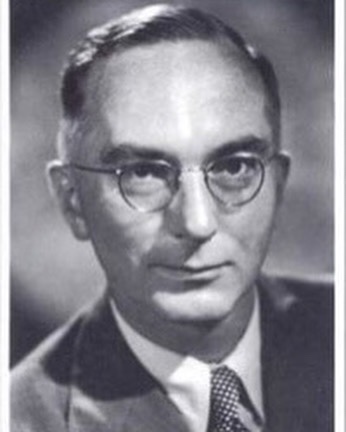
I didn’t agree with Voegelin by the point, maybe three fifths into the lectures, where he was making this point, but I was impressed with his erudition, his writing, and the sophisticated way he laid out the various elements of the system of order as he understood it. There were some farrago elements from the beginning, the nose-in-the-air way intellectuals of his kind, like his friend (and to my mind, substantial intellectual inferior) von Hayek, dismissed materialism based on straw-manning no one would accept for their own beliefs. More than — or along with being — a farrago, a dodge away from unacceptable ideas, it also got deeply derpy with Voegelin’s — and here, it’s good to GIS him, his beady eyes and big forehead behind his spectacles — insistence that all social science, including any history that partook of positivism, is wrong on its face because of its lack of “theory” i.e. value statements… but I’m used to that. And then came the turn. The turn wasn’t enough to ruin the experience of the book, not hardly. But it was enough to transform my enjoyment of it from intellectual appreciation to something like high camp.

It’s the gnostics, folks! It’s not the Jews, or whoever else, who brought the snake into the garden of the high Middle Ages, who play that role that all conservative world-building needs, but the ding-dang gnostics! Just when you thought it was safe, that pesky Joachim of Fiore has his vision and all of a sudden they’re immanentizing the eschaton all over the place! All modern political philosophy other than reactionary conservatism and, Voegelin grudgingly allows, some forms of very conservative classical liberalism, are just Gnosticism warmed over. Communism, socialism, most types of liberalism, fascism, nazism- all just Gnosticism, and all lead inevitably to totalitarianism, the erasure of all individuality and freedom in the great blaze of that immenatinized eschaton. 

You can see it coming, if you read the text. For someone breezing over hundreds of years of history in a set of lectures for an American collegiate audience, Voegelin writes carefully, but not ploddingly, covering his bases, when he talks about ancient and medieval philosophy. But things get awful hurried and poorly-documented when he gets to his gnostic conspiracy theory. He can’t help it (well, maybe he could, if he threw his thesis overboard). There aren’t a lot of actual records of what the gnostics — and contemporary scholars often hate the word, because it implies a much more unitary movement than what record there is would suggest — actually believed or did. Most of what we “know” about Gnosticism comes from the records of the inquisitors who hounded them to destruction and burned their texts. Poor Voegelin- at the time he was writing in the early fifties, archaeologists were just piecing together the Nag Hammadi archive, the major source of stuff actually written by gnostics — about fifty texts in all — that we have. Voegelin wasn’t in the archaeology mafia, and translations wouldn’t appear until the sixties. Another way Strauss was lucky- he stuck to canon. Voegelin was more adventurous and it cost him.

But he did it to himself. Stuck-up German that he was, he should’ve known better than to just sort of slide a few half-apocryphal historical guesswork suggestion gnostic transmission from their utter destruction before the Late Antique period was out and into the 1200s, when Joachim of Fiore was doing his thing, let alone to Voltaire, Marx, and Hitler, into such a key place in his edifice. Amateur hour! The stupid thing is, he probably could have had his cake if he didn’t insist on eating it. He could’ve said the Enlightenment thinkers walked backwards into Gnosticism, reconstructing the creed (or Voegelin’s version of it) out of their interests, desires, and found intellectual parts. I’ve seen other right-wing theoreticians of history, lesser lights than Voegelin but perhaps more savvy, do stuff like that. The gnostics make great villains. You can argue that the Church instantiated their version of who the gnostics were, complete with weird rituals and underground dwellings, quite deep into the western idea of villainy, nestled comfortably next to stereotypes about Jews. John Whitbourn, who I’ve owned an email to for about eighteen months, made good use of gnostic villains in his anarcho-Jacobite fantasy stories. They’re a chestnut, and it’s easy enough to grow their ideas out of whatever soil you want to use for planting- intellectual pride, depression, decadence, neuroticism, whatever.

But no, that won’t do, not for Voegelin. Because ideas matter, dammit! And not in some positivist, pragmatic sense, some John Dewey feel-goodery where you pick what ideas “work!” They matter because they’re metaphysical concepts that we need to instantiate on earth to keep the darkness at bay, to make the world make sense. It’s touching, really, that Voegelin would want to extend this metaphysicality to his enemies, who he also regards as intellectually inferior (well, until you realize there’s really only one solution for dealing with them…). But it leads him to some excruciating readings of history and theory. I’m a lumper, rather than a splitter, in history- I like bigger categories than some people find legitimate. But everything from this Joachim guy to Keynes being a gnostic… when we barely know what they actually believed… and that it’s an actual intellectual lineage, a conscious project, like Catholic scholasticism! And he means it! That’s too much, man. He just gets himself deeper in the mire the further he goes until he sounds like Glenn Beck with a thesaurus. 

It’s funny but it’s also sad, and gets crooked as you figure it would. Voegelin was giving these talks at the behest of some conservative foundation trying to bolster the Cold War on campuses. John Whitbourn, the anarcho-Jacobite Catholic fantasist, would probably agree with Voegelin’s condemnation of the Puritans as the first truly modern gnostic totalitarian movement. But Whitbourn had the balls to include all of Protestantism in the condemnation, Luther right next to Cotton Mather. If Puritanism was a rebellion against the divine settlement of Catholicism, it had a starting point: the Reformation, on which good Catholic traditionalist, but better Americanized Cold War conservative Voegelin, does not lay a glove, and doesn’t even mention. Shameful! If you’re going to go down this crazy road, go all the way! Similarly, at the very end, Voegelin cops out when granting that the American Revolution and even the English Civil War — where, mind you, the Puritans executed a sitting king! — were ok, for reasons too boring to get into but translate to “conservative cold warrior Americans sign my checks, and while they’re fine digging at Puritans — Mencken did that after all — they won’t tolerate smacking down the founding fathers or parliamentarian oligarchy.” Lame. 

Well, campy conspiracy and lame-puts towards the end and all, I got a lot more enjoyment out of this than any right-wing material I’ve read recently. I don’t plan on chasing down any more Voegelin, and certainly not his little cadre of sad followers trying to pipe up with their imitation of the master’s erudition in the sea of bullshit on the right-wing internet. But this one was definitely well worth reading, in many of the veins in which my readings on the right work. *****

Review – Voegelin, “The New Science of Politics”

Review – Miéville, “Embassytown”

Get a load of THESE

China Miéville, “Embassytown” (2011) – I’m probably going to do a video on this! With a special guest star, as part of a new thing I’m doing. But I still figured I’d give a review.

China Miéville seems like a pretty cool type, genuinely committed to both genre fiction and to revolutionary socialism. In “Embassytown,” he does more or less straight up scifi! Though of course, Miéville seems the type to dislike having the phrase “straight up” ascribed to his writings, and there’s more than a little horror in here as well. In humanity’s future amongst the far-flung stars, there’s a settlement called Embassytown! It’s a little human spot on a planet dominated by a species they call the Ariekei, or the Hosts. In classic Miéville style, the author enumerates their many gross-sounding features but does not give a clear picture of what they look like. Roughly deer-like moss-bugs with coral extrusions that hold their eyes, multiple pairs of wings that are actually ears and/or arms, two mouths, various slimes, you get the picture. The Ariekei and the humans live more or less peaceably, with the humans sticking to the town with its breathable air and trading stuff back and forth, mostly goods the Ariekei biologically engineer.

The Ariekei speak a language, or rather, Language. It has two important features: first, they talk it out of both mouths at the same time, with said mouths each making different noises to make one word, and second, they can’t lie. Speech is thought for them, and vice versa, and they can only think/speak stuff that actually is. They have no word for “that,” for instance, just ways to specify what thing they are talking about. This creates communications problems! They couldn’t communicate with humans at all until the human started breeding people as twins of such a high empathy that they basically think the same thoughts? Or something? And can speak sufficiently in tandem to speak Language. Then, the Ariekei can understand. These twin pairs are called Ambassadors, and they and their handlers more or less run the human show on Embassytown, though a vaguely Hanseatic-themed human confederation technically has it as a colony.

Woof! All this happened in the past of the novel. In the present day, Avice is a child of human settlers who grows up on Embassytown and goes on to become an “Immerser,” which is to say, she can navigate the eerie nether space that is Miéville’s way of getting around the light barrier. She comes back with a linguist husband named Scile (who she doesn’t sleep with?) who is intrigued, naturally, by Language. Avice is also a simile in Language. In order to do similes, the Ariekei need for the thing they’re invoking to actually happen. So, using a human intermediary, they draft the child Avice to do a thing. She didn’t like it, which probably has to do with why she went out to space. But she returns to Embassytown just in time for a power play- the metropole sends a new type of Ambassador. They’re not twins! Just two guys! But it turns out that their Language is such hot shit that the Ariekei get addicted to it! Fuck!

I’m being a little facetious in my descriptions, as I seemingly can’t help but be with Miéville’s flashily “subversive” cleverness, but it’s a cool idea and it works well. It also ends a long middle period where the book wanders a little, as Avice slowly describes herself getting enmeshed in weird power/Language politics, with Ariekei who try to learn to lie, with other simile-children, with her husband and his increasingly unfortunate ideas about it all. But shit kicks off once the Ariekei get a load of EzRa (the Ambassadors all have names that are names that are also combos of names or at least nicknames- CalVin, DalTon, MagDa, etc). They quickly need to hear EzRa (who I don’t imagine as my friend Ezra, he’s a lot cooler) to function. And then they build up tolerance. And then EzRa refuses to fully cooperate with the other humans, because they’re fucked up and like being, as Miéville puts it, a “god-drug.” Then the Ariekei technology, seemingly all congealed out of bio-soup similar to that which the Ariekei come, get addicted to EzRa, and build up tolerances, and stop functioning, etc.

Soon shit starts to be some weird space-alien-drug-language-zombie-apocalypse situation! It’s pretty cool. You can’t ding Miéville for invention. The day gets saved, sort of, by some inter-species communication and language stuff. I’m not going to get too much into it, both to avoid spoilers, and because I want to get into the questions I’ve got with my friend on video! Stay tuned! ****’

Review – Miéville, “Embassytown”

Review – Roanhorse, “Black Sun”

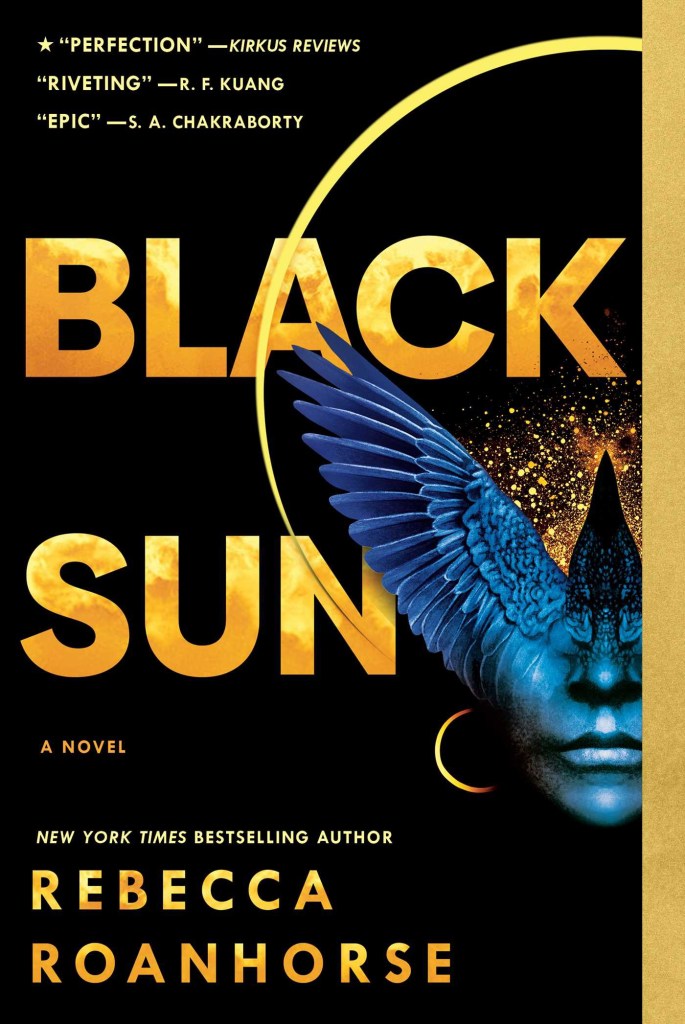
Rebecca Roanhorse, “Black Sun” (2020) (read by several actors) – I didn’t especially like this novel, one of the most hyped and praised fantasy works of the last few years, but more than even most books, it’s impossible to separate my reaction to it from broader context. “Black Sun,” like many speculative fiction novels in the last five to ten years, is meant to be a great victory for inclusion and new perspectives in its genre. Set in a secondary world based on Mesoamerican and Southwestern Native American history and mythology and written by a black woman who claims membership in one of the Navajo nations (according to Wikipedia, said nation disputes this claim), it promises a new departure in fantasy. No more “white farm boys going on quests,” as Roanhorse put it in one interview, no more whiteness-as-default. This was going to be something new.

Well… it isn’t. It just isn’t. It’s the same old fantasy crap with vaguely Mesoamerican trappings, and really, not that much of that. Special child of destiny, blah blah, Han Solo-style outcast rogue, etc etc, the world is on the precipice of dangerous transformation, yadda yadda yadda. And you know… that’s fine, I guess. I don’t love it, I don’t hate it. I like to paraphrase Adam Clayton Powell’s reaction to the Mafia hijacking of the illegal lottery in his district: “I am against the numbers in any form, but until the numbers aren’t played in Harlem, I want the black man to have the same chance to profit from it as the Italian,” or words to that effect. As long as anodyne same-same bullshit is what we’re doing, women, people of color, queer people, marginalized people of all kinds, deserve the same chance to write banal fantasy novels as anyone else, and throw in the same bowdlerized versions of what they think of as their culture as any white guy doing his Wagneresque nonsense.

But like… what a wasted opportunity! A Mesoamerican-based fantasy novel that actually tried something ambitious could kick ass! Hell, there probably are some… they’re probably out of print and don’t have social-media-active authors and/or fans to do shitty publishers’ promo departments’ work for them… but I do think it’s worth thinking about, with this explosion of interest in diverse representation in media, and at least some understanding of the histories and patterns of thought of historical cultures, why we get stuff like “Black Sun” instead of the more interesting works we should be able to expect.

Let’s start with what is missing in “Black Sun.” The plot is hackneyed and poorly-paced, the language dull, and the imagery not especially creative, but those problems are surmountable (though in descending order). What’s really missing is any sense of difference in the world. The characters act, talk, and think like genre stereotypes, though admittedly genre stereotypes of our time rather than the ones from days of yore by which we’re supposedly inundated. There is no indication that this culture, based, supposedly, on entirely different roots than European culture, produces different thought, or social structure, or really anything, even aesthetics. Roanhorse depicts the characters as dressing a bit different than standard Renn Faire garb, but you’d figure the one thing the author of this sort of work would nail down would be that the world would —look— different, and she doesn’t manage that. I thought the whole basis of this stuff was a sort of bourgeois liberal variety of ethnic essentialism, a kind of Twitter-bound Herder’s sense that every group has a unique way of thinking and seeing the world based on culture, environment, heredity, etc., but you don’t see any of that here, and you don’t see it in works that play similar roles but with different ethnicities represented, either- in or out of genre fiction. It’s maddening!

Some of the problems are not unique to the failures of the liberal representationalist model in genre fiction, but are broader problems, especially in SFF. There’s a lot of worldbuilding and it’s not done especially gracefully, and again, Roanhorse has the opportunity to make a world that seems really different — that has a different lived-in experience than however many Middle Earths and Westeroses — and whiffs it. The world isn’t the most laboriously built-out one you see these days, to Roanhorse’s credit, but it possesses the schematism that characterizes a lot of contemporary SFF worldbuilding. What I mean by that is you wind up in a world that may have secrets, but is otherwise ordered in rather rigid categories, worlds that could very easily be summed up in charts. You have these nations (that should be a worldbuilding gimme- it should not be new news to people who went through liberal education recently that the nation state should not be taken for granted!), you have these factions, these gods, and this type of person is characterized by X, Y, and Z, while the other type of person from whatever faction can be characterized by A, B, and C, on and on.

Tolkien’s worlds weren’t like that- Gygax, Arneson, et al had to do a lot of work to rationalize his world (and Moorcock’s, and Vance’s, and who knows how many others) into playable schema. To say there’s been a dialectic between games and SFF writing might have been accurate in their day- at this point, the overlap is nearly comprehensive and defines SFF writing more than it does games. This isn’t a problem in and of itself- some good fiction has been inspired by games. But it can be a problem when the schematic categories of gaming come to define, in an insufficient critical way, worldbuilding, and in some cases character work and other aspects of writing. It doesn’t help matters that some of the most successful franchises of all time are heavily schematic: Harry Potter and it’s houses, Game of Thrones and it’s factions, on and on. It doesn’t help that such categorizations loan themselves readily to the kind of fandom identifications that help drive sales (you have to figure the recent craze for astrology plays into this dynamic too- “I’m a Taurus Ravenclaw etc etc!”), – and to the sorts of stories — star cross’d love across the ill-delineated faction lines being most prominent — that people want to read (over and over again). I don’t know if whole online communities are going to start delineating themselves by Roanhorse’s four castes of the academy of the holy city or whatever just yet. I can’t say whether Roanhorse wanted that to happen when she wrote the book, or that it matters- because that’s the thing with tropes and cliches, it’s not some conspiracy. It’s just the path of least resistance.

It seems that a community of fiesty critics and writers have arisen that share some of my issues with contemporary SFF, and they have recently taken to describing the dominant strain in it these days as “squeecore.” These critics name the following as the traits of squeecore: a shallow emotional range that mostly does either maudlin or glib; heroes who feel like adolescents even when they aren’t; genre send-ups that were stale twenty years ago; aversion to the dark or strange; influences from anime and video games; humor “stuck in the aughts”; superficial dedication to diversity and other liberal values, generally affirmed by the triumph of the hero. The original promulgators of this critique were maddeningly unspecific about who they had in mind, and mostly only named big figures well outside of striking range (like Joss Whedon).

I think the concept is a valuable contribution to the critical discourse, but could use some work. There’s a certain “opposite day” tendency in the criticism that sees qualities lacking in squeecore — mainly darkness and sexiness — as the sine qua non of quality genre fiction and as lacking in the unfortunate SFF of today. I don’t think that’s quite right. Maybe it’s not the quality of darkness and sexiness they want, but you can’t say that “Black Sun” doesn’t do dark, or sex. It’s just anodyne, predictable, and even if the situations — the inevitable world-doom/structural oppression combo the heroes will fix however many bloated books in because hashtag-love-wins; the sexual politics ported in straight from contemporary Twitter — weren’t so hackneyed, the writing is not up to the task. Dark and sex won’t fix the problem, and really I think few aesthetic fixes will. But maybe I think that because my aesthetic sense is limited. My solutions are pretty limited, as well- learn more, I guess? Challenge yourself? A ruthless criticism of everything existing? Maybe that would help me critique contemporary literature more effectively but something tells me it is, to borrow a phrase from one of my critical masters, shooting nerf darts at a T-Rex.

Because why should Rebecca Roanhorse or her many, many readers care? Why should they challenge themselves? Why should they be more critical? They’d clearly rather not. It won’t win you any popularity contests- you’ll still deal with the same chuds who hate anything thoughtful, even anodyne liberalism and boring writing, plus all the anodyne liberals and boring writers will hate you, too. And it’s not like Roanhorse wrote a bad book, just a mediocre one. And the world’s burning and emerging fascism etc etc. I get that. I will say that I think many of the same faculties that could maybe get us out of the whole “burning world” business with something like civilization intact are the same that maybe might get us a better literature, genre and otherwise. Similarly, I think that a lack of imagination, of criticality, and of ability to take on a range of difficult emotions and ideas, and the complacent belief that because you’re not awful then you must be good enough, really isn’t helping, anywhere. **’

Review – Roanhorse, “Black Sun”

Review – Thompson, “Blood in the Water”

Heather Ann Thompson, “Blood in the Water: The Attica Prison Uprising of 1971 and Its Aftermath” (2016) (read by Erin Burnett) – The Attica uprising is another one of those historical things I’ve known about and been interested in forever but can’t put my finger on when I learned about it. It might have been when, during an attempt at becoming a “film buff” in my late teens, I watched “Dog Day Afternoon” and got to the famous scene when Al Pacino riles the onlookers to his bank siege with a chant of “Attica! Attica!” and then I went and looked it up? It might also have been before that- it feels like it was always in the background, an artifact of a strange but not entirely disappeared time.

Seeing as the first group of people who got to tell a public story about Attica — the officialdom of the state of New York, led by then-Governor Nelson Rockefeller — lied about the situation from stem to stern, historian Heather Ann Thompson had her work cut out for her in writing the first major academic history of the uprising and its aftermath. This is, in some respects, an old school social history, an excavation of the history of the downtrodden made possible by intensive spadework through old, and in this case long-suppressed, sources. Among other things, Thompson’s access to long-hidden or censored state records allows her to show that the state, from Rockefeller on down, purposefully lied about what happened at Attica for decades.

Attica Correctional Facility is way out in the depths of western New York. Life was bad there. The prisoners were mostly black and Puerto Rican from the city, while the officials and guards were almost all white and rural. More than the harshness of conditions — shitty food, overcrowded cells, hard labor (to the great profit of the State of New York) — there was an inconsistent, martinet quality to life at Attica that wore on the men. It was impossible to follow all of the many rules, seemingly inspired by encrusted layers of discredited penological theories. So the men were routinely given beatings or isolation by guards who made clear their racist contempt for their charges, generally for minor or even unavoidable infractions of petty rules. This has an echo in the petty stupid charges that landed a lot of young people in the hellhole of Attica in the first place- joyriding, minor theft, above all violation of parole, and something tells me parole violations were as impossible to avoid in the slums as infractions are in the prisons.

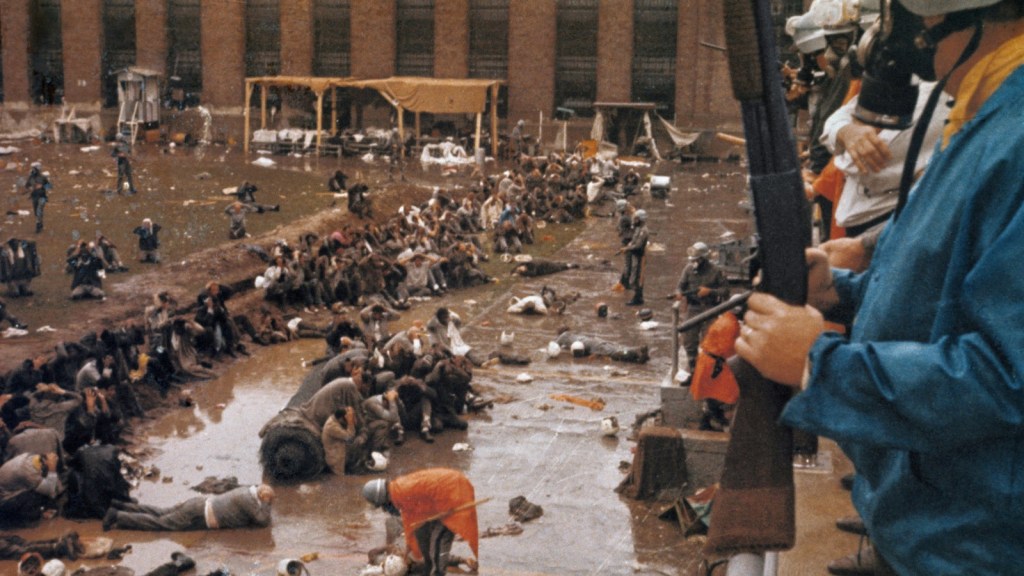
Thompson does not believe that prisoners planned the Attica Uprising, which began on September 9th 1971, ahead of time. Basically, a guard started beating a prisoner while lining a group of them up to go to a meal or exercise, I can’t remember which. The guards had already taken away a number of prisoners for severe beatings as retribution for complaining about conditions in the nights previous, and something snapped. The men attacked. They seized control of the central yard of the prison and several cell blocks. A guard would later die of injuries incurred during this initial attack. The prisoners took forty-two guards and prison officials hostage.

After an initial period of chaos, both sides of the conflict found leaders, or anyway, spokespeople. The prisoners established a rough sort of democracy, led by a council of respected men, many of them drawn from the radical milieu in the New York prison system: Black Panthers, Young Lords, various black Muslim groups, a few white radicals like “mad bomber” Sam Melville. As for the state, you could almost see it as this symbolic tableau- notionally “well-meaning” vaguely-liberal officials, like state prisons commissioner Russell Oswald, trying to manage the situation while a small army of frothing mad prison guards, state policemen, and sheriff’s deputies roiled in the background, demanding blood.

You can guess who won out in the end, both between the prisoners and the state and between the state officials who wanted, at least a little, to avoid a bloodbath and the reactionary mass of gun-thugs beneath them. For three days, the prisoners tried to negotiate with the state. The state sent observers, mostly journalists and politicians, to discuss matters and to report on conditions inside the yard. The observers got a mixed picture. Someone — Thompson isn’t clear on who, and doesn’t seem interested in finding out — killed three inmates during the time between the Attica rebels taking control of the yard and when law enforcement took it back. Moreover, the demands that the prisoners came up with included some that were basically politically impossible, like a plane to a “non-imperialist” country (one wonders how their lives would have gone had they somehow made it to Cuba or Algeria). But the observers were also surprised and heartened to find the prisoners on good order, taking care of each other and taking very good care of the hostages (indeed, showing more care than the state showed, either before — like when the rebels tried and failed to get the state to take a head injury of a guard seriously and he died — during or after the retaking). Most of the demands, as Commissioner Oswald readily admitted, were reasonable: better food, better pay for their labor, more education, not throwing any mail in Spanish in the trash, etc.

Any situation like this has numerous factors that go into its outcome, but I think we can say that the end was “overdetermined.” Thompson raises hopes — that at certain points communication really happens between the different sides, that this or that interlocutor will come and fix things — only to dash them against walls made of institutional indifference, miscommunication, and bad luck. Pretty much no one comes out looking good, even if the Attica rebels come out looking better than the picture of savage criminality the state would try to etch into history. It’s hard to do direct democracy, and the rebels made some mistakes with it, but given the strains… Black Panther leader Bobby Seale looks pretty bad, too, briefly coming in and harming negotiations by making miscommunications, refusing to clear them up, and then begging off by saying that his party wouldn’t authorize him to do anymore.

But no one looks worse than the New York State Police and the man who sicced them on Attica, Governor Nelson Rockefeller. Rockefeller comes off as something like the deus absconditus of gnostic myth, the lousy god who set up bad situations and then disappears, aloof off in the celestial aether. His own people, like Commissioner Oswald, begged Rockefeller to come to Attica. No one thought he’d talk to the rebels directly, but at least they could have taken the negotiations more seriously. But Rockefeller refused, and left the worst possible people — State Police commanders and his personal fixers — making calls. Ultimately, Rockefeller had his eye on the White House and didn’t want to look “weak in crime” if he was going against his old foe, Tricky Dick.

Almost worse, to me, was Commissioner Oswald. I don’t expect any better from a Rockefeller, even if liberals long for the day of supposedly-sensible “Rockefeller Republicans.” But you can see in real time Oswald going from patronizing, but seemingly sincere, reformer to angry martinet, irked enough by the men he thought should be under his control displaying their agency past what Oswald thought the limits should be that he ultimately signed off on a massacre. Maybe he thought the cops and guards flocking to Attica to get their piece of prisoner flesh would off him if he held off much longer- certainly they were putting pressure on the situation. Rumors circulated that the rebels in the yard were setting up gallows and bombs, that they castrated guard hostages, on and on. All bullshit of course… and in the end, Oswald served his function, as he probably always would have.

The state, as Thompson told it, had effectively regained control of the yard just after a National Guard helicopter dumped something like CS gas all over the area. No one was resisting at that point, just blindly scrabbling around. The cops and guards who rushed in had no training for this situation and inappropriate equipment- shitty gas masks and goggles, shotguns loaded with buckshot, hunting rifles. Of course, the assumption behind that sort of thing is that the sort of “best practices” used by contemporary militarized and lawsuit-leery cops are what they’d want in any event. But the guards, state cops, and sheriff’s deputies who stormed Attica went in wanting to kill. They liked what buckshot did to the bodies of prisoners. That they — and they alone — killed nine hostages with their gunfire does not seem to have bothered them, at the time or after. They were too busy, first executing several prisoners, including leaders Sam Melville and 21-year-old Black Panther L.D. Barkley, as well as torturing the surviving rebels, and then beginning their campaign of lies and cover-ups. By the time it was all over, forty-three people were dead, thirty-nine of them killed by gunfire from the forces of the state. No hostages were killed or seriously harmed by their prisoner rebel captors.

Nelson Rockefeller went on a press conference and said the prisoners had cut throats of and castrated hostages. The state smeared its own employees, medical examiners, when these examiners pointed out that medically, this did not happen. But, in certain respects, it was an atrocity-coverup combo whose time had come. This was just as the conservative reaction to sixties/seventies militancy started gaining steam. It was probably also the moment in American history where sympathy for mostly black and brown prison rebels would have been highest — witness the multiethnic crowd who responded positively to Al Pacino’s “Attica!” chant — but that left was fragmenting under the pressure of state suppression and the challenges inherent to what they, we, do. The state’s story could become enough of an official story for the state’s purposes.

Like I said, Thompson does this book old-school social history style, so it’s granular and sticks close to evidence. This pays a lot of dividends in the first half of the book, which traces the roots and the story of the uprising. It begins to become a diminishing returns situation in the back half, which covers the efforts of Attica survivors — prisoners and hostages both — to get some justice. The fact that this took up half of the book kind of shows the problem. Thompson does a fine job illuminating the legal back and forth that dragged on into the first decade of the twenty-first century, but it simply isn’t as interesting as the uprising, and there’s less to learn for it. The state obstructs justice, realistically if not according to the letter of the law, when money and reputation are on the line- this could have been gotten across more briefly. I think it would have been interesting to have seen more about how the uprising influenced the broader movement for prisoners rights, and, god help me, the culture at large. Most of the time I root for social history over cultural history when they compete nowadays, but Thompson could have used a skosh of the cultural approach in this one. Still, this is a very good and exhaustive book on an event that still resonates today. ****’

Review – Thompson, “Blood in the Water”

Review – Lispector, Complete Stories

Clarice Lispector, “The Complete Stories” (2018) (translated from the Portuguese by Katrina Dodson) – I think I get it. This isn’t really “for me.” Clarice Lispector is hot new shit in certain literary circles, despite (?) having been dead since 1977. Born into a Jewish family in the Ukraine, Lispector’s family made the smart move of getting the hell out of there before the wheels came completely off, and Clarice was raised a middle-class Brazilian. She became a literary success early on, and a social one too, moving in Brazilian high society and marrying a diplomat. The biographical details are mainly relevant insofar as they inform the glamour that has wrapped around Lispector’s name, first in her native Brazil, and then in anglophone literary circles as her work came to be translated. I’m trying to find a generous way to say it, but basically, I think there’s a lot of hype here. Divide Latin American literary hype — breathy, exotic, not your granddad’s dour (or sappy) northern hemisphere literature — by the sort of hype that surrounded the recently-deceased Joan Didion (harshly “literary,” and a beautiful elegant woman readers can project themselves on to) and you’re more or less there.

Well, I read Lispector’s short stories, supposedly her most accessible works- apparently she really gets into some modernist weeds in her novels. They weren’t bad, necessarily… or maybe they were and I’m just trying to be “nice.” They were mostly tales either of cities being weird and surreal, or women dealing with bad men, or both. The language is supposed to be “lush” but I can’t say I experienced it that way. The stories are more notable for what they lack- no moral or “point,” especially not a political one, and you have to imagine contemporary literary readers breathing a sigh of relief on that score. Not much in the way of character, often anonymous men and women described by surface characteristics and behaviors. You can’t really get avant garde points with a focus on character, anyway, or plot, which the stories don’t really have either.

What do they have? Well, a vague air of tropical decadence- cf my notes about “Latin American literary hype,” anglophone and Western European readers have been looking to Latin American writers for that at least since “The Boom” in the mid-twentieth century. It’s ushered great writers onto the global literary scene, this literary escapism. Who knows, maybe Lispector is one and I’m too much of a literal-minded lunkhead to enjoy! Kinda sucks that the best they can find to renew that source of interest in world letters has been dead longer than the people “discovering” her have been alive, but thems the breaks, I guess. I was never that much of a stickler for “show don’t tell” but Lispector does a lot of telling about people’s inner states. There isn’t much here that sustains my interest, I’ll admit.

Shot in the dark- as Dril put it, “this whole thing smacks of gender!” Not in the sense that Lispector’s work is where it is because she’s a woman or something stupid like that. I mean in the sense that many of these stories comment on gender relations in a groove well worn by millennial thought on the subject. The bad men with whom Lispector’s protagonists deal aren’t dissimulators or opportunists like many abusers. They advertise themselves as the nihilists they are, the protagonists find themselves irresistibly drawn into their orbit, and are usually changed in some way- and callooh, callay, a miracle! In the differently-moraled global south they don’t jump immediately to “the woman gets murdered” to send the point about bad men home. In fact, they seem empowered by the experience, to use a term Lispector would probably stick her arm in a bear trap rather than use. Not by sticking with the bad man, oh no. Just in general. They’re badder and vaguely witchier.

From the cheap seats of cis manhood, it appears the great comic theme of millennial women’s writing — and men, especially straight men, keep saying things but have less and less to say that transcends the level of overly-elaborated grunting, so most writing these days is done by women — is that you can be gay! The comedy of errors that is compulsory heterosexuality straightens, if you will, itself out and everyone can go off and be happy. The central tragic theme of millennial women’s writing is that most of the time, they either love, or have loved, or will love, a man or men, alas. Lispector stories show the shiftiness of loving men, but, like certain genres less of literature (though it’s there) and more of music and social media aesthetics, depicts a ability one might have to have one’s cake and eat it too by emerging from the tragedy of dealing with our dumb male asses stronger and more independent. Well! I’ve heard worse visions. ***

Review – Lispector, Complete Stories