
Review – Skocpol, “States and Social Revolutions”

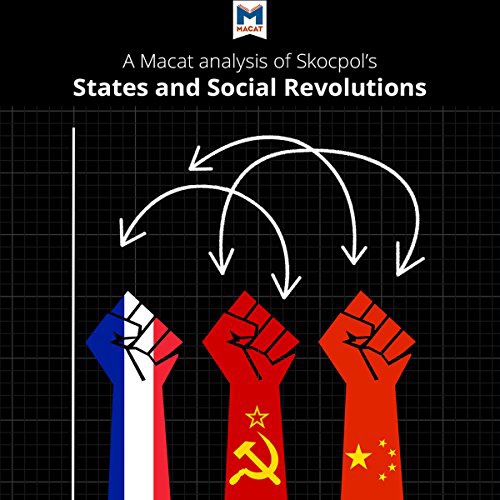
Theda Skocpol, “States and Social Revolutions: A Comparative Analysis of France, Russia, and China” (1979) – I have some weird background with this book. My first job out of grad school was for a nonprofit that the author started, dedicated to getting social scientists (like herself) to more effectively engage with the policy process. The nonprofit did what they do and my job, which involved trying to hammer into the heads of social scientists that they couldn’t just drop their papers into the laps of elected representatives and expect said politicians to act on the papers’ implications, ended after about ten months. Theda, as they called her in the office, didn’t do much with the day to day but it was understood she was the source of power. We were citizens of the Skocpolis. I only met her briefly. I sometimes wonder if our manager, knowing my socialist leanings and being a somewhat nervous type, thought it wouldn’t be a great idea, the grand old lady of liberal social science, used to decades of Harvard deference, and the red rando who didn’t always know or care about social pecking orders, being in too close proximity…

Anyway! Skocpol was not, in my very limited experience, the compulsive left-puncher that various others trying for influence in the Democratic Party (technically, the group was nonpartisan, but Republicans have their own ways of leveraging their, errrm, thinkers) often turn into. But in this, the monograph that made her reputation in that year of years 1979, she threw ‘bows left and right and mostly left in her effort to define revolution. What makes revolutions? Why do they happen when they do?

Skocpol, she informs us, is no “voluntarist.” It’s structural facets of historical-sociological situations that lead to revolutions! Funny- this is back before Marxists slid into their contemporary reputation as being arch-determinists. Skocpol dings Marxists for attributing too much to the will of revolutionaries, and also for reducing what makes revolution possible to class structure. Class is important! She demurs. But before we get to the “but,” she has to take down her old cohort, the modernization theorists who were well past their expiration date by the late seventies but holding on, as old academics too. You can’t explain revolutions as some automatic process that happens when institutions are insufficiently “modern” for conditions or don’t match public values, or personality types or whatever structural-functionalist voodoo the old modernization guys thought they could do.

“Bringing the state back in” – Skocpol started doing that in the late seventies, and History is such a slow academic field we were still acting like it was a big new deal when I was in grad school thirty years later! It’s actually state structures, and the international scenes in which they are situated, that are what people have been missing about revolutions. Especially Marxists, who “reductively” (shouldn’t “reducing” the chaos of circumstance and making a clear through line be a good thing? Isn’t that what we’re supposed to do?) dismiss the state as the “organizing committee of the ruling class.” Not so, Skocpol tells us! The state is autonomous! And we need to treat it as such not only to understand how revolutions arose in France, Russia, and China, but also the courses they took towards tyranny etc. 

Here’s the thing: I’ve been on organizing committees. The idea that Marx was trying to say that states acting as organizing committees of a class means that their interest and actions could be reduced to what the class they represented wanted or what was best for that class or even just basic ideas of means-end rationality flies in the face of the nature of committees, organizing and otherwise. Yes, states don’t act straightforwardly in class interest, but they still act in class interest. It’s just that circumstances make things less than straightforward, much of the time. 

So, it’s something of a straw-Marx and, to a lesser extent because some of them were class reductionists or whatever, straw-Marxists, that Skocpol beats on, here. To her credit, Skocpol does not ignore the class situation in her three case studies. She means it when she says class struggle is a part of these situations. But this book’s reputation rests on an analysis of state policies. The funny thing is… that seems more like a job for history, with its eyes for incident and contingency, than for sociology and political science, even historical sociology. The actions of the state actually seem more incidental than structural, down to some “autonomous” nature of the state that can be turned into a general category of analysis which we can “bring back in” anywhere. But this is social science, liberal social science at that, and ideal types are the name of the game. 

Among other things, all three old regimes — the Bourbons, the Romanovs, and in their different ways the old Manchu regime and the Koumintang that followed them — Skocpol deals with had deeply stupid and fucked up priorities when it came to personnel decisions, budgeting, more or less every aspect of governance. Wouldn’t… that seem to imply there’s something about these states that got them to make bad, arguably suicidal, choices? Older “neutral” (read, revolution-skeptic) analysts of these things, from Carlyle on, had answers- the welter of incident and a vague pattern of decay, for the smarter ones, some conspiracy (usually led by, who else, the Jews) for the dumber, meaner, more activist ones. Skocpol punts to the nature of states, to protect and propagate themselves, but… for what? For whom? Might we suggest… a certain… class??

Anyway. This is far from the worst analysis (the non-academically-employed rando said to the two dozen randos who read him out of friendship about one of the most prominent social scientists of her time- and one who has done yeoman service holding back the tide of the quants, to boot, good on her). But the idea that this was, pardon the term, revolutionary social science thinking… well, in an academy where the Marxists themselves tend to be less revolutionary you’d like, maybe, but you know what they say about lands and blind people and one eyed people etc etc. ***

Review – Skocpol, “States and Social Revolutions”

Review – Shivji, “Class Struggle in Tanzania”

Issa Shivji, “Class Struggle in Tanzania” (1976) – I picked this one up at a sale at the Brookline Public Library. Who was reading Marxist analyses of Tanzania from the seventies in Brookline, I wonder?

In any event, I have it, and read it. 1976 was an interesting moment in Tanzania. By then, it was almost ten years past the Arusha Declaration, where charismatic leader Julius Nyerere declared that Tanzania was going to build “African Socialism,” based on village cooperation, nationalizing foreign-owned business (much of which dated to the colonial era), and forging the country’s own path in the Cold War. Probably the best known artifact of this era were the “ujamaa villages,” planned cooperative villages where socialism, African style, would supposedly be grown from the ground up.

What did Marxist Issa Shivji think of all this? Not necessarily what one would think, in a number of directions. Shivji taught in Tanzanian universities, and belonged to the prominent Asian minority you see in much of coastal East Africa. He writes in the classic inter-Marxist mode- this is when Marxist and Marx-influenced thinkers were taking the “international development” world by storm, in that brief period between America’s defeat in Vietnam and when neoliberalism really started to hit in the eighties. He understands the books — Marx, Engels, Lenin, Mao — and how they apply to the ground better than his interlocutors and he wants to prove it.

Socialism can work in Tanzania, will come to Tanzania, Shivji argues, but it isn’t there as a result of Arusha. Ujamaa is ultimately a conceit of the “bureaucratic bourgeoisie” based in Nyerere’s regime, who defeated the old commercial bourgeoisie (basically, the guys selling sisal and cotton abroad) for power with the help of the emerging working class and the peasants. It’s not an adaptation of socialism- there doesn’t need to be “African socialism” because as far as Shivji is concerned, that’s a patronizing workaround; Africans, like everyone else, can have, will have, deserve to have, socialism, no modifiers necessary. Things don’t look exactly like Russia in 1917, China in 1949, Cuba in 1959, Shivji grants, and we shouldn’t expect it to, but a working class is emerging into class consciousness and will soon get what it is due.

It’s interesting what’s not in this book. I don’t mean this as a dig, really, but you can see it as an artifact of the era just before concern for “human rights” took over the thinking-about-developing-countries realm. Nyerere was far from the worst violator of human rights around, but he did force people off the land into his Ujamaa villages. He controlled the press tightly, and waged periodic campaigns against such “non-Tanzanian” cultural practices as soul music and homosexuality. He also had almost nothing to say about periodic attacks on the Asian community he comes from. You could see this as being beyond Shivji’s strict brief (and this is a short book), but you’d figure the forced migrations would enter into the status of the working class and peasantry… in any event, Shivji’s tradition as he understood it took other stuff more into account. In ten years time, Nyerere (who probably comes up more in this review than he does in the book- it is centered on the reality of class, not the actions of important individuals) would be gone, the dream of Ujamaa and numerous other decolonization-era visions for what Africa could be would fade, replaced by a terrible cycle of exploitation and war. If Marxism provides the blocks with which to rebuild, one has to assume people will have to reach for more elementary ones still than the ones Shivji presents, given the stark realities. We’ll see, I guess. ****

Review – Shivji, “Class Struggle in Tanzania”

Review – Burnham, “The Managerial Society”

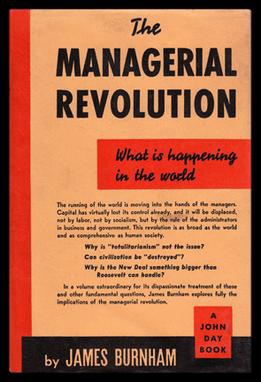
James Burnham, “The Managerial Revolution: What Is Happening in the World” (1941) – Who does half smart like a renegade Trotskyite? From what I can tell of his biography, James Burnham didn’t come to Trotskyism the way you think a political figure born in the first decade of the twentieth century might- after becoming a communist and growing disgusted by Stalinism. No, he went in for Trotskyism directly as a young man, even got to know Leon Trotsky a little. He was a bright young intellectual New Yorker with an eye for power, and something told him Trotskyism was it. This isn’t a diss on Trotsky or his ideology, but on Burnham, when I say that shows he wasn’t as bright as he thought he was. There could be an infinity of reasons to become a Trotskyite and power ain’t one.

I guess Burnham figured that out and went all the way rogue by the time he published this in 1941. “The Managerial Revolution” proceeds according to a parody of the ruthless logic of the two figures Burnham most cribbed from, Trotsky and more than his old mentor Machiavelli. He somewhat gets the ruthlessness, performs it well enough for his audience of little magazine readers (back when little magazines were bigger). The logic eludes him. He tracks a real change in the world but gets the valences wrong, and makes classic mistakes like putting too many chips on prognostications that would play out while he still lived. Above all, he makes the classic mistake of assuming everyone — everyone with thinking about, anyway — thinks like him, all schemes, power, maps, org charts.

The basic point is simple enough- capitalism will be replaced, is being replaced as Burnham writes, by managerialism. Capitalism was/is rule by the bourgeoisie, defined by ownership of capital; managerialism is rule by managers, defined by their managing complex enterprises. Increasing size and complexity of organizations, along with the failures of capitalism, made the rise of the managers inevitable. Governments would be their tool- state management of the economy obviously being more efficient, as shown by both Nazi Germany and the Soviet Union, the New Dealers or some other bunch would show the way in America and that would be that for capitalism. In keeping with his Machiavelli schtick, “this isn’t how I like it, it’s just how it is,” Burnham repeatedly avers throughout the book.

The rise of management as a field, separate from ownership, is an important phenomenon and it’s well worth thinking about what it does to the class dynamic. That said, it seems people who think about it too much tend to overdramatize it- not just Burnham, also thinking here of the people who took the discourse of the “professional managerial class” from Milovan Djilas’ Yugoslavia to dirtbag left podcasts. It makes sense. Managers are bosses in a way owners don’t have to be, and bosses are annoying. But managers weren’t just annoying in Burnham’s time- they seemed like the future. All the stuff you could do with big bureaucracies, with the technology that you needed experts to invent and maintain and bureaucracies to direct, it was all over the place at the time. 1941 is also when the Nazis seemed at their most impressive, post taking over France, pre-Stalingrad.

You still need big bureaucracies and institutions to do a lot of things. Managers, their thought and their place in the class structure, are still important. But it seems like Burnham committed the classic mistake of assuming a static set of subject and object relations (which Machiavelli generally did not- and neither did Marx, Lenin, or Trotsky). Capitalism has proven quite capable of incorporating the wants and needs of managers, who displayed little in the way of class consciousness- what little they had aimed down, not up. Owners haven’t completely ceded the field of management yet. And while they wouldn’t exist without big complex institutions like governments and investment banks behind them, Burnham lived to see that small enterprises, like tech companies, could accomplish a lot. Indeed, the moral/political core of a lot of technical/organizational thought that came after Burnham ignored class distinctions in favor of thinking about whether technologies trended big — think steel foundries or auto manufacturing plants — or small: personal computers and the acid blotter (not that the former work without microprocessors made in giant expensive plants but that’s design thought for you).

Burnham would continue his rightward trajectory into friendship with William Buckley and become an editor at National Review. You have to wonder what ol’ Bill thought of this guy and his rejection of the free market- my understanding is that he didn’t come around to liberal economics for quite some time. I guess “anticommunism makes strange bedfellows,” as James Ellroy said. Or maybe not so strange. The managerialism critique, the idea that our capitalism isn’t really capitalism, that it’s some imposter just pretending, has a powerful attraction on defenders of capitalism tasked with explaining the system’s failures. It’s really the fault of — those people — who think they’re so damned smart, that they can just manage everything, not anything wrong with the system… this has legs, both for standard conservatives and for those who make the leap of “those people” meaning “the Jews.”

In any event, Burnham’s radical years left him with enough rigor to make this less painful to read than a lot of my readings on the right. I could follow along with it relatively well even when he was crashingly wrong, like predicting an Axis victory. It’s more of an odd artifact, the granddaddy of a meme that blobs around the noosphere, acting as a placeholder for critical thought, than anything insightful on its own. ***’

Review – Burnham, “The Managerial Society”

Review – Aschoff, “The Smartphone Society”

Nicole Aschoff, “The Smartphone Society: Technology, Power, and Resistance in the New Gilded Age” (2020) (read by Linda Bevilacqua Farber) – Former Jacobin editor (and friend of mine!) Nicole Aschoff tries to get us past proclamations of doom, utopian nonsense, and “what’s the deeeeeal with phones?!”-level analysis in this work of popular sociology. Fun fact- the last event I had scheduled before covid was her (cancelled) book launch!

The smartphone is a big goddamned deal, arguably a bigger deal than the personal computer (except there wouldn’t be the former without the latter), and we dismiss that at our peril. It serves many functions, and moreover combines functions, in a tiny, portable, relatively affordable package, that genuinely does change the way we do a lot of things. Aschoff discusses some of these- dating, work, politics.

But she doesn’t leave off at either the possibilities that smartphones present at the moment (filming cops!), or their dangers (the Uber-fication of labor!). If there’s a target in this book, it is technological determinism, in either its utopian or dystopian guise. It is true that the shape of the smartphone’s functions, like that of any important technology, shapes society. But it’s also true that society — and social power, who wields it and to what ends — shapes how we use the smartphone.

Right now, that power is squarely in the hands of a coalition of Silicon Valley giants and major governments, and loaned out to other employers. The smartphone, in its current use pattern, empowers the powerful more than it does the powerless (though it does help the latter in a number of instances). The smartphone is a powerful tool in their hands to further their goal of instantiating a data-driven hypercapitalist hellscape.

There’s some interesting stuff here on “spirits of capitalism.” I know Aschoff is a big Luc Boltanski reader based on reading her earlier work, and his thesis that neoliberalism ushered in a “new spirit of capitalism” to replace Weber’s crusty Protestant ethic (NOT “Protestant work ethic,” a phrase which drives me up the wall). Aschoff argues we need a new spirit to envision a future where technology works for us. It would have been interesting to have gotten more on that — Marxist and Weberian insights mix in interesting and volatile ways, people on both sides (well, in my experience, more the Marxist side, but I know more Marxists) often treat the other as verboten — and what it might mean for leftist praxis. But I also understand Nicole wanted to write an approachable, short book.

For all the ways smartphones keep us hooked to the bosses and their values, disconnecting from our phones, while it may be useful (even necessary) for some, isn’t really a good option if we are going to redistribute power downwards. Instead, we need organization- and there’s an extent to which smartphones can help with that. Realistic perspectives on technology, not mythology, needs to guide our organizing understanding if we’re going to seize power and if we’re going to use it sensibly when we’ve got it. We can’t ignore it on the idea it’s not “real politics,” and we certainly can’t buy utopian promises of it eliminating politics. When the power is in our hands, we can use (and, if needs be, limit the excesses of) our technologies for the common good. ****’

Review – Aschoff, “The Smartphone Society”

Review- Lewis, “Public Entrepreneurship”

Eugene Lewis, “Public Entrepreneurship: Toward a Theory of Bureaucratic Political Power” (1980) – I have a feeling the Citizenry (become a Citizen of my newsletter, it is rad) voted for me to read this book out of two motivations: a minority are genuinely interested in how bureaucracy works, and a majority who thought it would be funny to make me read and review something with a title that sounds this boring. Joke’s on them! I love this shit. I tracked down this book and bought the cheapest but still rather dear copy I could find with some stimmy money. I had known about it for at least a decade, after seeing it in some “works cited” of interesting books.

I probably would not have noticed this in “works cited” were it not for the second subtitle (I basically refuse to have second subtitles in the headlines of my reviews, nonfiction authors should count themselves lucky to have subtitles, let alone fiction writers getting subtitles!): “The Organizational Lives of Hyman Rickover, J. Edgar Hoover, and Robert Moses.” What a trio! Hard charging bureaucrats who gave precisely no fucks and ran important parts of American state power at roughly the same time, Rickover was the “father of the nuclear navy,” Hoover ran the closest thing to a nationwide secret police force America ever saw, and Moses was “master builder” of New York, basically in charge of the city and state’s public infrastructure for decades. They weren’t the gray, colorless figures we associate with master bureaucrats. They weren’t exactly flamboyant like the politicians they coexisted with, like Roosevelt or Johnson, either. They were their own thing- the titular public entrepreneur.

This book belongs to what you’d call “historical sociology,” that odd by-blow of two fields you’d figure would maybe have more in common but reached a real nadir of mutual misunderstanding not long after this work was published. I’ve read some good historical sociology (like this book) but it’s not a good way to rocket up the field in either history or sociology, specializing in it. Essentially, what Eugene Lewis (a political scientist, according to his short, eccentric, one suspects self-written Wikipedia page) tries to do here is use historical examples to prove a social scientific point. He doesn’t do primary research (a big history no-no) and he doesn’t do anything quantitative or any fieldwork (a substantial social sciences no-no). Mostly, he talks about the careers of the three men, based on secondary sources (including Robert Caro’s legendary biography of Moses, “The Power Broker”), and fits them into a definition of public entrepreneurship. Public entrepreneurs both fit (uncomfortably) into their organizational molds and break them wide open, they expand their domains, they present a face of apolitical technical competence, they get old and stumble on new political realities, etc etc.

I shouldn’t give such short shrift to Lewis’s theory here, but A. it’s not why I read the book and B. it didn’t go anywhere. My understanding is that “Public Entrepreneurship” is respected in its field but that field isn’t huge and this didn’t spark a big, long-lasting conversation. It also came at an interesting time- 1980, just as neoliberalism was coming down the pike and bureaucracy went from being seen as a necessary evil to… well, here the story is funny. Neoliberalism is a famously slippery term, and people tend to associate it with a rebellion against bureaucracy and rules-bound organizations in favor for “thriving on chaos” in the marketplace, but recent research and arguments have gotten across the point that neoliberalism in fact thrives on, proliferates, rules and bureaucracy. But in any event, those bureaucracies wouldn’t look that much like those of the heyday of the mid-twentieth century. A “theory of bureaucratic power” that made a Weber-inflected take on those bureaucracies in 1980… that’s just bad timing.

But really, I mostly just found the descriptions and comparisons of how the three principals worked interesting and written in quite lively style, remarkable for social science. All three were tough- interestingly, the one from the actual military, Rickover, while a hardass when it came to his agenda, was probably the least of a son of a bitch of the three (then again, he probably wouldn’t have hesitated to flip that nuclear switch if the order came down, so…). Moses routinely destroyed neighborhoods to build highways, and Hoover, arguably, would be the one man to erase from American history if you only got one (I’m aware other people did worse stuff- but most of them would have been replaced by equally bad, roughly equally competent people, not the case with Hoover in my opinion). While Lewis makes notes of things like the lives destroyed during the red scare, he is ultimately more interested in bureaucratic form, how the three men managed new technologies and techniques and played politics, all while appearing apolitical. In many ways, that is the most appropriate portrait of these three men and others of their type, and I’d argue the type is worth understanding. The siren call of “just getting shit done”… not always enough to get an elected politician over the line, but it can provide a basis for power that slips the bonds of what is usually associated with bureaucracy (i.e. the notional source of the apolitical nature of the bureaucratic entrepreneur). Lewis admits his book is more of a jumping off point than a set of definitive answers- alas, I don’t know what jumped off from it.

One thing I found myself wondering- is this sort of power exclusive to liberal capitalist states? Would other bureaucratic setups nurture similar people under similar dynamics? It would seem they could- surely clever people played communist and fascist bureaucracies pretty well. I guess I’m wondering A. would such power dynamics inevitably exist in any system with bureaucracy, and could (should?) they be prevented and B. could you have, if not socialist, then social democratic public entrepreneurs within a capitalist system? Frankly, I have my doubts, though I have fewer doubts about the technical feasibility — some AOC devotee landing in charge of Head Start or something and cancelling their opponents on Twitter until they ran all of the country’s pre-K or some such — then whether it’d actually be helpful to socialism. I don’t hate bureaucracy but it’s not my preferred way to play the game. In this case, I very much am asking for some friends who I could see seizing upon such an arrangement were it possible… people love some sewer socialism… maybe my navy-man alter-ego in a work of fiction (who would no doubt greatly admire Rickover!)… anyway. An interesting and evocative book. ****’

Review- Lewis, “Public Entrepreneurship”

Review- Vysotsky, “American Antifa”

Stanislav Vysotsky, “American Antifa: The Tactics, Culture, and Practice of Militant Antifascism” (2021) – I figured I’d have a look at this new social scientific work on antifa in the US. I’m not sure what I expected but I was pleasantly surprised. It’s nice to see someone in the academic guild get something basically right about this fraught topic. The writing, predictably, plods, as social science does these days, with a lot of name checking and theoretical hedging. Vysotsky carefully classifies American antifa in relation to the literature on social movements, subcultures, etc. It’s also worth noting that Vysotsky did his primary research with antifa groups (“Old City” and “New City” Antifa) between 2007 and 2010, which is to say, years before antifa sprung into the news around the 2016 election. He has plenty to say about post-2016 antifa debates, but a lot of what he observed happened in the time when a few groups, mostly anarchists ensconced in punk scenes, were keeping the antifa thing alive.

The basic thing about antifa, Vysotsky argues, is that it is opposed to fascism. This sounds like a “duh” but given where the rhetoric around antifa has gone — and not just on the right, where it’s basically official that antifa is an underground army for communism/the Democratic Party — it is helpful to ground it some. Vysotsky describes antifa as a classic “countermovement.” The shape any given antifa group takes largely depends on its fascist opposition. Given that the research mostly took place before 2010, a lot of what this book looks at is groups dedicated to dealing with street fascists, generally open about who they are, often in and around punk scenes. This is pretty different from much of what I’ve worked on, where we deal with a range of fascists between Trump supporters and open Nazis, and are largely trying to keep their political movement from taking root in the area. But the general idea is accurate. Any antifa group that goes in already decided about what they want to look like and do, without a clear strategic purpose, won’t last long or do much good.

In any event, as Vysotsky makes clear, action other than violence — education, intelligence work, securing events, etc. — takes up more of any antifa group’s time than street fights, even for the most roughneck groups. This has certainly been true of local practice- I’m writing a book about this stuff and am worried I’ll bore audiences, there’s so little fighting. This is a nice marriage of practicality and ideology. Practically speaking, it makes sense to set some basic parameters, and within those parameters adapt your practices to the situation, when facing an enemy like fascism. Ideologically, anarchists kept the embers of the antifa flame going for a long time before it blossomed again post-Trump, and their emphasis on direct action, decentralization, and voluntarism has placed an indelible stamp on antifascism. Communist groups often participate to the extent they can hang with those values. As for us democratic socialists, well, let’s just say the decentralized decision-making structures in certain chapters of the largest democratic socialist organization stateside give us some leeway a “smaller tent” might now allow… There are times where the voluntaristic aspects of antifascist work can be frustrating, especially to the “frustrated officer” in every nerd boy. But it has answered, so far.

If anything, Vysotsky probably could have afforded to criticize antifa a little more in this book. They/we get stuff wrong. There’s infighting, posturing, ideological foolishness there the same as there is anywhere else on the left, or really in any kind of politics. Going into dangerous situations demands more organization and accountability than some organizations involved want to or can provide. But I think insofar as “American Antifa” exists as a corrective to conservative (both pop-journalistic and criminological) accounts, it is a valuable book. ****’

Review- Vysotsky, “American Antifa”

Review- Tissot, “Good Neighbors”

Sylvie Tissot, “Good Neighbors: Gentrifying Diversity in Boston’s South End” (2011) (translated from the French by David Broder with Catherine Romatowski) – This fascinating work of sociology (and, I’d argue, either social history or historical sociology, depending on definitional boundaries I don’t fully grasp) examines the transformation of Boston’s South End from a “skid row” slum in the mid-twentieth century to the yuppie conspicuous-consumption domicile it has become today. More than that, French sociologist Sylvie Tissot looks at the formation not just of gentrified space, but of the gentrifying class- the upper-middle class that created the contemporary South End. Taking issue with monochromatic depictions of the bourgeoisie in chronicles of urban gentrification, she seeks to create a more nuanced picture, though not so nuanced she can’t make judgments, as is all too often the case when “nuance” gets invoked.

The beginnings of the gentrification process in the 1960s saw a gestalt of factors come together to create a unique situation. The Boston Redevelopment Authority, famously smash-happy and fresh off of destroying the old West End utterly, started taking a second look at its approach. Urbanist critics like Jane Jacobs had begun singing the praises of mixed-use and mixed-class urbanism. The radical movements of the period inspired tenants unions and other groups to fight draconian “redevelopment” plans. So South End, despite its slum reputation, was spared the West End treatment.

But underneath all of this was a more class-driven dynamic, where younger, largely white, professionals with money started seeing potential in the South End. Its Victorians could be converted to single family homes or condos in a way the “high modernist” apartment blocks the BRA might have built could not. “Pioneers” began moving in, self-consciously trying to both live an urban lifestyle and manage the urban experience according to their own lights. The metaphor of rehabbing old Victorian houses extended to “rehabbing” the neighborhood at large. This entailed the new homeowners coming together (sometimes in alliance with older slum landlords) to both fight new housing developments (in the name of “historical preservation”) and police the habits of the older, less moneyed and white residents, often on their way out of the neighborhood.

An urban experience with lots of different kinds of people was always (notionally) valued by the settlers of the South End, but “diversity” became a buzzword in the nineteen-nineties as the neighborhood was transforming beyond all recognition. Tissot tries a high-wire act of both acknowledging the hypocrisy of the yuppies and hipsters of the South End, with their obvious fear of black and poor people, with the kernel of truth of their investment of diversity. They’re not just lying when they say they want diversity. It’s that “diversity,” conceptually, has always been a bourgeois concept that meant an order of things managed from above to produce a pleasing effect, not a genuine pluralism or even a laissez-faire policy towards who lives where.

Hence the ironic parade Tissot runs by the reader of old South End ways being twisted around into new ones for a new population. The pioneers of South End gentrification deplored the frequent drunkenness of the inhabitants and the sheer amount of bars and liquor stores, and deployed considerable political muscle at City Hall to get many of them shut down… but the social life of the contemporary South End runs on alcohol, just higher-priced and in chi-chi bistros instead of working-class bars. The new South End swapped out the diversity of people from all over — black, Puerto Rican, Chinese, and numerous European immigrant groups — for an equal diversity of ethnic restaurants, most of which the remaining non-gentrifying residents, shunted into public housing around the edges of the neighborhood, can’t afford. Instead of gay cruising spots there are gay families. Most poignant to me (and, I think, to Tissot) are the dogs. The prevalence of dogs and their shit was a common complaint for early South End gentrifiers. Now, dog-ownership is a major part of South End yuppie identity, gay and straight, often a substitute for the children they don’t have or delay. In the name of the dogs, South Enders fiercely control public park space, clearing out people (predictably, mostly the poor and people of color) so their dogs can roam. The dogs are something Tissot, coming from France where they’re less sentimental about them, is clearly put off by in a kind of amusing way.

All told, this is a very worthy addition to the history of the present. Gentrification narratives tend to be either all too moralistic (those damn hipsters!!) or mechanistically economics-driven, and Tissot gracefully avoids both. She tries to do in contemporary miniature what E.P. Thompson did with the English working class- show how a class, in this case upper-middle-class gentrifiers, came to an awareness of themselves through collective action, and she succeeds markedly. *****

Review- Tissot, “Good Neighbors”

Review- Hochschild, “Strangers in Their Own Land”

Arlie Russell Hochschild, “Strangers in Their Own Land: Anger and Mourning on the American Right” (narrated by Suzanne Toren) (2016) – Sociologist Arlie Russell Hochschild would, presumably, object to me categorizing her book along with others in the “Cletus Safari” genre, where educated types go out into the hollers and trailer parks (but seldom the McMansions) to figure out what those dang flyover people are thinking, what they could possibly want. And in some respects, she’d be right to object- she did spend several years with Tea Partiers in Louisiana, after all, and clearly does her level best to write of them sensitively. She makes a game effort to “scale the empathy wall,” as she put it, between her Berkeley-bound blue state self and her informants, and claims to have befriended several. I tend to believe it.

Still and all… there’s no rule saying Cletus Safari can’t be undertaken in earnest. What makes it Cletus Safari isn’t exploitativeness (though that’s inevitable in any researcher-informant relationship, no matter how respectful) but the relationship between researcher and informant as envisioned by the researcher. Acting as though the people of Middle America are this riddle that needs deep (or shallow, as the case more generally is with journalistic safaris) application of the tools that urban sophistication can provide in order to get what’s going on with them- that’s the essence of Cletus Safari.

Leftists get “the white working class” or “middle America” or whatever plenty wrong plenty of the time when they try to explain it, too, but Cletus Safari is a peculiar product of deep-freeze liberal, or even liberal-conservative as with J.D. Vance or Charles Murray, mindset. There’s just something about it: the individual, armed only with their advanced degrees, research assistants, and gosh darn broad-mindedness, getting down to cases with the canaille — and y’know what? LEARNING something about THEMSELVES in the process! — that just screams “domestic Peace Corps,” or “domestic counterinsurgency” for that matter (it might be a matter of time before the genre gets folded into the latter…).

I’m getting away with myself, here. My point is that Hochschild doesn’t need to be stupid or a bad writer or sociologist — she is none of those things — to produce Cletus Safari. She just needs liberal brain, which she has in spades. At its core, liberalism is about short-circuiting power conflicts through appeal to some sort of underlying harmony of interests and channeling the energy of power conflict into other streams of “progress,” economic, technological, political, whatever flavor. One such short-circuiting and channelling produced the discourse of “big government versus small government” or “government versus market.” It’s a way of not asking the question even a baby radical would ask- “whose government?”

Hochschild takes the terms of the debate over “government” at face value as presented in contemporary American political media. The image of the liberal professor arrogantly lording their perspective over others is wrong, or at least is in this case- this particular liberal professor has been captured by her sources, at least to the extent where she uncritically accepts a “big government versus small government” framing as though it means anything in and of itself. This is the heart of “The Great Paradox,” as she calls it- the fact that the people most in need of “government” by virtue of the economic screwed-ness of their communities are the most likely to want to gut it, to vote for people who refuse to help them and often make matters worse. Why, oh why, do they do this to themselves, the liberals cry out to know?

Thomas Frank often gets lumped in here and it’s called the “What’s The Matter With Kansas” question, but people (Hochschild included) get Frank wrong- Frank made it abundantly clear to anyone who actually read the book that Kansas was largely the doing of the Democratic Party, which abandoned whatever pretense it once had of looking out for the working class and/or the little guy. If you’re going to get screwed either way, might as well vote for the guys who at least throw you the bone of cultural solidarity and make liberal elites amusingly angry. There’s limits of how long I’ll go to the mat for the honor of Tom Frank, but he deserves more credit than he gets for “What’s the Matter With Kansas” from people who should know better.

Anyway, this book. Hochschild wants to explain What’s the Matter with Louisiana, a state in need of more and better governance if ever there was one, considering it is sinking into the Gulf of Mexico in no small part because of its main export, oil. The people she talks to, white inhabitants of the area around Lake Charles (which is half black but she doesn’t talk to many of them), are prey to one ludicrous petrochemical-linked natural disaster after another, from the BP oil spill to a massive sinkhole that consumes many of their homes caused by irresponsible chemical storage practices. Some of them grant that maybe the government should do more to fix this or that given individual problem (though they rightly point out the state authorities in Louisiana are in the oil industry’s pocket). But in general, they eschew “big government” and hail the oil industry as a great friend of Louisiana.

So she talks to a range of Lake Charles Tea Partiers. A lot of the book is her collecting quotes and anecdotes. From them, Hochschild excavates their “deep story,” a narrative construct that structures all their other ideas. This “deep story” is basically the idea that there’s an orderly line for the American dream, and that Tea Partiers (that is, older white people) are being cut in line by minorities, and moreover, the minorities are being praised and the Tea Party base scorned for their respective actions. Hochschild proudly reports that all of her informants related to the deep story when Hochschild explained it to them.

If I were one of Hochschild’s informants, I would jump at this story, too, because it’s a lot nicer than the simpler explanation: spite. Their lives suck (most people’s lives suck), despite their privileges, and they want to take it out on someone, so they take it out on others. No government could be too big for the task- Hochschild doesn’t record any answers to questions about police violence, but her informants are certainly in favor of big government capable of regulating your uterus, of closing the borders violently, of waging permanent wars in the Middle East. Why wouldn’t they be willing to spite themselves in the bargain, if it’s people like Hochschild who get hurt worse (or more performatively) by things like environmental degradation? Among other things, they’re old. They’ll be gone soon. To paraphrase a Zionist slander of the Palestinians, these people hate liberals more than they love their children.

I don’t know, man. I’m not trying to condemn this book entirely, out of hand. I get that Hochschild put a lot of work in. I get that she couldn’t just go out there and come back with “these people are spiteful” as the answer. Among other reasons, spite isn’t the only thing they’ve got- they also share their sweet tea and pictures of grandchildren with her. But a more complex view of the person than contemporary liberal brain (as distinguished from liberalism at its best, which can do more with complexity) allows shows that spite and at least superficial kindness to strangers (who you know are observing and reporting), basic niceness, can coexist. How personally mean were the bulwarks of any broad-based repressive system? I don’t think spite fails to exist in “blue” areas, and an ethnography of, say, the burghers of Newton/Wellesley (or my own dear hometown of Foxborough) would show that much nicer- maybe a tad more rational in their spite. But between liberalism and some very basic cooptation by her subjects, Hochschild whiffed it on this one. **’

Review- Hochschild, “Strangers in Their Own Land”

Review- Neel, “Hinterland”

Phil Neel, “Hinterland: America’s New Landscape of Class and Conflict” (2018) – This is a very interesting and provocative look at the contemporary geography of class conflict from someone steeped in insurrectionism. Forget the “brain-hub,” “creative class” cities, Neel tells us- the most interesting spaces, both from an intellectual and an insurrectionist standpoint, contemporary capitalism has created are the hinterlands. Neel divides them into far — rural and exurban — and near hinterlands, the latter of which are the interstitial spaces within urban areas into which capitalism shoves both infrastructure and poverty.

The far hinterlands are, well, not “familiar” but are at least examined in many a post-2016 work. Neel is a native of rural northern California (the “State of Jefferson”), but doesn’t truck with the native tale-bearer/interpreter role that J.D. Vance has taken on. Neel does, however, borrow from Vance’s fellow militant liberal, counterinsurgent David Kilcullen, in arguing that in in the void left by the economy and increasingly by government in rural western areas, whoever evinces “strength and stability” will attract a following. In some places, Neel notes, militia groups like the Three Percenters and the Oathkeepers present more of that strength and stability than does the local government, and certainly more than any left-leaning formation. Ironically, most militia types can no more claim to be the salt of the earth hinterland types than most liberals, being largely well-heeled exurb dwellers, but could potentially attract a following.

I found the discussion of the near hinterlands most interesting. Geographers have long observed that the inner ring suburbs of many cities, originally all-white, are rapidly diversifying and becoming poorer as black and Latino residents flee the inner cities. Ferguson, Missouri is a good example of this outside of St. Louis. At the same time, the infrastructural supports of capitalism extend outward spatially into these same areas- the warehouses, the trucking depots, server farms, etc. This activates Neel’s insurrectionist imagination. He had a rioting bust from Occupy Seattle and is in general dismissive of most other leftist strains (sometimes eye-rollingly so, as when he puts too much analytical weight on identity politics as a failing of the contemporary left). He was on the ground in Ferguson, too, one of the much-maligned “outside agitators,” but there wasn’t much need for outside agitation. The people of Ferguson were pissed, and their situation isn’t all that different from the other near hinterlands- poverty, insecurity, racism, a state absent in terms of dealing with needs but omnipresent in terms of doling out fees and police violence. Ferguson, Neel notes, was the first major suburban uprising, and the geography was totally different than that of traditional urban uprisings, much less dense and more spread out, darker, both in the sense of fewer streetlights and just a general sense where the cops didn’t know what was going on.

Where does this leave us? Neel theorizes about the “historical party” of revolution, the implicit mass ready for what might come, and “overcoming the riot” – going from rioting (or occupying) to a more sustained revolutionary action. He wonders where the “ultras” of the American near hinterland scene may be, alluding to the soccer hooligans who did so much to bolster crowd resistance against regime forces in Egypt, Ukraine, and elsewhere. He calls for an “oath of water”: where the reactionary militias have an “oath of blood” to a community defined by exclusion, the advancers of revolution need an oath to the flood, the overcoming of all boundaries (I wonder if Neel has read Klaus Theweleit?). His prose flows beautifully and his observations are sharp. I can’t say I agree with everything here — Neel would probably find me a softie, with my book review and noise demos and tendency to stay put in dear old Massachusetts — but this is a fascinating, compelling read. *****

Review- Neel, “Hinterland”