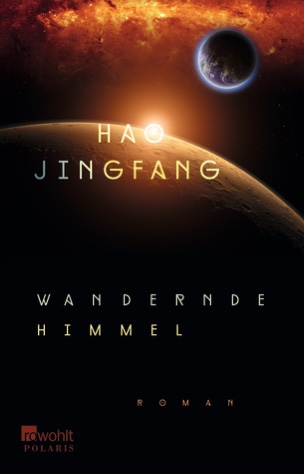
Hao Jingfang, “Vagabonds” (translated from the Chinese by Ken Liu) (read by Emily Woo Zeller) – Here’s the thing with Ursula Le Guin: she didn’t go on for six hundred-odd pages at a pop. I know, I know, Saint Ursula could do no wrong and if she did write about the feelings of scifi people for six hundred pages we’d all eat it up and ask for seconds, but, the point stands. We should not neglect something that differentiates genre fiction from literary fiction, historically: a keen awareness of the reader’s patience. True, many a SFF classic strains that patience, but it usually does so with worldbuilding and action sequences, and a lot less with attempts to plumb the depths of character.
Critics sometimes compare Chinese scifi writer Hao Jingfang with Le Guin, which is where this opening gambit comes from. But even leaving aside the fact that Hao’s freshman effort weighs in at a robust 624 pages, the comparison shows the weak chops of a lot of genre criticism these days. You don’t need to hate “Vagabonds” to see the differences- I didn’t love it, I didn’t hate it, I’m confident in saying Hao is no Le Guin (which she doesn’t claim to be, as far as I know). “A woman writing scifi that’s not about space battles and has characters with inner lives and social commentary, must be a second coming of Le Guin!” is just dumb even if you think Hao has the chops to merit the comparison on quality grounds.
“Vagabonds” is about a small group of kids raised on a Martian republic in the 23rd century or so, who go visit Earth for a few years, and then come back. Hao depicts Mars as a sort of technocratic utopia; Earth, meanwhile, is its capitalistic, nationalistic self. You don’t see much of the trip, except as flashbacks narrated by the main character, Luo Ying. What you see is their homecoming. Most of them went out when they were thirteen and came back eighteen. And now they’ve got feelings and opinions about the comparative merits of Mars’ system versus that of Earth!
Given that this is a writer from China, it’s pretty impossible to avoid seeing some overlay of comparisons between China and “the west” here. Ken Liu, the translator and a big SFF writer himself, downplays these comparisons in an essay somewhere, but it came off pretty literal-minded. The strict technocracy of Mars — everyone lives in one big (glass! Lot of sand on Mars) city, everyone’s basic material needs are met, everyone joins an “atelier” workshop when they graduate and they’re all coordinated according to master plans established by engineers and scientists — does not strongly resemble China’s current system. But it kind of does seem like the symbolic relationship between the two systems does rather resemble that of contemporary China and contemporary US/Western Europe. Hao represents Mars as serious, planned, aimed towards high values, but also authoritarian (though not notably violent) and conformist. She depicts Earth as free, fun, valuing the individual, but also corrupt and shallow.
Well… the kids have feelings about it. There’s an interesting bit early on where Luo Ying interacts with a film director from Earth. The director is starting to dislike Earth’s shallow consumerism as Luo Ying starts to disdain Mars’ authoritarianism, they pass like ships in the night, both idealizing the systems the others are trying to escape. Time goes by and Luo Ying and her peers grow more and more restless with a life of assigned workshops and such. They act out by doing stuff like “borrowing” planes and flying around Mars’ valleys and so on without permission. They get angst, make plans. Luo Ying finds out terrible things about her parents, who were also dissenters, and her grandparents, who helped engineer the Mars system and possibly her parents demise.
It’s not bad, but it’s also not great. There’s a lot of characters, and most of them are hard to distinguish, especially the rebel Martian kids. Hao does a lot more telling than showing when she wants to get across the heightened emotional states of her characters, and you gotta figure translation isn’t helping. But also, like… no one seriously addresses a serious believablity question. A fragile ecology in a place where the atmosphere and temperature could kill you — Mars has not been terraformed, in this story — easily seems kinda like not the place to complain about “authoritarianism”? Especially when said system isn’t that violently repressive and mostly sticks to managing the technical systems keeping everyone alive? I get that these are kids and kids complain and act up. And they don’t really overturn anything- that would be besides the point, which seems to be, every system has it’s good and bad points but people need to express themselves etc etc. All well and good but it kind of seems impertinent when the wolf (or radical decompression) is at the door, and isn’t an interesting enough idea to really rocket the book past it’s sleepy pace and uninteresting characters… or to Le Guin comparisons, though Hao is young yet. ***
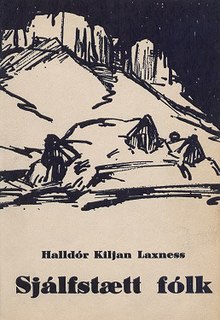
Halldór Laxness, “Independent People” (1935) (translated from the Icelandic by J.A. Thompson) – I took my time reading this, and I’m glad I did. Critics complain — I complain — about books, mainly literary fiction, where “nothing happens.” For some critics, this means stuff needs to be as action-packed as a thriller (or incident-packed as a romance novel) to be worth their time. While I do like a lot of action/incident, it’s not a requirement for me, or rather, I might have a broad understanding of incident. This novel of rural life in early twentieth century Iceland does have a few humdinger scenes, like a man who winds up taking an unplanned reindeer-back ride into a just-barely-above-freezing fjord river, but for the most part, the incidents we see are the quotidian ins and outs of just barely getting by on an Icelandic farm. But it’s riveting all the same. It wasn’t (just) poor time management that had me reading “Independent People” mostly in dozen-page dollops- I wanted to savor this book.
To the extent we think about Iceland much these days, we think of it as a quirky tourist destination, conveniently located on the flight path between the northeastern US and Britain. It’s an extension of Scandinavian civilization way up north and west, complete with a high standard of living, stability, democracy, free sexual mores, etc. Well, it is indeed an extension of Scandinavia, settled by Vikings in the late ninth century AD, but that meant something very different from hot spring tour buses and pricey Reykjavik beers for most of its history. It meant profound isolation and poverty. It means a couple-ten thousand descendants of the Vikings stuck on a small volcanic rock, with only intermittent boats back to the distant metropole in Denmark, trying to scrape a living as the rest of the world mostly passed them by. Shit gets weird in that kind of setting.
There wasn’t really a “native” population when the Vikings got there, but there were a few people, most of them Irish monks and other religious hermits who wanted to be well and truly alone to contemplate their dark, moody Celtic variant on Jehovah. Our story begins with the Viking settlers driving off one of these monks from a particular valley, and over the centuries, they expanded his memory into a hiberno-papist demon, Kolumkilli (presumably named after the great Irish hermit saint Columbkille), who curses the valley and anyone who tries to make a go of it. Is it the curse, or just the fact that scratching a living from volcanic rock, cut off from all the trade routes, is a precarious proposition? Icelanders tend not to think in those terms. People leave Iceland — a fair number go to America once that’s on option, often via work on whaling ships — but once you leave, you’re gone for good, as though you’ve died, at least as far as those who remain when this story begins are concerned. This makes the remainders an odd breed.
And Bjartur, the main character of “Independent People,” is odd, but in a relatable way. When the main action of the novel begins, he’s just gotten done with eighteen years of indentured servitude to a landlord, debt peonage still being a major institution in Iceland at the time. He takes his accumulated savings and buys some land smack dab where Kolumkilli supposedly cursed things. He doesn’t care. He bows before neither ghost, gods, or men. He will go to almost any length to maintain his status as an “independent man.”
It’s not just economic dependence, or even primarily economic dependence, even if he avoids debt like the plague. One of Laxness’s master strokes is depicting an actual pedant- which is to say, someone who makes himself and everyone around him miserable on principle, but who doesn’t actually follow through all the implications of those principles (John Kennedy Toole was another master of this). Bjartur’s farm isn’t an autarchy- that’d be borderline impossible. He sells his wool and sheep to a small port town merchant, who advances him the rye flour, preserved “refuse fish” and minor household goods he needs. There’s no getting ahead. But as far as Bjartur is concerned, it’s the natural order of things. His real independence isn’t economic- it’s in his refusal to accept any connection or obligation other than the bare minimum sanctioned by longstanding Icelandic custom as what a man ought to have. And so you have brilliant scenes of Bjartur grudgingly doling out coffee (coffee and tobacco seem to be the only foreign products these people seem to have) by the bucket to his neighbors when they walk or ride by, snidely insulting them all (and receiving insults) the while in between rounds of quoting epic poetry (almost none of them have books, even bibles) at each other and comparing the rate at which their respective sheep flocks are being decimated by intestinal worms.
Family is an obligation, but not the haven from the world that we think of it as today. Bjartur is married to a woman with whom he escaped indentured servitude. She gets pregnant — possibly with a landlord’s kid — and dies in childbirth because Bjartur would rather chase one lost sheep up into the wilderness during a blizzard than stay at home and listen to her talk. The daughter survives, Bjartur wrangles some hired peons for himself, knocks one of them up a few times, and soon has a small gaggle of kids… both because that’s what happens when you have sex, and because he wants and needs the labor. Bjartur and the other adults around — his peon-wife (this was apparently considered normal at the time), other hired long term laborers — aren’t entirely unsentimental about children. He especially loves his oldest daughter, Asta Sollilja, in a way that only avoids being super creepy through Bjartur’s hard-assed personal qualities. But the absolute best Bjartur is going to offer them is the opportunity to replicate his own life- endless, unremunerative toil, and after he dies, one of them (one of the boys that is) gets to call himself “independent” and keep the cycle going. The girls and the other boys can go screw. “It’s no business of mine,” as Bjartur would put it.
Much of the middle of the book is told from the kids’ perspectives, mostly Asta Sollilja’s and that of the youngest boy, Nonni. Both are dreamy children who want to experience worlds beyond the miserable sod croft — building a house is a distant glimmering dream — they’re stuck in. That’s another element of Scandinavian culture, the imaginative flights of fancy, waking dreams of elves, trolls, ghosts, and what might as well fall into that category for a 1910s Icelandic child, “the counties” – anywhere not Iceland (or, I guess, Denmark, which sends officials and takes money). The imagination can be as active as you please, but utter monotony threatens to starve it. It’s hard to imagine just how monotonous it was, and conveying this is one of the miracles Laxness accomplishes. Obviously, there’s no media beyond oral tradition- even newspapers are a thing only the landlords bother with. There aren’t schools except private religious schools Bjartur only sends one daughter to, for a little polish. Beyond that, there’s an extraordinarily deprived “material culture.” There’s just not a lot to work with, considering how poor and isolated the Icelandic countryside is. You see the same shit every day and it’s all the same colors. The natural environment is beautiful, but in a stark (and somewhat predictable) way, with an extremely limited color palate and so few animals that cows are some of the most exciting things you’ll ever see. Nonni, for lack of anything else to imagine, spends hours in bed before rising for his fourteen hour work day to fantasize the small stock of metal goods in the croft — a few pots and pans, a coffee service — talking to each other.
Bjartur (and the circumstances he fights in a never ending doomed war that makes mock of the concept of “independence”) dominates the kids but can’t keep them on the farm forever, especially with the tendency of his wives to die. Nonni gets a relative to send him to America. Asta Sollilja comes back from confirmation school pregnant. Bjartur can’t stand the shame, denounces her as a landlord’s bastard, and casts her out, after which she carries on her own doomed struggle for independent survival as a poor single mother in a small port town.
Laxness also shows what change does to such a situation. Cooperative societies arise, and Bjartur refuses on principle to have anything to do with them, especially because the big shots up the hill who used to employ him as a peon are big coop players. Laxness never gets so lazy as to let either Bjartur or his rivals gain the moral upper hand- the big shots foist a cow on him at one point. The cow changes everyone’s life on the croft with its milk and niceness. Bjartur hates the cow and eventually slaughters it wantonly, and the shock helps kill his second wife. Who’s the asshole? It’s an asshole move to kill your kids one source of food other than rye bread and shitty old fermented fish. But he didn’t want the cow, and in a world where everything runs on debt and clients he (it’s worth noting that some libertarians see the old Icelandic social/political structure as a role model for an “anarchocapitalist” utopia), you can see why he may be leery of his former almost-owners, who are always trying to get him indebted to them, bearing gifts.
Coops get big anyway, with or without Bjartur. Then World War One rolls around and all of a sudden people want Icelandic wool for uniforms and mutton tallow for greasing rounds. Even Bjartur starts to make money. In a pretty classic “stubborn asshole” move he suddenly decides he wants in on the Coop, and it’s lending capacity, to finally build a house (among other things, it might get Asta Sollilja to come back home, not that he’ll admit it). But of course, somewhere between Bjartur’s asshole, standard capitalist bad luck, and living in the valley cursed by Kolumkilli, his house sucks, and the war ends, and the market collapses, and he has to sell out and start all over again, and he’s down to the one “practical” son, who wants to go to America but then falls in love with a rich neighbor girl who hates him.
This is positional economic, social, and existential warfare, and I love it. You’d figure depictions of futility would bother me, given everything, but when they’re honest and well-done, I like them better than almost anything. I was a little cautious coming in, used as I am to sentimental American literary portrayals of rural people by urbanites who shower multiple times a day. Especially because I knew Laxness was a pretty big lefty, and some of the worst excesses of American rural sentimentalizing come from American “popular front” type writers… but no, Laxness neither sentimentalizes, or goes in for Faulkner-style (or the many cheaper kinds on the market) of rural gothic. All in all, a great read, one worth savoring. *****
Bronze Age Pervert, “Bronze Age Mindset” (2018) – I decided to take a look at this one because people on the contemporary far right talk about it a lot, including people close to Donald Trump, people with security clearances. “Gaze upon the terrible and stupid shit supposedly serious people are taking seriously.” Well, I had my little gaze, but I also do antifascism and watch street-level and internet fascists on my own. It might be important that the likes of Michael Anton (author of the “Flight 93 Election” essay) take “Bronze Age Pervert” seriously. But I have the inkling it’s less likely that BAP will directly advise on policy or something, and a lot more likely — in fact, is already a fait accompli — that BAP expresses a way of thinking that has already filtered outwards into the broad contemporary right.
For those of you unfamiliar, “Bronze Age Pervert” is a social media personality. He hollers about the corruption of our current age, harkens back to a period when men were men (there were a few such periods but as you’d guess, the Bronze Age is his favorite), and caterwauls about the relationship between physical strength/classical beauty and virtue. In 2018 he put out some of his stuff in ebook format. As far as where he fits in contemporary reactionary circles goes, his influence mostly runs in the “manosphere” and in “neoreactionary” circuits. Some even speculate that BAP is actually Curtis Yarvin, aka “Mencius Moldbug,” a neoreactionary writer I reviewed a while back. Whether he is or isn’t Yarvin, BAP fits in- while a screaming reactionary, he’s also pedantic and, like many in the manosphere, urges a peculiar vision of self-improvement over real-world political action. Scream online, whisper in the ear of the powerful (if you can get them- this isn’t 2017 anymore), and “cultivate yourself,” the main MO of this type.
A brief detour: what seems like a long time ago, when this book was likely being conceived and before she took her “heel turn,” Angela Nagle cut a reasonably high profile in the land of left-wing altright-explainers. We all should have seen how thin that pretense was (plenty of people did- but we all should have) between her needless cheap shots at tumblr teens, the distinct absence of the deep research into altright forums she claimed she did from her written work, and from the sort of pseudo-clever, Twitter-sound-bite quality of even her best points. One of those points was this: in no way did the altright, as we called it then, resemble patriarchy of yore. It was juvenile, vulgar, polymorphously perverse. Nagle would assure us that growing up in rural Ireland (another tell- for someone who hated identity politics, Nagle was not above making use of her Irishness for authenticity points) she knew from patriarchy, and it wasn’t that. As usual, even her relatively good points were more about scoring points against enemies on her left, in this case Internet feminists throwing charges of “patriarchy” around. Moreover, the point lands and then mires in the context of twenty-tens Internet debate like a two ton anchor in swampy bottom muck.
I say all that to say this: it should be a given that Internet misogynists (racists and other reactionaries too), even when they harken back to one or another period of the past as a golden age of gendered order, should not be expected to actually live up to even their own picture of said golden age, let alone what the time was “actually” like. It can be good for “owns.” The failure of people to live up to the standards they set themselves seldom fails to provide targets for criticism and abuse, and if the standards are ludicrous to begin with and they scream and abuse others for not accepting them, all the better. But there’s limits to that, too, and arguably that’s where books like “Bronze Age Mindset” come in.
The word “mindset” is a vague one. Most users of the word would be better served trying a variety of nouns ranging from “attitude” to “ideology.” BAP and those like him are a (likely accidental) exception. Vagueness serves them, and if you think the mind is a sort of simple input-output device you can “set” or program, then the word is perfectly cromulent. Set your mind on its course and let it fly! Don’t think too much about how you had to think — at least a little! — to get yourself on this set course. That should be your last thought! “You’ve been thinking thoughts your whole life!” As Super Hans put it in that one Peep Show episode where he and Jez join a cult. “Look where that got you!”
That’s roughly the sort of thing BAP would say, though he might use fewer conjunctions, to get across the idea he is a hulking caveman, or else throw in some dumb Internet-speak. That’s not to say he recommends something so simple as just not thinking. Oh no! He’s a Nietzschean, you see. He’s the real thinker! He sees past the skeins of lies put out by vampires who seek to prevent the true spiritual elite — who are also the intellectual elite, and the physical elite, the strongest and the prettiest — from living out their destiny. You can guess what ethnic group most of those vampires come from, though BAP has a lot more to say against the Chinese and Shia Muslims (not sure how that bee got in his bonnet but who cares) more than he does about Jews.
Biology is everything; history is mostly falsified and in fact men and monsters and weird gods coexisted, maybe (he strikes many more poses than he stakes claims, but says readers should look into hollow earth ideas). The real conflict is between those who’d “domesticate” people by getting them to live in cities, and then those who want to live wild and free with the strong taking what they want, as nature supposedly intends. The nonsense of it all is apparent and not really that necessary to rehearse here- science is true when he wants it to be but a tower of “bugmen” (domesticated people) lies when it says something he doesn’t like, history is mostly lies except the back third of the book is mostly tediously-retold stories of heroic men from history, most of whom came from at least partially agricultural/urban societies, blah blah.
Stupid to expect much sensible here. To the extent he has anything to say, it’s about the farce that is most of contemporary masculinity. He uses “gay” as a casual insult, but advances an interesting, sympathetic theory as to why boys turn out queer: they get a look at the parody of masculinity prevailing around them, abd don’t like it. Without any “real” masculinity to model themselves after, they become effeminate and hence gay and/or trans, etc. I reject a lot of the premises involved, but I do tend to think a lot of people, by no means men and boys only, have discovered themselves somewhere on the spectrum of queer because of just how awful and rotten conventional sex and gender roles are. But he doesn’t sustain any real train of even half-interesting thoughts — one wonders if he included that bit about gay boys to appeal to rich reactionary gays like Peter Theil — and like I said, spends a lot of the book telling “epic fuckwaffles”-toned versions of old stories about pirates and conquistadors and shit. He gets that contemporary Internet-based life is awful, but he doesn’t write like it.
Like I said, I think this book is less important for its potential to reach important shitheads — they’ll do awful and stupid things whether or not they read BAP or anyone else — and not really directly his impact on more everyday fash, either, at least not directly. I guess what I’d say is that BAP is an example of an emerging attitude towards truth on the part of some reactionary sections of our society.
In recent years, being wrong has not proven to be a problem for our elites. Everything from the Iraq War to the 2008 crash to the Clinton presidential campaign shows that they just don’t suffer meaningful consequences for fucking up, and often recieve greater rewards when they do. I’ve come to think that in lieu of any better explanations for the world around them, certain sectors of society have more or less decided that being factually right or wrong about things is for suckers, and even having a standing attitude towards the rightness or wrongness of most given ideas beyond personal convenience is just unnecessary. If they just carry on that way with enough conviction, then they, too, can be like our elites, consistently rewarded. They too can fail upward. That most of these same people claim to hate postmodernism, while adopting distinctly postmodern attitudes towards truth claims and towards the relationship between appearances and reality… well, that’s just the sort of factual reality they don’t have to care about.
I see this pretty frequently in street practice. Political types generally try to minimize their losses (it takes discipline to follow Amilcar Cabral’s motto, “mask no defeats”) but contemporary fascists really take it to a whole other level. What does it matter if they get infiltrated, routed, humiliated again and again as long as they can cut video for their few hundred followers on right-wing-only social media that makes them look (their peculiar version of) cool? Real world failure seldom embarrasses them. If you can really get them at their ethos, that embarrasses them, sometimes- a big manosphere figure got shamed, “cancelled” if you will, because someone dug up an essay on how he enjoyed his girlfriend having sex with other men, thereby making him a “cuck” (his outsized emotional reaction, directed at a player in the scene bigger than himself, didn’t help). But even that’s inconsistent. Reality as you and I understand it, with some relationship between cause and effect and everything that implies, is for bugmen. Supermen make their own reality, with kickass elves and magic and shit in it.
“They’re immune!” you might find yourself crying out. Well, they may be immune to facts and logic, but we already knew that, didn’t we? Immune to mockery most of the time too- well, we’ve seen that, too. Really, as unsettling as seeing people who really think the Earth is flat, or that there’s microchips in vaccines, or that physical strength is the same as personal virtue is, it’s probably a good thing. It’s good that we see what we’re dealing with. Think about eras when embarrassment actually did work, when people didn’t pipe up with their worst ideas because they were afraid of being mocked- the sixties and the nineties come to mind, that is, rising tides. Once they stop handing out shiny apples for being good rational types, it’s no surprise that people — many of them only a few generations removed from hex signs and tent revivals (or darker things yet) — decide they won’t play along.
Beyond showing the seriousness of our situation, there’s another… maybe not happy, but positive message here. People of this type lose to people who can see reality and drag the others into it. Sometimes, it’s even relatively easy- the original altright became a punchline because one dude decked Richard Spencer on TV, and because we dragged the rest of them off their forums and into real, public space, and made clear we wouldn’t put up with their shit. It’s unlikely that this form of reactionary post-truth, and others like it (QAnon probably most troubling of all) will be out to bed that easily. But if we can adhere to reality harder than they can adhere to fantasy, I think we can do what needs to be done. *’
James Forman, Jr., “Locking Up Our Own: Crime and Punishment in Black America” (2017) – There’s a lot of annoying cliches that have either arisen or taken on new life since the Black Lives Matter movement began, but maybe the “why don’t they protest black on black crime?” one is the most irritating. Among other things, it reveals the utter isolation of the speaker from any kind of black community. I’m not saying my social situation isn’t very white, and to the extent it’s not white, it’s not very black. But go to any march or rally pertaining to anything black — or if that’s not your speed, read a book by a black author, or hell, listen to even more or less any music by black musicians — and you will get an earful about black criminals harming and exploiting their communities. Every BLM action I’ve been to has had speakers denouncing gun violence in their communities, with loud affirmations from black people in the crowd. Inter-communal violence is a clear source of angst in black culture and has been for a long, long time, and you need to be profoundly, willfully ignorant not to see that (or so offended by the ways in which many black people are unwilling to take shit off of white people chiming in on the issue these days that you just shut down).
In fact, law professor James Forman, Jr. (son of a civil rights legend) argues that we can’t really understand our current mass incarceration crisis without understanding black anti-crime politics. He focuses on Washington, D.C., the premier “chocolate city” of that time, starting in the early seventies, when black mayors started getting elected in largely-black cities and walls keeping black people out of civil service jobs started coming down. DC also had a serious crime problem, concentrated in poor black parts of the city, and it only accelerated in the period when the official rulership of the city passed into largely-black hands.
People were pissed. Black people were extremely pissed. Suburban whites weren’t, aren’t, mad about crime, not really (whites who actually lived or live in areas with high crime rates often enough are). A lot of them are scared, and a lot of them feel shame about that, and want to experience either the vicarious thrill of someone “cracking down,” or else do it themselves, or feel shame that they or their politician/cop surrogates aren’t doing enough… but black people who live in areas with a lot of crime were and are pissed off about it, understandably so. You didn’t need to be a socially conservative black person to feel that way, either- many movement veterans, as the high water mark of both civil rights and black power receded into the past and they found themselves with crumbling cities on their hands, were profoundly depressed, angry, and ashamed at the contrast between their high hopes and the grim realities of cities in the seventies.
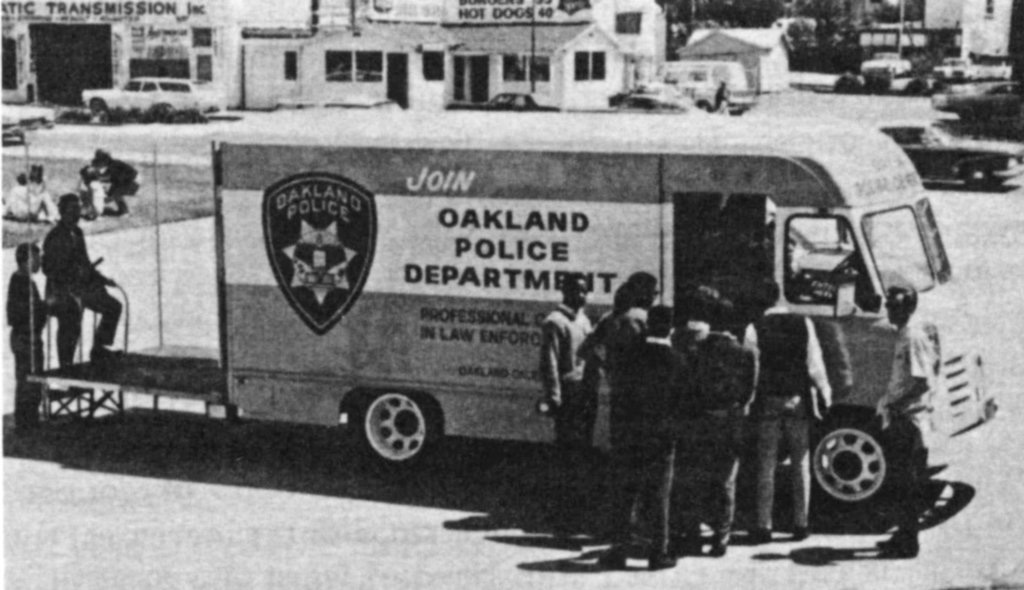
Organizers and politicians in DC and other cities called for many of the things progressives and leftists still call for in response to high crime: more jobs, better education, stuff to keep young people (especially young men) busy, medical solutions to addiction. They also called for more policing to deal with existent thieves, drug dealers, gangsters, and others making urban neighborhoods unlivable. As Forman puts it, most of them had an “all of the above” approach. They often wanted policing to be undertaken by police forces that took on more black recruits. This took a while, given the prevailing racism in police departments, but by the eighties they were getting their wish.
A combination of bad circumstantial political calls, pervasive lack of funds for social programs, and fundamental misapprehensions about the role both of police and of class divisions within black society brought about this tragic situation, where black people who sincerely thought (and think) of themselves as pro-black, contributed — continue to contribute — to a situation that sees more black people in some stage of incarceration than were enslaved in 1850. It didn’t happen overnight, it was more of a consistent series of botched reactions to awful situations- you see that a lot when people lack resources and political room to maneuver. So the newly-formed DC city council refused to decriminalize marijuana in the early seventies- a white “hippie” brought it up, heroin was ravaging the black community, it just didn’t seem right. DC passed draconian gun restrictions, but couldn’t get any kind of alternative to the illicit economy in front of its citizens, so people still had guns and used them. DC empowered it’s police to act like warriors in an occupied land when the crack epidemic spread out of control, and black cops — many of them drawn from a black middle class both long accustomed to looking down on the black poor and not much more knowledgeable about poor black communities than their white fellow officers — unleashed a stream of violence on black DC that goes on to this day.
Plenty of black voices opposed these things, in DC and out, but there was no consensus on these issues (and I doubt there is one today, though maybe things are a bit better when even a lot of conservatives admit the carceral state is out of control). It’s unlikely that any but Clarence Thomas-style authoritarians would have approved of the tough-on-crime course of action had they could have seen the end result. Many black leaders called for a “Marshall Plan for Black America.” What they got from the white elite that still holds the purse strings was a much harsher military-style occupation than the US Army gave Germany and barely any of the economic reconstruction.
Safety is still a substantial concern in a lot of neighborhoods, disproportionately black and brown neighborhoods. The police aren’t helping, and for many populations, especially young people and particularly young men, are a frequent danger to their safety and a constant drag on their dignity and sense of belonging to anything other than a throw-away community. Forman criticizes the police, and he includes scenes from his own interactions with cops and the legal system from his time as a public defender and as a founder of a school for kids within the juvenile justice system in the book. I won’t soon forget his descriptions of cops routinely rousting his students for nothing more than standing outside the school during their lunch period, screaming at them, slamming them down on the ground or on car hoods, finding nothing at all. Forman and his fellow teachers painstakingly arrange a “community forum” with the police. Officers come, almost all of them black, and robotically repeat the same talking points about “high crime areas” etc., and how the students should all wear big lanyards so the cops know they’re ok. Needless to say, Forman and his students aren’t impressed with the idea that they need to carry a “pass” to avoid police harassment.
But Forman also sees the police as a necessary part of a better future for black communities. He is not an abolitionist, it seems. Well… I am, but I get it, from two angles. The first is that we need a robust alternative safety system of our own in place before just ditching the cops and calling it a day. It isn’t fair. Think about everything that capitalism — that policing! — fucks up every day, to crickets and shrugs from most people, and then think about the hue and cry every time a reform effort screws up or simply has a slow or rocky start. But fair gets you on the bus. We can’t afford to fuck up. The second and more depressing angle… where are the police going? Forman probably thinks of them the way more advanced political thinkers in the early modern period thought of the aristocrats. The armed, organized people aren’t going anywhere, not on their own, they’re not. You can pull their leash a bit by messing with their money, but what else can you do in this system? Well, we probably have to figure out something better than that. But Forman isn’t there to paint pretty pictures, just to show us the deep and gnarled roots of our current situation. ****’
James Ellroy, “Widespread Panic” (2021) – James Ellroy returns to his bread and butter in this story of blackmail and obsession in fifties LA. You can argue he’s never left his bread and butter, but his most recent series, which he interrupted with this book, is a little off the beaten path. “Perfidia” and “This Storm” take place during WWII, involve more geopolitical intrigue, an effort at a sort of Balzacian encapsulation of the whole time and place of wartime Southern California, and also get into the strange and unlikely master plots that animated arguably his single greatest novel, “Blood’s A Rover” (don’t go off and read BAR if you want to start reading Ellroy, read the beginning of its series, “American Tabloid,” first)… but can’t quite nail it like that book could.
I’m still along for the ride wherever Ellroy, to my mind the great living American crime writer, wants to go… but it was nice to reunite with the more mundane LA scumminess that’s his old go-to. Our narrator this time is Freddy Otash, a (version of) a real life Hollywood private dick, supposedly one of the bases for Jack Nicholson’s character in “Chinatown.” As in real life, Otash in “Widespread Panic” is an ex-LAPD cop who works for “Confidential” magazine in the 1950s. “Confidential” turned the scandal rag into an art form and an ideological statement, and is among the main influences on Ellroy’s famous telegraphic/bebop-inflected writing style. Otash has the run of fifties Hollywood, gathering gossip on the stars for “Confidential,” arranging blackmail and shakedowns using the information he finds, threatening or just mauling anyone who threatens the business, etc.
If you’re looking for tightly-plotted detective work ala Ray Chandler or whoever, you won’t find it here. The plots here are mostly forgettable. Otash gets tangled up with figures ranging from JFK to James Dean. Importantly to Ellroy’s whole thing, he also gets tangled up with a variety of women- a floozie actress who leaves him for one of the bad guys, a giant college basketball player who flirts with him but refuses to have sex with him, an ex-communist with a deadly grudge, and one of Ellroy’s classic good hardass Midwestern women who have to make it in this awful town types.
The women are important thusly: in Ellroyland, like I discussed in my Jacobin piece on him long ago, romantic love for women constitutes the highest good a man can reach for, and what distinguishes good men from bad. Otash feels himself superior to the main villains in this novel, the minor actor Steve Cochran and Nick Ray, the guy who directed “Rebel Without A Cause,” despite the fact that, from most readers’ perspective, they’re a lot alike. They’re depicted as violent men who are obsessed with control and with voyeurism. They obsess over women and pursue them both openly and on the sly- they are stalkers. Otash is friends with James Dean for much of the book, but loses him to Nick Ray’s evil cadre surrounding the “Rebel Without A Cause” production. Ellroy puts a lot of weight on a scene where Otash finds the “Rebel” crew — Dean, Ray, Sal Mineo, etc. — do a frat-style “raid” on a sorority house. It’s a little more violent than what Animal House would get up to, but mostly involves yelling at women and stealing their underwear. Bad behavior, no doubt, Otash is right to be disgusted… but he does the same shit! He routinely breaks in places and does weird voyeuristic shit! All Ellroy protagonists do, and Ellroy used to himself! He’s a weird dude!
How, then, does Ellroy cop a judgmental attitude towards his villains? It comes down to a few differences that would register to most of the people reading this as aesthetic more than anything, but which for Ellroy make up the heart of his romantic-noir ethics. It’s in the way you go about things, and what backstops what you do. If you love the right kind of woman — a hard, difficult, protagonistic woman who is just off on her own weird trajectory — then you are among the blessed. Steve Cochran and Nick Ray just run around fucking whatever, which Ellroy protagonists also do, but you know, they either stop when they meet The One (or A One, anyway) or view all future assignations through the lens of one of the Divine Women.
I found myself wondering what the relationship between Ellroy’s protagonist-thugs, the divine (whether expressed as a woman or more conventionally), and rebellion as I read this curious book. Like “Confidential,” Ellroy does not love or necessarily even respect duly appointed authority, but he tends to despise those who rebel against it. Ellroy protagonists, Otash included, routinely rip off their (invariably crooked and thuggish) bosses in police departments or wherever else… but they don’t make a principle out of it. Rebellion as a principle is verboten in Ellroy. Much of the early part of “Widespread Panic” concerns Hollywood communists. They’ve already been raked over the coals by HUAC, and can’t really do much, but Otash and Ellroy still give them some juice. The runaround he gets into with them, politics aside, is a little… it’s fine, but not as good as the other parts.
Considerably more compelling in this vein of rebellion is Otash’s disgust for the (somewhat anachronistically early- the main action of the book ends in 1956) emerging counterculture. He doesn’t hate gay men, like his erstwhile pal James Dean, or drug abusers (Otash pops benzies like they’re going out of style). But he does hate people who go around acting like they can upset the applecart, morally or culturally speaking. Part of that might be good business- a blackmailer has much less to do in a morally permissive society. But beyond that, it seems to me that maybe Ellroy thinks copping an attitude of rebellion — whether it’s riding motorcycles too fast and making “blue movies” or following the Moscow line — means abandoning the straight and narrow, not defined by staying away from booze, drugs, sex, violence, and betrayal — that’s boring — but defined by certain patterns of devotion, like those Ellroy’s protagonists have for the divine women.
Satan was the first rebel, after all, and whatever else you want to say about the politics of Ellroy’s takes, there’s few better at getting across the airheaded but vicariously vicious posturing of rich, decadent types who think they’re above morality or respect, let alone devotion. This comes out in Ellroy’s treatment of the case of Caryl Chessman, a convicted (and confessed) rapist who became a Hollywood cause celebre. I’m also opposed to the death penalty, but Ellroy made opposition to gassing (they used gas in California back then, creepily enough) the guy seem like pure envy- they love Chessman, these Hollywood liberals, Nick Ray included, because they want to be bad like him, because they lack the sort of moral rectitude that differentiates an Ellroy protagonist… even when said protagonist is also a murderer and a creep. That Otash tells this all from Purgatory, where telling his stories brings him closer to salvation… well, it’s a weird and thought-provoking book, and I’d say upper-mid-tier Ellroy, which at this point means top-tier of contemporary fiction. ****’
Arthur de Gobineau, “Essay on the Inequality of the Human Races” (1855) (translated from the French by Adrian Collins) – French right-wingers are generally more interesting than right-wingers from the Anglosphere, I’ve found. Something about that always-the-bridesmaid-never-the-bride thing- they never really wound up in charge, the only time they came close was Vichy, a parody of French nationalism installed by their worst enemies… and the worst part was, by that time, that parody probably was the best they could do. Among other things, French right-wing thought is interesting because it’s diverse, which means it never coalesced around one movement or figurehead, not even Papa Petain.
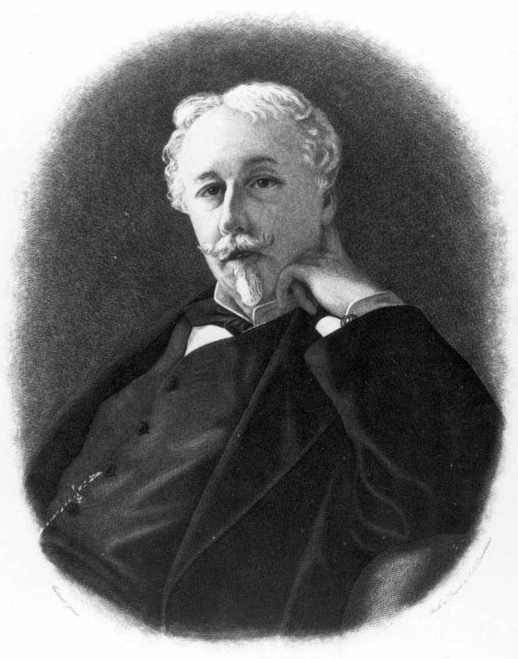
So the work of the Comte de Gobineau, one of the fathers of “scientific” racism, is better than it has any right to be… but still not “good.” An aristocrat who was buddies and pen pals with that other big French aristocratic intellectual name of his era, Alexis de Tocqueville (your original liberal-chud pairing, like how some left-libs pat the likes of Dreher or whoever on the head now sometimes?), the Gobineaus were pretty big losers during the Revolution. Not big enough, if you ask me, but apparently Mama Gobineau started defrauding people to keep little Artie in book money, and you gotta figure that “defraud” might be a euphemism for selling what she had to sell, so…
He’s pissed! He’s pissed at society for being insufficiently deferential to its betters, and pissed at all the theories that imply either equality of peoples, or that inequality is the product of environment, ideas, or any of that (needless to say, the idea that hierarchy might not be the best way to order our comparative understandings of society doesn’t enter into his head, or, to be fair, most nineteenth century heads). He has a good old time showing the many inconsistencies in various theories of history from Herodotus to Rousseau to contemporaries like Guizot. They had a lot of them, as theories of history, and especially theories of history before people really knew how to do archival research, often do. This is the best part of the book.
But then he goes into his big theory of history. It’s all blood, people! Good blood, bad blood (you know I’ve had my share/my woman left home with a brown-eyed man/and I actually really care a lot because his brown eyes are a sign of racial impurity etc etc). All of civilization comes from a small coterie of people with good blood, and most of that good blood comes from “Aryans,” that horrible conceptual gift the advance of linguistics accidentally gave to the world. Why, then, do “civilizations rise and fall,” as one of the central question of nineteenth century thought somewhat unhelpfully put it? Because good blood mingled with the bad blood it conquered! Thereby diluting the bloodlines, thereby leading to the decline of civilization. Gobineau also makes entirely clear he’s talking about France- the nobles, his people, had Germanic Aryan blood, the peasants had Celtic blood, and those peasants only got the better of the nobles because the nobles mixed blood and became degenerate.
This is stupid, and has about the kind of “evidence” behind it as you’d expect, but the kind of stupid that proves, for lack of a better word, “catchy” with some kind of people. It doesn’t convince so much as it burrows a groove in the head of those who want such a groove there. It has embedded in numerous projects into which stupid people with mental energy to spare can invest themselves. They can try to chart where exactly the blood went wrong, or try to explain China, Japan, the Mayans, or whichever non-whites they find impressive as being, somehow, Aryan. They can try to come up with schemes to preserve that blood, which almost always involve shedding somebody else’s.
Interestingly, Gobineau didn’t have an issue with the Jews. He sees them as a strong race, as possibly Aryan even! There’s no big puppet master behind decline, in Gobineau’s book- just horny aristocratic conquerors and hustling low-borns. It makes you wonder why, if they’re such hot shit, the master races can’t maintain, but that’s sort of part of what makes French reaction both smarter and less able to take power than the versions you see in the Anglosphere and in Germany. The latter often say they have a tragic sensibility, but with one or two exceptions, they don’t. Gobineau’s work is spiky with hatred — for black people, for the masses in general, and especially for intellectuals who think the masses are anything other than dross — but it’s also basically resigned to the inevitable tragedy that is life. It’s a stupid, needlessly cruel, and ultimately self-flattering version of tragedy, but at least connects up to it, somewhere, and French reactionary thought from Maistre to Celine to Faye does a lot with that, or anyway, more than other (one is tempted to say “more Aryan,” from the ironically-named Rosenberg to Breivik) do.
Of course, a Hitler is always in the wings to gussy it up and give violent racists something to do other than ponder the tragedies of decline and horniness, and that’s how you get the inevitable blood-farces of reaction. C’est la vie, as Gobineau might sigh to his pen pal Tocqueville. *’
Michel Foucault, “The Birth of the Clinic: An Archaeology of Medical Perception” (1963) (translated from the French by Alan Sheridan) – I think this is the only one of Foucault’s monographs I had yet to read? I haven’t read the second through fourth volumes of “History of Sexuality” (I get the impression few do), or all of the extant translated College de France lectures, if those count. It might seem like a big investment in the guy! He was a name to conjure with when I was in school, even if people who even claimed to understand what he was saying were few and far between in history programs. This always surprised me. The reason I’ve read his books is simple- I find them interesting. Sometimes they’re obscurely-written (apparently there’s circumstantial evidence that Foucault deliberately made the language harder in order to fit in with French academia) and sometimes I disagree with them. But I never invested the old guy — or any of the other old guys, or gals, or new ones either — with magic. Like Zaphod Beeblebrox, “Foucault is just this guy, you know?” I find reading goes better when you’re aware of big reps but don’t take them on board.
Having now read this one, I see it mostly as a rehearsal for his next book, “The Order of Things.” Like that one, “The Birth of the Clinic” traces a change in the order of knowledge and practices — one is tempted to say “praxis” but the bald old point-monger always avoided Marxist language, even when he was supposed to be in Marxist formations — that occurred between the ends of the seventeenth and eighteenth centuries. In “The Order of Things” he discusses such changes in a number of fields, in “The Birth of the Clinic” he focuses on medicine (European medicine, to be precise- one thing about Foucault is he stayed in his Eurocentric lane). I don’t remember all the details of the intellectual (another word Foucault avoided- wouldn’t want to come off as a “mere” intellectual historian, heavens to Betsy, no!) transitions he detailed in “The Order of Things” but from what I recall, a lot of them were pretty similar to those in “The Birth of the Clinic.” They’re not so much down to “advances” as shifts in how to organize data (another word he’d never use). Firmly early modern doctors tended to ascribe/describe in somewhat earthier, wide-ranging tones, and work with bewildering ranges of variables and what they could mean; those further down the on-ramp to what we would call “modernity” tended to be more stripped down and given to isolating variables, etc., though honestly even late eighteenth century medicine sounds pretty baroque and weird to my ears.
Truth be told I had less interest in this one both because it wasn’t as thoroughly fleshed out as “The Order of Things” and because I’m less interested in the subject matter, weird old medicine that didn’t work, than I am in rhetoric and other topics Foucault discussed later. I will say Foucault’s a clever spark, and I think encouraged his reputation as a shifty pseudo-magical genius, using techniques any stage magician would know- in this instance, framing. The book stops before the germ theory of disease takes hold, and before vaccinations really get going, either. If he did that, he really would be telling a story, unavoidably, of discovery and medical progress. He cuts the story off before anybody fucking knew anything, so of course, he doesn’t talk about objective truth, and the people who get real mad when the humanities people don’t give the science folks their gold stars do their thing, all good for the Foucault brand.
I don’t think that’s all Foucault was doing here, or even most of it, and I’m sure he had valid reasons to tell this story the way he did. But the “legend of Foucault,” if you will, that obtains even (arguably exclusively) with educated people is that he’s a subjectivist weirdo who doesn’t even think medicine is objective. Of course, other people (often devotees of other aspects of Saint Foucault) debunk that idea as a misreading of the man, at tedious length, but the guy himself just gave that nice toothy smile and stayed noncommittal. It doesn’t really worry me either way. ****
Suleiman Osman, “The Invention of Brownstone Brooklyn: Gentrification and the Search for Authenticity in Postwar New York” (2011) (read by Marc Cashman) – Woof! I needed that week off from reviewing. I do love criticism but I also love “me time.”
I got this book originally during a book-buying spree while studying for my comprehensive exams. The idea is you read, or anyway prepare to answer questions about, as many of the major books in your field as you can convince your examiners you looked at. I did pretty good! But never got to this one. I figured I’d give it a listen in my “nonfiction reviews” slot. It’s something of a minor standard, it appears, in the academic history of gentrification.
Historian Suleiman Osman begins the story of gentrification in Brooklyn well before naive “common sense” understandings of these things, in the seventies or nineties. The story here begins in the immediate postwar period, when middle-class New Yorkers, including recently demobilized troops, started looking at Brooklyn as an alternative to expensive Manhattan living. Osman gives us a capsule residential history of the borough, from farm town to poorly-planned real estate speculation to almost-rival, a sort of Oakland to Manhattan’s San Francisco… these new middle class people postwar inserted themselves into the multi-layered history of Brooklyn, and came to use that history for their ends.
These ends were both self-expressive and monetary, as middle-class ends so often are. Brooklyn presented, if not a blank canvas — they didn’t want that — then at least a palimpsest that people looking for a certain kind of “urban experience” could work with. These were people who specifically did not want to live in the utopian (utopia means “no place” in Greek) suburbs or high rises, both of which were designed to warehouse people like them in comfort. They wanted somewhere with a sense of history and, for lack of a better term, that slippery concept of “authenticity.” All because we can’t pin it down, doesn’t mean the feelings surrounding it aren’t real (even if the term is dubious). Symbolic of all this were the brownstone buildings of South Brooklyn. To the Brooklyn settlers, they represented nineteenth century grace and elegance (even if, in fact, they were often cheaply built by low-balling speculative builders), and refurbishing them — often after they had been converted to serve as low-cost rooming houses for decades — gave the settlers a sense of both sweat equity in the neighborhoods and a metaphor- they were going to fix the mistakes of previous generations (you know, with their pesky need to live cheap) and renew an urban dream.
“Inventing Brownstone Brooklyn” lingers mostly on Brooklyn Heights, arguably the beachhead of the gentrification invasion, and on surrounding areas (it doesn’t touch much north of there, like Williamsburg, the gentrification epicenter when I lived there, or Greenpoint, directly north- not a lot of brownstones, for what that’s worth). Osman talks about the different ways gentrifiers understood themselves, and boy, they wrote a lot- pamphlets, novels, memoirs, articles in magazines. They were the ones who were going to make the new urbanism, most notably that version preached by Jane Jacobs in a few chapters of her “The Death and Life of Great American Cities,” (few read that book all the way through, and no one reads her other stuff) a reality. They stood down a number of plans by Robert Moses and other villains in the Jacobs-ite rogues gallery to build superblock construction in Brooklyn Heights. It turned out it was useful to have white middle class people, many of them journalists, architects, and especially lawyers, when you wanted to defend your neighborhood from city hall.
Osman makes much of the confluence of visions between the early gentrifiers and at least some of the people they settled amongst, usually some mixture of working class “white ethnics,” black peoples, and Puerto Ricans. They could work together to save neighborhoods, sometimes, or get improvements. Some of the gentrifiers meant that sixties business. But others either didn’t, or meant it in the bad way. They “meant it” as in they opposed “big government” and “red tape” and anyone getting in the way of their self-fulfillment (which, curiously, usually seemed to coincide with their real estate portfolios). In the end, “saving” a neighborhood from Robert Moses usually meant a stay of execution. Moses wanted to plow highways through neighborhoods and raise brownstones to build superblocks because he thought you needed those to maintain an industrial city (factories need trucks, trucks need big roads). Gentrification went hand in hand with financialization and the service economy, which implied a different spatial order. Neither were great for the working class of late twentieth century Brooklyn.
In keeping with work inflected by “the new cultural history,” Osman soft-pedals the economic factors, especially early in the book. Sure, the settlers of south Brooklyn wanted a good deal, but they also wanted to find themselves, find community, etc etc. He even points out how banks and insurance companies wouldn’t service owner-renovators of brownstones in a lot of neighborhoods, seeing them and the neighborhoods more generally as bad risks! But, even Osman has to admit, eventually, the money was the determinative thing. It didn’t take long for banks and real estate companies to notice what was happening in Brooklyn. These companies seized on the gentrifiers as proof of concept for expanding into “dilapidated” urban real estate. Hell, even a lot of the cultural stuff worked for them, decades before anyone knew what a latte was- the early settlers, looking for “neighborhood” feel where parts of 1960s Brooklyn only offered block or parish or ethnic feel they couldn’t directly accessed, often went deep into the archives of New York history to find some, any, old-timey name to give their neighborhood. This is where “Cobble Hill,” “Carroll Gardens,” “Boerum Hill” (which is flat) come from. Once given a name, these areas could become commodities. Maybe that’s not what the original gentrifiers had in mind (though Osman looked for some who minded and only found a few), but that’s their ultimate importance. ****’
Neal Stephenson, “Termination Shock” (2021) – I recently had the inspiration to google “Neal Stephenson net worth.” The internet seems to know what every even mildly famous (Stephenson once said he was probably about as famous as the mayor of Des Moines- figure maybe we could bump him up to, I dunno, El Paso mayor status now?) is worth, or at least gives a confident-sounding answer. The answer the Internet gave for Neal Stephenson is eighty-five million dollars. That’s a lot! It makes sense, given that he’s been a bestselling writer for a while, but more so because he is a friend of — and his work is an inspiration to — tech billionaires, including the current biggest of all, Jeff Bezos. Something tells me those nerds probably let slip a few tips to the old beard-monger (he’s not that old or that beardy these days, granted) when they’re in their cups, geeking out with the dude who wrote “Snow Crash.”
I’m a materialist, so I’ll just say it: I think Stephenson’s proximity to/immersion in the world of rich tech people has dulled his imagination, blunted his literary ambitions, and (along with what I can only imagine is soft-touch editing) encouraged several of his bad traits as a writer. I’m a dialectical materialist, of sorts, so, naturally, I will complicate this assertion. I don’t think money necessarily leads to bad art. I do think that the mental/cultural/aesthetic space of contemporary rich people ala Bezos is so profoundly anodyne that spending enough time in it will, almost invariably, infect a person with its banality. Moreover, depicting the anodyne space of “bizjets” (as Stephenson invariably calls private jets at this point), high-end hotels, conferences, etc in a way that doesn’t numb the mind… well, my favorite filmmaker, Michael Mann, has to expend all his talent to make settings like that compelling, and he only has to do it over the course of a two hour movie, with frequent dips into more interesting environments (“The Insider” is one of his harder movies to watch in part because of this issue).
Neal Stephenson is, in fact, a major talent, though I wouldn’t say a prose stylist in the way Mann is a cinematic artist. His talent is a cobble of ideas, capable genre chops, ambition, and flaws. You know what doesn’t have cobbles, or if they do, they’ve been artfully arranged by mercenary art school grads for maximum soullessness? The world of billionaires. And that is the world where we live in for most of “Termination Shock,” Stephenson’s go at a climate change novel.
The idea here is that in the near future, a Texas billionaire (who, god help me, I can’t help but imagine as Rod Strickland, Hank’s boss on “King of the Hill”) starts shooting sulfur into the atmosphere to abate climate change. He invites the Queen of the Netherlands — Stephenson likes to introduce her in any given section with her fusillade of names, but mostly, she goes by Saskia — and elites from other low-lying areas to look at his Big Gun for shooting sulfur-shells into the atmosphere and help advance his plans. This puts Saskia, here depicted as just a sensible, self-aware lady trying her best, into a whole political thing. Meanwhile, Canadian Sikh action-guy Laks (Stephenson is a words and ideas guy who loves action-guys, more later) goes to the Punjab to connect with his roots through learning advanced Sikh stick-fighting, and winds up in some weird fighting with the Chinese in the Himalayas. Then these things get connected!
I’m aware of where criticisms of Stephenson usually land- on the politics of his ideas and postures, and sometimes, as an afterthought, on his prose. I’ve been doing this long enough that I accept that his politics won’t be like mine, and I more or less accept his prose, too. The big red flag for most people will, naturally enough, be geoengineering (trying schemes to reverse climate change). I am not a scientist or engineer. Here’s what I know: most people I know with an opinion on geoengineering are firmly against it, and that includes a substantial subset made up of every actual scientist I know and have heard opine on the subject (a substantial minority of science-enthusiast friends are pro-geoengineering); that our system, and especially the individual billionaires involved, probably shouldn’t be in charge of anything more important and dangerous than a pair of soft shoes. So, basically, not too dissimilar to nuclear power, except I could see a situation where nuclear power was key to the future, and even Stephenson seems to only see geoengineering as a temporary measure…
Anyway! Stephenson clearly —likes— geoengineering schemes- why wouldn’t he? He likes big, ambitious technoscientific schemes. But you might be surprised how little he dwells on opposition to geoengineering, especially for a dude who in other novels makes his dislike for critics of ideas he sees as important through turning them into truly obnoxious villains. True, his characters invokes “the Greens” as an ever-present force blocking progress, but that’s mild stuff, for Neal. The politics he’s concerned with is great power stuff and in the end, he treats them all alike- looking out for their interests (except the US, which he treats as something of a basket case that can’t really act in its own interest- fair enough). There’s some China-baiting but by the time the book reaches a denouement, the Chinese are not the problem. By the end of the book, he’s making a decent point, even, not about geoengineering so much as maybe, even if we “need” billionaires and terrible governments to do big important projects, they should also not cowboy around doing whatever without talking to each other. I think most of can agree that communication is good (the most communication I want to make with a billionaire is “hand it over and get in line for your turnips with everyone else” but, you know).
So, no, it’s not the politics that makes this probably the worst Stephenson novel. Rather, the politics is infected by the same anodyne, under-thought but over-elaborated, quality that makes the plot, writing, and characterization bad. Basically, it’s a very dull seven hundred pages. It’s a thriller — Stephenson has clearly long loved airport thrillers ala Grisham but has only indulged in writing them the last decade or so — that seldom thrills. That sucks, because Stephenson has packed big books before with stuff. If it wasn’t discussion of ideas, it was fun incident. But, god help me, the world Saskia inhabits just can’t be interesting no matter how hard Stephenson tries (I don’t know how hard he’s trying). Witnessing the aftermath of climate catastrophes (like a pretty horrifying-sounding beachside mass-drowning in sea foam) having a love life, getting ratfucked by the Chinese and their deepfake schemes, could be interesting, but aren’t. They’re written like so many depictions of flying around in “bizjets” and attending conferences. It is almost determinedly boring, like he’s trying to prove some kind of point.
What of characters not trapped in the “air-conditioned nightmare” of beige rich life? What about Laks the Sikh stick-fighter? Well, it’s a little more interesting. It sounds absurd at first, that India and China would restrict their wrangling over deglaciated Himalayan real estate along their 1962 ceasefire line by having “volunteers” fight with sticks, rocks, and fists. Stephenson waxes thoughtful on the long history of “performative war,” which wasn’t particularly persuasive on why someone wouldn’t just use a knife or a gun, and why the invariable casualties (rocks can also kill you!) wouldn’t produce the sort of outrage that would escalate the situation… but it is true that not everyone uses every weapon they have. Stephenson relies on the example of nuclear weapons- I thought more about fascist versus antifascist confrontations. Who knows what will happen post-Rittenhouse verdict — and if the fascist right thinks they’d have more than a momentary advantage if things went to the gun, they are wrong, guns are plentiful in this country and they can’t organize for shit — but for now, there are practices that contain the escalation of the violence.
So, in principle, the “Line of Actual Control” storyline passes the sniff test, and the action was more interesting than Saskia flying (herself- you see, she trained as a pilot, so she’s not just some useless scion of unearned wealth, oh, no!) around. But let’s talk about the non-grossly-wealthy characters in “Termination Shock.” These are mostly Laks, who briefly becomes a social media celebrity for leading a crew of Indian stick fighters against Chinese opposite numbers, and Rufus. Rufus is the inevitable standin most Stephenson novels have for the wisdom of the American heartland. This time, the stand-in is, like Nas, “all races combined into one man” instead of being just a white guy, but mostly Stephenson identifies him as a Comanche. He gets involved in the action by rescuing Saskia and the Dutch royal crew from thirty to forty feral pigs when they visit Texas at the start of the book.
Here’s the thing- Rufus’s story, about how he got obsessed with feral pigs after one ate his kid, how he developed state of the art feral pig hunting techniques, how he read Moby-Dick after someone compared him to Captain Ahab, etc etc… it’s both the best part of the book, action wise (and comes to a halt once the Texan geoengineering billionaire hires him to attend to the dry fart of the plot), and the prime symptom of the patronizing ventriloquism Stephenson has long done with working-class characters, and which has gotten worse as time has went on and as Stephenson moves in more rarified social circles. Rufus is a noble savage in a peculiarly old-school mode, not so much Tanto as the sort of Native American imagined by Enlightenment types- simple, noble, formal, thoughtful, rational even if attached to strange cultural norms. He is contrasted to ignoble savages, like (white American) people who try to fight Laks for being Sikh, and, implicitly, the white heartland Americans who have let Stephenson down by supporting Trump and otherwise seceding from consensus reality. As for Laks, he’s Stephenson trying to write his way into the head of a good-hearted, smart but not especially verbal, athletic/mechanically-inclined guy. You get these a lot in Stephenson novels, but they’re usually side characters, and so you don’t see the strings quite as much. Let’s just say Stephenson’s loquacity as a writer and the supposed strong silent types he writes make for some odd contrasts.
One thing you can say for Stephenson’s working class puppets- in the end (and the back quarter is much better than the preceding parts), everyone is a puppet, blown along by forces greater than themselves, even queens and billionaires and people trying to make new countries out of geoengineering-happy low-lying rich countries (and a few impoverished Pacific Island countries fronting for them). Climate change, capitalism, and great power conflicts are so big no one can entirely manage it, even the billionaires or powers like India and China. That’s true enough. But between the lack of much to say about this state of affairs, and the hundreds of pages he makes you spend in beige billionaire hell…between both Stephenson and Kim Stanley Robinson writing climate change novels that are, above all else, failures to imagine radically different ways of arranging things (even when both have imagined precisely that in other works!), it’s not an encouraging picture. **
Rachel Cusk, “Outline” (2014) (narrated by Kate Reading) – Other than some stuff I read as part of my efforts to understand the far right, this highly-acclaimed literary novel was probably the least pleasant reading (in this case, listening, but there was nothing wrong with the reader or the audiobook production) experience I had this year. That’s not to say it’s the worst book I read this year (barring chud bullshit), though it is pretty bad. There were just a number of features in this one that made it particularly hard to put up with for its quite limited duration.
One feature is good press. I get that publishers had almost no reason not to praise anything they release in anything less than fulsome terms. I also get that critics, when they like something, also, increasingly, have no reason (other than a professional pride they haven’t seem to got) not to do the same. But there’s praise and praise. Fellow crappy contemporary scribblers Lauren Oyler and Charles Yu are praised in terms that are probably honestly meant but, if you squint, you can see them as being a bit backhanded- they express “their times” or “the experience of being” X, Y, or Z (for Oyler, a woman, notionally smart, or a millennial, for Yu, being Asian-American). Rachel Cusk, on the other hand, gets critics to call her no less than a major force shaping and advancing literature today. While her work is also definitely seen as expressing the experience of being a woman, she is also depicted as making major formal contributions to contemporary literature, in a way critics depict few writers.
Well… they’re not wrong. “Outline” condenses much of what makes contemporary literature distinctive into a product of peculiar purity. The novel consists of an unnamed narrator — a successful female British writer, like Cusk herself — relating stories told to her by assorted interlocutors, mostly in travels to Greece and around London. There isn’t a plot. The language isn’t awful but does not shine. And every single interlocutor — I basically refuse to call them characters — speaks in the same voice, that is, the narrator’s voice. They all relate their life stories — and they’re mostly Greek magnates of one degree or another or Anglo writing pedants — in the language and tone of Cusk herself. You can only tell when one is speaking as opposed to the narrator because of the accents the reader puts on!
Honestly, I can somewhat admire the chutzpah. Bret Easton Ellis and similar writers might have explored nihilistic self-absorption, but they were simple-minded enough to think that meant you just present an inner-monologue of a self-insert narrator. How much more self-indulgent is it to take the stories of others, quite dissimilar from the self, and just… rewrite them to sound like you! If it were Cusk just trying to report what people said, she would, accidentally if nothing else, slip into language other than what passes for high-toned contemporary English. But nope! Even when presented as quotes (as opposed to the narrator relating an interlocutor’s story), they sound exactly like her! It was excruciatingly boring — the only thing that could have saved these miserable stories of divorce and upper class anxiety would have been interesting language which Cusk either cannot or will not use — and when combined with both the knowledge that is considered cutting-edge writing, and the sort of dim knowledge that, yep, you know what, the critics are right, or half-right, it’s not brilliant like they say but they’re right that it is the distillation of contemporary literary fiction… yeah, it was a tough listen.
I don’t expect to read a lot of defenses of Cusk here — not unlike my other major category of unpleasant reads, the words of fascists, I read these shitty literary books so you don’t have to — but I figure if I did, what I’d hear is that this is what it’s like to be a woman. You have men just pouring out personal stories to you, on planes and in dinners, and it’s actually a work of subversion to regurgitate them all in your own voice. Well, maybe! That doesn’t make for a good novel. If that interpretation is correct, that just makes “Outline” similar to a lot of modern art- a joke, a stunt, a dumb point that would warrant, maybe, an essay, not a whole novel, written and read because no one involved has anything to really say but still fells compelled to self-expression. Extra half star for stones, though. *’






 Too Much Berard