Review – Caldwell, “The Age of Entitlement”

Figured the real pig poop balls might get me in trouble with platforms and besides, this asshole deserves the real version of nothing except a boot in the ass

Christoper Caldwell, “The Age of Entitlement: America Since the Sixties” (2020) – It’s getting on towards the end of the year, and so I find myself thinking about the best and worst books I’ve read lately. Since I’ve instantiated “readings on the right” as a slot in my book rotation system, I can rely on it (and the random crap I read for birthday lectures) to fill up my “worst of” list. I don’t feel great about that, as it makes me look like I have an ideological litmus test for quality, which I don’t. It is what it is, as people now say, and I can console myself with the several literary libs who have also made this year’s shitlist so far.

But the bottom three — the ones that have earned my “half-star” rating, for those playing the home game — are all shining examples of contemporary right-wing brain rot, the sort of thing that really makes you (or, well, me) wish we could restrict their (ab)use of the English language for the aesthetic good of society. And they’re three quite different examples, which pleases me as much as I’m going to get pleasure from dogshit like this. Michael Mahoney, you may remember, is a boy nazi who has tried his hand at avant-garde literature and produced nothing but bloviation and commentary on lifestyle choices. I guess in this triptych he’d represent the contemporary right trying to be cool and cutting edge. Andy Ngo produced his pants-wetting “journalistic” account of the dangers of antifa, a laughably cack-handed and incompetent work. There’s the right as brave, honest truth-tellers, above ideology.

And then we come to Chris Caldwell, a journalist of sorts and a Claremont center hack (Claremont is a California school/tax-dodge whose lit review came to some prominence on the strength of having a sufficiently undiscriminating digestive tract to swallow Trumpism without the show of gagging other right wing rags made). Here we have the contemporary right trying to be intellectually relevant. One thing you can say for Caldwell is that he’s not trying to get intellectual relevance by aping anyone on the post-Buckley tree of conservative intellectuals. He’s too coy to come out and say “Trump is great” (his coyness is one of his nauseating qualities) – but he has to be able to express enthusiasm for Trump, his program, and what he represents. And he has to do so in a way that doesn’t come out of the box compromised by what a certain portion of Trump’s base — and something tells me this guy has browsed 4chan and congratulated himself for his edgy currentness in so doing — would call “countersignaling.”

And so, “Age of Entitlement.” I suppose I could, if I wanted to, applaud the ambition of this book, an attempt to read the whole period from the passage of the Civil Rights Act in 1964 to the beginning of the Trump campaign in 2015 from a Trumpian (but coy and faux-reluctant) lens. But what distinguishes sweeping, ambitious historical readings from your uncle bitching on Facebook about kids these days? Well, a carefully constructed argument based in sources and a publisher’s imprimatur, generally. Caldwell has the latter, alas.

The thesis here is pretty simple: the Civil Rights movement, and it’s legal denouement in the Civil Rights Act and associated laws, upended the United States Constitution and ushered in a radical new understanding of governance in the US (file under “things conservatives believe that would rule if they were true”). Instead of a nation of laws and limited government, we became a nation of judicial fiat and big government. Rather than limiting behavior, civil rights laws made affirmative guarantees and empowered the federal government to make those guarantees real. It started with guarantees to black people but extended to women, other people of color, gay people, etc. This in turn can be understood as an instantiation of a class revolution- the dread Professional Managerial Class doing in their betters, lording it over the poor working stiffs and making them take sensitivity trainings in the bargain. By the end of the book he’s calling white men “second-class citizens.”

Christopher Caldwell’s Wikipedia entry refers to him as a “journalist.” Journalists can and have produced fine works of history. Journalists, the good ones anyway, have a respect for sources. But Caldwell does not. Most of his sources appear to be anecdotes from journalistic profile pieces. He repeats the kind of ludicrous claims that have become stock-in-trade for idiots, cutouts where knowledge would be, like that one that claims that every dollar any American governing body has spent on anything other than the military between (whichever year, usually sometime around when “those people” started “acting up” in a way the cracker in question started noticing) and (now) equals spending on “welfare” or “social justice,” therefore constituting “the most expensive failed social experiment in history” or whatever. Like the “100 million dead from communism” number, it’s a ridiculous claim, and unlike the communism one, doesn’t paper over anything real, just a category error. But who cares? It’s a meme. It’s all memes- one way in which Caldwell really has been “red-pilled” since his Weekly Standard days. That’s the quality of argument here.

I was curious what would happen when this ding dong got to Reagan and neoliberalism. How was he going to frame a story of expanding government power through decades of rule by politicians of both parties slashing the welfare state and denouncing “government as we know it?” Well, that was my turn for a category error. Because I have a class analysis, I understand what Reagan and Clinton did as part of a class war, a highly successful one- retrenching the scraps of power previous generations of workers wrested from the bourgeoisie. But this guy is actually dumb enough to be paid to write about politics and still think “government” exists in an existentially discrete category, subject to binary switches you can toggle- “small-good; big-bad.” And, of course, he’s both a right-winger and a member in good standing of the upper classes (even as he plays populist at times), so he doesn’t give a shit or notice what happens to poor or working people under these conditions. The government in some sense stayed the same size or got bigger (mostly due to police and military power but ok), gays got more accepted, immigration continued, the news was bad, Reagan or no Reagan. I shouldn’t have expected different.

Of course, if you think of “government” as a thing in and of itself, a building downtown sending out orders and goons according to its own logic, the “second class citizen” business as applied to privileged people the law attempts to blunt the privilege of — white men, usually — makes more sense. This is as good a reason as any to not make that category error, and one of the reasons why the Republican Party and the conservative movement could so easily get swallowed by someone who would say the quiet parts loud. The list of things you need to think in order to wedge such an understanding into the other accoutrements surrounding it — from the expansive power all of these people, libertarians included, want to give the cops, to the long long history of government action specifically propping up white supremacy up to and including literally conquering a continent and handing government land to white squatters and railroads, to a completely fictitious “freedom of association” Caldwell somehow finds in the Constitution — is… long. Arguably, that list is coextensive with white American culture (as opposed to other cultures to which white Americans can and sometimes do belong). Many of its greatest proponents think it’s not long for this earth. Let’s hope they’re right, for once. ‘
Review – Caldwell, “The Age of Entitlement”

Review – Ryan, “The Dynamite Freaks”

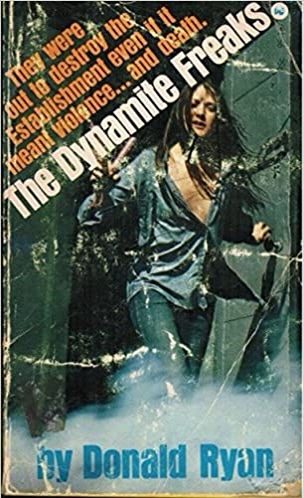
Donald Ryan, “The Dynamite Freaks” (1972) – I picked up this little pulp cheapie at a pretty great used bookstore in upstate New York. They had a lot of titles like these, what I think of as “exploitation paperbacks” – lurid titles and covers, stories ground out by the dozen by pseudonymous hacks. Now, people who collected those sort of books are dying or going to retirement homes, and their books — and the scifi and romance heads, and the collectors of dozens of cheap paperback editions of what were at the time deemed classics — are dumped on the used book market, to get scooped up by the likes of me. You see it more outside of higher-end used book markets like those in New York and Boston- upstate, Cincinnati, other places I’ve been.

Anyway! This exploitation novel exploits the New Left and the counterculture, especially the wave of bombing undertaken by groups like the Weather Underground. If you were expecting a sensitive sociological portrait of what would drive people to blow up banks, well, you’re not gonna get it here. You’re also not going to get much in the way of moralizing or a cop/right-wing protagonist bringing those dirty hippies to rough justice, either. Remember, these were contemporary exploitation novels, published by entrepreneurs trying to stay with a shifting audience and keep them buying.

There’s a lot more sex in “The Dynamite Freaks” than there is violence, though there’s a good amount of both. The main character, recent college graduate Carol Waring, and most other women in the book are described primarily via talking about their breasts (weirdly enough, this skeezy book very seldom talks about other sexualized parts of the body). Carol winds up in the clutches of a hippie communist terrorist gang basically because she was a grind in college and the first guy who paid attention to her (despite the author taking pains to convey that she is, in fact, very hot) was a hippie communist, so there you go. The closest thing to a “good guy” protagonist is a dude from her college who goes looking for Carol on behalf of her parents, and who muses that if only he had slept with her, she might be ok now. It’s that kind of book.

Selection pressures have drawn forth the best pulps of earlier eras, especially the thirties and forties, so when we think of pulp from that time, we think of tightly-crafted crime novels by the likes of Hammett and Chandler. To the best of my knowledge, no one’s done that for this era. The main blog dedicated to this stuff is “ain’t it cool” level criticism (run by a Trump chud to boot). So when you dip into this stuff like I do occasionally, you never know what you’re going to get, craft-wise. I do get the impression that latter-era pulp often disregarded plotting in favor of what could be called “sensation” (thanks, Spillane, thanks, Fleming), but that could be bias based on the aforementioned selection pressures.

In any event, there’s not much plot to “The Dynamite Freaks.” Carol starts out pretty in deep with dirty hippie Kurt and his band of miscreants, plotting to blow up a statue at her university graduation (and show off her body in a bikini under her robes- it is that kind of book), and only gets deeper until she meets a gruesome end borrowed from what happened to the Weatherman around the time they thought they were going to bomb a GI dance. The dude tracking her sucks at tracking and fighting (despite supposedly being a Green Beret?). The juice is all in the author (Donald Ryan is a pseudonym… or perhaps a “house name”) trying to twist the knife of transgression. For someone who grew up with the Internet, it’s quaint, almost touching, and at times disturbing by turns, what midcentury straight guy types do in art to shock. They seem to think that depictions of smoking doobies, of many different levels of violence, and of both consensual sex and of rape are more or less in the same category and will yield similar responses- shock and titillation. “Ryan” makes sure to throw in as many exacerbating details as possible- race stuff, family stuff. Violins for the poor little rich girl given everything by (a rather sexualized) daddy (with a heavy overtone of “watch this rich bitch get what she REALLY wants” as a sort of carnival barker come-on), etc.

I could appreciate the craft, such as it was. It also made me think about what “square” society thought was going on with the whole new left/counterculture thing. A lot changed, quickly- and even more seemed to be changing, superficially, while remaining fundamentally the same (different haircuts, same capitalism). There is a certain reciprocity between the sensationalism of the book and the motivations of the hippies in it. Spoilers- Kurt is taking money from a right-wing politician to do bombings that the politician can then use for political gain. In the end, Kurt declares he’ll take money from anyone to keep doing his thing- he’s only in it for power, more or less for its own sake.

A lot of people did a lot of shit in the sixties for a lot of reasons, and we look at them in various ways for various reasons of our own. We way overstate the importance of collegiate radicals like SDS/Weather Underground, for instance, and almost completely ignore waves of working class radicalism at the same time. Weather Underground might be the militant group in the world with the highest books-written-about (or by! lots of memoirs) to effective actions ratio… and hell, here they are, more or less, in pulp novel form. Maybe we keep thinking about the white collegiate radicals because they’re hard to figure- they could have been anything, they became… that, not just revolutionaries, but mostly shitty, vain revolutionaries who then all got book deals (the ones who actually seemed to mean it didn’t get rich and often wound up in prison for decades). Maybe they thought like Kurt did, that they could somehow ride their youthful bravado and a changing society to ultimate power, severely misunderstood the situation, and used their privilege to come back in… or maybe I’m just reading into a cheap, sleazy, diverting airplane read. ***

Review – Ryan, “The Dynamite Freaks”

Review – Macdonald, “Based on a True Story”

Norm Macdonald, “Based On a True Story: Not a Memoir” (2016) (read by the author) – Norm Macdonald was probably the funniest motherfucker I have shared this planet with thus far. My roommate and I had tickets to see him perform in Boston when we learned about his death. Like everyone else, we had no idea that he was sick. From the cheap seats, Macdonald was what I think of as “pure comedian.” He wasn’t notably charming, or handsome or compellingly ugly, he didn’t push envelopes in terms of hot button content or naughty words, wasn’t from a fresh identity category (don’t think Canadian counts), didn’t have an angle to him other than being just extraordinarily funny and utterly committed to the bit, to making people laugh. I’ve known of a few people a bit like that, not as successful as Macdonald, naturally, and they can make the lives of the people around them hell, but it really is it’s own kind of art.

I don’t know whether the story that someone asked Macdonald for a celebrity memoir and he handed in this comic novel is true, but it would make sense that Macdonald would seize the opportunity such an opening would give him. Your pure comic, more even than most comics, relies on the absurdity of life in general for material. What’s a more compound absurdity than the celebrity tell-all memoir and the life it kinda-sorta depicts?

So, Macdonald tells “his” story, using one of his go-to joke modes, old-timey phrasing and anecdotes summoning up hardscrabble pseudo-wisdom, as a tone and even plot structure for the whole book. This version of Macdonald is both a wholesome son of the rural great white north and a deviant of the first order. He regales us with cliches of rural life at least as funny as Stella Gibbons’ in “Cold Comfort Farm” before bringing us to Star Search and Saturday Night Live, where he makes his way via threats of violence, strategic illegal morphine sales, and sheer delusional self-belief. There’s a brief stint in prison for stalking Sarah Silverman, then he gets caught up in gambling.

This is where “Based on a True Story” comes relatively close to living up to its name- Macdonald was a problem gambler. He talks about it as hinging on that one moment, after you’ve thrown the dice but before they land- the moment of hope. I’m not a gambler, but that made me relate. Macdonald decides to throw away the credit he had built in Las Vegas in one last gambling spree, either making millions of dollars and buying a ranch in Montana, or losing it all and killing himself with dilaudid. He forces his (irl friend and cohost) Adam Eget, depicted as a manchild gambling prodigy along for the ride, winds up in hock to a mysterious figure in the Salton Sea, meets God but doesn’t pay much attention to Him, and tries to kidnap his ghostwriter, a fallen intellectual who occasionally bursts in to tell his version of the story.

Macdonald read the story himself (except for ghost writer parts- I thought they were Judah Friedlander, but were not) and so nails the delivery on every line. Not everything is a laugh line, of course, but he masterfully builds the tension and plays bait and switch with expectations to lead to gut busting laughs throughout. Things never go to the place, emotionally, you’ll think they’ll go. He’s never sentimental — part of his genius was the way he played with sentimentality but never gave in to it — so it meant that when I felt nice hearing his voice after his death, there was no bullshit heartstring tug to cheapen it. It was just a hilarious, well-written comic novel that played with memoir, celebrity culture, and crime fiction. It was funny, the one thing Macdonald wanted to be, and the one thing he was more than anyone. *****

Review – Macdonald, “Based on a True Story”

Review – Cook, “Charcoal”

Garrett Cook, “Charcoal” (2021) – I got this book as a special preorder from Clash Books, which puts the “lit” back in literary, as they say! It’ll be out for the rest of you hoi polloi next year. I knew to order it because I’ve been following Garrett Cook’s career since our days at the dear departed Marlboro College. Lit and Garrett promised a literary horror experience, and delivered.

We begin in the scariest place of all- art school! Shannon Rodriguez is a student MassArt who has talent and drive but also substantial self-doubt. This is made worse by the fact she’s a Dominicana in a largely white male dominated space and someone with a lot of childhood trauma. Professors skeeve on her, “that guy” that’s in every class doesn’t take her seriously. Art is hard.

What for it but to become part of a Faustian lineage? Thomas Kemp, a nihilistic artist in Victorian London dedicates himself to wickedness and sadism, making art out of other’s pain, eventually going so far as to inflict as much as he can himself in order to depict it. He has his ashes, when he dies, made into drawing charcoals. A skeevy professor suggests Shannon use them (for a consideration, of course) to really bring out the artist in her. She does, and it does, but it threatens to bring her down. Kemp himself was part of a chain of artists sponsored by a shadowy supernatural force, one interested in pushing art and evil to its extremes. The opportunities and costs are high, as is usually the deal with your Faust situations.

One good thing Cook does is vary up prose style considerably between works. There is none of the flippancy found in his earlier “bizarro” (roughly, surrealist horror) work. That’s not to say everything is self-serious, and the close attention to interpersonal detail in one or two relationships that you can see in other works comes out here- dorm room romances amidst communal couches and cheap weed. But Kemp and the charcoals bring Shannon to another world, as manifested by the murders of crows that follow Shannon around — in reality? In imagination? — consuming her traumas, past and present, making her…

Well, here, Cook presents few easy answers. Just what is the relationship between monstrosity and art? Is Shannon producing better work under Kemp’s influence, or is that just something her douchebag professors and peers say? What exactly is the potential cost to Shannon (note, it involves murder, but mostly of people who suck)? “Charcoal” was written and published in the midst of numerous debates about the relationship between art and artist. It also comes from a scene, horror fiction, that has not altogether handled these questions well (on any “side”) and depicts an art world that’s pretty bad with reconciling morality (or just functional, non-harmful behavior) with its ideas of genius. At some points in the book, Cook seems to come down on the side of the idea that artists of sufficient evil do deserve to be cast aside, but I don’t think that’s necessarily the point, or the only perspective taken.

I don’t want to spoil the ending, but in the end, Shannon has to reckon with her own power and agency, and when she does, this opens doors. It’s not a direct splitting off with the evil engine behind her artistic rise- it is not a “cancellation.” I’m not entirely sure what it is. A reconciliation, perhaps? In any event, this was a thought-provoking and well-written work, and you all should buy it when the publisher starts putting it out for more wide release, especially all you horror heads. ****’

Review – Cook, “Charcoal”

Review – Reed, “Ten Days That Shook the World”

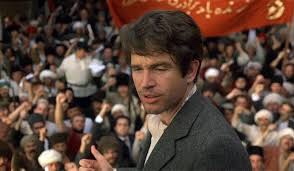
John Reed, “Ten Days That Shook the World” (1919) – I think it’s fair to say that literature has struggled with how to depict the Bolsheviks, especially in their “heroic” period- the Revolution and Civil War. Bolsheviks as monsters or robots, writers can do. But the thing is, no one honest, no matter how anticommunist or critical of the project, could look at the Bolsheviks in 1917-1922 and see the sort of comforting inability we project onto robots or monsters, no matter how scary they may be. Bulgakov was no friend of the Bolsheviks, for example, and his depiction of them in civil war era Kiev is sinister, chilling even- but they’re human, and winners, and deserve the W as much as anyone could, even to him. One irony of this literary issue is that the Bolsheviks succeeded, in large part, by sticking to a program- bread, land, peace, all power to the Soviets, and no substitute. Maybe that’s one of the depiction problems: literature as we know it thrives on dithering, indecision, and the comeuppance of belief and decisive action at the hands of irony and circumstance. You can say the Bolsheviks got their comeuppance, the reward literature assigns for anything like commitment… but not for some time.

John Reed made a crack at it. He worked as a war correspondent for a New York magazine that isn’t around anymore. He was a rich kid from Portland (where I sit and write this review!), entered the Greenwich Village bohemian milieu. It was an odd bunch, 1910s bohemia, that could go a lot of directions politically. A lot of them went plum useless, as artsy types tend to do. Reed went red, red enough they made a movie about him called “Reds” with Warren Beatty and Annette Benning (I’ll see it, some day). He showed up in Petrograd just after the first serious attempt by reactionaries to overthrow the nascent revolution failed.

You’d figure that’d be a unifying moment, right? Some shithead general almost taking over, who’d throw the softest socialists in the same jail (or mass grave) as the Bolsheviks? Not hardly. Alexander Kerensky, the moderate socialist leader at the time, continued to worry more about the Bolsheviks and others on his left than he did about ending the crippling war with Germany or preventing counterrevolution, increasingly seeming to actively favor counterrevolution as a way to get rid of his opponents. On the one hand, it makes sense- the Bolsheviks did indeed cook his goose and probably always wanted to even if he did much of what they wanted, and he must have figured that the Allies would help him out if he stayed in the war. On the other, here’s a good rule- if your plan involves the British being grateful, it’s not a plan, it’s a daydream.

Quite beyond anything else, the Bolshevik plan was the only sustainable one. They needed to end the war. The workers needed food, and the peasants needed land, in order to make a workable socioeconomic system of any kind other than the feudal one they already had and which was in the process of destruction in any event. None of the others had a plan that made any damn sense at all. That’s what Reed (and, in his way, Bulgakov in “White Guard”) conveys about his time in Petrograd. It was a revolutionary situation, which is a way of saying you could take the chaos of everyday life and dial it up times ten, the proverbial spilled ants nest. Reed shows us plenty of confused Bolsheviks but there was always a plan. Land, peace, bread, all power to the Soviets- stick together, encourage dissension in the other left groups, be in some sense “reasonable” but don’t give an inch.

Here’s one way in which this worked out for them, and which Reed depicts clearly- the Petrograd masses clearly preferred the Bolsheviks. Whatever distance they may or may not have had with the real mass of the Russian population, the peasants, the Bolsheviks had the trust and active participants of the working class in Petrograd, and whatever they might have been in terms of the total Russian population, they were strategically poised. Reed goes to a lot of political meetings in the course of reporting this story. The “committee for the salvation of the revolution” or whatever the moderate coalition was called (the book is three thousand miles away from me at the moment) were mostly meetings of political “types” – intellectuals, lawyers, trade union officials, etc. All of those types were well represented in Bolshevik meetings Reed attended, too. But so were actual workers, soldiers, and sailors. This proved crucial. A question, irrelevantly simple in some times and places but crucial and knotty in others (I think our time is the latter) – who is the infantry? The best the moderates could come up with was “Cossacks, the worst troops in the world and only good for throwing people like us in jail.” The Bolsheviks had a much better answer.

And they didn’t get it through pandering, either. So much of our conversation on class politics is debased cultural nonsense. Lenin and Trotsky weren’t, like, working class dudes being guys, cracking open a few cold ones and being casually transphobic or whatever the equivalent would be in terms of pandering to Petrograd workers a century ago. They were serious intellectuals from privileged backgrounds- but they were serious people and anyone could see it, and the people of Petrograd could see they were the only ones with a plan, certainly the ones with a plan that would benefit them.

Anyway! Reed depicts Petrograd ahead of the October Revolution, when Lenin said “yolo” and the Bolsheviks seized power, in all its chaos. It verges on hero-worship but doesn’t quite get there, in my opinion. He does a good crowd scene and a good chaos scene- neither are easy to write. The actions of the Bolsheviks run like a red line of rationality — notice, I do not say morality, though I happen to agree with most of their actions in that particular context (knowing me, I’d be some Left SR quibbling but shrugging- I’m always a degree or so off the main line) — through the chaos. You can see why they were so attractive, to the Petrograd working class, to Reed, to so many others. It’s a compelling story, a compelling reality. Cards on table: jokes about weird-alternate-universe-early-20th c Russian Peter aside, I do not trust vanguard parties to not degenerate into tyranny. But they’re pretty good at making revolution, and it’s not like any other group of people who seize power have such a great track record of —not— degenerating into tyranny. What to make of that? I don’t know. This was a pretty good book. The end… for now. ****’

Review – Reed, “Ten Days That Shook the World”

Review – Rodgers, “Mencken”

Marion Rodgers, “Mencken: the American Iconoclast” (2005) – “Send a maniac to catch a maniac,” as the phrase went in one of my favorite childhood movies, “Demolition Man” (which I think still holds up quite well). The writer to “catch” Henry Louis Mencken in biography form, by that standard, would have to be a prose wizard and critical to the point of scabrousness. Alas, in this biography, the task is taken up by a journeyman writer whose attitude towards her subject is mostly one of hero worship.

Do people still think much about Mencken? An article recently said Matt Taibbi thinks of himself as a Mencken figure, which is a complicated claim I’m just going to leave alone. I thought about him well before I read much of him because his name was ubiquitous if you read much about American culture from a period roughly between 1920 and 1945 or so. It’s not an exaggeration to say that every American writer who came of age in that period wrote in Mencken’s shadow. From his perch at The American Mercury and The Smart Set, Mencken propelled American literary modernism into the spotlight through his criticism and curation. He was one of the most famous men in America during the Jazz Age, and young intellectuals the country over aped his hard-drinking, cigar-chomping style. He was also a working journalist and was famous for reporting on presidential campaigns and on the “Scopes Monkey Trial.” His linguistic work, “The American Language,” is highly respected.

It’s hard to explain much about Mencken’s career without going into detail about his politics, which is a problem because a lot of the contexts of what mattered to him were different back then. In fact, you could argue that as his context converged more with one we could recognize, the more he kicked against it, and the further he fell from his twenties heights.

H.L. Mencken is at one and the same time a very contemporary figure, and one not necessarily easy to place given contemporary ideas about writing and politics. He was, in many respects, the original talented edgelord, laying the pattern for media iconoclasts from his day to the time of Parker and Stone. He was the guy who always one step ahead in terms of wit, who didn’t care when you did (and sometimes, just to show you up, cared when you didn’t, or didn’t expect him to), the “equal opportunity asshole,” the guy you couldn’t help laughing at or otherwise enjoying his work. Many of the same hot button issues Mencken leaned on are similarly deployed by edgy types today, from the hypocrisy of religion to the fecklessness of politicians to the importance of free speech.

That last might give us an entry point into the ways in which Mencken eludes us. Rodgers depicts Mencken as a man whose first and last priority was always free speech. She opens with a scene of him baiting a Boston blue nose into having him arrested for selling a copy of the American Mercury, which the Watch and Ward Society had had banned (this was the time when “banned in Boston” was a known phrase), getting the case dismissed, and stopping by Harvard for rousing applause. Mencken was, in fact, critical in opening both cultural and legal doors that allowed literary modernism to flourish in the United States. But it’s worth noting that the sensibilities offended were usually those around the use of working-class language like “damn,” allusion to the existence of sex workers, or depictions of such lascivious acts as kissing.

The point being, if you showed Mencken an episode of South Park without context, I think it quite likely he would agree with his Boston antagonist that it was filth and should be banned post-haste. This is a guy who broke up with a movie starlet at least in part because she made jokes about Johan Strauss’s waltzes. In this way, he’s both utterly unlike the “free speech purists” (outside of some chan-bound fantasists no one believes in literally free speech but you know what I mean), and strangely parallel. They get weirdly easily offended, too, a lot of the time. A lot of the time, what they’re about is more the promulgation of quality, as understood by themselves and as done over the objections of busybodies, rabble, and losers, than they are about anyone else’s freedom.

Mencken’s contemporary quality and his distance from our time come together in his reaction to Franklin Delano Roosevelt. Mencken hated FDR since he came
onto national political scene in 1920, seeing him as a silver-tongued mountebank (a favorite Mencken insult, “mountebank”). When FDR became President and started implementing the New Deal, Mencken grew increasingly angry, and grandiose, paranoid, in his anger. FDR spelled an end to American liberties, with his throwing money at the poors and his management of the press. On the one hand, this was, more or less, ideologically consistent for Mencken- he was always an elitist and always despised the poor. On the other, FDR was actually known as a relative fiscal conservative going into his term of office (Rodgers neglects to mention this), but Mencken still hated him and had for over a decade.

I think it’s actually easy to see why Mencken hated FDR so much, so consistently, for so long, even as FDR was key to ending the Prohibition law Mencken hated so. FDR beat Mencken. FDR beat Mencken at his own game, communicating in American English via mass media, and shifted the cultural ground under Mencken’s feet. Mencken couldn’t adjust to post-1929-crash reality, and FDR steered many aspects of that reality. FDR even beat Mencken at ridicule, owning him in speeches, and all Mencken could do was fume and fulminate, getting less and less funny with each column inch he took up screaming after the president. Whatever abrogations of due process FDR undertook in his time, he didn’t need secret police to beat his most determined opponent in the press- just his own wit and popular goodwill. That must have gutted Mencken, to the extent he understood it. It revealed a deeper weakness- Mencken always did best against weak opposition. He was a front-runner, great at turning his nose up at the “boobs” but unable to do much against anyone who could match wits with him or see something he couldn’t.

From there, it was downhill for Mencken. He was materially secure, more or less, but increasingly culturally irrelevant, somewhere between an honored relic and a cautionary tale. Among other issues, he was part of a whole generation of people whose justifiable skepticism regarding American intervention in World War One led to some horrifying judgment calls as its sequel came around. Mencken, ever the Germanophile and mindful of how exaggerated (some) anti-German propaganda in the Great War was, systematically downplayed the dangers of fascism and of Hitler in particular. Whenever there was a choice between sympathizing with inconvenienced Germans and with existentially endangered Jews, he always chose the former, and didn’t shy away from stereotype and crude language in so doing- why would the guy who called his critical collection “Prejudices”? By the time he died in the fifties, it made sense that a scabrously racist gang of paleocons had taken his name for one of their societies.

Well! I guess I should talk about Rodgers’ book rather than giving you this report on the guy, huh? Most of what I’ve written here I knew before I listened to this biography. Of course, I learned a fair amount in listening… but a lot of that was minutiae. This wound up raising questions for me that I found more diverting than the book as it wore on. How do you generate good questions in a biographical project? It’s so easy to fall into the trap of taking a side in some notional Egyptian afterlife courtroom, waiting to see if the alligator eats the subject’s heart. This leads biographers to array their investigations around the established controversies — in this case, “how much of a racist, antisemitic prick was Mencken, all told?” mostly — and neglect more interesting approaches.

The upshot of this is that as Rodgers went on into the period of Mencken’s life defined by public controversies, especially ones where he both loses and looks bad by contemporary lights, the more analytical energy she spends trying to justify him. This sucks, because not only are some of her calls pretty bad, but when she lets the thing breathe a little it isn’t half bad. You can see this in the early parts of the biography, where Mencken’s boyhood Baltimore comes to life, and the Edwardian (they often say “Victorian” but that’s basically wrong) context in which Mencken grew up and which shaped so many of his ideas comes across clearly. Among other things, the German-American milieu of Mencken’s youth (I forget whether Mencken’s parents or grandparents were the immigrants) comes in loud and clear, the combination of respectability and skepticism and the quiet certainty that they were, in fact, superior in terms of culture to American-Americans.

Basically, think of this book as having three stages (it has like seven “parts” but ignore that). Mencken’s youth is the best part, basically up until the end of World War One. Along with fun descriptive bits, it seemed to be setting up a clash between Mencken’s Edwardian, vaguely-German-American-nationalist idea of what an advanced man should be like, and the realities of modernity as revealed by the war. We get a little bit about this in the second part, Mencken’s salad days in the twenties. We see some of how the literary critical sausage gets made, Mencken’s negotiation with the “tribal twenties” — despite believing black people to be essentially inferior to whites, he published many more black writers than any other white editor, respecting talent where he found it — but we also start getting a lot of “hot goss” about Mencken’s love life. It was intermittently interesting — and Rodgers seems more indignant at the way the bachelor playboy Mencken dealt with some of his women than how he borderline denied the Holocaust — but not a good sign, how much it dominated the book. Then you get the end, with Rodgers scraping the bottom of the evidentiary barrel to make her man look good in his decline. By this time, analysis of anything interesting has gone out the window in favor of lawyering up- admitting what she has to admit, but giving “context” to excuse him.

The context I’d be interested in is that of historical change, and not just “a lot of people didn’t believe atrocity stories from Nazi Germany that people now know are true.” A real historical contextual understanding of someone like Mencken wouldn’t be a defense, or a takedown. He’s interesting enough, and important enough to American letters, to contextualize for its own sake. I wonder where Rodgers is at these days- I think she teaches somewhere, used to contribute to Reason, and you can see this as an addition to an aughts-era libertarian canon of saints. What it all would have meant, to her or to anyone, after libertarianism took its big fall against Trump, is a question you can’t glean an answer to from this book, alas. Will anyone with a critical acuity anywhere near matching Mencken’s — and despite some holes in his abilities, when he was good, he was phenomenal — ever take on the project of bringing him and his times truly to life, or will it all be fans and/or detractors from here on out, until people finally forget him? ***

Review – Rodgers, “Mencken”

Review – von Mises, “Human Action”

Nice ‘stache, prick

Ludwig von Mises, “Human Action: A Treatise on Economics” (1949) – Part of me thought, as I read this, “ok, this is the real shit” — not as in “this has a bearing on reality” (quite the opposite), but, “this is the mack daddy, this is the guy the libertarians are all trying and failing to be.” Von Mises came out of Dolfuss’s clerical fascist Vienna post-Anschluss (he worked for Dolfuss, but as a Jew, by blood if not by conviction, Nazism was a bridge too far). He had the haughtiness of European high culture, the world-building faustian self-belief and system-building ambitions of the great age of secular lawgivers that ran from Rousseau’s time to Freud’s. I had a vision of him as the pit bull of libertarianism, with people like Rothbard and Nozick as so many yapping terriers making noise from behind him.

Well, yes and no. He certainly had more going for him than either libertarian philosopher, or any of the others who came in his wake. But it wasn’t necessarily brains or even originality that he had. It was the sort of Yiddishism an assimilé Viennese Jew smiling and nodding for the likes of Dolfuss would avoid like botulism: chutzpah. And really, that’s a charitable reading. We associate chutzpah with underdogs. That’s never what he was, never how he’d even want to be seen (if this offends libertarians the way some of my reviews offend fascists, I’m sure they’ll try to get across the idea he was an underdog in the face of liberal statism blah blah etc etc fuck off).

But that’s basically what he had. He had… maybe “the face” is the right term… to just declare vast bodies of knowledge and many perspectives taken by numerous thoughtful people just verboten to human consideration. “Human Action” is about how anything other than the most intentionally naive positivism is flatly wrong, useless, and morally suspect. He calls this “praxeology,” “the study of human action.” Intent doesn’t matter, he smugly declares, not just as a consequentialist — that would make some sense — but out of a smug assumption of something like perfect, or at least sufficient, knowledge. In one of the great whoppers of supposedly educated writing — the sort of thing the worst positive thinker or evangelist you could imagine would probably demur from saying so baldly — declares that human action, it’s success and failure, actually creates happiness or sadness! You’re happy if you achieve your aims. The end!!

Quite apart from whatever else it is, von Mises and his followers (for those playing the home game, of the two lesser libertarians I mentioned, Rothbard really was a hype man for von Mises and believed in this praxeology shit, where Nozick had some other dumb philosophical basis) basically see this stuff as taking irony and tragedy out of the box of life. Things work rationally. Not being able to see things rationally is the closest thing to a tragedy you’ll ever get- not for those who so see things, but because those people keep rational people from thriving (there’s reasons von Mises warmly praised Ayn Rand before some stupid quarrel split them up). That’s it. Any intellectual construct that acknowledges that sometimes, the best laid plans don’t work out and maybe collective action differs in some important way from individual action — everything from Marxism to the most anodyne progressive liberalism to, von Mises hastily adds, burnishing his antifascist credentials for the big jump to America, racism — is intellectually bankrupt and oppressive to even be around. There’s a reason anarchocapitalism is, at best, a hop or two from mass slaughters ala Parkland- there are the main characters (you, and people you think about) and everyone else is a malignant sheep whose lives aren’t really lives.

What’s left of the European tradition — what von Mises supposedly brings to the table — if you take tragedy and irony out of it? If everything is a just-so story where the heroes just need to realize their heroism/rationality? Well, not much. Just the face, like I said, more or less, the chutzpah, the ability to get over with those rubes who want pedigreed ideas but not the existential bummers that often come with them (i.e. Americans with money), to write nearly nine hundred pages of this garbage and not get laughed off as a crank. *

Review – von Mises, “Human Action”

Review – Le Roy Ladurie, “Montaillou”

Emmanuel Le Roy Ladurie, “Montaillou: The Promised Land of Error” (1975) (translated from the French by Barbara Bray) – It’s been a while since I read this! Or wrote a review. I’ve been busy! More are down the pike.

Nobody makes a meal out of a good source like the Annales historians. The Annales School was mostly composed of French historians who minutely examined medieval and early modern European history, delving into archival sources to produce minutely detailed pictures of how people lived their lives, and deriving other things, like “mentalités,” roughly meaning “points of view,” from there. They were hot shit for a while- this one, “Montaillou,” was from the third generation of Annales School guys, and got write ups in the mainstream press both in France and elsewhere. But nowadays they’re somewhat out of favor. “No one wants to read them,” the dude in charge of our dissertation seminar, a taciturn Irish professor of nineteenth century America, once told us, “because their books lack arguments.”

I remember at the time arguing with Professor Kenny (I was the only one who’d argue back with him- I knew he didn’t mind) that history doesn’t have to have some big argument to be worthwhile. I’m of two minds about that now. I don’t think history HAS to be tendentious… but maybe it SHOULD. “Montaillou” is a good work of history, but probably could have been improved by a clearer argument. Maybe the argument simply was “this is history, like it or not,” and every argument it made in the historiography — I got the impression there was more than one — Le Roy Ladurie left implicit. Maybe that was always the Annales argument- “this is so clearly how you do history that we won’t even argue with others over how else to do it” (“typically French,” one is tempted to say).

Getting ahead of myself! Emmanuel Le Roy Ladurie had a peach of a source- the records of a long-term Inquisition put on by the Catholic Church in the little Occitan village of Montaillou in the south of France, near the turn of the fourteenth century. Montaillou needed inquisiting because it was in the heart of Cathar country. The Cathars were dualists, perhaps influenced by Gnosticism, who held that the material world was evil, and nothing was more evil than the Church. They were big stuff in the south of France in the 1200s, even making some moves prefiguring Protestantism (they were popular with the proto-bourgeoisie, tradesmen and artisans). But then the Pope and the French king (the latter looking to extend his power more firmly to the south) mounted the bloody Albigensian crusade (that’s where the phrase “let god sort them out” comes from). Popular Catharism continued to linger for a while after, and inquisitors chased them around.

More than Catharism, what Le Roy Ladurie uses the inquisitorial record for is gleaning details of life in this little village. The head inquisitor was a deeply scrupulous fellow who questioned damned near everyone in the village at some point, and who kept detailed records. Since heresy could be anywhere, he got a lot of details of everyday life in his questioning.

And so, Le Roy Ladurie takes us into the life of Montaillou. He writes it as centered around the “domus,” roughly, the household, which meant family, servants, and boarders. Everyone was looking to boost the wealth and prestige of their domus, often at the expense of others, and you can be sure ratting people out as Cathars — and virtually every domus had a Cathar or two, some were all Cathar — was a winning strategy in this game. The people were materially poor in ways hard to understand today, but it wasn’t exactly Monty Python peasants lying in mud ditches, either. Really, it was more capital poverty (building a good house was very hard) and lack of insurance against disaster, like sickness or famine.

One way out of the domus situation was to go become a shepherd. Much of the Languedoc was unsettled at the time, and men tended flocks across transhumance paths that wandered all the way to Spain. The shepherds were naturally more independent than the domus-dwellers, a source of news, ideas, and outside products and money. As you’d probably expect, a lot of them were Cathars or otherwise unorthodox, and could get away with it more, being relatively footloose (great, now I’m imagining a “Footloose” remake where instead of dancing, it’s Catharism).

I’m no medievalist and so can’t say how “accurate” Le Roy Ladurie’s picture of Montaillou is. It more or less passes what sniff tests I have. It was an interesting read, but damn me for a plodding Anglo if the professor wasn’t right, and it would have been better with more of an argument (I’d also like more Cathar deets, but I know they’re hard to suss out, given the secrecy and lies swirling around them). I’d say it’s still worth reading, and I get why maybe French academics, especially ones with great sources, might want to avoid the superheated ideological atmosphere surrounding most arguments then going in their country, but still. ****

Review – Le Roy Ladurie, “Montaillou”

Review – Lerner, “The Topeka School”

Ben Lerner, “The Topeka School” (2019) (read by Peter Berkrot, Nancy Linari, and Tristan Wright) – Well, well! An actually ambitious contemporary literary novel! And it’s… good? Perhaps great? You know, I’m going to go with “it’s great.” Perhaps it’s not for everyone but I thought it was great. Moreover, I “disagreed” with it, to the extent it has a thesis, and still think that! And it’s not even in one of the more-or-less official dissident categories that cranky lefty readers like me are “supposed” to reach out towards- right-wingers (conveniently, usually from outdated flavors of fash), people who are shitheads in their personal lives, etc. No, my disagreement is what seems to be a sort of left-liberal outlook on our current pass, the sort of thing that’s supposed to be poisonous to thinking and writing, in our bestiary. And it’s by a poet whose previous two novels look like the sort of stuff I’d hate, praised by the likes of Jonathan Franzen! But here we are.

This is primarily the story of the Gordons, a transparent and admitted stand-in for the Lerners: an upper-middle class family in Topeka, Kansas at the end of the twentieth century, composed of two psychotherapist parents (the mother is somewhat famous) and a highly successful but neurotic son set to graduate high school in 1997 (apparently there’s a second Lerner brother but he’s nowhere to be found in the Gordons). The stories are mostly told in the past tense, and we linger most with the son, Adam, a high school debate champion who is now a successful novelist and father in Brooklyn. We learn of his parents’ courtship and troubles, their efforts to live a psychoanalytically-informed, lightly culturally liberal life in increasingly conservative Topeka, anchored by a psychological institute that was there (for some reason) and was apparently hot shit between the fifties and the nineties. The present tense stuff we get entails mostly a final chapter, with Adam discussing experiences in contemporary New York, and brief interludes from the perspectives of a high school classmate of his, Darren, who was mentally ill, probably on the autism spectrum, and gets involved in some terrible violence.

What’s so great about “The Topeka School”? It’s an intellectual novel (partially) about intellectual life as lived, and seems to come from an honest place, without self-flattery or its cousin, self-flagellation. The language gets Lerner’s points across with the flourishes one might expect from a poet, but never gets in his way. The characters make sense, and, miraculously for a novel steeped in psychoanalysis, are fleshed out deeply, feel lived in, but that fleshing out is never tedious. It kept my interest. That’s a lot, for a contemporary novel without a genre hook (and for many contemporary novels with such hooks!).

All compliments in the negative, what “The Topeka School” avoids, but there’s positive goods too. I especially enjoyed the painful scenes of Adam’s debate career (there’s another champion debater who writes pretty good contemporary fiction: Sally Rooney). I knew I didn’t care for formal debate. I didn’t realize how much of it involved literally spewing out as many bullshit arguments as quickly as you could, so as to browbeat opponents, to the (adult!) judges approval. Apparently, “Lincoln-Douglas” debates, which prioritize declamation and thoughtfulness over “owning” the other guy, are increasingly popular in scholastic competitive debate, but as Lerner makes clear, determined shitty teen pedants can make those awful, too. Lerner’s good with stuff like that- the feeling of these debates and preparation for them, parties with the gangsta-fied rich white high school kids of suburban Kansas in the late nineties, passive-aggressive scenes between analysts in highly entangled relationships, and other scenes that make one question whether leaving the oceans was a worthwhile choice for terrestrial life.

The debate stuff enters into “the point” of the novel. People say that novels shouldn’t have points, that that should be left to nonfiction, which should in turn be all about the thesis. I almost believe the opposite. Thesis-heavy nonfiction books are often repetitive drags to read. I think a novel that makes an argument can often be fun and can avoid a lot of pitfalls. There are many, many bad examples of pointed novels and pointless nonfiction (and of pointless novels and thesis-heavy nonfiction), I know, but I think at this point one of the problems of anglophone fiction is that it often makes a fetish of pointlessness, or else of points so childlike that they haven’t really got a point to an adult reader (hence, maybe, the rise of an adult YA fiction readership…).

Anyway! The debate stuff is just the most prominent example in “The Topeka School” of characters slipping into non-signifying speech or glossolalia, talking a mile a minute but saying nothing. Teenage Adam goes to a therapist (at his parents’ employer, natch) who plays glossolalia tapes at him to get him to “open up.” Little kid Adam gets a concussion that messes with his memory and speech and gives him migraines for the rest of his life, and his parents witness college-aged Adam slip into nonsense-speak after he gets dumped. His (at the time married) dad has a bad trip on acid when courting his mom in New York in the sixties and loses control of his speech. But the debate stuff above all, and “the spread” — where one debater deluges another in bullshit — is the central metaphor for this problem, for the way language slips the bounds of civilization — of which it is the main support — and threatens to undo all that it’s done, to become a non-communication.

This is relevant, in the Trump years! I think the idea here is that the lives of the Gordons and those around them in the late nineties/early aughts are canaries in the coal mine of a communicative apocalypse that led to Trump, of the meaningful speech that builds society giving way to the glossolalia that is always under the surface. Lerner doesn’t say why, exactly this happens- the internet is an unwelcome, ungemutlich, porn-laden presence, and the fecklessness of the guardians of civil society in the book, the psychologists (including Adam’s parents and a refugee from Nazi Germany), probably doesn’t help. The antidote is to learn to speak together, meaningfully- and here, Lerner cites the Occupy-style “people’s mic,” at the end of the book, where he and his family are protesting ICE and telling off cops who tell his kids not to chalk on the sidewalk.

There’s much to be said about this! I agree with the basic framework of the thesis: there is indeed something different and at the very least unhelpful — perhaps “sinister” and “wrong” are warranted adjectives here — about many characteristic modes of recent discourse compared to discourse within living memory. I disagree with the notion that those who take up so much of public life discoursing in a way orthogonal to what were once commonly (maybe not so commonly?)-held conventions of truth and rationality are practicing glossolalia. Or else, I need to borrow a scene from another novelist who thinks a lot about contemporary communication, and arguably stole a march on Adam/Ben when they were in middle school-

“‘Cut,’ the journalist says, turning into the camera. ‘Just cut. The Babble Brigade has started again.’

“The soundtrack now consists of thousands of people speaking in tongues under the high-pitched, shit-eating chuckles of L. Bob Rife.

“‘This is the miracle of tongues,’ Rife shouts above the tumult. ‘I can understand every word these people are saying. Can you, brother?’”

As a certain clade of my readership will no doubt have caught on, this is from Neal Stephenson’s “Snow Crash,” a novel with a distinctly mixed reputation these days (I still think it’s good). The basic plot of the book is that Rife, an evangelical billionaire, wants to un-do the sundering of human language effected by the fall of the Tower of Babel (in Stephenson’s telling, a neurolinguistic virus created by Sumerian hackers to overthrow the tyranny of priests and create humans with personality- neuro people and people who know anything about Sumerian are among the major detractors of “Snow Crash”) and with it, the creation of separate languages- and separate human consciousnesses. We can all be a mishmash hive mind gabbing away in tongues, like God intended? The worst thing a hyper-literate nineties edgy dude could imagine (to be fair, I don’t like it either).

The point here isn’t that “Snow Crash” is better or worse than “The Topeka School” (a real apples and oranges comparison), but that Stephenson gets the power equation with language more than Lerner seems to. Rife has a purpose in mind with glossolalia, and he can understand it just fine. It communicates- just in a different mode than the one the protagonists of “Snow Crash” (and the writer and the audience) prefer and have built an existence around. Similarly, Trump may not “make sense” in the way a finely-written essay might, but he absolutely conveys meaning. You can argue that the internet has a higher static-signal ratio, and I think you’d be right, but there’s plenty of message there — hate, lust, desperation, affection for cats — if you listen. You can make use of these communicative techniques to build community, of a sort. I mean, look at this essay, or the rest of my writing- clearly, not my sort of community. But there it is.

Intermittently, Lerner seems to get that, or anyway gets there’s power at work, it’s not just a descent into nothingness. In the last chapter, he encounters a shitty dad of a child misbehaving in a sexist fashion and who won’t do anything about it, and a shitty cop trying to intimidate him and his kids. I think Lerner tries to depict their communications — the dad’s repetitions of cliches and refusal to engage, the cop’s tough guy woofing aimed at children — as part of the decline of speech. But their speech communicates, differently, but clearly. Similarly, he seems to get that the debate glossolalia he once indulged in, practiced like a sport, isn’t value-neutral madness, but a domination ritual. It’s meant to dominate another, and adult judges reward it, see it as grooming for further power positions.

Lerner also discusses hip hop and fighting. In trying to be cool — in Adam’s case, rebelling, before returning to, his parents gentle liberal humanism — the Topeka boys fight a lot, and try to do rap, both supposedly inspired by hip hop culture. Fighting is harsher than it used to be, Lerner argues, due to these white boys taking on hip hop posturing (and watching early televised MMA, with its ground fighting and elbows); attempts at rap were the first real poetry Adam tries, before becoming a renowned poet as an adult. The fighting is seen as entirely negative, a degeneration, a morbid symptom, and that seems reasonably fair. Adam gives his efforts at rap some credit for building his poetical skills, but is sufficiently ironic about his expensively bred white corpus mouthing phrases about bitches and gats so as to see it as basically foolish, a failed communication. Are either failed communications, or are they borrowings to express things that always were there under the surface of the lives of these boys? Is it entirely impossible that they could have found an outlet for their desire for conflict that kept hip hop’s power (and the knowledge that an elbow often does better than a fist at close range) without taking on board dysfunctions?

And then there’s Darren. Darren can’t communicate, never could, except in inept lies and sporadic violence. Adam and his friends intermittently bully him and people at his parents’ center try to treat him. Nothing works. The deck is stacked- broken home, almost certainly some degree of developmental disability, he just never had a chance. Some of the high school seniors start letting Darren hang around, semi-ironically (how often is anything that any privileged teen does entirely sincere?). When it becomes clear they’re playing with him, Darren uses a pool cue to cold-cock a girl. That’s the last we see of him until Adam comes home to Topeka for a poetry reading, and there’s Darren with the Westboro Baptist Church protestors.

This might be the wrongest part of a book the theses of which I have several disagreements. And even here, Lerner’s Darren is still human, thoughtfully portrayed. He’s pitiful and enraging in turn. There’s an interesting discursus Lerner makes on the man-child and his place in middle American life, the way in which that by being the same gender and race of the dominant type of the empire, man-children like Darren are allowed to be mascots, sometimes even muscle for an officially permitted body, in a way women or people of color with similar inability to grow up aren’t. Of course, they always know they’re on the outside… but… the idea that the Darrens of the world represent the Trump base, what happens to us when the communicative bridges collapse… that doesn’t work. WBC muscle, maybe, but not the Trump base. That’s more like the cop, or the shitty office worker dad, Lerner encounters in the end. My take is that Lerner is smart and perceptive enough to write his way into the mind of a loser enough to get us to believe him, but not enough to really get what makes those losers — or the worlds made by people cynically appealing to senses of inarticulate loss and rage — what they are. They’re just a mystery. You know how “serious” novelists love their unsolvable mysteries.

Well… I think that’s a fine position for a novelist, as long as they’ve got the chops to back it up. I’m dedicated to not treating these things like a mystery, and I’m not at all certain I’ll succeed! Moreover, if we’re writing passes for Celine, Kipling, Mishima (do we write passes for writers who co-signed or lied about communist atrocities, or is it either we pretend they didn’t on the left and the right and the center never forgives them? Asking for a friend), Norman Mailer, and so on, we can allow that a liberal with some mildly useless liberal opinions can write a great novel expressing those opinions, especially when there’s a lot else going on in said novel. That’s what Lerner accomplished here. Five stars? Ding half a star for liberalism? Fuck it, no. Five stars! *****

Review – Lerner, “The Topeka School”

Review – Corey, “Tiamat’s Wrath”

James S.A. Corey, “Tiamat’s Wrath” (2019) (read by Jefferson Mays) – It’s hard not to come to a book with preconceived notions of how it’ll be, harder still when you read (in this case, listened to) seven of its series predecessors in a given calendar year. Somehow, I got it in my head that the Expanse series picks up after a nadir of boredom and pointless a book or two back. Maybe it does, some, but that preconception took some hard knocks while listening to this, the most current and penultimate Expanse novel (there’s another one coming at the end of next month, and yes, I’ll probably listen to it- might as well finish the damn thing, I’ve come this far).

There’s some cool stuff here. The scientist Elvi, from several books back, comes back and discovers a diamond the size of a star, some sort of enormous memory bank for the civilization that built the ring-gate network that has given humanity a set of shortcuts across the galaxy. The Laconians, a sort of paramilitary that took over humanity a few books back, try to blow it up, on the idea that could draw a response from some of the ancient godlike aliens that created the gates and/or killed the gate-creators, thereby opening a comms channel. It causes some freaky, time-dilating disasters. That’s kind of interesting.

But at the end of the day the book has more to do with the maneuverings and relations of boring characters than it does with cool space stuff. We gotta see what the space-dullards we’ve spent thousands and thousands of pages are up to! They’re resisting Laconia, duh, and the Laconians become more obviously evil, definitely non-preferable to whatever workaday exploiters the solar system previously had, confirming the good moral sense of Naomi, Alex, Bobbie and the gang. Chief perspective-dullard Holden, a real Harry Potter of a narrator but with all too many parents instead of too few, is at the center of the action, naturally, even though he’s supposed to be in exile. They do some resistance stuff and save some kids. One of the gang gets pseudo-alien-zombified, if you’ve played the classic RPG Deadlands think “harrowed” but scifi rather than horror-western themed. There’s some palace intrigue with a teenage girl and heir to the empire, which could be a cool concept but the Coreys (it’s a house name for two guys) are kind of phoning it in at this point. At least, unlike their maitre George R.R. Martin, they seem likely to finish their series.

By the end of it, the Laconian grip is tenuous, shit is all kinds of fucked, and it seems likely there will be a showdown between humanity and the alien god-killers that the Laconians provoked. I’ll say it- other than bare curiosity about where the genre is going, I will only care about the last installment, “Leviathan Falls” (recalling the title of the first book!! So long ago), if shit gets good and freaky with these aliens. And I want to — see — these fuckers, at least their ships. The Coreys aren’t Liu Cixin, they don’t get to keep the aliens offscreen (well, they’re nerd-famous, they could probably “get to” scribble their characters names onto the screenplay of “Serenity,” publish it, and make millions, but you know). For now, this was a diverting but mediocre read that promises more than it delivers, though this many books in, it’s more my fault than anybody else’s for buying. ***’

Review – Corey, “Tiamat’s Wrath”