Review- Shalamov, “Kolyma Stories”

Varlam Shalamov, “Kolyma Stories” (1972) (translated from the Russian by Donald Rayfield) – Conservative moralists squat on top of the literary memorialization of the Nazi death camps and the Soviet gulag, even though the pair I have in mind, Elie Wiesel and Aleksandr Solzhenitsyn respectively, are both dead. Both are well worth reading but both also seek to isolate their particular instances of evil from history and politics, insisting on their metaphysical uniqueness and priority. This impulse has, ironically, loaned these historical memories to political projects of many blunt, history-distorting, and violent kinds, starting with the totalitarianism school and ranging from Zionism to post-Communist revanchism in Eastern Europe to whatever nonsense Jordan Peterson was selling before he took his current protracted disco-nap.

Wiesel and Solzhenitsyn got the Nobels and, more importantly, sit the perch where one is taught to generations of western high schoolers and undergrads as the definers of totalitarianism. Other voices were always out there and some, like Primo Levi, even had pretty good traction, though no Nobels, for those playing the home game. Gulag memoirist Varlam Shalamov has been published now in English both by Penguin and in those snazzy NYRB Press editions, but to the best of my knowledge hasn’t penetrated the western public that much.

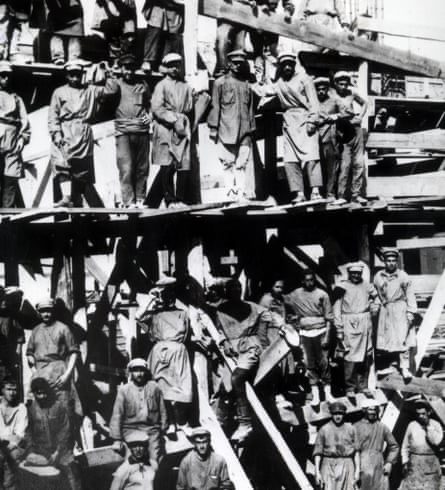
That’s a shame, as he’s a great storyteller. He was a Trotskyite, sent to the Kolyma mining colonies in the far northeast of Russia during the great purges of the 1930s, and stayed out there for seventeen years, until things started cooling off after Stalin’s death. Shalamov credits his longevity to having made it, after a few deathly years in the mines, into a paramedic program, and the stories he began writing after his release have a sort of medical acuity to them, an eye for symptoms and diseases, pain and humor. He gives a depiction of life stripped down its most brutal basics: the hunt for food, warmth, and security in an environment lacking all three. At bottom, he reiterates in several places, the camps strip the humanity from their inmates (and staff, in a different way), leaving only anger out of all the sentiments. His fellow Trotskyites came in already dehumanized from the tortures they experienced before being sent away; others, like the prisoners of war who had the bad luck of escaping from German captivity only to be sent to the Gulag, fought back more. But mostly, these are stories of work, food, theft, negotiation over the stuff of life. 

One obvious difference here with the Solzhenitsyn school of memorializing the Gulag is that Shalamov doesn’t moralize, or moralizes differently. For one thing, he went in a communist and as best I can tell, came out one, just of a shade disapproved of by Moscow. Shalamov harps on two things, and you can tell they were the preoccupations of someone who was still thinking like a camp prisoner: first, don’t romanticize criminals, as Russian (and other) intellectuals are wont to do. The gangsters in the camp made everything worse, an additional transaction tax of shit added to the already shitty situation they were in. Second, nothing about the experience of forced labor was ennobling, as the Soviets insisted on during (and after?) the high point of the Gulag system, and going through it didn’t grant any metaphysical insight. You can see why this appeals to western audiences looking for Cold War or post-Cold War morals less than other writers of the totalitarianism experience, but it also reads true. *****

Review- Shalamov, “Kolyma Stories”

Review- McCann, “War and an Irish Town”

Eamonn McCann, “War and an Irish Town” (1974) – Being a Trotskyite from the North of Ireland… talk about sectarianism inception! Eamonn McCann has fought for justice in Derry, the north’s second largest city, for decades, and has plenty of stories and even more analysis to show for it. It’s lightly surreal- I’ve read more than one account of organizing victories and woes in my day. I don’t think it’s too much to say there’s something of a Trotskyite “house style” of these things that transcends the many divisions within Trotskyism: the minute attention paid to organizational structural detail, the occasional doctrinal sermon aside, the inevitable partial success that would have been a fuller one had others listened to the voice of the people/the organizers doing the writing. What’s surreal is reading about the positional warfare of organizing committees and agitprop in Derry while an actual war, the Troubles, was starting at the same time.

There’s something ridiculous about these small sectarian groups grousing each other and puffing up their importance as though their position vis a vis the massive explosion of sectarian — real sects, with centuries of blood behind them, not the sunderings of Internationals of yesteryear — violence. But, as McCann shows, it’s not like the IRA or for that matter the Protestant paramilitaries were immune from the same sort of doctrinal, strategic, and personal wrangling. At the end of the day, it was small groups of people trying to harness an explosion of popular energy using the best tools they had.

McCann is a good storyteller and is surprisingly generous for a guy with an axe to grind. Unlike other socialists I’ve seen speaking on the Irish question, he manages to make his points against the IRA — ramifiers of sectarianism, insufficient attention paid to class — without missing the obvious part of their appeal. That appeal was simple and practical: the IRA, and particularly the Provisional wing, were the ones ready(ish) and willing to fight when the Protestant mobs came howling to destroy the Catholic communities that had dared to peacefully campaign for their rights (inspired by the black freedom struggle in the US). The various Irish socialist groups from the Labor party on down weren’t and never really were, some small guerrilla cells aside. McCann never denies this, even as he does something of a victory lap in his 2018 introduction about how the Good Friday Accords wrote sectarianism into the constitution of the North and that we’re no closer to a united, socialist (which even the IRA claimed to want, though they played a complicated game with red-baiting) Ireland than we ever were.

The memoirs part, of the rise of the civil rights struggle, the turn on the part of the Orange establishment and the British military to armed violence and the Catholic people’s response, and the atrocity of Bloody Sunday, is probably the best part of the book, due to McCann’s keen storytelling instincts. His analysis of the political economy of Ireland is also pretty good, though not being an expert on the field I can’t judge it too much. His most controversial claim, it would seem to me, is the claim that the Protestants in the North were encouraged to fear union with the rest of Ireland by the ways in which the southern Irish elite, led by walking disaster Eamon de Valera, cuddled up to the Catholic Church, letting them set much of social policy and covering for the political elite’s betrayal of the Irish working class and embrace of capitalism. By insufficiently distancing themselves from the “Green Tories” of the south, the IRA only made everything worse, appearing to be an army for Catholic theocracy to the working class Protestants who “should” have been on the side of overthrowing their social arrangements.

McCann is persuasive here but it gets to the basic problem of class-reductionist approaches to Ireland, or anywhere really. It’s ironic- if anyone should get that sectarianism is a real, material force, it should be Trotskyites, of all people! Did the Protestants of the North of Ireland really require lessons to hate Catholics? The “psychic wage” paid to the Protestant workers by Orange supremacy is never taken into account, though McCann is honest enough to acknowledge that the Protestant working class, presented with the tableau of their police beating the shit out of Catholic working class people fighting for basic civil rights, backed the cops every single time, and soon enough participated in pogroms against the Catholics. That would seem to suggest something not entirely dependent on economic self-interest, or anyway, something that complicates self-interest.

But, in the way of leftist pains-in-the-ass, McCann stubbornly points to issues that aren’t going away by waving the green flag or settling for Good Friday. He persuasively argues that the class structure as it exists on both sides of the line in Ireland can’t allow for a prosperous and free nonsectarian working class- too much of the pie is eaten up by the bourgeoisie, and you’ll seldom find a more crooked and backwards bourgeoisie than either the Green or Orange Tories of Ireland. That the Republic is basically a parking lot for Apple’s loose cash at this point makes it clear enough. To be honest, I don’t see how an independent united Ireland — which I was raised to believe in and still think is a sine qua non for a just future there — can, on its own, sustain itself as a modern, prosperous economy. The only answer is internationalism, as McCann calls for- revolution not just in Ireland but in Britain and everywhere else too. 32 counties of independent socialism is good- add 92 more from Britain and then you’re really cooking with gas. Here’s to the day. ****’

Review- McCann, “War and an Irish Town”

Review- Robin, “Fear”

Corey Robin, “Fear: The History of a Political Idea” (2006) – Corey Robin is most renowned (and controversial) for his work on conservatism, but his first book largely deals with fear and liberals. Emerging from the post-9/11 gestalt where pro-war/pro-security-state liberalism ala Chris Hitchens was the big new intellectual thing, “Fear” comes to grip with both the history and the contemporary practice of political fear. As it turns out, it’s liberals — Robin specifically focuses on Montesquieu, Alexis de Tocqueville, Hannah Arendt, as well as the less categorizable Thomas Hobbes — rather than reactionaries that have most defined our relationship to fear as a political factor. The… fear factor, if you will.

Hobbes stood at an inflection point in the understanding of political fear, Robin argues, as he did so many other concepts. Ancient and medieval political writers understood fear as having a moral/political object. So, too, did Hobbes- the fear of death in the state of nature impelled men to create society, with rules and a sovereign. But he also predicated later writers who would come to place fear outside of the political, as a force on its own that short-circuits political thought and action, an emotion to be indulged in just so much as to fend off the larger fear a given writer projects. So you have Montesquieu with his concept of despotic terror coming, essentially, from the personality of the despot, or Tocqueville with his anxieties stemming from the deracination of the new mass man of the nineteenth century. Both of these types of fear were meant to be feared themselves, and acted against, through the usual liberal prescriptions of intervening institutions, civil society, divided powers, etc. Arendt, for her part, both took this depoliticized fear to its apotheosis — her concept of total terror even went so far as to depoliticize Nazi death camps and Soviet gulags — but she turned against this conception, in Robin’s telling, with “Eichmann in Jerusalem,” where she brings the political (and personal responsibility) back in.

I’ve read all these thinkers but am no expert on any of them. Robin’s accounts seem reasonably illuminating and they hold together well, but I wouldn’t be surprised if experts on any of the four, and more likely the further from the present you get, would have quibbles. Robin makes no secret of his agenda- an intervention in the post-9/11 climate of political fear and discourse over political fear. This comes out more clearly in the second half of the book, “Fear: American Style,” where he discusses mostly McCarthyism and the discourse around 9/11. American domestic political repression has, at least as targeted against those thought of as part of the polity (Native Americans, Filipinos, and others received altogether different treatment), less bloody than other examples from the twentieth century. But this isn’t because liberalism isn’t repressive, Robin argues- but that American liberalism has refined its particular tools to such a pitch that it need not be so sanguine. These tools map neatly, in Robin’s telling, to the things that are supposed to make liberalism immune from repression: division of powers (which enabled things like the congressional committees that hounded supposed subversives during McCarthyism), civil society (with its inclusions and, more to the point, exclusions), the primacy of the free market (and the power this gives employers). Any tool is a weapon, potentially- any tool of power is potentially oppressive. This, along with his rejection of fear as a potential political unifier (a prominent post-9/11 theme), is his great apostrophe to the readership.

All of this is argued passionately and persuasively. One weird thing is that he doesn’t define what he means by “liberalism.” Maybe this is only irksome to someone who’s been following his project for the better part of a decade now. He shows no such hesitation in defining conservatism or reaction- indeed, he’s gone a long way to defining it for a whole generation of critics as the ideology of the defense of power and privilege. His history, like Arno Mayer’s, resembles a constant back and forth between those who would distribute power downward along social hierarchies and those who would distribute it ever more upward- he roundly rejects the (frankly asinine) linguistic argument that conservatives are particularly interested in “conserving.” Where do liberals fit into all this? Robin doesn’t explicitly say. I once suggested on his facebook that liberalism represents the idea of a harmony of interest that either harmonizes or neutralizes the struggle between redistribution of power and retrenchment. He dismissed it out of hand, if memory serves. Fine by me, I’m just some guy with a blog. I’d like to go forward with a schema for including liberalism in Robin’s system, though, as I think Robin’s ideas will be important for political work and our understanding of modern history going forward. ****’

Review- Robin, “Fear”

Review- Cossery, “The Jokers”

Albert Cossery, “The Jokers” (1964) (translated from the French by Anna Moschovakis) – If you were ever tempted to believe that a “both sides are bad, real wisdom is a matter of mocking ironic distance” was a new and bold stance… well, chances are some Greek or Roman somewhere would prove you wrong, but definitely French humorist Albert Cossery shows that it’s at least as old as the mid-1960s in this short novel. Egypt-born, Cossery wrote a few novels set in the Middle East, most of them satirical farces from the looks of them, like “The Jokers.”

Everything in the unnamed Middle Eastern city the book takes place in is a joke: the government’s a joke, the rebels against the government is a joke, love is definitely a joke (though in classic French fashion, misogynistic lust is taken pretty seriously). The main characters are part of a coterie dedicated to mocking all and sundry through underground subversions.

The issue here is that this is more of a sketch of a novel than a novel… one is tempted to say like how “both sides-ism” is generally a sketch of an idea more than an actual idea. The government is proven to be bad because it persecutes beggars and other street people- a good start. The actual antics of the joker gang, described as hilarious, are never actually laid out. They make a poster about the virtues of the governor, a grotesque figure they praise in equally grotesque terms- Cossery tells, but doesn’t show us. He doesn’t show them doing anything else funny either. If anything, he comes closer to the hectoring that he claims to despise in revolutionaries, as the jokers try to convince a revolutionary of how revolution is stupid and laughing at everything is cool. The revolutionary does a lot less preaching than the supposedly care-free jokers.

I get that different cultures have different senses of humor. And for all the physical proximity of France to England and England’s sort-of descendant America, the senses of humor are miles apart. Maybe if I were more French I’d find the jokers lusting after women they despise funnier, or find something inherently funny in the situations Cossery doesn’t bother to elaborate upon. Maybe I’m just a thick Anglo who prefers, say, John Kennedy Toole’s baroque literary comedical set-pieces over whatever is on offer here. But if I am, I am, and Cossery doesn’t seem liable to change that. **

Review- Cossery, “The Jokers”

Review- Vinge, The Snow Queen

Joan Vinge, “The Snow Queen” (1980) (narrated by Ellen Archer) – Do people ever call fairy-tale inspired grown-up fiction “fairy-core?” Or perhaps “tale-core?” Either way, this Hugo-award winning novel is inspired by the Hans Christian Andersen fairy tale of the same name the basics of which, characteristically, I either forgot or never really knew.

What I can tell you is that on the planet of Tiamat, there are two century-plus-long seasons, winter and summer. During winter, the Winter tribe rule, during summer, the Summer tribe, and they sacrifice each other’s rulers at the end in a big masked ceremony. Winter coincides with the periodic opening of a wormhole to the rest of the galaxy, and the arrival of interstellar travel, which brings some advanced technology and notional rule by the “Hegemony.” Summer comes and they destroy all the technology and so the cycle goes.

The current Snow Queen wants to change all that, and so has a number of clones of herself created in one of her schemes to prolong her rule. One of these clones, named Moon, lives among the idyllic Summers and becomes a sibyll, a sort of galactic hive-mind portal. She’s betrothed to her cousin Sparks, but when he fails to become a sibyll, he runs off to the big city of Carbuncle. After predictable urban-bumpkin misadventures, he catches the eye of the Queen, who sees both a potential new lover and a way to get her clone back.

This is just the setup. A lot goes on- this one of those Hugo-bait overstuffed scifi novels with plenty of bells and whistles and worldbuilding. Vinge rigs the world with a deft hand as Moon, Sparks, the Queen, and some galaxy cops all try to reach their respective ends. There’s immortality juice that comes from some local manatee-like critters who turn out to be more than they seem, galaxy cop bureaucratic back and forth, wind-control duels, space chases, secrets of the sibylls revealed, on and on.

I call it “tale-core” less because of any Andersen inspiration and more because of the feel. Moon and Sparks are star-cross’d lovers, and Moon will do anything to get back to Sparks, even after Sparks takes a pretty major heel turn. Moon isn’t some drip- she survives a lot, and takes on another lover in the meantime, but still, her goal remains the same. There’s a lot about masks, both real ones and the ones we wear in society (man) and the assumption of mythic identities. I think there might have been a fair amount of tale-core going around at the time- it was Star Wars’ time, after all, which is basically a fairy tale in space. It produced an interesting book here, though the ending more sets itself up for the inevitable sequels than anything else. ****

Review- Vinge, The Snow Queen

Review- Tissot, “Good Neighbors”

Sylvie Tissot, “Good Neighbors: Gentrifying Diversity in Boston’s South End” (2011) (translated from the French by David Broder with Catherine Romatowski) – This fascinating work of sociology (and, I’d argue, either social history or historical sociology, depending on definitional boundaries I don’t fully grasp) examines the transformation of Boston’s South End from a “skid row” slum in the mid-twentieth century to the yuppie conspicuous-consumption domicile it has become today. More than that, French sociologist Sylvie Tissot looks at the formation not just of gentrified space, but of the gentrifying class- the upper-middle class that created the contemporary South End. Taking issue with monochromatic depictions of the bourgeoisie in chronicles of urban gentrification, she seeks to create a more nuanced picture, though not so nuanced she can’t make judgments, as is all too often the case when “nuance” gets invoked.

The beginnings of the gentrification process in the 1960s saw a gestalt of factors come together to create a unique situation. The Boston Redevelopment Authority, famously smash-happy and fresh off of destroying the old West End utterly, started taking a second look at its approach. Urbanist critics like Jane Jacobs had begun singing the praises of mixed-use and mixed-class urbanism. The radical movements of the period inspired tenants unions and other groups to fight draconian “redevelopment” plans. So South End, despite its slum reputation, was spared the West End treatment.

But underneath all of this was a more class-driven dynamic, where younger, largely white, professionals with money started seeing potential in the South End. Its Victorians could be converted to single family homes or condos in a way the “high modernist” apartment blocks the BRA might have built could not. “Pioneers” began moving in, self-consciously trying to both live an urban lifestyle and manage the urban experience according to their own lights. The metaphor of rehabbing old Victorian houses extended to “rehabbing” the neighborhood at large. This entailed the new homeowners coming together (sometimes in alliance with older slum landlords) to both fight new housing developments (in the name of “historical preservation”) and police the habits of the older, less moneyed and white residents, often on their way out of the neighborhood.

An urban experience with lots of different kinds of people was always (notionally) valued by the settlers of the South End, but “diversity” became a buzzword in the nineteen-nineties as the neighborhood was transforming beyond all recognition. Tissot tries a high-wire act of both acknowledging the hypocrisy of the yuppies and hipsters of the South End, with their obvious fear of black and poor people, with the kernel of truth of their investment of diversity. They’re not just lying when they say they want diversity. It’s that “diversity,” conceptually, has always been a bourgeois concept that meant an order of things managed from above to produce a pleasing effect, not a genuine pluralism or even a laissez-faire policy towards who lives where.

Hence the ironic parade Tissot runs by the reader of old South End ways being twisted around into new ones for a new population. The pioneers of South End gentrification deplored the frequent drunkenness of the inhabitants and the sheer amount of bars and liquor stores, and deployed considerable political muscle at City Hall to get many of them shut down… but the social life of the contemporary South End runs on alcohol, just higher-priced and in chi-chi bistros instead of working-class bars. The new South End swapped out the diversity of people from all over — black, Puerto Rican, Chinese, and numerous European immigrant groups — for an equal diversity of ethnic restaurants, most of which the remaining non-gentrifying residents, shunted into public housing around the edges of the neighborhood, can’t afford. Instead of gay cruising spots there are gay families. Most poignant to me (and, I think, to Tissot) are the dogs. The prevalence of dogs and their shit was a common complaint for early South End gentrifiers. Now, dog-ownership is a major part of South End yuppie identity, gay and straight, often a substitute for the children they don’t have or delay. In the name of the dogs, South Enders fiercely control public park space, clearing out people (predictably, mostly the poor and people of color) so their dogs can roam. The dogs are something Tissot, coming from France where they’re less sentimental about them, is clearly put off by in a kind of amusing way.

All told, this is a very worthy addition to the history of the present. Gentrification narratives tend to be either all too moralistic (those damn hipsters!!) or mechanistically economics-driven, and Tissot gracefully avoids both. She tries to do in contemporary miniature what E.P. Thompson did with the English working class- show how a class, in this case upper-middle-class gentrifiers, came to an awareness of themselves through collective action, and she succeeds markedly. *****

Review- Tissot, “Good Neighbors”

Review- Brooks, “The Flowering of New England” and “Indian Summer”

Van Wyck Brooks, “The Flowering of New England, 1815-1865” (1936) and “Indian Summer, 1865-1915” (1940) – Van Wyck Brooks used to be a big deal. He was a Pulitzer Prize winner and a major critic, an influence on the emerging field of American Studies. The early American Studies scholars had a few goals in mind: combatting both right- and left- (but mostly left-) wing radicalism in American culture, proving America’s cultural weightiness as opposed to European stereotypes of cultureless Americans, and creating a sort of high-middlebrow American monoculture to incorporate immigrants, the working classes, and new generations into safely.

I don’t know how much Brooks actually participated in American Studies, which was a pretty well-organized (and CIA-backed) enterprise from the beginning; Brooks seems to have been an “independent scholar,” i.e. a rich guy who could do research, write, and get published by respectable outlets without institutional help. But the monoculture thing is definitely part of Brooks’ project in these two books. Between them, “The Flowering of New England” and “Indian Summer” cover a century of literary history in New England, the years between 1815 and 1915. They follow a sort of sine-wave pattern- rise, fallow period, lesser reconstitution, of New England influence over American culture, particularly but not solely writing.

But he doesn’t make straightforward arguments about why New England “flowered” or went fallow as it did, he doesn’t try to empirically measure New England’s literary influence, even qualitatively, and he only barely lays out a thesis to the books at all, and not in an introduction, where you figure it would go. He writes very flowingly and impressionistically, dedicating chapters to writers or artists and their circles in rough chronological order, stopping in at certain hot spots (Cambridge, Concord) from time to time. In the first book, “The Flowering of New England,” he puts a lot of emphasis on Ralph Waldo Emerson and Henry Thoreau, and it bleeds into his writing, both structurally and stylistically, not for the better. I never cared for either one, seeing them as individualistic phoney philosophers, jumped-up graduation speakers, and Brooks did not change my mind.

As it turns out, Brooks was borrowing heavily from German historian/pseudo-philosopher Oswald Spengler. He rejects Spengler’s racism (though his books aren’t free of patronizing attitudes to black people and Native Americans, and his literary New England is blindingly white), but uses something like his theory of how cultural spaces develop in history. “Culture cities” like Florence or Bruges in the Renaissance, Spengler argued, came from a concatenation of sources: a certain degree of wealth and power (not too much!), connection with “the soil,” meaning with a specific place, and a kind of spark of genius provided by rubbing those together with a broadly educated public, and hey presto! You’ve got yourself a “culture city.” Insofar as the model makes any sense and isn’t idealistic gobbledegook, it applies perfectly well to Boston/Cambridge/Concord in the nineteenth century, which did indeed have all of those things going for it (though I tend to think the real genius was Herman Melville, who get short shrift from Brooks, possibly because he bailed to New York when the opportunity came). Decline came in the post-Civil War era, when people (well, rich New Englanders, but that’s “people” as far as Brooks is concerned) gained interest in making money and marriages and lost interest in causes and greatness. This produced a sort of subsidiary bounce of genius as figures like the James brothers and Henry Adams portrayed and criticized this society, but in the end, we are left looking wistfully back at the genius of New England now eaten by the maw of modernity.

I read this book as part of a project on the intellectual history of New England, how it constituted (and constitutes) itself by the light of ideas. Brooks’ project here was part of a bid to make the literary history of New England part of a broader monoculture for America as a whole, a civilizing project for the unwashed masses, the kind of thing some of Brooks’ characters would take up. Obviously, I am not part of this project, nor am I especially sympathetic to it, though I do think people could benefit from looking at literature once thought “canonical,” both on its own merits and for historical purposes.

I guess what I got out of this was more archaeological than anything. The ruins of a lost civilization, or rather, two: the New England of the American Renaissance (scholars prefer the broader term, incorporating non-New England figures, than the “Flowering” metaphor Brooks used), and the mid-twentieth century literary Americanism project. It’s like you need to decode the latter before you can get at the former in Brooks’ work. This is basically pointless to the modern reader because others (Louis Menand, David Reynolds, probably loads more) cover much the same ground but don’t expect you to know or care who these triple-named Yankees are before they explain why. In Brooks, it’s assumed you know most of them and care. I try to imagine even scholarly friends of mine reading these books and I get the idea of a comical morass, like the begets of the Bible or the sludgier portions of the Silmarillion, though Brooks does have some nice turns of phrase. You can see the accomplishment here — I don’t know if I got this across, but the books are really exhaustive, as far as white upper-class New England literature goes — but I don’t think Van Wyck Brooks is going to make his way back from obscurity any time too soon. ***

Review- Brooks, “The Flowering of New England” and “Indian Summer”

Review- Auster, “The New York Trilogy”

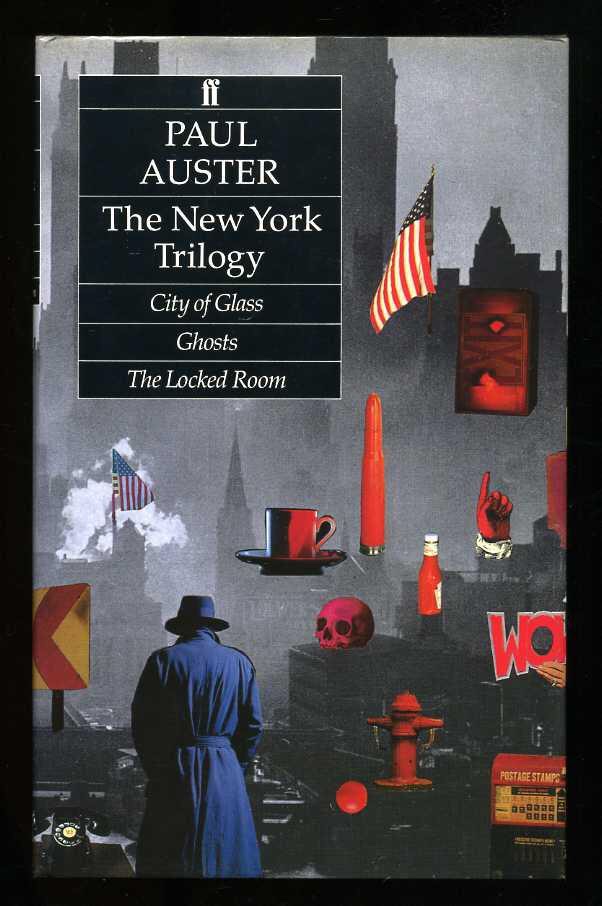
Paul Auster, “The New York Trilogy” (1986) – Every now and again, I look into the whole “big names of contemporary capital-L Literature” thing. I want to say, “just to see if it’s still bad,” but sometimes I find something I like; Sally Rooney’s “Normal People” was pretty good. It’s arguable how “contemporary” “The New York Trilogy” is, given it’s about as old as me, but Auster is still a name I hear get thrown around by literary young people. He doesn’t seem like much too bad a guy, avoiding the bad reputations of other great white chiefs of American literature: Franzen, Foster Wallace, Bellow, etc.

So I haven’t got a problem of ethos or politics with the guy, as far as I know. May he continue his journey in peace. I can narrow down my complaint with “The New York Trilogy” to one word: verbs. There’s a real dearth of good verbs in these three novellas. Especially given that Auster is inspired here from crime fiction, which has a lot of good action words in it if it’s worth a damn, this is baffling. It makes reading a slog. Is he trying to get across something about existential pointlessness this way? If there’s no point in writing, is there a point in reading? Hell if I know.

The best story is the first one, which at least has an interesting antagonistic, an intellectual with peculiar ideas about God, language, and child rearing, but he disappears and that’s that. The other stories lack such interest, and the middle one has this annoying tic of having all the characters named after colors (Brown, White, Blue, etc), and it doesn’t work, even if it did for “Reservoir Dogs.” I understand that they were meant to be slices of a certain kind of New York life… but beyond street names and the occasional conversation about the Mets, there’s not a lot here to distinguish it from any other big city. Maybe there’s a whole lot I’m not getting. But Auster failed to convince me there’s much more to get. **

Review- Auster, “The New York Trilogy”