Review- Lehane, “Mystic River”

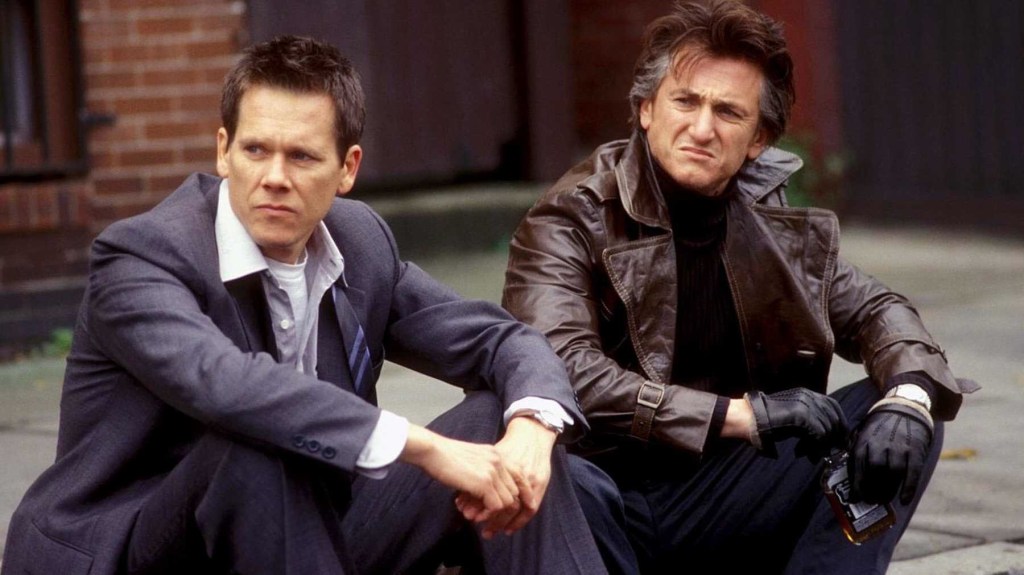
Dennis Lehane, “Mystic River” (2001) – This isn’t a hard one to review — I have plenty to say about it, as you’ll see — but it’s a strangely hard one to rate. I know you probably don’t read for the star ratings but I take them a little seriously. There’s a lot to dislike but a fairly sound structure and solid writing. This is the story of three men from “East Buckingham” (still not sure why Lehane made up a Boston neighborhood instead of using Dorchester or South Boston as is his usual wont). East Buckingham is Lehane-land, white blue collar Boston, incestous and besieged by the forces of change, in this instance rapid gentrification. The locals manufacture things and the locale manufactures childhood trauma. One of the men, Dave, is kidnapped by child molestors when he’s 11, in the presence of the other two, Sean and Jimmy, but escapes. Twenty-odd years later, Jimmy’s teenage daughter is murdered. There are Connections and it winds up being bloody and tragic before the end.

This was meant to be Lehane’s big cross-over novel, from crime to mainstream literature. One of the consequences of this is that the investigation of the crime, by Sean who’s a state cop and by Jimmy who’s an ex-con store owner with underworld connections, gets relatively short shrift compared to depictions of grief and trauma. Truth be told this is something of a dirge of a novel. It’s not done poorly, but a dirge it still is.

The depictions of the characters are decent, though I wouldn’t say necessarily realistic. There’s a certain cruelty to Lehane’s depiction of childhood as the necessary and unqualified determiner of adulthood that strikes me as wrong even as it is piquant. Dave is weak, a victim- that’s why he got in the car, that’s why he’s the person he is today. Sean had the advantages of a stable two parent home and some money, so he’s a hot shit investigator. Jimmy is a sort of tragic Southie ubermensch, always right in his instincts, and even when he’s wrong, as his wife assures him in the epilogue, is it really wrong if it’s the king of the neighborhood doing it?

Does it count as spoilers if the book is almost twenty years old and was made into a hit movie which was a pretty faithful adaptation? Well, in the spirit of niceness, SPOILER ALERT: the autistic kid did it. I was going through the book hoping Lehane had come up with something better than that, that Clint Eastwood was the asshole in this scenario for making that the plot of the movie, but nope. It’s right there on the page.

“Lazy,” “boring,” and “gross” are probably the three most overused terms in popular Millennial criticism and I do try to avoid them. But Lehane’s conviction that crime is basically an infection, a product of soullessness passed on via inflicted trauma or just blind chance (in the case of the autistic kid), leads him to a lazy, boring, and gross conclusion. The kid has an accomplice, an allistic kid who’s just depicted as an evil brat- this is Columbine era, remember, “Doom” and permissive parenting, both of which Lehane cites, was supposedly creating a generation of blank-eyed murderous sociopaths. But probably worst of all is his depiction of autism as soullessness. The kid is just a blank. Jimmy can see it, with his near-perfect antennae for evil, but doesn’t connect it up in time for him to not murder the wrong man (and you can probably guess who that is) for the murder of his daughter.

The infection model of evil is even more pronounced in Dave, who is depicted as having pedophilic feelings basically as a consequence of having been abused himself. Is there any science to back this sort of thing, or is it just bullshit? I guess it might qualify as a folk belief of Lehane’s people, and here I don’t mean the Irish or something dumb like that. I mean whites who fetishize blue collar authenticity even as it’s vanishing, even as it probably never existed quite like they think it did. The holders of a sort of stoic-cum-Catholic-cum-barstool-philosopher’s take on the problems of the world as being somebody’s unaccountable fault and everyone’s unaccountable fault. The sort of thing you see now that people are starting to criticize policing as a one-stop solution to social problems- “what about the sickos?” And no matter how often you patiently explain that van-diddlers are vanishingly rare next to child abuse coming from within the circle of trust, they saw on channel whatever just the other day about a weenie-waggler outside of a school so…

Well, channel whatever, for all it’s biased depiction of reality, doesn’t make stuff up out of whole cloth (usually) and there is the issue of bad coming out of good structures, killers coming from good families, etc. I guess it’s just a matter of what you choose to emphasize. Stories of making circles of trust less hermetically sealed, giving potential victims the ability to reach out and protect themselves, are less popular than stories of sickos getting theirs, for the time being anyway. So what to make of “Mystic River,” then? It’s not a simple story of a sicko getting his. It’s both less and more than that. So I’ll place it in a category of limbo, and have more to say about Lehane’s oeuvre come my birthday lecture this year. **’
Review- Lehane, “Mystic River”

Review- Macdonald, “The Moving Target”

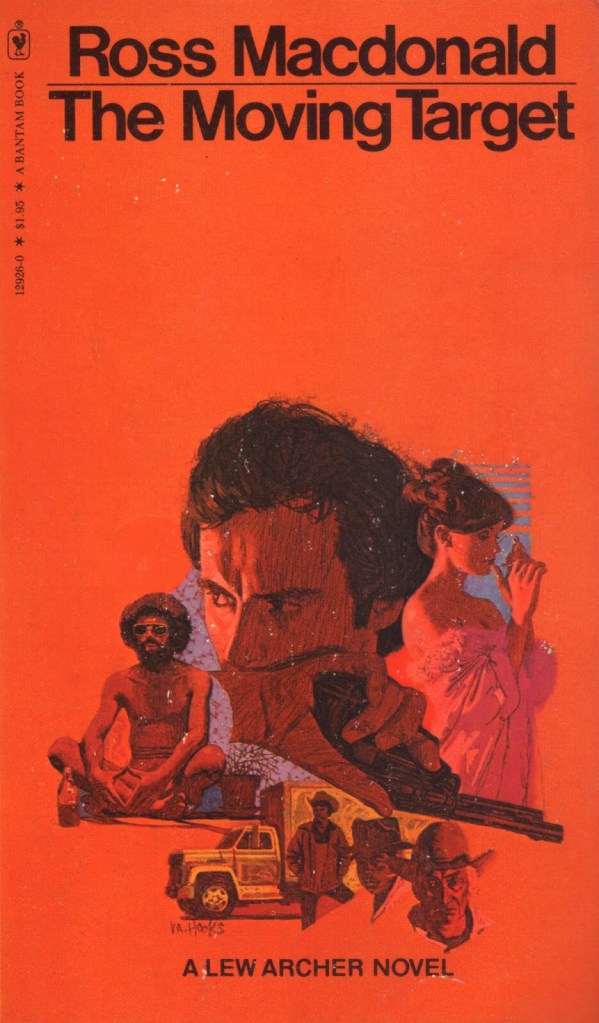
Ross Macdonald, “The Moving Target” (1949) (narrated by Tom Parker) – Corruption and sex in the Southern California sunshine are the order of the day in this hardboiled detective novel. Ross Macdonald and Ray Chandler apparently didn’t get along- Chandler thought Macdonald a softie who couldn’t write, and Macdonald thought Chandler an unrealistic hardhead. That being said, to most readers, Chandler and Macdonald will read a lot alike. That’s a good thing, because both are excellent. Macdonald’s Lew Archer is a chiller, less existential private eye than Chandler’s Marlowe, but takes plenty of chances to observe the philosophical and social quandaries of the milieux he finds himself in. In “The Moving Target,” this consists of a rich family, the Sampsons, whose patriarch Ralph has disappeared, and the lowlives with whom Ralph, a former oil wildcatter, was spending time to feel more alive. The latter included a tumbledown alcoholic movie actress, a sun-worshipping cult leader, and a British gangster (and importer of undocumented workers- Archer takes the workers’ side, but in a Chandler-esque too-cynical-to-really-challenge-the-structures way). Of course, the seediest milieu of all is that of the rich and depraved, so the problem came from inside the house, but Archer finds himself with more crimes than he knows what to do with. Money and a sickly sort of love drive things from disappearance to kidnapping to murder, leaving Archer to clean up the mess. All in all, a decent first episode for this long-lived detective series. ****

Review- Macdonald, “The Moving Target”

Review- Deutscher, “The Prophet”

Isaac Deutscher, “The Prophet” (1954-1963) – Trotsky! The man, the myth… the maverick! You have to do a lot in life to justify a biography weighing in at nearly 1600 pages, and Leon Trotsky certainly did. A lot of people have had a lot of opinions about the man. Praise came from the bodies ranging from the crowds of Petrograd to liberals who thought him the great lost hope of the Russian revolution; condemnation as the devil incarnate from Stalin’s throne and these days, the altright spreads the meme that Trotsky invented the concept of racism to undermine the west. In short, he was kind of a big deal.

Isaac Deutscher went a long way to cementing the picture we have of Trotsky with the “Prophet” series. It consists of three volumes: “The Prophet Armed,” covering the period from Trotsky’s birth as Lev Davidovich Bronstein through the Revolution to his victory in the Russian Civil War; “The Prophet Unarmed,” concerning the period during which Trotsky struggled and failed to define the direction the nascent Soviet Union would take; and “The Prophet Outcast,” dealing with his exile and eventual death. He started in the earlier fifties, when Stalin was still alive and the world by and large saw Trotsky either as one or another kind of ogre — the ogre of revolution, too dangerous to allow sanctuary in most democratic countries, or the ogre of counterrevolution, the cause of all the Soviet Union’s ills — or as plain irrelevant.

Deutscher’s Trotsky is human- a grand human, massive in his abilities and in his failings, a classic tragic hero. Maybe this is just me in the current climate talking, but what impressed me the most about Trotsky was just his sheer energy. The man could get a lot done! This is true from early times, as the young Trotsky managed a harsh student career with all sorts of extracurricular learning and political activism in the fledgling Russian socialist scene of the end of the nineteenth century. It continued right through his first periods of exile, both internal and external- even shipped to Siberia, he’s still organizing, agitating, learning math and science, getting married, having kids, escaping and fleeing across the tundra, doing literary reviews- hell, sometimes getting these reviews out is all I can do!

Trotsky danced an intricate dance with Vladimir Lenin in the period before the Russian Revolution. He was a Menshevik — a believer that Russia had to go through a bourgeois revolution before a vanguard party could propel it to socialism — in all but name, while Lenin of course ran the Bolshevik side of things. Deutscher depicts Trotsky as ever hewing to classical Marxism, which at the time of the Second International seemed more Menshevik. But Trotsky and Lenin converged once the Revolution broke out in Russia- I don’t recall if Deutscher put it exactly this way, but one thing that could move Trotsky away from his attachment to the classical formulae was the action of the people. Detached from them, as he would eventually be… but in Petrograd in 1917 he was in his element, leading the workers, speechifying, outwitting the Cadets and Mensheviks and whoever else. Here, it’s well worth reading Trotsky’s “History of the Russian Revolution,” because Trotsky was a capable historian on top of everything else.

Once the Bolsheviks established control with the October Revolution, it was time for the Civil War. Deutscher deals with this in a relatively short spread of pages, but it’s arguably Trotsky’s most impressive achievement. Entirely self-taught in military arts, he built up the Red Army from a collection of worker militia, trained and disciplined them, and fought a multi-front war against opponents with foreign (including American) backing and actual military experience, and beat them all. In the way of ideological civil wars, this one was bloody and brutal, with hostage takings and executions (for instance, that of the Czar and his family) on both sides. This has been called the “heroic” period of the Soviet secret police (the Cheka, in this incarnation), but I’m not sure I believe that to be a real thing. Maybe I’m just a soft touch, but even if necessary, I don’t see a lot of heroism in it. I’m not a heroism-seeker in any event, I guess.

With victory in the Civil War came that “oh shit” moment when the Bolsheviks had to govern their ravaged country and build socialism, and that’s where things started to come apart for Trotsky. While he was winning battles, his rivals in the Politburo were winning the war of position inside the bureaucracy. Trotsky had the keen ability to figure out what needed doing — concessions to the peasants, loosening of market restrictions, bootstrapping of industrial labor — just before the political winds shifted to make them possible. Stalin, with whom Trotsky shared a mutual distaste from the beginning that only curdled in time, again and again seized on Trotsky’s ideas after condemning them, and Trotsky, a few months or a year earlier. There’s a certain horror-movie element to the middle book, where you’re screaming at Trotsky to do something — mobilize the army, kill Stalin, just get out — but of course, he doesn’t do it. His confidence in himself and in the revolutionary process, his loyalty to the party of Lenin, and his underestimation of Stalin led him to stay in a situation where he and his allies were gradually maneuvered out of positions of power and influence and the public was rallied against them.

I never was good at following lines of doctrine. I mark Christian sects largely by their social following and aesthetic feel, and I get lost in the minutiae between leftoid groups- one of the reasons I’m in DSA (and not in any ideological caucuses therein), no need to follow a specific line. What I can make out is that Trotsky, Stalin, and Bukharin were the left, center, and right of the Bolshevik party for a while, and Trotsky’s left was weak and divided, dealing as he was with the likes of Zinoviev in his coalition. Before reading this book, many of these names were just names to me, but Deutscher deftly brings out their characters- Bukharin’s brilliance tempered by a certain arrogance, Zinoviev’s pusillanimity and overconfidence, looming behind it all Stalin, personality-less and ominous. Trotsky couldn’t ally with Bukharin’s right, which he saw threatening to reinstate capitalism, so he was isolated and forced out. As far as I can tell, that’s a decent capsule of what happened, but there was a lot of back and forth that Deutscher makes interesting, if not easy to encapsulate.

Finally, Trotsky is at loose ends, first in Turkey, then France, Norway, and finally Mexico. This part is just sad. He strives mightily to get some kind of opposition to Stalin off the ground, but within Russia Stalin is amping up the Great Terror and outside Trotsky was faced with fecklessness, division, indifference, and the issues caused by his own sometimes impossible standards. It proved an impossible balancing act, to criticize Stalin (as his cult of personality blossomed internationally) without condemning the Soviet experiment and the Bolshevik party. Even once he allowed, in the last few months of his life, that the Soviet Union wasn’t in any meaningful sense a “worker’s state” that needed to be defended to the last, he ran into bad timing- it soon did become imperative to defend the Soviet Union from fascism, even as Stalin undermined antifascism by treating with Hitler. Trotsky’s efforts to create a Fourth International were riddled by Stalinist spies and infighting, and continues to be a near-impossible organizing hobby horse to this day. His kids either committed suicide or were killed by Stalin’s agents. Finally, he himself was assassinated.

The end? Not quite. The fact that Stalin felt the need to have assassinated a man he had so thoroughly marginalized speaks to the power that Trotsky had as a symbol and as an organizer against all odds. With the help of the Deutscher biography, Trotsky had a revival after his death, and Trotskyite groups sprang up the world over. We’re little closer to international revolution or a Fourth International, but many of them do valuable organizing work all across the world- speaking as someone who has organized with (and occasionally been frustrated by) Trotskyite groups. More than anything Trotsky represented ideas and a vision of a way in which the people could take power. Both have experienced… it feels picayune to call them “setbacks,” massive body blows is more like it… but both continue to inspire. *****

Review- Deutscher, “The Prophet”

Review- Spark, “The Prime of Miss Jean Brodie”

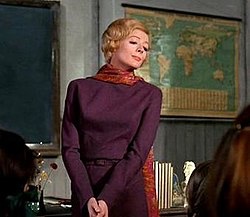
Muriel Spark, “The Prime of Miss Jean Brodie” (1961) – This was a fun little novel. Taking place mostly in 1930s Edinburgh, we follow the lives of six young pupils of one Jean Brodie, an unconventional schoolteacher who, we are told often enough, is in her prime for the course of the novel’s action. She picks favorites; she eschews the typical curricula in favor of “truth and beauty” and the occasional nod at interwar fascism. She has an unfulfilled love affair with the art teacher and a fulfilled one with the music teacher. She has a lot going on.

Spark masterfully warps the narrative, taking us forward into the future when the girls are grown and back into the past again with flawless aplomb and great gusto. Notionally, what’s “at stake” is who “betrayed” Jean Brodie, that is, narced her out to the school administration and got her early-retired. But this is solved relatively early in the book and the rest of it goes to show the logic behind it. Spark observes the manners of middle-class Edinburgh pointedly and poignantly, and while I don’t know what it’s like to be an eleven year old girl, I do know what it’s like to be eleven, and I don’t think Spark forgot either.

I’m not entirely sure what “The Prime of Miss Jean Brodie” is “about,” or if it needs to be “about” anything. If I had to put a spin on it, it would be about how adults project onto children, including the supposedly sensitive and intelligent adults, and what sort of trouble and loss of perspective that leads to. The last revealed actions of Jean Brodie are genuinely terrible, leading to trauma and death, and come from blurring the lines between herself and her students. But it’s all dealt with with a consummately light and deft touch. Highly recommended for those in to the art of fiction for its own sake. *****

Review- Spark, “The Prime of Miss Jean Brodie”

Review- Nguyen, “The Sympathizer”

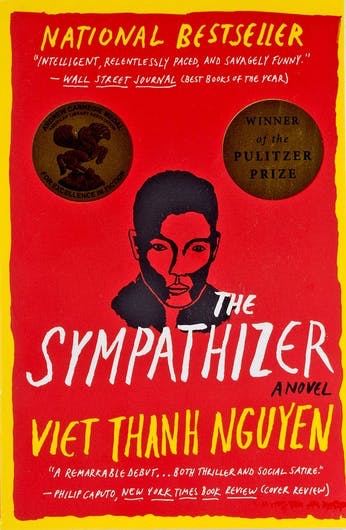
Viet Thanh Nguyen, “The Sympathizer” (2015) (narrated by Francois Chau) – This novel was quite interesting at times in spite of itself. The story of an unnamed ex-captain in the South Vietnamese national police, it’s mostly told in the form of a confession to an unknown commissar holding the narrator prisoner after the war is over. The narrator had been a mole for the National Liberation Front, and remained in that role even after the fall of Saigon and his evacuation, along with his commanding officer, to Southern California.

True to the title, the narrator is a sympathizer- always seeing things from multiple sides. He’s part of a trio of best friends with Bon, a sincere South Vietnamese nationalist killer, and Man, a fellow communist spy and the narrator’s handler. While he ultimately opposes the US intervention in Vietnam and wants a communist government, the narrator knows and likes Americans, even studying American Studies (which Nguyen teaches) when sent to American university. He’s half-Vietnamese, half-French, product of an illicit relationship between a French priest and a Vietnamese teenager.

He is, in short, both a classic and a very contemporary kind of subject. I try not to make everything an ideological critique, but some works call out for it. This is the great Vietnam novel of representation-minded 21st century liberalism- arguably, the great novel of that strain thus far, period. This isn’t the liberalism of JFK, which got the US into Vietnam in the first place. This is a liberalism of ambiguity and failure, but also of boundless room for individualistic variation, in short, the liberalism with which we now live.

This probably makes “The Sympathizer” sound worse than it is to most of my readership. But Nguyen is a capable writer (if a little much with the similes sometimes), and the representationist predilections only come out in the book about halfway through. The initial parts of the book depicting the fall of Saigon are great, as are his depictions of refugee life in Southern California, with its generals running liquor stores and skullduggery among politicians and wannabe liberators.

The representation-liberalism stuff really comes in when the narrator is hired as a consultant on a “Platoon” type movie directed by someone only called The Auteur. There, we are treated to the narrator’s long struggle to get some kind of meaningful Vietnamese or at least Asian representation in an exploitative film, and it goes so badly he’s almost blown up on set. This, and the narrator’s further negotiations with identity and love life around the same time, is less interesting to me than the other earlier parts of the story. But it clearly provides some of the emotional juice for the author and I suspect much of the readership I saw with this book on the train a few years back. It wasn’t bad- just next to the epochal struggle of the Vietnam War, it’s hard to care about some shitty ‘nam flick.

The end was also less compelling than the beginning. I’ll avoid spoilers though I don’t really have to, as the big reveal in the end is pretty obvious. The narrator and Bon go back to Vietnam as part of some hopeless Bay of Pigs-style scheme, and get captured. There’s then an extended, chapters-long torture and interrogation sequence, reminiscent of Orwell’s in “1984,” complete with speeches about the meaning of man and reflections on the inevitability of revolutions turning to inward-facing violence and corruption, etc. In the end, not unlike Winston Smith, the narrator comes to an exhausted, lighthearted, nihilistic epiphany. Human folly is ultimately about human folly with no point to it. The end.

I don’t know. Maybe this is just the red in me, but I think the revolution in Vietnam had a pretty distinct point- the will of the Vietnamese people to be governed according to their own lights. Or maybe it’s the negative in me- it’s worth it not to be ruled by assholes, and if a new set of assholes comes in, well, you revolt against them too. Use your limited time in this earth to make assholes uncomfortable- guess that’s my motto. It strikes me of as good of one as “nothing,” which the narrator winds up screaming as the big lesson he learned. Either way, this is a very interesting piece of work, for good and for… not even ill, just “less good.” ****

Review- Nguyen, “The Sympathizer”

Review- Moynihan and Søderkind, “Lords of Chaos”

Michael Moynihan and Didrik Søderland, “Lords of Chaos: The Bloody Rise of the Satanic Metal Underground” (1998) – I like some metal but not generally black metal. Too screechy, too bombastic. I like metal (and rock music in general) where you can still hear its roots in the blues. It’s ironic that “black” metal is the major metal subcategory (I know there’s a million tiresome varietals of metal, and this is probably more true of one) that’s the farthest away from black music.

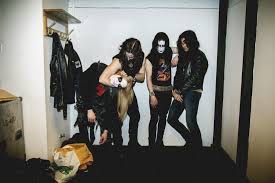
All of which is to say, I picked this book up out of interest in the far right rather than interest in black metal, or I guess the other point of interest, murder. The Norwegian black metal scene in the early nineties produced a small number of bodies and a larger number of burnt churches, a big deal in a country as staid and peaceful as Norway generally is. Michael Moynihan and Didrik Søderland document the scene in minute detail, in that way of rock journalism. I thought they did a reasonably ok job, journalistically, though their subjects, especially the endlessly pedantic murderer Varg Vikernes, contest this. They mostly let the people on the scene speak for themselves, which is generally the right move.

Might as well cut to the chase of my interests- the Norwegian black metal scene embraced fascism along with other “evil” trappings and accoutrements. Vikernes, sort of the philosopher or anyway the dorm room philosophy major of the bunch, adopted fascism more intellectually than the rest, including a “volkisch” worldview that others on the scene ape more or less consciously. And there’s a lot of back and forth about whether the author Michael Moynihan is a Nazi, whether his Nazism influenced the book, so on and so on.

In certain respects, it misses the point, or anyway begins unraveling the thread at the wrong end. What both Moynihan and Vikernes are is a familiar species to anyone who’s had to deal with that just slightly too-old specimen in a cultural space: they’re Gen X edgelords. Bereft of any larger struggle, the best thing they can think of to devote their lives to is offending sensibilities. They turn this into a whole philosophy and way of life, and a means to out-do each other. They’re highbrow shock jocks. Moynihan just tried to push it farther than the others by publishing Italian occultist fascist Julius Evola, Charles Manson, and for some reason Quadaffi’s little forays into the written word. The only thing that unites these people is shock and a certain degree of elitism based on who can/will stick with the nonsense and the gore. In Vikernes’ case, he took his schtick (and I definitely enjoy applying Yiddish to this particular putz) into murder.

Moynihan took it into relatively serious journalism. I don’t think “Lords of Chaos” is a particularly good piece of evidence of Moynihan’s fascist predilections, perhaps largely down to Søderkind’s influence. I see the evidence pointing to Moynihan’s fascism as being his friendship and amanuensis relationship with James Mason, the proponent of aleatoric terrorism as a means of bringing about white revolution, and Moynihan’s flogging of Julius Evola’s work. His publisher, Adam Parfrey at Feral House, was a Jew, as Moynihan’s defenders like to point out- so he rooked a credulous Jew, nothing a fascist need be ashamed of. In “Lords of Chaos,” his fascism doesn’t surface much- the idea there’s this roiling mass of discontent with society being too boring and hypocritical (as opposed to oppressive) waiting for a spark to ignite is a right-wing notion in my opinion, but that’s about it.

But what kind of fascist repeatedly denies being a fascist, as Moynihan has? Well, the pusillanimous Gen X edgelord kind. The kind whose passion for catching out supposedly-simplistic moralistic critics — every enemy is Tipper Gore to these people — belies their inability to take a stand on anything more meaningful. Both Moynihan and Vikernes claim to be more “spiritual elitist” than anything else. Moynihan, being generally the less circumspect of the two, takes that to indulging in Satanism, the ultimate rube’s philosophy. All that spiritual crap means is they’re too cowardly to take what they believe into the streets. We all know which way the “spiritual elite” bent when fascism came around the first time.

So do I think Moynihan is “fascist” as in “a real threat?” Not really. Do I think he’s “fascist” as in “fuck him and the pretenses he rode in on?” You bet. **’

Review- Moynihan and Søderkind, “Lords of Chaos”

Review- Morrison, “Song of Solomon”

Toni Morrison, “Song of Solomon” (1977) – There’s a clade of writers whose work I respect but do not, generally, enjoy- Faulkner and Garcia Marquez are the top of that marquis. Then there’s writers I both enjoy and respect but don’t have a ton to say about, and Toni Morrison would probably be near the top there. “Song of Solomon” is in the running for the best fiction I’ve read this year, as “Beloved” was a few years ago when I read it, but I don’t have a whole big thing of commentary on it. The story of Macon “Milkman” Dead as he grows up in mid-twentieth century Michigan, “Song of Solomon” expands leisurely, but never slowly, on a world of black people extending outward from Milkman’s family tree. His family is something of a mess- an unwanted child saved by his mother and his aunt Pilate, born from a union made for dynastic convenience among petty black wealth in their small rustbelt city, two sisters too educated into precious black bourgeois conventions to do anything, family secrets extending back to rural Virginia from which they hailed.

Milkman is an everyman in the best sense, which is to say he’s relatable while being somewhat feckless, selfish, and altogether human (another Berard Complete protagonist in literary fiction to go with Naipaul’s Mr. Biswas- fully realized without being tedious in the usual manner of bourgeois fiction). He floats through life, largely on the both reproductive and emotional labor of women relatives (mother, sisters, aunt, cousin-lover), until his thirties when he tries to find both gold and home by retracing the steps his family took backwards from the Great Migration. At the edges, he encounters traces of the mythical/countercultural past that Ishmael Reed (Reed and Morrison knew and read each other) conjured in his work, underground or renegade existences of outsiders on the perimeter of American life, living more authentically than their neighbors or descendants, magically so even. Morrison keeps this elusive, allusive, on the edges of Milkman’s perception, in a way I found compelling.

What else to say? “Song of Solomon” is beautifully and dynamically written throughout. The existence of a vengeful black counter-terrorist secret society threatens to take it into realms of speculative fiction that might not work, but it does work, in the end. I wonder to what extent the book reflects its time, when the retreat from black power and the civil rights movement was in the air but hadn’t yet reached the counterrevolutionary depths it would with the Reagan years. There’s a melancholy to the work, a desire for escape and an inability to find it, this side of fantasy… I don’t know enough to say. It’s good! *****

Review- Morrison, “Song of Solomon”

Review- Naipaul, “The Return of Eva Perón”

V.S. Naipaul, “The Return of Eva Perón” (1981) – Naipaul covers Argentina, the Congo (Zaire at the time), and his home country of Trinidad in this series of essays published over the course of the nineteen-seventies. These places find him in fine literary form, though if I were an Argentine, especially, I wouldn’t appreciate the depiction. You don’t send Naipaul out, especially to the developing world, to paint a pretty picture. Argentina and Zaire, in Naipaul’s tellings, are lands of delusion covering over fundamental inadequacies. In Argentina, the delusion is longer-running, having gone since the early nineteenth century; in Zaire, it’s largely an invention of Mobutu, uncrowned king and dictator, and his cronies. Argentina tried to convince itself it was Europe (aided by the wholesale slaughter of its native population and denial of existence of black Argentines), Zaire pretended to be an “authentic” African state forging its own path into the future when all either were doing, according to Naipaul, were fleecing each other and degenerating. Peron, husband and wife (wives), are what Argentina deserved, and peculiarly enough the closest to a revolution it would ever get. Zaire gets more of a Conrad treatment which was less interesting than the other essays, and there’s also an essay on Conrad I skimmed because I don’t know the author well and am not wild about him in any event.

The Trinidad case is interesting because it’s about another Trinidadian who made it big in England, like Naipaul did: Michael de Freitas, aka Michael X, British/Trinidadian Black Power leader and multiple murderer, who made a brief splash in mid-60’s England by posturing as a black power leader and getting people to go along with it, though not enough to substantiate an actual movement. Michael X was a part-black, part-Portuguese Trinidadian, which translated in England as just black. Naipaul comes from the island’s Indian community. I’ve heard it suggested that this essay, larded in contempt and with a palpable sense of doom, is Naipaul’s revenge for having been a dorky Asian swot surrounded by bigger, meaner black kids who essentially inherited the country out from under the Asians when the British moved out. It’s a nasty reading but Naipaul was a nasty guy. I could also see it as contrasting the fame Michael X briefly accrued from credulous white lefties, including John Lennon, eager to believe any black man with a grudge was a true revolutionary, with Naipaul’s own process of shucking and jiving Tory-ish for his own right-wing white patrons, which of course goes unmentioned, as it always does in Naipaul (did Naipaul have any rock star fans? Ray Davies, perhaps?). Either way, it’s a squirm-inducing homecoming for the eventual Nobel laureate, as his black other half winds up on the gallows for murdering several of his followers, dismembering two with a machete. All told, quality essays, though one questions some of his more severe judgments as coming from a place of Tory swot-ishness. ****’

Review- Naipaul, “The Return of Eva Perón”

Review- Stross, “Accelerando”

Charles Stross, “Accelerando” (2005) (narrated by George Guidall) – One thing that has struck me lately is how, outside of the “New Wave” of scifi in the late sixties through the seventies, scifi will depict the most outlandish developments — often transcending the merely human plane — in fairly conservative ways, literarily speaking. Probably this is a good thing- I’m generally more interested in inventive concepts and gripping plot than I am in literary experimentation. But it is interesting, beyond prose, how often old tropes find their way into these stories of dashing future exploits.

Both family/lineage stories and, to a much lesser extent, monarchy find their way into the posthuman explorations of noted blogger and novelist Charles Stross in “Accelerando,” arguably his flagship work. “Accelerando” started life as nine short stories, linked together by three generations of the Macx family, who experience (and affect) the rapid changes of the twenty-first century. We start with Manfred Macx in a recognizable near-future and as a recognizable near-future (or present) type- the peripatetic internet entrepreneur/techno-hobo, wandering around Europe drinking beers and coming up with “six ideas before breakfast” about how to hack normal economics into post-scarcity, AI-and-human-upload-friendly forms. He makes some deals with some uploaded sentient lobsters to start mining in space, and takes real hell from his dominatrix tax lawyer wife Pamela. Their kid, Amber, does some shenanigans to divorce from her mom, moves to a Jupiter orbital platform as a teen where she eventually makes herself queen, and before long leads a group of other space-teens to an alien communications portal just outside the solar system, or uploads of their brains anyway. The son her left-behind body has, Sirhan, meanwhile tries to write the history of the post-singularity future as assorted post-humans and AIs turn out to want to make the solar system unfriendly to biological life.

There’s a lot going on here. What starts as a hippie-ish dream of “ajambic” post-scarcity gift-economy economics becomes a nightmare of sentient corporations creating “Economy 2.0” and dismantling the planets to make “matrioshka brains,” concentric rings of massive super-computers to run simulations of intelligences forever. This supposedly solves the Fermi paradox of why aliens haven’t come knocking- at a certain point, most advanced civilizations basically upload themselves up their own asses and don’t want to bother exploring away from the good bandwidth. Despite having been on the cutting edge of technology for a century, the Macx clan winds up helping to lead a relatively-technologically-backwards group of humans who want to keep their bodies into forming colonies in deep space, away from their “vile offspring.”

Probably another reviewer would want to geek out over the other technological gee-whizzery Stross comes up with, and there’s plenty of it, much of it very creative, but I want to talk about the underlying paradigm a little. Beyond the family lineage stuff and the space-monarchy (potential birthday lecture topic in future years- a brief history of space monarchies), everything is very rules-based. Getting ahead means hacking the rules. Amber essentially hacks both corporation and sharia law to liberate herself from Pamela, and Pamela hacks sharia right back to try to retrieve her. Manfred’s whole career is finding strange loopholes, creating automated corporations and doing other shenanigans. Sirhan is more conservative, more rules-attached, and by that time the “rules-based order” to borrow a phrase from international relations has gone pretty distinctly anti-human. Force seldom seems to decide anything. Hacking and shenanigans does. When parasitical aliens hijack Amber’s crew in a simulation space, they don’t just threaten to blow up her spaceship once she starts maneuvering against them, which would be pretty easy because it’s just a flying canister with computer-stuff in it. It’s a consistent vision of the future, but one that clearly gelled pre-9/11 and came into full form pre-Trump, and is more than a little eye-roll-worthy. Stross is every basically decent technie nerd that cannot, will not, understand structural conflict, especially between classes, and thinks progress is basically finding the right systems to render conflict irrelevant. He’s far from the worst in that clade and has a sense of humor about the “rapture of the nerds” — it doesn’t really work out — but still. An entertaining yarn with a lot to think about, down to both Stross’s vision and his limitations. ****

Review- Stross, “Accelerando”

Review- Jackson, “We Have Always Lived in the Castle”

Shirley Jackson, “We Have Always Lived in the Castle” (1962) – They’re creepy and they’re kooky/they’re altogether (something?)/nuh-na-na-na-na-na-nah/The Blackwood family!

Listen: a goth, I am not. In fact, I used to be pretty anti-goth before I learned to just let people enjoy things without my interference (to be fair, I was outnumbered by goths and pro-goths who hadn’t gotten that memo yet, either). To a certain extent, it’s the narcissism of small differences, different shades of interest in the tragic- my emphasis on conflict and the agon, theirs on the outcome, the beauty of the dead and damaged… or in less exalted terms, I like wars and they like murders… or that all could be bullshit. Either way, like I said in my Mishima review last time, I’m altogether not much of an aesthete, so the goth (or punk, or really most subcultures) way wasn’t for me.

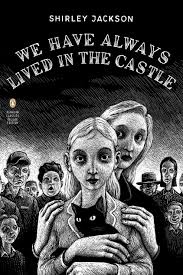
So what do I get out of gothic literature? And does Shirley Jackson’s oeuvre really count? I think the answers to those questions are “not as much as other people” and “yeah, basically, at least this book does.” In “We Have Always Lived in the Castle,” we are taken into the mind of Mary Katherine Blackwood, from a family of creepy murdered people the only survivors of which are her cohabitants sister Constance and uncle Julian. They live in a creepy old house in creepy old small town Vermont. Mary, or Merricat as she is known, lives her life according to the sort of rules and rituals made up by someone who stopped growing up at around twelve, or around the time most of her family was poisoned to death by… somebody. She buries things in the yard and nails other things to trees for their magical, protective properties. She’s into mushrooms, especially deadly ones, and her cat Jonah. Her sister consumes herself with cooking and other domestic tasks, and Uncle Julian obsessively documents the day in which his family was poisoned and he himself rendered invalid. It’s a gothic scene, I think we can all admit.

Her post-murders applecart is upset by the intrusion of her materialistic cousin Charles. Charles wants the family money, and is quite willing to turn Constance against Merricat to get it. He’s no match for her, though, and her means of removing him leads to what was for me the most interesting part of the book, a conflagration at their house followed up by a mob attack on the family- the Blackwoods had become fell legend for the small-minded Yankees they lived amongst and the fire became a bacchanalia for their greed and violence. Between the villagers and cousin Charles, you can’t help preferring the Blackwoods for who they are, creepy and potentially murderous though they are. Presumably, this was the effect towards which Jackson aimed.

All told, I could get why this is such a well-loved novel by so many people I know. It was definitely meticulously put together, and I’m interested in having more looks at Shirley Jackson’s work, especially her short fiction. That said, it’s not especially calculated to grab me. The stakes — the maintenance of Merricat’s way of life and the mystery of who murdered her family — didn’t interest me that much, for reasons not really the author’s fault. I wouldn’t say I related to Charlie or the villagers as opposed to the Blackwoods. Maybe I most related to Uncle Julian, who wanted to be fed, watered, and left alone to his historical researches… or maybe I just relate to the world outside the suffocations of the gothic, even if I can appreciate the intricacy and skill of its structures. ***

Review- Jackson, “We Have Always Lived in the Castle”