
Review- Gibbon, “Decline and Fall of the Roman Empire” Vols 4-6

gibbon.jpg

Edward Gibbon, “The Decline and Fall of the Roman Empire” Vols 4-6 (1787) – I picked up volumes 1-3 in one of those little cases at a steep discount when Borders went out of business. I’m a lot more used to reading texts in old vernaculars since 2011, so I think I got more out of the second half. The first half dealt mainly with the fall of the western empire. The second deals with a sprawling range of things, but the main connecting thread is the Byzantine Empire, which like a lot of nerds I have a childhood affection for.

You don’t really read historians like Gibbon for the facts- there’s many many other books for that, with better research, efforts to be more objective and culturally sensible, weren’t written two hundred years ago, etc. So what do you read Gibbon for? Well, I mainly read it as something to read while on hold at work (I’m on hold a lot at work) that you can get online. But obviously there’s more to it than that. For one thing, for better or for worse, Gibbon was hugely influential not just on history, but on literature as well, from his characterizations and prose style to writers (especially scifi writers) straight up ripping off Gibbon’s descriptions of historical events as plots.

I enjoy Gibbon’s sentence-level writing more than I do that of most historians. I actually think a fair number of his word choices are better than their modern equivalents- like “insensible” for “gradual-” it makes sense, the process goes on without you sensing it. “Gradual” implies it goes by grades, which can actually be any size, etc. But of course, I’m in the minority that likes to have to think about the prose I’m reading, as long as it’s not too laborious, as opposed to having the prose stand out of the way. Different strokes, as they say. The farther you get from the sentences, the more the structure doesn’t look that great — a lot of poorly-differentiated tribes and leaders doing their respective things — but sometimes Gibbon makes those sing, too, especially his descriptions of the Byzantine-Sassanid wars and the early Lombards.

Historiographically, Gibbon stands at a turning point, but not one in which he fully partook. He was stuck between the two German words for history- “historie,” history as a set of interchangeable chronicles saying more or less the same stuff, and “geschichte,” history as the progressive unfolding of comprehensible processes, generally with some kind of meaningful endpoint- the ideal state, the abolition of class society, what have you. The Decline and Fall is an Enlightenment-era text that looks at the vanity of a geschichte that wasn’t- if Rome really was the height of civilization (a problematic assumption, I know), then what sort of historical purpose was served by its fall, and the extended “dark ages” of irrationality and fecklessness (his view) that followed in its former domains? This is especially fraught for Enlightenment figures like Gibbon, who did not see the rise of Christianity as a recompense for the fall of Rome (to say the least), and who had at least an inkling that things were getting better — or at least his country was getting powerful enough to have a pretense towards universalizing empire again.

So you have this sort of mishmash. Sometimes in Gibbon you see the kind of universalized and law-generating tendency we’re used to seeing from more confident 19th and 20th century history, typically centered around republican theorizing about liberty, constitutions, how they’re maintained or not, as well as Enlightenment-era stuff about the progress of “rational” or “humane” religion, etc. It hints towards the idea that there is some general system through which some of the exigencies of history could be mastered. But you also get the sort of recitation of chronicles, calculated to impute lessons within a fixed moral/political system, that one is used to seeing in work that assumes history isn’t going anywhere in particular. Sometimes it’s both- one thing I’ve been thinking a lot about recently is how seriously manners and affect were taken as historical topics, and how that wasn’t just a matter of a silly thing weird old people care about. In a pre-industrial age, that stuff would seem to be a real distinguishing factor between cultures and a contributor to the power and reach of the ruling elite of a given power. Methodologically, Gibbon also stands between old and new- relying mostly on chronicles collected by other scholars, but scrutinizing them critically and also attempting to use linguistic and other more subtle kinds of evidence.

So… reading Gibbon can be fun for people who like old, occasionally somewhat sententious narratives of empires and their wars, and can be good for historians who want insight into how history is made. Also, for people with boring temp jobs. ****

Review- Gibbon, “Decline and Fall of the Roman Empire” Vols 4-6

Review- Neiwert, “Alt-America”

altamerica

David Neiwert, “Alt-America: The Rise of the Radical Right in the Age of Trump” (2017) – I thought it would be interesting to try to keep up with the literature on the altright as it comes out, which is made a little easier given that few printed books have been written on it yet (and that it’s impossible to do more than try to keep up with the more relevant online pieces on the same subject). One downside of this is all of them, so far, appear to be rather hastily-assembled and not as well thought-out as one would like.

Dave Neiwert is a long-time watcher of the far-right for left-liberal circles, whose earlier work I haven’t gotten around to reading. I know he’s written about militias and about talk radio before, and both take up much of “Alt-America,” which places the altright squarely in a right-populist tradition that goes back… and here, things get vague. Neiwert does a good job going through the actual narrative of the 21st century far right in America, but he is very light on historical or political analysis of why these things happened the way they did. He does little to place the far right and the “Alt-America,” a whole different worldview/culture he posits but does not really flesh out, in any kind of context. Where the other most prominent book on the alt-right, Angela Nagle’s “Kill All Normies,” is thesis-heavy (it’s all vague-left culture warriors fault) and narrative-light, Neiwert’s work is the reverse. Arguably it’s somewhat more useful- it’s nice to have all those dates and events in one book. But it should be possible to have both.

A lot of the analysis he does provide is basically psychological- authoritarian types and social dominaters, etc. I don’t dismiss this as much as I used to but there needs to be something more- if nothing else to explain why these psychological types are so prominent now. And this weakness of analysis extends to what’s always the worst part of any of these types of books (not just ones about the right, either), the “what do now” section. If you’re referencing Harry Potter as a role model for how to deal with pretty much any political issue, and worse yet citing Rowling’s works as great literary examples of empathy, you’re kind of on the wrong track.

I get the feeling that this is where we’re gonna be at for books on the new far right for a while. They’ll suffer from the inevitable weaknesses of books about fast-moving contemporary movements (books about the altright’s more ambitious reactionary cousins in ISIS had the same issues a few years ago) and more from the way that these altright people make any decent type anxious and angry in a way that always comes out in the writing. And so we’ll wind up with very basic narrative explainers (Neiwert) or with inter-left ax-grinding using the altright as a prop (Nagle) or alarmism and often enough simple gawking at the weirdos over on the far right (most internet pieces). It’s a shame, because I think there’s some interesting historical dynamics that this whole thing illuminates, but that can be a hard sell for publishers, I suppose. ***

Review- Neiwert, “Alt-America”

Review- Lessing, “The Four-Gated City”

4 gate city

Doris Lessing, “The Four-Gated City” (1969) – after five books and almost twenty years, Doris Lessing wrapped up the “Children of Violence” series with a notice from a post-apocalyptic bureaucrat. The series followed Martha Quest (based on the author) from her girlhood in settler Rhodesia to her middle years in London in the 1960s, and in a long “appendix,” to the years after a variety of wars and environmental catastrophes kill much of humanity.

The book follows Martha’s life in London, which she comes to from Rhodesia in her late 20s, shortly after the end of WWII, through the paranoid Cold War 1950s and eventually the thaw and revival of consumer prosperity that leads to “swinging London” of the later 1960s. The first third or so is Martha exploring immediate postwar London, which in many respects prefigures the post-apocalypse the book ends with- bomb-damaged, lingering under austerity, seemingly with no way to get better. Eventually, Martha becomes resident-secretary-cum-coparent for a writer and gets involved with his family, the Coldridges, a big, rich, high-profile public progressive clan riven internally by resentment and other emotional issues. A central part of the incompletely-drawn apocalypse Lessing posits occurring in the mid-1970s is rapid human mutation in response to environmental strain. In the end of the book, this entails telepathy and other strange powers. But it’s prefigured by the terrarium of difficult over-educated Brits Martha has access to in the Coldridge house, many of whom are maladapted by any meaningful definition — there’s a Jane Eyre-esque madwoman in the attic who becomes a friend of hers, one of the kids is a kleptomaniac, etc — but which prove helpful to the unsettled lives they (and more and more people) are made to live. Martha herself experiences a breakdown — in many respects a break with reality — and this is what allows her to see the coming of the end and survive it while helping others- at least for a while. It doesn’t make for a happy life, being a mutant in Lessing’s world, but little enough does.

Lessing wrote her magnum opus, “The Golden Notebook,” in the midst of writing the “Children of Violence” series. In many respects, “The Golden Notebook” is a shorter, somewhat more elegant version of the series, which does in one book what the series does in five. You get much of the same stuff: girlhood in settler Africa, falling in and out of love with various people and causes, move to London, and a breakdown surrounding the central issue of maintaining a sense of self when both society and personal life tend to fracture the self, and a recovery of sorts. I’m not sure how much the apocalypse adds. She makes it fit reasonably well, and it prefigures her move into scifi, which I look forward to digging into (and which I’m pretty sure was highly influential on later generations of scifi writers, especially feminist scifi). It was also pretty prescient, especially about mass computer-based surveillance and the way groups would try to buy their way out of catastrophes. But it’s also literally an appendix, and much of it isn’t from Martha’s perspective. It’s a little jarring, where “The Golden Notebook” manages its transitions perfectly.

I have a little theory that part of the reason behind Lessing ending the series with an apocalypse is that she might have seen it as a false start, a prolonged draft for “The Golden Notebook.” Stuck with the series after she already said what it was supposed to say, she spikes it, and its entire world. That’s probably not really true- if nothing else, at over 600 pages, “The Four-Gated City” is a serious work in its own right. There’s little like Lessing given the chance to depict a group of people over a long term, the evolutions of their relations, the various ways they repeat patterns while imagining themselves having broken free and recreated themselves. Lessing is a maestra of disappointment, which makes it all the more poignant when something good does happen, and someone can break away. So even if “The Golden Notebook” is tighter than “Children of Violence,” the longer form suits her well. *****

Review- Lessing, “The Four-Gated City”

Review – Vance, “The Asutra”

asutra

Jack Vance, “The Asutra” (1974) – The end of the Durdane series takes the hero, Gastel Etzelwane, far from home to figure out the secret of who’s been sending weird murderous aliens to mess with his homeland. Accompanied, sometimes, by a supercilious and self-serving historian from Earth, he first ventures to a distant continent and then is shanghaied to a faraway planet.

He finds out the truth, but one thing about Vance is that he’s a pretty strong skeptic of the notion that the truth sets anyone free. Enslaved on a faraway planet, Gastel finds that his world was little but a source of raw (mostly human) material and a site for experiment for two rival but symbiotic alien societies. The titular Asutra, brainbugs that exist parasitically on other species, and the Ka, a put-upon society from a gross swamp planet that used to be enslaved by the Asutra before turning the tables, have shaped the destiny of numerous planets in their efforts, mainly to dicker each other out of one crappy swamp world. The Asutra want the world because they had it before and think it’s nice (they have others); the Ka want the world because it’s their ancient homeland, and their entire culture is encapsulated in a 20,000-canto epic about how shitty it is but how much they love it. The depiction of the Ka is one of the better scifi depictions of wounded, small-nation nationalism I’ve ever seen.

Gastel, enslaved by the Ka, does his thing- looks for opportunities, and plays music (specifically, the Song of the Ka- the Ka reward slaves with leniency if they can learn bits of the Song). For the second time in three books, Gastel overcomes the inertia of an imprisoned people to lead a rebellion. For the second time, he succeeds. But for the second (and for the series, final) time, he finds that while rebellion improves his personal fortunes, the structures remain unchanged. After daring escapes and desperate battles, he and his fellow prisoners slaves are freed essentially as the result of an unseen negotiation process that didn’t have them in mind at all. He returns to Shant and the parliament he put in place is bickering. He — and his homeworld — are just as caught in the dynamics of history (not just human, but natural history too) as they ever were. The best he can do is take up music again.

The Durdane series (and much of his other work) places Vance squarely in the tradition of universal pessimism that runs like a black thread through speculative fiction. Unlike others in the tradition, like Lovecraft, he handles it with a light touch- inspired by that other great artist of the circular life, P.G. Wodehouse. He very cleverly uses the traditional tropes of pulp scifi — the individualist hero, the bold rebellions, the implementation of “progressive” change — to engage the reader in a bait and switch. It’d be easy to write the hero failing. But the hero succeeding, and for it not to matter in the face of a big, weird cosmos? And for the whole thing to be a lot of fun anyway? That’s what sets Vance apart and what makes the Durdane series more than the sum of it’s parts. ****’

Review – Vance, “The Asutra”

Review – Prashad, “The Poorer Nations”

poorernations Somehow along the way, I became a diplomatic historian, or anyway passed a comps field in US diplomatic history and have spent a lot of time with the kind of sources diplomatic history uses. There are some real triumphs of diplomatic history out there — Alfred McCoy, Arno Mayer, etc. — but diplo can also be some of the most perversely boring historical writing you can find. A LOT of “this dude sent this memo and then that dude sent THAT memo.” The old-time “great men” historians could at least jazz things up with completely arbitrary commentary and moralizing- our contemporary historians can’t or won’t.
Radical diplomatic history is its own thing and comparatively rare, and Marxist historian Vijay Prashad has two books of it charting the Non Aligned Movement, the second of which is “The Poorer Nations.” Prashad’s diplomatic histories are written in a much more loose sort of way than most, and the subject matter is at least relatively novel- the efforts by the Third World (the leaders of which used to bear the term proudly) to create a power base for themselves in the midst of the Cold War and even perhaps a new basis for international diplomacy. Prashad does his best to make it interesting, but especially as the revolutionary fervor burns down some after the seventies, the point when “The Poorer Nations” begins, it has some unavoidable drag- this conference and then that conference and this paper and that debt negotiation, etc.

The point is reasonably important though also a bit predictable if you’re used to this genre of left writing. We go through all the attempts of developing world leadership to forge an independent path, for their countries and the developing world at large. Very smart, ambitious people with serious plans, like Julius Nyerere and Manmohan Singh, appear. Models like Japan’s state-assisted development and Venezuela’s exploitation of oil combined with bolivarian populism crop up. Numerous international organizations are started to go to bat for the developing world. And they all collapse. The US and its cronies are too strong, and, Prashad argues, real solidarity is impossible because the ruling classes in the developing world don’t believe in it. Ultimately, those classes want to advance — want money, lifestyles, and respect on the world stage — more than they want their countries to do well or for the international order to change. And so it’s the usual lesson- class society will dicker everything up and any force that wants radical change needs to do several impossible-seeming things simultaneously. True enough, probably. ****

Review – Prashad, “The Poorer Nations”

Review- Graysmith, “Zodiac”

zodiac

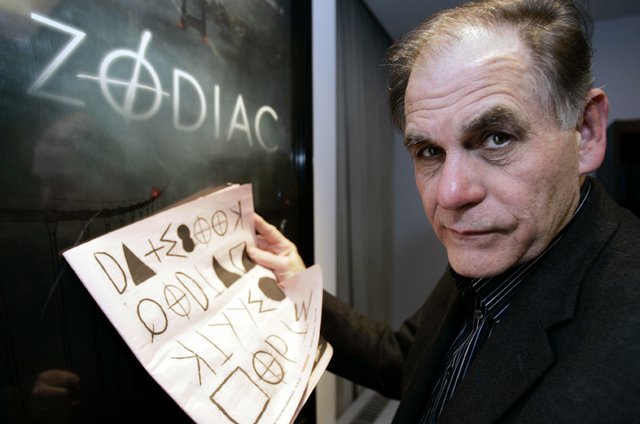
Robert Graysmith, “Zodiac: The Full Story of the Infamous Unsolved Zodiac Murders in California” (1986) – ehhhhhh… the movie is a lot better. Fincher gets across the obsessive quality of the case with more art than the actual obsessive (or, anyway, the obsessive in question) can manage. The one bit that’s missing from the movie that’s pretty funny is Graysmith (Jake Gyllenhaal’s character) saying that he got caught up in the Zodiac hunt because as a cartoonist, he is dedicated to justice. It’s a hilariously pro-forma version of the vindications that true crime writers (my understanding is that this Zodiac book did a lot to establish true crime writing in its current form) generally have to make. Probably at this point it’s gone on long enough that a few bold writers will openly say “I like to gawk at murders and so do you” but for the most part they need some edifying angle, preferably personal to them.

I don’t really follow serial killers but I get the impression the Zodiac is rather quaint. His confirmed number of kills is rather low and while any murder is awful, he’s certainly been outdone in terms of gruesomeness. A lot of the interest presumably comes from him having never been caught. And this seems to tie in with the larger theme of Zodiac lore: the supposed fecklessness and decadence of American society in the 1970s. In many respects, we have all been paying an absurdly heavy price to make up for the feeling of directionless the country felt at the time, especially where criminal justice is concerned. You can probably index the amount of mandatory-minimum laws to number of taunting letters the Zodiac sent to the newspapers and come up with a germane number (Dirty Harry’s fictionalization of the Zodiac probably had more of an impact, admittedly). But all the same… you can see how between Zodiac and the Manson killings would freak people out.

And it’s also hard to take seriously the response of supposedly enlightened parts of society to the Zodiac killings, a combination of panic, disregard, and forced posturing of various kinds. Among other things, we see an early deployment of blaming killings on the mentally ill that you see with mass shootings, but combined with a cloying and probably insincere desire to “help” sadistic killers like the Zodiac (Brian Cox’s character in the movie is, if anything, a restrained portrayal). None of this is a justification for the carceral state that arose in the late 20th century. But you can see how these things would help prime the population to both accept carceral logic and disregard soft-headed alternatives. Combatting the carceral state is going to take more than appealing to compassion (though that’s a part of it) or the preferred millennial alternative, flippant dismissal of the febrile Fox News inspired crime panics (though those narratives need challenging, urgently). I wish I had a better idea of what they look like, but hey, this is a Facebook review of a mediocre book, what do you want? **’

Review- Graysmith, “Zodiac”

Review- Vance, “The Brave Free Men”

tbfm

Jack Vance, “The Brave Free Men” (1973) – I’m a sucker for a weird subgenre of story- those about someone organizing and leading a small, unlikely army and overthrowing one or another long-held societal arrangement. Bonus points if it’s ideologically simpatico — a revolutionary people’s army, say — but I’ll take it even if it’s just private kingdom building. What can I say, I like a good story about delegation! Usually the prose is disappointing in these stories and the dorks who write them — often frustrated wannabe (or actual) military officers — can’t restrain themselves from going on at tedious length about maneuvers across imaginary, indifferently-related maps. But I’ll still give them a look when I see them.

The second installment of Jack Vance’s “Durdane” series finds our hero, Gastel, organizing just such a force, the titular “Brave Free Men,” to repel a rapacious horde of not-quite-orcs, the Roguskhoi, from destroying Shant. He has his work cut out for him. Shant has plenty of aristocrats (and killers) but no military tradition. The descendants of religious and ideological enthusiasts dumped onto a colony planet millennia ago, the inhabitants of its Shant’s various cantons concern themselves with maintaining their various arbitrary cult rules and general societal stasis.

Anyone familiar with midcentury scifi knows much of what happens next. Gastel and the few men he can trust have to overcome the hokum and conservatism of their backward culture. They do this largely by freeing indentured servants and enlisting them in the titular army. There are various technical challenges to overcome, betrayals both suspected and real, people telling them Shant can’t change and the heroes telling them it has to, etc.

What distinguishes Vance’s take on this plot is skepticism of the enterprise. In the end, the mobilized people of Shant beat back the hordes. Gastel sets up a new government with a parliament (but with no house apportioned by population, I noticed!). But the big reveal in the end — where the Roguskhoi came from — reframes the whole existence of Shant. Without giving too much away, it’s revealed that the hordes that almost destroyed the planet were somewhere between a joke and a speculative venture by powers much bigger and colder than anything Gastel can conjure up. If Shant is nothing but a dumping ground or playpen for amoral interstellar empires, then what larger purpose does change serve? Well, presumably we’ll get some kind of answer in the third and last book. ****’

Review- Vance, “The Brave Free Men”

Review- Mosse, “Fallen Soldiers”

fallensoldiers

George Mosse, “Fallen Soldiers: Reshaping the Memory of the World Wars” (1991) – this is a solid but relatively minor work from one of the great historians of the 20th century- and for my money, the greatest intellectual historian, though there’s stiff competition. Wouldn’t that be a fun radio show, like those sports radio shows where they argue who was the best shortstop based on obscure stats and get all heated about it, except about historians? I think it would be fun.

Anyway! In “Fallen Soldiers,” Mosse continued his examination of the cultural and intellectual trends that eventually fed into fascism. He sees these trends as a Europe-wide phenomenon, and talks a fair amount about France and Britain, but in the end, Germany and the way Germans memorialized their war dead, especially those from WWI, are his subjects here. Preexisting modes of prettifying death (Mosse writes a lot about cemetery design in the early chapters), already rife with conservative Christian and pastoral themes, get supercharged by nationalism and revanchism after the war. Again, this is more in Germany than anywhere else, but is also prominent in Italy and elsewhere the war touched.

War memorialization became a way not just to ennoble the chaos and slaughter of war, but a promise of a kind of secular deliverance. The new thing of total war would create the new man prophesied by the fascist right (and, to a lesser extent, the communist left), hard and fearless, shorn of the flabby lies of bourgeois civilization. Even conventional war monuments, Mosse argues, contributed to this gestalt, but nowhere was it more potent than I Germany, with results we all know. Ultimately, these are variations on the themes Mosse established in such earlier works as “The Crisis of the German Ideology,” but it’s a welcome additions to his project. ****

Review- Mosse, “Fallen Soldiers”

Review- Vance, “The Anome”

anome

Jack Vance, “The Anome” (1973) – Vance was a master of building baroque worlds of stasis, decay, and a sickly kind of wonder. In the Durdane trilogy, he depicts the realm of Shant, a long-abandoned colony planet divvied up into cantons, each governed by a different cult rigorously pursuing one or another set of arbitrary rules. Overseeing all is the “Faceless Man” or “Anome,” who enforces the division and cultural stasis of Shant through the simple expedient of a device that explodes the heads of anyone he pleases. It’s implied this state of affairs has gone on for some time.

Vance never stints on the human element of what makes his societies go, mostly in terms of the personal dynamics of domination and collaboration. The canton the hero grows up in is run by a cult of misogynist male ascetics, who loll around on hallucinogens while forcing women and children to do all the productive and reproductive labor. The vanity of degeneration is one of the affects Vance is best at conveying, and it’s at its skin-crawling (and sometimes hilarious, in a harsh kind of way) best here.

Anyone who knows classic scifi knows what comes next- the individualist hero, a bold, moody young man with big dreams and a disregard for established mores, strikes out on his own. Gastel Etzelwane skips out on the cult (refuses to be a “Pure Boy,” which I kept reading as “Proud Boy”- I’m sure the canton authorities also frowned on masturbation lol) because they make him abandon his mom and are generally dicks. He has various misadventures out in the world, which to be honest are a little disappointing- I would have rather seen less airship shenangians and more depictions of different cantons with their own weird rules and cults, at which Vance excels. Shit gets real when barbarians roughly in the orc mold — the Rogushkoi, big, ugly, mean, rapacious — invade Shant, killing various extras and also Etzelwane’s mom. The Anome doesn’t do anything about it, presumably because organizing an army between all his weird little cults would be too disruptive.

Etzelwane has to find a way to prevail upon the Faceless Man to do something. But how to find a dude who is faceless? Is this rando who keeps popping up in his life to alternately frustrate or aid him the Faceless Man, or just a rando? Will all this mean that Etzelwane will have to take power himself, and then disrupt the shit out of this classic scifi backwards-irrational planet with some good old-fashioned bourgeois revolution? You know it will- in the sequels. ****

Review- Vance, “The Anome”

Review- Dolan, “The War Nerd Iliad”

iliad

Homer/John Dolan, “The War Nerd Iliad” (2017) – It would be hard to overstate the impact John Dolan has had on my education. I began reading the War Nerd, written under the identity of “Gary Brecher,” after a friend linked one of his articles to me early on in my time in college- early enough that I was one of the ding dongs speculating, “COULD Brecher be Dolan???” While I pay my homage to the Gary Brecher persona, I’d have to say the Dolan half was probably more important to my education.

There’s a simple reason for this- I went to hippie school, sans requirements, and loaded my plate with history and sociology classes. I never took a literature class. Dolan’s writings were Lit 101 (and a few extra classes alongside) for me. The list of writers I picked up because of his recommendations is nearly coextensive with the list of my favorite writers. So I get why the man himself might prefer Gary Brecher, but I’ll always have a soft spot for Dolan. I’m glad the interests of the two — literature and war — coincided for this particular volume. Moreover, it’d also be hard to overstate how important the Iliad — or, anyway, the children’s Iliad I had — was to me as a child. It was my favorite story, though I was disappointed to find that the grown-up versions were generally slogs. Probably worth it, especially for people whose interest in literature comes to a large extent through history, but slogs nevertheless.

Dolan sees the slog quality as an injustice to the poem. The Iliad was meant to be recited aloud- closer a to campfire tale than a school poem. It’s meant to be gripping, a real emotional rollercoaster, and it’s not meant to stint on the goods- gore, gloating, gods, descriptions of riches, feasts, and other things that bored peasants passing some time in the winter want to imagine. Dolan tries to bring this quality back to the Iliad for modern readers of English. He does so via prose translation. Dolan argues that sentence and paragraph structure does form modern readers what meter and rhyme did for our ancestors… and moreover, who reads epic poems today (I know, I know… a few of my fb friends)? He wants this read.

He delivers, right to a sweet spot that few works really go for these days (arguably, Fury Road did). The characters are more alive than ever before (in English, anyway)- angst teen death-dealer Achilles, aggrieved manager Odysseus, decent doomed Hector, vain late-stage-mob-boss Agamemnon, original fuckboi Paris, etc. He does something really special with the gods- their human qualities come through clearly but they never lose a truly weird, eerie quality. The granular, cynical grasp on the politics of war that made the War Nerd such a success comes out in his depictions of the Greek war effort, all squabbling chiefs, mission drift, and chaos. And he delivers the goods- the battle scenes have all the chaos, blood, pain, confusion you could want, but also the sheer joy of rage and action that draws so many to this story and stories like it. Dolan may have chosen prose here, but the poet is still there in his similes and apostrophes and probably other figures I’m missing because, you know, didn’t take any literature classes.

At bottom, the Iliad is about an alien world, but with just enough familiar features to give us moderns some grasping points. Often, these points encourage — delude — people (whole generations, in some instances- cf the British ruling class in the 18th and 19th centuries) into thinking that these alien people actually were like us, or like what we could (or even should) be. Sometimes, sick of that, people go the opposite direction- claiming it’s all so different you’ll never understand it, except maybe if you immerse yourself in these languages, become a difficult prig about it, etc. In his take on the Iliad, Dolan illuminates an alien world in all of its splendor and terror — a lot of both — in a way that is relatable to us today, while never losing sight of the gulf between us and the Homeric. That balancing act alone is supremely difficult, let alone making it readable and entertaining. But Dolan has been making the alien seem familiar and the familiar alien, in his literary, historical, and (for lack of a better term) political writing for a long time now- and making it look easy, the sure sign of a master. *****

Review- Dolan, “The War Nerd Iliad”