Review – Chafkin, “The Contrarian”

Max Chafkin, “The Contrarian: Peter Thiel and Silicon Valley’s Pursuit of Power” (2021) (read aloud by Will Damron) – I’m a little behind on reviews. This was a pretty good audiobook about a juicy subject, but god help me if I’m not stuck on one weird thing. Journalist Max Chafkin, in relating the story of billionaire tech investor and political wirepuller Peter Thiel’s childhood, to portray the boy Thiel as bullied. California in the seventies, Peter Thiel a weird, hostile, skinny nerd, not hard to believe. That said, the one example anecdote Chafkin could pull out was some of Thiel’s high school classmates going around their town, stealing “for sale” signs, and setting them up on Thiel’s house’s front yard in the night. They then asked Thiel when he got to school “hey, you’re moving?!”

I mean… that doesn’t sound that bad? That actually doesn’t sound bad at all? Sounds kind of goofy? Maybe if there was an implied threat, like, “you better leave town,” but Chafkin didn’t imply there was, and probably wouldn’t leave it unsaid if there was. 

Beyond it just sticking in my head, why do I lead with this? Ultimately, I tell this story because it illustrates the ways in which Thiel was shaped — and then went on to shape himself — the myths and lacunae of late capitalist culture in the US. More than a bullied kid, Thiel seems like one of those kids who just doesn’t like anything, someone who never outgrew a sort of infantile colic (I’ve known kids like that- and other kids do wind up bullying them, in part because damn near any interaction with kids afflicted that way turn out to be experienced as bullying). It’s not quite depression, at least not as I know it, just a general disdain for and dissatisfaction towards the world. His parents, German immigrants, sound unpleasant, but not abusive. Who knows how people get that way? But “bullied nerd makes good, takes revenge” is part of the Silicon Valley myth. Thiel probably believes it- Chafkin, normally pretty perceptive, might have gotten taken for that ride, too. 

I’ve been thinking a lot about Generation X lately, for my birthday lecture. They all thought they got dealt a pretty shitty hand, and it didn’t help that many of them came of age during the recession in the late eighties/early nineties, but really, it was about as good a time as any for a superficially smart white American with ideas and grudges. Thiel didn’t start out as a tech guy. He started out as a politics guy. In eighties Stanford, he edited a review, like the ones Anne Coulter had at Cornell and Dinesh D’Souza had at Dartmouth, dedicated to ponderous conservative essay-writing next to brazen bigoted provocation. More than promoting any policy agenda, Thiel just hated the culture around him, though even that is more myth than reality. Thiel said his issue was the permissiveness, hedonism, and lack of standards supposedly inherited from the sixties counterculture. But like… at Stanford? The most preppy school in Northern California? It wasn’t that countercultural, never was. Maybe hedonistic, in a lightweight collegiate way, but still. The point is, Thiel hated, and put himself in the script that allowed that hate to flourish. 

He became a corporate lawyer in New York and tried to get into higher-end political law by clerking for federal judges. At some point he got sick of it, went back out west, and started a hedge fund. This was the mid-nineties, and one of his investment fields was online payment systems. You could say Thiel has a decent nose for opportunities. You’d probably be right, but again, it’s possible to overstate, and he’s banked on some weird shit over time too. Part of his motivation to look into moving money online was his anti-statism. He was a big fan of Neal Stephenson’s “Cryptonomicon,” all about daring tech entrepreneurs chasing gold to make a non-state crypto-currency (I read that book myself several times as a teenager- these days, I’d say it’s mid-rank Stephenson). Eventually, all of this led to PayPal.

One interesting point Chafkin makes is the inflection point Thiel’s rise represents in internal Silicon Valley culture. There was always a ruthlessness there- it’s capitalism, and the military-industrial complex always had a major hand in the tech industry. But it was, if not tempered, then modulated by countercultural values and promises. Hippie bullshit didn’t stop Steve Jobs from being a dick to all and sundry (until some genius convinced him he could stop cancer with juice); it did stop him from crowing about it, and perhaps inflected the culture around his businesses, making for a mellower corporate culture. Chafkin depicts Thiel, whose original bugbear was hippies, as leading the turn away from this ethos, to the “move fast and break stuff” era. The counterculture-cyberculture lineage had a vision of a sort of techno-pastoral idyll as the end point – the anarcho-capitalist Thielian vision is more like rolling around a blasted Earth in a robot body, absorbing hippies and other lesser breeds for the energy in their blood. Ironically, both are meant to be visions of liberation. 

Chafkin entertainingly relates the twists and turns in Thiel’s career. He fucked over Elon Musk — Musk spoke on the record about Thiel to Chafkin, seemingy in tones of wistful regret “but make it stupid” — and Meg Whitman at Ebay and whoever else he felt he could get a dollar out of. It’s a mistake to make too strong of a distinction between the hacker as hippie and the hacker as hateful nerd: both take glee in breaking rules, and Thiel certainly did plenty at PayPal. Say what you want about Apple, but it did and does make a product that people want, that’s different from what came before. Thiel was a pioneer of that other way to make a bundle: backdoor deregulating an industry, destroying competitors through the competitive advantages unpunished rule-breaking gives you, and establishing a monopoly. That’s what PayPal did, up to and including facilitating fraud and burning through millions of dollars of venture capital to lose money to hook people on their product. This is what a number of later Silicon Valley unicorns, most of which Thiel invested in, did and do as well- Uber, Airbnb, on and on. 

It’s another myth, the myth of disruption. Disruption “works” in the sense of “succeeds” — within the structures we live in, you can make a lot of money doing it. Maybe that’s the typical Gen X thing- acting like exploiting what we already have is the supreme genius, and that trying to create something fundamentally different is the ultimate stupidity. In any event, Thiel also sought to “disrupt” politics. He took the same view of establishment politics as he did of the likes of Meg Whitman- Thiel may be pro-capitalism, but he hates most successful capitalists for being office creatures, not Randian entrepreneurial supermen like himself. There’s a conspiracy, you see, of intellectuals and administrators — the bad kind of nerds — to lord it over both normal people and, crucially, entrepreneurs and visionaries (good nerds, for those keeping score) through rules, regulations, and encouraging cultural values inimical to the people who (supposedly) create value. Thiel, and other Silicon Valley right-wingers like Balaji Srinivasan and Thiel’s court philosopher, Curtis “Mencius Moldbug” Yarvin, think they can disrupt this government/academia/corporate complex the same way Uber disrupted taxis. 

As it turns out, Thiel could do a lot in that vein, but not enough to satisfy. He could destroy Gawker for its cheek in covering him negatively (also, for violating his privacy in the matter of his sexuality — he was partially in the closet when Gawker publicly wrote about him being gay — but it seems clear he would have gone after them anyway). And he invested in Donald Trump’s political career back when everyone thought the alliance between the Silicon Valley giants and the Democratic Party would last forever. That’s one of his bigger “everyone thought he was crazy but he was right” moments. He celebrated the victory alongside his friend, openly racist blogger Moldbug Yarvin. 

It wasn’t really to be, though. Disrupt something big enough, and you can’t control it. Something the old hippie capitalists could have told Thiel- at times, you need to surrender control, blah blah surfing, etc etc taoism. Needless to say, Trump’s personal style and that of Thiel did not mesh. Thiel didn’t succeed in his big goal of appointing his people on to various regulatory boards, in order to “destroy the administrative state” or whatever, really stick it to those bad nerds. You have to wonder… does he really not notice how sickly the regulatory state was already? Maybe half a regulatory state makes people even madder than a real one… but in any event, Trump couldn’t do whatever it is Thiel wanted him to do. 

The world still irks Thiel. It makes sense, because the world still has the source of all of Peter Thiel’s troubles in it, in the form of Peter Thiel. He can’t understand that, though, so he has to pour everything into narcissistic fantasies: New Zealand bugout bunkers, seasteading, life extension. Thiel’s on record as saying that he sees death as the ultimate evil. Revealing my own personal biases, there are few postures I respect less than an exaggerated fear of natural death. Especially from someone, like Thiel, who quite clearly does not actually enjoy life! So yeah, uhh, this dude sucks. The way he sucks is interesting, somewhat. One funny thing about contemporary life: we’ve put so much power at in the hands of so few people, and have ensconced hierarchy and elitism so thoroughly in the structures of life, that there’s a certain extent to which a few key people really are crucial to the functioning of many key bodies, organizations, and movements. Get rid of Trump, Musk, Thiel, and it’s pretty clear there’s no replacement, not really- someone can take their offices, but not their mana. It’s not because they’re actually that smart, talented, or even charismatic. It’s just a function of how power works, now. You’d figure people would draw some obvious strategic conclusions from that… but that’s not Chafkin’s job, here. ****’

Review – Chafkin, “The Contrarian”

Review – Niven, “Ringworld”

Larry Niven, “Ringworld” (1970) – The “soft versus hard” distinction in science fiction, like a lot of similar guidelines, should not be taken too seriously or schematically. Among other things, some of the most distinguished hard scifi writers can’t quite keep themselves from one or another magic-like technology: faster than light travel, various unobtaniums. And why shouldn’t they? Especially the “golden age” writers, who lived through so many technological developments that would have seemed like magic when they were kids? To me, the distinction seems to be more about what bases writers use for their speculation.

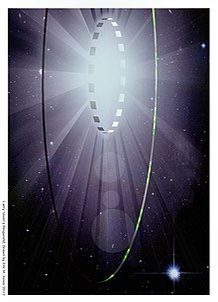
So, despite faster than light travel and various super-materials, I think it makes sense to call Larry Niven’s “Ringworld” hard scifi. I say all that less because the distinction is that important in and of itself, but because this is paradigmatic of the kind of scifi that begins with an engineering concept and works it’s way out from there. Larry Niven basically decided to one-up his buddy, the scientist Freeman Dyson. Dyson came up with the “Dyson sphere,” where super-advanced spacefaring civilizations could use all the matter not otherwise in use in their solar systems to encircle their suns in shells of matter, thereby absorbing all of the sun’s energy and unlocking limitless technological potentials (for everyone to sit around and browse the internet all day, later writers insisted). Niven said, why bother with the shell? Why not just a ring? A ring that encircles a star, with about the radius of Earth’s distance from the sun. You could implant all kinds of habitats on it and spin it. Bingo- trillions of square miles, all the room you’d need.

Ring habitats have since become a trope in science fiction, so I maybe didn’t have the same sense of wonder readers were supposed to get at the sheer scope of the idea when I read it (or the same feeling that the perspective characters were supposed to have encountering it). We only get to the ring about halfway through the book. First, a crew must be recruited by a member of a weird old muppet-looking alien race. It includes a member of a cat-people race whose culture is basically Klingon, and two inhabitants of post-scarcity spacefaring Earth, a bold rational enterprising man and a naive sexy lady who may or may not be preternaturally lucky. The muppet-alien wants to know what the deal is with an astronomical anomaly (in keeping with classic scifi, every alien race has one main characteristic, and for the “puppeteers” as they’re known, it’s caution that shades into cowardice). That anomaly is the ring.

Messed up by its automated defenses, the crew crash lands on the ring. The creators of the ring — or anyone with anything near the technological know-how to create such a stupendous artifact — are nowhere to be found. There’s oceans the size of planets, a massive eye construct, deadly laser plants, villages full of primitives who worship engineers as gods, etc. In order to get home, the crew needs to find out what happened to the “Ringworld engineers,” as they’re known. So there’s a whole series of adventures they have to go through to figure stuff out, the various alien representatives bickering all the while. Many of the adventures serve more to show off the features Niven came up with for his world — giant rotating shades to create the illusion of night and day! Hyperfast elevators to the top of the walls of the ring that the engineers could use! — than to advance the plot. 

This was pretty fun scifi. Not mind-blowing, far from enlightened attitudes (especially about gender and about progress), but basically enjoyable. I’m aware Niven was one half of the genocide-fantasy-pair Niven and Pournelle and a big right-wonder, backer of Reagan’s “star wars,” and if you know how to read that stuff back it shows up here. There’s that weird sort of social-technological darwinism, that the most rational and enterprising people (ie, those most like scifi protagonists, ie, those most like how a lot of scifi writers fondly imagined themselves) develop the best tech so they beat everyone else, only laid low by cosmic accident, etc. Stick to that too rigorously and you can wind up some odd places. Still, it was pretty good for a recreational read. ****

Review – Niven, “Ringworld”

Review – Patchett, “Bel Canto”

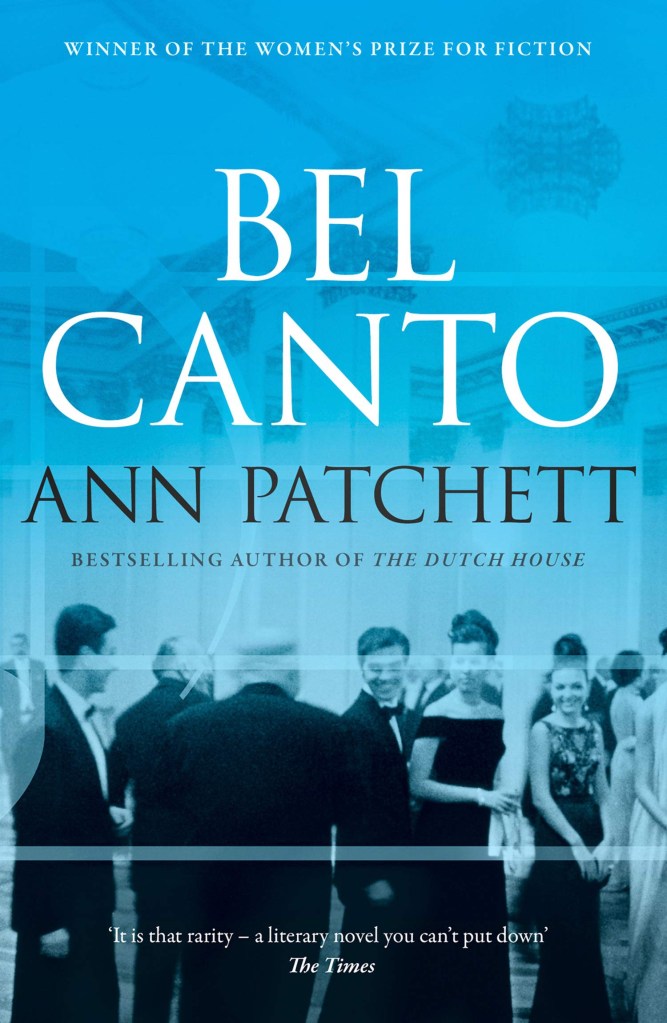
Ann Patchett, “Bel Canto” (2001) – The main question this book raised for me was this: how to describe and rate a novel that has flawless prose, from sentence level to plot construction, but that is also, fundamentally, a little boring? That takes something notionally exciting — a hostage situation! wealthy socialites held by third world guerrillas! — and makes it, mostly, a site of examination for the personal regrets, cares, and in some cases growth of some of the hostages and hostage-takers?

Fine prose is one of the keys to Ann Patchett’s reputation. Another is her real lack of pretense. She hasn’t even got that sort of stuck up pretense of rebellion a lot of writers who manage to escape more conventional pretense wind up displaying. What you see is what you get. Patchett didn’t promise a deep, searing examination of the causes or effects of terrorism, of social stratification, or of anything else. She didn’t promise literary experiment. She told a story, and on a prose level, told it with unrivaled grace. There’s not even really any kind of prose pyrotechnics: just very clear, effective, elegant writing, every word in place. 

There’s a theme, which is love. Love is put in extremis here. First, it’s a rich man’s love of opera. A Japanese executive, one of the richest men in the world, lets a small, impoverished Spanish-speaking nation bait him to a pitch meeting that the businessman doesn’t take seriously by getting the world’s greatest soprano to sing for him. The businessman is a big opera guy, you see. Once the terrorists take the dinner party over, love of art gets contrasted with the desire of the terrorists for revenge for various bad things their regime did, and the meaningless deaths that result. But the protracted siege allows hostage and hostage taker to come to some understandings. Love blossoms across these lines, and along them, little gesture of kindness depicted by Patchett with minute fineness and great emotional intelligence, especially for a scenario that could lend itself to laughable romanticism. The violence of the state comes along to take its own tax on love and humanity, but it goes on… for some, anyway.

Well… it’s not a bad plot. I didn’t find it especially compelling, especially as the characters, while elegantly sketched and differentiated, also weren’t super-interesting, and only had a limited range of action, given the circumstances Patchett put them in. I guess my main critique was that it’s almost too smooth. There’s no real “biting point,” nothing to chew on. Me and my eating metaphors! Surely, Patchett deserves a great deal of credit for her chops, in any event. ****’

Review – Patchett, “Bel Canto”

Review – Lockwood, “No One Is Talking About This”

Patricia Lockwood, “No One Is Talking About This” (2021) (read aloud by Kristen Sieh) – Well… I listened to this at a time where a fair few things came together for me. Whatever other effects this confluence had, it has made me very, very impatient with this book. I am informed, by people whose taste I respect, that Patricia Lockwood is a very talented writer, largely on the strength of her memoirs “Priestdaddy,” which I perhaps will one day read. I could see glimpses of it in this work, a smooth prose style and bits of humor. I have also been told she is a “master of Twitter.” This is probably part of the problem. I did not enjoy, like, or respect this book.

A friend of mine — a friend I’ve known exclusively online, if that matters, one I’ve known for years and shared writing and other intimacies with — did something extraordinarily self-destructive recently. His stated motivation for so doing, the way he went about it, and the formats in which he informed his friends, all simultaneously critiqued and reflected the sort of internet zeitgeist that seems to be one of the main topics of contemporary literary attention. His critique, and what he did in response, struck home not just for his perspicacity, though he is quite perceptive, or the extremity of his action, though it was quite extreme. It also struck home because at bottom, he and I are in similar positions- failed writer/intellectuals. People flinch from that word, “failed,” “failure” (like a certain other “f” word that I freely self-apply, “fat”). They point to my accomplishments, and they — I — point to his. They’re real. But there’s also no getting around the fact that neither my friend nor I can make a living from writing, academia, or any of the other societally-approved venues to cash out wordy oddballs. 

So much for the material! I usually play straight man to this friend. In our dynamic, based as it is on discussing ideas and aesthetics, I’m the stolid one, considering the implications, striving for consistency, trying to be “real,” he’s the zany one, throwing such mundane concerns to the wind, even to the point where he’d dispute this characterization. No pigeon hole for him! Maybe this is the way to put it: I make statements; he makes gestures. Another way to put it: we discussed depression, once, and he told me some facts about narcissistic depression, the depression of people capable of making flashy gesture and big deals out of themselves (as you can tell, my psychological vocabulary is… impoverished), whereas my depression, my family’s depression, was more the self-obviating kind. 

This friend would try to destroy himself all over again, I bet, before he accepted any kind of descriptor that said he, and his attempted last performance, were part of any kind of zeitgeist. Well, he doesn’t have to accept it. The thing that made me most angry as I read through his lengthy manifesto was the unsaid thesis: that he is above the real, above the quotidian. I answer emails about 3D printer failures forty hours a week, and try to eke out time for what I care about — writing, reading, organizing, fun time with friends and family — when I can. I can live with my failure to be a professional writer, and try to convert it into success, and this dude… 

Well. This is not a request for an explainer on the realities of depression and suicide. I get it, please believe me, intellectually at least, and you’re hardly going to get me to grok it emotionally more than the last week or so already has, so please, please don’t try. Among other things, and here it’s hard to see how much my friend “meant it” — he is a long-term practitioner of the “Schrodinger’s Joke” — but his manifesto included instructions for his posthumous acclaim. 

He’s not a “get famous or die trying” guy, exactly (he has invested a lot of energy in being hard to pin down). That’s made explaining this difficult, when I’ve tried to talk about what’s going on to other friends. I think it would be fair to say he is a “live in extraordinary fashion or try to die in extraordinary fashion” guy, or was, anyway. Surviving the experience seems to have woken him up to the fact that people care about him, and that living like the rest of us relatively-normie scrubs might indeed be preferable to death and mutilation. 

So, getting back to “No One Is Talking About This” (including me for the last thousand plus words, hey-o!), it’s not a fame thing, exactly. It’s not an internet thing, exactly, though most of my friend’s relationships seem to take place there, and a good portion of his friend network do appear to be internet-damaged millennials. It’s a hands-up-thrown refusal of concrete reality that can’t, even, really commit to its own lack of commitment. That’s what I see, both in internet discourse and in the discourse about the discourse. Half-digested nth-generation tropes from continental ding dong philosophers who barely even meant it themselves, circulated and recirculated like old coins until even the names wear off… glibly talking like nothing is real and nothing is worth speaking seriously about even as they milk everything from derogated social media platforms to climate catastrophe for cheap bathos… well, my friend wasn’t down with that, either. And in his attempted final act, he tried to put some chits on a commitment, of sorts. But a commitment to what, exactly? 

“No One Is Talking About This” is about an unnamed female narrator who becomes moderately famous via “The Portal,” i.e., Twitter, but, like seemingly everyone else who is connected to said social media platform, is unsure whether she likes it or hates it. It certainly has a profound effect on how she processes reality and communicates with others! This is gotten across in the text through a first half dominated by little vignettes, tweet-length remarks, no real plot, less “nods” or “winks” at James Joyce and more just Lockwood pointing openly at Joyce and saying “yeah, I’m doing that, but more so, because our TIME is just more so, you know?” 

We do get a pivot to something like the real, due to a family crisis. The narrator has a family, the family has a crisis. It’s not really a plot, but it’s something other than a social media scroll (self-conscious, because, you know, we’re all so self-conscious now!!). That’s the thing… they really can’t manage either, these “we live in discourse hell” writers, whether fiction writers like Patricia Lockwood and Lauren Oyler or the legion of nonfiction commentators that shade into the overly-online people on your feed. They can’t do the all-pretend world that some cyber-boosters of the eighties and nineties promised, but they can’t really do the real, either. And they’ll insist that their inability mirrors a human inability, or at least a contemporary inability… and they’re not wrong. It’s an old theme and it’s been done reasonably well. What’s real, how much do our feelings determine at least the subjective reality of experience versus what’s “actually” in front of us blah blah blah.

Look- I’m not some “I fucking love science” dork or an objectivist. I’m a reader, trying to read something interesting. And “discourse hell” isn’t cutting it anymore, to the extent it ever did, and pivoting to noticing how hard it is to take a family tragedy totally seriously because you spend too much time online- that’s not gonna get you over, not with me, anyway. Maybe I should be able to do it. Maybe this really is “the human condition,” with an earned definite article and everything. Maybe every rejoinder I could make to that is a cliche about how we should read about Bangladeshi factory workers instead (it isn’t, but the internet smallfolk can make you feel that way, when they’re all saying the same shit- we are social apes, after all), maybe I’m the stupid, blockheaded socialist realist next to the beautiful thoughtful modernists in the thirties tableau (the latter already on their way to neoconservatism but later for that). 

But I don’t think that’s how it is. 

I said there was a confluence of factors that, perhaps unfairly to Lockwood, rendered me incapable of enjoying or respecting this book. One was my friend’s situation. Another, longer-term one, is that I am, sort of, recovering from depression. I’ve felt better the last few years than I have in a long time. Life is far from perfect, but I experience more feelings (and I’ll say it- whatever set me up for success in terms of family and friend support and talk therapy, antidepressants landed the most important blows). One of those is anger. I’ve gotten used to suppressing it, got used to thinking of it as a self-indulgent gesture of my adolescent self (which, when I was an adolescent, it often enough was). But let’s put it this way: I experience anger as impatience. And I can still be very, very patient, when the thing I am being asked to contribute is just time, or honest effort.

My patience for dishonesty, though, is gone. My patience for glibness is gone. Worn through. My patience for bullshit is mostly gone, the only thing keeping it from being entirely effaced is an appreciation for funny bullshit. You can do what you want. You can be as glib as you want, act as though it’s all just performance and I’m just doing a dishonest (hypocritical!) glibness myself. You can “cringe” (there, using it as a verb, not an adjective, like we’re supposed to). You can fuck off, or not. But I’m not doing it anymore. Not with Lockwood, who is intermittently funny but not funny enough, not here, and not with you. 

Because on top of whatever else it is — genuine cris de coeur over authenticity! Artistic expression of your experience! Funny memes! — the glibness of the “we live in the hell of discourse” thing is intensely disrespectful. It does not live in peace, as I would live in peace with the internet people. It oversteps, by nature. It disrespects life, disrespects effort, personally disrespects everyone who tries to live something better than a shitty day on any given “hell site.” And they generally haven’t even got the integrity to admit that they are spitting in your face. A number of internet strangers recently, and at least one or two IRL acquaintances, have behaved disrespectfully to me, impugned my intelligence and my integrity, and, my patience gone, I asked or told them to stop, and I got earfuls about my “defensiveness.” “U mad, bro?!” gone to therapy. Fuck off. I see you, and I’m not playing. Not now, not anymore. 

Ironically, my self-destructive friend discussed a fair amount of what I’m saying now in an essay of his on… well, notionally on David Foster Wallace, but really on the whole literary scene circa 2010, around when it was written. His major thesis is that because hipster writers (this is back when hipster discourse was a thing) live such cushy lives that they have no real suffering to write about, and so write about a fake suffering, the feeling of inauthenticity. I have a number of friendly critiques of that article but I think, if anything, the situation has degenerated since then, even if we’ve made the relative advance of ditching hipster discourse. Now, books like this one, and “Fake Accounts” and I tend to imagine many others, somehow manage to be “about” ever less, and to be corrosively hateful to even the possibility of being about anything at all, and somehow, somehow! managing to dump themselves into the same old same old of familial sentimentality or careerist pseudo-heroism in the end.

I can agree with the internet scribblers about this much- it is a discouraging picture. But I have a better solution than they have- turning the fucking page. The exigencies of my reading scheduling, a fun little game for me, has led to my next audiobook being about the Armenian militants who hunted down and shot the Turkish pashas who led the genocide against their people. A perfect palate-cleanser!

I turned definitively against this book after Lockwood, culminating a series of little jokes about how being political is stupid — I get the impression she is meant to be a somewhat serious leftist, who knows, I don’t care — belittled people’s reactions to the killing of Heather Heyer at Unite the Right in Charlottesville. A good friend of mine was a medic on the scene. She split a vuvuzela in half to manufacture a splint for someone’s broken leg. Why are we telling the story of some dumb internet person’s inability to be honest about their, or any, situation, again? Why are we telling it over and over again? I don’t care what a commie you think you are, this whole fucking business is fash nonsense.

What did we do when the altright manifested itself out of the discourse? We — the actually committed, the ones who know we’re imperfect and fucked up and still drag our asses out into the productive real, no matter how “cringe” it makes us — dragged it into reality and we kicked the shit out of it and now, no one, not even Richard Spencer, will admit to being altright. There’s still fascists, and we’re working on them, but that bridge burned, because we burned it. That’s the reality I’m interested in. That’s the reality I live in, and I’m not going to take disrespect for living in it, even — especially — if it’s sly, sneaky disrespect that acts like I’m just being “defensive.” Lockwood gets an extra half star over her rival, Oyler, for being funny, sometimes. But I’m done. Quite done. **

Review – Lockwood, “No One Is Talking About This”

Review – Moreno-Garcia, “Mexican Gothic”

Silvia Moreno-Garcia, “Mexican Gothic” (2020) (read aloud by by Frankie Corzo) – It’s hard to say many people benefited from covid, and I’m not really willing to say Canadian horror writer Silvia Moreno-Garcia was one, but her breakout novel, “Mexican Gothic,” fit the mood, found a literally captive audience, and became a big enough hit to make it to my “zeitgeisty reads” slot. It’s also basically “Get Out” Latin American, a novel, and considerably less deft than Jordan Peele’s hit horror-satire film. It’s a reasonably promising premise: a young Mexican ingenue in the fifties has to go rescue a lady cousin from the clutches of an evil house and the family that lives there and which the cousin married into. 

Here’s the thing with the increasing awareness of a certain kind of history and politics among the sort of writers who, twenty-thirty years ago, would have made a point of not giving a shit: it can be used to score cheap points and cover over flaws in the execution of a work of art. It’s the closest the anti-PC crowd gets to a point when it comes to criticism, and fittingly, the baying hordes of anonymous commenters come closer — though not very close — to the truth of the matter than the notionally smarter contrarian essayists and podcasters paid to opine about it. It’s not some big conspiracy. It’s just fashion. So the ingenue is a girl-boss who never needs anyone’s help and always has a ready zinger- no innocent final girl here! The evil family are creepy British race science people, as though Mexico lacks its own oppressors and cooperators with foreign oppressors. That’s one thing Peele managed in “Get Out” that his many imitators have not- contemporary relevance and real strangeness. Given that he only had the suburbs to work with, that’s quite a feat.

The plot of “Mexican Gothic” is sufficiently by-the-numbers that if she was so inclined, Moreno-Garcia could probably argue it’s that way intentionally, as an homage to the cheesy horror we’re all supposed to love. There’s about as much feeling for being in either the 1950s, or in Mexico, or really in danger, as there is in any cheap period drama, or actually probably rather less, given there’s no set design to carry it off. Everyone talks like a contemporary person or a contemporary person’s bad parody, more worthy of a sarcastic tweet than a novel, of what various stock characters — the creepy racist, the bookish innocent — from the past would sound like. It wasn’t a terrible book. But it was mediocre and I have to figure covid-brain has something to do with its rapturous reception. **’

Review – Moreno-Garcia, “Mexican Gothic”

Review – Kirk, “The Conservative Mind”

Russell Kirk, “The Conservative Mind” (1953) – There’s a big pull quote on most editions I’ve seen of this book — and there’s been lots, conservative presses keep it in print — by William Buckley, saying something like that the modern conservative movement would be inconceivable without Russell Kirk, and “The Conservative Mind” in particular. Like much of what Buckley says, it’s neither quite true nor quite lie. Russell Kirk was a funny little nerd, an accomplished horror writer, wikipedia tells me, along with being a conservative ideologue. His ideas on what conservatism meant were sufficiently heterodox that a lot of big names on the right registered serious disagreement with him, and with this book in particular. You have to figure the right-wing juggernaut of the second half of the American twentieth century could have missed one divisive nerd.

That said, there is some truth here. The fifties were a good time to be an anglophone pedant with a systematizing streak. A country that not twenty years earlier was suffering a massive depression and ideological ferment which led right, left, and center to borrow like mad from foreign sources was now, all of a sudden, the center of the world, the source of authority and economic value. That’s a weird set of circumstances to adjust to, and it was the guys on the spot — not necessarily the smartest guys (gendered pronoun used advisedly) with the best ideas — who got to take advantage of sitting on the commanding heights. On the liberal side of the fence, structural functionalist social scientists like Talcott Parsons were, so they thought, comprehending social reality and finding that it looked a lot like fifties America. Among leftists… well, there weren’t a lot left. 

With conservatives, guys like Buckley’s pal Kirk had a similarly wide-open field to define conservatism. It might look like a thankless effort at the heyday of the liberal postwar order, when liberal social scientists like Daniel Bell were proclaiming “the end of ideology” and Lionel Trilling was calling conservatism less an ideology and more “an irritable mental gesture.” But it wasn’t. Buckley wasn’t as smart as he thought he was, but he was cunning, and he knew plenty of people hungered for the old prejudices, and that the liberal order had holes in its game a mile wide (if your best defenders are guys like Bell and Trilling, you’re in trouble). Arguably, the biggest problem he had was that the whole right of the political spectrum was associated with the Nazis, and in America with opponents of the New Deal and other popular liberal reforms, many of whom liked the Nazis until the Nazis forced them to pretend otherwise. You can go back and forth on whether Gore Vidal was right to call Buckley a “Nazi” (I typically don’t seriously call people that unless they hate the Jews- “fascist” does just as well). But it wasn’t a good look. 

Russell Kirk, in what I imagine was a gormless, pedantic way, helped give Buckley and his coterie an out. Kirk waved his hand at the whole tradition of conservative, reactionary, and counter-revolutionary thought since the French Revolution and said that pretty much only the British and the Americans count. He lets Tocqueville in the door, an honorary Anglo-American, but that’s it. Hegel and anything he touches- out, his impious dialectics too divorced from traditional life, or something. Frenchmen like Maistre? Right out. A nice nod near the beginning and then shown the door. Certainly, no fascists need apply (in keeping with the custom at the time, and with Buckley’s own program, he could be more “nuanced” in support of slavery and the Confederacy), what with their “totalitarian” designs. The point of conservatism is to “CONSERVE,” remember??

Corey Robin tee’d up on this book and knocked it down so hard there’s very little redeeming any of its central arguments. The title of Robin’s breakout book, “The Reactionary Mind,” is a play on Kirk’s title, and gets at what actually animates the right: not “conserving” anything, but reacting to advances on the part of the lower orders of society. Robin did most of his work through the simple expedient of a thoroughgoing reading of figures Kirk thought he had a near-monopoly on, like Edmund Burke, and broadening his scope a smidgen to include people outside Kirk’s large but limited hall of fame. There’s a reason, between Robin’s work and the time that it reflects, the era between 9/11 and the Trump election, that “the point is to CONSERVE, it’s there in the NAME,” went from being common sense to a joke to everyone except a small clique (including a disproportionate number of op-ed writers, alas) of liberal-conservative dead-enders.

Well, that lonely gal Minerva’s owl tends to fly at dusk. To bring in another animal metaphor, Robin shut the barn door after the horse got out (arguably, in an effort to get us to… not ride horses? What would the metaphor here even be?). It’s unlikely that Kirk did it all on his own. Not that many people read his ponderous tome. But it helped establish a foothold for the idea that conservatism was genteel, thoughtful, and not at all scary, violent, or fascistic like the experience of the thirty or so years before 1953 might indicate. He defined the Scotsman in such a way that Buckley’s new club could deny entry to anyone who would make the new conservative movement look bad (including actual Scotsman and major right-wing thinker Thomas Carlyle- kind of hard to imagine a meaningful history of conservatism without him, but people like Isaiah Berlin were saying he was a fascist progenitor at the time, so best to leave him out). 

Mutatis mutandis, “The Conservative Mind” presents conservatism as the sort of thing Buckley could sell to Anglo-American audiences at the time, a collection of gentlemen standing athwart history yelling “stop!” No-good philosophers, soulless bureaucrats, and the dumb masses that follow them want to tear down all that’s good in the world and replace it with abstractions, which inevitably leads to terror. What’s needed is a few good men grounded in reality to fight a rearguard action against them and salvage what they can to keep civilization going. How to create a whole ideology out of the particulars of a given reality that spans time and space? Well, Kirk doesn’t really answer that very well. Mostly he punts to religion, which is a non-answer as his conservative minds, if they were born two hundred years earlier, would have been co-signing the slaughter of their fellow conservatives because they called it “church” instead of “mass.” But this was Eisenhower-era America, which saw the promulgation of “Judeo-Christianity” as a bulwark against the left. It could play then. And Kirk also throws out enough stuff about how conservatism promotes individuality, and liberalism/leftism supposedly doesn’t, that it fit in with Buckley’s aim to make American conservatism seem cool and rebellious. It played- it shouldn’t have, but it did. 

You’d think a book with this kind of agenda, and that was wrong about its major points, and that was written by a man motivated by deep pedantry and ideological fervor, would be bad. Well, in many respects it is. But I actually enjoyed a lot of it. Kirk really did go deep, in his vein. He told interesting, if often bathos-laden, stories of interesting figures. Being forced to stick to Brits and Americans, he had to go rummaging around to fill the bench out. So we get the stories of weirdos and assholes like John Randolph of Roanoke, Fisher Ames, Orestes Brownson, assorted Lords who farted out some essays about how revolutionary France was bad before overdosing on laudanum and beef. They’re genuinely interesting. He sent me to wikipedia time and again to learn what this or that old-timey politician, philosopher, or faction was. I like that kind of read (I never get why people nowadays have an issue with references to figures or words they don’t know, when they carry the internet in their pocket). 

That’s not to say that “The Conservative Mind” also didn’t irritate me. I’m also a pedant and have trouble sitting through presentations of dumb ideas peaceably. Kirk tries to carry his argument with a high-serious tonality — another artifact that reminded me of the War on Terror era — and yields a patronizing head pat from anyone who knows better. And, of course, he was writing this as the Civil Rights struggle started. He sort of waffles about slavery. He was a northerner, he doesn’t find it good, and he embraces at least some anti-slavery figures, including John Quincy Adams. But he puts himself in the hands of the Dunning School — abolitionists were fanatics, ala the sans-culottes, and Reconstruction was a corrupt failure — and trusts the cliches Dunning at al taught to generations of American schoolchildren to get him through to his readers. I imagine they heard him loud and clear. 

But my star ratings come from goodreads, originally, and goodreads says they’re based on enjoyment. I put this in a similar category to David Hackett Fischer’s “Albion’s Seed.” Every now and again people ask me if I’ve read it. As the askers are perhaps impressed by the book’s heft and range of research, I have to let them down gently when I tell them that its thesis — that American culture, from 1609 on down, is defined by four (4) British subcultures with no meaningful change or even mixture or adaptation in the intervening four centuries of epochal historical change — is ludicrous, the kind of thing Fischer could not have published even ten years later. But- I keep my copy of it around, because it’s kind of a fun “let’s dip in and see how Scots-Irish ‘folkways’ surrounding childcare differed from equivalent Quaker ways” sort of book. Just don’t take it seriously. It’s the same here. Read for the stories of drunken swaggering “orator” John Randolph of Roanoke or T.S. Eliot transforming himself from Tom from Saint Louis into aged sage Tiresias, you probably don’t need to take the whole thing at one go. ****

Review – Kirk, “The Conservative Mind”

Review – Gallagher, “The Nazis of Copley Square”

Charles Gallagher, “The Nazis of Copley Square: The Forgotten Story of the Christian Front” (2021) – A member of my dissertation committee wrote this! It’s a fascinating story along with one that illuminates various odd corners of history with academic chops, a rare combo. I know a fair amount about the history of fascism, and I knew very little about the Christian Front- and nobody knew some of the stuff Charlie, as I know him, uncovered before he published it.

The Christian Front was, basically, the street instantiation of the vision of American Catholic fascists like Charles Coughlin, a sort of radio-based catholic Glenn Beck figure for the thirties. Catholic meatheads flocked to Coughlin’s message and sought out conflict with the many enemy figures Coughlin pointed them to: communists (also a growing movement in the thirties), liberals, Jews. It was a weird moment in Catholic America, and here we’re mostly talking Irish Catholics though Italians, Poles etc come up sometimes too. Catholics were sort of outsider-insiders. They had been around for long enough, had dense enough populations especially in northern cities, and done enough of the assimilationist things — Charlie especially emphasizes Catholic participation in the American effort in the First World War — that they felt some ownership in Americanism. But this period saw the rise of an Americanism that was explicitly anti-Catholic and anti-immigrant, as exemplified by the resurgent KKK of the twenties, and a crippling economic depression. Perhaps it looked like they were, to borrow a line from a guy Christian Fronters wouldn’t have liked, assimilating into a burning house.

None of the Fronters say that- they’re all flag-waving Americans, even when they’re actively undermining American war efforts as some of them would go on to do. If nothing else, it’s hard to say what exactly an American Catholic anti-Americanism would look like… they’re hardly going to secede… in any event! The Christian Front became a thing on the scene, especially in New York and Boston, brawling with leftist groups, making speeches back when street corner speechifying was a big deal. There was already a custom of neighborhood conflict that you could paste an ideological skin on to. 

One thing about eras of ideological ferment — the thirties, the sixties, right now — is that they allow nerds, goons, and pedants to take the things they’d do normally and dream of expanding them in terms of scope and importance. The brawls between Irish and Jewish kids suddenly aren’t just scraps between poor ethnics stuffed like rats into overcrowded cities, but part of some global conflict between Christianity and judeo-bolshevism; your clique of nerds and weirdos that you met in college aren’t just free-standing public assholes but a revolutionary vanguard. You can see why Christian Front people would think they could get real big, real fast. They had a deep well of American hatred and ignorance to tap into, and the classic fash assurance that the cops and the military are with them. So when a few got too big for their britches and started stealing and training with National Guard weapons, they were as surprised as anyone when they got pinched by the FBI.

The prosecution of the New York Christian Fronters has two main points of interest. The first is how the American Catholic establishment, both the actual church itself and politicians aligned with it, moved heaven and earth to get across two things: the Christian Front was no real threat; and that they had nothing official to do with the Church. Both are funny claims, true in some ways, but more revealing of how people in power understood political violence in this period than anything else. 

The Christian Front was extremely unlikely to overthrow the American government, like Hoover’s FBI informants caught them saying they wanted to. That the FBI insisted on going after them for this — and not, say, for their many plans to indiscriminately attack Jewish targets, in the idea this would bring about a communist uprising that the Front would then help their pals in the police and the army repress — speaks to their priorities. Fascists are right that cops share a lot of their views (with soldiers, it usually depends on the makeup of the service in question). What they get caught up on is a powerful police service usually sees street fash as cats paws, at best, and have no intention of taking orders from them. Hoover’s FBI was quite strong- perhaps not as professional as it would eventually become, but Hoover felt no need to bend the knee to any would-be fuhrer. They don’t care that much if you bash up people they don’t like- they do care if you overstep, make more work for them. 

The “are they Catholic?” part also has interesting historical questions attached. Charlie is a Jesuit along with being a historian, and an expert on the history of American Catholicism. In the fine Jesuit tradition, he does not evade intellectual responsibility: the Fronters were deeply invested in two Catholic doctrines that are either unpopular or officially derogated now, but were big deals at the time. One is the idea of the “mystical body of Christ,” that all Catholics are part of one body, and an injury to one is an injury to all, and to God. The other is “Catholic action,” which held that even if lay Catholics doing good works in the world couldn’t formally lay claim to the mana of the apostolic succession like priests could, they could claim to be doing the church’s work and deserve some kind of institutional recognition as such. Sometimes, these ideas inspired charity or even solidarity. Other times, they inspired fascism. American Catholics couldn’t claim to be systematically oppressed by the time the thirties came around, but as part of a “mystical body” with Russian, Mexican, or Spanish Catholics catching hell from leftists, they could take “Catholic action” and lash out at the supposed oppressors, and this usually meant Jews. 

So, the church fathers and their political friends could tell the truth- no bishop made the New York Christian Front plan to bomb Jewish community centers. But they were wrong to say that the Front had nothing to do with Catholicism. The FBI flubbed the prosecution of the New York Front leaders, but they went relatively quiet after that. Much of the action, in the Front and in the book, shifted to Boston. In characteristic Boston fashion, the leader was less of a street orator and more of a pedant and a sneak. What Francis Moran’s plans lacked in outward violence compared to his New York comrades, they made up for in ambition and sly interweaving with existent community practices in the Boston area.

Francis Moran was a failed priest and failed businessman, a classic smart underachiever. If you think those sorts are bad now, throw in growing up in the urban overcrowding and sexual repression of the Catholic American milieu at the time and you’ve got Moran. He got into the Coughlin movement and found a talent for organizing and public speaking. He made the Christian Front into a local organizing force, getting at least implicit nods from big politicians like James Curley. He, like the New York Fronters, was lucky in his choice of prosecutors, bumbling Irish-American political cops who more than half agreed with him about Jews and leftists. 

The war was probably the worst thing to happen to all of these little fash chieftains, and before it happened, before even aligning with Hitler, they wanted to make sure no such thing happened. In fact, this was a substantial part of their appeal. It’s a historical tragedy that the American people almost learned a lesson from the First World War — don’t let the British gull you into winning their stupid imperialist wars for them — just in time for the one time in history when that lesson was, in fact, invalid. A lot of people were slow to pick up that Nazi Germany was a different beast than the Kaiserreich (and yes, I get the latter was no picnic either, I’m a socialist), didn’t want to believe it. And of course, plenty thought that the Nazi program sounded good. But once the war was on, it was pretty hard to sustain American patriotism — which all of the fash groups, then as now, lay at least some claim to — while supporting other fascists, to say nothing of the massive expansion of police power that came with.

One of Charlie’s big discoveries is that Moran was working with the Nazi consul in Boston, a creepy SS intellectual named Herbert Stoltz. There were limits to what Gallagher could find or what Moran could provide- it mostly looks like Stoltz cultivated Moran as a potentially useful asset to sow discord in an important population center, should the US go to war. It seems that both the FBI and antifascist researchers — led by an indefatigable Irish-American Catholic leftist, Frances Sweeney — had at least some evidence that this was the case, but were unable (or, perhaps, in the FBI’s case, unwilling) to bring Moran down, especially after the Boston cops muddied the waters. Moran might have passed on intelligence, but more than anything it looks like Stoltz valued Moran as a political actor, a counterweight to pressure for America to join the war on the British side, and to spread a mood of defeatism and general shittiness that would make America less effective if it did jump in. 

Charlie also discovered that the Nazis weren’t the only foreign intelligence agency active in Boston at the time. British intelligence also funded political groups to bring America into the war, precisely the sort of thing Moran and others crowed about. The British intelligence and foreign policy establishment were especially worried about Irish-Americans impeding the political campaign for intervention and possibly the war effort itself. They set up Irish American groups to try to counter groups like the Christian Front, with little success. Frances Sweeney got her start working for an MI-6-funded front group, though she continued pursuing Boston fascists well after the British got what they wanted, American involvement in the war, and gave up funding local antifascism. 

Likely Moran’s most lasting legacy — he left politics in the forties, never recanted, and lived out his days as a reference librarian at the Boston Public Library — was his work to radicalize the already extant antisemitism of the Boston Irish. This, more than anything involving the war, is what local antifascists like Frances Sweeney were fighting hard to abate. There was serious antisemitic violence in Boston in 1943, as mostly Irish-American gangs coordinated attacks on Jews and Jewish institutions, aided and abetted by the largely Irish Boston Police Department, and ignored by the largely Irish-American political leadership of the city. Evidence Charlie dug up, including statements Moran made to FBI and antifascist infiltrators, suggests that Moran worked hard from underground to encourage this violence to go from the endemic condition of urban life to serious, planned assaults. Things only cooled down once the national media started paying attention.

One of Moran’s last recorded political statements was that he thought the returning veterans of the war would join him in sorting out “the Jewish problem.” Perhaps this is why he felt comfortable taking the heat off the Boston burner after the riots in 1943. It didn’t quite work out that way for him. But in other respects, Moran accomplished a good amount of what he set out to. He helped sew antisemitism into the fabric of twentieth century Catholic life in the area, and helped make a pigheaded authoritarianism a prime expression of Boston Catholic identity, especially among the Irish. It might sound like the community didn’t need much help with that, and there’s truth to that crack. But the twentieth century put a lot of pressure on the circuit between bigotry, conservatism, and ethnic identity in the US, and things could have gone a different way. What Moran showed was that you could get away with a lot, as a white bigot, through sly cultivation of publicity and politicians, playing that half-blind wrestling ref that is mainstream liberalism for all that it’s worth. 

What this reminded me of was, in part, the fascists I fight here, but more the population base they seek to reach: those sullen pasty faces in the suburbs, the progeny of the mobs Moran once moved, feeling that glowering itch to stamp out anything or anyone who would make the world better than a bad night at one of their shitty sports bars. It’s up to us to disconnect the circuit between their resentments and the ability to harm others, once and for all. This book doesn’t show us how, or purports to, but it’s a fascinating read with some unfortunate contemporary resonances. *****

Review – Gallagher, “The Nazis of Copley Square”

Review – Walton, “The Just City”

Jo Walton, “The Just City” (2015) (read aloud by Noah Michael Levine) – This is a weird one! A compelling premise: the goddess Athena uses time travel to try to create “the just city” as described in Plato’s “Republic”! She finds three hundred Platonist “masters” from across time, including his names such as Cicero and Marsilio Ficino (no word on if Leo Strauss made the cut- he may never have prayed to Athena, which was part of the deal). She buys ten thousand and change slave children who can speak Greek! Her masters raid time for books and inspiring works of art, and they get some robots to do a lot of grunt work. They set up on the Mediterranean island that would inspire the Atlantis myth, way back BC, and then they just go to town!

Jo Walton, a stalwart of the scifi/fantasy world with numerous acclaimed books to her name, gives us three viewpoint characters. One is Maia, who starts out as a classics-loving Victorian spinster and gets zapped to the Just City to become a Master. The one who gets the most screen time is Simmea, who we see go from a terrified slave girl to one of the Guardians destined to become a philosopher queen. And then there’s a few chapters from the perspective of Apollo, who consults with Athena about her scheme and, for reasons of his own, manifests as a mortal child and gets picked up into the city to be raised with the other kids.

I’m all about people with too much power and too many ideas trying to instantiate their loopy visions and stepping on the rake of circumstances. This is sort of that. Really, things go better for our Platonist friends than you’d have any reason to expect. Sure, it’s hard to keep 10,080 (Plotinus insisted, it’s a magic number) ten year olds in line, but it’s easier when you have robots to help, and the kids are grateful for not being slaves anymore (mostly). The kids develop mind, body, and soul in the Plato-approved pattern. They live in beautiful gardens and dorms named after “the great cities of civilization” with artworks time-zapped to the island before they got destroyed (one wonders what artworks they grabbed for “Novus Erboricum” — all Latin and Greek here! — before the big apple bought it, or if it wasn’t considered “civilized” enough). Life’s not too bad.

But there’s questions… questions of freedom. I try not to reduce these reviews to ideological critique. And I try to appreciate what various ideologies can bring to the literary table. I think it’s fair to say that Walton hails from the moderate wing of the geek liberalism that dominates the speculative fiction field, comfortable within its walls but always peering over them at the wild chuds outside, after winning the “puppygate” conflicts a few years back (around the time “The Just City” was being written). Truth be told, a lot of these people are sore winners, quite capable of being as vindictive — complete with internet harassment campaigns — towards people who don’t toe their line as the “puppie” factions were. We used to associate extreme behavior with fans of extreme culture. Now, the nastiest fuckers fight and fuck people over for anodyne culture: for SUVs and child beauty pageants on the chud right, for Whedon quipfests and corporate pride on the useless liberal center. Weird time.

Anyhoo! I don’t know how much any of that is Walton’s scene- her big intervention during the Puppygate era was an extended series of essays on the Hugo’s histories, which I dipped into and found even-handed and completist- old-school geek virtues, and the woman is an old-school geek. The point is, the questions in this book circulate around a framework that I think manages to, at one and the same time, speak to the issues of freedom such an experiment would involve, place her firmly in the zeitgeist of the contemporary geek-liberal camp, and also miss a fair a few points while really “grokking” others. 

This, of course, is consent. Apollo joins the project because he doesn’t get why a nymph would disdain his attentions so bad she’d pray to his sister, Artemis, to become a tree. Artemis doesn’t say, so he incarnates as a human boy to play Athena’s game. The slave kids might be “free” once the masters buy them- but A. the masters still buy slaves, supporting the Mediterranean slave market and B. the kids can’t leave, or really go against the masters’ platonic program. Most of them don’t want to, but some of them do, and more and more of them resent the program as they get older. Some of the masters don’t get consent very well, as an encounter between Maia and a Renaissance figure shows, in a harrowing scene that doesn’t seem to amount to much after it happens?

I think that, in any encounter between classical civilization and people from considerably further down the time track — like us as readers — consent, and the different valuations we put on it, is an important thing to consider. Sometimes, I wonder if “golden age” scifi doesn’t hit like it does because, whatever else it had, it had sort of a shruggy and smirky attitude about consent in a way that I think a fair few of the writers would have thought was following fine classical fashion (when it wasn’t doing straight up rape fantasy, like the Gor novels). It’s too much to say that the Athenians of Plato’s time had no concept of consent. But it did not have the same valuations as it has here and now. This is something I tend to think of as an improvement between now and then. 

Walton takes the conversation into some interesting places, and some less interesting ones. Not much happens to people who undertake sexual assault in the city. Half of the masters are women — as Walton points out, there’s good reason for women in eras where they weren’t allowed to do much intellectually on their own to be attracted to Plato’s vision, which did not formally distinguish between male and female masters — and you’d figure maybe they’d do something when one of their own was assaulted? But nothing happens with that. 

In another set piece on the consent question, once the kids are sixteen, the masters follow the recommendation in The Republic: they divvy the kids up into classes, led by the Golds, the ones who could become guardians, philosopher kings, steer the city. In each class, the kids are then randomly chosen to have sex during fertility rituals. This is meant to secure a supply of children. You’re supposed to be more or less celibate except for that! You can do platonic “agape” but not any kind of erotic business. It’s weird! All these kids doing it (or not) out of “duty.” What the kids don’t know — they’re not supposed to read The Republic until they turn fifty! — is that the masters do a “noble lie” and match the kids up via eugenical scheming, only saying it’s random. Of course, kids go out to the woods to do their illicit liaisons. 

At around this time, who shows up in the city but Socrates! It was unclear to me, but apparently Athena summoned him there to teach the kids rhetoric. Of course, he does his Socratic thing, asking questions. He actually thinks his student Plato was a bit of a weirdo. And also, the robots — called through most of the book “the workers” — start acting a little odd. Our man Socrates learns to communicate with them, because it turns out some of them have become conscious! Uh oh! 

As it turns out, it’s all about consent and self-actualization, for people, and robots. Everyone wants a chance to be their own best self, as the Just City promises, and they also want to choose to do so, and decide what their best self actually is And here’s the deal: I absolutely agree! Here’s the other half of the deal: not the most interesting point you can make and ignores the presence of beings who can literally reverse time, among other powers! To say nothing of basing your whole civilization on a dude with distinctly different ideas, and having a lot of your leaders come from that end of the timeline. It’s not clear exactly what Athena, Apollo, and the rest can and can’t do. They’re not omnipotent, like YHWH supposedly is. Their dad might be, but they aren’t. But still! 

It’s not so much that I think the existence of gods obviates consent, either for sex or for labor. Any god you like could say it didn’t, and I would tell any god you like that I live according to what I think is right, not them. I just think you’d get a different set of arguments other than Socrates owning the goddess with Reason and Logic until she resorts to force, in this situation. This dynamic — not isolated to the last confrontation, but in a few other places too — undermines the more intriguing elements of the book, in my opinion. Not fatally, but enough to make me wonder. Anyway! I’ll probably pick up the sequel, some time. ****

Review – Walton, “The Just City”

Review – Lincoln, “Red Victory”

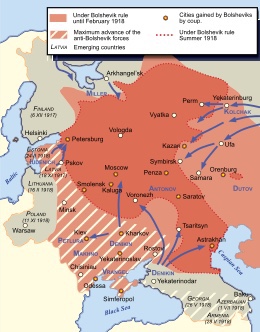
W. Bruce Lincoln, “Red Victory: A History of the Russian Civil War” (1989) – This sucked! I want some good history on the Russian Civil War. You can get tons and tons of stuff on the Revolution- the Civil War that came after, which arguably shaped the Soviet Union much more than the revolution did, is much harder to find books about. This one is supposed to be a standard, so I picked it up when I found it at a used place in Portland.

Listen- I don’t expect, or need, thoroughgoing sympathy with the left, especially from historians tied to the Hoover Institution, as Bruce Lincoln was. But this… it’s less a problem that Lincoln is critical of the Bolsheviks. It’s a civil war, no one is going to “behave well,” if that even has anything like the same meaning in a brutal internecine conflict as it does in an office or a daycare. And it’s not that he’s especially sympathetic towards their White adversaries. If nothing else, this dude is canny enough to get that the likes of Denikin, Kolchak etc do not for heroes make, and the closer you look at them — essentially, any look other than a still photograph, looking stern in fancy dress uniform (which is good enough for many, depressingly enough) — the less impressive they are. They were creepy reactionaries, and above all else, losers. Like Borges said of the Cossacks, who made up much of the White forces, “no one in the history of the universe has been defeated more often” than these “blustering and useless warriors.” 

So where do Lincoln’s sympathies lie? With the people of Russia? It’s the people, people trying to live their lives without killing or being killed, that suffer the most in these situations. But no. Lincoln’s sympathies are entirely with anyone who can wring pathos from him, and, typical dumbass Anglo, that means, basically, what there was of a Russian middle class, and the nobility. Objectively, this puts him on the side of the Whites, though again, he gets that their actual forces sucked too bad, morally and militarily, to get behind. And this could be a decent platform for a narrative history! Maybe not one I’d agree with, but potentially one worth reading. But instead, you get comparatively short shrift on the process or politics of the war as Lincoln instead wallows in such indignities as… bourgeois inhabitants of revolutionary St. Petersburg made to do work! And pawn their jewels! There’s bloodier stuff, too, but when Lincoln bothers to discuss it, he only dramatizes what happens to rich people and never bothers with any other kind of human suffering. It’s sickening, but beyond that, it’s just shitty history. Hard pass. *

Review – Lincoln, “Red Victory”

2021 Birthday Lecture – Alternate History, At the End of History and Beyond

When I was maybe twelve or so, my dad got in maybe his last real zinger on me, and what’s more, I’m pretty sure he didn’t mean to. After seeing a certain display at a Waldenbooks, I asked my dad if he knew anything about “alternate history.” He looked at me, a little puzzled, and asked “you mean, like Howard Zinn?”

No, listener, I did not mean Howard Zinn. I had nothing in mind that pointed to me being a good virtuous little leftie or particularly interested in learning anything useful. When I said “alternate history,” I meant novels set in worlds generated by asking historical “what if” questions. I’m not going to dwell too much on definitional questions — arguably, every novel set on Earth in the past or present is an alternate history novel given they all posit something happening that did not actually happen, yadda yadda — and simply say that for the purposes of this lecture, I define “alternate history fiction” as fiction where a historical counterfactual is a major part of what sells the book to audiences- the usual punt to the power of marketing to define literary categories that critics under late capitalism so often make, but there it is. And it was marketing that drove me to ask my dad about alternate history that day, namely, a display of alternate history novels by writers like Harry Turtledove, S.M. Stirling, Steven Barnes, and other stalwarts of the subgenre. 

Alternate history fiction in the form we know today came about when the form jumped the track, from a plaything for historians — from Titus Livy to Winston Churchill — into the emerging genre of science fiction. This was in large part due to various conceits that became common in alternate history stories and that are still present today: time travel, dimension-shifting, various divergences in the history of science leading to technological leaps, on and on. But the identification of alternate history and scifi was so complete by the time I was paying attention in the late nineties that alternate history stories without such conceits, where there’s no time travel or magic or advanced technology, were still usually considered scifi and shelved as such at bookstores and libraries… unless they were written by established literary figures, such as Philip Roth or Michael Chabon, both of whom wrote alternate history novels that are generally considered literary fiction, albeit with some genre flavor. 

Widely-admired works of alternate history fiction, including L. Sprague DeCamp’s Lest Darkness Fall, Ward Moore’s Bring the Jubilee, and Philip K. Dick’s The Man in the High Castle dot the scifi landscape throughout the twentieth century. But something changed in the late nineteen eighties, and this change gathered strength in the nineties and early aughts. Alternate history became a mainstay of science fiction. Many authors dabbled in it but a few became dedicated writers of alternate history science fiction, writing little else, and often cranking out multiple such novels a year. Literary fiction got in on the act, too, as with the aforementioned works by Roth and Chabon. So did TV, in the form of the show Sliders, which began as a show about a group of people forced to travel to a series of alternate dimensions with different histories (that eventually became a monster-of-the-week show). No less a figure than Academy Award winning actor Richard Dreyfuss co-wrote a novel about an America where the American Revolution didn’t happen with Harry Turtledove published in 1995 (they were going to make a movie but it didn’t get anywhere). Newt Gingrich slapped his name on some co-written alternate history novels between 1995 and 2011. Hack historian Niall Ferguson put out a book of “Virtual Histories” in 1997, a cheap cash-in that tried and failed to take shots at leftist history, mostly on the basis of great social historian E.P. Thompson having called counterfactuals “ahistorical shit.” There was a flourish of alternate history discussion groups online, on usenet, on webrings, and so on. 

This moment in the sun for alternate history fiction coincides with two relevant stretches of time. One is my childhood, as well as the portion of that childhood spent reading a lot of alternate history fiction- roughly ages twelve to eighteen, when I gobbled down works by Harry Turtledove, S.M. Stirling, Eric Flint and others. I bothered my friends talking about them (though my friends Miri and Phoebe were sweet enough to take me to see Harry Turtledove speak at a local scifi convention), attempted to write stories in the genre myself, and made one of my best friends in college when we gingerly admitted, with the shame that nineteen can have for seventeen, our respective alternate history reading phases to each other. 

The alternate history moment also coincides with the era we now sometimes, ironically, call “the end of history.” This is named after one of the great whoppers of bad historical prediction, one so bad you have to figure someone could write a decent alternate history story based on the idea of “what if Fukuyama was right?” Francis Fukuyama was a neoconservative intellectual who wrote the essay “The End of History?” in 1989, where he suggested that with the impending collapse of the Soviet Union and with it the dream of communism, history — capital H History, in the Hegelian sense, as in conflict over what ideology should guide politics and society — was over, and that liberal democracy, American style, had won the day. This was turned into a book in 1992, and became that rara avis, the Hegelian bestseller. 

You could call the “end of History” era the period where serious people could buy what Fukuyama was selling. Ironically, Fukuyama himself, one of the more thoughtful of the neocons, was less bullish for the concept than many others. But for plenty of “thought leaders” at the time, the world was destined to look more and more like America in the nineties as time went on. 

When did this era end? Some would say 2001, with the 9/11 attacks. While I see the point, I think in many ways the reaction to 9/11 was guided by the sort of people who believed in the “end of history” thesis and that Islamic fundamentalists were just backwash to be mopped up, many of these people being Fukuyama’s fellow neocons. 2008, with the financial crash and the resurgence of white revanchism that reared its head with Obama’s election is my general stopping point for the end of history.

The late eighties was also when figures like Harry Turtledove and S.M. Stirling began writing alternate history stories. Arguably the best alternate history novel of that period, Terry Bisson’s Fire on the Mountain, came out in 1988. On the other end of the End of History, the break is less clean, but Harry Turtledove concluded his 11-book series that begins with the Confederacy winning the US Civil War with one last novel in 2008. The major figures of nineties alternate history continue to publish in the subfield, and new writers take up the concept as well, but I think things shifted, somewhat, as the twenty-first century wore on. 

I guess now is as good a time as any for a thesis, isn’t it? I put it to you that the high point of genre prominence for alternate history occurred when it did due to a concatenation of circumstances that we can see as characteristic of the “End of History” era. This is not simply a matter of cultural or ideological critique, though that enters into it as well, but is also a question of material conditions pertaining to the production and consumption of popular art. As these conditions shifted in the post-2008 period, so, too, did the place of alternate history fiction. 

A caveat, here, around the question of “high points.” I would not say that the alternate history fiction produced during the “end of history” era is the best alternate history fiction out there. The products of the subgenre from that era range in quality from quite good, like Bisson’s Fire on the Mountain, to absolute drek, like Niall Ferguson’s work and much of Sliders. In general, I’d say they tend to the formulaic and the lower end of mediocre. This was, above all, the era of series, as exemplified by the work of Harry Turtledove, who at various points in the twenty years we can call the “end of history” worked on no fewer than eight series that could be called alternate history, all of them at least three books long, alongside multiple standalone alternate history novels. Other major alternate history writers followed suit, and some of these series, like Eric Flint’s “Ring of Fire” which he began in 2000, are still being written. These series tended to have concepts that did most of the work for them, with action, worldbuilding, and characterization varying in quality but generally being a little pro forma. Whatever their quality, these blockbuster series, many of them bestsellers that hooked a lot of readers, helped fill out the sorts of chain bookstore displays that first notified me of the genre. This would have been difficult to do with, say, alternate history fiction in the early nineteen-sixties, when works like The Man in the High Castle, miles better than any Turtledove pot-boiler, came out, but weren’t understood as representing a discreet subgenre for marketing purposes. 

I argue that things changed in alternate history fiction after 2008 or so. But of course, most stories of historical rupture carry with them elements of a story of history continuity (and vice-versa). There is continuity in the story of alternate history fiction across the 2008 barrier, but there’s rupture too. Let’s see if we can’t parlay continuity into rupture in both the alternate history sphere and the larger historical context. One continuity between our post-2008 period and the “end of history” era in which so many of us were born and raised has been the steady progress of a few economic trends: rising wealth and income inequality, stagnating wages and increasingly precarious job security, the delinking of productivity gains from wage growth and increases in standard of living, the consolidation of wealth in fewer and fewer hands and of corporate power in an ever-smaller number of conglomerates. 

This sadly familiar tale has a bearing on our story in a few ways and continuity and rupture across the 2008 line do-si-do with each other in both the realms of alternate history fiction and of the broader political and cultural context. The speculative fiction industry, like the culture industry more broadly, has seen a bifurcation- big name writers make big money, usually with big tentpole series that compete to become movies and tv shows, while millions of other, less fortunate scribblers find other outlets for their work than conventional publishing, especially self-publishing (now enabled by Amazon to sell directly to consumers) and fan fiction. 

This dynamic was somewhat less pronounced at the beginning of the “end of history” era in the late eighties than it is today. You could argue that a lot of the alternate history writers of the time existed in a sort of broad middle class of speculative fiction writers, the sorts of people who read and wrote for the pulps back when they were still relevant and cut their teeth on the expanding paperback market of the mid to late twentieth century. But we all know what happens to middle classes when the top decides to rake back their wealth and power, and there’s no meaningful opposition to stop them. Arguably, the creators of big alternate history series in the End of History era — Harry Turtledove, S.M. Stirling, Eric Flint — made it past the big thresher, into the lower strata of the series-producing scifi gentry, though they’re small-fry compared to your J.K. Rowlings and George R.R. Martins. 

Inequality and a general feeling of stagnation or decline also spurs discontent. This is true in the literary realm as it is in the political realm, though if the linkage between discontent and action can get blurry in the political world, it gets downright warped in the world of culture. In an altogether too neat analog of so many political situations the world over since 2008, the speculative fiction community, in the anglosphere in any event, has grown its very own red-blue divide. It maps neatly onto the red-blue divide in mainstream American politics (and which spreads like a weird memetic virus to other political contexts the world over), complete with a febrile, fascist-adjacent red team and a smug, complacent blue team, and masses of people and many pressing questions left out of the equation. 

This manifested itself most dramatically in the “Puppygate” saga, where various coalitions of right-leaning scifi and fantasy writers ranging from libertarian contrarian cranks to out and out Nazis tried to hijack the Hugo Awards nomination process, one of the big award ceremonies in the speculative fiction community, or else burn the award’s credibility to the ground. The different “Puppy” factions (you see, they’re ironic, which means they can’t actually be terrible pieces of shit, etc etc) did this out of spite for what they saw as a liberal elite of writers and editors imposing social message fiction on a mass of readers who just wanted spaceships and lasers. 

Unlike certain other encounters in the 2013-2017 period in which the Puppygate fiasco happened, the blue team decisively won. N.K. Jemisin, author of the Broken Earth novels and target of much abuse from the Puppies as a “social justice warrior” and a black woman, won three Hugos for best novel in a row. For now, it seems that the red and blue camps in contemporary scifi are here to stay for the foreseeable future, sniping at each other online and conforming more and more to type — the conservative gobbler-up of identikit military scifi stories of buff guys in power armor shooting aliens, the liberal mark for any story pitch with an oppressed narrator and a few buzzwords — as mutually antagonistic believer communities so often do. 

It’s not strictly symmetrical. The “red” side, led by the Puppy factions, really did harass and try to disrupt the other side in ways the Blues didn’t do back to them. If you want your scifi to jump the track to mainstream respectability, it helps to have the literary ambitions, social relevance, and better editing (and less cringeworthy cover art) of “blue” favorites like Jemisin, Ann Leckie, and so on… though that doesn’t always translate to superior sales numbers, as any number of pulpy populist stalwarts like Jim Butcher or David Weber can attest to. 

Alternate history fiction enters into this dynamic mostly on the margins. One of the bigger social-media brawlers in the notoriously rough playground that is young adult fiction, Justina Ireland, started a YA alternate history scifi series about slavery and zombies, and she doesn’t hesitate to wade into speculative fiction fights on the blue side (her day job is as a defense logistics professional for a US Navy contractor, as it happens). But most of the big players in high-stakes speculative fiction drama aren’t mainly known as alternate history writers. As I will discuss later in this lecture, I don’t think it’s accurate to say that alternate history has gone into eclipse since the End of History period, but it’s place in the genre and the culture at large has changed. 

This is where the long suffering listener might be thinking that we’re finally going to get into the ideology critique- how alternate history fiction has changed with the changes in prevailing ideology between the late eighties and today. Of course you all know I’m a materialist so I throw in stuff about material conditions, but we’ve read enough leftbook-shared articles to know that now’s the time when I lay the ideology bare. Well, far be it from me to disappoint my guests, but I’m gonna play with it a little. I think changes in ideological bent — the values expressed that map, more or less neatly, onto contemporary set-piece political battles — are only one strand in a braid of ruptures and continuities that run not just between contemporary alternate history fiction and that of yesteryear, but between any set of coordinates in cultural past and present. In short, I’ll give you your ideological meat but also your historiographical veggies.

It won’t surprise anyone to learn that the main ideological differences between alternate history of its peak period in the nineties and aughts and alternate history today is found in treatment of race and gender. It would be pretty easy, and even true enough, to say that earlier alternate history had problematic takes on those subjects, and contemporary alternate history is more “woke.” Consider some of the plots of big time alternate history works from the nineties and aughts: Harry Turtledove’s “The Guns of the South,” where Afrikaner militants use a time machine to give General Lee’s armies AK-47’s, the same author’s Southern Victory series, depicting a victorious Confederacy sans time travel this time, Steven Barnes wrote a series about Africans enslaving white people to work in the Americas, and there’s my personal favorite, the Draka series by S.M. Stirling, where American loyalists fleeing the Revolution go to South Africa and create a slave superstate that eventually conquers the world. Then consider the premises of recent alternate history hits: downtrodden nineteenth century nations use magic and steampunk tech to turn the tables on the imperialists in P. Djèlí Clark’s work, the ANC and the apartheid South African secret police fight over an empathy machine, wandering circus folk disrupt a world run by Luddites, dinosaur riding Sioux do Dances with Wolves but with dinosaurs instead of horses with Colonel Custer’s son. A whole new world!

Maybe! But- there’s complications. Let’s look closer. I’ve seen people cite the basic premises of these books — especially the older alternate history novels I just cited — as prima facie evidence of the writers’ racism and reactionary sentiments (or lack thereof, in the case of more liberal-leaning recent volumes). I think it’s worth getting deeper in there and exploring what exactly these writers thought they were doing with race, gender, and politics more generally. 

Let’s start with the material again: the big alternate history writers of the End of History era were all working scifi writers who made a living by cranking out a ton of writing, often multiple novels a year, usually in multiple subgenres of speculative fiction, and often had sidelines writing for tv or movies or for the tie-in novels attached to them; Terry Bisson, who wrote the excellent Fire on the Mountain, also wrote the novelizations of Johnny Mnemonic, The Fifth Element, and Galaxy Quest among others. Many of them have continued that work rate well into the second and third decades of the twenty-first century. What this means for us is that along with whatever points they are trying to make with their fiction, they primarily write to entertain. This doesn’t obviate the messages within their work, but it’s relevant to reading them that these writers needed to crank out a lot of prose, needed it to appeal to an audience, and needed ways to vary things up to keep the formulas fresh. 

The model I developed when visiting or revisiting these works is less that any given writer had a line, a defined take on race or sexuality or power or whatever, but a space, a range of ideas they considered sufficiently credible or interesting or just relevant to put into their fiction. So the same guy, S.M. Stirling, who wrote about the white South African slave superstate also wrote a series about a black lesbian sea commander who uses her samurai swords to fights slavers (after nineties Nantucket gets zapped to the Bronze Age… it’s complicated). The guy who wrote the “Africans enslaving Europeans” series was black himself and wrote about different kinds of slavery and their relative merits, etc. Harry Turtledove wrote of a kindly Lee using his AK-47s to create a gently progressive Confederacy in The Guns of the South, but ended his Southern Victory series by lazily mapping the story of Nazi Germany onto that of the Confederacy, with black people filling in for the Jews. Let’s put it this way: in the mainstream of End of History era alternate history fiction, you will find no careers that argue, straightforwardly and schematically, the way we like it to be on the Internet, for white supremacy, slavery, misogyny, fascism, etc. 

So what, then, is the space of thought in alternate history? What’s there and what’s not? Well, let’s get the obvious, for this crowd, out of the way first: communism is right out. Communism means Stalin, as far as Turtledove and Stirling are concerned, and moreover means weak competitors with liberal democracy and a lame villain next to fascism. No one but fanatical idiots believe in it in their stories, and they’re outnumbered by devious secret policemen and ideologues playing the system. The Draka, the South African master race Stirling devised, practice a weird sort of slave-driven corporatism, and it’s clear Stirling can more easily imagine that than an end to capitalism, and that seems to be the main line for alternate history at the time. There’s exceptions- Terry Bisson’s cooperativist New Afrika, founded by John Brown’s breaking of slave power in Fire on the Mountain, but that was exactly the kind of work your old scifi heads nod approvingly at and never reproduce. Eric Flint, author of the 1632 and 1812 series, was a Trotskyite, but is also clearly one of those dudes who working classed himself into thinking that working class revolution is bullshit because the guys in pickup trucks don’t talk about it. His good societies are vaguely social-democratic, but revolution to him is getting rid of inquisitors in seventeenth century Germany (a good first step, I grant) and teaming up with the most progressive king around (Gustavus Adolphus of Sweden and— no shit— Oliver Cromwell). It’s less that these writers were anticommunist and more that their visions were orthogonal to seeing any kind of communist or revolutionary horizon. 

The radical left option is out of the box in End of History scifi. The radical right option is not. Genocide, slavery, and the redemption of various right-wing monsters loom all throughout End of History alternate history. The redemptive angle is especially worth considering, and here, aspects of vernacular historical thought inherited both from the culture at large and from speculative fiction tradition mesh with timely ideas and concerns to dress up old themes in new clothes. Harry Turtledove premises all of his work involving the Confederacy on acceptance of many tropes of Lost Cause historiography- Robert E. Lee as a kindly man who didn’t like slavery, the importance of states rights over and above the slavery question, the idea that the Confederacy could ever have been a normal, functioning country, let alone a superpower. The Germans eventually join Team Earth to fight off aliens when they invade during WWII in another of Turtledove’s endless series, because, as everyone knows, the German army was essentially smart and honorable, unlike that nasty Hitler fellow. The good dictator, the ambivalent slaver, the reluctant mass killer, made to be what they are by circumstances and their realistic acceptance of same, their humanity wrung for pathos on the rack of their (fun to read) misdeeds… we see these in a lot of science fiction and fantasy going back to the genre’s origins, and the old alternate history guys were thoroughgoing readers of the old school scifi and fantasy, we know. 

Muddles, ironies, paradoxes, and the self-congratulatory consideration that wisdom is made up out of muddles, ironies, and paradoxes, constitute many of the coordinate points defining the space of alternate history fiction at the End of History. To the extent there is a hook to these books other than curiosity about the what-if premise and whatever action they boast, it is precisely the “made you think!” moment you’re supposed to have when you consider that perhaps the AK-wielding Confederate or the novel-writing slaver-soldier isn’t so different from you after all (another way in which Fire on the Mountain is exceptional- Bisson’s characters really are different along with the world, but still relatable). You can change the set dressing, move borders around on the big risk board, occasionally have more or less political freedom, but the basic structures — capitalism, our concepts of race, sex, gender, and so on, something like the nation state — do their structuring thing, providing scaffolding for the usual human dilemmas of middling writers: war and peace, love and sex, career ambition, inability to control complex situations, and so on. These dilemmas in their turn provide filling in between depictions of battles and little historical cameo moments for the fans that make up most of the appeal to most readers of end of history era alternate history. 

In many ways, this space of fiction maps onto the general space of politics that the philosophers of the End of History provided, which is also sometimes considered the era of “there is no alternative.” What we had, and the mental armature that comes with it, is what we have, and it’s not going to change. History, in this vision, becomes a set of dusty museum pieces to be mulled over. If anything, the difference between the alternate history space and what someone like Francis Fukuyama thought about things is that Fukuyama would have understood that in the past, people really did think differently, not just in their opinions about issues but in their patterns and concepts, in a way that writers at the time (or now) only seem to fitfully understand. Different thinking means a modern person can rook an ancient person at strategy if they get zapped back to the last, in these novels, because ancient people are (supposedly) mentally inflexible… that’s the level of sophistication at which they generally work. 

Allow me to fill in the space we’ve created for End of History alternate history fiction a little before we turn to what changed as the twenty-first century wore on. I see there as being basically two engines for the alternate history mobile as it chugs along, picking up readers on its tour for what it thinks of as the garden of forking paths but what is actually more like a carousel or Disney theme ride. The first is Harry Turtledove, of course. Like a certain kind of car, you know what you’re getting when you pick up a Turtledove novel. You get high concept what-ifs that can usually be described in one sentence. You usually get some war- war is important to a lot of alternate history fiction from this era, which had few fun conventional wars for nerds to gawp at. You’ll get a few awkward heterosexual sex scenes each book. You’ll get disasters but little really changes save for some borders and who is alive and who is dead. 

The second engine of End of History alternate history consists of online alternate history fans who wrote their own series. These were often better-written and more historically rigorous than published alternate history fiction. They often took the form of hybrid works combining omniscient history-book style analysis with narration from fictional viewpoint characters. They often pushed the envelope, too, with the historical concepts more than your Turtledove types did. In the end, though, a lot of the successful series in places like the Usenet group soc.history.what-if can be read as parables of how badly wrong things could have gone had anyone messed with the history that resulted in the triumph of liberal democracy circa 2000. An Australian I corresponded with wrote “Decades of Darkness,” which situation is brought on by New England seceding from the union during the War of 1812 and allowing the rest of America to become (what else) a slave superstate. The serial often considered the crown of the genre, “For All Time,” starts with FDR dying, relative progressive Vice President Henry Wallace becoming President, and a series of disasters occurring which culminates in nuclear war, mass cannibalism, and Jim Jones becoming US President thirty years later.

There’s some outliers that deserve talking about, too, who did things a little differently but still belong firmly in the literary space we’re talking about. One is familiar from a lot of our adolescent readings: Orson Scott Card. Card was big stuff in the nineties, coming off of the success of Ender’s Game. In 1987, he began the Alvin Maker series, a series of fantasy novels set in a version of early nineteenth century America where the various magical traditions of its inhabitants work. The first two books in the series are actually pretty good, and it’s a compelling concept. The reason I bring the series up here is that both point to a historical apotheosis outside of the End of History concept while remaining well inside their idea space. The answer to the riddle of how that can be is Mormonism. Any non-Mormon reader of the Alvin Maker series knows the sinking feeling of reading the series, getting into the latter books, and before the action gets stupid as Card becomes a worse writer, it turns into obvious Mormon propaganda. Alvin Maker is going to fix everything, the broken promise of America, by incorporating all of the magic traditions of the continent’s inhabitants, white, black, and red, into his anti-entropy super-magic and start up a golden city in the west. This sort of redemptive narrative is also seen in his novel “Pastwatch,” where time travelers go back to 1492 and make the indigenous peoples and Christopher Columbus, here depicted as a decent put-upon striver following impossible orders, become friends. Everyone can get along if they just hear the good news.

And then there’s S.M. Stirling, with his aforementioned oscillation between slave empires and… not-slave empires. Among other things, Stirling was a participant in online scifi discussion groups for a long time, and was notorious for getting in flame wars that led to him being banned from forum after forum (he seems to have calmed down some in the tens- he has a Twitter but doesn’t use it that much). This is part of how we know that genocide and slavery aren’t just fantasies for him. He would make big, Heinlein-esque declarations about how genocide solved many problems, that Muslims as a whole were an enemy of western civilization, etc etc. From what I know of his biography, he’s a classic child of late empires, with an Anglo-Canadian dad (no one loved the British empire like nerdy men from the white settler dominions) and a French mom. So it makes sense why the romance of settler empire — and you see it again and again in his work, not just with the slaver Draka — would appeal so strongly. 

The reason I talk about Stirling here isn’t to own him for being a reactionary. For one thing, he would try to wriggle out of that by pointing to his liberal heroes and reactionary villains. It’s true that the Draka get into a Cold War with the United States where he frantically signals that the US are the good guys (spoilers: the Draka win because they’re tougher). It’s also true that his time-stranded Nantucketers go around the Bronze Age world freeing slaves. Stirling does seem to see these actors as heroes doing heroic things- but also allows that slavers, Nazis, and genocidaires can be heroes too, because heroism is ultimately defined by strength. Beyond the politics, I think, to put it bluntly, he gets off on slavery. His slave empires, the Draka and others, have a lot of sex Stirling would probably think of as kinky, but which any millennial would instantly ID as fairly standard misogynistic slavery-based nonconsensual S and M between men and women or between women and women (among the Draka, for instance, Draka men routinely rape slave women but Draka women, liberated in most instances, never rape slave men- Stirling knows where to draw the line, and it’s where he stops being horny). 

At times, Stirling has his good liberal heroes denounce the lack of consent as a concept amongst the Draka or the bad guys in the Change universe or wherever. One is even tempted to believe that Stirling believes it, with his brain if not his libido. But it’s also clear that he loves the Draka, and loves his settler badasses more generally. They’re always tough, always smart, always sexy. Most of them see the problems with their system but philosophize them away, often with reference to their responsibility to keep things from getting worse- we are supposed to believe this constitutes depth of character. The process of settlement gives life meaning, provides opportunities for mastery, allows the good life. The liberals in Stirling stories often lament the pointlessness of their societies or else find a settlement-substitute, like space exploration. Stirling’s good settlers and slavers are usually from classy old money, and the bad ones are tacky new money, bureaucrats, gangsters, etc. The slaves have mostly resigned themselves to their lot and are often quite frisky, sexually speaking. You can almost appreciate the lengths to which Stirling goes to make every instance of upsetting a slave or settler applecart into a hideous pointless atrocity, really upping the pathos… if you’ve a strong stomach. Here, we see the prevalent patterns of thought in the End of History era — rebellion as tragedy — coincide with good old fashioned sexual pathology. This is a good time to google image search “S.M. Stirling” if you want a funny little stinger to the whole thing. 

As it happens, I could stomach Stirling as a teen. I didn’t read the Draka books, they weren’t at Borders and what I knew of them from the forums made me leery, but I loved (and often pestered my friends about) the Change series, the ones with Nantucket in the Bronze Age. And as it happens, I can stomach him as an adult, too, though that’s partially because of my training as a scholar of the right and of genre fiction. Stirling’s a pretty decent action writer, and writing good battles and fights isn’t as easy as it sounds. The sheer verve and gusto of his world-building concepts and the way he wears his weirdness on his sleeve — even as he thinks he’s completely normal! — can’t help but stir my admiration. The first Draka novel in particular is pretty good, because it gets into a genuinely alien headspace — Stirling, I think, did a lot of weird reading in old race theory and reactionary thought before starting — and has good battle action and, critically, is only about two hundred pages. What poisons Stirling’s work isn’t being a reactionary crackpot. It’s bloat and sentimentality. As he got older and more established as a writer, he asked fewer interesting questions, wrote much longer books with a lot of filler, repeated himself, and, perhaps in response to the Internet interlocutors we know he paid attention to, softened a lot of edges of his heroes and made his bad guys more capital-E evil, both in hammy Disney-style ways (also making the bad guys even rape-ier). It doesn’t work. His shit is still weird and creepy but hasn’t been that way in a fun way for a while. But it sold, especially during the End of History period. 

So! We have a reasonably fleshed out ecosystem of alternate history writing circa the End of History. What happens when history comes back, around our admittedly somewhat arbitrary milepost of 2008? 

Let’s once again get the relatively obvious Internet-style “ideology critique” out of the way first. There is, indeed, a good amount of back-and-forth pertaining to capital-H History, in the mode of ideological conflict, in contemporary alternate history fiction. Things like slavery and genocide are treated not as just unfortunate aspects of the human condition but as the product of power relationships that deserve to be critiqued and overturned. Many writers put a great deal of attention into matters of representation, what sort of characters they have doing what. I actually don’t see that as a complete break from earlier eras — if nothing else, your old scifi heads, including some of the alternate history guys I’ve spoken about, knew putting objectionable ideas and actions on characters from put-upon groups helped them get over — but there’s a different sort of focus on it now. Sometimes it drives more serious attention to character, sometimes it’s tokenism, but I will say the character-representation question does seem to eclipse other ways that writers could use to interrogate difficult subjects and create interesting perspectives. 

Let’s see if we can’t elevate ourselves beyond the culture war set pieces by going through them, like striking through a target. In the ideological conflicts that have roiled the speculative fiction scene in the last ten years or so, the reactionary side accuses the liberal side of neglecting entertainment in favor of political sermonizing, mostly about identity. This is patently false. Liberal scifi favorites like N.K. Jemisin, Ann Leckie, Yoon Ha Lee and the rest pack their stories with all the space battles and twisty betrayals you want. Reactionary and liberal scifi both seem to borrow from the same basic sources these days: video games, anime, role playing games, comic books, and major crossover hits like Harry Potter and Game of Thrones. It’s clear that what the “puppies” and other reactionary fans object to is their inability to project onto heroes who might be women, or queer, or people of color. 

What does it mean when the argument over the nature of speculative fiction — which is meant to be an exploration of human and even beyond human possibilities — so often becomes a question of projection, that is to say, one of the more common modes that viewers use to criticize pornography? They don’t like this actor because they can’t project onto him, they don’t like this actress because of X, Y, or Z flaw that they could only care about in their peculiar viewing situation – they can’t imagine themselves the captain of this particular spaceship, engaging in this particular mission, it’s all the same shit. 

Let’s use the sort of internet pronunciamento about the current age I usually don’t like, just as a pry bar to help us understand: the idea of the death of context. It’s not really dead, plenty of people get context. But it’s true enough in the case of the projection complainers, either in scifi/fantasy or in pornography. Why should they need any context for their decisions when they’re just looking to jerk off? To whom must they explain themselves? Ironically, as the eye of the surveillance machine of which the Internet makes up a large part steadies it’s gaze on us, many of us imagine ourselves alone to satisfy our consumer preferences, isolated from all other considerations. It seems clear that more and more of us are incapable of understanding choice in any other way. 

I see this mode of consciousness as a product of the conjuncture between the maturation of consumer economics in the late twentieth century and the concomitant collapse of shared public narratives about how life, politics, society and much else functions as the Cold War wound down and finally ended. In short, the discursive mode that seeded much of the ideological turmoil in speculative fiction — and, I’d argue, that is currently eating criticism alive — gathered much of its strands together in the End of History era. 

So- it’s all a continuity, right?! Joined together by superficial readings, mediocrity, context collapse, etc? Well, a graph is a continuity- starts one place, continues on into another. At what point in the graph is the change it depicts significant enough to become a rupture? That’s the kind of question that bothers a certain kind of historian. It sort of bothers me but I won’t dwell on it. Spend enough time thinking seriously about history and you’ll get used to seeing continuity and rupture together, creating continuities and ruptures out of their opposite numbers. 

But here’s a rupture for you: intellectual and cultural historians identify the end of the twentieth century with the collapse of consensus narratives that dominated public life, in America and many other societies, in the early and mid twentieth centuries. A lot of these histories are pretty good but they tend to be two panel comics: first, Americans by and large agree on a broad consensus around what you could call moderate nationalism, anticommunist liberal democracy, gradual progress in terms of equality of opportunity, and so on. Panel two, people no believe, or if they do they mean completely different things when they talk about these concepts. But it doesn’t make sense it would happen just like that.

Rupture and continuity: science fiction and fantasy in the twentieth century has been a site for the exploration of unusual and uncommon ideas (including being a place where seeds of extremist ideologies understood in midcentury as unamerican, mostly on the far right, could estivate, waiting for a better climate). But there’s continuity- in many respects, science fiction held to the idea of a common core of truth, generally identified with science, it’s progress, and the social progress that is meant, mutatis mutandis, to go with it, longer than it was necessarily fashionable in more “literary” publishing circles. Moreover, it seems pretty likely that Francis Fukuyama, when he wrote The End of History, thought he was ushering in a new consensus, at least among elites, not heralding an age of consensus collapse. 

Let’s get back to alternate history: with the inevitable exception of Terry Bisson (an old SDS and antifascist hand, it’s worth noting), the major alternate history producers of the End of History era, even if they didn’t buy or even know about Fukuyama’s proclamation, all, in their way, pay tribute to the last thing that could pose as a consensus picture of history — the progress and triumph of liberal democracy, capitalism, and western science and technology — even as they honor it in the breach by creating alternate history scenarios where everything goes the other way. Even Fukuyama thought the End of History would prove tiresome, especially for people who dig war, like most scifi nerds do. The consensus picture of history is the negative against which the alternate history scenarios of the End of History period could be read. I don’t think it’s a total coincidence that this was also the height of the subgenre’s visibility.

A rupture with a continuity: many of the big names of alternate history fiction from the End of History era are still plugging away in the genre. Eric Flint turns out stories of his West Virginia mining town democratizing Europe after getting zapped back to the Thirty Years War. S.M. Stirling has a series about Teddy Roosevelt winning the presidency in 1912 and starting the CIA, but cooler, early. Harry Turtledove, who really has seemed to have given up, wrote a story about Stalin being raised in the US but still doing all of his Stalin stuff as US President despite his life being completely different from babyhood. Where do these guys figure in the ideological conflict that has occurred in scifi/fantasy in the last ten years? You’d figure they’d be involved, especially with Stirling’s documented love of online flame wars.

The answer: almost nowhere. Stirling used to try to start fights with left-leaning writers early in the period but seems to have settled down of late. Occasionally, given what the Draka series looks like, left-leaning writers use his work as an example of what reactionary scifi looks like, but he’s a third-stringer there next to gaudy assholes like Ted “Vox Day” Beale. Some commenters use Eric Flint’s allegiance to the publisher Baen, which publishes a lot of the major reactionary military scifi writers, as proof that said publisher is beyond ideology, given Flint’s background as a Trotskyite organizer. Turtledove’s nowhere to be found. I tried to find commentary among the Puppygate types on alternate history. It doesn’t seem to be something they’ve thought a lot about. And if they’re not thinking about it, their opposite numbers, speculative fiction liberals, aren’t thinking about it much either, even as some produce alternate history fiction themselves. The alternate history greats of the End of History era are now like so many of our legacy cultural institutions, seemingly going mostly on inertia. 

What does alternate history mean in a situation where there isn’t really a consensus idea of what happened in actual history? You could argue that many of our fellow citizens are, essentially, living in alternate history fiction scenarios already. Here, I draw a distinction between people living with inaccurate ideas of the past in their head — that’s everyone — and people collaboratively recreating history according to standards that the participants may think are those of actual history, but are actually many of the same standards that go into creating genre fiction: entertainment value, emotional satisfaction, potential for viral spread. Think QAnon, but that’s only an extreme example. 

We have also seen a collapse of genres along with context and consensus history. Alternate history becomes one trope among many, and easily mixed with all kinds of others between and across genres. You can index this to the rising prevalence of alternate history fiction that throws fealty to science out altogether. There was always magic or what amounted to magical technology in alternate history fiction. Most of the time, before our current era, the magic was restricted to a single moment- something gets shifted in time, a single advanced technology becomes available, and we follow the historical changes. Stories where magic and ultra-technology exist throughout the story, as part of the setting, are much more prevalent in alternate history fiction written now. 

Alternate history writers of the late twentieth century were among the first to seize upon the possibilities of “alternate dimensions” and the many-worlds interpretation, as shown by subgenre progenitor’s H. Piper Beam’s “Paratime Patrol” series, the inevitable alternate-dimension-cop series by the inevitable Harry Turtledove, and so on. But the many worlds came into their own not with the schematic stories of the late twentieth century where, with few exceptions, there was a stable reference point — America, circa whenever the piece was being written — but with contemporary scifi- and not high end writers either. Those of you who think I’m a genre snob, hear me now: comic book fans and fan fiction people get many-worlds — they “grok” it, to use a term from an old scifi lion — in ways that the old scifi masters generally did not. You have to hand it to them. They navigate a world of few stable reference points. Sure, there’s canon… but who cares? Your real fan fiction head keeps a great many realities in their minds at once, lord love them. Horniness, narcissism, obsessive completism, and pedantry have driven your true fan into a mental space that had precursors before the 2008 breach but really only came into its own after. 

Alternate history scenarios, then, become so many branches of the noosphere, the realm of ideas, nothing separating them from Tolkien’s Middle Earth or any other product of the human imagination- from the world of QAnon, for that matter. I suppose if there’s a thesis here, it’s to say that the late twentieth century — arguably the whole second half — was a time of unusually strong divides in the noosphere, that people believed in, and that many of those divisions have since collapsed, leaving us in the situation we’re in today. After all, who’s to say somewhere in the many worlds of ill-understood quantum physics there isn’t a Middle Earth, or a world where JFK Jr faked his death to battle the deep state, or the scariest world of all, wherever the fuck The Brave Little Toaster happens? Well, physicists are to say, but who cares about what a Steven Hawking might have to say next to what Rick Sanchez offers our imaginations?

In the collapse of consensuses from the definition of genre to the understanding of history, we have a freedom that has naturally led to an effervescence in alternate history fiction, and in speculative fiction — in art — more generally, right? Of course we did- just like how the Internet democratized information and made people much smarter and less susceptible to misinformation. To use an expression from the End of History period and my youth: NOTTTTT! Contemporary alternate history fiction is mostly pretty lousy, much like the alternate history fiction of the late twentieth century. Most of it abandons efforts at being historically rigorous, which would be fine, a good thing even, if they did anything especially creative with it, which they usually don’t. You wind up with a lot of just-so stories and tedium, at least in part, I think, due to the shadow of YA fiction and other influences that don’t especially encourage critical thought about what a given writer is really doing. Contemporary alternate history fiction tends to be shorter than the honking long series of yore, which is nice, I guess. 

Here’s a suggestion: maybe instead of adopting a single story, or just giving the nod to any story that comes down the pike, we apply our critical capacity. We acknowledge that there’s a reality that we live in, that not everything is equally true or untrue, but also that we have imaginations, capable of seeing things that aren’t there, for a reason, to imagine possibilities and impossibilities. Maybe we can try out some old ideas and some new ones as something other than set-dressing. The first that comes to mind is the dialectic, the creation of new ideas through the opposition of existing ones, like that between our concrete realities and our limitless imaginations. Maybe games are better with rules, because everyone can play- and everyone can make new ones, everyone can make house rules with their friends. Maybe we could try communicating, but first we’d have to come up with something to say. When we do, then we can walk onto the path of the many worlds as though we belong there.

2021 Birthday Lecture – Alternate History, At the End of History and Beyond