Norman Mailer, “The Naked and the Dead” (1948) – For most of my life thinking about literature, I thought of Norman Mailer as one of the great overrated buffoons of American letters. I thought this mostly on the strength of his nonfiction. This included his pseudo-gonzo reportage from riots in Miami and Chicago but the text of his I saw the most was “The White Negro.” People invariably cite this essay in histories of American culture and thought in the late twentieth century, and in the culture-drowned internet discussions about race of twenty-first century- Norman, the archdevil of white appropriation of black culture, along with Moynihan, the devil of pathologization of the black family.
Well, “The White Negro” might be needlessly flogged but it is also, to borrow a usage I dislike, deeply “cringe.” It is genuinely a bad piece of work, and his reportage sucks hard, too, especially when Hunter S. Thompson was around, showing what was possible in the same vein. Mailer’s performance of self after the sixties is impossible to take seriously: bloviating, macho, homophobic, Hemingway without the pretense of elegance. And he stabbed his wife (and pretty much the whole of New York literati at the time, including at least one contemporary progressive saint figure in the person of James Baldwin, signed statements to let him off). That’s the Mailer who serves as midcentury New York literary foil to Gore Vidal, in the minds of internet people with some stake in being literate, little time or interest in reading long old books, and an awareness that Mailer was the straight buffoon and Vidal was the queer guy with the bon mots and the fine taste in enemies.
So I wasn’t sure what to expect when I picked up Mailer’s first novel, “The Naked and the Dead,” written a full decade and a half before he punched Vidal, stabbed his wife, or ran for office. What I got is actually pretty stellar, and even more impressive considering that this was a first novel from a twenty-five year old just coming back from a grueling wartime experience. It seems like a shame to me, now, that Mailer’s later reputation in many ways overshadows his first book, though Mailer himself can take most of the blame for that.
“The Naked and the Dead” tells the story of an American campaign to take a fictional South Pacific island from the Japanese, part of the “island hopping” strategy. Most of the viewpoint characters are part of a reconnaissance platoon. The island is hot and wet, the men are mostly sweaty, horny, contentious, and when not terrified, bored. We get insight into the private lives of at least a dozen members of the platoon as well as frequent visits to the general leading the campaign and his psychological war with his aide de camp. These include “time machine” sections where we get insight into the men’s lives before the war (Gore Vidal sneered at these in his dismissal of this book, saying they were second rate Dos Passos knock offs- Vidal was wrong here, and wrong about the book as a whole, which shows he takes Ls in this game, too).
The plot isn’t complicated. The platoon lands on the island and gets shot at. The platoon hangs out on the island for a while when the campaign stalemates. The platoon gets sent on a cockamamie long-range patrol, ordered and run according to agendas that have little to do with winning the battle winds up determining their fate. Some of them survive, most of them don’t.
More than the plot, the point of the book is the situation and the characters, a study of men — gendered pronoun used intentionally, there are no women on the island (there are also apparently no indigenous people- I’m not sure whether there any islands that big that were uninhabited out there, but whatever) — in an extreme situation around other men. Ever wanted to know what was going on in the heads of all those members of those multiethnic (but no black people) squads of WWII dogfaces, before we decided that generation was too Great to have internal lives? Mailer tells us, by the expedient of throwing them all in with each other and adding numerous stressors.
You can see some of where Mailer’s gendered bullshit later in his career comes from, but in a larval form, arguably a form that could have had a very different growth. The root, in a predictable enough pattern, is in insecurity. All of the men in the platoon, and the general and everyone else, is in one way or another insecure in their masculinity. Even the sergeant who leads the platoon (it’s without a lieutenant for a while), Croft, a self-contained autochthon made of rage and competence, feels insecure, is constantly on guard from challenges to his manliness. The other characters — especially Mailer’s two Jewish characters, who, like him, live in the shadow of the “nice Jewish boy” stereotype (and of raw antisemitism) — don’t stand a chance.
So, they rub up against each other, emotionally if not physically (one way the macho buffoon Mailer of later decades shows himself here is the clear association he makes between heterosexual sex and happiness, if not necessarily wholesomeness, and homosexuality — as represented by the ruthless, mind-game-playing general — and a sinister devaluing of human life). They complain about their wives and sweethearts, and fantasize about female infidelity even as they undertake many of their own. They get in little pissing contests. Much of the action are the attempts of the men to get out of doing difficult and dangerous things, and the way the Army makes their lives worse, whether they manage to get out of the firing line or not.
As a dude who hangs out with a lot of other dudes, it all rang pretty true. The prose was good, with some pyrotechnics in places but little of the pretense Mailer with which Mailer would come to stultify us. It felt honest and immersive. I spent a long time reading this, partially because I’ve been busy (especially in my traditional novel-reading time, evenings after work), but by the end, because I was savoring it. My plan now is to read down Mailer’s oeuvre chronologically to see when he went from this guy to the guy he became. *****
Judith Butler, “Gender Trouble: Feminism and the Subversion of Identity” (1990) – One of the things that has bemused me in the last decade or so is how concepts, tropes, and names that were distinctly “grad school” things have slipped the bonds and become something that the sort of people who never took a GRE — and not for the many good reasons not to, usually — have started bandying about. “Critical race theory,” “American exceptionalism,” “ethnostate,” etc. And to look at their work, you wouldn’t figure that Judith Butler would necessarily become this big cultural figure, either, literally a demon figure as far as many chuds are concerned.
There’s a lot of cliches about theory, and most of them have some basis in fact. The unreadability thing is often overstated, but the prose is usually ungraceful and in the case of some theorists, like Homi Bhabha, quite incomprehensible. You wouldn’t read “Gender Trouble” for the prose. Abstract, referring to other writers and their generally abstract concepts, feints towards a more thoroughgoing radicalism and theoretical bet-hedging weaved together, like a new boxer juking around the ring. The funny thing is, Butler can make themselves quite clear when they want to- you can see it in interviews and the like. Well, it was the late eighties/early nineties, high theory era. We all come from decades, like the man says.
Really, it was people taking up Butler’s work — and, predominantly, the first third or so of it, when they state their main case and before they do their exegeses on other theorists — who have made it, and them, something like household concepts/names. Gender as performance, gender as divorced from biological sex, gender as constitutive of our ideas of biological sense (to my mind, more provocatively overstated than what I know of the case would support, but that’s theorists for you). It took people — a lot of them quite divorced from the circumstances of holders of named chairs at Berkeley — applying these ideas to their lives and those around them to make them relevant. There were trans and non-binary people well before Butler put pen to paper, as they’d surely acknowledge. But Butler put a lot of the pieces of a theory of gender performance — the dreaded “gender theory” of chud nightmares — together in a usable package.
Butler also did something important, that might not be obvious, but I’ve been reading stuff from the late eighties/early nineties a lot lately, and it stood out to me. Butler explicitly linked their theorization to a feminist project. Now, it seems obvious, and we have a word for feminists who refuse the idea that gender does not straightforwardly map on to biological sex: TERFs, and they are increasingly aligned with the far right against anything resembling any meaningful feminism. But I don’t think it was necessarily the obvious angle then, and the outraged cries of TERFdom, that destabilizing their precious essentialist concepts of womanhood constitute a betrayal of their concept of where history was going, shows this. It’s not hard to imagine a similar set of concepts, in the hands of a contemporary of Butler’s — a Camille Paglia type, say — delinked from feminism, either explicitly — no transcendent feminist subject, no political movement — or with an insouciant end of history shrug. Among other things, Paglia was generally a more lively prose stylist than Butler. You can see her selling it, maybe.
It sounds silly, and it probably is. I don’t think a non- or anti-feminist critique of gender essentialism would get that far. One thing we’ve seen is that opposition to rethinking gender roles, and the concept of permanent gender roles, is one of those things that unites the contemporary right, something that really drives them crazy, and I don’t think any theorist was, or is, going to change that. And like I said, the thinking we’re seeing now, especially it’s spread beyond academia, has a lot more to do with everyday people looking to, and adapting, these concepts to explain their concepts than with any one theorist. But it was probably a good thing — a better thing than the book as a whole, probably, which isn’t especially new news (can’t ding it for that- it’s thirty-two years old, now) or compellingly written (can ding for that, imo) — that Butler situated this as they did, for all it riled up the easily riled down the line. ***’
Judith Butler, “Gender Trouble: Feminism and the Subversion of Identity” (1990) – One of the things that has bemused me in the last decade or so is how concepts, tropes, and names that were distinctly “grad school” things have slipped the bonds and become something that the sort of people who never took a GRE — and not for the many good reasons not to, usually — have started bandying about. “Critical race theory,” “American exceptionalism,” “ethnostate,” etc. And to look at their work, you wouldn’t figure that Judith Butler would necessarily become this big cultural figure, either, literally a demon figure as far as many chuds are concerned.
There’s a lot of cliches about theory, and most of them have some basis in fact. The unreadability thing is often overstated, but the prose is usually ungraceful and in the case of some theorists, like Homi Bhabha, quite incomprehensible. You wouldn’t read “Gender Trouble” for the prose. Abstract, referring to other writers and their generally abstract concepts, feints towards a more thoroughgoing radicalism and theoretical bet-hedging weaved together, like a new boxer juking around the ring. The funny thing is, Butler can make themselves quite clear when they want to- you can see it in interviews and the like. Well, it was the late eighties/early nineties, high theory era. We all come from decades, like the man says.
Really, it was people taking up Butler’s work — and, predominantly, the first third or so of it, when they state their main case and before they do their exegeses on other theorists — who have made it, and them, something like household concepts/names. Gender as performance, gender as divorced from biological sex, gender as constitutive of our ideas of biological sense (to my mind, more provocatively overstated than what I know of the case would support, but that’s theorists for you). It took people — a lot of them quite divorced from the circumstances of holders of named chairs at Berkeley — applying these ideas to their lives and those around them to make them relevant. There were trans and non-binary people well before Butler put pen to paper, as they’d surely acknowledge. But Butler put a lot of the pieces of a theory of gender performance — the dreaded “gender theory” of chud nightmares — together in a usable package.
Butler also did something important, that might not be obvious, but I’ve been reading stuff from the late eighties/early nineties a lot lately, and it stood out to me. Butler explicitly linked their theorization to a feminist project. Now, it seems obvious, and we have a word for feminists who refuse the idea that gender does not straightforwardly map on to biological sex: TERFs, and they are increasingly aligned with the far right against anything resembling any meaningful feminism. But I don’t think it was necessarily the obvious angle then, and the outraged cries of TERFdom, that destabilizing their precious essentialist concepts of womanhood constitute a betrayal of their concept of where history was going, shows this. It’s not hard to imagine a similar set of concepts, in the hands of a contemporary of Butler’s — a Camille Paglia type, say — delinked from feminism, either explicitly — no transcendent feminist subject, no political movement — or with an insouciant end of history shrug. Among other things, Paglia was generally a more lively prose stylist than Butler. You can see her selling it, maybe.
It sounds silly, and it probably is. I don’t think a non- or anti-feminist critique of gender essentialism would get that far. One thing we’ve seen is that opposition to rethinking gender roles, and the concept of permanent gender roles, is one of those things that unites the contemporary right, something that really drives them crazy, and I don’t think any theorist was, or is, going to change that. And like I said, the thinking we’re seeing now, especially it’s spread beyond academia, has a lot more to do with everyday people looking to, and adapting, these concepts to explain their concepts than with any one theorist. But it was probably a good thing — a better thing than the book as a whole, probably, which isn’t especially new news (can’t ding it for that- it’s thirty-two years old, now) or compellingly written (can ding for that, imo) — that Butler situated this as they did, for all it riled up the easily riled down the line. ***’
Omer Bartov, “Hitler’s Army: Soldiers, Nazis, and War in the Third Reich” (1992) – I’m old enough to remember when the “good Wehrmacht” myth still played with people who should know better. It was a Cold War myth, originally, a way to save face while rearming West Germany, but it got mixed up with all kinds of other ideas about war, memory, etc., that seem to make less and less sense the further we get from it. I imagine some chuds out there still hold to the myth, but you gotta figure they hold the harder the more we understand what the Wehrmacht actually was, both because they like to trigger libs (i.e. anyone who knows anything) and because they like what the Wehrmacht actually did, and pretending it was noble is a good way to have your cake and eat it too.
Because it’s pretty clear, now: the Wehrmacht was, as Omer Bartov put it, “Hitler’s army.” Bartov, an Israeli historian who’s currently at Brown, emerged from a variety of tedious fights in the history of the Third Reich — the debate of “intentionalism” (it was all Hitler’s idea) versus “structuralism” (it was all them reacting to/interacting with structures), the “Historikerstreit” where Nazi apologists like Ernst Nolte burnt their fingers by saying the quiet parts loud — waving a simple, undeniable thesis, backed by archival research and affirmed by where more abstract theorizing was going. Namely, if you hate your boss so much, you usually don’t fight the biggest war in human history and kill tens of millions of people when he tells you to, like the Wehrmacht did in Eastern Europe. The war against the Soviet Union was understood as something other than a normal war, even the wars the Nazis unleashed to swallow up countries like France. It was an ideological and racial crusade, extreme violence — even by the standards of an epoch of bloody wars — was always a part of it, and the Wehrmacht embraced it from the beginning.
There’s a lot of historiographical hedging here — Bartov beats the shit out of rival theories of what kept the Wehrmacht together, most of them obvious Cold War snowjobs, at somewhat tedious length — and the meat of the book comes towards the end. This is where you get the letters and the diaries, and the exposition of the totalizing world that the Nazis made in the killing zone in the East. By 1941, most of the men going into the Wehrmacht had lived under the Nazi regime most of their lives. Many of them had been through the Hitler Youth and they all mainlined propaganda. Above and beyond the specific politics, this propaganda insisted that fighting, suffering, obeying, and above all, killing, is what will make the Reich. In many respects, what Nazism aimed at was creating a sphere where that would be a reality, and they only came close in the East. However bad they were to the French or whoever, whatever they had in mind for the Atlantic powers once they got grips on them (rather unlikely), it was the East where the action was.
Probably the most compelling part to me was Bartov’s explications of a peculiar mental operation that a lot of German soldiers did. You can see this operation attested to over and over again in the literature, and you see other conquerors do it too- British, Americans, I don’t want to say it’s universal but it’s common. And that operation is, treating the human condition that these soldiers see as a result of their army’s actions as an indictment on the people they are conquering, and a justification for further violence.
Germans saw inhabitants of the Soviet Union after said inhabitants were subjected to extreme violence. The Soviets they encountered were scared, hungry, hurt, bewildered, dirty, and often far from home. People in that position don’t usually look or act their best. And it seems that more or less the official position of the Germans out there, as revealed in letters home as well as in official orders and dispatches, is that’s just how Slavs, Jews, Roma, etc. are. They don’t even really bother to say “well, we Germans wouldn’t be like that if we got invaded.” They didn’t seem to need that extra mental armature. They saw hungry, ragged wretches, who they had done most of the work to make wretched, and decided that what they saw meant that the people they were conquering were just wretches who deserve what they get (you’d figure the next step would then be “why are we bothering with them” but nobody seems to have gotten there, either, in any meaningful sense). We know what the consequences of that kind of dehumanization look like.
I’m used to stupidity and to cruelty, but that kind of motivated, but seemingly not quite intentional, divorce between cause and effect… That, I don’t really understand. I think it might be important to understand but ultimately not something you can think your way into. This mental habit was in no way confined to Germans between 1941 and 1945. I had to read “American Sniper” for a project a few years back, and that was Chris Kyle’s basic impression of Iraqis. That’s the logic behind the “shithole countries” remark. That’s how the British saw Indians, Africans, and often enough the Irish. That’s how a lot of American cops look at black, brown, and poor people.
It does seem that “official” first world culture encourages that little voice that says “they’re still people/how do you think they got so wretched, dummy?” And it seems that first world fascists can be reasonably defined as the kids who are mad that that voice got installed in their heads and want to kill it, and kill it in everyone else, joined sometimes by those who lack it entirely and are mad that people say they should have it. And, no, “leftists aren’t just as bad.” A lot of the worst leftists atrocities took place precisely when leftists didn’t do the thing they’re supposed to do, and think seriously about the lives of those in front of them. And it just doesn’t happen as often, or as severely, as crimes motivated by this sort of master-wretch dichotomy that seemingly defines the mental landscape of a lot of people in positions of relative power.
This attitude has to be institutional to get the sort of effect you saw on the eastern front, not just “bad apples” or just the SS. Ultimately, it was the logic behind the whole war. It’s one of, maybe the main, or the only, non-logic behind the concept of race in general. It defined the goals of the war in the east and its conduct. It’s why the Germans couldn’t try to move slow, couldn’t try to meaningfully ally with minority nationalities in the USSR or just Russians who hated Stalin and communism, even as, in many cases, such people greeted the Nazis, went to great lengths to join them. All that dried up pretty soon after the initial invasion, with the way the Germans treated the entire population of the USSR. Assholes like Bandera stuck with it out of a mixture of ideological fanaticism and the knowledge that there was no going back. The SS did some of their major killing actions because the Wehrmacht asked them to, after general Nazi policy so badly alienated the (previously grievously oppressed!) people of the USSR that they were willing to risk the worst retribution possible to strike back.
They were all in it together. The attempt on Hitler’s life by a small clique of Wehrmacht officers was a poorly-organized, half-hearted attempt for a few of them to save their own skins, get the Anglos on side to stop the Soviets from coming for them. The Soviets took terrible vengeance on Germany, but you’ll notice Germany still exists, which is more than would have happened to Russia or anywhere else east of Prussia had the Nazis won. Maybe because the logic of dehumanization was so prevalent in the power centers of the world no one really knew what to make of it when they saw what it all led to. Then the Cold War came along, so official historians and social scientists had a new script, and a new motivation to explain away what we saw, to redeem the Wehrmacht and so on. Well. Pretty much anyone who takes history seriously anymore gets that that’s bullshit, in no small part to Omer Bartov here, but who’s to say whether we’ve closed the barn door after the horse got out? ****’
Scott Anderson, “The Quiet Americans: Four CIA Spies at the Dawn of the Cold War” (2020) – God help me, I can’t remember why I put this book on my list. That makes it sound worse than it is. But I know enough about the Cold War that this was, as they say, “surplus to requirements.” That’s not to say I didn’t learn anything! But like… I’m just trying to figure out my thought process. Did LARB or somebody run a review that made it sound revelatory? Then I just unthinkingly put it on my amazon list and a gracious relative picked it up for me for Christmas? That’s the most likely etiology, here.
This book is about four spies who made the transition from the World War II era OSS to the Cold War era CIA. There’s Frank Wisner, the OG company man; Peter Sichel, Weimar refugee turned Cold War operator; Ed Lansdale, ad man turned counterinsurgency guru and the one I know the most about; and some guy I forget and haven’t got the book on me, but he was the classic “he was on the football team at an Ivy League school so let’s make him a SPY” type (just for extra pathos, he was Irish-American, not WASP like most people in that clade). They all did hella derring-do in the war, were mad that they got decommissioned and they just let the Soviets do whatever, supposedly (Lansdale, more Asia-oriented, had a more complicated mad-on about, like, corruption letting communists in the door, or something), wound up in the Company when “Dean” Dean Acheson himself tapped them for our new permanent civilian foreign intelligence service, the CIA.
We all know what’s coming: high ideals compromised by, uhhh… and here’s the thing. The “high ideal” that Scott Anderson, a fairly standard establishment liberal journalist whose dad was an “agricultural adviser” in Asia in the sixties (read: he either was a spy, or reported to some) is anticommunism. Free the Romanians/Vietnamese/whoever from oppression! Show Stalin what’s what! Well… what they wound up doing, the stuff that would go on to reave the souls (such as they were) of our four spies, it was all pretty standard anticommunist stuff.
I’m well aware of the idealism surrounding liberal anticommunism in the period Anderson writes about. I wrote a dissertation about it, mostly about the Kennedy era but I read plenty on the times that preceded it. I don’t think everyone involved was lying, exactly, when they thought they were liberating people. Ed Lansdale is the one I know the most about, and he was a cipher: he probably thought he was doing something good, but he only “thought,” as in “performed ratiocination,” to a very limited degree. He mostly just zoomed around doing whatever. But you know… insofar as people bound and determined to avoid thinking too hard about things can be said to have sincere values, some of these Company guys probably did.
Here’s the big question… so fucking what? Where exactly is the pathos? Lansdale was upset that when his schemes, like trying to dissuade the Vietnamese peasantry away from the National Liberation Front via tricking them with astrology (this is how actually racist he and the others were, that they thought that would work), invariably failed, that they called in the bombers to try to keep Vietnam in the “free world.” Sichel quit because his higher-ups kept parachuting Ivy League kids like the one from the Penn football team whose name I can’t remember into Poland or Ukraine or wherever, to meet up with a non-existent WWII-style “resistance” to the USSR. They all got caught, they all got killed — that’s most of the stars on the wall at Langley that every CIA movie lingers on — but the Company kept doing it, because, uhhh, it wasn’t the desk jockeys being dumped out of a plane there and who knows, it might work?
It’s not pathos. It’s bathos and dark comedy. The Coen Brothers knew what to do with the CIA, in “Burn After Reading.” John Malkovich’s character, Ozzie Cox, actually waxes into a tape recorder for the memoirs no one asked for about how much he admired the old Cold Warriors, doing the thing back when men were men and you couldn’t get shitcanned for being a sloppy drunk, like Ozzie did (it’s a funnier scene when you know that Malkovich is something of a pretentious, right-leaning ass, too- and I think he knows it). The joke is, it was always a fucking joke. It’s a sad joke, a deadly one, a joke about missed opportunities, less for a “good” anticommunism than for a saner policy… but a joke nevertheless.
Anderson misses the joke. The reasons I’m giving this a star rating above the threshold where a book is likely to get included in my “worst of” list at the end of the year are that Anderson is a capable writer, and I just can’t discourage baby’s first thinking that maybe Cold War anticommunism wasn’t all it was cracked up to be. He’s outraged, outraged! By the ways the likes of Joe McCarthy and J. Edgar Hoover advance their own agendas at the expense of the noble goals of Acheson and the Company. These, along with the inevitable hubris and a bit of Silicon Valley style failed iteration, explain how the CIA erred as it did, failed as it did, became something that men like Sichel (who went on to make a fortune marketing Blue Nun- “the wine so bad it made the news!”) could no longer be proud of. Anderson occasionally points to something like “well, the US and the UK really DID delay a second front in Europe in a way that probably got millions of Soviets killed” or other elements poking a hole in Cold War mythology, with the miffed indignance of a high schooler watching his first Oliver Stone movie. Maybe… follow that train of thought? But what I do know. I don’t think I could get published in New York Times Magazine.
But like… what did the CIA exist for other than as an extension of what the J. Edgars of the world had in mind? You can see why the Hoosier Gollum was pissed that the Ivy League boys got the assignment to extend his surveillance regime globally! He might have been better at it! In all seriousness, the dream of a meaningfully democratic anticommunist liberalism, even if you think it’s not a pipe dream at any point in history, definitely was circa 1945, after communist resistance movements just got done playing a major role in defeating fascism, and leading the fight against colonialism. There wasn’t any way to combine the disparate vagaries of the liberal anticommunist imagination at that period with anything like reality on the ground. You could, with something like Hoover’s vision of mass surveillance, manipulation of political and social structures the world over, and the occasional use of massive lethal force. And that’s what we did, the whole Cold War through. And, in a sense, it worked. As usual, Ellroy knows the score better than the liberals.
If anyone deserves pathos, it’s the people on the receiving end, not the people doling it out but feeling bad about it. If you want to do something other than straight-up condemnation of those people, want to humanize them, the answer is obvious. As J.K. Simmons puts it at the end of “Burn After Reading,” “What did we learn? We learned not to do it again… but I’ll be fucked if I know what we did!” Put that in bronze letters on the wall at Langley, above those stars. ***
Caroline Elkins, “Legacy of Violence: A History of the British Empire” (2022) – The main thing with the British is how they’ve gotten away with it, all of it. The worst they’ve ever gotten in return for all the dirt they’ve done was some aerial bombing — by the one enemy they actually looked good next to, classic sociopath’s luck — and then spending a few decades looking a bit like a (prosperous, safe) joke-country. Defenders of the British empire like Niall Ferguson can not only acquire the kind of respectability it’d be impossible to acquire defending any other empire, but they can also pretend they’re somehow intellectual underdogs. They all act like “we already went through this,” “this” being any kind of meaningful reckoning with what empire meant, and you know that “this,” in substance, meant little Niall and undergrad Andy and hungover 10 AM history seminar (no 9s or 8s for Oxbridge boys I bet) Boris had to hear a couple of fellow students wax indignant once or twice. Man… what the Germans or the Russians wouldn’t give to have THAT have been, continue to be, their comeuppance!
Caroline Elkins pisses those people off like nobody’s business. While she builds on the work of and acknowledges many previous generations of anti-imperialists, she seems poised to be the one to lay the foundation for something like a real intellectual reckoning with what the British Empire meant. If, down the line, we flinch from Empire the way we flinch from Nazism or “actually existing Communism” — not intellectually get that it was bad, but flinch, have it built into our historical reflexes — Caroline Elkins, and this book, will probably have a lot to do with that.
The subtitle here is “A History of the British Empire.” That is a large subject. This is a large book. Elkins, a professor at Harvard (and, I’m told, a Watertown resident! Caroline! Get at me! Let’s have beers and play keno at Mount Auburn Grill! Bring the wife and kids I learned about from the acknowledgments!), makes a number of choices here calculated to land this book with maximum impact. She tells the history of the empire through its dual experiments in violence: learning to use violence to maximum effect to maintain a world-spanning and profitable empire, and finding ways to legitimize that violence within a philosophy of liberal imperialism.
Most of what Elkins writes about the nineteenth century lays groundwork. Liberal imperialism as a philosophy comes not handed down from a Marx figure, but as a kludge, assembled from the results of battles in parliament and the papers over what Britain’s empire meant in the nineteenth century. Edmund Burke may have led the charge against abuses by the East India Company, but his anti-imperialism wasn’t so stiff that his criticisms could not be absorbed into later iterations of imperial technique, especially once John Company had outlived its usefulness. Crises like the Great Mutiny of 1857 and the Boer Wars at the turn of the 20th century refined both the techniques and the ideologies of Empire — and later for how Elkins relates the two — into a reasonably coherent body that Elkins spends the bulk of the book examining- the British Empire of the twentieth century.
Focusing as much as Elkins does on the twentieth century, and especially on post-WWII British imperialism, is a peculiar but considered choice. The owl of Minerva takes wing at dusk, one of the old Germans the British did their best to not think about informs us, and British imperialism took on its most articulate and fully fleshed out form as it was indisputably in decline, at the very least decline relative to other, younger global powers. More than that, focusing on twentieth century imperial conflicts forces the reader to stop thinking of the British empire as some weird old anachronism, something involving powdered wigs and wooden ships. Many of the worst crimes of the British Empire took place contemporaneously to the great ideologically-motivated crimes we are all taught to loathe, to organize our social orders around avoiding repeating. Some of them took place after a British judge sat on the bench at Nuremberg.
India, Ireland, Palestine, Kenya, Malaya… tied together more than being victimized by the same empire, but often by the same personnel. Black and Tans picked up stakes to suppress the Arab uprising against the British Mandate in Palestine, and often the Zionist revolt a decade and change later in the same place. Palestine veterans, in turn, made their way to Malaya to fight the Emergency and to Kenya to suppress the Mau Mau (the latter being the subject of Elkins’ first book). Plenty of them wound up back in Ireland to deal with The Troubles once they kicked off in the late sixties. Everywhere, these personnel, and the London-based imperial bureaucrats who deployed them, cross-pollinated techniques of repression: emergency suspension of civil liberties, economic denial often past the point of starvation, forced relocation, encouragement of ethnic and sectarian division, torture, kill squads. Everywhere, the same, shifting but essentially coherent, body of ideological techniques as well: the liberal civilizing mission and demonization of anti-imperial fighters, control of information in and out of the war zone, careful attention paid to public relations, appeals to sentimental victimhood (dead settlers, traumatized and betrayed veterans of hard wars) and erasure of the many, many more victims they themselves created. Often enough, the literal erasure, through bonfires of records when the Tommies bugged out from Nairobi, Kuala Lumpur, Delhi, Tel Aviv, of the records of what they had done.
Elkins tells it all, chapter and verse, not glosses like with the Mutiny and other nineteenth century episodes but gritty, granular examinations of the dirty wars of the fading twentieth century Empire. Just as Whigs and Tories bickered over management of the Empire at its heyday (even producing opposite condemnations, not that they ever picked up enough traction to really stop the train) but united in dedication to it, so too did Churchill’s Conservatives and Bevin’s Labour remain equally committed, for much longer than we normally associate with either party, to liberal imperialism. After all, they had to somehow recover their economic position after two devastating world wars. One of the reasons they held onto Malaya as hard as they did was that the colony’s tin and rubber production brought in dollars, the international currency that replaced the pound sterling.
But it’s not all dollars and cents (or pounds and pence or whatever made up Harry Potter ass words they use over there). And it’s not all ideology and nostalgia. One of Elkins’s strengths is the way she not only refuses to engage in boring “intentionalism vs structuralism” style debates- she treats them as though they weren’t even there, which, honestly, is one of the better ways of getting across the fundamental truth that interest and ideology mutually constitute each other. Add a third element in there, too- technique.
Let’s put cards on the table- for all the dirt they did, the British Empire didn’t do literal, Treblinka-style death camps. They routed almost the whole Kikuyu population and numerous other Kenyans besides into concentration camps, and thousands, maybe hundreds of thousands (it’s hard to say with all those torched records) died there, many of them tortured to death. But they weren’t sent there specifically to die (complete with special industrial mass murder machines), as part of a specific plan to eliminate the Kikuyu from the earth.
Well… the thing with the Holocaust is it actually got a few useful things into the thick heads of the whites. It’s a good thing we memetically associate many bad things — book burnings, open embrace of war and evil, fascism, etc. — with outsized horror and avoid them, to the degree that the lesson has really stuck. So you can see why we don’t want to “relativize” these things. And I don’t think we have to relativize the Holocaust in order to get the point across that there were, are, a lot of ways to be horrific, to be mass murderers on a historical scale, to commit crimes, as the Church fathers used to say, “that cry to heaven for vengeance” (well, the Church fathers including gay stuff in that category, which doesn’t make any sense, but it’s a good turn of phrase).
But what we probably should do is recouple existential horror to a wider range of crimes. After all, as historians have been carefully pointing out, much of the Holocaust itself didn’t take place in the six death camps, but in fields and alleys all across the German war zone- the “Holocaust by bullet” in places like Babi Yar, starvation and disease in the ghettos. These things look less like some expression of unique bureaucratic-Teutonic evil and a lot more like what other empires do. It looks a lot like what the Soviet Union did around the same time, what the US did to Native Americans, and, more to the point, what the British did — what the British were doing, what they would do again — to colonial subjects.
The point isn’t that Nazis were or weren’t worse or better than British imperialists. That’s a stupid and childish way to look at it. The Nazis had a situation, the British had a situation. They had ideologies and interests that constituted each other. I would say the Nazi ideology was, in most sense, dumber than the British one, but this book also shows up just how dumb these supposedly clever British imperialists could be. In the Nazi situation, both an interest in trying to carve a continental empire out of Europe, and ideologies that both preceded that project (but were partially generated from many of the same factors that led Germans to think their empire was workable- like a certain lack of opportunities in other parts of the world to work their will) and were radicalized by it, created the horror of the Holocaust. Other situations — mostly a situation of massive but fading and endangered international strength, and much more pliable ideologies than the Nazis usually had — generated the British horrors.
I say all this as someone who is not a pacifist, who is willing to fight, to countenance and, if needs be, do hard and dark things, for freedom and for the ability of the people to thrive. But the thing with all of these crimes is how arbitrary, how pointless they were to any end other than allowing some privileged gang to thrive. Sometimes it was big gangs — the great big gang of Anglo settler culture, they just needed their “elbow room” no matter how many people had to be killed or enslaved to do it — sometimes it was little gangs, some racial or political elite. But it was never really for freedom, except in the sense that some people got the “freedom” to do what they want at the expense of vast numbers of others. The biggest mass killings you got for that happened with decolonization- Haiti, Algeria, the actual revolutionary stages in places like France, Russia, and China before their mass killings turned into ways to consolidate the power of an elite.
Maybe you’re the sort of person who flinches from a bomb in a cafe or a guillotined aristocrat in a way you don’t from starving Bengalis or a round dozen, at least, nations of this Earth plunged into endless ethnic strife by imperial endgames. Sometimes that does seem like a pretty basic divide- those who can really make themselves feel sorry for Marie Antoinette in the tumbril, but can pass over however many French kids died of diptheria and hunger to buy her jewels (to say nothing of how many were enslaved in the Indies for the same end) with an “oh, dear,” and those who have the opposite reaction. And there’s those who feel bad about both, about neither, etc., I get that. But pathos-directionality divergence does seem pretty fundamental, almost pre-political. There’s patterns — we’ve made Sad Aristocrats the basic element of real pathos from Burke’s day to Sophia Coppola’s, you need to flash kids with bloated starvation bellies to wring a dime out of most Anglos for Sad Poors and even then we can change the channel — but it does seem some people are just more receptive to one or another type of pathos than others. It’s worrisome.
Well! We’ve gone far afield. Oh well. “Legacy of Violence” is an excellent book. It is not a perfect book. The writing is sometimes a little rushed-seeming. There’s stuff to nitpick, and one thing Tories can do is pick the shit out of nits. The effort involved to make us understand the Empire in the horror that it deserves, she has to a lot of lumping. This shows up most notably in the category of Liberal Imperialism, which she clearly is trying to punt into the category of Bad Ideologies To Be Scared Of, like Fascism and, for most people, Communism. I question whether we’re not operating in enemy terrain, here- that accepting their category schema doesn’t necessarily mean accepting their categories, and trying to modify the schema is doomed to failure. But then I think… well, nothing else has worked. And Elkins is trying, and there’s at least some evidence that hammering the point home, with a lack of interest in niceties that’s less pointed and more just sheer eagerness for getting an actual point across, is exactly what we need. *****
Robert Gross, “The Minutemen and Their World” (1976) and “The Transcendentalists and Their World” (2021) – Forty five years is a long time in history! And let’s be real, a somewhat less long time in the rather slow-moving world of academic history. Robert Gross started “The Minutemen and Their World” near the high water mark of social history in the American academy. Minute studies of New England towns were in! It helped that we Yankees are meticulous record keepers. There’s a cruel parody of every historiographical school implicit in its work, no matter how generative. The American social historians never had that Hobsbawm-Thompson of their British counterparts/inspirations. You kind of got the idea they thought they were getting away with something. “We can… we can parse old tax records and not make a point about them but consider it ‘history from below’ because it’s not about famous people?!”
Anyhoo, Gross saw where the wind was blowing and he was writing just before the bicentennial, so he got to have his cake and eat it too. He could comb the finely-kept records of the Concord burghers, and tie it in to a larger political point, i.e., how did these people convince themselves to take on an Empire they were just recently pretty proud to be in on?
Truth be told there’s more burgherdom than revolution — more “world” than “Minutemen” — but honestly, that’s ok. Concord was a world on the move! You might just assume it would be anyway because it was a colony, all rough and new. But it was a hundred fifty years old by 1775! It was the first Puritan settlement away from the sight of the ocean in Massachusetts. Moreover, the Puritan fathers weren’t… well, it’s complicated, and Gross doesn’t analyze it closely. The Puritans were capitalists, some of the most important proto-capitalists. But they really didn’t seem to think a lot about the potentially socially corrosive effects of capitalism, or if they did, they thought that, I don’t know, prayer and surveillance could fix it?
I was going to say the Puritans weren’t big “opportunity people,” and maybe that is right- their capitalism was the frowny Weberian kind, where you thank your stern god for his sufficiency. They were “harmony people.” They wanted everyone on the same page. They wanted to do a Heaven LARP until god pulled the plug on this whole “material reality” farce. What did that mean a century and a half on? It meant Concord didn’t know how they were going to keep sons on the farm. Land was expensive and not super great to begin with. Open lands in places we don’t think of now as “open land” — Worcester County! Vermont! — beckoned. Social control was strict in Concord and people got in big theological pissing contests. They were definitely better off than they’d likely be in Britain. But they weren’t as well off as they’d like.
A general rise of individualism connects “The Minutemen and Their World” and the book released forty five years later, “The Transcendentalists and Their World.” The Minutemen beat the British! That was unexpected! It helps that the British used relative kid gloves on them, as fellow white English-speaking Protestants. About fifty years later, Concord is going pretty well after recovering from the time of troubles around 1812, but still needs to figure out what exactly it’s for, other than a springboard to places west. Industrialization is creeping in, and going past the traditional mechanic-operator-owned shops to big mills worked by a proletariat. Lowell is in full swing and often wants to steal the courthouse — it was a good thing to have the county courthouse in your town back then — from Concord, which the townsfolk fend off with their establishment political muscle. Even as Puritanism receded, the established political powers of New England sought harmony and order over most other social considerations.
How you gonna keep ‘em down on the farm once they’ve seen Andy? Andy Jackson, that is. Jackson never won Massachusetts, or came close (New Hampshire, on the other hand…). But Jacksonian politics shattered New England’s elite-run politics. In some places, including Concord, it took the form of Anti-Masonic politics. A lot of big shots in Concord (and elsewhere, including a certain Tennessean President) were Freemasons, so inchoate populism streamed that way (a similar dynamic prevailed with the Know-Nothings a generation later). Even where Jackson’s enemies prevailed, they had to learn to play the game on something like his terms, appealing to the populace, modifying old laws, and in general learning to act in a master-race-democracy polity rather than an (also racist) aristocratic-republican one. Say what you will, but he put himself at the head of a political shift that knew what time it was.
What did all that mean for Concord and the Transcendentalists? Well… vibes, I guess? A general effort to figure out a society where there was — along with everything else — a pretty unprecedented degree of individual opportunity? I can hear people flinching away from that. I know! Most people didn’t have a lot of opportunity. I know that “opportunity” is one of those sacred words like “courage” (we don’t want to say Andrew Jackson had that, because it’s sacred and he was bad, but…). But… maybe it shouldn’t be? Maybe it’s purely fucking circumstantial? Maybe people shouldn’t need a fairy godmother of opportunity to bless them to have a decent life? And every other empire on earth had similar structures keeping out-groups from accessing the fairy godmother, and a smaller in-group. That’s all I’m saying about America. It figured out how to do a big in-group. Slavery and the destruction and dispossession of indigenous people was a prerequisite for it. I’m not saying it was great.
And, in many respects, the Transcendentalists became the poets and philosophers of that society and its opportunities. There were others, and vast portions of that society — anyone south of New York, basically — had nothing good to say about Emerson, Thoreau, or their milieu. But, like Yankees playing the Jacksonian politics game, eventually, Southrons learned to play the Emersonian personhood game. Emerson, for his part, learned it by navigating between various factions in and around Concord. There’s the elitism of the high toned Whigs, but spiritualized- anyone could be a great soul, just like Jacksonian Democracy promised (to whites). Emerson’s Concord was only a few years out from the Unitarians basically hijacking the Massachusetts religious establishment, and a lot of Emerson’s idea of man’s relationship to the spiritual world came from them… but the Trinitarians (which eventually became Congregationalists), who held to something like the orthodox New England faith, showed how emotional appeals could actually touch people, in the way that chilly Unitarian reasonability couldn’t, so Emerson learned to take from that, too. He talked reform and was at least somewhat anti-slavery… but the real reform, as far as he was concerned, was realizing you are, in fact, fantastic, if only you realize it, the original notionally-progressive self-help hack.
Honestly, I see more of this in Emerson than European romanticism, but what do I know? It surprises me that a curmudgeon like Carlyle would hang with this dude, but Emerson could be a mean prick too, and you gotta figure Carlyle wouldn’t look the gift horse of an American publicist in the mouth… people in the expanding south and west might have seen Emerson’s irreligion and light-abolitionism as a threat (you have to figure they just thought Thoreau was a piker and fake), but they embraced something of his anything goes — except politics! which are stupid — ethos, the idea that the individual is the basis of all good, not necessarily because said individual is the ol’ image-and-likeness, but not not because of that, either! Because Emerson copped more attitudes than he actually staked claims, it’s possible to integrate him into all kinds of projects of personal fulfillment. The South would soon be so thoroughly dominated by slaver politics that you couldn’t afford to praise Emerson for generations hence, but again- Jackson never got close to winning Massachusetts, either.
Like the Minutemen book, the Transcendentalists book is more “world” than the subjects, and honestly, that’s a good thing. As you can probably tell I am not a fan of the Transcendentalists. It’s hard out there, for an appreciator of New England’s intellectual heritage who doesn’t actually like a lot of New England thinkers! Gross, forty-five years into a tenured career, sees it all for the good. It probably was, for him. Anyway! This was respectable social history with a good intellectual soupçon. ****/****’
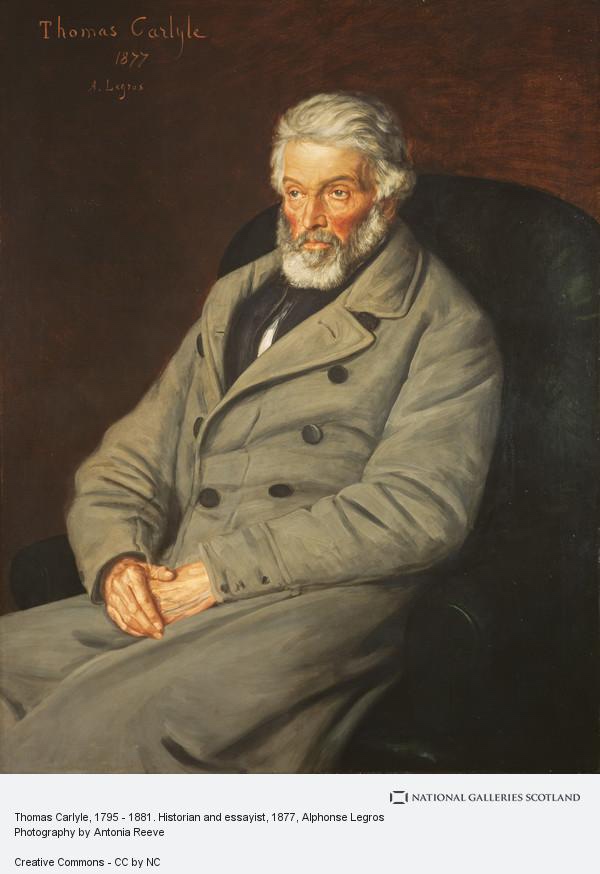
Thomas Carlyle, “The French Revolution: a History” (1837) – I don’t know, man. I’m not sure what I’m supposed to get out of this (he said, about the book he assigned himself). Apparently this was a standard work once! It doesn’t surprise me that a round denunciation of the French Revolution would become a standard anglophone work on it- that’s still viable today. I guess I’m a little surprised that this massive, discursive mess that takes for granted a pretty substantial knowledge of the players going in was as big a deal as it was. Because Carlyle, romantic elitist sage that he was, does nothing so pedestrian as “begin at the beginning” or “explain the significance of any of the people in the narrative” or “have a written thesis.” He just blusters. He blusters learnedly, with some good turns of phrase, and an impressive ability to project his feelings (almost always disdain), but still. Shows how relatively unlearned even educated people are now! Barely anyone knows who Madame Du Barry was, or why she was important, or the Necker affair or whatever. I know the French Revolution pretty well for a nonspecialist but would still get lost sometimes.
Still and all, frustration won out over intellectual insecurity in reading this. Carlyle doesn’t argue, really, but he gets his point across- disdain, universal disdain, disdain given just enough contrast to some theoretical world of worth to even exist, an oxygen to fuel Carlyle’s smoky peat fire of secular damnation. That dingdong Curtis “Mencius Moldbug” Yarvin cites Carlyle as his intellectual master and you can see why, not that that fatuous nerd would be fit to edit Carlyle’s copy on one of the Scottish prick’s bad days. Carlyle could make a point when he wanted to. He was quite explicit about what he thought about black people and slave emancipation, for instance. He used the bare minimum of wordy bush-beating that a Victorian sage could get away with there! He was pithy with Margaret Fuller when he insisted she accept the universe (his, though, it went without saying, not her Yankee vibration).
But I notice one bunch who our enterprising Scot seemed kind of leery of, even though he blames the French Revolution and whatever came from it on them: the philosophes. I came in expecting some good, ripe Frenchie-smarty-pants punching, and I did not get it! Many lesser lights have made Rousseau, Diderot, Voltaire and company rhetorical pin cushions. They’re not hard targets! But while Carlyle, in as close to a real argument as he comes, strongly implies that it was the philosophes who ushered in the “age of paper” that allowed the sans culottes to run wild and cause all the problems, he never really comes to grips with them, never gives them a real working over. Was he… scared? Did he figure that argument by implication — “we all know what was wrong with philosophy, guys” — would play better? Probably a reasonable assumption in his time and place. Who knows! Maybe I’ll read a Carlyle biography someday and find out. I hear he had a peach of a marriage! **’
Pierre Barbet, “The Napoleons of Eridanus” (1970) and “The Emperor of Eridanus” (1982) (translated from the French by Stanley Hochman) – I know you shouldn’t judge a book by its cover, but when it features robots in napoleonic garb, has that DAW yellow spine, and costs two dollars, you just pick it up. That was the situation with prolific French scifi writer Pierre Barbet’s “The Napoleons of Eridanus” (original title: “Les Grognards d’Eridane”) when I found it on some used bookstore spree or another. I was also jazzed by the back cover, calling on the war-gaming subculture — and this was the seventies, real motherfucking cardboard-pusher hours — to embrace this novel of ultra-civilized aliens recruiting Napoleonic soldiers to lead them against space invaders.
Well, I read it, and it was… fine! Not quite as fun as I was expecting. The aliens — sybaritic brains-in-robot-suits — use telepathy to smooth out most of the bumps that came after they jacked eight or so French soldiers from the retreat from Moscow. The grognards, led by Captain Bernard, stomp everyone’s ass at space war, first their hosts’ enemies, then their hosts. They’re Napoleonic badasses, they’re not gonna take orders from a bunch of robo-wusses forever. Everyone else makes war following the orders of computers, but Bernard and company have good old human initiative and brutality. They basically don’t lose, and even when one of them dies, the hosts just clone him. This is a thing you see in pulp scifi, sometimes- the ubermenschen too uber to lose a round, except maybe once, through treachery, as the climax… and they usually come back and win that round, too.
The first one was still reasonably fun. I made a classic mistake and ordered the sequel before I read the original (it was pretty cheap). I had the idea I would try to dust off my French and read the third one, which hadn’t been translated into English. Well, the second one might explain it. Published twelve years after “Les Grognards,” Barbet is really phoning it in for “L’Empereur.” Bernard’s in charge! But the whole galaxy unites against him. He gets arrogant. Rival space empire Itain uses its space navy, led by Lenson (yes, it’s that lazy), to contain him, really breaking down the metaphor because, like, it’s space… it’s mostly fleet actions? It’s just beat for beat the Napoleonic Wars in space. Bernard invades some space-Russia and it’s all over. He can’t beat the weather! His last act as space-emperor is to have the host send him and his posse back to where they were on Earth when they got picked up, and wipe their memories of the whole thing. Done and done! It was pretty lame.
I’m still curious about Barbet. He wrote a lot! Including a story where aliens show up during the Middle Ages, only to piss off the Knights Templars so bad that the knights learn to do space stuff to convert the galaxy to Catholicism, etc. They have another involving a Carthaginian empire that left Rome in the dust, and that idea always intrigued me too. The “Cosmic Crusader” books are translated, the Carthage ones aren’t. We’ll see what I can do- when I read French, I usually wind up writing a lot of it down anyway, so maybe I can produce some “quick and dirty” translations. Stick it on the job queue! *** (Les Grognards)/* (L’Empereur)
Attica Locke, “Bluebird, Bluebird” (2017) and “Heaven, My Home” (2019) (read by J.D. Jackson) – These are some good — one good, one great, I’d say — recent crime novels! Attica Locke writes novels and for tv (apparently the show “Empire”? I used to see ads for it). These are the first two of her “Highway 59” books (there aren’t any others out right now but it seems clear from the cliffhangers that she’s planning more). One of the joys of crime writing is the sense of place crime writers usually include in their books. Highway 59 runs through East Texas, and Locke incorporates the place-ness of East Texas into the books, the aesthetics but also the characters and the plots.
Locke’s protagonist is Texas Ranger Darren Mathews, a scion of a family of black rural Texas smallholders with a proud tradition of public service. Not the least of Mathews’ quandaries spans the distance between the seedy situations Mathews finds himself in and the multiple, not quite coinciding codes: that of being a “race man” and member of a family that sees itself as upholding black independence, that of being a cop (especially a Ranger- the Rangers were basically an Anglo-Texan death squad for a long time), etc. These quandaries intersect, in the time-honored crime fiction way, with the cases Ranger Mathews encounters in these two books.
There’s an overarching case that ties into Mathews’ larger ambition as a Ranger. He wants to do in the Aryan Brotherhood of Texas, the local instantiation of the hyper-violent white supremacist prison gang that began in California. That’s what he works on with the Rangers, as part of a task force. An ABT affiliate got dead after confronting an old family friend of Mathews, where Ranger Mathews tried to deescalate. We don’t know what happened to that Nazi (well, we find out at the end of the second book but I don’t need to say here, it’s pretty good), but Mathews tries to defend the family friend — another representative of the world of old-time post-Emancipation black families that managed to hold on to their piece of rural East Texas in the face of what the white world could throw at them — in a way that both challenges his commitment to the letter of the law and also opens him to manipulation by bad actors.
Mathews has to deal with this in the context of various murders and missing persons! Apparently Texas Rangers get called in, and occasionally bureaucratically parachuted in by the state, by local sheriffs for assistance on complicated cases. So Mathews always has to deal with East Texas sheriffs, who are usually pretty sketchy. In the first book, two people, a black out-of-town lawyer and a white barmaid, both show up drowned within a few days, with evidence pointing towards having been beaten beforehand. Could it have to do with the sketchy bar full of Aryan Brotherhood types in town?? Well, yes, but it also has to do with the much nicer black-owned bar/restaurant/knick-knack shop down the road, land ownership, weird local feuds, etc. The second novel doesn’t even have “a body,” as various cops remind Mathews, as he goes looking for the missing child of an ABT bigwig and stumbles into a whole situation of real estate betrayals and old — sometimes antebellum! — grudges.
The plots may sound similar, and I guess they are, but that’s true of Chandler and Hammett as well, when you strip their books down. Locke really nails two key things for crime fiction: pacing and characterization/place-making (characterizing a place). The pacing is damn near perfect, especially in the second book, a highly satisfying “Empire Strikes Back” type of novel. The characterization brings in numerous suspects, victims, other cops, friends, family, lovers of Mathews, local randos, as well as evoking various East Texas locales, vividly but without a lot of tedious detail.
A brief discussion of politics: the Aryan Brotherhood is an interesting bete noir for an interesting black detective at an interesting moment. If the name weren’t already taken by a law enforcement organization, “Texas Rangers” could easily enough be the name of a Lone Star State-based Nazi gang. The Rangers basically were a white supremacist gang for a long time, and still uphold a racist system even if they let people of color into their ranks. Locke is not naive about this, even if she doesn’t draw all of the conclusions some of the readers would. For their part, the Aryan Brotherhood, while an extremely violent, dangerous, and racist gang, has historically been a lot less political than one might expect from the name. They are primarily a business organization. Some of them bother with Nazi political organizing, but in general, there’s not a lot of money in it, so most don’t bother. There’s a funny, possibly apocryphal, Reddit thread by an altright murderer who got sent to prison and tried to ingratiate himself to the local AB types, but failed. The altright doofus wanted to talk race war; the AB guys wanted to lift weights and get high. I’ve heard spicy-socdem types try to pooh-pooh antifascism on the idea that if we went after “the really dangerous fascists” we’d go after AB. That is a stupid take for obvious reasons (some of the people I’ve seen making it might be reading this- sorry doggs, you did a bad take, still heart you).
But these are very much novels of the “black lives matter” era, and the AB is inimical to black life to the point where killing a black man is said to be their initiation ritual. Locke squares the various political circles around her work by making Mathews, basically, a pretty simple dude. He wants to protect black life and uphold community values the best way he can. One of his beloved uncles was a Ranger- he became a Ranger (his other uncle, still alive and a character in the book, is a lawyer who owns him all the time for being a cop instead of following his example). The AB literally throws away black life with extreme violence for no reason, so after them he goes (plus he gets a badge, gun, and paycheck for so doing). Simple! It does look like Locke intends on complicating this equation- the second book takes place in the wake of the Trump election and even a borderline perspective-dullard (he’s not Harry Potter dull!) like Mathews is asking questions. I don’t expect him (or Locke) to go ACAB, but see these questions as an enjoyable savor for Locke’s finely crafted crime stories. Recommended! **** (Bluebird)/***** (Heaven)






 Too Much Berard