Review – Sapkowski, “Blood of Elves”

Andrzej Sapkowski, “Blood of Elves” (1994) (translated from the Polish by Danusia Stok) (read aloud by Peter Kenny) – Three possibilities, here: the first is that you really should read the Witcher short stories before starting this, the first novel in the Witcher series, the Polish fantasy epic that has taken the world by storm via video game and netflix adaptation. The second possibility is that Andrzej Sapkowski just really expects you to be very heavily invested in his characters, especially titular Witcher (freelance mutated monster hunter, more or less) Geralt of Rivia (pronounced like a townie saying “Revere”) and his sometimes lover, the enchantress Yennefer, and that reading the previous short stories won’t really give you much more reason to care about them. There’s also the possibility of “both” – the earlier stories will give you more background, and Sapkowski has an exaggerated idea of how compelling his characters are.

In any event, “Blood of Elves” could probably use more context than I had to fully enjoy, but I also admired that it didn’t hold the reader’s hand too much. You get plunged into… I’m not sure that the world or part of the world in which it is set has a name, or if I just haven’t remembered, but anyway, a continent sort of like a mish-mashed medieval Europe. People describe the Witcher series as based in Slavic myth- I don’t know enough Slavic myth to say, but it makes sense, though from the names, institutions, etc., it doesn’t seem like Sapkowski is shy of dashing in cultural influences from all over Europe. It’s a fractured land with many kings ruling minor principalities, and there are also elves, dwarves, gnomes, and other sentient fantasy creatures running around, living in uneasy peace with the humans who are relative newcomers to the land. Looming over it all (like how Russia and/or Germany have loomed over Poland, historically, one is tempted to say) is Nilfgard, which tried to take over the whole area a few years back and did a lot of damage in failing to do so. 

There’s a little girl, Ciri, who’s a refugee from the last war, and heir to the throne of one of the kingdoms (since occupied by Nilfgard). For both reasons of state – others of the royal lines want to use her as a symbol, or marry her into their families to establish a claim to her former realm – and reasons of prophecy, she is a Special Child. She hangs out at Witcher academy for a while, which is where we run into Geralt. She gets trained in Witcher stuff, like fighting, but they don’t zap her with mutagens to give her Witcher powers, super strength etc., and also the Witcher’s separation from humanity. She also trains some in magic with Geralt’s on-again off-again lover, the enchantress Yennefer. 

There’s a lot more training, scheming, and portents – a lot, a lot of divining portents, most of them to do with Ciri’s special destiny and how it relates to Geralt – than there is real action, here, which again, might have been cooler had I done the preliminary reading. Geralt swears to protect Ciri, and there’s something about Ciri being “promised to him” in prophecy, and it’s unclear whether that means marriage or protection or what (the former is a little creepy because she’s a kid, and Sapkowski doesn’t stint on grown-up characters commenting on her “development” as she enters adolescence, which is about as fun to listen to as it sounds). One of the portents means she has to leave Witcher academy, though I’ll be damned if I could figure out why. They have to travel through a countryside with a pretty well-depicted guerrilla insurgency/counterinsurgency war going on between elves and humans who used to be chill together. Geralt has to do some derring-do monster fighting on a boat, and some spy stuff. Then there’s more portents and that’s more or less it. 

There’s cool stuff in here but it doesn’t really gel- though again, I’m not sure if that’s the style, or if I’m just missing the context of the earlier books, like if I tried to start “The Lord of the Rings” with the second or third book. I kind of doubt it would blow me away anyway, but it’s fun enough to pick up the series again sometime, this time, at the proper beginning. ***’


Review – Sapkowski, “Blood of Elves”

Review – Davidson, “The Mirror and the Phoenix”

Virgil has a Spin Doctors look here

Avram Davidson, “The Mirror and the Phoenix” (1969) – This was fun. Apparently, during what I’m told I’m not supposed to call “The Dark Ages” (though honestly, considering all the shit people say about the twentieth century, which say what you want about it, but cured a lot of diseases and put a man on the moon…), many Europeans believed that Virgil, the poet of the Aeneid, was a wizard of some renown! Old SFF hand Avram Davidson took that idea and made this story around it. Not only does he depict Vergil (he uses that spelling, apparently it’s gone back and forth) as a wizard, he depicts the world as a whole as having the confusion and geographical/historical inconsistency that a half-literate scribe scratching away in tenth-century Thuringia might give to it.

Vergil gets a job from a high-end lady: find her daughter, who went missing on the way to becoming an imperial concubine. To sweeten the pot, the lady steals Vergil’s potency! He doesn’t like that. He’s motivated. He has to create a mirror, and not just any mirror- a “virgin speculum.” This bronze mirror needs to be made in such a way that in the very instant of its ability to reflect light, Vergil can cast a spell and see where the daughter went. Mirrors were tricky enough for the ancients, I’m told, but a virgin speculum! That’s a whole thing. Vergil needs to secure tin and copper because normal bronze won’t do it, he needs his own bronze. Tin is a monopoly of Cornish chieftains, copper only comes from weird degenerated Aphrodite-worshiping Cypriots, the “Sea Huns” have given up their horses and taken to terrorizing the Mediterranean, so it’s pretty hard to get all that stuff. Meanwhile, there’s all kinds of mysterious hints as to where the daughter might be, and Vergil’s Phoenician friend who sails him around acts increasingly weird.

This is an agreeably shaggy, ponderous work, especially for a fairly short novel. It’s not hard to tell what’s going on but there’s also not the kind of handholding one gets used to in secondary world fantasies, especially contemporary ones. The world feels not just like there’s magic, but that it runs according to a magical logic. All too many stories with magic – and I can’t help but notice how the turn in this dynamic seems to have come with the popularization of games with magic systems, like Dungeons and Dragons – make magic seem like technology, a set of tools to use like any other, possibly dangerous but not really irrational, the world still works according to rules a Galileo or a Descartes could describe. It’s fun to see a world that isn’t like that, especially based on history. ****’

Review – Davidson, “The Mirror and the Phoenix”

Review – Kuang, “The Poppy War”

R.F. Kuang, “The Poppy War” (2018) (read aloud by Emily Woo Zeller) – Man… this is just discouraging. I don’t really have a lot to say about this that I didn’t have to say about the similarly wildly-hyped “Black Sun,” except, if anything, this is even weaker and more rote. Once again, we’re promised a new take on fantasy, inspired by a global setting, not the usual post-Tolkien Europe-based world-building, and changes in perspective that come with both that and from authorship by a woman of color. Once again, we get paint by numbers cliches borrowed from Harry Potter, shonen anime, and the maybe, what… five? Six? Other strains that go in to contemporary big ticket narrative entertainment media. And once again, the speculative fiction industry has piled honors and money at the author’s feet.

The idea here is that the main character, Rin, a put-upon foster child in a rural province of a secondary world society based on China during its pre-1949 century of humiliation, studies real hard and gets to go to hogwarts I MEAN battle school I MEAN, the academy, whatever it’s called, for special military children. People are mean to her because she’s poor. The instructors are harsh beyond what seems necessary or advisable even for a military academy. But, lo and behold, Rin is the special child, the only one who can do the kind of shamanism that can keep the kind-of-Japanese at bay when they attack again. Presumably, in the sequels, she battles going crazy (shaman magic makes you crazy) and the stand-in westerners. 

Look. I shouldn’t have to keep repeating this, but I will. I would love to see a big fantasy epic based on Chinese history. Same with Mesoamerican history, same with African or Polynesian history- really, anywhere. If these epics were written by women of color or other people historically marginalized within publishing, so much the better (Kuang belongs to other demographics, like Georgetown and Oxbridge graduates, that aren’t so marginalized, and it’d maybe be nice to get some diversity on that axis, too, but the point stands). The reason I would like to see these things is because I think that good writing can accomplish that double-miracle- the exploration of difference, many-fold ways of thinking and living, alongside the recognition of human concordance across differences. Sometimes, a triple miracle- those things, plus entertainment! 

“The Poppy War” fails on all these counts. The closest thing for a justification for its existence, outside of the balance sheets of its publisher, is what I think of as the Clayton Powell principle. Asked about the illegal small-time numbers gambling game that was everywhere in his Harlem district (and was beginning to be violently taken over by Italian and Jewish gangsters, after generations of being run reasonably peaceably by black and Hispanic operators, often women), Congressman Adam Clayton Powell said, “I’m against the numbers in any form, but until the numbers are eradicated from Harlem, I want the black man to have the same chance to run the numbers as the Italian.” So, yeah- if we’re doing this chintzy, bloated, overrated, same-same hero’s journey bullshit over and over again, then yes, women of color like Kuang, Rebecca Roanhorse, and N.K. Jemisin deserve the same chance to see their work wildly overblown as boring white dude hacks like Patrick Rothfuss have. 

But what a missed opportunity! Rothfuss didn’t promise as much, or more to the point, waste as much as the supposed deliverers of the field from “white farm boys going on quests” have. A fantasy novel based on the dynamics of Chinese history is a really fucking good idea! I was looking forward to this! I had some forewarning it was a little trite from people I trust, but other people I trust (a little less if I’m being honest) spoke quite highly of “The Poppy War.” 

But what’s the goddamned point of it’s the same old shit, with somewhat different personal names and aesthetic details in the scenery? Especially when those aesthetic differences are indifferently conveyed and aren’t in an audiovisual medium to begin with? It’s like someone slapped a reskin on a well-known video game and declared it not just a whole new game, but a subversion of all previous games in the genre, a step forward both for game design and, in some way, social justice. And it works, over and over again! People fall for it!

“The Poppy War” in particular was possibly the most predictable single book I ever read. Every character is who they seem to be, if not to the other characters — they can’t see that Rin is special, generally, or that the crazy old herbal medicine teacher actually knows shamanism — but to any reader over the age of eight. Every turn of the story you can see coming well ahead of time, including the setups for the inevitable bloated sequels. 

This would be less of a problem if the premise delivered more, if Kuang successfully immersed us in another world, a world dissimilar to those in which we usually find ourselves as readers. Fantasy plots don’t need to be scintillatingly original. But the world and atmosphere of “The Poppy War” was so familiar it felt like going to the office (honestly, NBC-The-Office worship is a disease, but it feels like less like going to work and probably has more real world-building than most Hugo candidates for best novel in the last five years). You can’t just have everyone eating rice flour dumplings instead of beef stew and call it a subversion of Eurocentric genre tropes. Put upon decaying kingdom, sure. Long-dead magic arises despite skepticism of decadent ruling elite, you bet. And always, always, the magic one proving themselves. No one thinks different, no one talks different, nothing is really arranged, socially, politically, economically, all that different than in the “white boy” Tolkien-deriviative fantasies with which this book shares shelf space. 

A friend of mine likes to say that a lot of the problems in contemporary genre fiction stem from meritocrats – and most contemporary big name writers come, at the very least, from decent universities, and often enroll in highly competitive and expensive workshops to hone their craft and make industry connections – staging endless vindications for versions of themselves, the lonely striver revealed as being as special as authors generally imagine themselves to be. My addendum: a really different world, and certainly the different consciousness you would see in a genuinely different world, like those built by Tolkien, Le Guin, Butler, Herbert, et al, would interfere with the clarity of this vision… to say nothing of taking much more time and effort, if nothing else reading weird old shit when a tired grad student would rather be streaming (speaking as a grad student whose career failures probably had something to do with preferring reading weird old shit, I know whereof I speak). To the extent smart people I know like this book, it seems they like it for a somewhat depressing reason: they’ve enlisted in an online war with SFF enthusiasts who embrace what a friend calls “toxic-posi vibes,” “hopepunk” types who smilingly try to ruin the careers of anyone less posi than themselves. That means that “The Poppy War,” which is unrelentingly grim, humorless, free of the quips, squee moments, and familial sentimentality we’ve picked up from Joss Whedon et al, is on their side in the pointless series of cafeteria brawls that is speculative fiction social media. 

A dispiriting spectacle all around! Somewhere in the stacks, or online, there’s probably someone who’s written actually good, new scifi or fantasy based on historical China. I feel confused by the situation we see in contemporary SFF, even though the basic dynamics are as clear and sleazy as in any of our decaying institutions, and I guess the confusion stems from that. Good writing doesn’t cost that much more than bad. So why don’t they take a good writer out of their slush pile and elevate them? That probably comes down to some kind of sleazy bullshit surrounding workshops and who you know, too. Still! **

Review – Kuang, “The Poppy War”

Review – Muir, “Gideon the Ninth”

Tamsyn Muir, “Gideon the Ninth” (2019) (read aloud by Moira Quirk) – People love this book! It’s about Gideon Nave, who lives on a planet that sucks in a solar system that sucks and both are ruled by necromancers. Every planet has its own kind – martial necromancers, sexy necromancers, brainy necromancers, etc., you know how contemporary scifi likes to sort things into houses and so on based on one or two traits – and the Ninth, Gideon’s, is run by the gothiest necromancers. You might think all necromancers are pretty goth, what with the reanimating skeletons and all, but the Ninth is extra goth, all about decay, darkness, stuff being old, repentance, etc.

Gideon doesn’t fit in that well, because she’s big, bluff, lively, and rebellious. She eventually makes a path for herself as a swordswoman. She’s also the only one of two people her age on her planet due to a ghastly accident near her birth. The other is Harrow. Harrow is the heir to the noble house who runs the place. She’s petite, delicate, and a manipulator, and as into necromantic magic as Gideon is into swords. They don’t get along. But they’re forced to go to the First planet, where the necromantic empire got its start, to get into a competition with all the other houses/planets. One (1) necromancer and one (1) swordsman from each planet are to compete to become, like, extra-special vaguely-immortal necromancers, and fight by the side of the necromancer emperor himself!

Here’s the deal: this is a plot and a setup perfectly balanced to produce a neutral starting opinion in me, basically because elements that interest me (science fantasy! Swords!) get canceled out by elements that don’t (goth stuff! Oft-repeated plot elements and tropes from contemporary series-based speculative fiction!). Similarly, the ecstatic reception this book has received from many friends- on the one hand, they’re smart people whose opinions I respect, on the other, I know my own particular tastes differ. So… I come with a very open mind, and in the end, it was the quality of the writing, from structure down to syntax, that decided it. 

Aaaaand… that quality, while I could tell it would be just the thing to keep others more favorably inclined on the hook, was not the kind that I like. First, the book is surprisingly slow-moving for a popular bestseller about people with swords and magic fighting each other. After a pretty bravura opening, matters slow to a crawl when Gideon and Harrow get to the First planet. It’s a pretty funny twist, that they bring all these necromancy freaks and swordfighters to a big palace for a contest, but the Emperor’s flunkies don’t actually know what the contest is! And so, you get a long drawn out middle of everyone trying to figure shit out. You get leisurely introduced to all the weirdos from the assorted planet/houses, who of course have millennia of lore and rivalries and stereotypes about each other, not the worst worldbuilding but also the sort of stuff that will be familiar to anyone who has read contemporary SFF, living as it does under the shadow of Hogwarts. Not only do these weirdos need to banter, occasionally duel, get romantically obsessed with each other, etc., but they need to not just solve a mystery, but solve the mystery of what the mystery is! Too slow, and the stakes too abstract, for me. 

Then there’s the dialogue and humor. Here, I worry most about stepping on the toes of friends. I didn’t like it. Despite existing in a millennia-old undead empire presumably light-years from Earth, Gideon still thinks in memes and internet jokes. Honestly, the anachronism involved doesn’t bother me. What bothers me is that Muir follows this into having most characters talk in a sort of early-2000s internet forum argot, a wordy idiom of exaggeration and affected cynicism. She wrings a lot of mileage from the contrast of aristocratic high diction and puns and/or a Boing Boing reader’s idea of “naughtiness.” Harrow and Gideon, for instance, repeatedly threaten each other in… not exactly “flowery” language, a “fuckwaffle” isn’t a flower, but you know, like, very wordy threats with a lot of silly words thrown in. Sometimes more than one, in a string! Think the way your freshman year dorm-mates who misquoted Monty Python would talk if they had all the time they wanted to come up with the most needlessly elaborate lines possible and deliver them with as much mustard as they could muster. It doesn’t help I listened to this as an audiobook!

Basically, this is a book for goths, or anyway, goths in the way goth-dom has taken shape in the last… well, here, I don’t know enough to say. I understand that the goth subculture was always big on irony and camp. This scans from my memories of youth. I do also vaguely get the idea that they – not just goths, either, but other youth subcultures at the time too, like metalheads, punks, to a certain extent nerds, hippies, and so on – used to take the whole subcultural thing more seriously, thought their customs, outfits, music, tropes etc. really were superior and would fight, or at least argue, the point. I’m not sure if that changed, or if I was just projecting- back when it mattered (i.e. adolescence), I was pretty violently opposed to subculture as a concept. It’s hard to project myself back there. Why did I care? 

Anyway! The points where this book rubbed against me seem to be points that either wouldn’t bother or would positively delight the contemporary, un-self-serious goth with a job and responsibilities. Moreover, the joy they could take from how dark, decadent, and skeleton-y (animated skeletons appear to do all the work, and being me, I wanted to know more about them, and think they’d probably have a better book in them, all amusing skeleton hi-jinks) would probably get them over rough patches, like the slow pace. If Muir has one strength, it’s atmospherics: even (especially?) with all the quipping, stuff does feel quite gothic. I’m glad they have something they can enjoy! This isn’t bad but it is definitively “not for me.” ***

Review – Muir, “Gideon the Ninth”

Review – Roanhorse, “Black Sun”

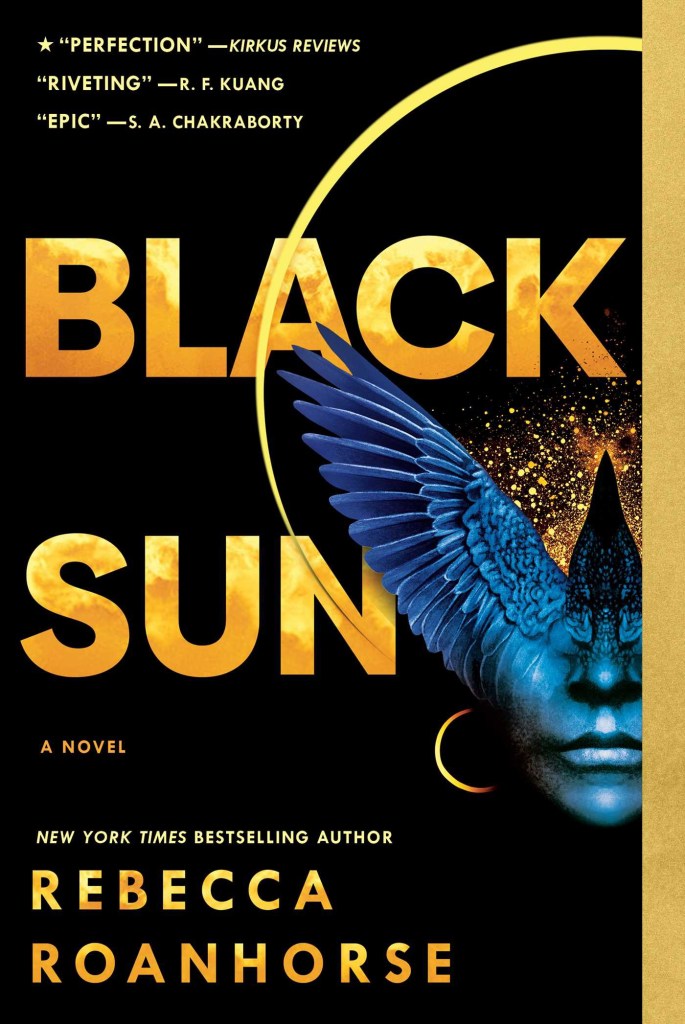
Rebecca Roanhorse, “Black Sun” (2020) (read by several actors) – I didn’t especially like this novel, one of the most hyped and praised fantasy works of the last few years, but more than even most books, it’s impossible to separate my reaction to it from broader context. “Black Sun,” like many speculative fiction novels in the last five to ten years, is meant to be a great victory for inclusion and new perspectives in its genre. Set in a secondary world based on Mesoamerican and Southwestern Native American history and mythology and written by a black woman who claims membership in one of the Navajo nations (according to Wikipedia, said nation disputes this claim), it promises a new departure in fantasy. No more “white farm boys going on quests,” as Roanhorse put it in one interview, no more whiteness-as-default. This was going to be something new.

Well… it isn’t. It just isn’t. It’s the same old fantasy crap with vaguely Mesoamerican trappings, and really, not that much of that. Special child of destiny, blah blah, Han Solo-style outcast rogue, etc etc, the world is on the precipice of dangerous transformation, yadda yadda yadda. And you know… that’s fine, I guess. I don’t love it, I don’t hate it. I like to paraphrase Adam Clayton Powell’s reaction to the Mafia hijacking of the illegal lottery in his district: “I am against the numbers in any form, but until the numbers aren’t played in Harlem, I want the black man to have the same chance to profit from it as the Italian,” or words to that effect. As long as anodyne same-same bullshit is what we’re doing, women, people of color, queer people, marginalized people of all kinds, deserve the same chance to write banal fantasy novels as anyone else, and throw in the same bowdlerized versions of what they think of as their culture as any white guy doing his Wagneresque nonsense.

But like… what a wasted opportunity! A Mesoamerican-based fantasy novel that actually tried something ambitious could kick ass! Hell, there probably are some… they’re probably out of print and don’t have social-media-active authors and/or fans to do shitty publishers’ promo departments’ work for them… but I do think it’s worth thinking about, with this explosion of interest in diverse representation in media, and at least some understanding of the histories and patterns of thought of historical cultures, why we get stuff like “Black Sun” instead of the more interesting works we should be able to expect.

Let’s start with what is missing in “Black Sun.” The plot is hackneyed and poorly-paced, the language dull, and the imagery not especially creative, but those problems are surmountable (though in descending order). What’s really missing is any sense of difference in the world. The characters act, talk, and think like genre stereotypes, though admittedly genre stereotypes of our time rather than the ones from days of yore by which we’re supposedly inundated. There is no indication that this culture, based, supposedly, on entirely different roots than European culture, produces different thought, or social structure, or really anything, even aesthetics. Roanhorse depicts the characters as dressing a bit different than standard Renn Faire garb, but you’d figure the one thing the author of this sort of work would nail down would be that the world would —look— different, and she doesn’t manage that. I thought the whole basis of this stuff was a sort of bourgeois liberal variety of ethnic essentialism, a kind of Twitter-bound Herder’s sense that every group has a unique way of thinking and seeing the world based on culture, environment, heredity, etc., but you don’t see any of that here, and you don’t see it in works that play similar roles but with different ethnicities represented, either- in or out of genre fiction. It’s maddening!

Some of the problems are not unique to the failures of the liberal representationalist model in genre fiction, but are broader problems, especially in SFF. There’s a lot of worldbuilding and it’s not done especially gracefully, and again, Roanhorse has the opportunity to make a world that seems really different — that has a different lived-in experience than however many Middle Earths and Westeroses — and whiffs it. The world isn’t the most laboriously built-out one you see these days, to Roanhorse’s credit, but it possesses the schematism that characterizes a lot of contemporary SFF worldbuilding. What I mean by that is you wind up in a world that may have secrets, but is otherwise ordered in rather rigid categories, worlds that could very easily be summed up in charts. You have these nations (that should be a worldbuilding gimme- it should not be new news to people who went through liberal education recently that the nation state should not be taken for granted!), you have these factions, these gods, and this type of person is characterized by X, Y, and Z, while the other type of person from whatever faction can be characterized by A, B, and C, on and on.

Tolkien’s worlds weren’t like that- Gygax, Arneson, et al had to do a lot of work to rationalize his world (and Moorcock’s, and Vance’s, and who knows how many others) into playable schema. To say there’s been a dialectic between games and SFF writing might have been accurate in their day- at this point, the overlap is nearly comprehensive and defines SFF writing more than it does games. This isn’t a problem in and of itself- some good fiction has been inspired by games. But it can be a problem when the schematic categories of gaming come to define, in an insufficient critical way, worldbuilding, and in some cases character work and other aspects of writing. It doesn’t help matters that some of the most successful franchises of all time are heavily schematic: Harry Potter and it’s houses, Game of Thrones and it’s factions, on and on. It doesn’t help that such categorizations loan themselves readily to the kind of fandom identifications that help drive sales (you have to figure the recent craze for astrology plays into this dynamic too- “I’m a Taurus Ravenclaw etc etc!”), – and to the sorts of stories — star cross’d love across the ill-delineated faction lines being most prominent — that people want to read (over and over again). I don’t know if whole online communities are going to start delineating themselves by Roanhorse’s four castes of the academy of the holy city or whatever just yet. I can’t say whether Roanhorse wanted that to happen when she wrote the book, or that it matters- because that’s the thing with tropes and cliches, it’s not some conspiracy. It’s just the path of least resistance.

It seems that a community of fiesty critics and writers have arisen that share some of my issues with contemporary SFF, and they have recently taken to describing the dominant strain in it these days as “squeecore.” These critics name the following as the traits of squeecore: a shallow emotional range that mostly does either maudlin or glib; heroes who feel like adolescents even when they aren’t; genre send-ups that were stale twenty years ago; aversion to the dark or strange; influences from anime and video games; humor “stuck in the aughts”; superficial dedication to diversity and other liberal values, generally affirmed by the triumph of the hero. The original promulgators of this critique were maddeningly unspecific about who they had in mind, and mostly only named big figures well outside of striking range (like Joss Whedon).

I think the concept is a valuable contribution to the critical discourse, but could use some work. There’s a certain “opposite day” tendency in the criticism that sees qualities lacking in squeecore — mainly darkness and sexiness — as the sine qua non of quality genre fiction and as lacking in the unfortunate SFF of today. I don’t think that’s quite right. Maybe it’s not the quality of darkness and sexiness they want, but you can’t say that “Black Sun” doesn’t do dark, or sex. It’s just anodyne, predictable, and even if the situations — the inevitable world-doom/structural oppression combo the heroes will fix however many bloated books in because hashtag-love-wins; the sexual politics ported in straight from contemporary Twitter — weren’t so hackneyed, the writing is not up to the task. Dark and sex won’t fix the problem, and really I think few aesthetic fixes will. But maybe I think that because my aesthetic sense is limited. My solutions are pretty limited, as well- learn more, I guess? Challenge yourself? A ruthless criticism of everything existing? Maybe that would help me critique contemporary literature more effectively but something tells me it is, to borrow a phrase from one of my critical masters, shooting nerf darts at a T-Rex.

Because why should Rebecca Roanhorse or her many, many readers care? Why should they challenge themselves? Why should they be more critical? They’d clearly rather not. It won’t win you any popularity contests- you’ll still deal with the same chuds who hate anything thoughtful, even anodyne liberalism and boring writing, plus all the anodyne liberals and boring writers will hate you, too. And it’s not like Roanhorse wrote a bad book, just a mediocre one. And the world’s burning and emerging fascism etc etc. I get that. I will say that I think many of the same faculties that could maybe get us out of the whole “burning world” business with something like civilization intact are the same that maybe might get us a better literature, genre and otherwise. Similarly, I think that a lack of imagination, of criticality, and of ability to take on a range of difficult emotions and ideas, and the complacent belief that because you’re not awful then you must be good enough, really isn’t helping, anywhere. **’

Review – Roanhorse, “Black Sun”

Review – Howard, “The Coming of Conan the Cimmerian”

Robert E. Howard, “The Coming of Conan the Cimmerian” (2003) – More genre homework. Lovecraft and Howard, Howard and Lovecraft, handing the torch (and a metric shittonne of baggage) down from the pulps to the nascent scifi/fantasy scene, subjects of adoration, exorciation, tribute, parody, pastiche, and endless imitation. They were friends, too! Penpals, natch- neither got out much. Howard killed himself when his mother died. People talk about the irony, this big, strong man, creator of rugged, devil-may-care heroes, living with his mother and unable to live without her. To me, it’s less ironic and more painfully sad. I’m close to my mom, too, though I think I can navigate the end of her life without terminal self-harm.

Anyway! Conan! He’s got thews, whatever those are (apparently it’s an old word for “strength” and not a weird word for “thighs” like I at first assumed) and he knows how to use them. This collection of Conan stories includes about half of the original Howard stories from the thirties, and nothing but Howard stories. This is somewhat rare- interlocutors, bearers of the torch (or handlers of the baggage), votaries of the cult, have interpolated their own work into the Conan mythos (and his other works, and Lovecraft’s stuff too), most notably fantasy writers L. Sprague DeCamp and Lin Carter but plenty of others too. Other Conan collections mix them in like you couldn’t tell the difference.

You can tell the difference. I wasn’t wild about any of the Conan stories. But there’s a sense of mystery, limitlessness, and foreboding in Howard’s Conan stories that just isn’t there in the various imitators. They say that Conan is a male power fantasy, someone for the nerds reading the pulps to project onto, and that’s true enough in both Howard’s and DeCamp/Carter/whoever’s versions. But the element of escaping into a different kind of world stands out much more starkly in Howard than in the imitators. This is ironic, as later fantasy worldbuilds much more extensively and generally more rigorously than Howard ever did (there’s a similar disconnect between Tolkien and later fantasy, though it’s hard to say that Tolkien did not worldbuild with rigor).

Conan’s world is loosely-jointed history fan fiction, the creation of a young autodidact stringing together evocative words, names, and dynamics from the emerging fields of archival history, anthropology, and archaeology. It’s it’s “gigantism and ineptitude,” to use Borges’ phrase, it resembles mythology and draws us more closely in, to a feeling if not to a reality, than the more schematic, “logical” takes on worldbuilding that followed DeCamp and the others and that feel like maps for theme parks much of the time.

Theme parks work better than mythologies if you want a real plot to follow. Plots aren’t something Conan does in the story. Conan is just Conan. He finds himself in situations- plots are something others weave, and Conan bashes his way out of them with strength and courage. This is because Conan is a barbarian, and barbarians are simple, strong, straightforward, whereas the civilized are complicated, individually weak if collectively strong, and tricky. This is drawn from various old historical ideas, some of which gained new currency during the extended bourgeois freakout about “degeneration” that was in full swing by the time Howard was born.

The starkness of the divide, along with being a little laughable to people who know history better, also “works” on an atmospheric level. Howard clearly prefers barbarians but doesn’t skimp on what the way of life costs- Conan is always confused except in battle, and lives a bare and frustrating life. He comes from an impoverished people, unimaginative to the point where even their gods are dull, to whom the Viking-manques Conan fights amongst in some of the stories seem opulent. Civilization could solve some of these problems but brings up others. Life is basically bad.

There’s also the well-known racism in the stories. It’s probably less bad, anyway less hateful, than Lovecraft’s. Howard’s register was less Lovecraft’s terror, and more rage. To the extent that rage had a real target, it was sophistication- wizards piss Conan off, even when they’re helping him. People being uncivilized, as the black people in Conan invariably are, isn’t a problem to Conan, but presumably is to the reader. It’s also worth noting that “orientalism” wasn’t a critical term of abuse at the time, but a mode of entertainment (not unlike “minstrelsy”). It makes sense- living in a coal-smoke town or lonely plains shack, without movies, tv, or radio, hearing tales of the sumptuousness of some other part of the world, studded with intrigue where yours was dull and workaday, would be compelling. The Conan stories are orientalist to the hilt, in both that sense and the (degraded contemporary version of) Said’s sense. It doesn’t justify anything, necessarily, but the lines of superiority-inferiority aren’t always that clear (as they generally were in minstrelsy), and I think one could go into it with relatively good intentions… but yeah, it’s jarring to modern sensibilities.

All in all, these stories really aren’t great in and of themselves — the sameness of the plots, such as they are, the frequency of deus-ex-machina resolutions, the thinness of the characters and needless multiplicity of indistinguishable cultures (Koths! Hyboreans! Etc) — but it’s worth reading these to understand the shape of the genre more, maybe move on to other sword-swinging writers inspired by Howard, ala Charles Saunders, Fritz Leiber, etc. Maybe I’ll try out Solomon Kane one of these days, too. ***

Review – Howard, “The Coming of Conan the Cimmerian”

Review- Ng, “Under the Pendulum Sun”

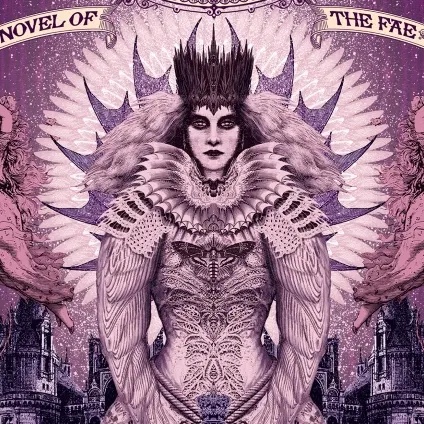
Jeannette Ng, “Under The Pendulum Sun” (2017) – A friend of mine who read this book and didn’t like it described it as “claustrophobic.” Amusingly enough, so did one of the quotes from a positive review put on the back of my copy of the book! Well, I agree with both of them. This dark fantasy novel, about a Victorian lady who goes to the realm of the Fae to find her brother, a missionary who went to spread the word of the Lord to the fair folk, does indeed summon the feeling of the walls closing in. The lady, Catherine, has to stay in a creepy old house. Stuff shifts around. No one talks normal. Eventually her brother comes back but he’s cold and probably traumatized. Also, a weird fairy queen takes up residence in the house. It’s ominous!

It’s an interesting concept but also a little bit of a strange call to have this whole fantastic world of fae and restrain most of the action to one creepy house? Moreover, the world of the fae, what they can and cannot do, is so arbitrary it’s often hard to get a grip on the stakes of the narrative. I get that it’s hard to make irrationality, like what the fae represent, consistent while maintaining its essence, but if you can’t figure it out, you should go back to the drawing board rather than writing a novel about the fae. Ng, one of the big liberal social media firebrands of current SFF, also partakes of the idea that the Victorians were so stupidly fanatical they’d try to convert, in this instance, — nonhuman people. — Fanatical, sure, stupid, no- when Victorians threw their lives away, they usually had a reason, and they could be pretty canny about their use of the God stuff, even when they wholeheartedly believed in it. There’s a predictable twist and some weird sex stuff and ultimately it just wasn’t that interesting. I can’t actually remember why I put this book on my list, I’m not normally into goth-y stuff, but I’ll try not to judge the aesthetic as a whole by this lacking representative. **’

Review- Ng, “Under the Pendulum Sun”

Review- Barker, “Man of Gold”

M.A.R. Barker, “The Man of Gold” (1984) – A small but persistent minority of Citizens wanted me to read this book, so read it I have! It took a while. I usually read a chapter before going to bed. The chapters are short but dense.

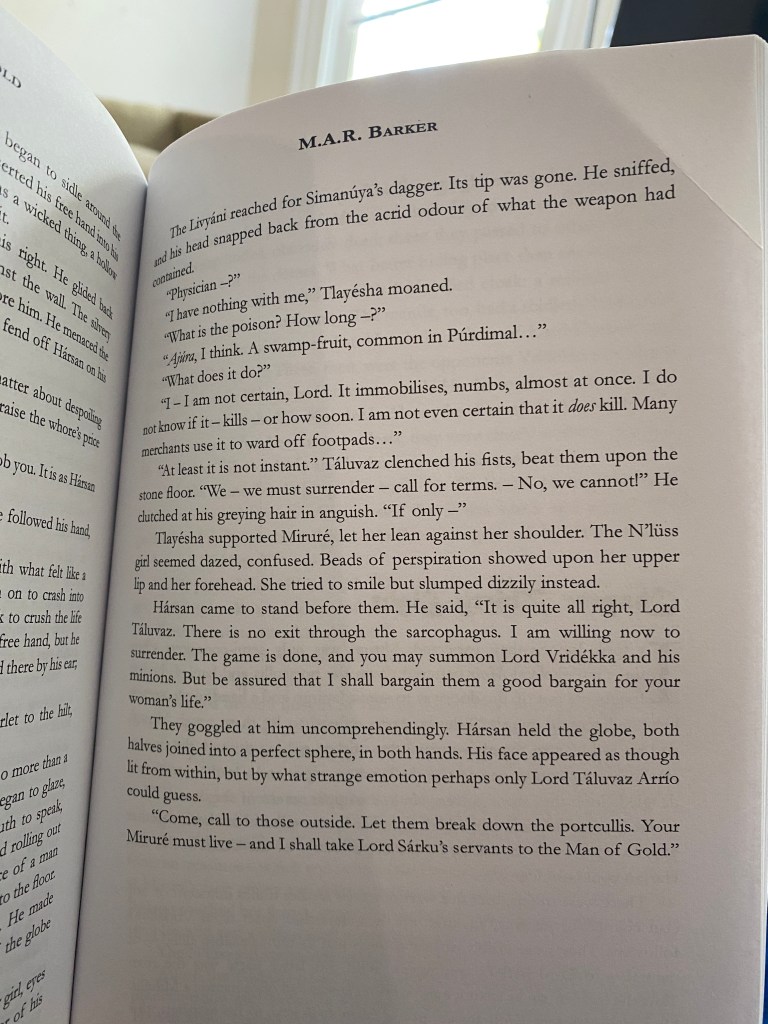
His fans call M.A.R. Barker “the American Tolkien” because like the grand old man of high fantasy, Barker was a linguist, working in both Native American and South Asian languages. And it shows! Those short chapters weren’t dense with ideas or involved prose- they were packed with references. Nothing on the planet of Tekumel is just an animal or plant- it’s a “dri-ant” or a “whatever-fruit.” Every page is packed with proper nouns and not just that of characters- gods and clans and cities and empires. Seemingly every word in all of the several Tekumel languages has an accent mark in it (I haven’t reproduced that here because they’re redundant and annoying). The picture I’m going to use to accompany this review on my blog (and maybe I’ll include it on fb and the newsletter?) is a picture of a random page in the book. Truly random- I entered “356” for the number of pages into random.org and produced a page number. Page 307 is the end of an action scene, not exposition-heavy as far as the book goes, and get a load of all the names and proper nouns and accent marks! It reminds of late-era Magic card expansions- they can’t get away with calling something “warrior” anymore, so it has to be “X-civilization’s warrior,” etc.

Look, I like world-building. I like Tolkien, I like multi-layered worlds with lots of history, especially if someone tries to rigorously construct them according to some kind of logic. I wrote a novel and there is too much world-building in it so I have more or less given up on it. But there’s such a thing as too much, too quickly, and too poorly-distinguished. That’s a place where Tolkien’s oft-lamented slowness as a writer comes into its own. He introduces you to the many-fold nooks and crannies of Middle Earth slowly, “organically” even. Not so in “The Man of Gold” – Barker just throws words and concepts at you in an exhausting fusillade.

It’s not an altogether bad world, Tekumel. It’s pleasingly asymmetrical and complex. It seems like it was a colony planet of Earth, thousands of years ago, and degenerated from several eras of high-tech into a kind of medieval situation, except they can’t even figure out iron, just bronze and copper like jerks. Humans live in byzantinely complex hierarchical societies. People belong to temples of one of twenty-odd gods (who might have once been powerful technologists? Or aliens? Or something?), most of whom seem to have multiple mythic aspects as well as their main names. People also belong to clans (which don’t have Tekumel-language names, but names in English, which is both confusing and a relief) and the clans have some relationship to the temples? Then there’s kingdoms and empires, and various non-human races, lizardfolk and mantis-folk, etc. Magic exists, mostly access to ill-understood ancient technology. A lot of it has a Central Asian/Indian imperial vibe, as understood by a midcentury white scholar, to me- layers of history, people bound by multiple codes meant to respond to transhistorical imperatives, ornate flowery language to go with ornate social arrangements, etc. “Orientalist,” probably, but that’s fantasy fiction for you.

The story is pretty basic fantasy boilerplate. A young scholar, Harsan, in the temple of the scholar-god discovers an ancient secret during his linguistic research (like the author, he’s a linguist). He’s sent off on a quest to explain this secret to his superiors. He gets whisked off on various adventures as different factions try to use his knowledge. He has the key to some kind of ancient weapon (the titular Man of Gold) that can defeat another ancient weapon, but can’t consciously access it. All the different factions, most of them vying for the imperial throne, want it. He gets seduced by a lady from the sex-goddess temple. Death-god cultists mess with them. They get shanghaied by slavers. He meets another lady and escapes into ancient labyrinths of ruins to find the titular McGuffin, all while being pursued by various groups. With pluck and fortitude, Harsan survives, averts disaster, and winds up with two wives! Score!

All this is in fairly basic high fantasy prose. That’d be fine, but if you’re going to have that many groups running around, it’d be good to be able to distinguish them more, and Barker either didn’t have the chops or the inclination to do so as much as he perhaps should have in this one. Probably his best creation in this one is the death-cult, classic lawful-evil well-mannered horror villains with all manner of gross undead critters to menace the heroes with. But they also just kind of reminded me of Jack Vance, who did worlds like these but with a much defter hand. Vance often had nigh-indistinguishable factions hating each other in stagnant worlds- but that was the point, that their hates were petty, and he did as much prose-wrangling to get that across and no further. Barker, I think, got lost in the love of Tekumel. Apparently, he was a great dungeon master on the early role-playing game scene: Dungeons and Dragons co-designer Dave Arneson apparently said Barker was his favorite DM. I could see that. But as a novel… well, I’m curious enough to maybe try out another Tekumel book. But ultimately, this was more of a slog than I was thinking it might be. ***

Review- Barker, “Man of Gold”

Review- Rothfuss, “The Name of the Wind”

Patrick Rothfuss, “The Name of the Wind” (2007) – A lot of people like this book. There was huge hype and lasting affection around it when it came out in the late 2000s, that magical time when we thought we had seen how bad it would get. It came highly praised by the likes of Ursula Le Guin. I have a lot of friends who like it. The friends I have who like it (when I posted about it on my social media, other friends with other opinions emerged, but that’s neither here nor there) use words like “poetic.” And Patrick Rothfuss himself seems like a decent sort, a harmless, fun-loving nerd who doesn’t appear to be using that performance of self as a guise to exploit others, as we see done (:cough: Joss Whedon :cough:) elsewhere in the nerd-o-sphere. His blog is all raising money for charities and pictures of his nice family.

So you can see why I might want to go easy on this book. Respected writers like it. More importantly, friends like it, and use language for it I feel weird challenging- am I really going to just diss my friends’ sense of aesthetic? Most pertinent of all, most of the time, when I really gun for a book, the author sucks in some way, like Mike Ma being a fascist or Sheila Heti contributing to tweeness and pretense in literature, to cite two recent examples. I can’t really say that about Rothfuss, who, I reiterate, seems like a decent, blameless guy.

But I will not go easy. I will reflect my experience. This book baffled me with its utter mediocrity. It bored and frustrated me. A lot of the time, when millennial critics say something bored them, they mean it offended them. This is not the case here- I would have taken some offense if I could’ve gotten it, just to spice things up. Similarly, when they say a piece of writing frustrated them, they imply there was something else they wanted the piece to be, or in non-fiction, wanted the author to acknowledge some hobby horse of theirs. I guess I wanted this to be good fantasy, but I’ll damned if I can say specifically how other than “be more exciting and interesting, and maybe shorter.”

“The Name of the Wind” is, mostly, the tale of one Kvothe. Kvothe lives in what we could see as a generic post-George-RR-Martin fantasy land- roughly medieval European technology level and social arrangements (though with post-Columbian-Exchange crops, like chocolate- I will admit that took me out of things a little early on), magic and monsters largely in the background… for now. Because this was supposed to be a big deal trilogy, there is an extended framing device, a good seventy-five pages or so dealing with demon spiders emerging in this little rural town, before we get to the meat of the story. The owner of the inn in this little town isn’t all he appears. A Chronicler shows up who knows who he is- Kvothe, big time badass wizard warrior. Chronicler wants his story and Kvothe, after some back and forth, agrees to give it, and that provides the action for much of the rest of the book. The demon spiders don’t come back- presumably they do in the second book or in the third book that Rothfuss probably at this point won’t write.

The biggest problem, if I had to pick one, with this book is that Kvothe is, as pointed out to me by a fan of the book, an utter Marty-Stu, a wish-fulfillment of the most banal fantasies of badassery that the first decade of the twenty-first century could conjure up. Kvothe relates his upbringing amongst traveling performers. From the beginning, he’s whip smart and savvy. He also talks like a twenty-first century adult, but we’ll get into that issue later. He meets an old wizard who teaches him some magical basics and of course, he picks it up faster than anyone. His lows are heroic lows- his family slaughtered by mysterious wights from ancient lore, first he survives in the woods all on his own, then makes his way by his wits on the streets of the big fantasy city of Tarbean. He then makes his way to the University to learn magic (and about the wights) and impresses the masters so much they pay HIM for his first term! He makes enemies — a mean professor, Snap- I mean, Hemme, and a snooty aristocratic boy Malf- I mean, Ambrose — and shows them up magnificently with his magic chops and street smarts. He’s a musical genius, too, and girls totally want his fifteen year old self. Above all, he’s collected and self-contained.

“Well, it’s HEROIC fantasy,” I can hear some of you say. Sure. And there’s a number of ways to make such a character interesting. One would be to make him a less reliable narrator, like maybe he has to dial back some of his stories (there is an interlocutor character along with Kvothe and Chronicler). Even if you want to keep him that heroic, you can make the challenges he faces interesting, or ones to which he isn’t suited. You can also set him in an interesting world, worthy of the hero’s talents.

Rothfuss fails to deliver on any of those options. Kvothe is understood to be reliable throughout. The lack of interesting challenges and the failure of worldbuilding reenforce each other. Magic and science aren’t separate in this world, so Kvothe learns a lot of both, seemingly more of the latter, but he does so so effortlessly it’s basically uninteresting. The details of the magic system, laid out in pseudo-scientific trappings, were left underexplored but were also so dull I didn’t really want to know any more.

Rothfuss seems to have been going for “gritty,” which led to one of his more interesting decisions- making young Kvothe constantly worry about money. He’s poor and the University costs, at least after first term. This is something of a departure for fantasy, but it isn’t handled well. It’s sort of a low-grade irritant throughout the book, worrying about Kvothe’s finances and doing exchange rates on the various units of currency he uses.

Most of the action takes place in generic medieval city-space and while several cultures are mentioned and attributes ascribed to them, none of them are particularly distinct. There’s lore, intimations of old, deep mysteries (like the murderous wights), but none of it is anything fantasy readers haven’t seen many times before, interspersed with similarly anodyne action. There’s numerous songs and poems but I’ll be damned if I remember any of them, and I finished the book the day I’m writing this.

Then there’s the writing. He didn’t want to do exalted high-fantasy diction. I get that. He doesn’t make even as many concessions to it as does George RR Martin- fine, I guess, you want to stake your own territory. But god help me if Kvothe and basically everyone else in the book (except some yokels done in painful yokel-speak) don’t just talk like anodyne twenty-first century people, with the occasional lapse into flowery language of the kind a marketing intern would make up for a renaissance faire. If your magic is (mostly) science and your cultures aren’t any different from ours except for having lords and ladies (which we might as well have, given where inequality is going), and everyone is going to talk more or less like the people at your friendly local gaming store — a little more verbal and descriptive than at the other stores in the mall, but basically the same dialect — why the fuck did you bother writing fantasy? What was the point?

What this most forcefully reminded me of was less another given piece of literature and more a moment in my life. That’s the moment in college — around the time this book was probably being written, in fact — that it dawned me that most nerds are boring as shit. They might be good or bad, smart or dumb, but nerd culture as a whole did not represent what I wanted out of culture. Cruelly, one of the better things about nerd culture, the participatory element found in role-playing games, fan fiction, etc., bore this out the most. Given the vast scope of possibilities laid out before them, most nerds will ineptly reproduce what came before, the ones who won’t just turn the creative possibilities before them into their personal toilet, that is. Rothfuss presents himself as an every-nerd, and, god love him, after reading “The Name of the Wind” I can’t disagree. I feel about as good about this as I would about roasting some of the decent nerds I knew, but wasn’t friends with, in college- but the hell with it, he made his pile and is doing fine. I’ll give him the extra half star for being a decent dude and deserving more honor, for at least trying fantasy, than shitty litfic gets, not that he or anyone really cares. **

Review- Rothfuss, “The Name of the Wind”

Review- Novik, “His Majesty’s Dragon”

Naomi Novik, “His Majesty’s Dragon” (2006) – Probably not the best way to begin a review of a book to talk about another book altogether, but I really should get around to reading “Master and Commander.” I have a copy of it sitting on a shelf. I’ve read “Master and Commander But In Space,” i.e., one of David Weber’s space navy books. And now I’ve read “Master and Commander But With Dragons,” or, the first in Naomi Novik’s Temeraire series. I can’t even be sure how many of the shared tropes are really in the original work, but from context and what I remember of the Russell Crowe movie, it seems like there’s a lot. The new commander, earning the respect of their crew; learning the rites and rituals of the service; intimacies both warm and structured by custom and chain of command, on and on.

All that, but with dragons, is the premise of “His Majesty’s Dragon.” Everything about the world seems normal circa 1804 — there’s no additional magic — but dragons exist and are an important part of warfare. Royal Navy officer Will Laurence captures a French ship with a dragon’s egg. The egg hatches and the dragon imprints on Laurence, who names the dragon Temeraire. This imprinting means Laurence has to leave the Navy and join the dragon-borne Aerial Corps, a wild, wooly, and declasse bunch. At first Laurence is put out by this, and gets dumped by his sweetie, but he and Temeraire become close, flying is cool, and he’s an English officer, dammit, he does his duty.

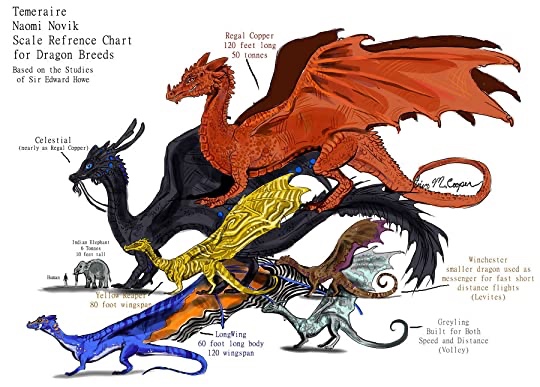
Ships of the line were probably the most technologically advanced and complex systems of their day, and part of the “Master and Commander” genre appears to be immersing the reader in the management of and vocabulary adhering to keeping them going. Scifi writers like David Weber enthusiastically adopted this practice to allow them to geek out over their spaceships. There’s a lot going on with dragon combat, too, in Novik’s world. Much of the book is taken up with Laurence and Temeraire’s training and integration into the Aerial Corps. They fly around the Scottish countryside with other dragons, and we hear a lot of names of dragon breeds and their attributes. Laurence adjusts to such novelties as women officers (some of the dragons will only let women fly them). Novik describes the harnesses that allow bodies of men to stay aboard flying dragons throughout their combat maneuvers, dragon-borne battle tactics, etc.

Novik made the interesting decision to have her dragons come out of the egg capable of speech. I guess being a novel, she couldn’t go the “How To Train Your Dragon” route of having them just sort of mug and pantomime to communicate. Temeraire the dragon is somewhere between a cat and a child, supercilious, curious, fiercely attached to Laurence, basically good-hearted. As it turns out, he is a special breed with special abilities that come out in the nick of time to prevent a disaster. Pretty much all the fighting comes in the last fifth or so of the book. Truth be told, the balance between training and fighting being so heavily in favor of training didn’t really do it for me. The descriptions of aerial combat were all right, but not anything to write home about. And I am further biased: while I am critical of Napoleon, who in many ways wrecked the legacy of the French Revolution, I have a hard time getting myself to support the British aristocratic oligarchy against him, despite the efforts of two hundred years worth of propaganda, much of which has found its way into foundational tropes in a lot of fiction genres. For many readers, the premise — the Napoleonic Wars with dragons! — will be enough to get this book over. It is indeed a compelling premise, and Novik doesn’t waste it, but it was a little slow for my taste. ***

Review- Novik, “His Majesty’s Dragon”