Review – Mann and Gardiner, “Heat 2”

Michael Mann and Meg Gardiner, “Heat 2” (2022) – I yield to few in my admiration for Michael Mann, my favorite director, and like most Mann fans my age, I first got into him from seeing “Heat.” I don’t look for perfection in artists and works I admire (stupid I have to say that but there it is)- Mann isn’t “perfect” and “Heat” is no longer my favorite Mann movie. I see it as being great, in the sense of having a lot going for it and some huge flaws. “Heat” adds and forgets at least one major plotline (serial killer Waingro) to an already over-stuffed script, the characters are needlessly wordy to the extent that Pacino especially almost becomes farcical, and it’s the nadir of Mann’s uneven ability to depict women. But it’s still compelling- the actors, the action, the pathos Mann never sneers or winks at. In a time when we’re all encouraged to be either shitty little stand-up comics inflicting our not-so-tight-fives about everything to everyone, or else woofing, yawping nincompoops, Mann’s deadly serious, but not self-serious, stories of connection and tragedy constitute signals from a better world. This is as true for his misses (like “The Keep”) as much as it is for checkered successes (“Heat,” “Public Enemies,” “Miami Vice”) and indisputable masterpieces (“Thief,” “Manhunter,” “Last of the Mohicans”) (note- I actually –like– some of the “checkered” works better than the masterpieces- enjoyment is more subjective, to me, than mastery).

So, on the one hand, I get the jokes that rise to the mind when one hears that Michael Mann, with help from bestselling thriller writer Meg Gardiner, wrote and published a book called “Heat 2,” both a prequel and a sequel to his 1996 film. Chris Fleming, a comedian who almost fills the role in comedy that Mann does for me in film, described it as a government program to get adult men to read (considering the last book that you could make that joke for would be “American Sniper,” I think we can agree this is an improvement). Moreover, being a follower of Michael Mann’s work, I know this is part of a “comeback.” His last film, “Blackhat,” was a massive, almost inconceivable flop (I think it’s kind of good), and for years the studios wouldn’t let Mann near another movie. I think now they realize enough dads out there will buy stuff with “the guy who brought you Heat” on it, especially if it’s a sequel, to let him out of the doghouse a little- he got this book out, and now they’re letting him make the Enzo Ferrari biopic he’s been talking about forever. 

So, I do think there’s some calculation here. But I also know Mann’s work well enough to know, from the first page, that this stuff was going to be cask-strength Mann, an immersion into the Manniverse, if you will. He’s known for writing extensive biographies for his characters, most of which don’t come up in the movies, and you know he’s just been dying to get all of that, and the research he does for locations and criminal dynamics, out there somewhere, too. 

Anyway, guess I should say what happens in the book, a little! We first catch up with Chris Shiherlis (the only place I’ve seen that surname outside of the universe of Heat is actually here in Watertown- wonder if it’s Greek or Armenian), Val Kilmer’s character, hours after the botched robbery that formed the pivot of the movie. He’s been shot, his wife is working with the cops (but no so much she doesn’t find a way to warn him out of a cop trap), his best friends have all been killed. Jon Voight’s character smuggles him out of the US and gets him a job in Ciudad del Este, Paraguay. Real Mann heads know that Mann loves places like that, weird nether zones exposing both capitalism’s darkness and it’s potential for adventures for Mann to dramatize. Ciudad del Este is more or less openly run by smuggler clans, and Chris gets in with one of them. 

Zap back to 1988! Neil McCauley, Robert DeNiro’s character, is still alive, and something like the crew is still intact, and in Chicago. They take a big score there, but also pick up an enemy in the form of the leader of a crew of home invasion robbers. Those of you who know Michael Mann, or really who read/watch a lot of crime stories, know that home invaders are bad news. Neil, Chris and crew are criminals, sometimes violent, but never do crime to sate their violent desires- they’re professionals. Otis, the leader of the home invaders, on the other hand, makes his already violent crimes more violent intentionally. He’s a creepy sadist on top of everything else. Meanwhile, Al Pacino’s detective character, Vincent Hanna, is in the mix- he was canonically a Chicago cop before moving to LA, so he’s trying to find Otis (he’s not on Neil’s tail yet- Neil’s Chicago score didn’t involve violence). 

The score they do in Chicago leads the crew to taking down a cartel stash house in Mexicali, on the border. This was probably my favorite part of the book, the best heist of the bunch (and there’s a few, enough for pretty much any heist-head). But Otis, despite not being a “professional” in the sense of Neil et al, is dogged and lucky, and he finds them. Specifically, he finds Neil’s love interest, a Mexican smuggler lady who helps out with the crimes (over time, Mann has gotten better about having women who aren’t victims or shrews in his stuff, and one imagines Meg Gardiner probably helped here too). Tragedy ensues, one of the things that helps lead Neil to his “have no attachments you can’t walk out on in 30 seconds” credo from the movie. 

Back to the future! By 2000, Chris is in with a Taiwanese-Paraguayan smuggler clan. Despite still having his wife, Ashley Judd, back in the States (they can’t talk much because Chris is extremely wanted), he gets together with the business-minded daughter of the clan, who sees the transnational criminal entrepreneurial possibilities of the future. This takes them back to LA, where a concatenation of weird Chinese-Paraguayan dynastic politics, and our old friend Otis, somehow combine to create big time problems that Chris and Vincent Hanna, still on the force, need to navigate/shoot their way out of.

Those of you who know Michael Mann’s stuff (and even more so those of you know his stuff and then lick the boom up) will recognize the story, it’s themes, and much of its background as a melange of elements Mann used in any and all of his crime movies. It’s not just “Heat,” but especially “Miami Vice” and “Blackhat” with their emphases on interconnected global crime, “Public Enemies,” “Thief” (especially in the Chicago parts), even “Manhunter” given how much pivots on sociopath Otis, whose motivations aren’t all that different from the Tooth Fairy in that move… all present and accounted for. 

It’s not so much fan service for fans of Heat — you get more of Kelso, Tom Noonan’s wheelchair-bound hacker, but kind of more a plot device, and not people you’d rather see like Tom Sizemore’s Cerrito, Wes Studi’s Casals, or Danny Trejo’s character, named after the actor — as fan service for fans of Michael Mann as a whole. It won’t surprise you to know that I follow Michael Mann’s Facebook page, and his fans are now talking about a “Michael Mann extended universe,” which you gotta figure is exactly what the publishers/studios want. I try not to do this in reviews, but it’s a very strong case of “this is the kind of thing you’ll like, if that’s the kind of thing you like.” Michael Mann’s work is so stuck in my brain it’s hard to tell if other people will respond to it. There’s definitely enjoyable crime material, here, and it’s also encouraged me to check out Meg Gardiner- while the vision is definitely Mann’s, I could see her doing a lot to make a real novel out of it. Anyway… I’d call this middle-rank Mann, which means it’s better than high-ranked stuff from lesser mortals. ****

Review – Mann and Gardiner, “Heat 2”

Review – Kuang, “The Poppy War”

R.F. Kuang, “The Poppy War” (2018) (read aloud by Emily Woo Zeller) – Man… this is just discouraging. I don’t really have a lot to say about this that I didn’t have to say about the similarly wildly-hyped “Black Sun,” except, if anything, this is even weaker and more rote. Once again, we’re promised a new take on fantasy, inspired by a global setting, not the usual post-Tolkien Europe-based world-building, and changes in perspective that come with both that and from authorship by a woman of color. Once again, we get paint by numbers cliches borrowed from Harry Potter, shonen anime, and the maybe, what… five? Six? Other strains that go in to contemporary big ticket narrative entertainment media. And once again, the speculative fiction industry has piled honors and money at the author’s feet.

The idea here is that the main character, Rin, a put-upon foster child in a rural province of a secondary world society based on China during its pre-1949 century of humiliation, studies real hard and gets to go to hogwarts I MEAN battle school I MEAN, the academy, whatever it’s called, for special military children. People are mean to her because she’s poor. The instructors are harsh beyond what seems necessary or advisable even for a military academy. But, lo and behold, Rin is the special child, the only one who can do the kind of shamanism that can keep the kind-of-Japanese at bay when they attack again. Presumably, in the sequels, she battles going crazy (shaman magic makes you crazy) and the stand-in westerners. 

Look. I shouldn’t have to keep repeating this, but I will. I would love to see a big fantasy epic based on Chinese history. Same with Mesoamerican history, same with African or Polynesian history- really, anywhere. If these epics were written by women of color or other people historically marginalized within publishing, so much the better (Kuang belongs to other demographics, like Georgetown and Oxbridge graduates, that aren’t so marginalized, and it’d maybe be nice to get some diversity on that axis, too, but the point stands). The reason I would like to see these things is because I think that good writing can accomplish that double-miracle- the exploration of difference, many-fold ways of thinking and living, alongside the recognition of human concordance across differences. Sometimes, a triple miracle- those things, plus entertainment! 

“The Poppy War” fails on all these counts. The closest thing for a justification for its existence, outside of the balance sheets of its publisher, is what I think of as the Clayton Powell principle. Asked about the illegal small-time numbers gambling game that was everywhere in his Harlem district (and was beginning to be violently taken over by Italian and Jewish gangsters, after generations of being run reasonably peaceably by black and Hispanic operators, often women), Congressman Adam Clayton Powell said, “I’m against the numbers in any form, but until the numbers are eradicated from Harlem, I want the black man to have the same chance to run the numbers as the Italian.” So, yeah- if we’re doing this chintzy, bloated, overrated, same-same hero’s journey bullshit over and over again, then yes, women of color like Kuang, Rebecca Roanhorse, and N.K. Jemisin deserve the same chance to see their work wildly overblown as boring white dude hacks like Patrick Rothfuss have. 

But what a missed opportunity! Rothfuss didn’t promise as much, or more to the point, waste as much as the supposed deliverers of the field from “white farm boys going on quests” have. A fantasy novel based on the dynamics of Chinese history is a really fucking good idea! I was looking forward to this! I had some forewarning it was a little trite from people I trust, but other people I trust (a little less if I’m being honest) spoke quite highly of “The Poppy War.” 

But what’s the goddamned point of it’s the same old shit, with somewhat different personal names and aesthetic details in the scenery? Especially when those aesthetic differences are indifferently conveyed and aren’t in an audiovisual medium to begin with? It’s like someone slapped a reskin on a well-known video game and declared it not just a whole new game, but a subversion of all previous games in the genre, a step forward both for game design and, in some way, social justice. And it works, over and over again! People fall for it!

“The Poppy War” in particular was possibly the most predictable single book I ever read. Every character is who they seem to be, if not to the other characters — they can’t see that Rin is special, generally, or that the crazy old herbal medicine teacher actually knows shamanism — but to any reader over the age of eight. Every turn of the story you can see coming well ahead of time, including the setups for the inevitable bloated sequels. 

This would be less of a problem if the premise delivered more, if Kuang successfully immersed us in another world, a world dissimilar to those in which we usually find ourselves as readers. Fantasy plots don’t need to be scintillatingly original. But the world and atmosphere of “The Poppy War” was so familiar it felt like going to the office (honestly, NBC-The-Office worship is a disease, but it feels like less like going to work and probably has more real world-building than most Hugo candidates for best novel in the last five years). You can’t just have everyone eating rice flour dumplings instead of beef stew and call it a subversion of Eurocentric genre tropes. Put upon decaying kingdom, sure. Long-dead magic arises despite skepticism of decadent ruling elite, you bet. And always, always, the magic one proving themselves. No one thinks different, no one talks different, nothing is really arranged, socially, politically, economically, all that different than in the “white boy” Tolkien-deriviative fantasies with which this book shares shelf space. 

A friend of mine likes to say that a lot of the problems in contemporary genre fiction stem from meritocrats – and most contemporary big name writers come, at the very least, from decent universities, and often enroll in highly competitive and expensive workshops to hone their craft and make industry connections – staging endless vindications for versions of themselves, the lonely striver revealed as being as special as authors generally imagine themselves to be. My addendum: a really different world, and certainly the different consciousness you would see in a genuinely different world, like those built by Tolkien, Le Guin, Butler, Herbert, et al, would interfere with the clarity of this vision… to say nothing of taking much more time and effort, if nothing else reading weird old shit when a tired grad student would rather be streaming (speaking as a grad student whose career failures probably had something to do with preferring reading weird old shit, I know whereof I speak). To the extent smart people I know like this book, it seems they like it for a somewhat depressing reason: they’ve enlisted in an online war with SFF enthusiasts who embrace what a friend calls “toxic-posi vibes,” “hopepunk” types who smilingly try to ruin the careers of anyone less posi than themselves. That means that “The Poppy War,” which is unrelentingly grim, humorless, free of the quips, squee moments, and familial sentimentality we’ve picked up from Joss Whedon et al, is on their side in the pointless series of cafeteria brawls that is speculative fiction social media. 

A dispiriting spectacle all around! Somewhere in the stacks, or online, there’s probably someone who’s written actually good, new scifi or fantasy based on historical China. I feel confused by the situation we see in contemporary SFF, even though the basic dynamics are as clear and sleazy as in any of our decaying institutions, and I guess the confusion stems from that. Good writing doesn’t cost that much more than bad. So why don’t they take a good writer out of their slush pile and elevate them? That probably comes down to some kind of sleazy bullshit surrounding workshops and who you know, too. Still! **

Review – Kuang, “The Poppy War”

Review – Wilson, “Colors Insulting to Nature”

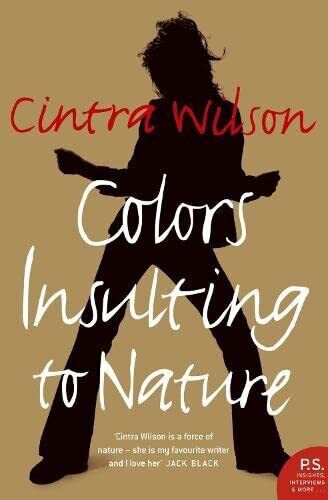
Cintra Wilson, “Colors Insulting to Nature” (2004) – This was a big, delightful surprise. This book came on my radar when I was looking into Montgomery McFate, the founder of the Human Terrain Project, a Pentagon effort to put social scientists into the field to support counterinsurgency in Iraq and Afghanistan. It was a bloody farce, as most things in those wars were. The media blitz around McFate as the program spun up added insult to injury, with a lot of emphasis on her credentials as a Bay Area punk in the eighties, raised on a houseboat by beatniks, theory geek, affecting punk style into her middle-aged aughts… one of the puff pieces brought up that a character based on her features in this novel by her friend Cintra Wilson, who upon googling turned out to be a sort of op-ed writer/style critic/general writing person. So when I decided I would write about Gen X literature for this year’s birthday lecture, I thought, perfect- a bridge between Gen X literary cynicism and support for our imperial wars, probably a piece of shit in literary terms, too. Maybe there’d be a cameo from John Dolan, aka the War Nerd, who in a very strange convergence dated McFate back when!

Well, “Colors Insulting to Nature” is none of that. The closest comparison I can make is to “A Confederacy of Dunces,” and that’s high praise. It’s a little too cute and self-aware (and, let’s be real, less relatable to me- you’ll see why) for it to quite scale the pedestal Dunces sits on for me, but it was a surprisingly great read. The story of the Normal family (you can see why I might have been rolling my eyes going in), particularly Liza Normal, and its efforts to make good with the one god that they can adhere to: fame, being on tv. Living on an arc between Las Vegas and Marin County north of San Francisco, the Normals are uniquely ill-equipped for their mission, lacking pretty much everything you would want for pre-ironic, mass-media late twentieth century fame other than one thing: “the tenacity of the cockroach,” as that one book called it. 

The book opens with Peppy Normal driving Liza, maybe age eleven or thirteen, to a hopeless audition for a commercial. Maybe I’ve been doing too much generational reading — which is ironic because a lot of the point in my lecture is about how generational analysis sucks — but I feel like in a book by a millennial author, the audition would be about how hard Liza tried to meet an impossible standard, and then either she fails (due to some certified injustice, maybe) or succeeds to find that success isn’t all it’s cracked up to be. Wilson does not do that. Liza’s audition is a train wreck, partially due to lack of talent, but mostly because the Normals are possessed with a very specific idea of fame, beauty, and glamor, an extraordinarily tacky pastiche of better-forgotten post-fifties over-sexed fashions and phrasings, so that little Liza makes some profoundly uncomfortable performances without even knowing it.

I dwell on this audition scene to show that this novel is about the subject of so many great works of humor: miscommunication. In this case, the Normals don’t want to communicate anything so prosaic as ideas, or even desires. They have visions in their heads, differing but converging in some key areas, of glory, light, love, the limelight dream (agoraphobic older brother Ned even makes Liza an actual limelight at one point, not an easy technical feat). Perhaps the most important structural prop in Liza’s dreamscape comes from an almost forgotten subgenre of movies about street youth whose natural talent and authenticity propel them to fame by just doing what they do- perhaps the only well-known artifact of this wave of media is the musical actually called “Fame.” Needless to say, their peculiar aesthetics would be hard to get across in any event. But based as they are in a “dinner theater” in Marin County, they have a singular incapacity to instantiate their visions. The harder either mother or daughter try, the more humiliatingly they fail, and the more they only attract dregs drawn by similarly deeply sincere but inane visions to their productions.

There’s a lot more incident in this book than I could cover here. The future Montgomery McFate comes up during Liza’s terrible time in high school, as Lorna, the reliable friend who introduces her to punk rock. Punk does form something like an alternative to the world of chintz and glitz, and, for a subculture that was still pretty oppositional back then, something like a stable platform of values (and a way to rebel against Peppy). But Liza can’t quite rid herself of the fame dream- that she could get revenge in some spectacular way (arguably punk’s most fundamental dream), or when that fails, an LSD-and-TV inspired dream of ultimate purity and cleanliness, where her shining whiteness (not directly racialized, but not not racialized, if that makes sense) can’t help but draw in worshipping masses.

The San Francisco portions of the book keeps up the pace of amusing incident and is also of some historical use in the bargain, I’d argue. We sometimes act like “the sixties” (metonym: hippies) kind of shifted into “the eighties” (metonym: yuppies) and “the seventies” (metonym: disco? Pet rocks?) was sort of the stomp on the clutch and yank of the e-brake that facilitated a sudden and complete transformation. But of course, it wasn’t quite that way. It wasn’t just aging acid casualties trying to hold on to some dream of counterculture, deep into the eighties, certainly not in the Bay Area. Probably my favorite section is where Liza and Lorna fall in (for the classic reason- cheap rent) with a group of the sort of DnD players your psychologist warned you about, the kind who take a lot of acid and genuinely think they’re elves. This was before nerddom — many of the subcultures I grew up with as relatively discrete categories, and which are now dissolving into the internet — gelled, and confused ex-football players looking for meaning could actually think learning Sindarin and growing their hair was a good way to get laid. The elf house gets into a three-way conflict with some techno-music alien enthusiasts and some gothy wannabe vampires. This is funny enough on its own, made funnier by the historical dynamic- we know, Wilson would have known almost twenty years ago, that these lifestyles aren’t avant-garde, they’re jokes, and soon they’ll be seen as reasonably wholesome hobbies. But only the goths on this tableau have even the slightest capacity for irony. The ex-jock elf leader keeps telling Liza she hasn’t had the vision that would allow her to be true otherkin. She has her own vision during a three-way drug-addled subculture melee in Golden Gate park, and goes back to pursuing fame.

Irony plays an interesting role, here. Wilson, who makes occasional asides to the reader, relates Liza’s failures but never entirely dismisses her vision. Her ludicrous TV dreams are no better or worse than what animates most of us, Wilson insists. Still and all, what saves Liza — and, eventually, Peppy — is irony and queers. Queer people, mostly trans women and gay men, hovered all around the story and the creative efforts of both Liza and Poppy. They provide a certain degree of sympathy — and once the Normals’ productions become ridiculous enough (to a certain extent due to mother-daughter rivalry), a certain amount of buzz, an unwanted and ambivalent form of fame for two women who desire mainstream appreciation, but something. It’s a desperate last resort that Liza starts writing queer erotic fan fiction. In this pre-internet time, you could make money doing that! This is what saves her and her mom in the end, that and a well-timed move away from overly-pretentious California and onto the self-aware, take it or leave it Las Vegas of the mid-1990s.

I’ve known people who thought Gen X basically invented irony, and that irony, essentially, invalidates history. Wilson doesn’t go that far. But it provides a sort of, err, fairy godfather, if you will, a role similar to that of kismet in the Arabian nights, that will allow one with enough persistence and luck to survive and even thrive. It’s not quite happily ever after for Liza (it might be for Lorna, who drives off east with her fiancée- and unless John Dolan was ever a tattoo artist, I’m not sure there’s a cameo there). It’s close enough. These endings are always weak points for these misprision novels, but like Confederacy of Dunces, the ending here, while not the best part of the book, does what it needs to do. All in all, a very pleasant surprise of a book, and I think a good and fun source for insight into the end of the twentieth century in the US. ****’

Review – Wilson, “Colors Insulting to Nature”

Review – Macdonald, “The Drowning Pool”

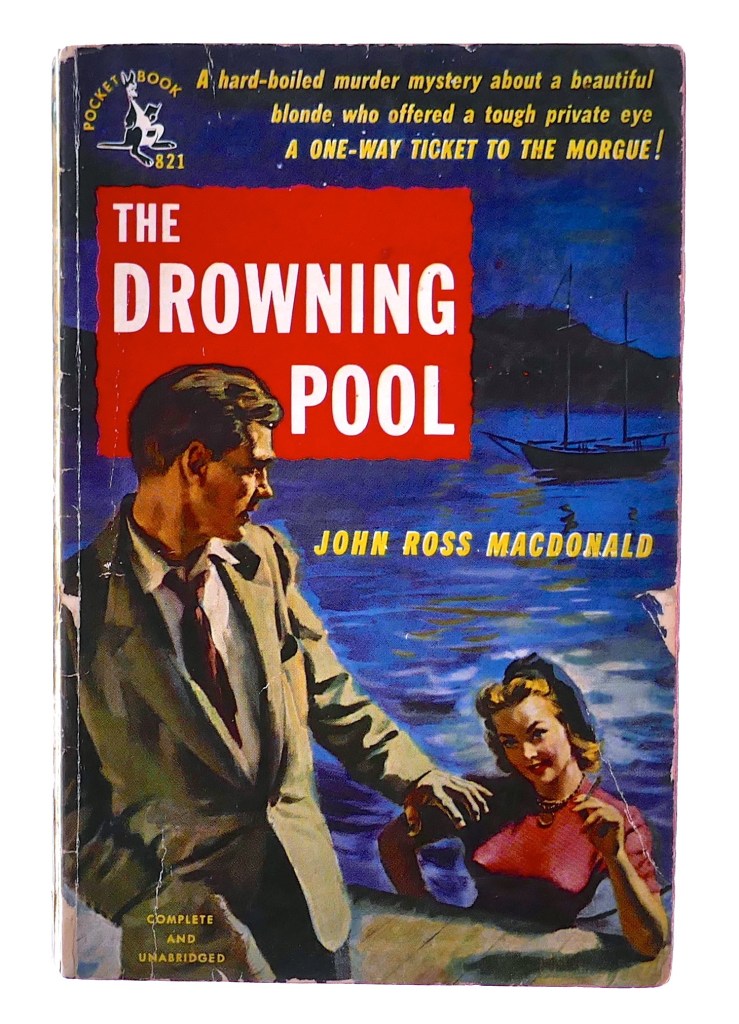
Ross Macdonald, “The Drowning Pool” (1950) – This is not a novel about the band responsible for that “let the bodies hit the floor” song, but a quick wiki browse indicates that they took the name for their band from the movie adaptation of this book starring Paul Newman! Very recent postwar disgust is the prevailing theme of this one. Southern California might be booming economically, but society has yet to gel into any real shape, crooks and grifters can be found on every level, and sunshine and cheap glitz can’t cover the rot. Private eye Lew Archer is hired by a sexy dame to investigate some poison pen letters she’s been getting. The dame lives in what should be an idyllic valley, but of course, even idylls are a cheap come-on in the land of dreams.

Crime novels can be hard without giving too much away! The dame won’t tell Lew much. Honestly, I might not have taken the case were I him, but he’s curious and horny. There’s conflict between the old idyllic farming town and the new oil money in the valley, some unfortunate (and kind of Freud-by-numbers, including the homophobia you get in even left-leaning crime fiction of this period) family psychodynamics, and drifters with sinister agendas and mouths full of lies. A big bad of sorts emerges about halfway through, and some murders. At one point Lew has to escape people torturing him with hydrotherapy (has anyone had a good experience with that? The only references to it I’ve seen are here and in “Thief,” and it wasn’t happy in the latter either) by doing one of my all-time favorite types of escape, filling a room with high windows up with water and floating to the windows (it doesn’t work that well but still). Would the physics of that work at all? Anyway, this is a tightly written and enjoyable little book. ****’

Review – Macdonald, “The Drowning Pool”

Review – Muir, “Gideon the Ninth”

Tamsyn Muir, “Gideon the Ninth” (2019) (read aloud by Moira Quirk) – People love this book! It’s about Gideon Nave, who lives on a planet that sucks in a solar system that sucks and both are ruled by necromancers. Every planet has its own kind – martial necromancers, sexy necromancers, brainy necromancers, etc., you know how contemporary scifi likes to sort things into houses and so on based on one or two traits – and the Ninth, Gideon’s, is run by the gothiest necromancers. You might think all necromancers are pretty goth, what with the reanimating skeletons and all, but the Ninth is extra goth, all about decay, darkness, stuff being old, repentance, etc.

Gideon doesn’t fit in that well, because she’s big, bluff, lively, and rebellious. She eventually makes a path for herself as a swordswoman. She’s also the only one of two people her age on her planet due to a ghastly accident near her birth. The other is Harrow. Harrow is the heir to the noble house who runs the place. She’s petite, delicate, and a manipulator, and as into necromantic magic as Gideon is into swords. They don’t get along. But they’re forced to go to the First planet, where the necromantic empire got its start, to get into a competition with all the other houses/planets. One (1) necromancer and one (1) swordsman from each planet are to compete to become, like, extra-special vaguely-immortal necromancers, and fight by the side of the necromancer emperor himself!

Here’s the deal: this is a plot and a setup perfectly balanced to produce a neutral starting opinion in me, basically because elements that interest me (science fantasy! Swords!) get canceled out by elements that don’t (goth stuff! Oft-repeated plot elements and tropes from contemporary series-based speculative fiction!). Similarly, the ecstatic reception this book has received from many friends- on the one hand, they’re smart people whose opinions I respect, on the other, I know my own particular tastes differ. So… I come with a very open mind, and in the end, it was the quality of the writing, from structure down to syntax, that decided it. 

Aaaaand… that quality, while I could tell it would be just the thing to keep others more favorably inclined on the hook, was not the kind that I like. First, the book is surprisingly slow-moving for a popular bestseller about people with swords and magic fighting each other. After a pretty bravura opening, matters slow to a crawl when Gideon and Harrow get to the First planet. It’s a pretty funny twist, that they bring all these necromancy freaks and swordfighters to a big palace for a contest, but the Emperor’s flunkies don’t actually know what the contest is! And so, you get a long drawn out middle of everyone trying to figure shit out. You get leisurely introduced to all the weirdos from the assorted planet/houses, who of course have millennia of lore and rivalries and stereotypes about each other, not the worst worldbuilding but also the sort of stuff that will be familiar to anyone who has read contemporary SFF, living as it does under the shadow of Hogwarts. Not only do these weirdos need to banter, occasionally duel, get romantically obsessed with each other, etc., but they need to not just solve a mystery, but solve the mystery of what the mystery is! Too slow, and the stakes too abstract, for me. 

Then there’s the dialogue and humor. Here, I worry most about stepping on the toes of friends. I didn’t like it. Despite existing in a millennia-old undead empire presumably light-years from Earth, Gideon still thinks in memes and internet jokes. Honestly, the anachronism involved doesn’t bother me. What bothers me is that Muir follows this into having most characters talk in a sort of early-2000s internet forum argot, a wordy idiom of exaggeration and affected cynicism. She wrings a lot of mileage from the contrast of aristocratic high diction and puns and/or a Boing Boing reader’s idea of “naughtiness.” Harrow and Gideon, for instance, repeatedly threaten each other in… not exactly “flowery” language, a “fuckwaffle” isn’t a flower, but you know, like, very wordy threats with a lot of silly words thrown in. Sometimes more than one, in a string! Think the way your freshman year dorm-mates who misquoted Monty Python would talk if they had all the time they wanted to come up with the most needlessly elaborate lines possible and deliver them with as much mustard as they could muster. It doesn’t help I listened to this as an audiobook!

Basically, this is a book for goths, or anyway, goths in the way goth-dom has taken shape in the last… well, here, I don’t know enough to say. I understand that the goth subculture was always big on irony and camp. This scans from my memories of youth. I do also vaguely get the idea that they – not just goths, either, but other youth subcultures at the time too, like metalheads, punks, to a certain extent nerds, hippies, and so on – used to take the whole subcultural thing more seriously, thought their customs, outfits, music, tropes etc. really were superior and would fight, or at least argue, the point. I’m not sure if that changed, or if I was just projecting- back when it mattered (i.e. adolescence), I was pretty violently opposed to subculture as a concept. It’s hard to project myself back there. Why did I care? 

Anyway! The points where this book rubbed against me seem to be points that either wouldn’t bother or would positively delight the contemporary, un-self-serious goth with a job and responsibilities. Moreover, the joy they could take from how dark, decadent, and skeleton-y (animated skeletons appear to do all the work, and being me, I wanted to know more about them, and think they’d probably have a better book in them, all amusing skeleton hi-jinks) would probably get them over rough patches, like the slow pace. If Muir has one strength, it’s atmospherics: even (especially?) with all the quipping, stuff does feel quite gothic. I’m glad they have something they can enjoy! This isn’t bad but it is definitively “not for me.” ***

Review – Muir, “Gideon the Ninth”

Review – Schuyler, “Black No More”

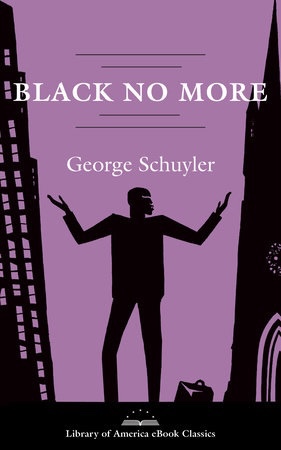
George Schuyler, “Black No More: Being An Account of the Strange and Wonderful Workings of Science in the Land of the Free, A.D. 1933-1940” (1931) – I’ve probably harped on this before in this space, but I never agreed with the nice-internet-people nostrum that satire is only satire if it “punches up,” that is, only targets people above the socioeconomic scale, vis-a-vis the author (and I guess the reader, too?). I’m not a strict prescriptivist, I don’t think we need to stick with the classical definitions of things… but I think it is a bad redefinition, the kind that trades in thousands of years of thought on something for a momentary comfort, or an edge in online arguments. This attempted redefinition only has any currency because we’ve decided that being funny is somehow sacred, in the same way that courage was once considered and still is by some, that it’s the sort of virtue you can’t apply to an enemy and see them as a real “bad guy.”Anyone is perfectly saying that they –don’t like– satire that “punches down,” against the downtrodden. I usually don’t, especially not with satire of contemporary societies! But I think it really doesn’t cut ice to say that somehow satire isn’t satire because it does something you don’t like. That’s part of the conceit of the genre, from Juvenal’s day on down – it is a mirror, it takes in society as a whole. Don’t like it? Blame light, blame glass, blame yourself for looking and being the way you are.

Well… “Black No More” is a satire in the old mold, all right. The satirical conceit is like any other conceit: it’s not literally true, like any artist the satirist makes their choices of what to depict and how. But if the satirist is smart, they can make it seem as natural as the reflection you see (and, generally, loathe, one way or another) in glass or water. George Schuyler was a Harlem Renaissance guy who grew to hate the Harlem Renaissance. Child of a black military family who knew poverty and prison before becoming a writer, Schuyler gadded about the literary scene for some time, doing journalism, travel writing, criticism, and occasional fiction. This is technically scifi- it’s about a scientist (a black scientist, if anyone’s keeping track) who invents a process for rendering black people into white people, flawlessly and cheaply. Schuyler handwaves a lot of the science (which goes along with his ideas on race more generally- more anon) away, and soon enough, new white people are taking the US by storm. 

On the one hand, Schuyler was a “race isn’t real” guy. He insists that, for instance, that differences in facial structure and accent wouldn’t give the game away for black people turned white (though I also think he has the process involve some kind of facial/bodily reconstruction? He’s vague). On the other, he has the US come close to collapse once it becomes clear that its black population is going to shrink almost to nothing. Without race, the whole culture starts to lose its grip, and massive upheavals occur in politics and society. 

We see this mostly through the person of Max Disher, a charismatic and morally flexible young black insurance agent in Harlem at the beginning of the story. When he hears of the black-no-more process, he immediately takes it, because he wants nicer things and also is obsessed with a white lady who rejected him a gin joint. Max immediately becomes a success in the white world by joining a KKK-like organization and leading it against the threat of crypto-black people. Among other things, the process is not genetic, and the offspring of ex-black people come out as black as they would otherwise (the doctor who invented the process promises that he will have special infant clinics that can “fix” that). As luck would have it, the racist group’s leader’s daughter is the mean white lady of his dreams, and he gets married to her as he grows the organization. 

As you can probably tell, the plot isn’t the point here, really. The point is Schuyler’s look, as acidic as it is panoramic, of American society and its hypocrisy around race. Schuyler depicts white racists, like Max’s new father-in-law, as stupid. But Schuyler depicts black “race leaders,” including very obvious parodies of W.E.B. Du Bois, Booker T. Washington, and Schuyler’s employer at the time, NAACP head Walter White, as utter frauds, pompous boobs living off the credulous. He shows them as willing to sell every notional value out immediately for white approval or for simple living expenses, mostly via trying to insist that black people stay black rather than de-racinating themselves. Of course, this is also what Disher’s new racist friends want. As tensions rise and white society falls on itself, trying to find a new scapegoat and mostly landing on “ex-blacks,” the movement Disher helped start finds itself in a position to take national power… only to find that racial purity, backed by anything like a “rigorous” understanding of race, doesn’t really work, either. In the end, everyone gets what’s coming to them, mostly violently. 

So Schuyler doesn’t think race matters… but it’s also at the center of the society he depicts, the identity and needs of every character, and the whole story he tells. This doesn’t make him a hypocrite, necessarily. It sort of does make him a satirist of the old school- where would Juvenal be if he lived in the supposedly clean Rome of the early Republic, what would Thackeray have to do with himself in a society less grotesquely unfair than early Victorian Britain? This does get into one of the weaknesses of satire as a genre: that its most common topic is hypocrisy, the distance between professed value and observed deeds. The more inflated the sense of virtue and the more obviously dirty the deeds beneath them, the more entertaining pricking hypocrisy with pins can be. 

Pretty much any period, given how people are, can be a good target for hypocrisy-baiting… but I’m not sure that applies to all times and places equally. Sometimes, the pretense of virtue wears thin, and it’s pretty obvious that the emperor has no clothes. Pointing it out isn’t that funny. By the time Schuyler was writing, the pretenses of white American society were pretty thin indeed. Scientific racism no longer held the stranglehold on anthropological thought it once did (though it was still a major intellectual force), the general skepticism of the Roaring 20s and the reaction to the Depression that came after was in the air… so Schuyler really has three main targets. There’s the ignorant “booboisie” (H.L. Mencken was a great publisher and booster of Schuyler, and they shared a lot of misanthropic attitudes- some called Schuyler “The Black Mencken”), mostly of the South, insisting that segregation was necessary for civilization. That’s pretty easy to lampoon. Then there’s black “race leaders.” I wouldn’t say Schuyler was “punching down” here, even if I thought such was the instant DQ some of the internet thinks it is. People like Du Bois probably had more power than a scribbler like Schuyler. I would say that, whatever their flaws, the black leadership of this class at the time was actually pretty smart, and the idea they were useless, feckless boobs really doesn’t wash- Schuyler couldn’t see the future, but he was awfully sure about the present, and the future has a tendency to knock people like that down a peg. 

Above all, though, Schuyler’s target was people in general. People are stupid, greedy, concuspient, and inevitably bring about their own doom in what can only be called parodies of tragedy. We’re back at the familiar territory, why this book belongs in “Readings on the Right,” even though Schuyler had yet to break with the NAACP and go all the way to the arms of the as-yet-unfounded National Review, as he would later do, by this point. Even though race is bullshit, it’s definitional and will collapse society if it’s taken away because people are bullshit. Race is about what we deserve- it just sucks that George Schuyler, who sucks less, has to be inconvenienced by it, and listen to other people talk about it (some of his more well-known critical essays were about how it’s wrong to classify writers by race). We know where this goes. Trying to improve things is pointless, usually perverse, almost always involves improving things for (and worse, forcing interactions with) lame, stupid people, so, most misanthropes wind up opposed, to one degree of violence or another, to attempts at liberation or amelioration. You’d figure more people would think that, if people are as lousy as all that, that you should make power arrangements as equitable as possible so no one can lord it over you (roughly my position, on bad days), but it seldom seems to work out like that, with your freestanding public cynics. 

This is one of the reasons why satire can be real iffy as a genre. As Clint Eastwood once put it, “we all got it coming, kid” – we are all, in some sense, hypocrites worthy of ridicule, or in some way or another shown up by the world around us. This applies to most of our ideas and social institutions as well. But that doesn’t mean just any “snarking” (to use a hideous newish word) does the job, or justifies a book. Among other things, it helps to either have interesting imagery (Juvenal, Ishmael Reed- the latter a big fan of Schuyler’s) or a plot (Confederacy of Dunces, Arrested Development) if you’re going to do longform satire, and Schuyler hasn’t really got either going for him. It’s funny in places and he clearly has some writing chops, but it also feels more like a phoned-in rant turned into a novel than anything else. ***

Review – Schuyler, “Black No More”

Review – Piercy, “Woman on the Edge of Time”

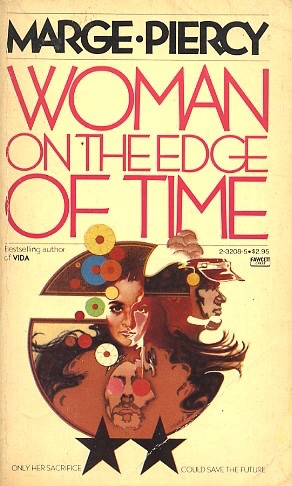
Marge Piercy, “Woman on the Edge of Time” (1976) – Damn… this fucking ruled. A classic of seventies feminist science fiction, “Woman on the Edge of Time” advances multiple visions of the future with daring only rivaled by its vision of its present, the hungover, pessimistic seventies. Consuela Ramos, a middle-aged Chicana woman, starts seeing visions around the second time she is committed by the state to an insane asylum. These visions, however much Connie is annoyed by them at first, are unusually consistent: a person named Luciente, unfailingly polite and positive, telling her about a future, the year 2137. Eventually, Luciente is able to pull Connie’s consciousness into something that is either that future, or a very convincing vision thereof.

Piercy, a major feminist poet of her day as well as a novelist, is unsubtle without being at all cliche- people often conflate the two, but they don’t deserve to be put together. The contrast between Luciente’s future in the village of Mattapoisett (on Buzzard’s Bay in Massachusetts, not far from Piercy makes her home) and Connie’s present in the asylum might seem like obvious contrasts, but Piercy makes it about more than “good versus bad” or even “free versus oppressive.” It really is life versus death, or human versus machine. The asylum claims to heal, but really just warehouses the poor, sick, and obstreperous until they’re finally utterly disposable, either dead or drooling, passive zombies. Mattapoisett is the product of a successful revolution. The inhabited parts of the world, after decades of ecological catastrophe, now live in confederations of small communities that practice socialist economics, small-scale democratic governance, and generally a lot of “person-centered” culture. 

Here’s the deal: the world Luciente presents to Connie is a good deal more hippie-dippy than I’d both think realistic, or even prefer, for a near-utopia. I don’t fetishize smallness, I certainly don’t fetishize nature, and it sounds like these people go to a lot — A LOT — of meetings, for everything from figuring out land use to interpersonal conflict. I’m more of a “fully automated luxury gay space communism” guy. Connie, even once she gets over the disbelief in what she’s seeing, is a little skeptical, too. Everyone has to work on farms? No flying cars? What kind of future is this?? 

Well, two things. First, Piercy is smart enough to not make it too hippie-dippy. It’s not a full utopia. There is conflict, and the people aren’t always great at dealing with it. Yes, people work on farms- but with profit and rent removed, everyone in general has more leisure time, and most people do other stuff, too, including advanced science, art, etc. Specialization is, in general, less of a thing in this future (again, not totally to my taste, but it’s not as dystopian as some back to the land fantasies). And there is technology- people have what amount to Apple watches, there’s advanced biotech, etc., and, eventually, you see something like flying scooters. That leads to the second thing- Piercy’s sheer power of description, and the wholeness of her vision, make you believe it, and if not necessarily want that future — at least not as much as I’d want Banks’ Culture future — you can see it as a thing of beauty, both reflective of its own time (and how!) and with meaning for ours, and for times to come. You come to know the inhabitants of Mattapoisett, see how they live, work, love, raise children, and die, and there’s a weight to it, a realness even in spite of the utopianism, that you don’t get with just any hippie bullshit. Among other things, I think it’s pretty important a woman wrote this- there’s sexual liberation aplenty, but the real kind, not the stylized sexual assault that countercultural men were often after. 

I said that Piercy realizes her time as fully as she does Mattapoisett in 2137. She does- its grit, its grime, its exhaustion, its hopelessness, the many, interlocking ways it can beat people down, the way people learn to accept, even love, their oppressions (and oppressors). Connie isn’t, in any meaningful sense, crazy. She has had just enough hope — hope for education, hope for love, hope for societal progress — that when those hopes were dashed, by family, money, and bad luck, she had few places to turn. If she were more beaten down, she wouldn’t be where she is (she needs to pretend to be more beaten down for plot reasons later in the book). She’s not a plaster saint. She’s cantankerous, and she did something hard to forgive: after the love of her life died, she got drunk and depressed and hurt her little daughter. She paid endlessly for that, but still feels the guilt. Part of her attachment to the ghost of Luciente is seeing her daughter in this future-person. 

Like I said- not subtle, but never cliche, and always powerful. Fuck subtle. The man comes for Connie’s head. A group of hotshot doctors (another point of divergence between me and the viewpoint of this book is I’m slightly more pro-psychiatry- but hell, it was the seventies) are cutting open the heads of “violent” patients like Connie and putting hormonal control switches in there. As her own day on the table comes closer, Luciente’s future starts to fade out. It becomes harder and harder for Connie to see. A few times she slips into another future, a cyberpunk avant-la-lettre (William Gibson honors Marge Piercy as a godmother of his genre) hellscape of destroyed nature, inscribed gender roles, and corporate control. If Mattapoisett is going to survive, not only will its inhabitants and the rest of the post-revolutionary future have to fight for it- so will Connie, in her own time. Maybe that’s what seals why I can admire this future, so far in many ways from my own aesthetic- the people earned it through organization, solidarity, courage, the will to fight and risk all… and it is never a certain accomplishment. 

This is a singularly beautiful, intriguing, and readable book. But… if I’m going to be as honest as the future Piercy wanted for us, as honest as Piercy is herself here… I did the thing I always wind up doing when I read a second wave feminist author, and upon googling, found Piercy signed off on some bullshit anti-trans public letter. All of the commentary I saw on this was profoundly disappointed. You might see it coming from JK Rowling or Mary Daly or whoever. But among other things… all the Mattapoisett people use gender neutral pronouns! All children have three mothers, some of whom can be men, and are grown in vats before being implanted in one of them! Connie witnesses a man breastfeed! At first, she’s repulsed by the whole setup, she has fairly essentialist ideas, but she rejects them by the end, sees the beauty of it! What gives, Marge?! Anyway, I’m not about to “cancel” Marge Piercy or decide I don’t like — love is the right word — this book. It’s not about “separating art from artist.” It’s about appreciating both as what they are, and aren’t. Both are profoundly human, here, for better and for worse. *****

Review – Piercy, “Woman on the Edge of Time”

Review – Bacharach, “The Bend of the World”

Jacob Bacharach, “The Bend of the World” (2014) (read aloud by the author) – This was a pretty entertaining, agreeable, somewhat forgettable humor novel. Jacob Bacharach is a weird twitter habitue and entertaining guest on lefty podcasts, or was back when I listened to those more. He’s one of those small/mid-size city dudes who is all in on his small/mid-size city, in his case, Pittsburg. The main character – I’m behind on reviews and forget his name, it doesn’t really matter – is a young corporate drone from a rich family who’s wasting his life on noncommittal relationships, jobs, and priorities in general.

He then has a weird year! He meets a disturbingly fascinating couple, a bold young man and a tragic alcoholic sexy artist lady, at a party, the same night he sees some UFOs! The main character has been on the fringe of conspiracy stuff for most of life due to his best friend, Johnny (yes, I did sometimes imagine him as Johnny from “The Room,” but the author reads this in his own, non-Wiseauesque voice so it didn’t happen too often). Johnny is a gay, drug-addicted conspiracy theorist, which, if I remember Bacharach’s podcast appearances, is not too dissimilar to Bacharach himself as a teenager/young man. Johnny believes Pittsburg is the center of a massive conspiracy involving Nazis, time-tunnels, summoning alternate dimensons, and bigfoots. 

The main character doesn’t really believe in all this stuff and alternately humors Johnny and tries to save Johnny from himself, his drug problems and tendency to annoy powerful Pittsburgers. Meanwhile, the dude from the compelling couple gets a job at the main character’s pointless company and offers to make the main character a soulless corporate shark like himself. Is this company, and the weird guy in particular, part of a big conspiracy? Maybe THE big conspiracy? It’s hard to say. The main character interacts with the art world, his family, his hippy artsy girlfriend and more serious tragic drunk artist second love interest. 

Bacharach evokes an agreeable atmosphere of confusion as to what, exactly, the big Nazi/time-traveller/Pittsburg/bigfoot conspiracy is, intermingling it with a lot of shit both weird and mundane, but this does have the effect (especially when combined with my review backlog) of making me forget whether the conspiracy WAS real or not, and what exactly it was. At some point, the main character and the drunk sexy artist have to strike out into Appalachian Pennsylvania to save Johnny from the main theorist of the big conspiracy, who turns out to have weird designs of his own. There’s showdowns at a big weird drug/orgone party in the woods, complete with possibly-drug-induced visions of beneficient Bigfoots. In the end, some people die, and the main character decides to ditch corporate whatever and become… a landlord?! Well… this might have been before Bacharach made his turn all the way left, he was right-libertarian leaning as a young drug-addled semi-ironic conspiracy theorist… but that’s a minor point. I was worried it was going to take the path of “guy meets a weird alpha man’s man who leads him to uncomfortable discoveries,” ala “Fight Club,” “The Red Pill,” and I feel a fair number of zeitgeisty works from the last thirty years or so. That doesn’t happen! Stuff does happen, but usually without much sense of stakes. That’s not the worst thing in the world. This was pretty fun, somewhat forgettable- some of the things that might have made it less forgettable might have made it less fun, if you get what I mean. ****

Review – Bacharach, “The Bend of the World”

Review – Alderman, “The Power”

Naomi Alderman, “The Power” (2016) – A kind friend and patron of the art of literary criticism sent me this book in the mail, saying he had mixed feelings about it and wanting to know my takes!

Let me start by talking about some other books altogether. For a while there, it looked like journalistic accounts of fictional genre disasters might become a big thing, or maybe it only seemed that way to me after Max Brooks’ “World War Z” was all over the place in 2006 or so (it is a profoundly 2006 kind of book). “World War Z” is deeply silly, so I didn’t appreciate how well Brooks did with it until I read a book in the same vein about an AI/robot uprising which was extraordinarily bad. Apparently Brooks also did a bad job writing about a war between people and Sasquatches? Writing! It’s not easy, folks!

No less a figure than Barack Obama (who was big-upped but not by name in “World War Z” – like I said, big time 2006 vibes) named Naomi Alderman’s “The Power” one of his favorite books of the year when it came out. It’s a somewhat more high-concept deal than “World War Z” or the robot book- women develop the power to basically shoot lightning from their hands. It starts with teenage girls, but they can pass it on to other women, and soon enough, pretty much all women can zap people right up. 

So… I get this would be a big deal, should it happen “in real life.” But like… people can already kill people, women very much included. Yes, it would be convenient to be able to kill people from a distance with something that is just in your body (though there’s all sorts of limits in terms of how much juice a given woman has, how well they can control it, etc). I mean, it would be weird if half of all people just had a gun on them at all times that they wouldn’t even have to conceal, or draw to use! It would be weirder still if this situation were in-born, and gendered. 

But I’m not convinced such a situation would collapse society, which it does in “The Power.” But I’m more convinced that it would collapse society – among other things, societies are maybe more delicate than we thought when I was a kid – than I am that it would result in millennia of matriarchy, and that said matriarchy would be, more or less, opposite-day patriarchy, like a world Quinn and the gang might wind up in on “Sliders.” The framing story is an interaction between a lady editor (named Naomi Alderman) and a dude writer (named an anagram of Naomi Alderman) about the dude trying to write a historical novel of the rise of global matriarchy! So, they reconstituted our society not just down to having publishing houses like ours, but also, as the book progresses, women wipe out refugee camps for fun, wipe out depictions of men ala the Taliban, etc etc. 

Look, two things: one, I don’t think future histories need to be credible or even believable to be good or fun. Two, I absolutely think women are capable of abusing power. But the way Alderman handles both the unspooling of this story and the story of women proving as beastly as men just seems kind of pro-forma, a going through of the motions. Like… wouldn’t they come up with more interesting ways of being fucked up and wrong? Different ones, anyway? Given that they’ve got superpowers and all, and the different socialization of women, that first few generations who get powers at least? Why just have them replicate what men do already? 

The characters and the writing aren’t awful but aren’t enough to restore the interest lost by whiffing on the execution of the premise. To probably contextualize too much, this was written around the time Black Mirror made its comeback, going from charming and subversive-seeming indie favorite to big-market, overly-lugubrious butt of “what if your mum was an app??” jokes. That’s what “The Power” feels like, to me. **’

Review – Alderman, “The Power”

Review – Wolfe, “The Fifth Head of Cerberus”

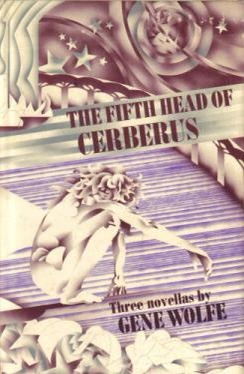
Gene Wolfe, “The Fifth Head of Cerberus” (1972) – I’m way, way behind on reviews. I finished this one a little while ago. By coincidence, I also listened to a podcast just now about how lousy overly-literal political metaphors in speculative fiction can be, and how good ones don’t belabor the point and get on with it. Well, this group of linked novellas, arguably the first major work of great scifi/fantasy “writer’s writer” Gene Wolfe, follows this post-dated advice. It’s less a metaphor for colonialism than a projection of a melange of colonial practices into humanity’s space-faring future. Those of you who have read Wolfe’s “Book of the New Sun” – which is an investment but well worth it – know that Wolfe makes intricate worlds with deep pasts, but does not dump them on the reader in inelegant chunks (like a certain book reviewer does in his bad attempts at fiction). His worlds unspool as his character discover them in the process of figuring out their own mysteries and living their lives.

I feel like I might be alone in this, but I enjoy the titular first story the best out of the three linked novellas. A man relates his boyhood on the colony world of Ste. Croix, one of a pair of inhabitable planets in a solar system settled by mostly-French colonists. At first grasp, the worlds of Ste. Croix and Ste. Anne resemble something like the Caribbean or Brazil, maybe with French-ruled Indochina mixed in. I don’t recall Wolfe specifically saying it was hot and humid on Ste. Croix but it feels that way anyway- a backwater, culturally static, strict hierarchies that let their hair down behind closed doors in various fucked up ways, a ruling class that prioritizes its control over the lower classes over its notional independence from outsiders. 

The narrator is a child of this ruling class… sort of. I don’t want to spoil it, but it turns out that the planters, merchants, and bordello-keepers (guess which one the narrator is raised by!) of Ste. Croix take the whole “reproduction of the ruling class” thing literally… so a lot of his tale is basically him figuring out his strange origins, without much in the way of reference to outside standards of normality (i.e., ours) to act as a reference point. It takes some doing and Wolfe does it well. Among other things, he was an early linker of the possibilities of bio-tech and the creepy ethos of colonialism, a solid connection… you gotta figure a successful CSA would put a lot more chips on gene-editing than, say, spaceships…

All of the stories relate to the “extinct” “aborigines” of Ste. Anne and Ste. Croix. Legends describe them as shapeshifters. There’s even a theory that they killed the original French colonists and then just assumed their shapes! Who ever heard of such a thing? We get some interesting looks at what later generations of pedants would call “indigeneity” and the way the “gaze” of anthropologists, etc. reduce and make major mistakes about situations that colonizers have an investment in misunderstanding. There’s no big denouement- we never know for sure if the aborigines are still out there, let alone that they rebel against their human overlords, etc etc, like a simpler book might insist on. Instead it insists on lingering on how we know what we think we know about others, and what others see in us, and without the posturing and moralizing such questions usually come freighted with in contemporary speculative fiction. It’s hard to write much about it without giving too much away, and a lot of the fun is in Wolfe’s sublime prose and pacing, anyway. So go read it, if this sounds at all good to you. *****

Review – Wolfe, “The Fifth Head of Cerberus”