Review- Chabon, “The Yiddish Policemen’s Union”

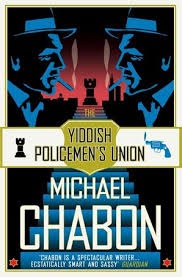
Michael Chabon, “The Yiddish Policemen’s Union” (2007) – Are we still doing the thing where we damn literary fiction and criticism and oppose them to the glories of genre fiction for populist reasons? Or have we caught up to the fact that the literary world is now largely in agreement with said indictment? Sure, there’ll always be highbrows to trot out and lampoon. You can say that contemporary literary figures are genre cherry-pickers, and that’s true enough- genre paeans from literary figures seldom reach past standard-bearer figures like Chandler, Dick, Tolkien, and Octavia Butler. You can say it’s all fake, professorial pseudo-populism, and there’s probably some truth to that, too… but if that’s the case, it’s faked its way into making the careers of Jonathan Lethem, Junot Diaz, Colson Whitehead, Margaret Atwood, and the topic of today’s discussion, Michael Chabon.

Chabon splashes into not just one but two genres in this one- hardboiled crime fiction, and alternate history science fiction (for which he won the Hugo). The premise is that instead of going to Palestine, Jews post-WWII fled for a special city-state the federal government allotted them in Sitka, Alaska. For assorted reasons, Sitka becomes linguistically and culturally Yiddish rather than choosing the Hebrew language and the sort of Zionist culture Israel developed. This allows Chabon to revel in Yiddish constructs and terminology as he constructs the hardboiled element of his story, the story of a murder in a cheap hotel room of someone who might or might not have been Messiah. Detective Meyer Landsman is on the case, sometimes followed by his half-Tlingit Indian partner Berko and harried by his supervisor and ex-wife Bina.

“The Yiddish Policemen’s Union” is science fiction, crime fiction, and literary fiction all at the same time, and mostly avoids tripping over its own multiplicity of feet. Beyond the alt-history set-up, it’s not too science-fictional, taking place in the present day, as Sitka’s sixty-year lease to the Jewish refugees is coming up and who knows what sort of new regime looms. As for crime fiction, Chabon takes in and out of various criminal milieux from recently-imported Russian gangsters to small-time chess hustlers (the Sitka settlers are really, really into chess) to assorted Hasidim families-cum-crime families. Ultimately, the latter, their late messiah, and a scheme to find a new chosen land (in rather a hackneyed location) take center stage. Landsman gets beat up, goes on wild goose-chases, doesn’t really meet any knock-out dames except his ex-wife, but otherwise hits the genre beats.

As for literary fiction… part of me is tempted to go Walter Benn Michaels on Chabon. Michaels is a literary critic who insists (even as it gets him in hot water) that much of contemporary literary fiction is “Thatcherite,” that is, denies the existence of society beyond individuals and families. He takes his thesis a large leap forward when he argues that ethnicity, as understood in America nowadays by the literature-reading (read bourgeois) classes, is essentially “family writ large,” as he calls it, so stories about ethnicity are also Thatcherite, neoliberal constructions. Taken to its extreme, this argument (unless Michaels has qualified it elsewhere) could easily be used to dismiss virtually all black American literature, to say nothing of the rest of the collateral damage it could pile up. Michaels is, in some respects, the class-reductionist we’ve al been warned (and warned, and warned) about. But I think his work is a useful corrective to our tendency to get nice and cozy with literary historical fiction, memoirs, and other genres that place the emphasis on either historical wrongs overcome or individuals overcoming individually.

That said, I won’t go Michaels on Chabon. Partially, it would be redundant- Michaels has already done so. But also because while “The Yiddish Policemen’s Union” ticks some of Michaels’s boxes about nostalgia and a sort of clannish individualism, it does seem to me to have something to say about the present: that homelands aren’t about a given special piece of territory and millenarian expectations aren’t about a special piece of time, and that those who see them that way are dangerous. For a while, I thought this would turn out to be a Zionist novel- what a disaster it is that Israel didn’t get founded, something terrible is going to happen to them as a consequence. This can be bolstered by the way Chabon presents Palestine in his alternate history as still a basket case, and it’s never resolved in the end what will happen to the Jews of Sitka at large. But I don’t think that’s the point in the end, whatever Chabon’s specific politics on Israel/Palestine happen to be- if it was, presumably, he would have been much more explicit and had different villains. As a literary figure, I think Chabon is both more and less than what he is made out to be. His points aren’t the most slashing, profound points in the world. But they usually manage to be something other than trite, and he has a talent for expositing them in a way that makes you want to read along. That’s good enough for me. ****

Review- Chabon, “The Yiddish Policemen’s Union”

Review- Rooney, “Normal People”

Sally Rooney, “Normal People” (2018) (narrated by Aoife McMahon) – The title of this work by someone who’s been proclaimed as the great millennial novelist is somewhat misleading- “Depressed Meritocrats” is more like it. But given that much of the action of the novel is motivated by the desire to appear “normal,” it makes sense. It also makes everyone involved miserable.

They also say Sally Rooney is a Marxist, and her works reflect a keen interest in class, especially in her home country of neoliberalism-ravaged Ireland. I’ve even heard reviewers complain that she’s not social realist enough for her declared politics! I didn’t see that to be the case, I think she’s doing her own thing.

In many respects this is a simple story- boy gets girl, boy loses girl, boy gets girl back. The boy is Connell, a working-class but popular kid at his high school in rural/suburban Ireland; the girl is Marianne, whose house Connell’s mother cleans. They get together in high school but are plagued by an inability to express emotion, an incapacity made up of the quadruple whammy of neoliberal ennui, traditional working Irish male inexpressiveness, women’s low expectations in the patriarchy, and the fact that they’re teenagers. Connall doesn’t want his friends to know he’s banging Marianne, who’s an outcast for no clear reason beyond being a smart, acerbic girl.

This leads to heartbreak and a role reversal when the two get to Trinity (both are depicted as very smart). Marianne becomes a social favorite of a rich set (their families are repeatedly implicated in Ireland’s financial scandals and crashes), where Connall, a big quiet rural lad, has trouble fitting in. They flit fecklessly around various social circles and in and out of each other’s beds. Through it all, they’re aware of how little waits for them on the other side of college, though I will say, one of them being rich and both of them being successful enough to get into Trinity makes me fear less for their future than I might.

Both suffer from various emotional health issues- depression for both but especially Connell, and masochism and attachment to bad men on Marianne’s part. Both of these are depicted as exacerbated by the social structure they find themselves in, but with a reasonably light touch. Like many millennials, Rooney is plainspoken but avoids ideological didacticism. Marianne’s masochism is depicted as stemming from childhood abuse- is this kind of thing considered “problematic” or “kink-shaming” now? Either way, she has the predicament of wanting to be both understood and loved and treated poorly at the same time. Connall, bring a fairly “normal” guy, has a hard time with this. They wind up together in the end, but tenuously so.

Is this the great millennial novel? Hell if I know. Time will tell, I suppose. It’s pretty good, at least in audiobook, and well-read by actress Aoife McMahon. It feels emotionally “real” throughout, a lot more than I can say of similar middle-class-young-people novels ala Franzen and Eugenides. Something tells me, though, that we have something more, something bigger, to offer the world than tales of flat affect. ****’

Review- Rooney, “Normal People”

Review- Azuela, “The Underdogs”

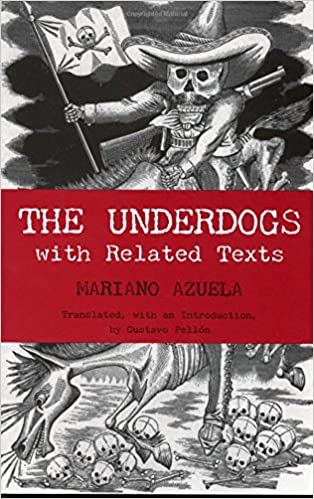
Mariano Azuela, “The Underdogs” (1915) (translated from the Spanish by Frederick Fornoff) – We get a worm’s eye view of the Mexican Revolution in this novel, which as far as I can tell is considered the great novel of that war. Indigenous Mexican peasant Demetrio takes to the hills with some friends after federales burn his house. Azuela doesn’t explain the whys and wherefores- that’s just what the war causes men to do. The politics of the war impede on its logic only from high above. Demetrio and his friends know they hate the federales, the rich, and the reactionaries, and the three tend to meld together. They win some fights and soon enough become a sort of military unit, promoting Demetrio to their leader with self-declared ranks and joining up with other revolutionaries.

They’re all fighting the murderous Victoriano Huerta government, but really the war, Azuela takes pains to note, has its own logic. Demetrio and company “live off the land-” that is, by looting, rich people where they can, anyone else in a pinch. Drunkenness, concubinage, random violence and general disorder become the order of the day, in a way reminiscent of such wars from the Thirty Years War onward. This is contrasted to the high-sounding rhetoric of Luis, a city-slicker “curro” who joins Demetrio’s unit, from whom the sort of patriotic revolutionary speeches contrast to his behavior tolerating and reluctantly participating in the abuses of the revolutionary forces.

Talent will take you far in such a chaotic situation, and Demetrio winds up a general in Pancho Villa’s army. But those who know the conflict or just know about romantic rebels like Villa realize he’s doomed. After taking part in the overthrow of Huerta, Villa loses the great battle of Celaya to his erstwhile allies, which Demetrio only finds out about from some refugees he might otherwise rob. Demetrio’s men go down fighting against a better organized and equipped force. The end, no moral! My edition is a critical edition with a bunch of essays, one of which compares “The Underdogs” to epic literature, and I think that’s right- Demetrio has the gigantism and ineptitude of epic heroes, and the war is largely it’s own point, as they tend to be in epics. It was interesting to read such a modern epic about a war largely neglected in the States. ****’

Review- Azuela, “The Underdogs”

Review- Dickens, “Bleak House”

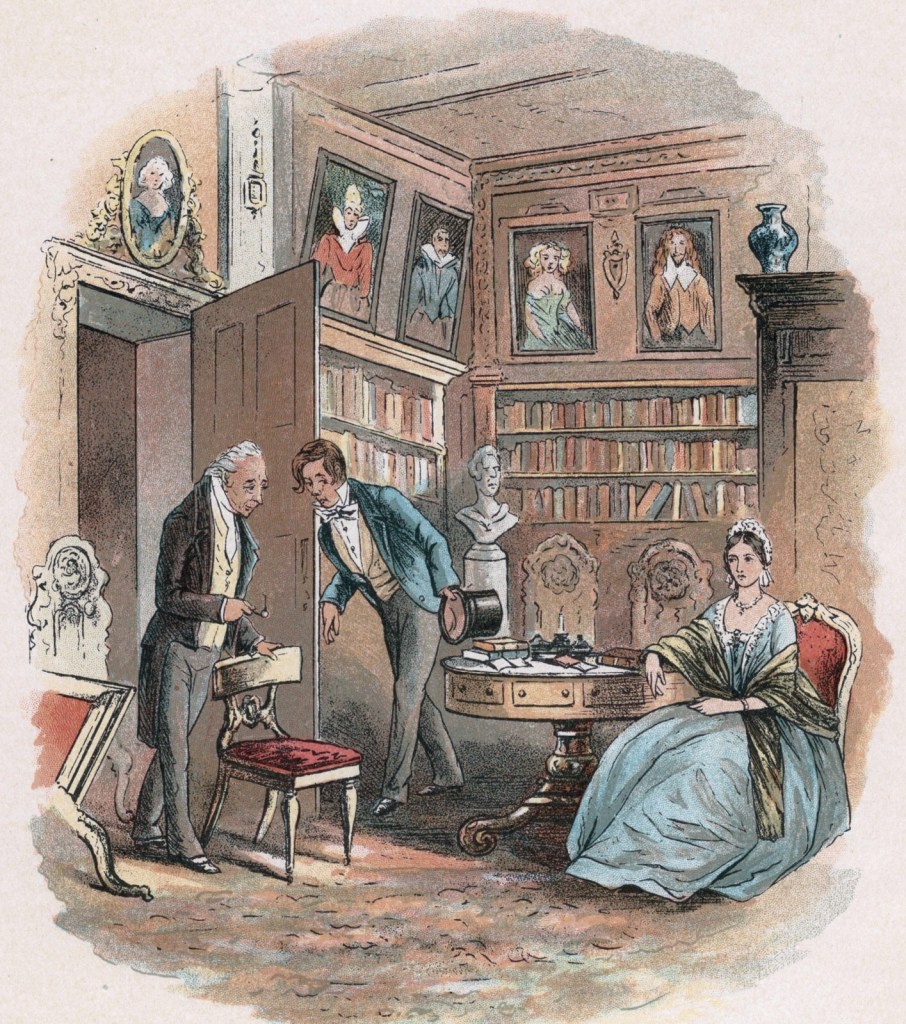
Charles Dickens, “Bleak House” (1853) – I think my issue with Dickens is that I go in expecting Anthony Trollope but sentimental. I failed to recognize that Dickens is a lot more stylistically complex. This isn’t always a good thing, and with my acknowledgment that there’s more going on in Dickens on a literary level, I prefer Trollope’s clarity and sophistication of social observation.

All that said, “Bleak House” was a pretty good read, with the usual Victorian literary caveats of it being extremely long, filigreed, and full of subplots. Like a soap opera, it’s hard to say what the main plot is, though there is a main character in the part of ingenue Emma Sunmerfield. She acts so little for herself that it’s hard to say her plot is THE plot, but she does sort of tie it all together. “It all” includes an interminable, generations-consuming lawsuit, the mysteries of various births (including Emma’s own), a murder or two, some guy spontaneously combusting, and, of course, marriages.

I’m not about to recite the whole plot of this eight-hundo pager. Dickens isn’t shy about metaphor- the London fog swirling around the courts district, the contrast between the childlike selfish aristocrat Skimpole and the street child Jo, and of course the nasty do-gooders, all compassion for far-off problems but living in homes of squalor both physically and emotionally. All told, it’s pretty good Dickens, as far as Dickens goes. I should probably go back and give “A Tale of Two Cities” another shot. ****

Review- Dickens, “Bleak House”

Review- Adichie, “Americanah”

Chimamanda Ngozi Adichie, “Americanah” (2013) – Beyonce’s favorite feminist wrote this novel roughly around the time Beyonce made her famous, or at least famous for a writer. Chimamanda Ngozi Adichie was reasonably prominent before then, a MacArthur genius fellow and all that, but it was the world’s biggest pop star taking a bunch of her words out of context and putting them in a music video that made her the figure she is today, about which position I understand (from her wikipedia article) Adichie herself is ambivalent. Understandable!

Beyonce-meme-ification or no, “Americanah” stands on its own merits, but is definitely a book by a prominent TED talker. The story of one Ifemelu, a Nigerian middle class girl who moves to the States for school, “Americanah” is part immigrant story, part love story, and part vehicle for the author’s observations and opinions about race, gender, the differences between America and Africa, etc. One of Adichie’s TED talks is about the importance of representation of varying viewpoints in media- to the extent anyone really founds any of the discourse of twitter and tumblr, she played a role in founding representationalism discourse as it exists today. One way this plays out interestingly is that beyond writing as a black African woman, Adiche writes as a specifically middle-class Nigerian- no starvation or war crimes for her, and she comments wryly on the white Americans she meets who expect such. Ifemelu’s briefly poorer in America than she is in Nigeria, but the book doesn’t dwell on that for more than a chapter or so. She winds up a young urban professional with a successful blog laying the cards on the table about race in America from a non-American black perspective.

The blog is interesting in that its observations are picayune even for a 2013 woke blog. Adichie’s observations of Ifemelu’s environment are inevitably more interesting and better-written than anything the character produces for the blog. Is this accidental, or is Adichie trying to say something about the blogging/social media milieu of the time? In general I’d say Adichie is a better novelist than an essayist, though I get the feeling as an essayist (based on Ifemelu’s blog and Adichie’s TED talks) she is pitching at a much more basic audience. She even depicts Ifemelu as dumbing down her material, especially her paid talks to workshops, for mostly white audiences. It’s interesting to consider if Adichie is doing the same thing.

As far as the novel goes, it’s not half bad. The characters are pretty well fleshed out. Incident in the novel is uneven, given how much of it is the opportunity to do observational bits, and at least one incident that should be harrowing (a teenager’s attempted suicide) kind of comes out of and goes nowhere. She has a good eye for the details of American life that blips sometimes but is generally reliable. There’s a central romance between Ifemelu and her high school boyfriend Obinze that’s made easier to believe in by how many obstructions it finds, and how ambivalent one feels about its final consummation. All in all, a decent read. ***’

Review- Adichie, “Americanah”

Review- Yourcenar, “The Abyss”

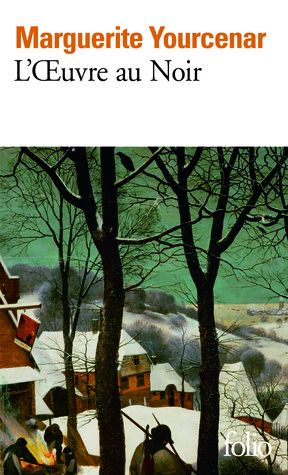
Marguerite Yourcenar, “The Abyss” (1968) (translated from the French by Grace Frick) – I’m not sure what to say about this book. I liked it. It’s about a doctor, alchemist, and philosopher named Zeno, living in 16th century Europe, his travels and his stayings-put. It’s not quite a picaresque. Yourcenar, notable among other things for being the first woman appointed to the Academie Francaise, tells us more of Zeno’s travels — plying his trades among soldiers, Swedes, and the Grand Turk — than shows us.

What do we get instead? First, we get some of the circumstances around Zeno’s (illegitimate) birth and family background. This includes his mother being killed during the suppression of the Anabaptist takeover of Munster, an event we see in some detail as an example of ideological madness. There’s philosophical conversation, like those between Zeno and his mercenary cousin Henry Justus. Zeno loves men and sometimes has sex with women, and faces the horrors of plague. He invents machines when younger and writes philosophical treatises when older, both of which gets him in trouble from which he barely escapes.

In the last part of the book, Zeno returns home to Bruges and a monastery hospital, only to be caught up in the many roiling conflicts in the region, about which he cares nothing. He just wants to focus on medicine. But the rebellion against Spanish authority in the Low Countries comes to affect his life and put him in danger, as does the lingering threat of heresy. Partly influenced by Protestantism, partly from an implied underground peasant catharism, and mostly impelled by youthful horniness and boredom, some of the younger monks had been doing some light heresy-horseplay and meeting women on the sly. Zeno finds out and doesn’t immediately tell on them, which of course seals his own fate once it’s found out. The Inquisition doesn’t have a sense of humor about these things.

I probably haven’t made the novel sound that compelling. But it was a great read in a hard-to-describe way. “Immersive” is one word for it. I felt like I was looking at an old painting of some complex subject, a landscape or city scene, rich with detail that revealed itself more the more you looked at it. For all the war, persecution, and death, it’s ultimately a quiet book, an examination of a life lived for knowledge in turbulent times. I don’t know. It’s good! ****’

Review- Yourcenar, “The Abyss”

Review- Vargas Llosa, “The Feast of the Goat”

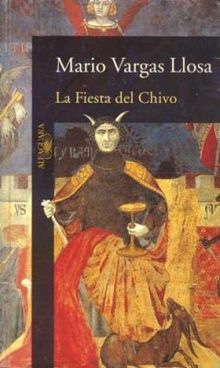
Mario Vargas Llosa, “The Feast of the Goat” (2000) (translated from the Spanish by Edith Grossman) – “The Feast of the Goat” apparently belongs to a Latin American subgenre of “dictatorship novels,” which makes sense. More than any of its particular viewpoint characters, the main character of the book is the dictatorship of Rafael Leonidas Trujillo Molina over the Dominican Republic from the thirties to the sixties. Trujillo and his regime were like a parody of the caudillo figure and caudillismo. He renamed one of the oldest Spanish cities in the Americas, Santo Domingo, Ciudad Trujillo after himself; he instituted a cult of his family, even as his brothers and sons proved to be worthless playboys and thugs; he took part personally in the destruction of dissidents and the humiliation of members of his inner circle, most notoriously by seducing/raping the wives and daughters of both associates and opponents alike. There’s a waft of macho oversexedness around the whole thing, diplomats chosen at least in part due to their international playboy credentials, etc., though it’s worth noting the two literary sources I have on the Trujillato are Vargas Llosa and Junot Diaz- both somewhat hierophantical men. It’d be interesting to get other perspectives.

Either way, Vargas Llosa draws the reader into (his version of) the logic of the Trujillato. Like dictatorships generally do, this one ran on complicity. Trujillo had something on everyone in the elite, some hook of interest, and kept the masses on side through bread and circuses, the latter including the periodical humiliation of those in the regime itself. In chapters dedicated to the men who would eventually end the Trujillato by ending Trujillo himself, we see the crises of conscience even dedicated opponents felt, from religious scruples to knowledge of how much they owed Trujillo personally.

The other chapters are told from the perspective of Trujillo himself and of a woman, Urania, a daughter of a Trujillo flunky. She left the Dominican Republic as a child during Trujillo’s last year and came back in the nineties. As Trujillo goes through his last day and Urania explains to her family why she abandoned the Republic, the two stories come together, I don’t want to say predictably but congruously. These are both the most affecting chapters and the ones where Vargas Llosa’s peculiar take on dictatorship comes out the most.

Vargas Llosa wrote this decades into his neoliberal turn, after disappointments with Castro and the terror of Sendero Luminosa drove him from his youthful leftism. And the Trujillo dictatorship, with its nitty gritty personalistic terror elements, fits with the essentially apolitical picture of dictatorship Vargas Llosa paints. There are references to the anticommunism and racism (mostly against Haitians) that animated the Trujillato, but in the end it’s about Trujillo and his manhood running roughshod over a whole country- essentially apolitical, or maybe that’s what politics is in Vargas Llosa’s telling. This extends to Trujillo’s very last day, where he goes to his death due to his inability to impose his manhood, in the most middle-aged-male-writer’s-version-of-events way possible, on young Urania (though he was quite capable of traumatizing her mercilessly). Live by the dick, die by the dick, I suppose- though something tells me the Americans didn’t support Trujillo all that time for his bedroom exploits. That was because he was a reliable anticommunist, and they withdrew that support when he refused to play well with others in Washington’s anticommunist orbit.

That said, this is still a great novel, technically accomplished in an unobtrusive way with the way Vargas Llosa ties the various narrative strains together. Put it in the category of politically-questionable classics. *****

Review- Vargas Llosa, “The Feast of the Goat”

Review- Levi, “The Reawakening”

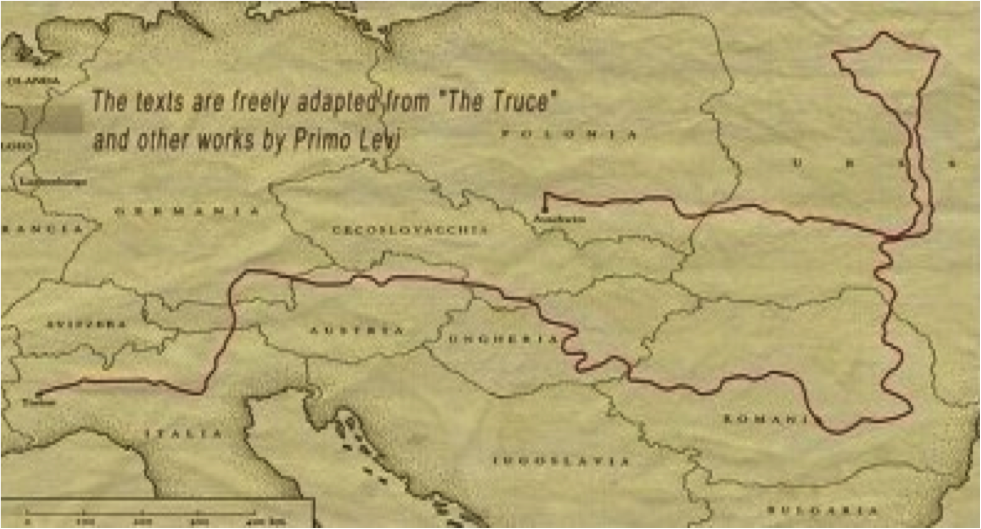
Primo Levi, “The Reawakening” (1963) (translated from the Italian by Stuart Woolf) – I already said this when I reviewed “The Periodical Table” last year, but: what to say about Primo Levi? He went through a lot of shit and said what he saw. In “The Reawakening,” we start with him in the last days of Auschwitz. He was too sick to be marched away with most of the inmates as the Red Army closed in- ironically, his sickness probably saved his life, as few survived the march. We then follow him as a refugee protected by the Russian army, first headed to Kracow and Katowice, then to various spots in Ukraine and Belarus, then on a winding train journey back to Turin, where he started from twenty months before.

Along the way, Levi experiences sickness, boredom, and misery, but there’s a lightness to the whole odyssey that animates the book- they survived, they’re going home. The Russians are depicted in an interesting way: sort of gargantuan, big in everything from their compassion to their messiness, Levi admires them but in a distant, almost patronizing kind of way. In the essay that follows the recounting of his travels, he defends the Soviet Union from those who try to say it was the same as Nazi Germany, and does so well, I think. More to the point of the book are the other survivors Levi finds himself amongst- the Greek Mordo and Cesare being the most memorable. Mordo is a grimly efficient survivor and Cesare a gregarious, bargaining one- both of them take Primo under their wings, Mordo almost in spite of himself, and help him survived. Levi reports on their doings in an almost bemused way, and this carries the reader through the accounts of scrounging for shoes and food, the creation of little mini-societies wherever the refugee train rests on its way back to Italy. It’s humanity at its most human, contradictory in every element but still a consistent whole. Nobody needs me to convince them that Primo Levi is great. Just go read him if you haven’t already. *****

Review- Levi, “The Reawakening”

Review- Littell, “The Kindly Ones”

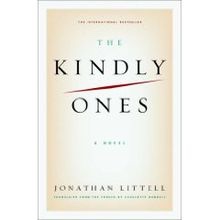
REREAD (sort of) MINNIT with PETER: Jonathan Littell, “The Kindly Ones” (2006) (translated from the French by Charlotte Mandell) (performed for audiobook by Grover Gardner) – Since I got my current job, I’ve taken to listening to audiobooks while doing the various boring computer-bound tasks the job entails. I never got into them before- too slow, no opportunity to take notes. But I find with the right kind of book it’s ok, plus I’ve gotten sick of most podcasts, which either seem to be grade school-level recitations or regurgitations of twitter dramatics. Shouts out to the SHWEP (Secret History of Western Esotericism Podcast) for keeping it real (and esoteric!).

Audiobooks are also a way to do rereads without feeling like I’m retreading. Rereading “The Kindly Ones” would be a major task- clocking in at over 900 pages (or nearly 40 hours of audio time, unabridged, ably performed by actor Grover Gardner) and not being exactly forgiving to the reader, in form or content. These 900 pages come to us from the point of view of an unrepentant (though not exactly free from guilt) SS war criminal. While protagonist Max Aue is determined to make clear to us that most of us would do as he did in the same situation, that it wasn’t some unique depravity of Germany or the Nazis that made the Holocaust possible, he is possessed of a fairly uniquely set of circumstances himself. He’s a highly-educated, cultured young man (in that, not unique among his generation of SS bureaucrats), and his family situation is the stuff of Greek tragedy, which has all sorts of effects on his personality and actions. His evil is not banal, though to a certain extent his drive to self-expression which frames the whole book is.

I guess it would make sense to say what actually takes place in the novel. After an extended introduction where Aue, an old man sometime in the 1970s or after, explains why he’s writing (and why he’s not- he’s not looking for an out, at least he tells us that), we start with the beginning of Operation Barbarossa, the Nazi invasion of the Soviet Union. Aue, an officer in the Sicherheitsdeinst (SD) or Security Office portion of the SS, is sent to observe the actions of the Einsatzgruppe, SS units that were charged with protecting the German rear during the invasion. This generally meant mass killings, first of commissars and Communist party members, then retaliatory killings of civilians en masse, and always, mass slaughters of Jews. Aue witnesses the notorious Babi Yar massacre as well as numerous smaller killings and plays a minor role in carrying out some of them. There’s a lot of observing in this novel. Trifling critics have claimed Littell set up Aue to be everywhere at the “greatest hits” of the Third Reich, like a Nazi Forrest Gump. That’s flatly untrue. To the extent Aue’s career rings false, it’s that he meets a lot more high-functioning Nazis than necessarily makes sense, but his career — the Einsatzgruppe, helping decide the “Jewish question” in the Caucasus where old tribes of Jews had existed from time immemorial, Stalingrad, inspecting Auschwitz, involvement with the liquidation of the Hungarian Jews — isn’t that outrageous for an SS officer who could survive it all. And it doesn’t include a lot of important things, like Leningrad, any involvement with the Officer’s Plot beyond hearing about it, or anything to do with the Western Front, the latter an especially notable move for an American author.

As he’s observing and reporting all of these things, he has his personal life to deal with. He used to do incest with his twin sister when they were kids and he never got over it. His father, a WWI and Freikorps veteran, disappeared when they were little and his mother remarried a Frenchman who Aue hates. The kids were packed off to boarding school where little Aue developed a taste for sodomy that remains the only sex he has, with a lot of rhapsodizing about how being fucked brings him closer to his sister, etc. etc. He narrowly avoids being outed and fighting a duel in the Caucasus. He gets shot through the head in Stalingrad but survives, experiencing bizarre dreams of being rescued from the icy Volga by a zeppelin pilot who resembles Louis-Ferdinand Celine. Aue reunites with his sister and her husband, an old-school Junker conservative, for a bit and then in all likelihood kills his mother and stepfather, though he can’t remember it. After that, he’s pursued by two Columbo-esque Kripo cops and is protected by Bond-villain-esque Doctor Mandelbrod, who sends him to observe and try to wring more productivity out of Auschwitz. Finally, between his personal situation and the collapse of the Third Reich, Aue finds himself in a fever dream of further depravity and destruction which only ends with the novel. This paragraph and the one preceding it are very abbreviated and there’s all kinds of other intriguing bits in the novel, including Aue’s involving himself with the fascist literary scene in France and an interesting run-in with a Soviet commissar in the ruins of Stalingrad. It is, as they say, a lot.

Insofar as a novel full of death, depravity, and endless bureaucratic infighting and quibbling can be catnip to anyone, this one was catnip to me because I like a lot going on in a book and I think it makes a historical argument more than anything. Littell clearly did the reading in the history of Nazism, the Eastern Front, and the Holocaust. And excitingly (to me) he doesn’t stick with any one writer’s explanation of how it all occurred and let it direct the text. There’s some of Christopher Browning’s “Ordinary Men” here, especially in the depiction of the rank and file of the Einsatzgruppe, but Aue and his peers are no ordinary men, even if you left aside all of Aue’s family drama. There’s more than a dash, alas, of the totalitarian school, drawing parallels between the Soviet Union and Nazi Germany, the kernel of truth in which is generally drowned in tendentious Cold War overgrowth. The witness-bearing I see as, along with being a literary device, Littell’s tip of the cap to the diarists of the period and of the encyclopedic scope of works like Raul Hilberg’s “Destruction of the European Jews.” Examples could doubtless be added by people who know the literature better than I do. And maybe this is a stretch too far but I think Aue’s family situation is a way to bring the West as a whole into it by stirring Greek tragedy, one of the ur-texts of Western civilization such as it is, into the pot. But there isn’t one thesis that the book is illustrating. There’s a lot going on.

Littell wrote the book in French and was the first American to win the Prix Goncourt. But Anglophone (and, I’m told, German) critics first freaked out over it (in a bad way) and then ignored it- I’m told its English sales numbers were disappointing. They dismissed it as a horror story, as trash, exploitation, as overly long, evidence of French perversity. It doesn’t take much to bring out the provincialism of the New York Times literary page and this was more than enough. I first heard about it in an essay by Walter Benn Michaels where he contrasts the emphasis on structural responsibility, the smallness of the individual in the face of world-historical forces, that “The Kindly Ones” makes with the individualism of the memoir and memoir-esque writing that Anglophone critics seem to prefer. I think Michaels is right in this instance- the same critics will sit through all sorts of horrors if there’s a nice edifying moral or personal fulfillment in the end. Maybe it’s just the historian in me, but Littell’s depiction of the Holocaust and of Aue’s fucking himself with various objects in a fever delerium didn’t make my skin crawl nearly as much as Junot Diaz’s depictions of men “dating” preteen girls as though it was just normal in the Dominican community. Personally, I think reading “The Kindly Ones” is a salutary exercise, much more so than going through another contemporary memoir in my opinion, and, as Aue promises in the introduction, full of interesting incident. *****

Review- Littell, “The Kindly Ones”

Review- Han, “The Vegetarian”

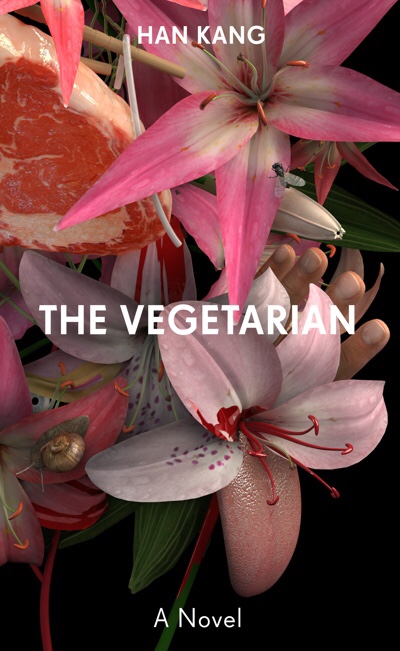
Han Kang, “The Vegetarian” (2007) (translated from the Korean by Deborah Smith) – This one’s pretty harrowing, and I guess an ironic one to post for thanksgiving all things considered. A Korean woman decides to go vegetarian and everyone freaks out! That’s the beginning, anyway. The three parts of the novel are each told by a different relative of Yeong-hye, a seemingly ordinary South Korean woman. The first part, centering around her vegetarianism, is told by her husband, a self-professed mediocrity who likes Yeong-hye for her seeming ordinariness. Yeong-hye decides to go vegetarian in response to some very bad dreams she had. Apparently, in Korea, this is a big deal, though I get the sense the bigger deal is Yeong-hye’s quiet refusal to obey her husband and go back to eating and cooking meat. She also defies her father and the rest of her family in a harrowing scene at a family dinner. All of the best meat dishes are there, and so is her father, a Vietnam War vet and old-school brutal patriarch. He tries to force Yeong-hye to eat meat, slapping her, forcing meat into her mouth, as the rest of the family looks on, weakly protesting at best.

Yeong-hye cuts herself in front of her family in response and winds up hospitalized. Her husband, convinced he’s the real victim in all this — he just wants a normal obedient wife and is being deprived! — divorces her and we move on to the second part, narrated by Yeong-hye’s brother in law. He’s a hacky video artist who becomes sexually obsessed with Yeong-hye, with the idea of painting her body and his in flower patterns and having sex with her. This section gives off a really real-seeming scum and skeeze feeling as Yeong-hye continues to worsen, haunted by dreams and by isolation, and the artist exploits her and ruins what’s left of both their lives.

Lastly, there’s the section narrated by Yeong-hye’s longsuffering sister, who becomes the sole point of contact for Yeong-hye when she is again hospitalized. This time, she refuses to eat, insisting she is turning into a plant and only needs sunlight and water. This section is just sad, a brutal look at failure and madness. Why didn’t anyone help Yeong-hye when everything began, with the dreams? How did it come to this place with her starving herself? Well, the patriarchy certainly didn’t help matters, between her reckless selfish husband and brutal abusive dad. But Han suggests that Yeong-hye’s response to the violence and selfishness of the world is not necessarily a rational response, but a consistent one- escape from humanity and animal life altogether into another type of existence. All told, this is an unsettling and well-executed read. ****’

Review- Han, “The Vegetarian”