Review – Hazony, “The Virtue of Nationalism”

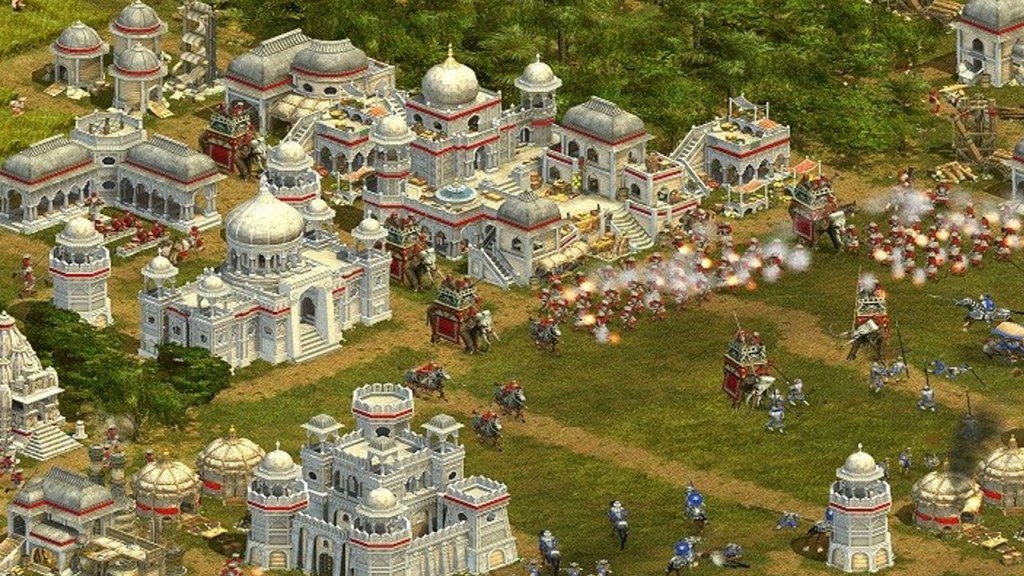
The fatuous, in-app-purchase-requiring 4x game of the contemporary nationalist imagination

Yoram Hazony, “The Virtue of Nationalism” (2018) – I should probably stop reading books on the idea that the contemporary twerp-right is reading them, all on a throwaway line in a half-remembered article in the Atlantic or the New Republic or somewhere, shouldn’t I? I doubt this Hazony guy is really hot stuff on the right, at least the part of it I should pay attention to. Whatever nonsense is in here, Hazony is too moderate, too polisci, and let’s not forget too Jewish for an increasingly bloodthirsty and openly antisemitic right. The kid name-checking him in that article probably just liked the title. I’ve seen a lot of that. You can’t tell me all these idiots on goodreads, or the morons on the other side of the line when we deal with local Nazis, have actually read Evola’s “Revolt Against the Modern World.” They just like the title, and stick with it despite Evola having written numerous books that are also fascist nonsense but are pitched more at their level. This is not a thoughtful time on the right.

Anyway- Hazony plays the usual polisci calvinball of making up whatever categories he wants and foisting them on the entirety of history to make some dumb presentist point. There’s three ways of arranging sovereignty, he informs us: “tribes and clans,” where no one has loyalty beyond an immediate in-group and it’s a war of all against all; nation-states, little culturally-bound units with discrete borders and governments; and empires, which swallow up nationalities and subject all to the rule of some overarching sovereign. The real choice in front of us, Hazony informs us, is between nationalism and imperialism, these days, the imperialism of super-national bodies and ideologies: the EU, global liberalism, Islam, Marxism comes in but more as an example from the past.

Well, this is obviously stupid, and moreover, Hazony seems to get that, does so much hand-waving he could probably fly from his home in Israel to Brussels to tell the eurocrats how naughty they are. One big hand wave is that you only get nation-state status if you’re “strong enough.” Ahh! Well, ok then. That sorts that. He hand-waves the imperialism practiced by more or less every nation-state on earth, sometime in its history and usually in its present. That’s different, and basically ok (“hear that, Palestinians!!”). You get to do that when you’re a political scientist! There’s a huffing and puffing appeal to the “common sense” of people who have grown up with national sovereignty as a basic principle, and pretty gratuitously whacky claims, like that the Old Testament enshrines the nation-state form specifically.

What all this adds up to is one of two things: I think Hazony might have meant it as an appeal to the center; or, part of an intellectual fig leaf for the right, like that boy in the article would have in mind. But the center is shrinking and paralyzed, and increasingly, the right, from the “national conservatives” to open Nazis to Zionism, dispenses with fig leaves altogether. Among other things, they can’t make up their mind between Hazony’s three categories. They say they like nationalism, and some of them do, but seemingly on the basis that nation-states are the playable factions of the 4x or miniature battle game they think life either is or should be. But many of those same people clearly prefer tribal/clan models, or imperial models, or… it’s almost like sovereignty isn’t a “solved problem” with discrete categories but rather a set of techniques and priorities! 

I give Hazony a little credit, but just a little, because sovereignty really isn’t a solved problem. Every now and again, a leftist looking to make a point, and they can come from the heights of the academy or the dregs of the Internet, crops up to crow about our lack of grounds on this issue, like a fat house cat bringing you a rubber band it caught but generally not cute. Well, they’re not wrong, though their solutions, which usually amount to “embrace nationalism, it’s fine,” generally are. At the same time, slapping one category on top of another like a trump — “class beats nationality, haha!” — clearly doesn’t do either. We might want it to be that way but in practice it doesn’t work. Hazony won’t help anyone clarify anything. But, unlike a lot of my readings on the right, especially contemporary ones, he’s at least in the neighborhood of an actual question, and in this category, I take the consolations I can get. **

Review – Hazony, “The Virtue of Nationalism”

Review- Robin, “Fear”

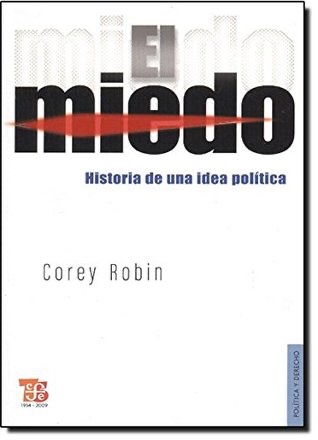
Corey Robin, “Fear: The History of a Political Idea” (2006) – Corey Robin is most renowned (and controversial) for his work on conservatism, but his first book largely deals with fear and liberals. Emerging from the post-9/11 gestalt where pro-war/pro-security-state liberalism ala Chris Hitchens was the big new intellectual thing, “Fear” comes to grip with both the history and the contemporary practice of political fear. As it turns out, it’s liberals — Robin specifically focuses on Montesquieu, Alexis de Tocqueville, Hannah Arendt, as well as the less categorizable Thomas Hobbes — rather than reactionaries that have most defined our relationship to fear as a political factor. The… fear factor, if you will.

Hobbes stood at an inflection point in the understanding of political fear, Robin argues, as he did so many other concepts. Ancient and medieval political writers understood fear as having a moral/political object. So, too, did Hobbes- the fear of death in the state of nature impelled men to create society, with rules and a sovereign. But he also predicated later writers who would come to place fear outside of the political, as a force on its own that short-circuits political thought and action, an emotion to be indulged in just so much as to fend off the larger fear a given writer projects. So you have Montesquieu with his concept of despotic terror coming, essentially, from the personality of the despot, or Tocqueville with his anxieties stemming from the deracination of the new mass man of the nineteenth century. Both of these types of fear were meant to be feared themselves, and acted against, through the usual liberal prescriptions of intervening institutions, civil society, divided powers, etc. Arendt, for her part, both took this depoliticized fear to its apotheosis — her concept of total terror even went so far as to depoliticize Nazi death camps and Soviet gulags — but she turned against this conception, in Robin’s telling, with “Eichmann in Jerusalem,” where she brings the political (and personal responsibility) back in.

I’ve read all these thinkers but am no expert on any of them. Robin’s accounts seem reasonably illuminating and they hold together well, but I wouldn’t be surprised if experts on any of the four, and more likely the further from the present you get, would have quibbles. Robin makes no secret of his agenda- an intervention in the post-9/11 climate of political fear and discourse over political fear. This comes out more clearly in the second half of the book, “Fear: American Style,” where he discusses mostly McCarthyism and the discourse around 9/11. American domestic political repression has, at least as targeted against those thought of as part of the polity (Native Americans, Filipinos, and others received altogether different treatment), less bloody than other examples from the twentieth century. But this isn’t because liberalism isn’t repressive, Robin argues- but that American liberalism has refined its particular tools to such a pitch that it need not be so sanguine. These tools map neatly, in Robin’s telling, to the things that are supposed to make liberalism immune from repression: division of powers (which enabled things like the congressional committees that hounded supposed subversives during McCarthyism), civil society (with its inclusions and, more to the point, exclusions), the primacy of the free market (and the power this gives employers). Any tool is a weapon, potentially- any tool of power is potentially oppressive. This, along with his rejection of fear as a potential political unifier (a prominent post-9/11 theme), is his great apostrophe to the readership.

All of this is argued passionately and persuasively. One weird thing is that he doesn’t define what he means by “liberalism.” Maybe this is only irksome to someone who’s been following his project for the better part of a decade now. He shows no such hesitation in defining conservatism or reaction- indeed, he’s gone a long way to defining it for a whole generation of critics as the ideology of the defense of power and privilege. His history, like Arno Mayer’s, resembles a constant back and forth between those who would distribute power downward along social hierarchies and those who would distribute it ever more upward- he roundly rejects the (frankly asinine) linguistic argument that conservatives are particularly interested in “conserving.” Where do liberals fit into all this? Robin doesn’t explicitly say. I once suggested on his facebook that liberalism represents the idea of a harmony of interest that either harmonizes or neutralizes the struggle between redistribution of power and retrenchment. He dismissed it out of hand, if memory serves. Fine by me, I’m just some guy with a blog. I’d like to go forward with a schema for including liberalism in Robin’s system, though, as I think Robin’s ideas will be important for political work and our understanding of modern history going forward. ****’

Review- Robin, “Fear”

Review- Stern, “Proud Boys and the White Ethnostate” and HoSang and Lowndes, “Producers, Parasites, Patriots”

Alexandra Minna Stern, “Proud Boys and the White Ethnostate: How the Alt-Right Is Warping the American Imagination” (2019) and Daniel Martinez HoSang and Joseph Lowndes, “Producers, Parasites, Patriots: Race and the New Right-Wing Politics of Precarity” (2019) – Another two promising but at bottom disappointing attempts to explain the contemporary far right. I’d argue that Stern’s work is both the more promising of the two and ultimately the most disappointing. She starts to grapple with interesting topics like how the alt-right looks at time and the centrality of gender panics on the far right but ultimately does not interrogate either nearly enough. The Proud Boys barely enter into it at all, despite the title and the efforts of the group to intimidate the author.

Instead, we get definitions of things like “ethnostates” and “trad” as a descriptor, which Stern accuses the alt-right and its enablers like Tucker Carlson with smuggling in to the American imagination. This begs the question- where do the ideas in question come from, and why does anyone listen, if anyone does (and who is that anyone)? The alt-right emerges as an actor a lot like the liberals’ idea of Russia, an existential force for chaos and evil, poisoning an otherwise noble body politic. I think this is backwards- the alt-right is a morbid symptom, not the disease itself. Stern’s overview of alt-right facts is probably useful for some (in many ways, this is a brief primer, like Angela Nagle’s work without the twitter-beef baggage and shoddy editing) but it’s a missed opportunity for a real scholar (Stern is a professor of obstetrics and a historian, an interesting combo) to sink their teeth in to what we’re seeing. **’

HoSang and Lowndes fare little better. “Producers, Parasites, Patriots” was exciting to me because I thought it would get to grips with how concepts have changed on the right due to the historical conditions of the last twenty years or so. It does so, a little, especially in an early chapter on the racial politics of producerism. But ultimately, it is a book of inside baseball amongst the critical race theorists. HoSang and Lowndes have a point — that racial signifiers are increasingly migrating from strictly being applied to PoC to being applied to categories of white people and vice versa as neoliberal precarity screws with everything — and they hammer it home, to the exclusion of other worthwhile avenues (where does climate change enter into the precarity-driven differentiation scheme?). Moreover, to avoid accusations that they’re downplaying the significance of the white-on-black racism we’re used to seeing, every chapter and many sub-chapters have ponderous warning labels about how racism is still racism even if racists like Allen West, etc. **’

Coda: what, then, do I want out of books on the contemporary far right? Easier to say what I don’t want. I don’t want inter-left axe-grinding and the interference with thought that produces, like you see in Nagle. I don’t want Cletus Safari where we gawk at the yokels like in Vegas Tenold. I don’t want the tepid social science toe-dipping, like these two books and one or two others like it. I don’t want sneering dismissal or febrile fear-mongering.

Alexander Reid Ross comes closer to the ideal with “Against the Fascist Creep,” but he gets into axe-grinding territory against anyone who’s gotten a little tired of hearing of him and others calling red-brown alliance wolf. Elizabeth Sandifer makes a noble effort in “Neoreaction a Basilisk” but at the end of the day it’s too narrowly focused on a relatively minor current, the titular neoreactionaries, to bear that much weight.

All this begs for the approach of critical intellectual history. Is it possible to attain at the moment? I’ll fudge and say “partially.” We lack the sort of distance in time that the best historical writing needs. Any conclusions are necessarily tentative. But you can start with a granular understanding of the forces at work in recent history, an ability to depict the dynamics of a moving target rather than static pictures, and a desire to encapsulate something large and diverse as both a coherent whole and a changing, fluid thing. Someone who can bring these to bear could really make the topic their own.

Review- Stern, “Proud Boys and the White Ethnostate” and HoSang and Lowndes, “Producers, Parasites, Patriots”

Review- Bagehot, “The English Constitution”

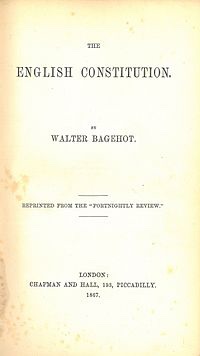
Walter Bagehot, “The English Constitution” (1867) – I read this out of an interest in reactions to democracy in the nineteenth and twentieth centuries. Many would bridle at even getting the word “react,” with its connotations of “reactionary,” so close to Walter Bagehot, such a liberal touchstone the Economist (which Bagehot edited) has a column named after him. I cede the differences between him and your “real” reactionaries but he is part of an early draft of the great western freakout about the masses and power.

I expected this to be more historical, but it is in fact a description of how Bagehot saw the English constitution as working when he was writing, just before the second big Reform Act hit that would grant something resembling universal manhood suffrage to the British people. It was also at or near the peak of British prestige on the world stage. Bagehot placed much of the success of the British government on the cabinet system — which united legislative and executive functions, he has no time for separation of power — and the differing but complementary effective and “dignified” parts of government, the latter including the House of Lords and the monarchy. The effective parts of the state, notionally democratic but really controlled by the best people with a stake in the system, took care of the effective bits, whilst the dignified parts of the state, while explicitly undemocratic, actually brought the masses in to the system by appealing to some supposed universal human penchant for mystery and ritual.

For a great liberal, he goes back to conservative talking points about the nature of the people and governance quite frequently. This is just how people (sometimes the British in specific, sometimes everyone) just are and will always remain. For one thing, it ignored a lot of what was going on with the working classes in Britain, who as E.P. Thompson showed were engaged in a flurry of self-education and had been for most of a century by the time Bagehot was writing. Secondly, like I was lamenting earlier, these figures never make clear what, exactly, about elite education really makes them the only ones who can govern. If anything, much of their education was wildly impractical, which just goes to show nobody is entirely ignorant of their own interest, American voting behavior notwithstanding. But in the end, even if you accept the general premise or take it as a given for this kind of literature, Bagehot — and in my experience, British reactionaries, conservatives, and conservative-liberals (with few honorable exceptions, like Wyndham Lewis) do not bring the same analytical depth or literary imagination to bear on their reactionary visions as their continental counterparts did. I tend to assume this is because the British were so much stronger and more complacent during the nineteenth century, and it seems to me that Bagehot exemplifies this- the sort of attitude the Economist tries to cop. ***

Review- Bagehot, “The English Constitution”

Review – Mampilly, “Rebel Rulers”

Zachariah Cherian Mampilly, “Rebel Rulers: Insurgent Governance and Civilian Life During War” (2011) – Pretty good polisci material on insurgent groups and the ways they govern territory they control. Mampilly’s case studies are the Tamil Tigers in Sri Lanka; SPLA/M, the confederation of rebels that eventually broke South Sudan away from plain old Sudan; and the Rally for Congolese Democracy, one of the major factions behind the overthrow of Laurent Kabila.

Mampilly arranges them in strata according to their governance success. The Tamil Tigers had a very robust governance structure, complete with courts, banks, health service, etc- this was written before their leader, Prabhakaran, essentially took his whole group with him in a doomed last stand against the Lankan army. SPLA/M was considerably less capable, but in a way almost as impressive in keeping the many ethnic groups involved working more or less together (alas, this also collapsed soon after South Sudan gained independence). Finally, RDC was never capable of doing much governance beyond extorting merchants at border crossings.

The conclusions Mampilly draws from his comparisons are pretty interesting, and I learned some things. Among others, the Tamil Tigers allowed the Lankan government to act in its territories for the purposes of welfare distribution (Sri Lanka apparently has/had a generous welfare state) and education. This reminds me of the stories I heard from Syria about the annual SAT-equivalent went ahead all throughout the civil war, administered on all sides- war is war, but the exams, especially in a former French colony, are the exams. Mampilly argues that insurgents do better at governance where they could inherit or work with robust state structures. This seems tricky, given that those seem to make insurgency less likely, but also seems to make sense.

In general, Mampilly seems to have a sensible perspective, refusing to act shocked by the sheer presence of insurgents like a lot of liberal/conservative social scientists, or attributing different outcomes to ineffable factors like “leadership” or “spirit.” A lot of success or failure comes down to facts on the ground- previous level of development, ethnic/sectarian rivalry, length of insurgency (longer insurgencies allow a Maoist strategy, which is the most successful in terms of creating a shadow government). It’s polisci so it’s not scintillating writing, but there’s much worse out there. In general, pretty good. ****

Review – Mampilly, “Rebel Rulers”

Review- Mounk, “The People Versus Democracy”

Yascha Mounk, “The People Versus Democracy: Why Our Freedom Is in Danger and How to Save It” (2018) –


(Note: I initially wrote this for a little magazine, but since then pretty definitive pieces on the book and it’s genre appeared in n+1 and in Dissent. Both are well worth reading and say much of what ought to be said. But I do try to post a review of every book I read, and I did read this book, so I thought I’d post this here.)


Harvard-based German political scientist Yascha Mounk is one of the latest to step up to the plate to explain the decline of the liberal political order, the necessity of reviving it to more or less pre-2016 status, and how we can get there. Younger than many in the same ideological cohort and less tied to wildly unpopular neoliberal institutions and policies, he’s got the marketing game down pretty good too- The People Versus Democracy is the sort of thing bound to get a Vice interviewer excited. The book is schematic and breakable down by bullet points, well-suited to an audience used to getting their public intellectuals via TED talks.

The title is something of a stumper. We’re more used to hearing arguments about freedom versus democracy, or merit versus democracy– fear of the masses taking down the big important people, from people representing (or fancying themselves to represent) the latter. What does the people versus democracy mean?

What Mounk means when he talks about the “people versus democracy” is “the people versus liberalism.” Mounk allows that there is such a thing as illiberal democracy, where elected strongmen abuse the rights of minorities and trample due process. This is one of the primary things he fears from Trump, Modi, Orban (who boasts of the “illiberal democracy” he has made of Hungary), etc. But as far as he is concerned, the only true democracy is liberal democracy, and that is what he is worried about “the people” undoing.

Political thinkers of his generation and that preceding him (barring a few unserious radicals), Mounk tells us, assumed liberalism and democracy naturally go together. This is what the “End of History” moment in the late 1980s meant. But we are now witnessing the “deconsolidation” of liberalism from democracy. Democratic publics are turning against liberalism, with its provisions of equal justice under the law and checks on executive power, both in the new democracies that liberals had such high hopes for post-1989 (mostly in Central Europe) and in liberal democratic states of older vintage: Brexit Britain, AfD Germany, LePen’s France, Trump’s America.

Unlike libertarian figures like Jason Brenner and their proposals for bringing back property (or better yet, IQ-based) restrictions on voting, Mounk sees democracy as something like an equal partner to liberalism in the “liberal democracy” formation. This gives him some additional context that many of the liberal doomsayers lack. He grants that if liberal democracy has become unpopular among worryingly large swaths of contemporary electorates, it is due in no small part to the elites in liberal societies hollowing out the substantive meaning of their democracies. Judges and unelected bureaucrats unilaterally makes rules that affect millions and the wealthy buy access to power, Mounk explains. This results in a situation of “rights without democracy,” the equal and opposite of the illiberal democracy scenario. It’s hardly surprising that people prefer the latter, if those are their choices.

What has brought us to this state of affairs? Mounk identifies three factors behind the disaggregation of democracy and liberalism: social media; economic stagnation; and the rise to importance of “identity.” Stagnation makes people mad; social media lets their anger circulate widely, quickly; “identity” gives them someone to be mad about.

Mounk’s history of the late twentieth century puts the dysfunction of liberal social science bereft of political economy or class analysis in stark relief. In his telling, social media and the economic restructurings that led to secular stagnation in the developed world are the results of the genies of technological and economic progress, respectively. The identity politics thing is the result of immigration, with an assist from liberal college professors who say mean stuff about the Enlightenment. Why these things have taken on the importance that they have – and they all are important, even if they are framed unhelpfully – and why the political system of liberal democracy is unable to cope with them, are not answers Mounk answers or really addresses.

Mounk can talk about an economy. He cannot talk about capitalism, a system of organizing production; which is to say, a system of power. We hear a lot about the impositions on freedom made by illiberal democrats such as Orban and Duterte. We hear a little about the inroads liberalism has made on democracy through wealth concentration. We hear nothing about how freedom and democracy are made into abstractions by the reality of class power in a capitalist society. Liberalism, at its most ambitious, builds out the degrees of freedom and democracy possible without defeating capitalism: the government can’t imprison you for dissident speech but your boss can make you ask to go to the bathroom; you can vote for someone to vote on laws but not for who runs your workplace. This is a massive, almost juvenile reduction of a complex set of dynamics, that doesn’t even get into how race and gender interact with capitalism to produce even grosser unfreedoms and inequalities. But it is pitched at the writing and analysis level of The People Versus Democracy, and Mounk does not engage any critique like that, even to dismiss it. The closest he comes is comparing Jill Stein and Naomi Klein to Donald Trump and Steve Bannon as purveyors of “easy answers.”

Mounk comes perilously close to something like class consciousness when discussing the influence of wealth on policymakers in formally democratic countries. Less than a matter of open bribery (though that happens plenty), he argues, it’s a matter of “milieu.” Rich and powerful people spend their time with and get to know other rich and powerful people, and come to identify with them and their interests, and this identification shapes policy.

Alas, Mounk does not follow up on this insight. Like others on the left-er side of liberal, he acknowledges that income inequality is an issue, in terms of people’s quality of life and their willingness to engage in the sort of politics he understands as acceptable. But also typical of liberals, he does not, cannot, understand inequality as part and parcel of a structural relationship between a class that owns and rules and another class that works and obeys. A liberal democracy is already a hollowed-out democracy. It isn’t simply hollow for the poor, because they cannot participate as much as the rich (though that’s certainly part of it); it is hollow because the most pressing questions of social power are bracketed away. It’s little wonder that people would disengage, even if many of the replacement outlets for their political energy are ghastly and will only make matters worse.

Nowhere in The People Versus Democracy is the dysfunction of liberalism’s inability to confront capitalism as a system more on display than in Mounk’s proposed remedies. His economic prescriptions are about what one would expect from, say, a centrist Democrat running in a district where Bernie polled well: make the rich pay their fair share, retool welfare for the twenty-first century, etc… mostly unobjectionable, if tepid. We also hear about the need to “domestic nationalism” and “renew civic faith.” For the most part, these are as platitudinous as they sound- people should try to reach across divides, promote civics education, maybe get Zuckerberg to tone down the fake news algorithms, etc.

It’s where those phrases aren’t platitudes where the piece runs into real trouble, and reveals just how much the strain of avoiding a critique of capitalism can warp a thought process. Liberalism needs nationalism because liberal leaders, hands tied by devotion to capitalism, cannot offer their people anything more substantive with which to secure their loyalty. And “domesticate” it all you like, but nationalism has something of a habit of going feral, as we are currently seeing the world over. The “civic faith” chapter takes a bizarre stroll into political correctness-baiting. Here, Mounk pulls from some anecdotes of his time around universities to argue that we aren’t civically engaged in large part because of professors traducing the Enlightenment and the Founding Fathers. This is the sort of inflation of the power of obscure academics (and ignoring other, larger factors) that characterizes Fox News, not serious scholarship. It’s unlikely anyone is going to wave Mounk’s chapter on their way to harassing an adjunct out of a job, especially when there’s so much stronger stuff available in that vein. But it goes to show that even intelligent, up-and-coming liberal commentators will veer erratically into profoundly unlikely territory to avoid confronting the power of capitalism.

The people aren’t opposed to democracy. Capitalism is. *’

Review- Mounk, “The People Versus Democracy”

Review- Hawley, “Making Sense of the Alt-Right”

hawley

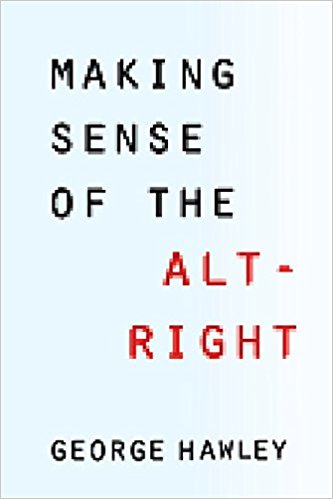
George Hawley, “Making Sense of the Alt-Right” (2017) – This volume marks the beginnings of the efforts of political science to understand the altright, at least as far as work aimed towards a public goes. Like Dave Neiwert, Hawley is pitching the work towards an audience baffled (and presumably disgusted) by this new thing, so you get a lot of the same explanatory stuff, though from a markedly different angle. Neiwert emphasized continuity between the earlier far right, as well as mainstream conservatism, with the altright. Hawley insists that the altright is a complete negation of mainstream conservatism, with the usual references to William Buckley casting the Birchers out of the temple, etc etc. Nobody seems to ask why it has to be either/or- why can’t there be a certain degree of ideological continuity (white identity politics, which mainstream conservatives absolutely practice just at a softer pitch; worship of authority, hatred of liberalism, etc) as well as institutional bad blood? That seems to be how every other ideology, socialism included, works…

Hawley has what I think of as a polisci habit of shortchanging historical context. Sometimes this takes the form of asking tantalizing contextual questions – “why does mainstream conservatism not integrate the sort of people, like right-leaning college kids, that it used to?” – and then basically just punting to something like “conservative weakness” or “the internet.” True factors, both of them, but he doesn’t get into why these things have taken shape the way they did and what that might mean for his question.

He appears to have taken this subject on because he was the guy in polisci writing about right-wing critics of American conservatism (work I’d like to look at, despite not thinking much of this book). Focus on the way the altright hates mainstream conservatives (and they do, or anyway they hate the leaders and hope to convert the followers- and have a better chance of the latter than any of us would like, even if it’s still unlikely by the Vegas odds) occludes much of the rest of what makes the altright a thing. There’s a real lack of attention paid to gender politics, which just seems baffling to me given how poignantly obvious male insecurity is with these people. And there’s the usual judicious weighing of the altright vs the altlite, as though it makes a difference if you get jumped by an open white nationalist vs by someone too insecure to admit they are basically a white nationalist. There’s some good attributes of this book — it’s a relief to see a professionally-produced, well-written volume on this stuff, given the thrown-together quality of Nagle and Neiwert’s respective works — but viable critical perspective on this question continues to elude the print longform format. **’

Review- Hawley, “Making Sense of the Alt-Right”