Review- Slotkin, “Regeneration Through Violence”

Richard Slotkin, “Regeneration Through Violence: the Mythology of the American Frontier, 1600-1860” (1973) – This is a great big humdinger of a book, and the first of three laying out Slotkin’s thesis on the roots and branches of American culture in violent frontier myth. Historiographically, it lays at a transition point in American Studies. The original American Studies scholars explicitly founded it as a Cold War enterprise, a way to foster their vision of America —more or less, that of Cold War liberalism — back when people still thought culture was a big Cold War weapon and that Jackson Pollock was worth CIA money. Slotkin turns away from their vision of America as the culmination of western humanism but still uses a lot of the old American Studies concepts and tropes. These include canonization — Slotkin both crams old AS favorites like Melville and Hawthorne into his thesis and tries to canonize new ones, like frontier writer Nathan Filson — and an attachment to the concept of myth as an explanatory category. Analyzing the frontier as myth goes a long way in American Studies. It’s poignant, in a way- the American Studies cadre included many of the first generation of American Jews given equal footing in American schools, and in general it was more nerdy New Yorkers and immigrant’s kids — names like Slotkin and DeVoto — defining this picture of America and the frontier than it was sons of the pioneers.

Like the American Studies guys (and like me in some areas), Slotkin is an arch-lumper in this book. American culture as a whole, he argues, is defined by a series of tropes descended from the English encounter with the wilderness. Because some of the first English to do it (and especially to write about it) were Puritans, one major strand of processing that encounter entails seeing the wilderness as a place of evil, a place where good Christians go to become bad and die, a reflection of the dark spaces of the mind and soul. One of the ways the Puritans processed this was through captivity narratives, where a Puritan is captured by Indians, lives with them for a while, and then escapes or is bought back into the fold, chastened and stronger in faith.

But as the frontier expanded and white people got more used to it, the idea of the wilderness as a place of fulfillment got bigger, but with caveats. American litterateurs struggled mightily with how to cope with the identification between the wilderness and the Native Americans (so too, for that matter, does Slotkin, who lumps them all together into one culture more or less at one with nature, etc etc). The whites wanted to master the wilderness the same way they thought the Native Americans had, but it was important that they maintain their special white, Christian status. As mythic figures like Daniel Boone became national (and international) favorites, the frontier became, in narrative anyway, a place for whites to prove their mettle by entering into the wilderness. They could learn from the natives and even befriend them, but would eventually master them at their own wilderness abilities, initiating themselves into the mysteries of the hunter and the warrior. This would lead to the ushering in of white civilization, where the frontiersman would either need to assimilate or move on, the sort of prepackaged tragedy narrative from which Anglo culture gotten so much mileage.

There’s a lot of interesting material in this book, overstuffed in that classic AS way with block quotes, stories about publishing, etc. There are fascinating characters like Gilbert Imlay, a Kentuckian conman and lover of Mary Wollstonecraft who sold an enlightenment-tinged vision of frontier democracy to get radical French and British to sponsor a western breakaway state before fleeing a pregnant Wollstonecraft with the money. There’s also some interesting stuff where European and northeastern writers wanted to depict the whole thing as capital R Romance, which culminated with James Fenimore Cooper’s lachrymose and intricately symbolic tales of the noble savage white guy who was more native than the natives but also white and what a dilemma! But western writers — and most audiences — wanted more realism, i.e. shootings and scalps.

The basic thrust of the analysis seems sound, especially when it leaves the Jungian myth stuff to one side and hews to the material. One thing that encouraged an American monomyth more than anything unconscious was a monolithic capitalist publishing industry centered in New York, that had to try to sell books the whole country would buy. The frontier story appealed to all sections, even as Slotkin details how the different sections interpreted Boone and other figures according to their peculiar lights. My understanding is that American Studies turned more towards questions of creating a national consciousness — and even more to questions of race, which Slotkin does not interrogate enough — after this transition point in the 1970s. It’ll be interesting to see if Slotkin’s later books, bringing the story of frontier myth to the twentieth century, handles that. ****’
Review- Slotkin, “Regeneration Through Violence”

Review- Bacigalupi, “The Water Knife”

Paolo Bacigalupi, “The Water Knife” (2015) – On the surface, this book is very much “my shit.” Set in a near-future where the Colorado River has largely dried up and the Southwest states fight underground wars to keep the water coming in and refugees out, it’s the sort of crime-scifi mix that I tend to enjoy.

It turned out pretty good. The titular “water knife” is Angel, a former gangster and now enforcer for Las Vegas’s water rights. Vegas is the second banana in all things western water-related, able to maintain its casino-arcologies but always in the shadow of the big daddy, California (the tune “California Uber Alles” came to mind several times while reading this). The big losers have been Texas, hit by both drought and hurricanes and the source of most of the refugees trying to cross over into California and Nevada, and Arizona, where Phoenix is in the process of dying a slow death. This book was first recommended to me by a friend on a post I made about how seeing Phoenix out of an airplane window freaked me out- all that perfectly geometrical green sprawl against that stark desert… this depicts that society in collapse once both nature and politics started restricting the water. Refugees, gangs, dust storms, bags for converting piss into drinking water, all in the shadow of arcology towers built by the Chinese.

But some Las Vegas agents are getting bumped off in Phoenix, in increasingly grotesque ways, and Angel has to go and find out why. Of course, he can’t trust anybody, and there’s a lot of running away from shadowy “Calies” and fights and the like. He gets embroiled with a reporter looking into the murders (they hook up, natch) and a Texan refugee looking for her ticket out, who gives us a grounds-eye view of refugee life. It turns out the whole thing revolves around “senior” water rights- water rights granted so far back that they would allow the holder (originally Arizona) priority over all the water in the basin. It’s worth billions of dollars, and of course, a good many betrayals and torture-murders.

The plot was basically fine from a crime fiction angle, not the best but good. There are some parts of it that make little sense. This novel depicts the states getting into all but open war with each other over water rights. California and Nevada National Guards routinely invade and blow up waterworks taking “their” water, including a bravura scene at the beginning where Angel leads a helicopter raid. The Constitution has been changed such that states can enforce state borders, generally with violence. Why would they care about a deal Arizona made with the Pima Indians that long ago if force seems to be what decides things? Why care about the letter of the law? I guess you need a McGuffin and this is a reasonably fun one.

The other thing is this… it’s hard to believe that US state origin would suddenly matter more than race. I know, I know, the Dust Bowl and the anti-Okie stuff, but still. I’d have difficulty believing this stuff wouldn’t be racialized, with Latino and black refugees treated the way they are in this book, and white refugees not nearly as bad. White people across the southwest seem to relate to each other more than people of color from their own state. It think that would structure how they deal with these crises. There’s a lot of people of color in the story, but beyond some cultural stuff it doesn’t seem to make much of a difference, certainly much less than which state you come from. This rings untrue. That’d be less of a problem in a gauzier scifi novel, but the tone of this novel is so gritty and “real” that kind of thing sort of hurts the realism. All in all though, a decent read. ****

Review- Bacigalupi, “The Water Knife”

Review- Stansell, “American Moderns”

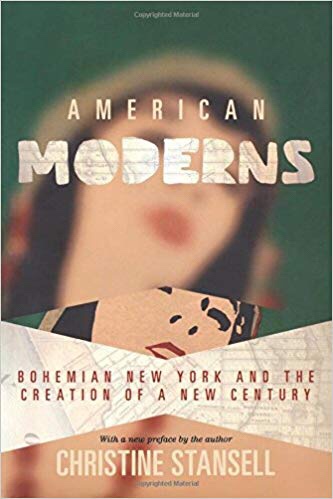
Christine Stansell, “American Moderns: Bohemian New York and the Creation of a New Century” (2000) – New Yorkers already think they’re at the center of the universe- why write books arguing for it? I’m being facetious, there’s more to Stansell’s books on the Edwardian counterculture in the Village than that. But even as she nods to New Yorker self-importance, she still basically grants it’s right. We’re not stuck with Victorianism anymore because of the mixture of libertines, political radicals, and artists who glommed themselves together in Greenwich Village between 1890 and 1920, is the basic thesis. They got together, broke various rules pertaining to art, expression, and relationships — across gender, class (sort of), nationality, but not generally race lines — and broadcast the results to the rest of the country and world. Change followed.

I don’t know… this book seems well-researched. Stansell is part of a wave of accomplished American social historians who came around in the 70s and 80s who know their way around the archives. You can learn a lot about stuff New Yorkers said to and about each other. But look- I’ve read a lot of histories pertaining to the 1960s counterculture, as someone not notably interested in it qua itself but for other reasons. And the thing you get from there is that it was less the actual activities the hippies did that were so unique — their parents were on various drugs (pills and booze), slept around, used to listen to unapproved music (jazz), etc. — but more… well, it’s hard to say. Some people figure it out better than others, but most just go on and on about Ken Kesey as though there’s something intrinsically interesting about the man. And whatever the equivalent of that analytic something is for the 1910s bohemians of the Village, Stansell doesn’t really say it. It’s just assumed that they are as they presented themselves, the diametric opposite of a standard order that Stansell also doesn’t really define or interrogate.

I like to defend old-school social history. It did a lot of good things in terms of bringing to light the lived experience of everyday people, and at its best used that to create larger, more systemic pictures. But the cultural turn had its uses, namely, it shook up people’s assumptions about the immutability of social structures. This leads to some issues (it took the new cultural historians a while to really think seriously about capitalism) but it also means challenging ground assumptions. Like that we all just know what the norms are and how people relate to them, and that the function of “norm-upholder” and “norm-violator” just sort of wander through history perennially, unattached to any cultural or social structures because they ARE structures. But they’re not. They’re dependent too.

I’m making this book sound awful. It isn’t. Artistic resistance is something of a cringe topic for me- I first came to political awareness at the height of the power of adbusters-style culture-jamming nonsense, so that stuff plucks some bad chords for me, especially seeing genuine radicals like Emma Goldman get wrapped up in it. But if you want to know about this stuff, Stansell isn’t bad. But for someone more interested in the broader significance, it’s about as useful as yet another recitation of the deeds of Timothy Leary. I guess I do it to myself by picking these books, but hey… I don’t see anyone else here writing reviews, do you? ***

Review- Stansell, “American Moderns”

Review- Cole, “Open City”

Teju Cole, “Open City” (2011) – Ehhhh… maybe I’m biased because he wrote that stupid article about the Charlie Hebdo massacre or maybe I’m just biased in favor of books having a plot, but I couldn’t get into this one. Cole’s sentence/paragraph level writing is pretty good. But it’s a book about a guy walking around New York (and, for part of it, Brussels). Nothing happens, there is basically no plot.

Here’s what I don’t get about these books about the experience of a city, and this goes from Whitman to Mary McCarthy to Cole (all writing about NYC, it occurs to me)- the idea behind cities is that you pack a bunch of people and resources together more densely than in other places. Presumably, this should create stories, more than other places (and, indeed, it has proven a gold mine for such, as the hardboiled tradition shows).

Why, then, do so many big name writers eschew plot and get all figurative when attempting to describe a big city? It makes sense when the romantics did it for rural landscapes. There’s less of human society going on there. Before you jump on me for just not getting it, keep in mind I lived in New York for two years and still have affection for the place. I, too, have perambulated alone through the streets of the city at night, thinking thoughts and feeling feels. I’d say I’d be as bored by a book of those thoughts, but no- beyond garden variety narcisissm, I think I came up with more vivid and involved fantasies and conjectures than Julius, the main character, does. My star ratings are always about some murky mixture of how much I like a book and how good I think it is. I’m going to lean more towards the latter on this one and give it an extra star for technical accomplishment, but I did not get much out of it. **’

Review- Cole, “Open City”

Review- Naipaul, “A House for Mr. Biswas”

V.S. Naipaul, “A House for Mr. Biswas” (1961) – One of the hardest things to do in literature is to maintain a real satirical eye. You need both a sharp, unforgiving perspective and an ability to recognize real pathos. TV sitcoms often do the debased version of this, twenty-one minutes of intermittently-amusing cruelty with a dumb moral slapped on in the twenty-second. When it’s done right, it looks like there was no other way it could have been- that the sensitivity and the sharpness constitute each other.

This is what you see in V.S. Naipaul’s breakout novel. Mohun Biswas, based on Naipaul’s father, is born into the poverty and insularity of the Indians imported Trinidad by the British as cheap labor in the sugarcane fields. Caste, religion, and tradition hem him in on all sides, even as these things are all challenged and broken down by modern conditions in a place thousands of miles away from where they were originally developed. A pundit decides he’s bad luck when he’s born, which becomes a self-fulfilling prophecy. His parents and community treat him as bad luck, which helps make him feckless, resentful, and dishonest, which in turn lead to disasters like the death of his father. It’s a hard life.

Mr. Biswas (as he’s referred to throughout) is a character you could call “Berard Complete”- fully realized without being tediously fleshed out in the manner of bourgeois character development. He has ambitions most of us would recognize as valid. More than anything, he wants to be independent, to escape from a world that is, shall we say, overdetermined. Buying or building his own house symbolizes that commitment, and it takes the whole book, over five hundred pages, to finally land one for him to die in. But he’s also something of a prick. He’s not the martyr-saint of so many stories about a man at odds with society. His fecklessness, his dishonesty, his resentments feel as real as his yearning to leave his predicament.

His predicament is symbolized by the Tulsis, the family which he marries into and the house in which they, and for a while he, live. They are a sprawling, matriarchal clan dedicated seemingly solely to reproducing itself, complete with immune system of shaming, shunning, and bribery to keep potentially restive cells of the body, like Mr. Biswas, in line. Along with symbolizing the stasis of the Hindu community in Trinidad (a controversial enough thesis), the Tulsis also represent Naipaul’s longstanding issues with women. But Naipaul’s satiric eye doesn’t fail him- Mr. Biswas may complain about his wife Shama, and her family trapping him, but he’s depicted as at least as responsible for his own status as they are, and probably more. The thing with living under various kinds of oppression, Naipaul reminds us, is that it doesn’t make us into saints or superheroes. It more often makes you and those around you a mess.

Insights like these are one of the reasons Naipaul was such a controversial figure in the liberationist 1960s when he came to literary fame. His ideas about women are what brought him his last major controversy before he died this year. But Naipaul’s satirical eye really did range everywhere, though he was soft on the English Tories who propelled his career and could probably have used it. To use a cliche, he was an equal-opportunity hater. In no wise was this more true of himself and his family. He loved his father, by every account. One of those accounts is in the book: the relationship between Mr. Biswas and the character of Anand, based presumably on Naipaul himself and something of a swotty little shit. But like Mr. Biswas, he consumes his father- in this case, using his struggles (including struggles to become a writer) as fuel for his escape from Trinidad into literary glory. He never flinched, or said he didn’t, or indicated regret. He saw what he saw, whether imagined or not, and said it, as well and as clearly as he could. When it worked, it worked spectacularly. *****

Review- Naipaul, “A House for Mr. Biswas”

Review- Igo, “The Averaged American”

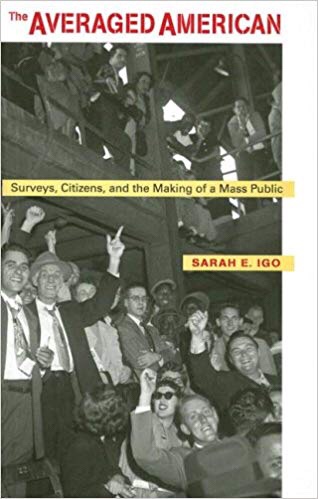
Sarah Igo, “The Averaged American: Surveys, Citizens, and the Making of a Mass Public” (2007) – Historian Sarah Igo makes a pretty good toss at arguing that not just government surveys or academic social science, but public reception of certain social scientific surveys, help define America’s sense of itself in the mid-twentieth century. She focuses on the Lynds, who authored the influential Middletown surveys; pollsters George Gallop and Elmo Roper; and surveyor of sexual habits Alfred Kinsey.

What distinguished these three from early social scientists was their focus on the average. Most 19th and early 20th century anthropologists and sociologists focused on what was seen as marginal and/or deviant: the poor, criminals, minorities, and the “primitive.” The idea of studying average Americans was so unusual most of Igo’s subjects walked into it backwards. Robert and Helen Lynd were originally contracted by the Rockefeller people to study ecumenical cooperation between churches. Gallop and Roper both worked in sales before devising polls as means to create feedback loops between increasingly capital-intensive consumer goods ventures (things like breakfast cereals and cars) and publics. Kinsey was an expert on mud wasps before he got into asking impertinent questions to thousands of people.

As it turns out, Americans from the twenties to the seventies really dug knowing what the average American was like, or, anyway, gazing at a selective picture of what’s “average” or even more iffy, “normal.” The Lynds’ “Middletown” studies became a publishing hit, and even the inhabitants of Muncie, Indiana, the basis of the study, grew proud of their distinction as the scientifically-designated normal American city. The Lynds specifically picked Muncie not because it actually met any statistical norms of the American population, but because it had small immigrant and black populations for an industrial city its size. This actually took some doing to find in America in the 1920s, the period just after the great waves of immigration and smack in the middle of the Great Migration from the American south. Gallop only studied “likely voters,” which ruled out most black people, many immigrants, women in many communities, etc.

It was a normative assumption on these people’s parts — ironically, fostered by the ways in which social science at that time focused on the “deviant” i.e. people who didn’t fit into WASP social scientists idea of normal — that Muncie was the mean. But people ate it up. The same uncertainties about change and modernity that drove social scientists in that period also drove many Americans, including those then as yet aspirationally part of the norm (children of immigrants, for instance), to seek out and embrace a picture of “normal” that ensured them that change would not threaten a social order. This normality became a self-fulfilling prophecy as policymakers — Igo depicts Franklin Roosevelt as an eager consumer of reports about national attitudes — hewed to these pictures when shaping social policy, like the New Deal’s encouragement of single-family homeownership. We’re still living with this picture of “normal” today, even as the cracks become harder to ignore. While a little “dissertation-y,” this book is a fine monograph that gets into an important subject. ****

Review- Igo, “The Averaged American”

Review- Rawlence, “City of Thorns”

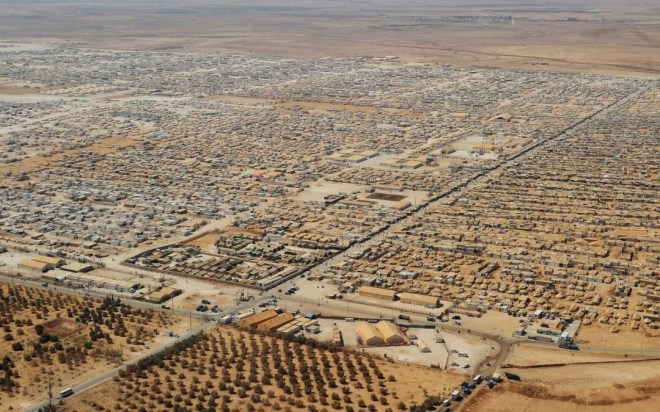
Ben Rawlence, “City of Thorns: Nine Lives in the World’s Biggest Refugee Camp” (2016) – This had a lot of potential to be awful. A white Brit, from the liberal-hawk Human Rights Watch (and an adviser to the Liberal Democrats in the UK, apparently) writing about Dadaab, a refugee camp of around a half million people, mostly Somalis, in the north Kenyan desert.

But it’s pretty good. Rawlence is more or less completely missing from the book, and instead we follow the lives of a number of refugees. Some of them, like Guled, are recent arrivals. Some, like Nisho, were born there- the camp has been there since 1992, so whole generations have been born inside. We follow the lives of men, women, young, old, Muslim, Christian, Somali, Sudanese, and Ethiopian. We see them try to make it in Nairobi or Mogadishu and generally find their way back.

The camp is run by the UN and the Kenyan government. The UN wants to ameliorate harm and provide a basis for NGOs to do the same (and do the other stuff NGOs do, like posture for donors). The Kenyan government wants to contain the refugees, and corrupt actors within it — which is to say, most actors in it — want to profit off of them. You can tell Kenya has come in to its own as a wannabe regional power by how it tries to set up its own Somali breakaway puppet state, Jubaland, using American-provided bombs and war-on-terror rhetoric alongside recruited refugees.

What no one except the inhabitants of Dadaab really want is for the people there to prosper and become independent. The NGOs would lose donors and connections, and more pertinently the Kenyan government and cartels would lose a profit source. Much the same goes for Somalia- a united, strong Somalia doesn’t benefit as many non-Somalis as the current mess does.

Rawlence does a good job of portraying the people of Dadaab as resourceful without giving in to the siren song of inspiration porn. They work themselves to the bone and find numerous hustles to keep themselves alive, and gain more than the bare life of UN rations. Porting, scavenging, peddling, building, running bus lines, making soccer leagues- the Somalis in the camp aren’t lying around waiting for handouts.

But an array of structures keep them from flourishing, not just international connivance. Clan matters tremendously; Guled is chased out of several marketplaces for trying go do porter work while belonging to the wrong one. Ethnic, national, and religious boundaries are high and lethal, and while Somali gender roles aren’t as stringent as some, they’re still quite strict on women and particular on interaction across combined gender and clan/religious lines. One mixed couple, Christian Sudanese and Muslim Somali, dodge lynch mobs and threats until they both sink into drink. The constant hustling for survival both breaks down traditional institutions and makes the trust boundaries that the surviving institutions create extra important.

Rawlence’s time frame coincides with the rise of al-Shabaab, the al-Qaeda aligned Somali militia; Guled fled from them to the camp. Dadaab is caught between al-Shabaab and the Kenyan government. Most of the refugees just want peace and opportunity. The camp-raised have an especially poignant attachment to UN values of process, gender balance, etc. But enough of them are angry or scared — or have the wrong clan ties — to let al-Shabaab in. Once bombs start going off in Dadaab and gun massacres happen in Nairobi shopping malls, the Kenyan government cracks down with the usual brutality of crooked states with little legitimacy. This, of course, drives more refugees into the arms of the militants.

It’s a big damn mess, and Rawlence puts little spin on it other than to express anger and derision towards the major players and admiration for the people of Dadaab, ordinary human beings living through an extraordinary situation. Seems like a good approach to me. ****’

Review- Rawlence, “City of Thorns”

Review- Graham, “Cities Under Siege”

Stephen Graham, “Cities Under Siege: The New Military Urbanism” (2010) – If I had read this book when it came out, it would probably be a bigger deal to me. But events — none more than the civil war in Syria — have changed things. Mostly, to Graham’s credit, the last few years have seen an acceleration of the trends he saw- drone assassinations, the internet as surveillance machine, the increasing focus on borders between the spatial cores of global capitalism and their hinterlands, increasing focus on the part of militaries on fighting in “urban terrain.” What Syria has shown is that while adapting technology is important, old questions like “who’s willing to actually put their ass into the horrors of urban combat and fight effectively” and things like diplomacy still matter as much, if not more. At one point, IS and Jabhat-al-Nusra had a good answer, in the form of a shitty international brigade of jihadis, and the Assadists didn’t have a good counter. Then they picked up one- Hezbollah, Shia militias, and SAA given a new spine by Russian help.

So, it’s weird reading a book like this pre-Syria war, pre-Brexit, pre-… all kinds of things. Much of what it says is still relevant! But some of the stuff I would’ve liked to have seen a deeper dive on — like rural/suburban/exurban antipathy for cities and what that means for military operations in urban terrain — he doesn’t spend as much time with as he does with drones and other things everyone now knows about. Graham also way over-quotes- theorists, mostly, but also plenty of ordinary geographers and other social scientists making points he could just express and then cite their influence. He’s not a bad writer- like I used to say to undergrads, you can say it in your own voice! ***’

Review- Graham, “Cities Under Siege”

Review- Vance, “The Book of Dreams”

Jack Vance, “The Book of Dreams” (1981) – Jack Vance’s Demon Princes saga ends with the taking down of the last and probably most interesting of the five space pirates who destroyed Kirth Gessen’s home village way back when. Howard Alan Treesong, like Viole Falushe, one of the previous baddies, just can’t get over high school. Born on a planetary backwater that sounds a lot like the upper Midwest or some descriptions I’ve heard of rural New Zealand, an imaginative and willful boy, he gets the works from the locals and dedicates his life to revenge. He gets far enough to become a sort of “Mr. Big” of galactic crime and nearly becomes something like space-Jesuit-General. But of course, he’s no match for Kirth Gessen’s focus and grit (and unlimited money he secured whilst taking out a previous Demon Prince).

Hero and villain both live for revenge. Kirth lives to avenge his family and home; Treesong lives to get his vengeance on his high school class and to make the universe as much like his adolescent fantasies (in the titular book, which Kirth eventually finds and uses as bait). The latter option seems to lead to a somewhat more colorful, if nefarious, existence for Treesong (and his fellow space pirates), but the latter provides the drive necessary to go through all the hoops to eliminate the former. In this installment, they range from a fake magazine contest to identify the one known picture of Treesong to the shenanigans with the lost diary to Kirth having to pretend to be a flautist to infiltrate the band at the high school reunion Treesong interrupts with dire theatrical revenge. Sometimes, the difference between hero and villain is how they go through the rigamarole.

The Demon Princes books are pretty cool. Vance clearly made more world than he could really fit in to these fairly conventional detective stories, as evidenced by the long epigraphs to his chapters full of lore from his universe. You mostly get the worlds through the odd planets Kirth visits, which showcase Vance’s fascination with the plasticity of people and societies, where oddballs in backwaters keep getting odder due to their cultural — and their planet’s ecological — logic. I ultimately prefer the Cugel and Anome books, but these are also cool. ****’

Review- Vance, “The Book of Dreams”

Review- Civico, “The Para-State”

Aldo Civico, “The Para-State: An Ethnography of Colombia’s Death Squads” (2016) – More uplifting material! Italian anthropologist and… life coach? According to his website? Aldo Civico originally set out to do an ethnography on the peasants forced from the land in to urban slums in Colombia during its last spate of protracted civil war. Among these people he found people connected with those most responsible for their plight- ex-members of right-wing paramilitaries, most of them part of the infamous Autodefensas Unidos de Colombia, or AUC. While the communist guerrillas in FARC did not play with kid gloves, it’s estimated that it’s the right-wing paramilitaries that were responsible for a majority of the civilian killings and forced displacements over the course of the war. The people Civico first found were cast-offs from the period wherein the Colombian government, less in need of the services of independent right-wing whack jobs and their private armies, began demobilizing the paras, who typically either found employment in the drug trade or none at all. And so Civico set out to understand the culture they came from.

Most of it is what you’d expect. A few leaders mouth platitudes about how bad the communists were and how they were the ones really looking out for the campesinos, etc. The lower-level soldiers mostly talked about needing to join one group or another during the war, and preferring the paras for various reasons- the guerrillas had wronged them somehow, or the paras paid more, etc. Civico does get them to open up about violence- how violence for its own sake, spectacular violence, was at the core of what the paras did, how even leaders routinely got involved in killing every now and again “to keep in practice.”

Civico throws a lot of theory around. The stuff from Lacan, et al, is generally unhelpful, and most of them are insights Civico could have come to himself. His borrowing of Deleuze and Guattari’s idea of the “war machine,” the organically-evolved reticular body of people and forces that coheres to wage battle either against or orthogonal to the more orderly bodies of the state, is more interesting. The AUC really did harness inchoate social forces in Colombia — from the decentralized power of local landlords (and later drug exporters) to Catholicism to the particular vision of the good life of land-bound order to the reality of Colombia’s embedment in global capitalism — to create a lethal force along the grain of existing Colombian society and against those who would change that grain. Deleuze and Guattari typically see the “war machine” as opposite from and destroyed by the state, but Civico points out that war machines like that often wind up reducing opposition to a certain kind of state, clearing room for a given form of order- or, in right-wing Latin American terms, engages in cleansing (limpieza) a given space or society. The government can forsake them, but in many respects, these groups are the precondition for the sort of governance the government had — has — in mind. Never underestimate the murderous rage or native organizing capacity found in the space where money and privilege meet the shock of resistance. ****

Review- Civico, “The Para-State”