
Review – Mampilly, “Rebel Rulers”

Zachariah Cherian Mampilly, “Rebel Rulers: Insurgent Governance and Civilian Life During War” (2011) – Pretty good polisci material on insurgent groups and the ways they govern territory they control. Mampilly’s case studies are the Tamil Tigers in Sri Lanka; SPLA/M, the confederation of rebels that eventually broke South Sudan away from plain old Sudan; and the Rally for Congolese Democracy, one of the major factions behind the overthrow of Laurent Kabila.

Mampilly arranges them in strata according to their governance success. The Tamil Tigers had a very robust governance structure, complete with courts, banks, health service, etc- this was written before their leader, Prabhakaran, essentially took his whole group with him in a doomed last stand against the Lankan army. SPLA/M was considerably less capable, but in a way almost as impressive in keeping the many ethnic groups involved working more or less together (alas, this also collapsed soon after South Sudan gained independence). Finally, RDC was never capable of doing much governance beyond extorting merchants at border crossings.

The conclusions Mampilly draws from his comparisons are pretty interesting, and I learned some things. Among others, the Tamil Tigers allowed the Lankan government to act in its territories for the purposes of welfare distribution (Sri Lanka apparently has/had a generous welfare state) and education. This reminds me of the stories I heard from Syria about the annual SAT-equivalent went ahead all throughout the civil war, administered on all sides- war is war, but the exams, especially in a former French colony, are the exams. Mampilly argues that insurgents do better at governance where they could inherit or work with robust state structures. This seems tricky, given that those seem to make insurgency less likely, but also seems to make sense.

In general, Mampilly seems to have a sensible perspective, refusing to act shocked by the sheer presence of insurgents like a lot of liberal/conservative social scientists, or attributing different outcomes to ineffable factors like “leadership” or “spirit.” A lot of success or failure comes down to facts on the ground- previous level of development, ethnic/sectarian rivalry, length of insurgency (longer insurgencies allow a Maoist strategy, which is the most successful in terms of creating a shadow government). It’s polisci so it’s not scintillating writing, but there’s much worse out there. In general, pretty good. ****

Review – Mampilly, “Rebel Rulers”

Review – Lethem, “Motherless Brooklyn”

motherless

Jonathan Lethem, “Motherless Brooklyn” (1999) – Ok, here’s my question: why did people treat a literary sendup of the tropes of detective fiction like an innovation at the turn of the millennium? They were only a few years out from “Who Framed Roger Rabbit?” Hardboiled detective fiction had been parodied in movies and magazines more or less since its inception, and even the people who wrote it often had a sense of irony about it. Lowbrows did it, highbrows (like Umberto Eco) did it. It was a done thing.


So I don’t know why people flipped their shit when Jonathan Lethem published “Motherless Brooklyn” and showered it with praise and awards. It’s about Lionel, a man with Tourette’s Syndrome who had been orphaned as a child and who was taken under wing (along with three other orphans) by a minor Mafia figure and used for odd jobs. Maybe part of it is that readers of “serious” new fiction like a simple, high-concept hook as much as anyone- “zany detective with — get this! — Tourette’s!” I recall the syndrome being a popular subject of daytime talk shows like Maury at that time, some poor kids on stage uncontrollably cussing and barking…


The second chapter, where Lionel explains his upbringing and the beginning of his experience with Tourette’s, would make a pretty good short story on its own. This is partly because, happening as it does in Lionel’s head, the autobiographical portion doesn’t interrupt the dialogue several times a page with Lionel’s tourettic outbursts (italicized, naturally). These are annoying. “That’s the point!” I can hear the defenders say. Well, A. it’s not like Lethem was trying to illuminate a lived experience of his, so the virtue defense is out B. the blurts are supposed to be a running poetic commentary on what’s going on, but it’s ham-handed and C. it’s fucking annoying.


Lethem has some good turns of phrase amongst his precious bullshit. The plotting is respectable — the old standby of a spiritual body being used for sinister and distinctly materialist purposes — if unevenly spooled out. Mainly, I think the book suffers from an identity crisis. Post-ironic sincerity writers like Lethem always struggle with saying anything about anything other than saying things. He tries to say things about detective stories and literary fiction (and New York and Tourette’s and music etc), but falls between the stools. It’s too dedicated to the quotidian detective story to go full meta-, and too literary to really commit to the detective story qua detective story. Even this could be all right, if the whole conceit of the book didn’t involve spending 300-odd pages with Lethem’s outside take on a disability, which renders everything obnoxious to get through. **’

Review – Lethem, “Motherless Brooklyn”

Review – Mirowski and Plehwe, eds. “The Road from Mont Pelerin”

Philip Mirowski and Dieter Plehwe, eds. “The Road From Mont Pelerin: The Making of the Neoliberal Thought Collective” (2015) – I was into talking about neoliberalism before it was cool/overused! I remember going around campus with my copy of Harvey’s “A Brief History of Neoliberalism,” with its severe black and red cover, and a wide-eyed Marlboro girl looking at me asking, “are you, like, really conservative??” That would’ve been circa 2006, so don’t at me with this defensive shit about using trendy buzzwords.

If I remember right, Mirowski has some kind of arcane beef with David Harvey over the definition of neoliberalism, something to do with Harvey’s overreliance on figures like Friedman and Hayek, the kind of thing intellectual historians use to trip up their more materialist rivals. Either way, except in the finicky academic sense, the essays in this book more or less fit into and expand the paradigm Harvey and others have laid out for what neoliberalism is: efforts to use state power to instantiate market models of governance broadly in society. If it’s overused, well, that’s because neoliberalism the concept has been overused, all over the place. Don’t hate the player (or in this case… sportswriter?), hate the game, etc.

As edited collections go, the essays here vary in quality. A lot of them do a “social history of ideas” thing, which I am generally in favor of but which often comes off a little boring- this scholar knew that scholar who knew this funder, etc. It gets more interesting when it gets into changes in ideas- to me, the most interesting is how the original “classical liberals” were often in favor of using government power to break up monopolies, including some of the early Mont Pelerin Society (the ur-think tank that launched neoliberalism as a conscious project) folks. Watching Hayek, Aaron Director, and other more politicized neoliberals work their way around that — purely coincidentally as they were getting more and more funding from angry right-wing American plutocrats — is certainly worth observing. The social history of ideas method works best when it’s paired to an understanding of power, and the history of neoliberalism, which is more a theory of governance than anything, stands to benefit from it substantially.

I’m not great at reviewing edited collections because they kind of break up my concentration. So I’ll just relate what it made me think about the history of liberalism more broadly. It’s my belief that there is a set of parameters that unifies liberalism across the modern period. I don’t think those things are an emphasis on liberty and individualism, etc. I think what defines liberalism is its relationship to the cycles of revolution and counterrevolution that characterize modern history- liberalism seeks means to establish a harmonic system that channels the energies of revolution and reaction into support for the system itself. This is why the concept of liberal-conservativism (figures like Tocqueville) make sense- I see “conservative” as most useful a term to describe the same relationship liberalism has with the revolution dynamic, but leaning towards the reactionary end. So “classical liberalism” and progressivism and Keynesian liberalism and neoliberalism and “social liberalism” all deserve to be called liberalism, despite their differences, and none is a more legitimate claimant to the title than the others. All of them attempt to negotiate the strains of modernity — of Arno Mayer’s “Furies” — in a way that avoids a decision in favor of either revolution or counterrevolution (though they are often forced by circumstances to weigh in favor of one or the other, generally the latter) through directing their energies into some sort of system that is supposed to be balanced… anyway, that’s Peter’s Unified Theory of Liberalism, for whatever it’s worth. Feel free to ask questions/tell me someone already came up with this/poke holes! It’s not as though people haven’t! ****

Review – Mirowski and Plehwe, eds. “The Road from Mont Pelerin”

Review – El Akkad, “American War”

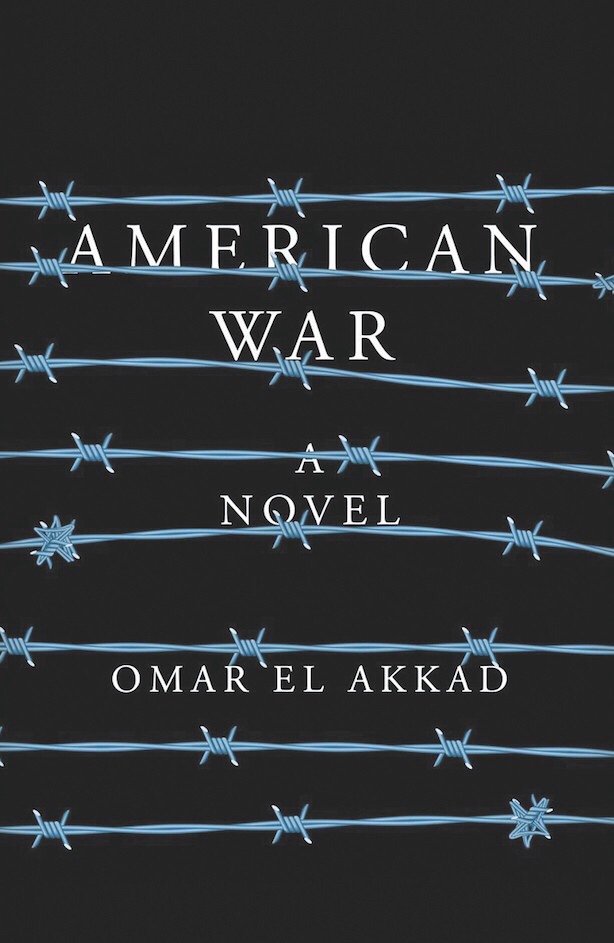
Omar El Akkad, “American War” (2017) – The first major literary attempt at depicting the big wet dream fantasy of the right (and at least some on the left), the second American Civil War is, alas, lousy. El Akkad is an Egyptian-Canadian journalist who has reported on the war in Syria and uprisings in places like Ferguson. There’s some realism in his depiction of refugee camps, where most of the story takes place. But, for a book that’s supposed to deal with this risky territory, it really punts on the nature of the war itself. In the 2060s, the US, already minus Florida because of climate change, tries to ban fossil fuels. The South rises again, I guess out of sheer love of rolling coal (the depiction of the South is both deeply patronizing and weirdly hands-off). The rest of the country very slowly grinds them down until, at the start of the book in 2074, only a rump state of Mississippi and some other places are left.

This is lame. I know we shouldn’t tell people they should write a different book. But it’s just takes you out of the story when it doesn’t really engage with so many of the things that have divided Americans, past and present- particularly race. Despite harkening back openly to the Confederacy in its propaganda, the rebellious South is depicted as race-blind in an easy, nonconflicted way. The North wouldn’t even be that. People give the main characters, a black Latino family, more stick for being Catholic (though not in any way that advances the plot or builds the world) than for race or immigration status or any of the stuff that matter more to people post-20th century. You see more of refugee life than you do of the war, but the details of the war don’t work either- that things would break down easily by US state, that the North would take out the whole state of South Carolina and ONLY South Carolina with a bioweapon (like it wouldn’t spread), etc. Twenty years of straight-up war is way too long, even though I know these wars drag… which makes the one big apocalyptic ending off-key, too. It just all feels contrived.

The prose and plot of the book doesn’t redeem it. El Akkad sees some things. His depiction of the experience of the refugees who make up the family we follow seems real enough- equal parts terror and boredom with confusion ladled over it all. The parts where a Southern militant begins recruiting one of the members for suicide attacks starts out good but becomes way too flowery, too much a courtship. The dialogue runs the gamut from ok to drek, averaging at pedestrian. At the end of the day, there’s not a lot of there there, which probably explains why the likes of Kakutani got so ga-ga over it. It’ll take someone who has caught at least a whiff of the fever that stalks this country to tell this sort of story right. *’

Review – El Akkad, “American War”

Review – Whitbourn, “To Build Jerusalem”

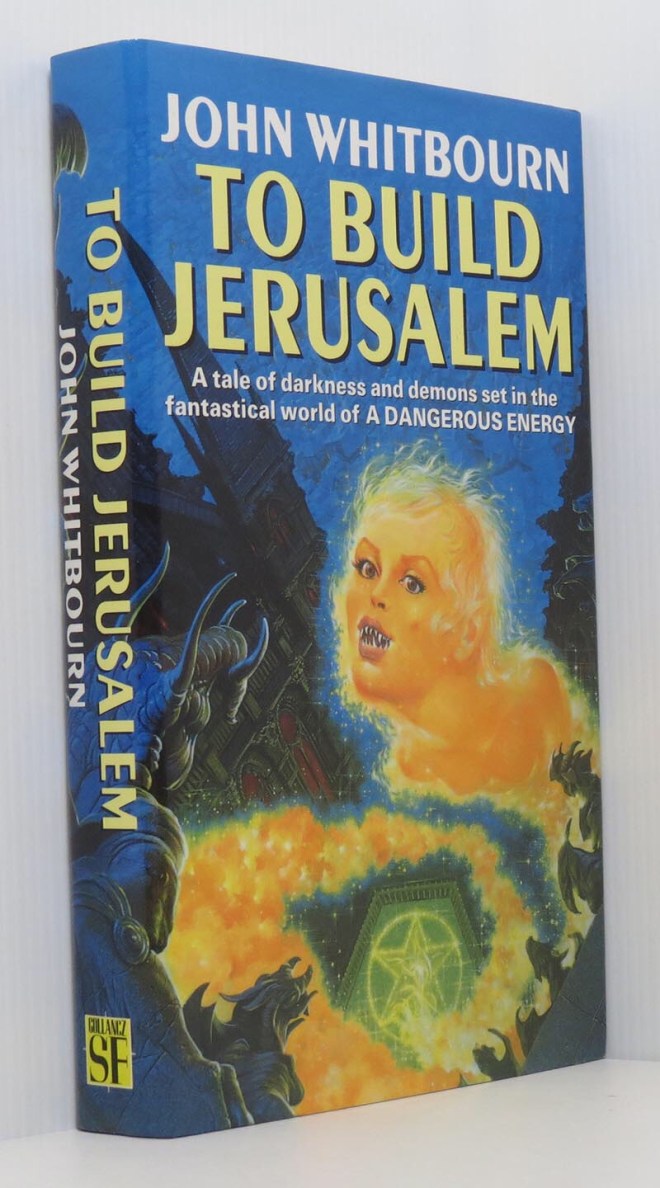
John Whitbourn, “To Build Jerusalem” (1995) – An alternative title for this one could be “Fear of a Protestant Planet.” English fantasy writer Whitbourn once described himself as a “Green Counter-Reformation Anarcho-Jacobite” (you can see why I made a point of tracking his books down). This was back in the eighties or nineties, before we would automatically assume such a person is just trying to find a way to avoid self-describing as fascist. Whitbourn’s ideas frame the worlds he writes, and they’re animated by a pulpy horror/fantasy sensibility with substantial Lovecraftian overtones.

This one in particular takes place in a world where the Reformation failed, the Catholic Church runs things in a manner reminiscent of the Emperor in Dune, and magic exists, mostly wielded by priests. Like I said when I reviewed the first book set in this world, “A Dangerous Energy,” if Whitbourn is trying to convince people that the world would be better without the Reformation, he’s found a funny way of doing it. The world is dark, cramped, and run by tyrants. It’s the late twentieth century and much of the world is unmapped and they’re just figuring out trains. To the extent Whitbourn can be said to pitch it as a “good” world, you could argue it’s more orderly- people know their place in the world and stick to it. Not my thing, but ok.

But Whitbourn is pleasingly non-didactic, and the actual point of the world seems to be that it’s a good jumping off point for horror and adventure. The main character is an enforcer for the Church, a sort of Catholic janissary named Adam. He’s sent to England because there’s a disturbance in the force- some kind of entity in the sphere of magic that is making the spells not work good. Wizards often summon demons, but it turns out, the demons they summon are small-fry compared to a big (and very horny) demon from a realm of evil beyond even the evil-realm the wizards can access. The many layers of unknowable and unholy power that exist beyond our ken are reinforcement for the idea that we need a stable order watched over by a perennial source of spiritual power…

Spoiler alert- the demon lord (never named) manifested itself to the Gideonites, the underground remnants of Protestantism in England. They bargained with it to kidnap the King and the papal legate and do a bunch of other mayhem. Whitbourn depicts the Gideonites as similar to (a conservative picture of) militant leftist movements in our timeline (including references to “democratic centralism” lol). Their overweening pride and desperation over being owned by the Church and its armies all the time leads them to believe they can use this demon-lord to bring about the End Times and hit the reset button on the whole thing. Not only that- but they’re getting into enclosure! The venal lords of England, never really faithful enough, start doing capitalism against the wishes of the church, kicking good pious peasants off the land and raising sheep for money. Both the demon’s antics and enclosure are treated as equally heinous, offenses against the sacred order of things.

The book’s a lot of fun. Naturally, our Leninist-Puritans can’t control the demon-lord, who does all kinds of nasty things. Adam develops a fun Holmes-Watson thing with a provincial English yeoman-soldier. Whitbourn throws in a lot of fun details and a real sense of place, namely Surrey and Sussex- apparently he has whole collections of macabre tales about them. The ending was kind of a cop-out. There’s some fun battles in the demon-lord’s own dimension, but they end with a literal deus ex machina (or deus ex coelum). It’s consistent with Whitbourn’s beliefs and with his vision of our world at the mercy of extra-dimensional powers above and below… but it kind of took the wind out of the book’s sails. Still, definitely worth checking out. Also, someone claiming to be Whitbourn commented on my review of his earlier volume. If you’re reading this, Mr. Whitbourn, thanks for getting in touch, and I hope your straits aren’t actually dire! I did go out and buy this book, and encourage others to do so if they like quality weird history/fantasy/horror fiction. Maybe we can do an interview? Let me know! ****’

Review – Whitbourn, “To Build Jerusalem”

Review – Tutuola, “The Palm-Wine Drinkard”

Amos Tutuola, “The Palm-Wine Drinkard” (1952) – …or, “what’s a guy gotta do to get a drink around here??” Amos Tutuola recounts the trials and tribulations of a hero looking to get his palm tree tapper — the one guy who get enough for the titular palm-wine drinkard— out of the underworld.

The Nigerian Tutuola mixed elements from the Yoruba storytelling tradition with modern touches to produce this modern-day mythic epic. We encounter all kinds of weird creatures. My favorite is the suitor who turns out to owe all of his body parts to creatures in the forest, who repossess them one by one, except his mouth- how else is he going to keep talking? The hero and his retainers undergo transformations and what we would today call “mission drift.” Most of all, everything is transactional- the hero can’t smash his way out of things, or call on a deity to fix it. There’s always a deal to be made and work to be done, and no one drives a harder bargain than the ever-importuning dead.

I’ve read that when Tutuola published the book, people didn’t know what to think. Tory critics in Britain pretty near openly race-baited it. Other contemporary African writers were embarrassed by it. They wanted to (and did) prove that Africans could produce modern, universalist literature. Tutuola’s work is steeped in the stories, worldview, and language patterns of the Yoruba. His bid for universality isn’t that of an Achebe, but it works. Some of the original students of mythology held to a stupid, racist idea that the myths of each people were mutually incomprehensible, “deep cultural patterns” or whatever acting as a substitute/supplement for the blood magic racists often believe in. Nothing can be further from the truth. The characters and situations are often difficult to relate to across time and space- but the themes aren’t, and that’s why people not born to them can enjoy them. The Yoruba stories remind me a little bit of the Celtic myths- the intertwining of the cyclical and the disruptive (like the Celtic cross, sadly appropriated by fascists), the capricious changes, the demanding dead. But that’s my own provinciality speaking. Both caught real hell off the Brits, but that’s probably incidental… ****

Review – Tutuola, “The Palm-Wine Drinkard”

Review – Levi, “The Periodic Table”

Primo Levi, “The Periodic Table” (translated from the Italian by Raymond Rosenthal) (1975) – What is there to say about Primo Levi? As far as I can tell, he might be the most universally respected of the great twentieth century literary figures. No late-career slump, no shilling for oppressive regimes, no ego spiral, no sexual predation… just a dude saying what he saw, as best he could.

I’m both trying to be more brief with these reviews (especially of fiction) and am about two weeks late with this one- between my birthday and everything, stuff just got pushed. This is a book of short stories about Levi’s life, mostly before and after his time in Auschwitz. Each is themed after one of the elements on the periodic table- Levi was a chemist by vocation. They range a lot. There’s a discussion of the old Italian Jewish community the came from. You see young Primo learning how to climb mountains with a boy who went on to be the first partisan killed from his town. There’s a bunch of amusing chemical industry anecdotes (apparently varnishes turn into gross little livers after a while?). Perhaps most interesting is his meeting with one of his supervisors in Auschwitz years later and trying to figure out how much of his repentance is sincere or relevant. All of it in the straightforward but humane prose of a man who, in the depths of the worst of the century, decided that if he survived, he would remember and recount all of it, as clearly as he could. That one of the few uncompromised figures of twentieth century literature is also one of the clearest and most readable is a miracle. *****

Review – Levi, “The Periodic Table”

Review – Chu, “Time Salvager”

Wesley Chu, “Time Salvager” (2015) – This was fun. It’s set in the 2500s after humanity has fled a toxic Earth into a precarious existence on space stations and in outer moons like Europa. A profoundly unequal, megacorp-dominated society fighting a losing battle against economic and social decay, they use time travel technology developed in earlier, better days to essentially loot the past for raw materials and the types of goods they can’t manufacture anymore.

Of course, like any time travel story, there’s a bunch of more or less arbitrary rules, both to time travel itself and the way the time-looting agency, ChronoCom, uses it. In order to protect the integrity of the time stream, you can’t give the secret away, or cause major ripple effects. In the book, this means they wind up looting a lot from people who are about to die imminently, particularly at the sites of battles or disasters. Looting engines from spaceships about to blow, for instance, or art (of course, the megacorps commission custom jobs) from a cathedral about to be shelled. You also can’t bring people back, but that turns out to be more of a political rule. There’s a bunch of other rules that basically are there for story purposes- as Time Pimp informs us, “Nobody knows or cares how time travel works.”

Of course, somebody has to break the rules, and of course, that somebody is a grizzled veteran of ChronoCom who’s seen many a disaster, on top of an already rough life. The main character, James, is your basic gunslinger character put into this time-travel story. Everything changes when he meets the love interest, a scientist named Elise who works on a doomed experimental ocean station in the late 21st century. She’s nice to him, so when the station is destroyed, after looting the stuff he was sent for, James saves Elise. This is a big no-no, so they become fugitives among the tribes of the toxic Earth, with both a megacorp and James’s chronoman buddies after them. Despite being stranded amongst the primitive scavenger tribes of post-apocalyptic Boston, on an Earth where every ecological disaster was turned up to 11 over a few centuries, Elise discovers a potential way to save the Earth. Naturally, it ties in with what she was doing before she got time-napped, which of course ties in to various dark secrets of time travel, etc. etc.

This isn’t Philip K. Dick or Octavia Butler here. Hell, it’s hardly Shakespeare, even. The characters are pretty basic- James the hard-drinking vet who’s seen some shit, Elise the optimistic scientist who’s tougher than she looks, Levin the by-the-book enforcer whose honor compels him to hard choices, etc. etc. The prose doesn’t sparkle, especially the dialogue. But it’s fast and fun. I also think the various futures we see (Chu makes the interesting, and I think smart, choice to have the characters go back more often to the future history — the period between now and the time the main action is set — rather than doing our past) are assembled out of found parts, but well-assembled without too much exposition. The action is fun- close escapes, fights with assorted future technology, etc. It’s a good subway/beach read that plays familiar rhythms well. ****

Review – Chu, “Time Salvager”

Review – Beniger, “The Control Revolution”

beniger

James Beniger, “The Control Revolution: Economic and Technological Origins of the Information Society” (1986) – This is a history of the technologies and techniques of controlling industrial processes. It’s both as interesting and as boring as it sounds. Beniger exhaustively surveys the industrial landscape, from materials processing to production to transport to distribution, digging up every kind of feedback mechanism from thermostats to cereal box-top contests and placing it in the context of an ongoing narrative of broadening and deepening control capacities. These control mechanisms both relied upon and were necessitated by the explosive growth in the speed of movements and the mass of productivity unleashed by the Industrial Revolution. Much of the “Control Revolution” begins in the same places the Industrial Revolution did: coal and steel, textile manufacturing, and especially the railroads. It really comes into its own — and develops a class of specialists in control and feedback mechanisms (i.e. industrial bureaucrats) — with the Second Industrial Revolution of the late nineteenth century, which paved the way for a mass consumption society. It’s a truly impressive work in its depth and scope.


It’s also pretty dry. It’s not completely lacking in historiographical zeal- in fact, it makes some big claims about seeing societies as processors of matter and information, organizing itself and the world around it from lower to higher degrees of control as a (ultimately futile) struggle against empathy… but at the end of the day, learning about accounting techniques, factory arrangements, and bureaucratic structures is something that only works for me in small doses. Two things also seemed to be missing. First, the rest of the world- this is a very America-centric story. It would make sense if the US was the center of the Control Revolution, but it would be good to get more of an explanation as to why. Second, not a ton about workers- stuff about Frederick Taylor and other (exploiter/)managers of labor, but not a lot about what seems like a key ingredient- producing and reproducing a labor force to make the whole thing go. That might complicate the picture of a self-organized informational society some, and I guess Beniger prefered to stick with his vision. Either way, an interesting dive into some of the undergirdings of modern society. ****

Review – Beniger, “The Control Revolution”

Review – Vance, “The Face”

Jack Vance, “The Face” (1979) – In this installment of Vance’s space-detective-western series, Kirth Gessen knocks off the fourth of the five Demon Princes that sacked his home planet. Space pirate Lens Larque hails from Dar Sai, a desert planet the climate of which breeds a harsh and haughty people. Think the Fremen from “Dune.” Herbert built his worlds like an engineer, with everything serving some purpose (however obscure) or making a point (however pedantic), and his desert nomads are an austere product of pure adaptation. Vance, more of a writer’s writer, makes his desert-dwellers capricious and proudly difficult, full of orientalist filigree like special sports and mating rituals. The reader spends a lot of time on this planet as Kirth attempts to track down stock certificates for a worthless company that Larque once controls which somehow will winkle Larque out of hiding, or provide information as to his whereabouts, or… something. It’s not very clear and it even gets tedious at times, which Vance usually doesn’t. There’s some encounters, including Vance beating the Darsh at their weird wrestling-diplomacy game, and the usual love-plot, in this instance with a winsome member of an elitist society colonizing Dar Sai for minerals. This would be the least inspired volume in the series so far if it didn’t build to a very satisfying and amusing end, when we find out what Larque was up to with all of his money-making and planetary construction schemes. It’s a gesture even Kirth has to respect- after getting his man, of course. ****

Review – Vance, “The Face”