Review – Vance, “The Palace of Love”

Jack Vance, “The Palace of Love” (1967) – This is the third of the Demon Princes novels, a sort of space-opera-revenge series with western overtones. Kirth Gessen’s village got enslaved by a gang of space pirates led by the five Demon Princes when he was a boy, and he’s spent the rest of his life pursuing revenge, one (book) at a time. By this third book Vance is a bit looser, building more character into Kirth’s quarries. The first two Demon Princes were mostly distinguished by their provenance in a species that mimics mankind and attempts to excel it. Kirth’s target this time is a human- and an incel! Viole Falushe got into the space slavery game as a result of being spurned by the cool girl in high school. Very human self-pity and self-regard fill in for whatever alien-species stuff Vance used as a motivation for his bad guys in the last two books, and it works out.

The thing with Vance villains is that they are generally aware of the absurdity of their situations but are so wrapped up they continue on anyway. There’s no becoming the cool boy with the girl that Viole wanted to be, so he resorts to increasingly high-concept and creepy ways to replicate it, all of which fail. Eventually, it’s these failings that give Viole away, and after hanging out with a feckless poet who influenced the young Viole and doing some detective work, allow Kirth to find his man and give him his just desserts. But more than the plots, which can be somewhat pro forma, the Demon Princes books get their juice from the baroque shapes Vance envisions human societies and personalities taking in response to environments, cultures, personal obsessions, etc. No one comes up with worse hells than Vance — Viole’s last scheme to get what he wants is pretty grotesque stuff, even by my standards — so it’s forgivable if the straight men he puts on them are a little stiff sometimes. ****

Review – Vance, “The Palace of Love”

Review – Taylor, “From #blacklivesmatter to Black Liberation”

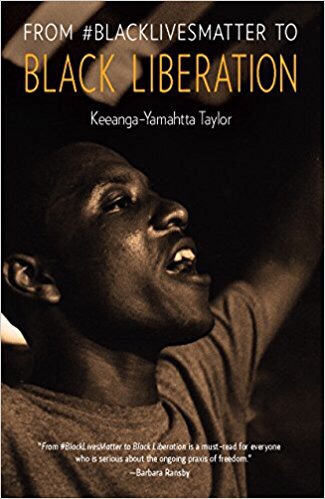
Keeanga-Yamahtta Taylor, “From #blacklivesmatter to Black Liberation” (2016) – It’s been a while since I’ve read a “current events” book (nonfiction about contemporary issues that isn’t reporting) not about the far right. Keeanga-Yamahtta Taylor is a comer in the left public-intellectual world, who reliably produces sharp analysis and clear writing on politics, especially touching on race, and has been the recipient of that badge of honor for activist intellectuals, the Fox News freakout.

In this short, highly readable book, Taylor frames the Black Lives Matter movement as a renewal of a black liberation struggle that has gone on at least since Reconstruction. She depicts these movements as both a continuation and a critique of the civil rights and black power movements of the 1960s and 1970s. The latter made critical advances in securing citizenship rights for black Americans, especially in situations where formal color-blindness was an improvement, such as voting rights or public accommodations. But forces that tried to tackle the nexus between racism and capitalism were savagely repressed by the government and failed to make much headway. This left the system that oppressed black Americans (and, to one extent or another, most Americans) intact, with a somewhat more diverse ruling class than had existed previously.

Taylor puts a lot of emphasis on civil rights (and, to a lesser extent, black power) heroes attempting to adapt to the system, and being co-opted by it, to the point of becoming impediments to the new movements as they arose with a spate of highly-publicized police/vigilante murders of black people in the 2010s. The new movement is considerably less leader-driven than previous iterations of the black freedom struggle, largely being mobilized and publicized online and organized via consensus by local coalitions, with women and gender-nonbinary people playing many of the major roles. Taylor cites this decentralization along with the willingness on the part of the emerging movement to criticize the relationship between police brutality, racism, economic injustice and the logic of our system more broadly as signs that the movement has the potential to meaningfully answer the crises we face.

Taylor isn’t naively optimistic, giving due credit to the magnitude of the challenges, the liabilities of decentralized, social-media-driven organizing, and the possibilities of co-optation. If I have a criticism, it would be that I would have liked to have seen more specifics about how these challenges might be overcome, and what this loose, inchoate assemblage turning into a movement that can sustain a long-term challenge to power might look like. Since Taylor wrote this book, at least a few journalistic pieces have come out detailing that internal difficulties between Black Lives Matter groups, the way decentralization leads to a sort of centrifugal force making unified action impossible. On top of this, one sees the same ideological fault lines and personality conflicts between leadership you see in any movement, and that social media might accelerate and make harsher.

It’s good to have hope, both because there’s reason to believe in it for these movements and because gloom seldom helps anything. But I think it could have been interesting to look into the internal dynamics some and see how they work or could be improved. That said, this is a shorter work that introduces the issues and a frame for understanding them, and does well at that. ****’

Review – Taylor, “From #blacklivesmatter to Black Liberation”

Review – Zola, “The Conquest of Plassans”

Emile Zola, “The Conquest of Plassans” (1874) (translated from the French by Helen Constantine) – My campaign to read Émile Zola’s Rougon-Macquart series, at the rate of a volume or two a year, continues apace. In this installment, a Rougon back in their ancestral home area of rural Provence gets messed with by a priest. Zola was an anti-clerical republican and so his priests are generally sinister figures, and so far in the series Abbe Faujas takes the sinister cake.

The abbe rents a room in the farmhouse of the Mourets, a solid-ish bourgeois family into which Marthe Rougon married. Francois Mouret grumbles about having the priest and his mom around- he’s a staunch skeptic, republican in a low-key way in second Empire France. But it still happens, and the abbe makes his play to conquer the town of Plassans for the church and for the Bonapartist party.

Who doesn’t like a good stranger-comes-to-town-and-messes-stuff-up story? I gotta say though, Faujas’s moves don’t seem to make much sense to me. As far as I can tell, he gets owned by the snooty Legitimist notables he came to town to undermine at a party. Then, he uses sympathy from that to get in with a few of the wives, including Marthe. He gives them meaning and purpose through things like founding a home for unwed women (and what bourgeois lady doesn’t like bossing unwed poor women around?) and creating a club for the teens. He also negs them mercilessly in the confessional. Through it all, Faujas shows few emotions other than light disgust for the rubes who come to throw themselves at him. He doesn’t display real passion for his work or his cause. Passion in Zola’s “naturalist,” Darwin-influenced worldview is for men like Francois, concerned with patrimony and pride. Faujas — priests in general — cut off from reproduction and displacing that energy into other goals, are unnatural, vaguely uncanny, both more and less than the likes of Francois.

Zola may have been a left-republican hero for his stances against empire and the Dreyfus affair, but he bought into some pretty standard gender ideology of the time. This is the French version, so the women in his novels are much saltier and more independent than equivalent figures in 19th century Anglo novels. But all the same, the women allow the abbe, his mom, and for some reason his ne’er-do-well siblings to gain social and financial power over Plassans. The men are all gaslit into either going along or literally going (or just seeming) crazy and being committed, like Francois. Marthe in particular develops a deeply erotic attachment to both Catholic ritual and Abbe Faujas. For his part, Faujas both brusquely tells her to tone it down — her enthusiasm embarrasses him — and relies on her devotion to squeeze the Mourets for everything they’re worth, eventually destroying the family and their home. How much of Marthe’s pathology is down to gender, and how much due to the immutable physical/moral characteristics Zola wrote into his two subject families as an experiment in literary “naturalism,” is hard to tell. But one gets the idea that the Rougon curse in a man would express itself pretty differently.

Either way, enjoying Zola’s novels at this point in history depend on whether the novel in question provides a clear enough picture with enough action to keep a reader who isn’t immersed in 19th century France engaged. I even know a fair amount about the history and it can be tricky for me in its more granular detail. This one gets a little subtle in terms of the social manipulations and hence harder to enjoy. Still worth reading for Zola completists, and really, if you’re doing Zola at all, might as well try for the whole whack, no? ***

Review – Zola, “The Conquest of Plassans”

Review – Coontz, “The Way We Never Were”

Stephanie Coontz, “The Way We Never Were: American Families and the Nostalgia Trap” (1992) – In one of the books on the use of social science research evidence in policymaking that I am looking at for my job, the author talks to Stephanie Coontz, a cultural historian, about her decision to write books for a more popular audience. Coontz said she specifically sought to challenge the policy environment surrounding questions of the family- and to do that, you had to write in a way policy actors could read and understand. She undertook this primarily in her book about the history of marriage (this during the gay marriage debates), but also this book, which takes aim at a vast array of historical assumptions about American families which shaped a whole range of domestic policy debates in the 1980s and 1990s.

This frame appears almost quaint now that various sentimental images of the American family are literally used in the propaganda of fascist groups and to justify the Trump administration’s border policies. But we shouldn’t underestimate the stakes in the 80s and 90s either. Our failings in that era help pave the way for what came after, but policies like welfare and housing “reform” did real harm to a lot of people, to say nothing of the systematic harmful neglect of lgbtq people and people of color that went on under the rubric of “tradition” and “family values.” Defenders justified many of the policies that did the damage as maintainable of or returning to one or another mythical version of the American past, and in particular a mythic American family of some golden era- the colonial period, the Victorian era, the ever-popular 1950s… I’m told nowadays the 1980s are quite popular with the chuds, especially the younger ones, but that came after.

All of these pasts were — are — radically, cartoonishly simplified when it came to family and household structures. Casting the nuclear family into the, well, pre-nuclear era as some sort of norm is flatly wrong, given how often people lived in extended family groups, either were or hired live-in domestic help, lived apart from family due to migration, etc. The idea that people had more “family values” is almost diametrically incorrect for any period before the end of the Second World War in this country, where a man’s actions in the public sphere were considered to be more important to his personality than what happened in the domestic, and where even in times when women were more confined to the domestic sphere, they were expected to use that to have a substantial impact on the outside through “moral improvement” and so on. “Family values” would, as a phrase and as an actual value set, sound selfish and vaguely cowardly to earlier generations of Americans.

Even if those things — “family values” and the nuclear family — were more characteristic of the 1950s, A. that was basically new at the time, was much less universal than we think, and made a lot of people, especially women, miserable and B. depended on massive government welfare spending. Ward and June relied on government handouts in everything from roads to old age pensions (so grandpa and grandma didn’t have to spoil the party) to jobs to education. And even if it wasn’t the federal government providing it before the 1950s, welfare or dependency on others of some sort was always definitional to the American family structure, and usually more to that of the comparatively well-off than to the truly destitute.

Consistently, from at least the late-19th century, bourgeois reformers sought to use governmental power to both nudge families towards accepting a lifestyle model refined from very specific clades of the upper-middle class (starting with that of the northeastern bourgeoisie), and discipline those, generally poorer or otherwise marginalized, who did not meet their standards. All the while, they generally hid the hand of government power in creating the structures that made the accepted family model possible, treating it as the natural outcome of market forces and good character. Schematically, this particular alignment of forces — the politics of family and its occlusion as being a politics — sees to be an artifact of the post-Commune, post-1870s-depression global upper class freakout. This would make many of our ideas about family, including widely accepted and cherished ideas about things like childhood and romantic love, products of the long counterrevolution… history! A harsh friend.

Coontz marshals a wide range of materials from history and the social sciences, as well as primary sources, to make her points. It’s all pretty neatly laid out for undergrads- my copy looks like it went through at least two previous owners (to judge by the number of highlighter colors used and its general condition) and it seemed pretty well-followed throughout. It does eventually take on a fish-in-a-barrel quality which can get a bit wearying, especially considering what we know about what happened post-1992, none of which is hardly Coontz’s fault of course. One of the main reasons I read it is for a writing project where I am trying to get beneath the dreams that go in to creating “traditions” and imagining them back in the past. Coontz’s book is a useful compendium and dissection of some of the main fantasies that continue to structure how Americans see their lives. ****’

Review – Coontz, “The Way We Never Were”

Review – Pein, “Live Work Work Work Die”

Corey Pein, “Live Work Work Work Die: A Journey into the Savage Heart of Silicon Valley” (2018) – I picked this up because I’m a fan of Corey Pein’s podcast, “News From Nowhere,” and have liked some of his writings a lot. Pein’s a journalist covering what you could think of as the “high-concept political awfulness” beat, and has some of the better short-form writing on contemporary fascism and the altright around. After publishing an article on the embrace of “neoreactionary” thought in tech circles, Peter Thiel called Pein a conspiracy theorist- a few weeks later, we found out Thiel was bankrolling and orchestrating the lawsuit that destroyed Gawker.

“Live Work Work Work Die” combines first person gonzo-style memoir/journalism and more conventional journalistic writing. Pein depicts himself at his wits end by early 2015- journalism increasingly in shambles due to the impact of social media, getting dicked around by the tech-industry types increasingly calling the shots in his industry, he lights out for Silicon Valley with the sort of confused non-plan that characterizes a great many tech industry success stories. He’s going to become a billionaire and write a book about it- perhaps he’ll become a billionaire by writing the book?

He’s not clear about that in the book and one gets the impression it doesn’t matter. Hope and fear both drive people to the tech gold rush in the Bay Area and are basically indistinguishable. This is because your two options are basically become rich or slide down the slope of exploitation and misery- there’s no way to just be in San Francisco, as Pein tells it, or increasingly in the rest of the US, or the world.

So, like the those around him, even (especially) those who sincerely believe in what the tech industry says about itself, Pein bounces from plan to plan, between insanely expensive shitty short-term housing situations, around startup parties to get free food, and through all kinds of profoundly banal pitch meetings and networking groups. No one who isn’t already rich has any more control over their lives than he does, even as numerous gadgets and apps provide the illusion of control through structuring your tiny range of choices- the same way one tries to get toddlers to do what one wants by giving them two choices to do the same thing.

What Pein concludes during his time in Silicon Valley is that no startup succeeds because it’s brilliant or innovative or actually helps anyone- to the extent that describes any of them, it’s purely incidental. Successful startups either: – rip off an existing idea that a venture capitalist wishes they funded earlier; leverage government-funded research or infrastructure for private gain; or simply “disrupts” a given field by committing substantial breaches of regulations and law, and hoping they get big enough fast enough so that no one will stop them in time. That’s what happened with Uber and Airbnb, after all- taxis and hotels without those pesky regulations, insurance, etc. Pein’s own best idea along these lines is called Laborize- for a price, they’ll go start a union drive at a rival company, giving the client a competitive advantage. His motto- “disruption is not a dinner party.” Alas, it doesn’t get far beyond the pitch stage- too novel, probably, for venture capitalists, and perhaps their class consciousness was pricked by the specter of worker organization, even if weaponized against competing firms.

Pein’s description of his journey through the degradation and banality of non-billionaire life in the tech boom complements his discussion of what the tech industry means for the rest of us. The spectacle of a great city being swallowed by an industry that both fetishizes its authenticity and is in the process of destroying it is a reasonably good metaphor here. Notionally, all of these tech products are meant to enhance our experiences, including the social media platforms on which I am posting this review. But really, like what the industry is doing to San Francisco, the products are doing to us- parasitically mediating our experiences in an effort to produce dependency and extract endless labor and profit from every aspect of our lives. The people amongst whom he lives — the supposed pioneers of a new way of living — live like hamsters, in Pein’s telling, with no conception of agency in their own lives except for demanding goods and services- push the button and get your pellet from grubhub, or your streaming tv. Presumably, the fact that this is still considerably harder for needs such as human connection or sex helps produce the sort of violent “incel” misogyny we see among nerds…

Moreover, tech’s metabolization of the world is working, and unlike virtually every other major institution in our lives, people still by and large trust the tech industry, if polls are to be believed (it wouldn’t surprise me if this ardor has cooled in the last year or two). Given this, the last chapter of LWWWD is a baffling one. It describes the bizarre fantasies of the tech elite. This includes singulatarianism as well as the “neoreactionaries,” figures like Curtis “Moldbug” Yarvin, Balaji Srinivasan, and Peter Thiel who want to see something like a tech-CEO-monarchy and the breakup of contemporary power structures to be rebuilt on the basis of strict hierarchies. This might be naive, and I can think of answers, but I think it’s worth wondering- our society piles money, power, and adulation at these people’s feet and has bent itself in knots to please them, including literally giving them the government-funded architecture of the internet as a gift. What more could they possibly want? How can they possibly be as upset as they purport to be with the shape of a society that has blessed them so thoroughly?

At the end of the day, the more concentrated power is, the less capable it is of being truly secure. Among other things, as they themselves will tell you, these guys are nerds- with major insecurity and chips on their shoulders. Society has rewarded them for following their adolescent impulses for accumulation and control, why should they grow out of anything now, or even just reign in any of their other impulses? Moreover, there seems to be some awareness on their part — however papered over by a mind-numbing fog of biz-babble and techno-optimism — that their fortunes, positions, and most importantly senses of self rely on massive and increasing inequality and immiseration of the rest of the population. Perhaps they feel in that situation, they can’t afford to leave well enough (for them) alone. They need to keep going until they have secured all the resources and all the power, even power over death, time, space, etc, for themselves.

Apparently, the original draft of this book was 600 pages. I’d like to see that- you get the feeling in a few places that stuff has been cut, that you’re looking at an abridgment. In particular, the sections of first person description and of reporting of the ideological oddities of the Silicon Valley elite are joined a bit awkwardly. I even get the impression the frame — Pein seeking his fortune, not getting it, then having these epiphanies (as though he hadn’t been writing about this stuff for years) — is basically a device to squeeze a longer, more original work into a narrative the publisher felt comfortable with. Either way, it’s a fast read with a strong voice, appropriately angry and alarmed, avoiding the twin perils of febrile wailing or condescending dismissal of the “nerds” that you so often see in writing about tech, fascism, and the confluence of the two. Given how sensitive the likes of Thiel and Elon Musk are, I can only hope more writing like this gets out there- let’s give these people something to cry/tweet about. ****’

Review – Pein, “Live Work Work Work Die”

Review – Dantec, “Babylon Babies”

Maurice Dantec, “Babylon Babies” (1999) (translated from the French by Noura Wedell) – It’s not a great sign when the title of your experimental cyberpunk novel — published by “semiotext(e),” MIT’s theory imprint, yet! — has a title that makes you think of the Muppet Babies except everyone is in those big hats and beards. I thought maybe it’d be better in French — “Enfants de Babylone” doesn’t sound so dumb — but nope! Dantec gave it that English title despite the novel itself being in French.

Anyway… for a 560 page novel replete with references to literature, history, and especially high theory like Deleuze (presumably by it got translated into English by a theory-specialist academic press), I haven’t got that much to say about the actual plot. A magical girl holds the key to a future of Deleuzean schizo-something or other, where the boundaries between people, machines, animals, plants, et al break down and everything gets all freaky and liberated (but in a scary way) somehow. I don’t hate that kind of theory in the way vengeful nerds often do. Some of it I even get something out of. But more of it strikes me as posturing obfuscation, not offensive so much as uninteresting. Perhaps in keeping with the muddle of this kind of postmodern thought, it’s not entirely clear how the girl, or one of multiple hard-to-distinguish cults with an interest in her, is going to effect this change- something about viruses and genetically engineered babies? Who knows.

This magical girl (Marie- natch) needs to be escorted by the main character, Toorop, a Flemish mercenary with a philosophical bent, initially hired by the Russian mob but then wooed away to save the girl and one of the nicer cults, or… something. Honestly it got hard to keep track. At 560 pages and numerous digressions into High Theory you’re not doing cyberpunk, you’re doing cyberprog. There’s some cool stuff in here; it’s not the worst laid out near-future dystopia I’ve seen, and there’s some good twisty crime stuff. But it gets overwhelmed by sheer volume of (basically indistinguishable) characters, digressions, and just words. It’s too long and confusing to work as a novel. The translation doesn’t help- among other things, there’s mistakes even someone who can maybe quarter-read French could pick up, like translating “ancien,” as in “former,” to “ancient,” so you get stuff like “Toorop was an ancient soldier” when really he’s a retired, hence former, soldier, only in his forties. Sloppy, or “post-modern”? You decide!

I will say I’m curious about this Dantec figure. He died a few years back, but apparently cut quite a swath in French-language literature, a sort of love-him-or-hate-him kind of guy. Supposedly his real magnum opus is where he pulls a Leon Bloy and wrote something like 3000 pages about how all of the rest of contemporary French literature is awful, and written by awful people. Untranslated, alas, and even the wikipedia article in French isn’t that informative- seems to be one of those literary fights waged fiercely in its circles and not making its way out, certainly not to Anglophone schlubs like me. Apparently, Dantec was on the political right, a supporter of the Iraq War and Israel. He selects some interesting backgrounds for his characters- Toorop fought for the Chechens against the Russians and the Bosnian Muslims against the Serbs, and his two friends on his mission are an American emigrant to Israel and a Protestant militant from Belfast… the romance of small nationalisms? A lot of our contemporary very-online far right seems to prefer big nationalisms against smaller forces seen as disintegrative, ala Russia, the US, Syria… but you do get the other side too, the fantasy of breaking apart the liberal global monolith through multiple secessions of militant nationalities, eccentric enclaves and ministates, and so on, which is pretty in keeping with cyberpunk tropes… anyway, who knows if that’s what Dantec was in to, but I’m basically more interested in that than the theory-inflected stuff. **’

Review – Dantec, “Babylon Babies”

Review – Geismer, “Don’t Blame Us”

Lily Geismer, “Don’t Blame Us: Suburban Liberals and the Transformation of the Democratic Party” (2014) – A book that hits close to home! This is a study of suburban Massachusetts liberals in the period running from the 1960s to the 1980s. Geismer focuses on the Route 128 corridor that runs around Boston, and on the towns of Newton, Brookline, Lincoln, Lexington, and Concord in particular. So, in terms of personal biography, it’s a day early and about a half hour north- I was born under the second Dukakis administration, where Geismer ends, and grew up around where 95 and 495 meet, where the Massachusetts Miracle extruded suburbs over old farm/mill towns, replicating the original 128 boom thirty years before. I wasn’t quite the child of the inner-ring suburb professional/managerial elite Geismer writes about, though it’s certainly close enough if you squint, and I went to school with a lot of them.

Geismer writes of the 128 suburbs as the domain of the knowledge professionals. Spurred by Cold War funding and the presence of Harvard and MIT, early tech companies and their employees flocked to the cheap but accessible real estate in what were streetcar suburbs or historical farm towns. These towns became dedicated sites for the reproduction of the knowledge-based side of the professional/managerial class- from the aesthetics of the housing stock to the structure of local government to, especially, the schools, these people had found a way of life they liked and were going to both stick to it, and pass it on to their children. Part of this particular reproduction strategy involved a denial of itself as a class process, either through efforts to abate class privilege through ameliorating the conditions of poorer people, or justifying it via a notional meritocracy, or some combination.

Unlike many who flocked to the suburbs in the postwar era, the knowledge professionals of the 128 corridor considered themselves liberals, indeed, more liberal than the boss-dominated democratic politics in the city some

of them departed. They believed in a gentler, more rational world, and in values of fair play, compassion for the less fortunate, and most of all education. Geismer depicts the original 128 settlers as well aware of the stereotypes of suburbanites — small minded, reactionary, living in houses made of ticky-tacky that all looked just the same — and strove to be different, particularly the highly educated women among them determined to remain active in the outside world and who got involved in many liberal causes.

Of course, we all know that liberal values and a dollar seventy gets you on the bus- though you might be waiting a good long while for one all the way out in Concord. The fight to bring public transit to the 128 suburbs — including a Red Line extension to Concord — is just one of many that Geismer documents where suburban liberalism either failed to act upon, or actively hindered, egalitarian projects in Massachusetts. The nice towns with the nationally-rated public schools were ok with bussing in a select few black students through METCO, especially if they could (in language that is pretty cringeworthy today) spin it as an opportunity for their little darlings to learn to work with (or manage) a diverse population. But no way were they going to consider a metropolitan pooling of school resources with Boston, especially once the Supreme Court ruled they didn’t have to. Towns like Lexington routinely evaded efforts to build more housing and make them more accessible by public transit using arguments about good, liberal values like historical preservation and open space. And of course, as times got tighter in the 1970s, the mask started to slip a little and plenty of people in the nice liberal towns voted for Prop 2 1/2, avoiding the kind of taxation on their appreciating property that might have made a difference for the less fortunate for whom they sometimes professed caring.

Conservatives (and the occasional radical) have been making hay out of the Massachusetts liberal stereotype for decades- arguably, given its role in clinching the presidency for both Bushes at various points, it is a caricature of world-historic importance. And there’s ample justification for that. But Geismer admirably resists caricature, and the result is to make the critique more potent, not less. While undoubtedly there many hypocrites among the suburban liberals, Geismer depicts many of them as quite sincere… within the bounds of their worldview. They genuinely believed in progress… all the progress that could be made without forcing a substantial change in the way of life in towns like Concord.

Something big like ending the Vietnam War was more feasible, in this worldview, than seemingly smaller things like building public housing in Lincoln or a red line extension to Concord or really desegregated local schools. The effect of Vietnam on their property taxes, the schools their kids went to, their quality of life as measured by hiking trails and the view out of their windows, was not readily apparent, though it did have an impact on that other important motivator of suburban liberalism, their senses of self as good, progressive people. They could oppose many egalitarian measures from plausibly liberal values standpoints — by reference to quality of life issues, meritocracy, freedom of choice, and so on — and often did. The people most loudly suggesting an alternative value arrangement in Massachusetts at that time were violently reactionary white ethnics in Boston, the ones behind the anti-busing and anti-abortion movements. It’s important to avoid romanticizing the working-class urban politics of mid-twentieth century in our desire to stick it to the neoliberalism that arose from the suburbs. Sometimes, there aren’t good choices- left movements in the area at the time were marginalized, where they weren’t sucked into suburban liberalism’s gravitational field.

Once Massachusetts — parts of it, anyway — began thriving again during the “Massachusetts Miracle” in the 1980s, national Democratic Party politicians began taking notice. Like other rapidly growing suburban areas organized around knowledge and service work, the 128 suburbs portended a new kind of politics, a technocratic, issue-oriented neoliberalism promising jobs, growth, and meritocratic social progress. It could present itself as progressive and rational, as opposed to the ward-heelers made to stand in for working class politics and the screaming yahoos on the right. In other words, like other forms of liberalism, it attempted to split the difference between popular power and reactionary rage through various management techniques. Mike Dukakis was an early poster-child for this kind of politics, and if it didn’t work out for him nationally (in large part due to massive race-baiting), it did work out for Bill Clinton, who had all the same policies but with a fake populist drawl. The Democratic Party is still basically that party today, and seemingly cannot adjust.

Geismer isn’t a prose stylist (most academics aren’t) but given the subject matter, the book was still highly evocative to me. I’ve come to see liberalism in general and the sort of suburban liberalism I was raised partially in and around as the tool of a class that needs to be overthrown not just if we’re going to make progress, but if we’re going to survive. But I’ll admit, having been raised around it’s tropes has had an impact, though maybe it’s just local chauvinism- I think our education-based bullshit social structure stacks up well, or is at least less tacky, than the rest of the country’s real estate and god-bothering-based bullshit social structure. It’d be easy for me to hate most of our leadership class in any event, even if I hadn’t gained a political education, because they seem like, are generally, crass dummies. But the sort of academic politicians my state produces — Dukakis, Robert Reich, Elizabeth Warren — raise my hackles precisely because I can feel them tickling some deep spot in my brain that identifies their affect and rhetorical ticks with competence and safety, probably from imbibing WBUR and Channel 5 in the cradle… suburban politics have a uniquely powerful way of wrapping regionally-tailored cultural fantasies around a means of socially reproducing an unsustainable system in a way that reinforces both. It’ll be interesting to see how it develops as that unsustainability becomes more clear. ****’

Review – Geismer, “Don’t Blame Us”

Review – Winterson, “Sexing the Cherry”

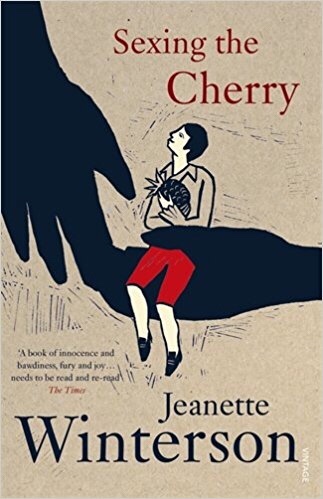
Jeanette Winterson, “Sexing the Cherry” (1989) – This was a pretty fun, short read. A gargantua-style “Dog Woman” and her beautiful small non-son Jordan get unstuck in time. They start out mostly in seventeenth century Britain, but seeking out fruit, shelter from civil wars, and love send both characters, but especially Jordan, wandering around getting in various magical realism adventures with a feminist spin. It’s pretty fun and not weirdly self-aware like a lot of big time “literary” writers are when they dip a toe into the speculative side of things. Think Italo Calvino with a sense of humor.

Because I’m weird, I found myself thinking less about its take on time, gender, myth, or any of the other big themes Winterson plays adroitly with, but about one time in particular- the time surrounding the English Civil War. The Dog Woman, the main narrator, falls firmly on the royalist side. The Roundheads are presented as prissy, hypocritical, not allowing of fun, and also totally gay for each other. The executed King Charles is depicted as a tragic figure beloved by all. In short, the Royalist side was the side of the kind of funky, weird, subversive types that Winterson asks the reader to identify with, and the Parliament side represents the martinets who try to keep them down.

It’s less that I object to this — my ideas about the English Civil War are complicated, to say the least — and more that I feel like this isn’t the only artistic work from its era by notional lefties (or at least counterculture habitues) who identify with one or another conservative ancien regime. This is usually held in opposition to some new order, like the Roundheads, supposedly progressive but actually just the force of cold rationality. The ancien regime is seen as more organic, funkier, warmer, authentic. I feel like, but can’t quite remember, others did this with the Royalist side in the English Civil War, or with the Restoration. Definitely you saw it with figures like Richard Brautigan and his “Confederate General from Big Sur,” who lives a life of liberated fecklessness that the narrator seeks to join, fleeing from the buttoned-down life in the rest of the union. Ishmael Reed was a complicated writer but hated many kinds of radicals and tended to prefer figures who carve out spaces of freedom inside of a system whether than trying to overthrow it. You see something like that in parts of Robert Anton Wilson’s “Illuminatus!,” which is basically Ishmael Reed for literal-minded white nerds… anyway, not sure what to make of it but I think it could be a thread worth tugging on. I don’t think it takes away from the book at all, which was pretty good, but I get fixated on weird stuff some times, lay off me! ****’

Review – Winterson, “Sexing the Cherry”

Review- Kruse, “White Flight”

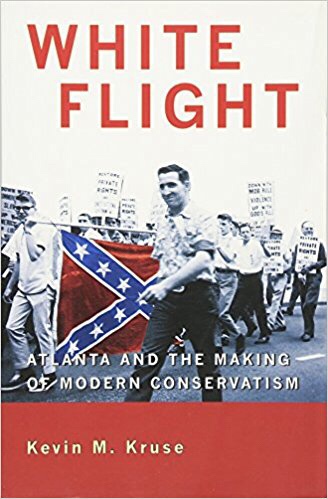
Kevin Kruse, “White Flight: Atlanta and the Making of Modern Conservatism” (2005) – This book is part of a wave of pretty solid social/cultural histories that used local studies to examine national historical trends, many of them published by Princeton University Press in the 2000s. Kevin Kruse looks at Atlanta in the mid-twentieth century and the ways it dealt with race, specifically as it pertained to desegregation and class. For decades, Atlanta had prided itself on being forward-thinking and racially moderate- the “town too busy to hate.” That all went out the window once it became clear that black people weren’t going to be content to be second-class citizens, disallowed from public services and spaces. “White Flight” traces the patterns and broad historical effects of the temper tantrum the white population of Atlanta threw in response.

Kruse goes through a number of the efforts white Atlantans tried to bolster and reinscribe formal racial separation in the period from the 1940s and the 1960s. Open racial terrorism, including bombings, came into play most often as black families attempted to buy homes in white neighborhoods. Neighborhood-based public resources such as schools, parks, pools, and busses were generally abandoned by whites — and therefore underfunded — rather than allowed use by integrated publics. Most of this affected working-class white Atlantans; even middle-class black families couldn’t afford (and certainly couldn’t secure loans) to buy in middle-class neighborhoods. Things finally reached the upper classes of white Atlanta when the sit-ins at restaurants and stores began to challenge the merchant elite of the city for control of their space, and when demands came to desegregate spaces where they congregated, like golf courses. Then they lost their sense of noblesse and began flipping out, too. And in Kruse’s telling, they all acted en bloc, only disagreeing on whether intransigence or flight was the proper response to desegregation- nobody thought about trying to make it work, nobody white anyway. Flight won out.

In the end, none of the formally, legally racialized bulwarks of the segregation order remained standing in the late 20th century. What we have instead is a racial order kept in place by control of capital, which in turn commands space (in the form of real estate) and force (governments, taxes, borders, cops). The new suburbs that whites fled into, not just in Atlanta but all over the US, grew into cut-off enclaves- at one point, Metropolitan Atlanta had 56 separate municipalities in it, each with its own taxes, zoning code, schools, etc. Using notionally color-blind language about “small government” and “local control,” these suburbs can replicate something like the experience of segregation for the white people who live in them.

There is a caveat there, though, two things that changed in substituting informal suburban segregation for the older formal, urban version. First, people were enjoined to avoid open expressions of vulgar race hate in public and in the legally binding rules. Second, and more consequentially, white Atlantans in the segregation era enjoyed well-funded public spaces and goods. Post-white flight, suburbanites came to abjure the idea of the public altogether. In some instances, the public schools, behind the walls of exclusive zip codes, continued to have some esteem (see also, suburban Massachusetts). But for the most part, public transit, public housing, public leisure- all of these were replaced by private equivalents. Many of the principles we associate with suburban design and governance were there before white flight, but white flight codified it, standardized it, and put a ton of money and political will behind it. This privatization eventually came to be a matter of principle, as expressed by politicians from these rapidly expanding suburbs, and none more openly than Newt Gingrich, who represented the Atlanta suburbs.

In Kruse’s telling, the real secession wasn’t the southern states from the northern- it was the white suburbs created out of the flight from desegregation seceding from the rest of society, despite being entirely dependent on urban cores and the federal government for their very existence. Consciously or not, their leaders succeeded where earlier reactionaries failed, and actually found a way to give a substantial portion of the population just enough property to feel like they’re in the master class- and just enough anxiety to be willing to fight to protect it, and to consider any other system not just wrong, but dangerous. Moreover, by helping destroy the cities in the mid-20th century, they also spiked the most viable alternative to that way of life. They even went so far as to rebuild some cities on a sort of privatopia-lite model and let their bored spawn go live in them!

In the end, soft segregationists called liberalism’s bluff. Liberals weren’t going to allow formal segregation anymore by the mid-20th century. This was in part due to values, but liberals had the political capital and the will to go along with it in large part due to the Cold War- segregation being a bad look when wooing developing world allies. But liberals also weren’t willing to challenge capitalism, and the smarter, later generations of segregationists knew it. Crying about the big mean gummint making you serve milkshakes to black customers was for small-timers. The real action, and the real money, was in remaking segregation with the tools — capital, and the way it can command institutions and populations — at hand. *****

Review- Kruse, “White Flight”

Review – Flint, “Cecil Rhodes”

John Flint, “Cecil Rhodes” (1974) – One of the big problems of pretty much any hierarchical structure is how often they entail press-ganging the less powerful into the stupid dreams of powerful people. Exploiting others for profit is wrong but it makes a certain intuitive straightforward sense. It’s when powerful people exploit others for non-material things — where they want others to play along with some stupid vision, and are willing to use coercion to do so — that I get really creeped out. This extends from the mundane (“service with a smile,” beyond basic politeness, makes my skin crawl) to most of the practices that have gone into making “new” kinds of people, whether nationalist, revolutionary, religious, whatever. If your program was good to begin with you wouldn’t need to coerce people into performing its attributes. But people with dreams that involve other people’s obedience typically don’t listen to that logic.

Few had bigger, dumber, creepier, more coercive dreams than Cecil Rhodes, and very few ever gained as much power to carry them out, however imperfectly. This relatively short (just under 300 pages) biography of Rhodes gets across a reasonable sketch of those dreams and the things Rhodes did to bring them to fruition. The massive expansion of European power over the course of the eighteenth and nineteenth centuries gave unprecedented opportunities for people like Rhodes to draw their designs on the world- generally at its cost.

Rhodes was a classic imperial “type”- younger son in a middle-class provincial family. Not notably smart or talented, he did have a certain doggedness that helped him when he joined a brother in prospecting the diamond fields in South Africa. His company, DeBeers, came to have a near-monopoly on diamonds, and Rhodes became a major player in gold as well.

But wealth was always secondary for Rhodes. It was secondary to what he called “the Idea.” Not being notably intelligent or articulate, the specifics of it are hazy, but the main thrust is clear enough. He wanted the British Empire to rule the entire world, and for white settlement to cover the whole planet (eventually displacing all over people, who, it’s implied but not stated, will die off). To see to it this happened, Rhodes wanted to create a secret order, based on the Masons or the Jesuits, or rather, versions of those organizations found in lurid fiction of the time. This secret order of the best young people from the best Anglo/Germanic stock — Germany, Britain, the white settler dominions, and the US, which Rhodes dreamed of reuniting with Britain — would be molded at Oxford University and then sent out to work together to shape the world according to Rhodes’s imperial dream. And that’s why the Rhodes Scholarship exists- though it’s worth noting that its executors stopped caring about the goofier bits of the founders vision pretty much as soon as he died in 1902.

The scholarship was a long term plan. In the shorter term, Rhodes sought to carve out an empire in Southern Africa, preferably one he could run himself in Britain’s name. Flint does a pretty good job keeping track of the players in the deeply complicated world of southern African politics in the 1880s and 1890s. If Rhodes showed real talent anywhere, it was in playing politics- working merchant interests, the Afrikaner republics, and the British administrators off of each other. At his height, this allowed his company to basically annex what became Zimbabwe and Zambia outright- this became “Rhodesia.” Rhodes was always seeking more, and doing so led him to start the Second Boer War (after years of getting along relatively well with the Afrikaner leaders, largely on the strength of impressing them as being equally racist as they) before he died.

Most of the time, Rhodes went faster than the government in London wanted to go. It’s not that the people in the Colonial Office were nice- they were just cautious and didn’t want to bite off more than they could chew. Rhodes got around them through combinations of canny politicking and appealing to the mob. Rhodes was a genuine celebrity, a symbol of upward mobility and white supremacy. His formula — imperialist expansion abroad as the way to allay class conflict at home — would prove important for the future, even when things didn’t go exactly as planned for him or other imperialists. Dreams of superiority (which involve you being you, but more so) are a useful antidote to dreams of solidarity (which might involve actual change).

The biography itself is pretty good, though one imagines one could do a much longer and more thorough job. Rhodes had numerous phases in his short life that shed light on a number of interesting pieces of history: his attempt to buy the Oxford experience in his late twenties with his diamond money, his various attempts to work out systems of power that would both balance various actors — English settlers, Afrikaners, British administration — and the explosive politics of racial exploitation, involvement with the ins and outs of extractive industry and political power. Moreover, it’d be interesting to have a close reading of his particular kind of racial jingoism, of the kind Elaine Frantz Parsons did with the early Klan. Still and all, if you want to spend some time with someone with a lot of money and big evil world-changing dreams, this book does it. ****

Review – Flint, “Cecil Rhodes”