Review- Boyle, “East is East”

T.C. Boyle, “East is East” (1990) – Somewhere, and I don’t know where, I got the conviction in my head that there’s a good writer inside T.C. Boyle. The best I can figure it’s a combination of hope and approval of his choice to go with high-concept novel ideas instead of mulling on themes like divorce, being horny for the wrong people, the usual ideas that spur “literary fiction.” I read “The Inner Cycle” and it wasn’t great but it was an interesting premise, doing a novel about Kinsey and his group.

Truth be told, “East is East” doesn’t even have an especially interesting premise. A Japanese sailor named Hiro (get it?! I wonder if Boyle and Neal Stephenson read each other) jumps ship on a real rural, real purty island off of the coast of Georgia inhabited by all kinds of bucolic yokels, and also a writer’s colony. I’ve been told this a novel about stereotypes. That’s basically right- whatever there is in terms of Hiro or the other characters reacting to others based on stereotypes, the characters themselves are also flat cardboard cutouts- the honorable idealistic young Japanese, backbiting pretentious writers, assorted rustics. Other than the rustics it’s not like the characterizations are especially damning. They’re just boring. The writer stuff especially was disappointing- the biggest, easiest target for an up-and-comer (at the time) like Boyle, and he just whiffs it. I just finished the book last night and I can barely remember it.

Am I alone in detecting a certain strand of late-80s/early-90s literary writing where whimsicality in prose and high-concept, sometimes genre situations covers up for a whole not of nothing happening to flat characters? Walker Percy gets close to that in “The Thanatos Syndrome.” You’ve got Tom Robbins. Tom Wolfe- “East is East” was compared to “Bonfire of the Vanities,” which I also despised. Ishmael Reed’s eighties novels are definitely a lot flatter than the rest of his work. I feel like there’s others. The End of History era wasn’t great for literature, either, it seems. It all seems like setup for David Foster Wallace to come along with his GRE words and vast tragic self-importance to identify himself with the umpteenth version of “the new sincerity…” Anyway. This was bad. Don’t bother with it. I might continue my quest to see if there’s a good T.C. Boyle book but at this point more to test my hypothesis on high-middlebrow flatness in the late twentieth century. *
Review- Boyle, “East is East”

Review- Brontë, “Wuthering Heights”

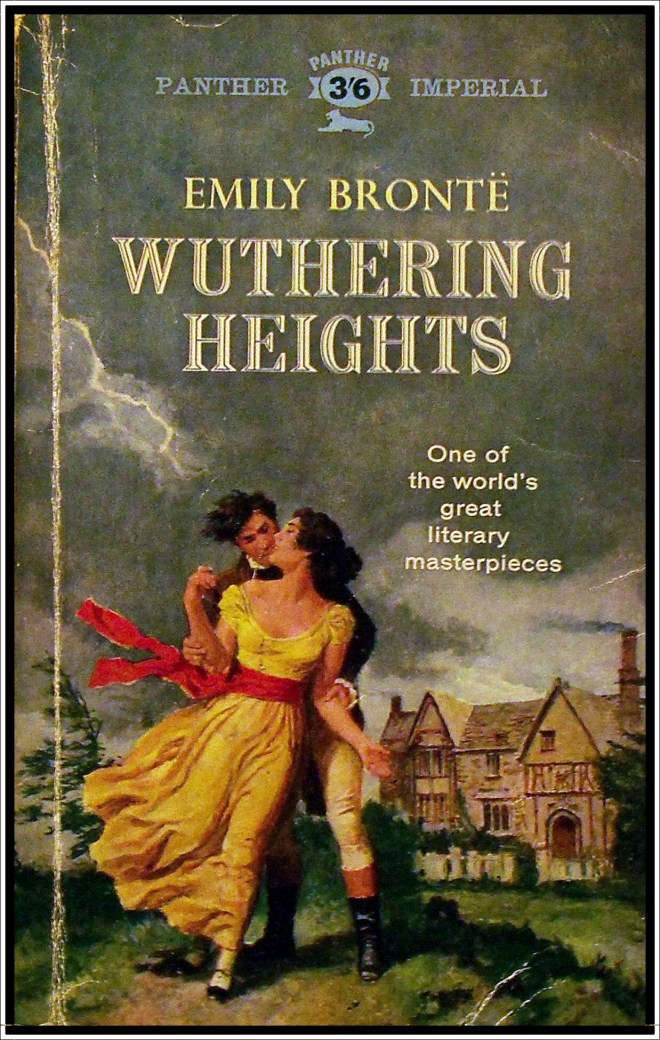
Emily Brontë, “Wuthering Heights” (1847) – Part of me wants to just link to the video for that Kate Bush song, but that would just be a bid for cheap likes. More than anything, Wuthering Heights was a surprise for me, much like it was for the critics who read it at the time. I wasn’t scandalized by it like they were, but I was surprised by the raw, wild quality of the emotions and the actions impelled by them in this book. It’s a stark contrast from other “respectable” Victorian writers. Everyone continually blackmails each other’s futures by leveraging landed positions and unlikely attractions (like anyone’s attraction to Heathcliff, who I guess gets away with it because of his craggy brow or however she phrases it) to either steal other people’s land or set up some kind of awful marriage. People get stabbed and falsely imprisoned and set upon by dogs. It’s a mess! Along with being more extreme in its action than a lot of Victorian novels, this one also gets to the points it’s making somewhat quicker, without the mannered pace common at the time. I also always enjoy a third-party narrator in a story, though that might enter into the feeling of repetition I had towards the end- but that might just be the nature of the story.

Maybe I’m influenced by other criticism I’ve read, but I do think the historical context — setting the novel at the turn of the nineteenth century when she was writing in the late 1840s — is meant to convey a message about the worth and sustainability of all of these high-romantic feelings and gothic tropes. Cathy and Hareton might not be much, emotionally, next to Heathcliff and Catherine, but at least it’s an actual match and not someone’s lover’s revenge turned into a state-sanctified marriage pact. All in all, a satisfactory read, would wuther these heights again. ****’

Review- Brontë, “Wuthering Heights”

Review- Maugham, “Of Human Bondage”

W. Somerset Maugham, “Of Human Bondage” (1915) – This one hurt. The only comparison I can think of is Celine’s “Death on the Installment Plan.” Maugham and Celine are on utterly opposite sides when it comes to style: Celine, the great prose innovator of the twentieth century, Maugham, the master of conventional, easy-reading style in whichever medium he used. But both were in medicine before they took up writing, and both knew pain, both taking it and inflicting it. Both wrote great books putting versions of themselves through the wringer of youth.

The main character, Philip, has a rough time from the beginning- he’s got a clubfoot and his parents both die before he turns ten. He’s adopted by a basically indifferent elderly uncle and aunt. He goes to boarding school, which is hard enough when you’re not sensitive and clubfooted, but sucks extra hard when you’re both. He’s the wrong sort of middle class, just enough money to avoid learning anything useful or being able to easily adjust to normal working life, but not enough money to actually skate through.

Leaving school, he tries accountancy, hates it, and then tries to be an artist in Paris at the fin de siecle. Impressionism is just getting off the ground and everyone wants to be an artiste. Maugham draws a grimly convincing portrait of the life of people who want to live the bohemian lifestyle but aren’t quite up to it, artistically or in terms of resources. There are schools everywhere willing to rook credulous anglophones out of their pounds sterling by telling them they’ll teach them how to draw and paint and then blaming their lack of talent — which basically amounts to soul, in this world — when they fail. As Maugham has Philip explicate later, lack of money doesn’t ennoble- it makes money take on hideous proportions, makes you mean and calculating. Throw artistic pretensions on top of it, and Philip gets another beating from life and returns to Britain.

But the pivot of the novel is a Philip’s relationship with one Mildred, a waitress at a coffee shop (shades of Charlie Kelly!). People have wondered about how Maugham, who was gay, portrayed the pitfalls of heterosexual romance as well as he did. Some speculate he had a male Mildred in his life- I think that’s possible but also think that he was a sharp observer, that straight romance is really none too subtle at the end of the day, and that what he’s pointing towards is damn near universal.

Philip essentially uses Mildred as a means of torturing himself. He falls in love with her nearly instantly. I don’t entirely grasp what writers of this generation mean by “falling in love.” Philip has other lovers that he lists off all kinds of positive feelings for, including a sense of loyalty and respect that I associate with love, but insists he’s not “in love” with them. In this book, “love” is a sort of sickness, a fever (to use hackneyed language, sorry), an alibi for all kinds of awful behavior.

Due to his “love” for Mildred, Philip winds up in an array of situations that, a hundred years later, the internet invented any number of crude terms for, from “cuck” to a quite literal “Captain Save-a-ho” scenario. Shows how our language for romance has degraded! This is a six-hundred page novel and charting all the ins and outs of this torturous non-relationship is more than I can do. He gets in other relationships with good women but leaves them because he’s “in love” with Mildred. He literally gives his best buddy money to take Mildred away for a holiday to bone after he introduces them to each other. In the end it takes a public health emergency and an inheritance to finally give Philip the escape velocity to leave her orbit.

Mildred is one of the better literary depictions of a cipher, a cruel and essentially misogynistic depiction but brilliantly realized. She has just enough humanity to see what she does to Philip is cruel, but between her own callowness and the real limits Edwardian England put on women’s agency, she can’t help but reel him back in again and again. Blame really lies with Philip, and he knows it, but because of the sickness of “love,” he can’t help it. In the end, he basically burns himself, winding up content with a good relationship (though with what we’d see as a sketchy age differential) that isn’t “love” and deciding that’s good enough. Unrequited love is its own peculiar, humiliating type of hell, and Maugham is the Virgil leading us through it. *****

Review- Maugham, “Of Human Bondage”

Review- Cole, “Open City”

Teju Cole, “Open City” (2011) – Ehhhh… maybe I’m biased because he wrote that stupid article about the Charlie Hebdo massacre or maybe I’m just biased in favor of books having a plot, but I couldn’t get into this one. Cole’s sentence/paragraph level writing is pretty good. But it’s a book about a guy walking around New York (and, for part of it, Brussels). Nothing happens, there is basically no plot.

Here’s what I don’t get about these books about the experience of a city, and this goes from Whitman to Mary McCarthy to Cole (all writing about NYC, it occurs to me)- the idea behind cities is that you pack a bunch of people and resources together more densely than in other places. Presumably, this should create stories, more than other places (and, indeed, it has proven a gold mine for such, as the hardboiled tradition shows).

Why, then, do so many big name writers eschew plot and get all figurative when attempting to describe a big city? It makes sense when the romantics did it for rural landscapes. There’s less of human society going on there. Before you jump on me for just not getting it, keep in mind I lived in New York for two years and still have affection for the place. I, too, have perambulated alone through the streets of the city at night, thinking thoughts and feeling feels. I’d say I’d be as bored by a book of those thoughts, but no- beyond garden variety narcisissm, I think I came up with more vivid and involved fantasies and conjectures than Julius, the main character, does. My star ratings are always about some murky mixture of how much I like a book and how good I think it is. I’m going to lean more towards the latter on this one and give it an extra star for technical accomplishment, but I did not get much out of it. **’

Review- Cole, “Open City”

Review- Naipaul, “A House for Mr. Biswas”

V.S. Naipaul, “A House for Mr. Biswas” (1961) – One of the hardest things to do in literature is to maintain a real satirical eye. You need both a sharp, unforgiving perspective and an ability to recognize real pathos. TV sitcoms often do the debased version of this, twenty-one minutes of intermittently-amusing cruelty with a dumb moral slapped on in the twenty-second. When it’s done right, it looks like there was no other way it could have been- that the sensitivity and the sharpness constitute each other.

This is what you see in V.S. Naipaul’s breakout novel. Mohun Biswas, based on Naipaul’s father, is born into the poverty and insularity of the Indians imported Trinidad by the British as cheap labor in the sugarcane fields. Caste, religion, and tradition hem him in on all sides, even as these things are all challenged and broken down by modern conditions in a place thousands of miles away from where they were originally developed. A pundit decides he’s bad luck when he’s born, which becomes a self-fulfilling prophecy. His parents and community treat him as bad luck, which helps make him feckless, resentful, and dishonest, which in turn lead to disasters like the death of his father. It’s a hard life.

Mr. Biswas (as he’s referred to throughout) is a character you could call “Berard Complete”- fully realized without being tediously fleshed out in the manner of bourgeois character development. He has ambitions most of us would recognize as valid. More than anything, he wants to be independent, to escape from a world that is, shall we say, overdetermined. Buying or building his own house symbolizes that commitment, and it takes the whole book, over five hundred pages, to finally land one for him to die in. But he’s also something of a prick. He’s not the martyr-saint of so many stories about a man at odds with society. His fecklessness, his dishonesty, his resentments feel as real as his yearning to leave his predicament.

His predicament is symbolized by the Tulsis, the family which he marries into and the house in which they, and for a while he, live. They are a sprawling, matriarchal clan dedicated seemingly solely to reproducing itself, complete with immune system of shaming, shunning, and bribery to keep potentially restive cells of the body, like Mr. Biswas, in line. Along with symbolizing the stasis of the Hindu community in Trinidad (a controversial enough thesis), the Tulsis also represent Naipaul’s longstanding issues with women. But Naipaul’s satiric eye doesn’t fail him- Mr. Biswas may complain about his wife Shama, and her family trapping him, but he’s depicted as at least as responsible for his own status as they are, and probably more. The thing with living under various kinds of oppression, Naipaul reminds us, is that it doesn’t make us into saints or superheroes. It more often makes you and those around you a mess.

Insights like these are one of the reasons Naipaul was such a controversial figure in the liberationist 1960s when he came to literary fame. His ideas about women are what brought him his last major controversy before he died this year. But Naipaul’s satirical eye really did range everywhere, though he was soft on the English Tories who propelled his career and could probably have used it. To use a cliche, he was an equal-opportunity hater. In no wise was this more true of himself and his family. He loved his father, by every account. One of those accounts is in the book: the relationship between Mr. Biswas and the character of Anand, based presumably on Naipaul himself and something of a swotty little shit. But like Mr. Biswas, he consumes his father- in this case, using his struggles (including struggles to become a writer) as fuel for his escape from Trinidad into literary glory. He never flinched, or said he didn’t, or indicated regret. He saw what he saw, whether imagined or not, and said it, as well and as clearly as he could. When it worked, it worked spectacularly. *****

Review- Naipaul, “A House for Mr. Biswas”

Review – Lethem, “Motherless Brooklyn”

motherless

Jonathan Lethem, “Motherless Brooklyn” (1999) – Ok, here’s my question: why did people treat a literary sendup of the tropes of detective fiction like an innovation at the turn of the millennium? They were only a few years out from “Who Framed Roger Rabbit?” Hardboiled detective fiction had been parodied in movies and magazines more or less since its inception, and even the people who wrote it often had a sense of irony about it. Lowbrows did it, highbrows (like Umberto Eco) did it. It was a done thing.


So I don’t know why people flipped their shit when Jonathan Lethem published “Motherless Brooklyn” and showered it with praise and awards. It’s about Lionel, a man with Tourette’s Syndrome who had been orphaned as a child and who was taken under wing (along with three other orphans) by a minor Mafia figure and used for odd jobs. Maybe part of it is that readers of “serious” new fiction like a simple, high-concept hook as much as anyone- “zany detective with — get this! — Tourette’s!” I recall the syndrome being a popular subject of daytime talk shows like Maury at that time, some poor kids on stage uncontrollably cussing and barking…


The second chapter, where Lionel explains his upbringing and the beginning of his experience with Tourette’s, would make a pretty good short story on its own. This is partly because, happening as it does in Lionel’s head, the autobiographical portion doesn’t interrupt the dialogue several times a page with Lionel’s tourettic outbursts (italicized, naturally). These are annoying. “That’s the point!” I can hear the defenders say. Well, A. it’s not like Lethem was trying to illuminate a lived experience of his, so the virtue defense is out B. the blurts are supposed to be a running poetic commentary on what’s going on, but it’s ham-handed and C. it’s fucking annoying.


Lethem has some good turns of phrase amongst his precious bullshit. The plotting is respectable — the old standby of a spiritual body being used for sinister and distinctly materialist purposes — if unevenly spooled out. Mainly, I think the book suffers from an identity crisis. Post-ironic sincerity writers like Lethem always struggle with saying anything about anything other than saying things. He tries to say things about detective stories and literary fiction (and New York and Tourette’s and music etc), but falls between the stools. It’s too dedicated to the quotidian detective story to go full meta-, and too literary to really commit to the detective story qua detective story. Even this could be all right, if the whole conceit of the book didn’t involve spending 300-odd pages with Lethem’s outside take on a disability, which renders everything obnoxious to get through. **’

Review – Lethem, “Motherless Brooklyn”

Review – El Akkad, “American War”

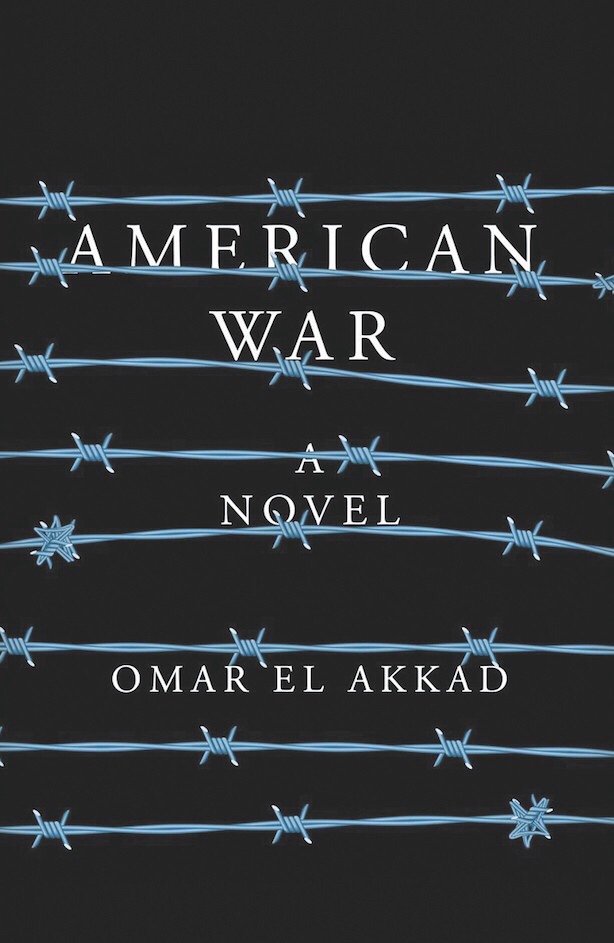
Omar El Akkad, “American War” (2017) – The first major literary attempt at depicting the big wet dream fantasy of the right (and at least some on the left), the second American Civil War is, alas, lousy. El Akkad is an Egyptian-Canadian journalist who has reported on the war in Syria and uprisings in places like Ferguson. There’s some realism in his depiction of refugee camps, where most of the story takes place. But, for a book that’s supposed to deal with this risky territory, it really punts on the nature of the war itself. In the 2060s, the US, already minus Florida because of climate change, tries to ban fossil fuels. The South rises again, I guess out of sheer love of rolling coal (the depiction of the South is both deeply patronizing and weirdly hands-off). The rest of the country very slowly grinds them down until, at the start of the book in 2074, only a rump state of Mississippi and some other places are left.

This is lame. I know we shouldn’t tell people they should write a different book. But it’s just takes you out of the story when it doesn’t really engage with so many of the things that have divided Americans, past and present- particularly race. Despite harkening back openly to the Confederacy in its propaganda, the rebellious South is depicted as race-blind in an easy, nonconflicted way. The North wouldn’t even be that. People give the main characters, a black Latino family, more stick for being Catholic (though not in any way that advances the plot or builds the world) than for race or immigration status or any of the stuff that matter more to people post-20th century. You see more of refugee life than you do of the war, but the details of the war don’t work either- that things would break down easily by US state, that the North would take out the whole state of South Carolina and ONLY South Carolina with a bioweapon (like it wouldn’t spread), etc. Twenty years of straight-up war is way too long, even though I know these wars drag… which makes the one big apocalyptic ending off-key, too. It just all feels contrived.

The prose and plot of the book doesn’t redeem it. El Akkad sees some things. His depiction of the experience of the refugees who make up the family we follow seems real enough- equal parts terror and boredom with confusion ladled over it all. The parts where a Southern militant begins recruiting one of the members for suicide attacks starts out good but becomes way too flowery, too much a courtship. The dialogue runs the gamut from ok to drek, averaging at pedestrian. At the end of the day, there’s not a lot of there there, which probably explains why the likes of Kakutani got so ga-ga over it. It’ll take someone who has caught at least a whiff of the fever that stalks this country to tell this sort of story right. *’

Review – El Akkad, “American War”

Review – Tutuola, “The Palm-Wine Drinkard”

Amos Tutuola, “The Palm-Wine Drinkard” (1952) – …or, “what’s a guy gotta do to get a drink around here??” Amos Tutuola recounts the trials and tribulations of a hero looking to get his palm tree tapper — the one guy who get enough for the titular palm-wine drinkard— out of the underworld.

The Nigerian Tutuola mixed elements from the Yoruba storytelling tradition with modern touches to produce this modern-day mythic epic. We encounter all kinds of weird creatures. My favorite is the suitor who turns out to owe all of his body parts to creatures in the forest, who repossess them one by one, except his mouth- how else is he going to keep talking? The hero and his retainers undergo transformations and what we would today call “mission drift.” Most of all, everything is transactional- the hero can’t smash his way out of things, or call on a deity to fix it. There’s always a deal to be made and work to be done, and no one drives a harder bargain than the ever-importuning dead.

I’ve read that when Tutuola published the book, people didn’t know what to think. Tory critics in Britain pretty near openly race-baited it. Other contemporary African writers were embarrassed by it. They wanted to (and did) prove that Africans could produce modern, universalist literature. Tutuola’s work is steeped in the stories, worldview, and language patterns of the Yoruba. His bid for universality isn’t that of an Achebe, but it works. Some of the original students of mythology held to a stupid, racist idea that the myths of each people were mutually incomprehensible, “deep cultural patterns” or whatever acting as a substitute/supplement for the blood magic racists often believe in. Nothing can be further from the truth. The characters and situations are often difficult to relate to across time and space- but the themes aren’t, and that’s why people not born to them can enjoy them. The Yoruba stories remind me a little bit of the Celtic myths- the intertwining of the cyclical and the disruptive (like the Celtic cross, sadly appropriated by fascists), the capricious changes, the demanding dead. But that’s my own provinciality speaking. Both caught real hell off the Brits, but that’s probably incidental… ****

Review – Tutuola, “The Palm-Wine Drinkard”

Review – Levi, “The Periodic Table”

Primo Levi, “The Periodic Table” (translated from the Italian by Raymond Rosenthal) (1975) – What is there to say about Primo Levi? As far as I can tell, he might be the most universally respected of the great twentieth century literary figures. No late-career slump, no shilling for oppressive regimes, no ego spiral, no sexual predation… just a dude saying what he saw, as best he could.

I’m both trying to be more brief with these reviews (especially of fiction) and am about two weeks late with this one- between my birthday and everything, stuff just got pushed. This is a book of short stories about Levi’s life, mostly before and after his time in Auschwitz. Each is themed after one of the elements on the periodic table- Levi was a chemist by vocation. They range a lot. There’s a discussion of the old Italian Jewish community the came from. You see young Primo learning how to climb mountains with a boy who went on to be the first partisan killed from his town. There’s a bunch of amusing chemical industry anecdotes (apparently varnishes turn into gross little livers after a while?). Perhaps most interesting is his meeting with one of his supervisors in Auschwitz years later and trying to figure out how much of his repentance is sincere or relevant. All of it in the straightforward but humane prose of a man who, in the depths of the worst of the century, decided that if he survived, he would remember and recount all of it, as clearly as he could. That one of the few uncompromised figures of twentieth century literature is also one of the clearest and most readable is a miracle. *****

Review – Levi, “The Periodic Table”

Review – Lewis, “Babbitt”

Sinclair Lewis, “Babbitt” (1922) – Did Looney Tunes ever make a joke where Elmer Fudd was hunting a “wascally Babbitt?” Sorry, I promise I won’t start all of my subsequent reviews with dumb jokes. In a way, though, commentators on the American cultural scene have been hunting the Babbitt (:continues in extremely Ride of the Valkyries voice:” hunting da Babbitt, hunting da BAAAAAABBITT”) ever since Sinclair Lewis put up the big ol’ “Babbitt Season” sign in 1922.

Ok, end of the Wabbit-Babbitt jokes, I promise. “Babbitt” was the sensation it was in no small part because it created an instant and enduring symbol of what Sinclair Lewis’s pal and supporter H.L. Mencken called the American “booboisie,” the oafish upper-middle-class. The book’s publication launched editorials about the curse of “babbittry” and publicity campaigns by groups like the Rotary Club to fight back against Lewis’s biting depiction of Business Man. Lewis was the first American to win the Nobel Prize in Literature in no small part due to “Babbitt.” I first heard of the book as a college student reading old essays from “The Baffler,” which especially under Thomas Frank (something of a mark for early 20th century lefty Americana) in the mid-to-late 90’s saw itself as echoing Lewis’s skepticism of an America whose business was business.

We spend over 300 pages almost solely in the headspace of George F. Babbitt, one of the leading real estate salesmen of Zenith, a city assorted midwestern burgs — Cincinnati and Minneapolis being two of the lead candidates — have contended is based on them. Of course, Lewis has his Zenith booboisie spell out for you that Zenith could be any early 20th century American city of the appropriate size run by “solid business ideas” held by “100 per cent Americans” full of “pep,” which is to say, pretty much any American city. Lewis said he was depicting the men who rule America, and I think he has a reasonably good grasp on that, especially for a novelist who was half in the bag most of the time.

Babbitt is in his forties, has a wife, two point five kids, a house, a car, a business, no meaningful money problems, and pretty much no idea in his head other than the received wisdom of his time and place. Lewis seems to have a grand old time riffing on the goofy “swell” booster-talk of Babbitt and his friends and juxtaposing the contradictory ideas — “America’s the greatest place in the world because of its freedom, and we should hang all union agitators” is a typical one — that that kind of deal-maker bullshit patter encourages people to think.

Babbitt does some social climbing; his glib bullshitting, flexible morals, and genuine hatred of people who might upset the applecart, who aren’t “regular fellows,” helps him along into being a major player in Zenith. He also does some rebelling, and it’s unclear whether his rebellion against the conformity that defines him and all of his friends is a genuine movement of what’s left of his soul, just another aspect of his conformity (what’s more white-American-bourgeois-man than deciding that his life is bullshit and he needs to ditch his responsibilities and run away?), or if there’s even a distinction between the two at all. Either way, Babbitt takes up with flappers and flirts with a sort of dippy liberal-radicalism for a few weeks before fleeing back into the bosom of respectable society.

I’ve read that Sinclair Lewis did real research for this book- immersing himself in the world of Booster’s Clubs and car accessories. This is reflected, on the one hand, with the exhaustive range of aspects of the Babbitt-ish lifestyle and mindset he crams into the novel, and on the other, with what reads like a heavy hand. I doubt Lewis was heavy-handed in terms of how boorish or authoritarian middle class WASPs were in his time. I do wonder if they quite so roundly and systematically declared their opinions on the kinds of things Lewis and his readers cared about — socialism, prohibition, the nature of life in America — as Lewis depicts them doing. Babbitt and co are oddly articulate in terms of the things they choose to articulate poorly and when. As the man once said, “people with real lives don’t need to be articulate,” and the whole point of Babbittry is that this — whatever the American upper middle class thinks and feels left to its own devices — is what real life is. Intellectuals often fall down portraying non-intellectuals, but Lewis does pretty well, at least in part because of his own verve and talent, and in part because he’s dealing with the class and milieu that, whether they’ll admit it or not, from which most American intellectuals hail. ****

Review – Lewis, “Babbitt”