Review- Scott, “The Common Wind”

Julius Scott, “The Common Wind: Afro-American Currents in the Age of the Haitian Revolution” (2018) – This one says it was published in 2018, but it had a pre-published life of its own, I’m told, going back to the eighties as a dissertation that historians working on various aspects of the Atlantic world would consult and tell each other about, a sort of underground classic. Why it didn’t get published before Verso picked it up in 2018 is beyond me, especially if there was demand for it among historians. Certainly other, less important, dissertations get published frequently (I should probably see about publishing mine, speaking of which…)

Anyway, one can call “The Common Wind” a social history of ideas, or perhaps more properly of the social life of information. The fastest information moved at the end of the eighteenth century was the speed of sail. And yet, people at the most degraded bottom rung of society — the slaves in the sugar islands and plantations of the Caribbean basin — found out about international news with surprising alacrity and consistency. This became especially true as the news got spicier with the French Revolution and the beginnings of the modern abolitionist movement in Britain, and still more urgent with the outbreak of the revolution in St-Domingue. Despite the best efforts of white authority, slaves found out about — and were inspired to action by — all of these.

According to Scott, sailors and city-dwellers made up the lifeblood of information exchange in the Caribbean basin at this time. Had the technology been more commonly available in the eighties when this was written, perhaps we could have gotten some network charts, but the picture Scott paints is vivid enough anyway. The New World colonies were largely designed at the time to be unsustainable on their own, especially the sugar islands of the Caribbean. Whether through trade with solely the “mother country” or experiments with free trade later in the eighteenth century, the islands and other colonies could not survive without outside intercourse, and were useless to the European colonizers without bringing their products to the international market.

This posed a problem for the slaveholders and authorities of the Caribbean basin, isomorphic from Virginia to Venezuela: how to control the flow of people, goods, and information in such a way as to make their colonies sustainable, but not endanger their delicate social orders resting on massive populations of slaves. They needed trade, and the things that came with it: ships, ports, sailors, cities, in a word, mobility, but mobility threatened them. It soon became a commonplace that urban slaves were unreliable and that sailors were threats to public order, carriers of threats ranging from drunk and disorderly conduct to political subversion.

Scott presents us with a kaleidoscope of efforts to suppress the threat of mobile and often master-less people to the social order of various parts of the Caribbean. Panicky governors from Spanish, French, and English colonies all passed laws restricting the doings of sailors and urban slaves, banning blacks and sometimes people and ships altogether from places seen as “infected” by subversive ideas (especially France once the Revolution broke out), trying to reign in the very active Caribbean press, and so on and on. Scott gives us a picture — limited by the sources but still fascinating — of the lives of masterless black and brown men and women largely through their interactions with the legal and fact-finding apparatuses set up by colonial governments.

None of the efforts to hem in the word of revolution worked. Information still moved, and Haiti especially lived on as an inspiration to blacks and a bogeyman to whites. In the end, the master class had to rely on blunter tools: terror for the black masses, crippling debt and control of trade (with inevitable, and inevitably dashed, hopes of economic development) for Haiti itself. Similar networks of information would form to pass on abolitionist news and sentiments throughout the slave societies that continued to develop, linking Deep South plantations to abolition movements centered in New England (and old England) through chains of correspondence. These, like the Caribbean ones Scott uncovered, eventually came down to mobile, risk-taking slaves, freedmen and other poor people of the plantation lands. Without them and their ability to distribute information in multiple directions, abolition — and revolution — are just ideas. ****’

Review- Scott, “The Common Wind”

Review- Kaplan, “The Collaborator”

Alice Kaplan, “The Collaborator: the Trial and Execution of Robert Brasillach” (2000) – This book grapples with questions that should interest me more than they do. What are words worth? How does the answer to the previous question change during wartime? What constitutes treason, or crime of any kind, when it amounts mainly to words?

American scholar of French history Alice Kaplan attempts to answer these questions by examining the case of Robert Brasillach. Brasillach was a fascist intellectual. In some ways, he’s the kind of far-right intellectual you don’t see much of anymore: a genuine homme de lettres, critic, novelist, poet, read by his intellectual opponents due to his power to shape the discourse from his post at the right-wing paper Je Suis Partout. In other ways, he’s a familiar figure: an edgelord and a shitposter, hiding by turns behind irony and sentimentality, the former mostly in his political/critical writings and the latter in his novels and poems.

He started out as a student with Action Francaise, the French royalist proto-fascist grouping, which had a significant intellectual wing to go along with its street fighters. Kaplan depicts Brasillach as being swept away by the romance of fascism as the ideology grew stronger. Always anti-democratic, Brasillach was enamored of the newness, youth, optimism, virility of fascism, the rallies and the parades and the in-group camaraderie and on and on. He was also a committed anti-semite, placing the Jews at the top of a list of enemies including leftists and parliamentarians that were supposedly degrading France. In his writings, he compares Jews to monkeys and rats, and when the time came, was entirely in favor of their being deported from France, most of them to their deaths in the concentration camps.

What exactly he did during the war became a bone of contention in the trial. He was drafted into the French army and taken prisoner by the Germans, where, already pro-Nazi, he began his formal career as a collaborationist. He continued writing during the Occupation, publishing pro-Nazi pieces, encouraging the puppet Vichy regime to crack down harder on dissidents, and living it up with his Nazi and collaborator buddies during a time of want for most French people.

To me, what renders a lot of the back-and-forth inspired by the Brasillach case that Kaplan tries to sort out moot is Brasillach’s participation in another favorite pastime of the contemporary far right: doxxing. In the pages of Je Suis Partout, Brasillach outed resistance members, communists, and Jews in hiding. Kaplan is careful to point out that we do not know if any of Brasillach’s doxes actually led to any arrests… but it wasn’t for lack of trying on Brasillach’s part. A doxxing then meant a lot more then mean phone calls and stalking by basement-dwelling chuds, it could mean torture and execution. As far as I’m concerned, even if you don’t think being a fascist is a punishable offense by itself, doxxing constitutes direct collaboration with fascist occupying authority with intent to kill.

The Resistance arrested him around the time Paris was liberated by the allies. Brasillach’s entire imprisonment and trial took place under the shadow of the ongoing war and France’s fledgling reconstruction of its own nationhood. The charge against him was treason- giving aid and comfort to the enemy and degrading the nation. Notably, his propagandizing for French participation in the Holocaust was not emphasized in the case, happening as it did before the Nuremberg Trials came up with the idea of crimes against humanity- otherwise, they could’ve gotten him like they got Nazi propagandist Julius Streicher.

Kaplan goes into great detail about those involved in the case, not just Brasillach. She discusses the two attorneys, for the prosecution and the defense, at great length. Both signed the Vichy pledge of loyalty to Marshal Petain; family legend has it the prosecutor helped the Resistance, but we have no real way of knowing. Virtually all of France’s lawyers signed the pledge- they were part of the state apparatus, after all, and Vichy was the state until DeGaulle had consolidated sufficient control over the Resistance (and the German grip slipped some). The jurors were drawn from lists of Resistance-friendly Parisians, and Kaplan profiles them, too, telling about their lives mostly in the working class suburbs of Paris, their small but noble acts of resistance, etc.

Brasillach’s lawyer tried to get him out of it by citing his career, from the high-end Ecole Normale to his collections of poetry and translations- not, Kaplan points out, the sort of thing that would appeal to this jury. Moreover, Brasillach himself came to compare himself to the Resistance, in poems and statements- both were just carried away by difficult times and ideology, or something like that (something tells me we may see contemporary fascists try that one before it’s all over). Nobody bought it. The prosecution layered on — and thereby made the whole thing “problematic” — insinuations of Brasillach as being gay or womanly, as being in love with the Nazis, a way to further inflame and disgust the jury. I agree that’s messed up, though Kaplan herself seems to agree there was a distinct erotic edge to Brasillach’s feelings for fascism. Either way, the jury voted to convict and execute Brasillach.

He appealed to de Gaulle to save his life, and so did a number of prominent French writers (including Camus but not including Sartre or de Beauvoir, for those keeping score at home). French intellectuals had become alienated from the purge of collaborationist elements and the complicities and complexities it continuously revealed. De Gaulle refused- some say due to being confused by a picture of Brasillach with French fascist leader Jacques Doriot, where Doriot was in German uniform and de Gaulle thought Doriot in uniform was Brasillach in uniform. Either way, Brasillach was shot, and became a martyr to the French far right to this day.

Kaplan concludes by saying that Brasillach should have been found guilty of treason, but not have been executed. I tend to disagree and think that his doxxing during wartime earned him a bullet. I see Kaplan’s point about making martyrs, but a living Brasillach could be an inspiration to the French far right, too. Speaking extra-judicially, I think Brasillach got what was coming to him, and think he should serve as an example to other fascist propagandists. ****

Review- Kaplan, “The Collaborator”

Review- Ellroy, “Clandestine” and le Carré, “The Spy Who Came In from the Cold”

AUDIOBOOK ROUNDUP: AESTHETICS OF ANTICOMMUNISM AND COUNTERREVOLUTION EDITION

James Ellroy, “Clandestine” (1982) (narrated by William Roberts)

John le Carré, “The Spy Who Came In From The Cold” (1963) (narrated by Michael Jayston)

We’ll start with Ellroy’s “Clandestine,” his second novel, despite the fact that it’s twenty years younger than le Carre’s work- I read “Clandestine” first and it’s set earlier. This was the beginning of Ellroy’s dip into his mythic realm, the noir Los Angeles of the 1950s, the world about which he spent his wayward youth wandering around the city fantasizing. Eventually, Ellroy’s dream-nightmare-LA would be the scene for the epic “L.A. Confidential” quartet; extrapolated to embrace the US, the gestalt he formed would be the basis for his greatest work, the “Underworld USA” trilogy.

But “Clandestine” is his first swing at it, and it shows. His main character is Frank Underhill, the sort of SoCal ubermensch Ellroy wrote (and sometimes writes) when he was projecting the man he wanted to be, not the man he was as he wrote later. Underhill is tall, handsome, athletic, a super-cop and a scratch golfer to boot. He’s a cop because he gets to experience something called “the wonder” (I wonder if it’s capitalized in print- I plan on ordering a hard copy for my library so I guess we’ll find out). He’s an appropriately meat-headed expounder of what “the wonder” is and we never quite get at it, despite Underhill waxing rhapsodic about it multiple times. As far as I can tell, “the wonder” is voyeuristic rubber-necking along the disasters that people’s lives become, the cheapness of life and death, the small pseudo-poignant details which tend to dissolve into death-kitsch; the sort of thing you get to see a lot of as a cop or other first responder. In later works, Ellroy gave up on characters telling “the wonder” and simply showed them basking in it. That’s an improvement.

Voyeurism and schlock are important parts of the Ellroy gestalt. Belonging is another key part- being one of the few that get to peek behind the curtain and act on what they find there. There’s someone killing women in LA and Underhill is brought in to a special LAPD unit led by Irish psycho Dudley Smith, who turns up frequently in Ellroy’s later work. Smith’s unit is essentially a death squad. Underhill has reservations about this but goes along with it anyway through the middle of the book, by far it’s strongest part. Ellroy tries to be whimsical in the first part, with poetry-spouting cops and cute dogs (punctuated by the killing of some Mexicans). That all goes out the window once Underhill gets in with Smith and tortures a confession out of an innocent man who goes on to kill himself before the evidence can clear him. Underhill tries to keep his distance and even double-crosses Smith, but not before taking a fascinated ride through the great domestic war of midcentury America, where crime, vice, simple nonconformity, and communist subversion are understood to constitute each other. Underhill gets to be one of the men engaging in the terror campaign this entails, while keeping some part of himself above it- Ellroy does better than that when we return to the domestic counterrevolution in “Underworld USA.” There, there’s escape, but no getting above the terror whilst keeping a foot in it.

The last part of the book is more interesting from a biographical perspective than anything else, now that Ellroy has written some fascinating and wrenching autobiographical works. Ellroy’s mother was murdered — a case still unsolved — and he was raised by a negligent father. Spoiler alert: a character seemingly based on Ellroy’s dad is the mastermind behind the women murders, which involves a whole convoluted plot with drug dealing, secret gay pacts, Nietzscheian delusions, etc. He kills someone a lot like Ellroy’s mother, and there’s a whole section where Underhill goes to Wisconsin (where Ellroy’s mother was from) and tracks down a whole massive crime epic story about the woman victim and her family. Moreover, they had a kid who sounds a lot like young Ellroy: obsessed with crime, unable to get along with other kids (and a genius, natch). It’s a lot!

In theory, Underhill and the other cops are part of the thin blue line between civilization and savagery. The thesis of the midcentury counterrevolution is that crime and subversion go hand in hand. Maybe Dudley Smith believes that (though it’s also a convenient thing for a sadist to believe), but I’m not sure Underhill does, or Ellroy. That’s just jive for public consumption. The real point is for power to reproduce itself, to continue the cyclical world of violence and chintz that makes up “the wonder,” which in turn justifies the violence (and chintz) of men like Ellroy’s cops. This is the joy of the domestic counterrevolution, and I think one reason why Ellroy is an important artist is that he brings that home better than anyone. He hadn’t quite nailed the delivery yet in “Clandestine,” but he would in time. ***’

What to say about “The Spy Who Came In from the Cold”? It’s a masterpiece for a reason. It hit me right in that Michael Mann sweet spot: the meticulous attention to details in the depiction of tradecraft, the masculine pathos, the deft scene-setting. And it’s paced better than anything Mann has ever done except, perhaps, “Thief.”

I’ve chosen to write about these two works together not just because I listened to them close to each other but because they have themes in common. Anticommunism is at the center of the world of le Carré’s work just as anti-subversion/crime is in Ellroy’s. But in both of them (or at least in this one of le Carré’s books- I haven’t read any others but will) the ideology is in most respects besides the point. Where Ellroy’s men find themselves in the battle to keep the domestic population in line, le Carré’s spies reach existential epiphany on the foreign fronts of the Cold War. Not for nothing is one of the main LAPD stations called “ramparts” and not for nothing is the then newly-built Berlin Wall one of the main symbols in “The Spy Who Came In from the Cold.” The ramparts don’t just separate Us from Them- in these novels, that’s not even the main purpose. The act of manning the ramparts separates those who see from those who can’t.

It might seem the more appropriate pairing with Ellroy’s crime fiction is the other side of the spy-fiction spectrum, James Bond. Sex, violence, and over-the-top schlock are what Bond is all about, after all. Well, A. I’m not sure that’s the case with the early novels and I intend to read them in order and B. I think the contrast with le Carré is more interesting. Both Ellroy and le Carré are interested in the introspections of the hard men who watch the ramparts in a way Ian Fleming doesn’t seem to care about. More than that, between them, Ellroy and le Carré span a near-comprehensive array of the affective appeal of the right side of the Cold War, in the Anglo genre world at least.

Le Carré is proper and sparse where Ellroy is over-the-top and leering. This extends to story form, as well. “Clandestine” involves stories within stories and sprawls all over the map, and so do many of Ellroy’s later works. “The Spy Who Came In from the Cold” is a story as well contained as the Soviet Union turned out to be in Eastern Europe. Le Carré sketches in his characters with a few telling details where Ellroy concocts vast fictional biographies.

Enough comparison! What is “The Spy Who Came In from the Cold” about? It’s a simple story. British intelligence wants to eliminate a dangerous leader in the East German counterintelligence apparatus. They get their former Berlin station chief, Leamas, to pretend to defect. They don’t do it with any phony damascene road conversion to Khrushchev-era communism. They have Leamas pretend to dissipate into drink and disrepair, complete with short prison stint. Le Carré goes through the whole routine of vetting and bringing in a new defector asset, and before you know it Leamas is face to face with East German intelligence… and finding out the mission isn’t all it seems. There’s some great back and forth between Leamas and his communist opposite numbers, a lot of subtle spycraft, it’s great fun.

It says something about how good this is that I don’t want to spoil this book that’ll soon be old enough to collect social security. And the plot, while supremely well-constructed and enjoyable, is somewhat beside the point for this essay. The spies in this care about communism or anticommunism about as much as Ellroy’s cops- more a matter of instinctive reflex and team loyalty than anything else, and le Carré makes it clear that goes on both sides of the iron curtain. Believers — like Leamas’s British communist girlfriend — are just dupes, pawns in waiting.

It’s too much to say le Carré’s spies believe in the game, but it’s something like that. More than what they believe, they get to be Tragic Men, men defined by being forced into choices that ordinary men never have to think about. No day job, excitement, and the opportunity to wax tragic, significant- that’s as appealing in its own way as Ellroy’s cop power trips. Higher-toned, perhaps- that’s a market niche all its own. *****

Conservative/reactionary/counterrevolutionary, take your pick, politics wouldn’t work if they didn’t speak to people somewhere deep. Conservative genre fiction — and my understanding is le Carré isn’t a raving Tory but I think his fiction leans right, so to speak — is part of the worldbuilding project of the global right, and a guide to the affective pressure points that make the whole thing tick. Probably, I should read the other half — romance fiction — to really get a comprehensive vision, but hey- one thing at a time.

Review- Ellroy, “Clandestine” and le Carré, “The Spy Who Came In from the Cold”

Review- Whitbourn, “The Two Confessions”

John Whitbourn, “The Two Confessions” (2013) – Dipping once again into the works of “counter-reformation green anarcho-jacobite” fantasy writer John Whitbourn brought me to this, the final installment of the series his first novel, “A Dangerous Energy,” began. The world is one where magic is real and largely controlled by the Catholic Church, which in turn controls vast swathes of the planet, keeping it at a pre-industrial level of technology even into the 1990s. This world’s Britain is staunchly Catholic, ruled by the Stuarts, not at all a United Kingdom, and generally not a great advertisement for what the counter-reformation, magic, or the Jacobites do for a country. Life is squalid, limited, and dark- for characters in Whitbourn’s stories, shading towards pitch black.

Our protagonist, Samuel Trevan, is an orphan turned proto-industrialist struck down by the Church’s strict laws against over-exploiting labor (in one of this alternate universe’s more extreme points of departure, the Church doesn’t generally side with employers). He was going to make a fortune manufacturing rifled muskets (because that’s where they’re at, technologically) and then marry the upper-class girl of his dreams, but no such luck once the Church gets done with him.

Now expendable, Trevan is employed by some of the realm’s deep state fixers to fix a case of spooky mines in rural Devonshire. Trevan wants money, his handlers want discreet elimination of a problem down there. And what a problem it turns out to be- demi-devils, part human part demon, but even worse- heretics! Specifically, Bogomils- for those not versed in heresiology, these were the predecessors to the more famous Cathars, and were dualists who believed the material world was somewhere between irrelevant dross and actively evil. Our word “bugger” comes from “Bogomil” because of their supposed sexual practices (to help reduce reproduction). These Bogomils are in touch with some cask-strength Lovecraftian elder god type thing and aren’t shy about sacrificing people (in a nicely nasty touch, the Bogomils’ friends, those dastardly Unitarians, are too squeamish for it and leave before the rituals get spicy).

Trevan’s whole crew gets sacrificed, but then Trevan is saved by… not quite a deus ex machina. Is there a Latin word for elves? Either way, elves exist in this world, magical and aloof from humanity but not above messing with it (in a way that reminds me of archons from the lore of the dreaded Gnostics). This is where things get fuzzy. The elves say they save Trevan because he’s a massive threat to them. The industrial revolution he could usher in would destroy elfdom- even his touch or proximity is toxic to the fae folk. So they take him, give him all the money he wants, let him marry the girl, and try to hide him. If they’re so indifferent to humanity, why don’t they kill him, or let the Bogomils sacrifice him?

Eventually, Trevan gets doxxed and the Bogomils show up, but not to sacrifice him: to try to recruit him. They want the industrial revolution, for reasons obscure but in tune with Whitbourn’s general vibe- in his world, heresy and “progress” go hand in hand. They harass Trevan so bad he eventually has to hide in a monastery, which is where the novel ends. The end, no moral!

Well, some moral. Whitbourn is as much a horror writer as a fantasy writer, so there’s limits to how sunshine-y his worlds would be in any event, but from a “deep green” perspective the world is probably better off, and some of the filigree in the worldbuilding makes clear settler colonialism didn’t get far, either. More than anything, man is small and mostly knows his place. Whereas, Whitbourn’s antiheroes and villains are small, battened by forces beyond their comprehension, but entertain delusions about steering their own ship… that is to say, they’re moderns. And in Whitbourn’s world, the moderns lose.

They have to, because this is essentially cosmic horror — horror about the universe’s essential cruelty and pointlessness — but with precisely one out: a remote but all-powerful God who, for mysterious reasons, chooses to communicate with man through the Catholic Church. That’s where reactionaries fall apart- man is small and irretrievably corrupt, therefore let’s pick a few of them (or just one!) and give them all the power. In Whitbourn’s world, those people have the direct line to the one bare trickle of cosmic hope, so I guess it makes sense they call the shots. Still and all though- the world as Whitbourn shows it is dark, cramped, and dirty (the writing displays horniness that borders towards the cringeworthy). The Bogomils have some good points about the grossness of the world, even if, in the fine old reactionary genre formula, the more ideas they have the more awful their behavior.

Anyway… a lot going on here. I may have gotten into Whitbourn out of ideological curiosity but I’ve stuck with it because he writes genre fiction with verve and heart (and a high work rate- he has dozens of other books). This one had a pretty good dungeon-crawl and some sinister yokels, even if it also had inexplicable plot points and slow bits. It’s all part of the unique package Whitbourn delivers. And he (or someone pretending to be him for some weird reason) has commented on my blog! I emailed him about doing an interview. Fingers crossed! ****

Review- Whitbourn, “The Two Confessions”

Review- Yourcenar, “The Abyss”

Marguerite Yourcenar, “The Abyss” (1968) (translated from the French by Grace Frick) – I’m not sure what to say about this book. I liked it. It’s about a doctor, alchemist, and philosopher named Zeno, living in 16th century Europe, his travels and his stayings-put. It’s not quite a picaresque. Yourcenar, notable among other things for being the first woman appointed to the Academie Francaise, tells us more of Zeno’s travels — plying his trades among soldiers, Swedes, and the Grand Turk — than shows us.

What do we get instead? First, we get some of the circumstances around Zeno’s (illegitimate) birth and family background. This includes his mother being killed during the suppression of the Anabaptist takeover of Munster, an event we see in some detail as an example of ideological madness. There’s philosophical conversation, like those between Zeno and his mercenary cousin Henry Justus. Zeno loves men and sometimes has sex with women, and faces the horrors of plague. He invents machines when younger and writes philosophical treatises when older, both of which gets him in trouble from which he barely escapes.

In the last part of the book, Zeno returns home to Bruges and a monastery hospital, only to be caught up in the many roiling conflicts in the region, about which he cares nothing. He just wants to focus on medicine. But the rebellion against Spanish authority in the Low Countries comes to affect his life and put him in danger, as does the lingering threat of heresy. Partly influenced by Protestantism, partly from an implied underground peasant catharism, and mostly impelled by youthful horniness and boredom, some of the younger monks had been doing some light heresy-horseplay and meeting women on the sly. Zeno finds out and doesn’t immediately tell on them, which of course seals his own fate once it’s found out. The Inquisition doesn’t have a sense of humor about these things.

I probably haven’t made the novel sound that compelling. But it was a great read in a hard-to-describe way. “Immersive” is one word for it. I felt like I was looking at an old painting of some complex subject, a landscape or city scene, rich with detail that revealed itself more the more you looked at it. For all the war, persecution, and death, it’s ultimately a quiet book, an examination of a life lived for knowledge in turbulent times. I don’t know. It’s good! ****’

Review- Yourcenar, “The Abyss”

Review- Federici, “Caliban and the Witch”

Silvia Federici, “Caliban and the Witch: Women, the Body, and Primitive Accumulation” (2004) – The current vogue for the witchy in certain circles wouldn’t be a vogue if I could get into it. This is due both to my being a cis straight (in both the sexual and the comedic sense) man and, more to the point, because if I’m involved, it’s either timeless or just plain not cool anymore, whatever “it” is. But that hasn’t stopped me from reading and enjoying contemporary classic “Caliban and the Witch.” With this wildly ambitious book (especially for its relatively slender 240 or so pages), Federici stakes several world-historical claims and tries to stay between three theoretical stools at once, whilst critiquing all three: radical feminist, Marxist, and Foucauldian.

From the feminists she takes the thesis that the great witch hunts and to a lesser extent heresy-hunting in general was a war against female power. This was aimed at disciplining and rationalizing the human body in certain ways- the slightly quavering Foucauldian note. That note becomes solid when wedded to the Marxist bottomline: that this disciplining of the body and campaign against female power was a critical part of the primitive accumulation process that led to the take-off of capitalism, and that capitalism and the spectacular oppression of women would be impossible without each other. For added bravura, Federici argues this process in ongoing today in parts of the developing world, as IMF-backed enclosure of commons goes hand in hand with febrile paranoia about women’s independence, both from men and the market order.

I think Federici makes a compelling argument. Like a lot of big claims, there are gaps in the story left by scant sources with which she, perforce, worked. For such large-scale violence — hundreds of thousands dead across three continents — the witch hunts are not well-understood history, and both the witch hunt and the heretic hunt (two different, if sometimes converging, things) tended to erase the voices of those they persecuted, leaving only the inquisitors’ words. But Federici makes valuable deductive points: most importantly why, all of a sudden, in the 16th century, did a campaign against witches, eighty percent of them women, start with such vociferousness? Medieval Europe knew heretic hunts, brutal ones, but did not consider witches heretics until surprisingly late, well into the “early modern” period as most understand it. Why this sudden turn on healers and midwives? Most studies are either too broad (citing a vague general cultural madness) or too narrow (citing a vague local cultural madness) to really answer that question. That this coincided with the crises that led to the rise of capitalism seems obvious in retrospect, one of the signs of a good theory.

This book largely relies on secondary sources. Often, these secondary sources are primary-source heavy works of history or anthropology, but they are secondary sources nevertheless. I’d be curious to know what the scholars Federici cites think about her larger thesis. In my experience, medievalists and early-modernists tend to jealously guard their realms from modernists looking to make points and comparisons. They might dispute many of Federici’s claims, and notice how fast and loose she sometimes plays with periodization. Notably, her claim that capitalism arose as a way to suppress challenges to the feudal order that came from the lower classes, heretics, and women is big and seems anachronistic, placing the cultural resistance cart before the capitalism horse. It doesn’t seem to bolster her main arguments that much, either, except to posit an unbroken thread of resistance to power across the centuries, where the story is probably a lot choppier.

In general, though, this is an exhilarating work of scholarship, passionately argued, wide-ranging, and even profusely illustrated with old woodcuts and the like. Between her unstinting (if at times unorthodox) Marxism and her publication with Autonomedia, one could see this work being ignored to death by the academy… but it’s proving popular with non-academics I know. That’s something. *****

Review- Federici, “Caliban and the Witch”

AUDIOBOOK ROUNDUP – Higgins, “The Friends of Eddie Coyle” and Vance, “Planet of Adventure”

AUDIOBOOK ROUNDUP

George Higgins, “The Friends of Eddie Coyle” (1970) – This is more like it. I had read Higgins’ “Cogan’s Trade” and didn’t care much for it. But this one was much better. Encountering it in audiobook form probably helped- Higgins’ crime fiction is largely made up of dialogue. But I also got a paperback copy of the book for Christmas and it held up in hard copy, too. For one thing, this one has real characters, primarily the hapless Eddie Coyle, small-time gunrunner facing three-to-five and looking for a way out. He turns informant but his ruthless Fed handler keeps wanting more than he can give him. We spend some time in a sleazy seventies Boston of bank robbers, gun dealers (this was back before you could buy an AR-15 at Wal-Mart or wherever), faux-radicals, bartender-fixers all looking to scam each other. No one deals with more money than about fifty thousand dollars, and usually a lot less. The key information that the Feds are looking for winds up coming not from Eddie but from a pissed-off girlfriend. The voice actor, Mark Hammer, does a good job conjuring up distinguishable Boston accents for the different characters, though he stumbles on the pronunciation of town names like Billerica (“bill-erica”) and Brookline (“brooklyn”). Still, a great version of a justifiably lauded crime classic. ****’

Jack Vance, Planet of Adventure series (1968-1970) – Tschai! There’s probably supposed to be an umlaut somewhere but I don’t care enough to look it up. Jack Vance’s was a world-builder but not in the over-baked sense of the word that it conjures up today. No thousand page tomes, no pseudo-Tolkien erudition, no pandering to fans looking for something on which to project. Tschai, like other worlds Vance created before and after it, is about the permutations the human subject (to use the kind of theoretical phrase he’d never allow) can undergo under extreme conditions, about people as small, contingent things. Tschai is run by four alien races: lizard-like Chasch, frog-like Wankh (heh heh), raptor-like Dirdir and bug-like Pnume, each of which is the main antagonist in one of the volumes chronicling the trevails of stranded spaceman Adam Reith. More often than the aliens, though, he deals with humans stranded on Tschai, first brought there long ago by the Dirdir but then escaped and diffused across the planet. Each alien race has its human disciples, who try to imitate them and have various delusions about their closeness to them. On top of that there’s various independent human societies, each with its own system of cultural rules. It’s the kind of kaleidoscope world we’d reward someone for exploring in 1800 portentous pages or so, but Vance sketched everything out in about a third of that, sticking to Reith’s adventures. I never felt less than satisfied with the worldbuilding, however- and I’d take it over much of the modern stuff any day. Reith builds a human army to fight the Chasch (a trope Vance has used elsewhere), hunts the Dirdir on their own hunting grounds, tries to build or steal a spaceship to get back home, woos a lady or two, rigs an eel race- all kinds of doings, all the while playing straight man to the various deluded human-types he’s surrounded by. There’s a lot of dickering with innkeepers, all in classic Vance Wodehouse-ian punctillio dialect. It’s not the Vance I’d start with but it’s a lot of fun. ****

AUDIOBOOK ROUNDUP – Higgins, “The Friends of Eddie Coyle” and Vance, “Planet of Adventure”

Review- Keefe, “Say Nothing”

Patrick Keefe, “Say Nothing: A True Story of Murder and Memory in Northern Ireland” (2019) – Is it fair to say this book gives the Troubles the true crime treatment? Yes and no. From the cheap seats, it looks to me that true crime has been upscaled some in recent years- going from supermarket paperbacks to high production value podcasts and nice hardcovers like my copy of “Say Nothing.” How much the works themselves have changed with this gentrification is for somebody who knows more to say. But it seems a lot of elements remain the same- the titillating intimacy of certain types of crime, the pseudo-literary psychologizing, using crimes to help define a given place and vice versa. Often enough, true crime attempts to hook the reader by presenting a new version of the crime at odds with the official story.

You get all of the above in “Say Nothing.” In many respects, the war in the North of Ireland is perfectly suited for this sort of treatment. To be way cynical for a minute, it presumably helps that it took place among white people who spoke English- with sexy accents even! One wonders how well a similar story set in that other capital of late twentieth century urban guerrilla mayhem, Beirut, would sell stateside… More generously to both author and readership, this long, slow, grinding war took place in a small place, among relatively few people- Belfast had (and has) something like three hundred thousand inhabitants (Beirut is roughly the same, fwiw). The action of the war involved heavy use of retail terror- acts of violence targeting individuals but directed at whole communities. This lends itself to the sort of individuated reconstruction of crimes and the broken lives around them that true crime thrives on. More systematic work of the same kind — the Phoenix Program stalking and killing National Liberation Front infrastructure, or for that matter, NLF guerrillas assassinating enemy officials — just don’t have the same kind of pathos.

I’m probably making it sound like I don’t like this book or have a lot of big criticisms of it. Wrong on both counts! I think part of me is interested in the literature on insurgency and counterinsurgency so am looking at it from that angle… AND the book has been so talked up it’s a tempting target…

But on its own, “Say Nothing” is a quite well told story of the whole universe of violence, complicity, and silence surrounding the murder of Jean McConville, a mother of ten disappeared by the IRA in 1972. To tell the story, Keefe tells something like the whole story of the Troubles, the early parts of which include the murder itself and the latter parts the extended coverup and seeming impossibility of getting justice for McConville’s slaying, or even knowing what justice would look like.

The bare facts are unspooled across hundreds of pages of background about the Troubles (which basically plays fair pool, from what I can tell, though like everyone else I have my own biases- against the British imperial state and in favor of a united socialist Irish republic), the lives of McConville and her kids (generally ranging from gloomy to fucked), details about the peace process, eventually getting into how Keefe got the sources, and so on. These bare facts appear to be this: the Belfast Brigade of the IRA got it in its head that Jean McConville was an informant. IRA fighters abducted her from her apartment and no one saw her alive again. In all likelihood, she was shot by a team composed of Brendan “Dark” Hughes, Dolours Price, and Marian Price. All of them either died before they could be charged with the crime or were not charged. Also not charged was Gerry Adams, president of Sinn Fein, one of the architects of peace in the North, whose whole post-guerrilla career rode on him denying what everyone knows- that he was an IRA commander and likely green-lit McConville.

The question of whether or not McConville was an informer is probably the least interesting question, on its own- the evidence isn’t strong but the British peppered Belfast so thickly with informants as to justify paranoia. What makes it interesting to me is the dynamics of ingroup suspicion. The IRA and the DSA are pretty dissimilar in most respects, but the social dynamics of small groups, especially of radicals, seem familiar. Someone suggested McConville was an informer; details, like an unlikely handheld radio nobody ever saw, are elaborated (passive voice intentional); soon it just becomes operating common sense. How many times have we seen that happen with one suggestion or another in radical circles? Everyone is too busy to chase down and confirm or disconfirm every rumor, and there were a lot of informants (and are a lot of harassers/careerists/entryists/whatever we’re on the lookout for now). It doesn’t help that the people most likely to want to sort this kind of thing out are often the last people you want to do it- as in the case of the IRA’s “Nutting Squad” (heh, heh), which was run by someone who was both a psychopath and an informant himself… he disappeared into something like witness protection, shielded by the Brits to this day, by the by.

Anyway, personal relevance aside, Keefe does an impressive job of marshaling a wide array of information into a package of elegant tale-telling. We get the full story of McConville, her family, those accused of killing her. Boston College plays an important and ignominious supporting role- they sponsored a project to collect paramilitary recollections under promises of iron-clad secrecy but with no real protections once the British police came knocking. Another associate from school days, British counterinsurgency guru Frank Kitson, shows up, (re)-introducing the death squad to Ireland, and it’s always good to see him, as in “good to know his proximate location at any given time.”

While Keefe delivers the goods — murder, pathos, some shoeleather detective work putting together who did the deed — he also makes a point through the way the book is constructed. In a situation like the North of Ireland, context is everything. You can’t understand one of the killings, in any of its particulars, without trying to understand that vast context. He even does a good job of getting across the complexities whilst avoiding pathologizing the Irish as possessing some special psychosis for murderous grudges. That’s more than you can expect from a book on the Troubles! All told, fine work. ****’

Review- Keefe, “Say Nothing”

Review- Vargas Llosa, “The Feast of the Goat”

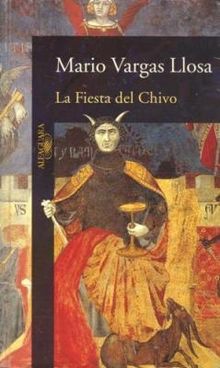
Mario Vargas Llosa, “The Feast of the Goat” (2000) (translated from the Spanish by Edith Grossman) – “The Feast of the Goat” apparently belongs to a Latin American subgenre of “dictatorship novels,” which makes sense. More than any of its particular viewpoint characters, the main character of the book is the dictatorship of Rafael Leonidas Trujillo Molina over the Dominican Republic from the thirties to the sixties. Trujillo and his regime were like a parody of the caudillo figure and caudillismo. He renamed one of the oldest Spanish cities in the Americas, Santo Domingo, Ciudad Trujillo after himself; he instituted a cult of his family, even as his brothers and sons proved to be worthless playboys and thugs; he took part personally in the destruction of dissidents and the humiliation of members of his inner circle, most notoriously by seducing/raping the wives and daughters of both associates and opponents alike. There’s a waft of macho oversexedness around the whole thing, diplomats chosen at least in part due to their international playboy credentials, etc., though it’s worth noting the two literary sources I have on the Trujillato are Vargas Llosa and Junot Diaz- both somewhat hierophantical men. It’d be interesting to get other perspectives.

Either way, Vargas Llosa draws the reader into (his version of) the logic of the Trujillato. Like dictatorships generally do, this one ran on complicity. Trujillo had something on everyone in the elite, some hook of interest, and kept the masses on side through bread and circuses, the latter including the periodical humiliation of those in the regime itself. In chapters dedicated to the men who would eventually end the Trujillato by ending Trujillo himself, we see the crises of conscience even dedicated opponents felt, from religious scruples to knowledge of how much they owed Trujillo personally.

The other chapters are told from the perspective of Trujillo himself and of a woman, Urania, a daughter of a Trujillo flunky. She left the Dominican Republic as a child during Trujillo’s last year and came back in the nineties. As Trujillo goes through his last day and Urania explains to her family why she abandoned the Republic, the two stories come together, I don’t want to say predictably but congruously. These are both the most affecting chapters and the ones where Vargas Llosa’s peculiar take on dictatorship comes out the most.

Vargas Llosa wrote this decades into his neoliberal turn, after disappointments with Castro and the terror of Sendero Luminosa drove him from his youthful leftism. And the Trujillo dictatorship, with its nitty gritty personalistic terror elements, fits with the essentially apolitical picture of dictatorship Vargas Llosa paints. There are references to the anticommunism and racism (mostly against Haitians) that animated the Trujillato, but in the end it’s about Trujillo and his manhood running roughshod over a whole country- essentially apolitical, or maybe that’s what politics is in Vargas Llosa’s telling. This extends to Trujillo’s very last day, where he goes to his death due to his inability to impose his manhood, in the most middle-aged-male-writer’s-version-of-events way possible, on young Urania (though he was quite capable of traumatizing her mercilessly). Live by the dick, die by the dick, I suppose- though something tells me the Americans didn’t support Trujillo all that time for his bedroom exploits. That was because he was a reliable anticommunist, and they withdrew that support when he refused to play well with others in Washington’s anticommunist orbit.

That said, this is still a great novel, technically accomplished in an unobtrusive way with the way Vargas Llosa ties the various narrative strains together. Put it in the category of politically-questionable classics. *****

Review- Vargas Llosa, “The Feast of the Goat”

Review- Burckhardt, “The Civilization of the Renaissance in Italy”

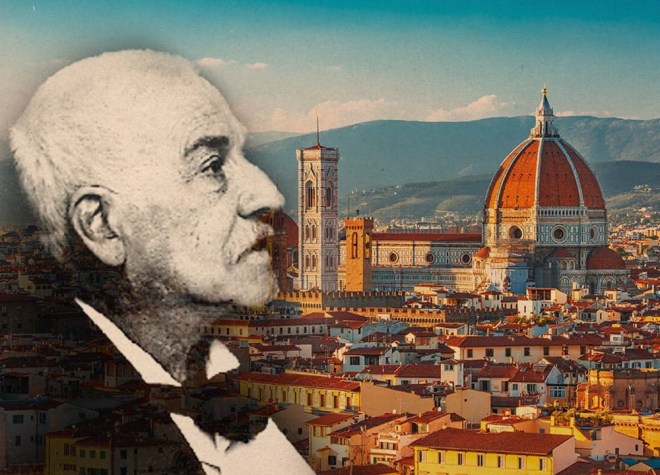
Jacob Burckhardt, “The Civilization of the Renaissance in Italy” (1860) (translated from the German by S.G.C. Middlemore) – Do they even think there was a Renaissance anymore? I know referring to the “Dark Ages” is a big no-no amongst the medievalists I’ve known. I guess there could still be a relatively value-neutral “rebirth” of classical learning even if you reject the notion that the times before were especially dark and benighted… anyway, people still read Jacob Burckhardt’s history of the Italian Renaissance over a hundred fifty years later, or in any event Harvard Book Store keeps it in stock.

It’s a worthwhile endeavor even for an artistic philistine like me. Burckhardt was one of the progenitors of art history and of cultural history, the original version before theory-inflected cultural history 2.0 got its start in the late twentieth century. I don’t know nineteenth century historiography as well as I might, but Burckhardt seems to stand alone in his perspective: rigorously evidence-based, but free from the heavy systematizing of his historian brethren to the north in Germany (Burckhardt was Swiss). Matters unfolded according to a logic, but it was its own logic, if that makes sense, not that of a dialectic process or racial imperatives or the like.

But not unlike the other historians of the time, Burckhardt roots a lot in the state. Or, in Renaissance Italy’s case, the lack thereof; between foreign occupiers, Papal fecklessness, and city-states ruled by self-made tyrants and unstable republics, there wasn’t the same sort of emerging proto-state you got in England, France, and Spain (how Germany fits in to this scheme is an open question). Moreover, while religion as ritual continued to maintain its hold, religion as dogma and organizing mental principle was weakened both by the lack of a central state to enforce it and by the manifest self-interest and corruption of the Papacy. When the Pope is just another rival power-player, that tends to dampen his authority a touch. If Italy didn’t establish its own Protestantism, its because its energies were engaged elsewhere, and by the time Protestantism came about in Germany, the Spanish were able to firmly establish the Counter-Reformation in the Italian peninsula.

But above it all was the rediscovery of classical antiquity, as a model for art and for life- indeed, as a model for making life art in all of its aspects, from courtly conversation to mercenary warfare. This is what Burckhardt saw as the central result of the chaos reigning in Italy between 1350 and 1550- an exhilarating freedom from long-standing medieval arrangements in life and thought that produced much of what we think of as modern. Most spectacularly, Burckhardt claims the modern individual — self-contained, self-seeking, defined by their own traits instead of corporate ones, and living according to their own lights — first emerged en masse in Renaissance Italy. It was these individuals that brought about the flowering of art and culture that made the Renaissance a high point in civilization to those who thought/think in those terms.

I’m not sure what to make of this thesis. In some respects, it’s shockingly advanced, prefiguring theorists of the development of the self ala Foucault a century ahead of time. I’m not sure I buy the history- if anything, the Italians of the Renaissance were almost too individualistic to really be a model the modern subject, defined as they are by so many larger structural forces. But it’s a bravura concept nevertheless. It’s possible to get lost in the names and references to works of art (I had an illustrated version that broke apart at the spine, necessitating a visit to the bookstore for a new, non-illustrated copy) but the work retains its vitality. ****’

Review- Burckhardt, “The Civilization of the Renaissance in Italy”