Review- Perich, “Too Hard to Handle”

mara2

John Perich, “Too Hard To Handle” (2012) – What better time to catch up with a friendrade’s thriller e-book series than when working the tail end of a tedious, low-energy temp job? The second installment of the adventures of Mara Cunningham, a news photographer with a knack for getting into sticky situations, moves along at a propulsive pace and delivers the genre goods.

Mara finds herself up against two seemingly insurmountable forces: cop pathos and disappointing family. Her older brother, a small-time hooligan and many-time loser, had been missing for a decade after a score gone bad, but he seems to be back. He’s tied to a string of cop-killings that send Boston and it’s police into the sort of heightened state of vengeful paranoia that the police (and, arguably, the city, proportions of it anyway) seem to be always waiting to jump into.

The truth is considerably more complicated than “improbably daring hoodlum suddenly becomes cop-assassin” or “innocent man framed,” and its into that murk that Mara must dive. That’s a dangerous place to be- immersed in a besieged-victim mentality, the police, including “good” cops with whom Mara has long-standing relationships, are in no mood to parse subtleties or put up with someone outside of the tribe looking into matters. That Mara finds a trail of police corruption and violence as she tries to bring her brother in peacefully doesn’t dissuade the blue wall very much.

The denouement — the exact scheme the crooked cops and Mara’s brother were in on, and how and why it went wrong — is a little foggy, but the takeaway is clear enough. Vengeful unaccountable power calls forward poorly-conceived revenge (which makes power more vengeful and less accountable), and we’re all caught in it, one way or another. ****’
Review- Perich, “Too Hard to Handle”

Review- Perich, “Too Close To Miss”

mara1

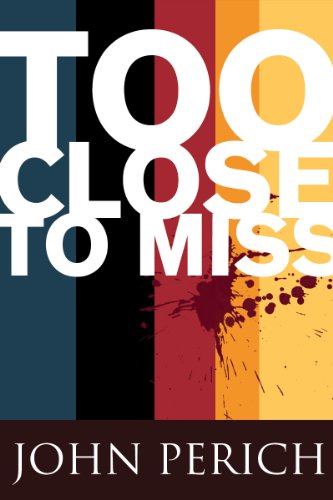
John Perich, “Too Close To Miss” (2011) – Believe it or not, but once upon a time, crime fiction was a lefty genre. As the genre shifted in the 1920s and ’30s from the genteel amateur detectives of Doyle and Christie to the more hardboiled mode we’re familiar with, it was injected with social realism that used real-world class struggles and oppression for framing and dramatic tension. Figures like Dashiell Hammett (an ex-Pinkerton who went left so hard he wound up on the blacklist), Ray Chandler, James Cain, Chester Himes, and many more cranked out genuine classics that were highly popular and conveyed a hard-hitting social critique without sacrificing story by becoming didactic (even when they could have used some education- see their attitudes towards gender). It was honestly something of a miracle.

Of course, nothing that good could last. Mickey Spillane came along and hijacked the genre tropes for his (to use Mike Davis’s phrase) “sado-McCarthyite” potboilers. Joseph Wambaugh, Jack Webb, and their imitators colonized (and cross-fertilized, and saturated) TV and the paperback market with their fatuous good-cop fantasies. Eventually, the crime-fiction right got its own genius with James Ellroy, but that was much farther down the line, and by that point, crime fiction in general wasn’t what it was.

My friend and comrade John Perich is doing his bit to bring the tradition back with his Mara Cunningham stories. His first novel, “Too Close To Miss,” treads in familiar territory — gritty Boston crime-land, which Dennis Lehane and his various imitators have been dishing up to us for a good thirty years now — but finds some new paths. We have many of the familiar tropes- the flawed hero, Mara, a photographer who enters into the action because of an affair with a married man; the web of corruption in which the local gangsters are in many respects the least reprehensible element; sexualized danger; urban blight contrasted with hollow gentrified urban glitz. There’s some first-time-novelist hiccups but a good solid frame (and some tense, well-described mayhem).

But as the story picks up and the pieces fall together, we get something a little more, the same sort of thing which made Chandler something other than a dude with a clean prose style (and some bad stereotypical depictions of people outside his demographic). It’s not the “social consciousness” that delivers tedious lectures- it’s a way of looking at the violence and hierarchy undergirding the whole social structure, the grime and the glitz just the same. It’s not that the bad guys aren’t bad, aren’t just as grotesquely sociopathic as the Lehane model of crime fiction, based in individual psychopathology (aided by an uncaring social system) would have us believe. It’s that our system is built structurally to enable the petty, individual sadism of powerful men- gendered pronoun used advisedly. The mystery Mara finds herself in is all about money, but money isn’t just money. It’s power, and at its best, crime fiction can illuminate power — its manifestations, its abuses, what it does to all of us — with a higher intelligence-to-pedantry ratio than just about anything else. I’m excited to see what the next books in the series do with it. ****

Review- Perich, “Too Close To Miss”

Review- Liu, “The Dark Forest”

darkforest

Liu Cixin, “The Dark Forest” (2008) (translated from the Chinese by Joel Martinsen) – At the end of “The Dark Forest,” we’re something like 900 pages in to Liu’s trilogy of contact between Earth and an alien civilization, and no Earthling has laid eyes on a Trisolaran! But in many respects, that’s beside the point. Here, Liu provides a new take on one of the classic themes that scifi tackles and that literary fiction occasionally dips a dilatory toe in: the horror of scale, the disjuncture between the sense of proportion — in terms of space, time, complexity, diversity, our own expectations, you name it — that we carry with us and what our discoveries tell us about the universe.

The book sprawls across multiple centuries and a number of attempts to come to grips with the coming invasion. They call Liu a “hard” scifi writer, as in he tries to keep things closely tethered to real science. I don’t know science well enough to say how much he does or doesn’t, but it seems science-y enough… though major new technologies come about at pretty convenient times. So cryogenic hibernation allows viewpoint characters — like feckless sociologist and possible savior Luo Ji — to hang around various important points in the four hundred years between when Earth discovers the aliens and when they show up.

A lot of interesting stuff — anti-alien schemes mooted (by “Wallfacers,” charged with coming up with planetary defense schemes in secret) and betrayed (by “Wallbreakers,” who aren’t the Kool-Aid Man no matter how much it sounds like it), tragic failures, rises and falls of global societies, terrible space massacres — occurs but the broad scale is also setup for the point Liu it trying to make. Jeet Heer, of all people, wrote something interesting recently where he said “hard” scifi, even more than “soft,” almost invariably has a religious charge to it. It reflects the desire to see science and technology take the role religion once did in promising transcendence.

Liu is deeply skeptical of humanist values in the face of the problems of scale upon which he built this series. The thing that saves Earth — for a time — isn’t any particularly clever scheme or bold move. It’s Luo Ji, the last Wallfacer (who mostly used his powers to acquire a waifu — Liu’s gender perspective isn’t much more encouraging than the rest of his worldview — and mess around) who comes to see the Hobbesian nature of galactic-scale life. He saves the day by essentially holding both Earth and Trisolaris hostage by the simple expedient of threatening to advertise their position to the wider universe and all of its predators. This is the titular “Dark Forest” — the universe.

That sounds depressing — it is depressing — but from Augustine’s day to Flannery O’Connor’s to Liu’s, some of the people with the most depressing worldviews hold out some of the highest hopes of existential deliverance from outside of consciousness and ego. Somewhere between emptiness and love, Liu carves out a space for hope at the end of this generally quite dark, “Empire Strikes Back” part of his trilogy. All of that is a little too Buddhist for me to really get whether it makes sense or not but it works pretty well as far as these novels go. ****’

Review- Liu, “The Dark Forest”

Review- Liu, “The Three-Body Problem”

3body

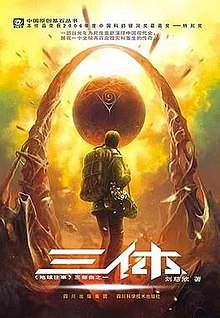
Liu Cixin, “The Three-Body Problem” (2007) (translated from the Chinese by Ken Liu) – When you think about it, for most of human history, if the aliens came and wanted to talk to anyone, they’d probably want to talk to China. It just so happens that the rise of scifi as a genre occurred at a time when China was weak and domineered by other powers. Liu Cixin corrects the imbalance in this book, and reconstructs the classic contact narrative while doing it.

The first two thirds of the book involve two narratives told in tandem. We hear the story of Ye Wenjie, an astrophysicist who witnesses the chaos of the Cultural Revolution but who survives to get involved in China’s revolutionary version of SETI (Search for Extra Terrestrial Intelligence). We also follow a contemporary scientist, Wang Miao, as various weird stuff starts happening. Scientists are killing themselves in numbers, Wang and others suffer weird hallucinations, and he gets sucked into a sinister online game where players try to solve one of the hardest problems in astrophysics- working out the gravitational pattern of the titular three bodies. Wang and other gamers try increasingly ingenious schemes to save a planet from getting messed up by its three suns in various ghastly ways, but always wind up getting owned. Liu makes good use of a classic post-classical scifi trope, the sinister-ass video game.

The stories come together as it becomes clear something with power greater than anything on earth is making itself felt. We learn a secret channel has been established between Earth and its nearest interstellar neighbors, and without giving too much away, this link is animated by dangerous combinations of disgust with life on their respective planets with delusions about what can make things better. Both Earth and Trisolaris (the other planets) are harsh worlds, inhabited by people who can only see salvation off of their respective planets, both sets of whom are bound to be disappointed. One way or another, the collision between the two worlds has been set in motion.

For the most part, the book is setup for the sequels, when the cards come to be more on the table and perhaps we see how this conflict shapes up. This leads to a certain anticlimactic quality. Liu writes in very straightforward prose with occasional rhetorical flourishes that wander into naivety- not unlike some engineers I know, when they want to make a point. At first this can be distracting. It starts to really work, though, as a fitting mode for the paranoia, cosmic insignificance, and intimations of (deserved, transformative, in some cases longed-for) doom that his scenario entails. Two beautiful scenes in particular — one where Ye confronts the Red Guards who murdered her father only to find old, haggard, unrepentant people insisting that history would forget, and another where Wang endures the peculiar sort of reassurance offered by a Chinese scifi writer’s depiction of a Marine officer during a horrendous calamity — I think will stick with me for some time. In general, there’s good reason to believe the Liu hype (I feel I say that a lot about writers- what can I say? I pick good ones) and I look forward to reading the next one. ****’

Review- Liu, “The Three-Body Problem”

Review – Vance, “The Asutra”

asutra

Jack Vance, “The Asutra” (1974) – The end of the Durdane series takes the hero, Gastel Etzelwane, far from home to figure out the secret of who’s been sending weird murderous aliens to mess with his homeland. Accompanied, sometimes, by a supercilious and self-serving historian from Earth, he first ventures to a distant continent and then is shanghaied to a faraway planet.

He finds out the truth, but one thing about Vance is that he’s a pretty strong skeptic of the notion that the truth sets anyone free. Enslaved on a faraway planet, Gastel finds that his world was little but a source of raw (mostly human) material and a site for experiment for two rival but symbiotic alien societies. The titular Asutra, brainbugs that exist parasitically on other species, and the Ka, a put-upon society from a gross swamp planet that used to be enslaved by the Asutra before turning the tables, have shaped the destiny of numerous planets in their efforts, mainly to dicker each other out of one crappy swamp world. The Asutra want the world because they had it before and think it’s nice (they have others); the Ka want the world because it’s their ancient homeland, and their entire culture is encapsulated in a 20,000-canto epic about how shitty it is but how much they love it. The depiction of the Ka is one of the better scifi depictions of wounded, small-nation nationalism I’ve ever seen.

Gastel, enslaved by the Ka, does his thing- looks for opportunities, and plays music (specifically, the Song of the Ka- the Ka reward slaves with leniency if they can learn bits of the Song). For the second time in three books, Gastel overcomes the inertia of an imprisoned people to lead a rebellion. For the second time, he succeeds. But for the second (and for the series, final) time, he finds that while rebellion improves his personal fortunes, the structures remain unchanged. After daring escapes and desperate battles, he and his fellow prisoners slaves are freed essentially as the result of an unseen negotiation process that didn’t have them in mind at all. He returns to Shant and the parliament he put in place is bickering. He — and his homeworld — are just as caught in the dynamics of history (not just human, but natural history too) as they ever were. The best he can do is take up music again.

The Durdane series (and much of his other work) places Vance squarely in the tradition of universal pessimism that runs like a black thread through speculative fiction. Unlike others in the tradition, like Lovecraft, he handles it with a light touch- inspired by that other great artist of the circular life, P.G. Wodehouse. He very cleverly uses the traditional tropes of pulp scifi — the individualist hero, the bold rebellions, the implementation of “progressive” change — to engage the reader in a bait and switch. It’d be easy to write the hero failing. But the hero succeeding, and for it not to matter in the face of a big, weird cosmos? And for the whole thing to be a lot of fun anyway? That’s what sets Vance apart and what makes the Durdane series more than the sum of it’s parts. ****’

Review – Vance, “The Asutra”

Review- Vance, “The Brave Free Men”

tbfm

Jack Vance, “The Brave Free Men” (1973) – I’m a sucker for a weird subgenre of story- those about someone organizing and leading a small, unlikely army and overthrowing one or another long-held societal arrangement. Bonus points if it’s ideologically simpatico — a revolutionary people’s army, say — but I’ll take it even if it’s just private kingdom building. What can I say, I like a good story about delegation! Usually the prose is disappointing in these stories and the dorks who write them — often frustrated wannabe (or actual) military officers — can’t restrain themselves from going on at tedious length about maneuvers across imaginary, indifferently-related maps. But I’ll still give them a look when I see them.

The second installment of Jack Vance’s “Durdane” series finds our hero, Gastel, organizing just such a force, the titular “Brave Free Men,” to repel a rapacious horde of not-quite-orcs, the Roguskhoi, from destroying Shant. He has his work cut out for him. Shant has plenty of aristocrats (and killers) but no military tradition. The descendants of religious and ideological enthusiasts dumped onto a colony planet millennia ago, the inhabitants of its Shant’s various cantons concern themselves with maintaining their various arbitrary cult rules and general societal stasis.

Anyone familiar with midcentury scifi knows much of what happens next. Gastel and the few men he can trust have to overcome the hokum and conservatism of their backward culture. They do this largely by freeing indentured servants and enlisting them in the titular army. There are various technical challenges to overcome, betrayals both suspected and real, people telling them Shant can’t change and the heroes telling them it has to, etc.

What distinguishes Vance’s take on this plot is skepticism of the enterprise. In the end, the mobilized people of Shant beat back the hordes. Gastel sets up a new government with a parliament (but with no house apportioned by population, I noticed!). But the big reveal in the end — where the Roguskhoi came from — reframes the whole existence of Shant. Without giving too much away, it’s revealed that the hordes that almost destroyed the planet were somewhere between a joke and a speculative venture by powers much bigger and colder than anything Gastel can conjure up. If Shant is nothing but a dumping ground or playpen for amoral interstellar empires, then what larger purpose does change serve? Well, presumably we’ll get some kind of answer in the third and last book. ****’

Review- Vance, “The Brave Free Men”

Review- Vance, “The Anome”

anome

Jack Vance, “The Anome” (1973) – Vance was a master of building baroque worlds of stasis, decay, and a sickly kind of wonder. In the Durdane trilogy, he depicts the realm of Shant, a long-abandoned colony planet divvied up into cantons, each governed by a different cult rigorously pursuing one or another set of arbitrary rules. Overseeing all is the “Faceless Man” or “Anome,” who enforces the division and cultural stasis of Shant through the simple expedient of a device that explodes the heads of anyone he pleases. It’s implied this state of affairs has gone on for some time.

Vance never stints on the human element of what makes his societies go, mostly in terms of the personal dynamics of domination and collaboration. The canton the hero grows up in is run by a cult of misogynist male ascetics, who loll around on hallucinogens while forcing women and children to do all the productive and reproductive labor. The vanity of degeneration is one of the affects Vance is best at conveying, and it’s at its skin-crawling (and sometimes hilarious, in a harsh kind of way) best here.

Anyone who knows classic scifi knows what comes next- the individualist hero, a bold, moody young man with big dreams and a disregard for established mores, strikes out on his own. Gastel Etzelwane skips out on the cult (refuses to be a “Pure Boy,” which I kept reading as “Proud Boy”- I’m sure the canton authorities also frowned on masturbation lol) because they make him abandon his mom and are generally dicks. He has various misadventures out in the world, which to be honest are a little disappointing- I would have rather seen less airship shenangians and more depictions of different cantons with their own weird rules and cults, at which Vance excels. Shit gets real when barbarians roughly in the orc mold — the Rogushkoi, big, ugly, mean, rapacious — invade Shant, killing various extras and also Etzelwane’s mom. The Anome doesn’t do anything about it, presumably because organizing an army between all his weird little cults would be too disruptive.

Etzelwane has to find a way to prevail upon the Faceless Man to do something. But how to find a dude who is faceless? Is this rando who keeps popping up in his life to alternately frustrate or aid him the Faceless Man, or just a rando? Will all this mean that Etzelwane will have to take power himself, and then disrupt the shit out of this classic scifi backwards-irrational planet with some good old-fashioned bourgeois revolution? You know it will- in the sequels. ****

Review- Vance, “The Anome”

Review- Mieville, “The City and the City”

citycity

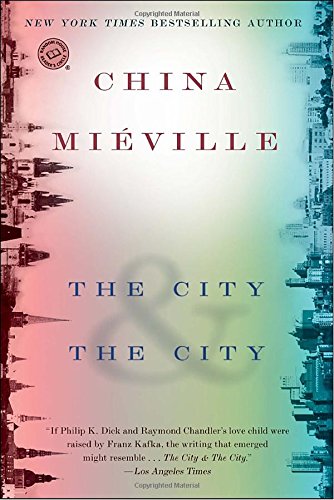
China Mieville, “The City and the City” (2009) – China Mieville has claimed he wants to write at least one novel “in every genre,” which given the murky boundaries between them sounds like a difficult-to-define goal, but admirable. In “The City and the City” he tries his hand at the classic Chandler-esque detective story, except all Mieville-d up. The titular cities are Besz and Ul Qoma, two Eastern European city-states which are in some quasi-magical quasi-political sense superimposed on each other. They occupy the same physical space and the inhabitants of the two cities just learn to “unsee” each other. Act as though you notice the two cities are right on top of each other, a mysterious and vaguely magical inter-city secret police will take you away. A body is dumped in dreary, post-communist, vaguely-Serbia/Croatia-esque Besz, but the evidence leads to thriving if unequal, vaguely Albania/Bosnia-esque Ul Qoma. So, naturally, a world-weary Besz detective needs to team up with a Ul Qoma cop who plays by his own rules, etc. And naturally, being a Mieville story, there’s dark hints of Lovecraftian dark secrets lurking in the space between the two cities.

Mieville gained his reputation because his high-concept flights of imagination (and social messages- Mieville is a Trotskyite, last I checked) are grounded by his solid genre fiction instincts. This more or less works here, though like a lot of detective stories, the catch is ultimately less interesting than the chase. To tell the truth the chase starts to lag a little earlier than in most good crime novels as Mieville starts to lay his cards on the table about what, exactly, is going on with the two superimposed cities. It winds up being an ok gloss on nationalism as a concept, but nothing mind-blowing (“aren’t ALL national boundaries just as arbitrary as between these two superimposed city-states??”). It was pretty fun getting there, though. He does a decent commie-weird-fiction Chandler. ****

Review- Mieville, “The City and the City”

Review- Wolfe, “Operation Ares”

ares

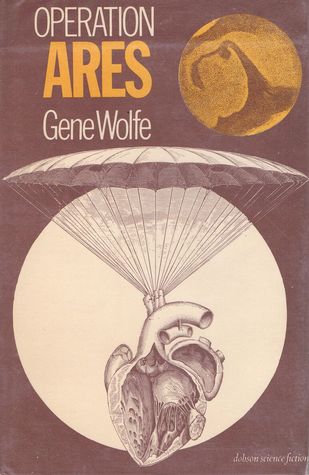
Gene Wolfe, “Operation Ares” (1970) – I mainly associate Gene Wolfe with the Book of the New Sun, a staggering, profoundly immersive work and some of the best books I’ve read in the last few years. So it’s a little weird to read him doing straightforward pulp scifi, like “Operation Ares,” his first novel. In the early 21st century, welfare bureaucrats have suspended constitutional governance and run America into the ground. Wolfe’s depiction of callous, patronizing social service bureaucracy actually does seem pretty sharply drawn, though some of the other choices he makes for the world — namely, the welfare state consciously turning its back on technology, allowing the Soviets (now allies with the US) to pull way ahead — are real headscratchers even from the perspective of a paranoid mid-century American right-winger. The hero is a standard-issue scifi ubermensch, universally competent and cool-headed, who chafes under this reign of mediocrity and conspires with Martian colonists — who the liberals in the US abandoned and blame for their troubles — and, weirdly enough, the Maoist Chinese to rebel against the government and bring back the constitution.

Even leaving aside the politics, it’s a bit of a bummer to read Wolfe do such generic plots (and often hare-brained, ill-explained schemes- he would come to master the use of limiting information to the reader, but hadn’t at this time) and stock characters. But he brings some glimmers to it that more pedestrian writers wouldn’t. To his credit, the charges of the welfare bureaucrats are depicted as realistic humans (and, seemingly, aren’t racialized), and develop some interesting ideas of their own, including a sort of urban-primitivist hunter cult that’s pretty well-drawn. He gets some good mileage out of the strains in the alliance between the cerebral, technocratic Mars colonists, the Maoists, and the ragtag American constitutionalists, and isn’t naive about how much damage internecine war will do. But how much can you say about a scifi novel that ends with the hero lecturing King Bureaucrat about personal responsibility and the need for a Universal Basic Income to replace welfare entitlements? ***

Review- Wolfe, “Operation Ares”

Review- Leckie, “Ancillary Justice”

ancillaryjustice

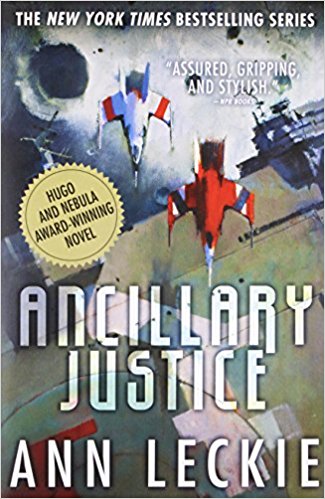
Ann Leckie, “Ancillary Justice” (2013) – this is some pretty good, straightforward space opera. A renegade spaceship AI, once a servant of a galactic empire, enacts a long-term revenge plot against the empire’s ruler, which sort of happens but in a sufficiently ambiguous way to leave room for a sequel. This was Leckie’s first published novel, and suffers from some hiccups but by and large delivers the goods.

Leckie got caught up in “Puppygate” — a sort of lightweight gamergate sequel within the scifi community — because her book hit the big time when some scifi reactionaries were making a ruckus about contemporary scifi supposedly being too liberal, PC, and dull. This has led “Ancillary Justice” to have a reputation for being out there and cerebral which it doesn’t really deserve. As far as I can tell, the “puppies” hit upon Leckie because she was a woman, a successful new writer, and because her space empire denizens lacked gender and called most everyone “she.” Of course, if they bothered to read past the first 30 pages or so, they would see that this space empire is hardly a genderless utopia but in fact the force the characters were rebelling against. Leckie invents a rank system for the imperial space fleet that is a lot more confusing and gratuitous than the pronouns. The most interesting part was the depiction of the Radchaai empire- notionally meritocratic but also clan-based, polytheistic in a vaguely “eastern” kind of way (lots of meditating and tea), run by the many clones of a sort of quasi-divine emperor. An empire of “she’s,” practicing what sounds a lot like pumpkin-spice-yoga-spirituality and run by people placed via “the Aptitudes” test trained to relentlessly overtake and assimilate other cultures- at a time when people thought Hillary Clinton really was going to define politics for a while, you can see why this may have gotten some neckbeards triggered. ****

Review- Leckie, “Ancillary Justice”