
Review- Mieville, “The City and the City”

citycity

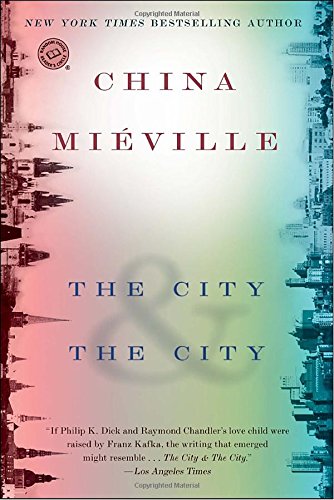
China Mieville, “The City and the City” (2009) – China Mieville has claimed he wants to write at least one novel “in every genre,” which given the murky boundaries between them sounds like a difficult-to-define goal, but admirable. In “The City and the City” he tries his hand at the classic Chandler-esque detective story, except all Mieville-d up. The titular cities are Besz and Ul Qoma, two Eastern European city-states which are in some quasi-magical quasi-political sense superimposed on each other. They occupy the same physical space and the inhabitants of the two cities just learn to “unsee” each other. Act as though you notice the two cities are right on top of each other, a mysterious and vaguely magical inter-city secret police will take you away. A body is dumped in dreary, post-communist, vaguely-Serbia/Croatia-esque Besz, but the evidence leads to thriving if unequal, vaguely Albania/Bosnia-esque Ul Qoma. So, naturally, a world-weary Besz detective needs to team up with a Ul Qoma cop who plays by his own rules, etc. And naturally, being a Mieville story, there’s dark hints of Lovecraftian dark secrets lurking in the space between the two cities.

Mieville gained his reputation because his high-concept flights of imagination (and social messages- Mieville is a Trotskyite, last I checked) are grounded by his solid genre fiction instincts. This more or less works here, though like a lot of detective stories, the catch is ultimately less interesting than the chase. To tell the truth the chase starts to lag a little earlier than in most good crime novels as Mieville starts to lay his cards on the table about what, exactly, is going on with the two superimposed cities. It winds up being an ok gloss on nationalism as a concept, but nothing mind-blowing (“aren’t ALL national boundaries just as arbitrary as between these two superimposed city-states??”). It was pretty fun getting there, though. He does a decent commie-weird-fiction Chandler. ****
Review- Mieville, “The City and the City”

Review- Wolfe, “Operation Ares”

ares

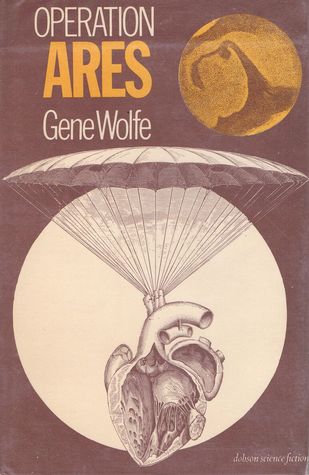
Gene Wolfe, “Operation Ares” (1970) – I mainly associate Gene Wolfe with the Book of the New Sun, a staggering, profoundly immersive work and some of the best books I’ve read in the last few years. So it’s a little weird to read him doing straightforward pulp scifi, like “Operation Ares,” his first novel. In the early 21st century, welfare bureaucrats have suspended constitutional governance and run America into the ground. Wolfe’s depiction of callous, patronizing social service bureaucracy actually does seem pretty sharply drawn, though some of the other choices he makes for the world — namely, the welfare state consciously turning its back on technology, allowing the Soviets (now allies with the US) to pull way ahead — are real headscratchers even from the perspective of a paranoid mid-century American right-winger. The hero is a standard-issue scifi ubermensch, universally competent and cool-headed, who chafes under this reign of mediocrity and conspires with Martian colonists — who the liberals in the US abandoned and blame for their troubles — and, weirdly enough, the Maoist Chinese to rebel against the government and bring back the constitution.

Even leaving aside the politics, it’s a bit of a bummer to read Wolfe do such generic plots (and often hare-brained, ill-explained schemes- he would come to master the use of limiting information to the reader, but hadn’t at this time) and stock characters. But he brings some glimmers to it that more pedestrian writers wouldn’t. To his credit, the charges of the welfare bureaucrats are depicted as realistic humans (and, seemingly, aren’t racialized), and develop some interesting ideas of their own, including a sort of urban-primitivist hunter cult that’s pretty well-drawn. He gets some good mileage out of the strains in the alliance between the cerebral, technocratic Mars colonists, the Maoists, and the ragtag American constitutionalists, and isn’t naive about how much damage internecine war will do. But how much can you say about a scifi novel that ends with the hero lecturing King Bureaucrat about personal responsibility and the need for a Universal Basic Income to replace welfare entitlements? ***

Review- Wolfe, “Operation Ares”

Review- Leckie, “Ancillary Justice”

ancillaryjustice

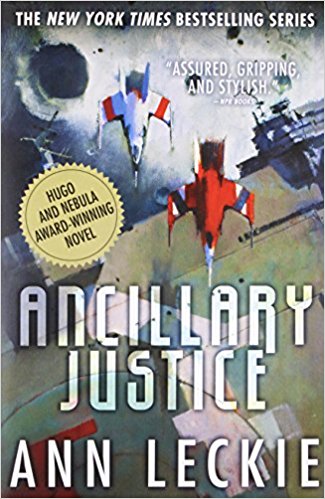
Ann Leckie, “Ancillary Justice” (2013) – this is some pretty good, straightforward space opera. A renegade spaceship AI, once a servant of a galactic empire, enacts a long-term revenge plot against the empire’s ruler, which sort of happens but in a sufficiently ambiguous way to leave room for a sequel. This was Leckie’s first published novel, and suffers from some hiccups but by and large delivers the goods.

Leckie got caught up in “Puppygate” — a sort of lightweight gamergate sequel within the scifi community — because her book hit the big time when some scifi reactionaries were making a ruckus about contemporary scifi supposedly being too liberal, PC, and dull. This has led “Ancillary Justice” to have a reputation for being out there and cerebral which it doesn’t really deserve. As far as I can tell, the “puppies” hit upon Leckie because she was a woman, a successful new writer, and because her space empire denizens lacked gender and called most everyone “she.” Of course, if they bothered to read past the first 30 pages or so, they would see that this space empire is hardly a genderless utopia but in fact the force the characters were rebelling against. Leckie invents a rank system for the imperial space fleet that is a lot more confusing and gratuitous than the pronouns. The most interesting part was the depiction of the Radchaai empire- notionally meritocratic but also clan-based, polytheistic in a vaguely “eastern” kind of way (lots of meditating and tea), run by the many clones of a sort of quasi-divine emperor. An empire of “she’s,” practicing what sounds a lot like pumpkin-spice-yoga-spirituality and run by people placed via “the Aptitudes” test trained to relentlessly overtake and assimilate other cultures- at a time when people thought Hillary Clinton really was going to define politics for a while, you can see why this may have gotten some neckbeards triggered. ****

Review- Leckie, “Ancillary Justice”

Review- Le Guin, “The Dispossessed”

dispossessed

Ursula Le Guin, “The Dispossessed” (1974) – a shameful gap in my scifi reading, filled! Like it’s series predecessor, The Left Hand of Darkness, The Dispossessed is less about any particular plot and more about journeying through Le Guin’s worlds. We see the twin worlds, one, Urras, not unlike earth in the mid-20th century, the other, Anarres, a stark desert planet settled by “Odonians” (what we would call anarcho-syndicalists) through the eyes of Shevek, an Anarresti physicist. Anarres feels real- you get the feeling Le Guin has been to more than a few leftist meetings, and the scraps of history of the Odonian movement she describes sound emotionally real to those of us who know the history of liberation movements (including rocky relations with socialists). There’s an exhilaration of stark freedom and openness to Anarres that never falls into sentimentality. Shevek experiences the bad side of libertarian (in the old sense) life on a desert planet- material deprivation, and abetted by it, pressure towards social conformity and ideological purity made worse by being customary and informal rather than legal. But Urras, while richer, isn’t better, with its wealth inequities and great power politics threatening to suck Shevek in and expropriate his work. I’m not sure I got the physics Shevek was meant to be working on, and to the extent there’s a real plot, it’s about what will become of his discoveries. It sounded like mysticism a few degrees higher than the usual scifi quantum-unobtainium stuff. But Le Guin’s larger point seemed to be that seeming opposites, like Anarres and Urras or physics and philosophy, need each other to be whole. Le Guin’s gift is taking that kind of point and making great scifi worlds out of them. *****

Review- Le Guin, “The Dispossessed”