Review- Vonnegut, “Jailbird”

Kurt Vonnegut, “Jailbird” (1979) – They call this Vonnegut’s “Watergate novel” – how common a subject was Watergate for major novelists of the time? Vonnegut had one, Philip Roth had one, were there a lot of others, enough to denote a subgenre?

Truth be told there’s not a ton of Watergate in this one. The main character, Walter Starbuck, is depicted as the least of all Watergate perpetrators. He’s a functionary Nixon barely recognizes who’s only involvement is that he let bigger government crooks use his underused office. That’s enough to land him in cushy white-collar jail, and not enough to attract the attention of Nixon sympathizers who might give him a book deal or sinecure when he gets out. He’s on his own.

There’s a lot more about moral compromise and the American class system, two of Vonnegut’s usual themes. Starbuck only got his Nixon job by accidentally outing an Alger Hiss-esque Harvard friend as a communist. Told in first person, Starbuck tells us about his loves, foiled and otherwise, and disappointments. Vonnegut’s Veblen-tinged utopian socialism guides the text, including his running jokes about being a Harvard man and what it meant (this having been written after Vonnegut taught there briefly).

It ends with a pretty audacious scheme by one of Starbuck’s exes, which I won’t spoil except to say that it uses corporate America’s sheer size against it, and fails. The story winds up back where it starts, another Vonnegut trope. All in all a minor Vonnegut novel, but enjoyable for all that. ****

Review- Vonnegut, “Jailbird”

Review- Lomax, “The Land Where the Blues Began”

Alan Lomax, “The Land Where the Blues Began” (1995) – How is Alan Lomax’s reputation these days? Is he still seen as a Popular Front good guy or did he just “columbus” the blues and other vernacular musical traditions? Something tells me the truth is in the middle, maybe closer to the former, but I’m curious as to his reputation. It seems the eye of Saur- I mean the internet, the internet! Hasn’t fixed itself on him just yet.

Anyway! Lomax was an ethnomusicologist who had an outsized effect on popular music through “discovering” such bluesmen as Leadbelly and Muddy Waters. The former of whom was in the hellhole called Angola prison, performing for the warden, before Lomax helped wheedle him out. These memoirs were written in the 1990s, a good fifty years after the epic period of Lomax’s career, so there’s a certain wistful remembrance to the work. It’s hard to estimate just how important Lomax’s efforts were for the history of popular music, given how widely influential the blues he publicized were, except that it was pretty significant.

Lomax recalls his travels in Memphis, the Mississippi Delta, and the adjacent Hill Country. He finds legendary musicians living in the grinding poverty and cash-crop driven racial caste system. Local law enforcement hassles him and his informants. The cops were often effectively seconded to the local plantation owners and wanted to know what a white man wanted with “their” blacks, suspecting “outside agitation.” That he was genuinely sent from Washington to record folk songs for a WPA project didn’t help matters.

As far as white people exploring a largely non-white culture goes, Lomax avoids a lot of traps. He lets his informants speak extensively for themselves. He both gives credit to the “race record” industry for spreading the blues and makes clear how exploitative they were to the talent. The names he summons are often more famous than his, for good reason and in part through his efforts. He does attribute a lot to Africa and Africanness, more than you’d probably get away with nowadays, which is probably less of an issue with the music than it is with his amateur sociology of the Delta. Still, if he’s essentialist it’s in the relatively innocent strain passed down from Herder to Boas and the liberal anthropologists of his time, that insisted that all of the (admittedly reified and questionably delineated) groupings of peoples had something unique and positive to offer. This was an interesting memoir, and if it sends people back to the source — Lomax’s recordings are on YouTube, look up the Mississippi hill country fife and drum blues if you haven’t — then it’s worth having been published. ****

Review- Lomax, “The Land Where the Blues Began”

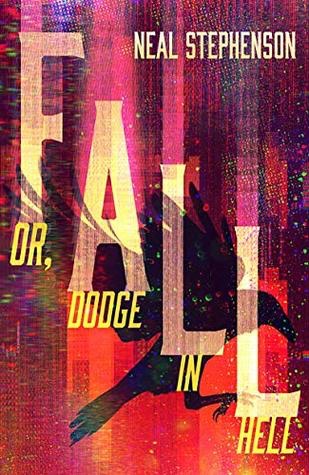
Review- Stephenson, “Fall; or, Dodge in Hell”

Neal Stephenson, “Fall; or, Dodge in Hell” (2019) – As it happens, I actually read this months ago. I requested a reviewers copy on the idea I could run a review in LARB or somewhere. But it turns out everyone already either had somebody to review it, weren’t interested in reviewing it, or is too political for my not-especially-political take. So it goes up on the blog instead! And I have to remember a book I read in March.

In keeping with Stephenson’s m.o., this is a big book, and has the feel of several books squashed together. I’ve argued before that Stephenson’s novels are following the trajectory of the life cycle, and we’re getting into the part where a man begins to think a lot about death (and divorce) and legacy. We start with the titular Dodge, one of the main characters in “Reamde,” in my opinion Stephenson’s weakest novel. He goes in for a routine medical procedure and comes out comatose! His will says to pull the plug but also keep his brain on ice- it turns out Dodge was in to some futurist stuff in the nineties that predicted that science would be able to resurrect people. So like Ted Williams, on ice he goes.

But his beloved grand-niece has Plans. After taking a trip through an America increasingly divided between neurasthenic automated luxury liberalism and fanatical worshippers of the “Tactical Jesus” (easily my favorite thing in the book), she decides her senior project at college is going to be simulating a human brain on quantum computers. And who better to try it with than her great uncle Dodge?

It turns out to suck to have your brain be bouncing around a computer program. It’s just static! Until, that is, Dodge starts playing Minecraft with the static. He makes the world in a way that feels right- that is, a world somewhere between the world he grew up in and the fantasy gaming milieu where he made his fortune. He minecrafts up the hilly-willies and down the hilly-willies and then eventually some other rich techies show up on the server. They create bodies for themselves and then it’s on.

Truth be told this is where I began to lose the thread. There’s an Old Testament quality to the work, down to rolling King James cadences in the Minecraft Genesis bits and that’s cool, I guess, but then it gets into something like the begets, not literally but in terms of being hard to keep track of. There’s another tech billionaire, El Shepherd, who has a Plan for the digital afterlife that Dodge’s niece set up. He doesn’t like that Dodge basically set up lightly-fantasy-Earth Minecraft in the digital afterlife and like a lot of villains, he has a point. We could be doing literally anything! The one time anyone tries something different — a kind of communal musical mindmeld — Dodge completely thunderbolts it. What’s the point of an afterlife if you have to do everything the same as in the before-life?

But in the classic way of villains in conservative-liberal fiction from Madam Defarge to Killmonger, the people with actual ideas are also dicks. El wants to be God. He casts Dodge into hell. Meanwhile, the whole earth’s population is getting obsessed with watching shit unfold in the afterlife and the tech to get in gets more and more accessible. It’s pretty interesting to see how society changes around that, people basically waiting out the clock to get into the digital afterlife club, etc. What becomes of the worshippers of the Tactical Jesus?? Stephenson doesn’t tell us. He just drops them.

At some point Dodge’s niece infiltrates the digital afterlife to, uh… there’s some stuff with an Adam and Eve pair, and a fantasy quest, and fighting the El/Peter Thiel/Bad God figure… but god help me it was mostly pretty boring by then and I can’t remember most of it. There’s some weird shit like how most people who get incarnated into the digital afterlife become weird mutant goblin-esque scrubs- is that where the Tactical Jesus people go? I also got the vague idea they were maybe third world peasants. Either way, shades of the weird eugenics Stephenson played with in “Seveneves.” That only bothers me a little — I’m fine with speculative fiction based in ideas I’m opposed to — but it was mostly confusing and inconsistent, and missed some good opportunities.

All told, there’s a lot here, some good, some bad, some just dull. His broadest point appears to be that while life can be better (or worse), the basic shape of things — from what trees grow where to what shape bodies take (for the most part- there’s always a few fun exceptions) — is handed down from on high, or by the shape of our brains perceiving ideal forms in a sort of quantum pattern-sensing, six of one, half dozen of another. The highlights of the book are the ways in which society bends before and around the digital afterlife. There’s a take on the problem of “fake news” which is both interesting and partaken of liberal bromides about how the problem works (and is completely dropped when it could have been carried into digital afterlife!). The lowlight is the mediocre fantasy novel the book becomes in its last couple hundred (!) pages. What’s next for Stephenson? Who knows but it should be conceptually interesting and worth noting, if nothing else. ***

Review- Stephenson, “Fall; or, Dodge in Hell”

Review- Ghosh, “Flood of Fire”

Amitav Ghosh, “Flood of Fire” (2015) – The “Ibis” trilogy concludes with the end of the first Opium War. The series had lingered on Calcutta and Canton, two important sites of their era of globalization, and ends with the creation of a third, colonial Hong Kong. There were three main viewpoint characters in this outing. Shireen Modi is the wife of a Parsi opium merchant who died in Canton under mysterious circumstances. Kesri Singh is a proud sepoy (and relative of some of the characters in the earlier books) sent out to fight in the war. Zachary Reed is a part (and secretly) black American sailor who decides to get into the opium business. Their ultimate fates can be seen as representing three different responses to the massive forces in which they and everybody else were/are swept up. Shireen goes the path of cultural mestizage when she married an Armenian merchant; Kesri goes for escape when his unit is accused of crimes a white British unit did, fleeing for Mauritius and pastures new. Most disturbing is Zachary, who spent the previous two books as a basically relatable character, whose descent into the amorality of the opium trade and of capitalism more generally leads him to become an avatar of the “kali yuga” or age of waste of Hindu mythology.

There’s a lot of loose ends by the close of the book, most of them intentional. There’s some head scratchers- like I could have sworn Karabedian, Shireen’s Armenian beau and friend of her late husband, already had two families, one in Cairo and one in Colombo. Surely that should have come up somewhere? Or is that just a surprise for Shireen to find out about? Similarly, Zachary’s descent sometimes seems a little hasty, but I guess the combination of dashed love (he had a bad affair with a memsahib) and the opium trade will do that. All in all, the Ibis trilogy is more than the sum of its parts. The immersion in another world it provides — one with many parallels to our own — and its compassionate understanding of a vast swath of human reactions to the inhuman forces that move us all overcome whatever minor quibbles I can make. The series is well worth the investment in time they take. *****

Review- Ghosh, “Flood of Fire”

Review- Levering Lewis, “W.E.B. Du Bois”

David Levering Lewis, “W.E.B. Du Bois: Biography of a Race, 1868-1919” (1994) and “W.E.B. Du Bois: The Fight for Equality and the American Century 1919-1963” (2001) – What a doozy! 1100-odd pages on the eventful life of sociologist, historian, activist, and man in the running as greatest American intellectual of the twentieth century, W.E.B Du Bois. It’s in the tradition of full-dress, life-and-times biographies like “The Power Broker” and “The Rascal King” — lots of detail, lots and lots of background on where Du Bois grew up, the histories of the settings he found himself in, the lives of people involved with his, so on and so on. Du Bois went many places: starting in Great Barrington, going to Fisk University, Harvard, Germany for grad school, back to Harvard, Atlanta, New York, touring the world and finally ending up in Ghana. He knew a lot of people. It’s two big books.

To give even a cursory examination of Du Bois’s career is beyond the scope of this review. Suffice it to say he was a scholar who played a major role in founding the NAACP and in shaping civil rights discourse and activism. His intellect was powerful and protean, finding outlet in sociology, history, memoirs, and novels (he was also a tremendous and well-organized worker). He redefined the history of Reconstruction in ways that historians only caught up with forty years later, and his philosophical works like “The Souls of Black Folk” went a long way towards shaping race consciousness in America in the twentieth century. Levering Lewis doesn’t stint from the nitty-gritty of Du Bois’s travels (one imagines his diaries were a source hard not to mine at sometimes tedious depths) and of his bureaucratic battles within the Niagara Movement and its successor, the NAACP.

Levering Lewis paints a picture of Du Bois as fiery, imperious, well aware of his own talents, and always fighting someone. My favorite parts were those dedicated to his epochal battles to define how black politics would look: with Booker T. Washington, with Marcus Garvey, with Walter White, etc. Washington played a game between the Jim Crow South, national authority, and the black community for which he acted as semi-official spokesman, where he attempted to bargain obedience to white rule for economic advancement. His struggle with Du Bois began over education — Washington being almost neurotically opposed to broad liberal arts education for black people and Du Bois a staunch advocate — but it quickly became a matter of broader vision for the community. No sooner had Washington left the scene and the Tuskegee network started seeing things more Du Bois’s way than Marcus Garvey and the United Negro Improvement Association arise. There was a viscerality to Du Bois’s despisal of Garvey, the wrath of a sophisticated, highly educated man for an interloper who was neither but who undeniably had the common touch Du Bois lacked. Garvey’s nationalism had more than a little of flim-flammery to it but it spoke to people fed up with Jim Crow, south and north, and seeing few ways out. Finally, Du Bois fought endlessly within his own organizations, the NAACP and the magazine The Crisis, and it was battle with Walter White — who became the archetype of the polished, establishment-friendly, legalistic civil rights advocate — that finally drove him from the group.

Du Bois lived a lot longer than he expected to- 95 years. Levering Lewis describes his politics and manner as essentially late-Victorian, a product of the 1880s and 1890s, which helped define but, ironically, had trouble managing the contradictions of the twentieth century as it unfolded. I would categorize his politics, insofar as I can, as “Fabian” — a belief in a socialized economy led by a meritocratic intellectual elite. He became a communist in the end, but Levering Lewis doubts how much he really believed in the destiny of the working class, though it’s worth noting Du Bois put much stock in Marxist historiographical technique, as his work on Reconstruction shows. Du Bois had tilted at socialists, black and white, for decades, but the Communist Party’s consistent efforts at organizing black workers probably decided the question for him. It was McCarthyism that drove him out of the country just as generations steeped in his thought began undertaking successful civil rights and decolonization work on both sides of the Atlantic. Hounded by his government, deprived of a passport, he lived out his days under Kwame Nkrumah’s aegis.

Like I said, there’s a lot here. Apparently Du Bois was a mediocre dad and a lousy husband, a major philanderer. Levering Lewis stints on neither praise nor blame and what you’re left with is a picture of both complexity and greatness (in the value neutral classical sense of the word “great”). That seems appropriate. All told, a solid piece of work. ****

Review- Levering Lewis, “W.E.B. Du Bois”

Review- Manchette, “The Mad and the Bad”

Jean-Patrick Manchette, “The Mad and the Bad” (1972) (translated from the French by Donald Nicholson-Smith) – Critics see crime novelist Jean-Patrick Manchette and filmmaker Jean-Pierre Melville as mutually influential on each other, but in this crime novel by the former, there’s a certain Coen Brothers feel. A failed architect who lucked into big money tries to have his brat nephew bumped off. He hires a caretaker from a sort of anti-psychiatric mental asylum (this was when the anti-psychiatry movement in psychology was big in France) as a fall girl. She turns out to be more resilient than he anticipated. The killers are less formidable than their employer might have liked, even if they are randomly dangerous- one is hindered by a stomach ulcer, the effects of which Manchette details extensively. The girl and the nephew escape from one perilous ambush situation after another, and wind up confronting the uncle alongside the uncle’s spurned former architecture partner. The final showdown takes place at a sort of surrealist parody mansion which messes with everyone’s sense of distance and proportion. All in all, a decent, quick read that seems very much “of it’s time.” ***’

Review- Manchette, “The Mad and the Bad”

Review- Herrera, “Kingdom Cons”

Yuri Herrera, “Kingdom Cons” (2004) (translated from the Spanish by Lisa Dillman) – Here we have a sort of lightly-magical-realist crime fable. The characters are all named for Types- the Artist, the King, the Witch, the Journalist, etc. etc. The Artist is the main character, a street performer who the King takes a fancy to and brings in to his compound as part of his court. There, the Artist composes narco-corridos to the greater glory of the King and his cartel. There’s no depiction of the inner workings of the industry or anything like that. All the drug dealing takes place off scene, and we only see the aftermaths of killings. The Artist eventually writes the wrong corrido and woos the wrong maiden (the Commoner, the Witch’s daughter) and is forced to flee. This is a short book and not a ton happens in it but it does maintain a sustained atmosphere of menace throughout. People praise Herrera highly but this, it turns out, was his first book- I’m somewhat curious what the others are like. ***

Review- Herrera, “Kingdom Cons”

Review- Ellroy, “Hollywood Nocturnes”

James Ellroy, “Hollywood Nocturnes” (1994) – James Ellroy- the great and sometimes frustrating grand master of contemporary American crime fiction; this is a collection of some of his early 90s short fiction. His short fiction magnifies both the capabilities and the shortcomings of his distinctive style. He can be masterful at summoning up his world — noir Los Angeles, either contemporary or in the fifties — in short order. The telegraphic style works well in short form, too. His characterization can go either way- sometimes deft, sometimes cheap (I remember one where one of his identical perspective-gun-thugs was mainly characterized as being “into rhinos”). The actual action is always a crapshoot- he’s always better with smaller-scale crimes than the grand and sometimes ludicrous conspiracies he sometimes conjures as endings. There’s exceptions — “Blood’s a Rover,” which caps the seminal Underworld USA series, involves a big conspiracy that actually works with the text. But by and large, the sleaze and intimate understanding of power dynamics he displays works better than his efforts at coming up with something commensurate behind it all.

The centerpiece of “Hollywood Nocturnes” and by far the best piece is a novella, “Dick Contino’s Blues.” Dick Contino was a real guy, a famous accordion-playing pop star (I have difficulty seeing how an accordion guy can get THAT famous in America, but who knows, it was the fifties). He entered the list of aspects of LA during Ellroy’s fifties childhood that made it into the matrix of the author’s noir dreams. Contino fell on hard times after being pegged as a draft-dodger (even though he eventually finished out his hitch). Ellroy puts him through several circles of the hells he creates, much of which out of things that are supposed to be pleasant: lounge acts, rigged variety shows, negotiating with the tabloid press, working as a repo man for a crooked car dealer, “infiltrating” a hopeless left-leaning reading group, sleazy d-movie productions, finally into a phoney kidnapping scheme to get him back into the limelight in a positive way. It all ends with a car chase and an encounter with an actual serial killer, but it’s the ride that really works.

There’s another good story involving an Okie ex-cop turned fixer for Howard Hughes, playing his patron off of mobster Mickey Cohen and a college-aged femme fatale. I don’t really remember the others that well, for good or ill. As usual his stories set in the mid-20th century play better than his contemporary stories. “Dick Contino’s Blues” is worth the price of admission, a ride through the noir hellscapes Ellroy conjures better than anyone. ****’

Review- Ellroy, “Hollywood Nocturnes”

Review- Ghosh, “River of Smoke”

Amitav Ghosh, “River of Smoke” (2011) – The best part of Amitav Ghosh’s Ibis trilogy is its immersiveness in the worlds connected by early nineteenth century globalization, especially the areas around Calcutta and Canton, the two geographical loci of the story. In “River of Smoke,” the second volume, we spend most of our time in Canton on the eve of the First Opium War. Ghosh doesn’t so much throw away many of the characters from the first volume as much as puts them aside to concentrate on a few, old and new. A disgraced former raja becomes a functionary for Bahram Moddie, a Parsi opium trader and arguably the central character in this sprawling book. As a Parsi in Canton, Moddie exists in several worlds at once: the Parsi community in Bombay, the traders quarter in “Fanqui Town” (the enclave for outsiders the Chinese allowed to exist in Canton), he dabbled in the actually Chinese part of China (having a son with a Chinese woman), and he exists in the space between the three, where he’s not Chinese but not European, even if he’s a respected player in the same trade as they.

He’s staked everything on one big opium shipment, and wouldn’t you know it? The Manchu regime finally appointed a mandarin serious about stomping out the opium business, Lin Zexu (a real figure). Lin starts seriously interfering with the trade and refusing to be bought off, the Europeans want war to open things up, Moddie and his functionary are caught in the middle. Like it’s predecessor, this one was a lot of fun. Two slight criticisms: there’s a lot about various plants, and one character basically spends her whole time on a plant-based subplot which goes nowhere; andone of the viewpoint characters is a gay painter, which is cool, but Ghosh writes him as contemporary white male gay, including having his letters swishily emphasize words in italics, etc. It’s a little gauche and takes you out of the story some. In all, though, a worthy follow-up. ****’

Review- Ghosh, “River of Smoke”

Review- Weber, “On Basilisk Station”

David Weber, “On Basilisk Station” (1993) – I figured I should take a crack at reading this, the first volume in the flagship series by the doyen of military scifi. In a way, this is a case of truth in advertising. It really is “military” scifi, as opposed to war scifi or action scifi, because a lot of it has to do with bureaucracy, procurement, chain of command drama, etc, the stuff of quotidian life in any military. There’s not a shot fired in anger in the first two hundred pages!

Instead, you get long descriptions of space ships and their weaponry. You get the travails of young commander Honor Harrington (presumably a descendant of Michael, continuing the socdem tradition of being soft on imperialism) as vindictive space-naval bureaucrats exile her and her ship to a remote station. Her crew dislikes her, she hasn’t got enough ships to do her job, blah blah. She serves the navy of Manticore, space-Britain to the nefarious space-Napoleonic-France of Haven, which has to conquer planets to keep its darn welfare state going. The natives are getting restless and of course no one bothers to explain why they’re bothering natives on the nearby planet when all they want is an adjacent wormhole, etc etc. Eventually the bad guys, whose only motivation is nefariousness, spring their trap, Honor proves everyone wrong, and we move on to the inevitable sequels.

Look: I’m fine with either one or the other. If it’s gonna be raygun space battles, cool (though over-adherence to a Napoleonic model of naval battles transferred to space makes everything a little stilted). I also could get into a story of someone organizing things in spite of limited resources, bureaucratic interference, etc. But we get half-assed versions of both with cardboard stock characters and uninteresting worldbuilding. It baffles me this is as popular as it is, not because it’s so awful (it beats “Starship Troopers” in novel form, for my money- at least Weber doesn’t preach, though he is literally a Methodist preacher), but because military scifi is held up as the populist, exciting counterpart to “ideas” scifi. But it’s not that exciting! LeGuin, Delany, Jemisin etc offer at least as much action and derring-do. Do the later Honor novels ramp it up? I don’t know and only curiosity about the shape of the genre would make me find out. **

Review- Weber, “On Basilisk Station”