Review- Reed, “Yellow Back Radio Broke-Down”

yellow back radio

Ishamel Reed, “Yellow Back Radio Broke-Down” (1969) – Ishmael Reed is a tricky figure. From a literary perspective, he is unquestionably one of the great twentieth century American writers. His lyrical voice — a reckless slangy prose-poetry — and satirical dream-logic vision has often been imitated (the “Illuminatus!” trilogy is, among other things, a dorky white pedant’s effort to do Reed- a Reed epigraph opens the trilogy) but never duplicated. He doesn’t get the praise and profile that would earn somebody because he has isolated himself since the 1980s in a cocoon of bitterness, resentment, conspiratorial thinking, and misogyny. I’ve heard he got in a fight with Alice Walker (among other things, he was one of the first to advance a criticism of the way white audiences eat up black women writing about black men as sexual predators) and she, in short, won. His worthwhile criticisms of the different flavors of chic radicalism with which he was surrounded in the Bay Area conflated with an increasingly rancid conspiratorial sexism, especially directed at black women, against whom he routinely addressed chapter-length rants in his novels. In many respects, his situation echoes that of Louis-Ferdinand Celine- a great prose innovator whose situation brought out the worst in him (and many others), where the real and undeniable motes in the eyes of others justify his decision to keep the beam in his firmly in place.

All that said… “Yellow Back Radio Broke-Down” is early Reed (his second novel), and a triumph. A surrealist “neo-hoo-doo” western, like most of his novels it is less a narrative and more of a conjuring, a pastiche of historical, religious, literary, pop culture, and humor elements meant to immerse the reader in an entirely different way of seeing the world. What first attracted me to Reed was my interest in the way non-historians use history to construct alternate pasts. Reed imagined an alternate America tossed together from bits and pieces of lore, what was at the time new (and sometimes under-researched) history of marginalized peoples, and odds and ends he free-associated. This, he believed, was “real” America, an sort of outlaw tribal America beyond the reach of the forefathers-and-framers vision of American history kids learn in school. It isn’t, really, but it’s a fascinating use of history.

There’s a sacred drama aspect to YBRBD, a sort of allegory of the rise of racialized capitalism in the American west, and the fulfillment of a prophecy of its destruction. The main character, “the Loop Garou Kid,” a black cowboy/medicine man and possibly the Devil, avenges the destruction of a colony of children who had liberated themselves (this novel was finished in mid-1968) by raining satirical, mystical destruction on various surreal allegorical figures of mainstream society, thereby creating a new society in the west, a realm for the free play of imagination by diverse “tribes” of liberated freaky-types.

If you want to, you can read Reed’s later issues back into his earlier works. He was always a horny writer, which undoubtedly didn’t help him survive the literary waters of his time, and never “couth.” The Loop Garou Kid may fight for everyone’s liberation, but he can trust basically no one (except a helpful Native American) and especially can’t trust women unless they die. He pokes fun at a variety of would-be revolutionary types- you can’t really blame him, being where was, but it hints towards the way he eventually embraced a sort of postmodern heritage-politics (without ever going fully right-wing) and black capitalism. Still… it is an impressive work, and for me at least, great literature doesn’t need to have good politics or be produced by good people. *****

Review- Reed, “Yellow Back Radio Broke-Down”

Review- Le Guin, “The Dispossessed”

dispossessed

Ursula Le Guin, “The Dispossessed” (1974) – a shameful gap in my scifi reading, filled! Like it’s series predecessor, The Left Hand of Darkness, The Dispossessed is less about any particular plot and more about journeying through Le Guin’s worlds. We see the twin worlds, one, Urras, not unlike earth in the mid-20th century, the other, Anarres, a stark desert planet settled by “Odonians” (what we would call anarcho-syndicalists) through the eyes of Shevek, an Anarresti physicist. Anarres feels real- you get the feeling Le Guin has been to more than a few leftist meetings, and the scraps of history of the Odonian movement she describes sound emotionally real to those of us who know the history of liberation movements (including rocky relations with socialists). There’s an exhilaration of stark freedom and openness to Anarres that never falls into sentimentality. Shevek experiences the bad side of libertarian (in the old sense) life on a desert planet- material deprivation, and abetted by it, pressure towards social conformity and ideological purity made worse by being customary and informal rather than legal. But Urras, while richer, isn’t better, with its wealth inequities and great power politics threatening to suck Shevek in and expropriate his work. I’m not sure I got the physics Shevek was meant to be working on, and to the extent there’s a real plot, it’s about what will become of his discoveries. It sounded like mysticism a few degrees higher than the usual scifi quantum-unobtainium stuff. But Le Guin’s larger point seemed to be that seeming opposites, like Anarres and Urras or physics and philosophy, need each other to be whole. Le Guin’s gift is taking that kind of point and making great scifi worlds out of them. *****

Review- Le Guin, “The Dispossessed”

REVIEW: STAHL, “I, FATTY”

i fatty.png

Jerry Stahl, “I, Fatty” (2005) – Stahl, one of a crop of 90s addiction-lit writers (his memoirs were adapted by Ben Stiller, apparently), tried his hand at writing in the voice of Roscoe “Fatty” Arbuckle, one of the greatest stars of the silent film era before he got hounded out of Hollywood over trumped-up rape and murder charges. There are flashes of insight here, but for the most part it’s a slog- the sort of thing that Arbuckle (he didn’t like being called “Fatty,” naturally enough), if he found himself starring in it, would have to animate with some pratfalls and thrown pies. Roscoe has a shitty family, Roscoe escapes into showbiz and it’s eccentric, Roscoe does the “E! True Hollywood Story” thing, blah blah etc etc. Maybe the framing device (it’s meant to be Arbuckle on his deathbed telling his life story to his manservant) is a partial excuse for the pacing problem but it’s a good story and a great setting and deserves better. It’s widely agreed at this point that Arbuckle didn’t touch the woman who died at his party and was essentially thrown to the wolves by his bosses to placate the moralists who had started inveighing against Hollywood as a whole. Though for whatever reason, Stahl writes Arbuckle’s actions as worse-looking than they’re attested to in the historical record. I think part of the problem with the book is that Stahl ultimately “gets” addiction (which Arbuckle certainly suffered from) more than he “gets” being fat (which, from GIS, Stahl isn’t). The embarrassing vs edgy-transgressive elements of the two states of being don’t quite track on to each other and, I think, produce pretty different mental landscapes and reactions to things. Either way, not the worst book but something of a waste. **’

REVIEW: STAHL, “I, FATTY”

REVIEW: SHEPPARD, “LEO STRAUSS AND THE POLITICS OF EXILE”

strauss exile

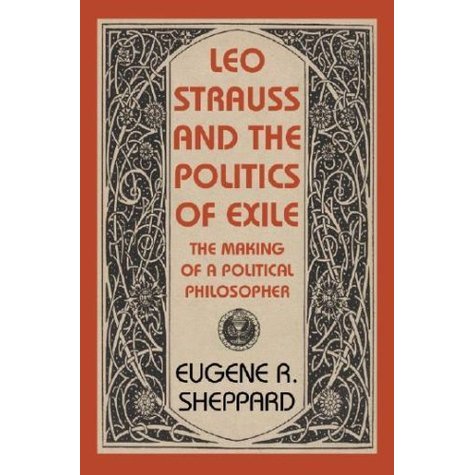
Eugene Sheppard, “Leo Strauss and the Politics of Exile: the Making of a Political Philosopher” (2006) – Having come to political maturity in the Bush years, Strauss is indelibly associated with the neocons and the Iraq War in my mind. Sheppard acknowledges that link but tries to draw focus away from late-stage neocon-cult-leader Chicago Strauss and towards the young exile Strauss, and does a reasonable job of presenting why an intellectual historian might be interested. The picture that emerges of pre-Chicago Leo Strauss is of someone whose many overlapping identities and concerns — Jew, German, philosopher, conservative, exile — fostered a subtle and complex approach to problems of political philosophy, one that later ossified into the various strains of cultish Straussianism of his Chicago disciples. In particular, the idea that the philosopher walks an individual, never-completed path towards the good life (and that communities do the same towards the right regime) was conditioned by Strauss’s experience in exile- an experience of terror and unfreedom but also one conducive to deep thought on the meaning of politics, something he read back into political philosophers of yore. This vision didn’t loan itself to the sort of easy answers ideologues — including his eventual followers — look for. Sheppard illuminates a number of angles on this early Strauss, including his complicated relationships with Gershom Scholem and Carl Schmitt. I’m far from a Straussian — his esotericism strikes me as tendentious and I’m of the opinion everyone can and should learn to rule the state and their own lives — but his interpretative method is an interesting game, at least. ****’

REVIEW: SHEPPARD, “LEO STRAUSS AND THE POLITICS OF EXILE”

Review- Bowden, “Black Hawk Down”

black hawk down

Mark Bowden, “Black Hawk Down: A Story of Modern War” (1999) – this is an accomplishment, story-telling wise: telling the story of a chaotic battle, with dozens of characters, a number of key turning points, coherently and in a way that gets across the distinct fuck-up quality of Task Force Ranger’s trip into Mogadishu. Moreover, until the end (where things get a little sappy and patriotic), Bowden refuses to moralize, presenting both the Americans and the Somalis as people with admirable qualities (not the least among them courage, on both sides) and flaws (not the least among them a desire to prove themselves through killing). I’ve read a lot of War on Terror (the battle in Mogadishu pre-dates the WoT by a while but you can see a lot of the same concerns and tropes) books and it’s rare an American author can avoid either sanctifying or demonizing. I think Bowden knew he had a good story already. So he mostly sticks to the granular, ground-level reconstruction of battle, and when he does, it’s pretty good. ****’

Review- Bowden, “Black Hawk Down”

Review: Roberts, “Stalin’s Wars”

stalins wars

Geoffrey Roberts, “Stalin’s Wars: From World War to Cold War, 1939-1953” (2006) –

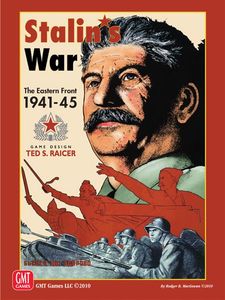
All the major figures of WWII have been mythologized to such an extent that it’s hard to get a real read on them. This is only in part because of the glamor of the myth- for me, more troubling is the chaff thrown up by multiple generations of historians challenging the myths or restoring the myths or challenging others’ restorations or restoring others’ challenges, blah blah. In this book, Roberts challenges two layers of myth about Stalin during WWII- the first that he was an incompetent who nearly doomed the Soviet effort, the second that he was a genius who was the major reason the USSR won. The picture that emerges from Roberts is Stalin as a competent, ruthless leader of large enterprises, someone capable of making mistakes — like those that nearly led to German victory at the beginning of the war — but who could learn from them (a capacity Hitler seemed to lack). This coincides with my gut sense of things- that much of what happened in the war by 1942, when people had their bearings, was basically a matter of optimizing, maintaining, and sending into battle giant, ungodly complex war machines (and angling for the postwar period). But I don’t know enough to really know. Same goes for my knowledge of Russian sources- I don’t know them enough to know if Roberts is on the right side of various arguments he makes about long-standing debates about Soviet plans and intentions. They seem to more or less check out with my image of a big, crisis-prone power led by a ruthless, paranoid, clever but somewhat unimaginative man, and it seems to color within the lines of historical practice, but ymmv as they say. ****

Review: Roberts, “Stalin’s Wars”

Review: Ferrante, “Those Who Leave And Those Who Stay”

those who leave.jpg

Elena Ferrante, “Those Who Leave and Those Who Stay” (2013) (translated from the Italian by Ann Goldstein) –

Three books in to the Neapolitan Quartet; what can I say? One easy way of getting my point across is simply to say that the praise for the series is entirely justified. Ferrante works several miracles that would each be impressive on their own, never mind all at once. There’s the world of fully-realized, consistent, but often surprising, characters drawn from the Naples neighborhood where the characters start (and from the academic and political worlds the narrator finds herself in). There’s the way she encapsulates the broad sweep of the last sixty years of history and a lot of sophisticated ideas about politics, gender, the family, etc. in a narrative where it never feels forced. The prose is forceful and lucid throughout, no “writerly” bs, and Ferrante can write a twist or a cliffhanger like the best pulp writer, a welcome treat. And at the core, the story of the two friends, Lenu and Lila, is… just very good. Sorry, out of superlatives. Basically anyone who has had a serious friendship will recognize parts of it in theirs, but with a clarity and force that’s almost resentment-inducing.

I don’t know if comparing it to the other books is helpful, I tend to see them as one big book. This one covers the late sixties and early seventies, most of which sees Lenu in Florence and Lila in Naples, so the narrative is more bifurcated than usual. Both struggle with the turmoil of the Years of Lead, in Lila’s case through very granular, disorganized struggle at a factory, which was fascinating to read. So, uh, yeah… it’s good. Read the Neapolitan Quartet (start at the beginning) if you have any interest in novels qua novels. *****

Review: Ferrante, “Those Who Leave And Those Who Stay”

Review: Ellroy, “Brown’s Requiem”

browns requiem

James Ellroy, “Brown’s Requiem” (1981) –

I’ve already written pretty extensively on James Ellroy (https://www.jacobinmag.com/2014/06/a-red-with-an-fbi-badge). I think I was fair in my assessment of his major work — Underworld USA, the LA Quartet, and his autobiographical writings — but if I included his minor works the picture would probably be less flattering- he’s written a lot of confusing messes where his trollish qualities overwhelm his better aspects. Ellroy’s first novel, Brown’s Requiem, is pretty minor but you can see why people would’ve seen potential in him. He tries to do 80s Chandler and fails — he can’t do that kind of ironic distance — but you can see him exercising the instinctive knack for depicting power that would help make his major works so vivid. He grasps, better than any writer of this time that I’ve read, the relationship between small-scale personal domination — and he is, to put it politely, uninhibited in his depictions of such dynamics — and the social structures in which the characters are embedded. His plots aren’t generally tight (who remembers crime fiction plots after they finish, anyway?) and his characterization runs hot and cold, but his worlds rival the best scifi masters for granular reality (generally the granular reality of terror). There’s glimmers of it in Brown’s Requiem but it isn’t there yet. He was presumably trying to find his voice as a writer- among other things, his protagonist is clearly one of his wish-fulfillment characters: strong, strapping, self-contained, cultured. Whereas his villain is closer to the person he actually was: creepy, obsessive, hateful, weird-looking… and, amusingly, a golf caddy, as Ellroy was before his writing career took off. ***

Review: Ellroy, “Brown’s Requiem”

Review: Chamberlin, “The Global Offensive”

global offensive

Paul Thomas Chamberlin, “The Global Offensive: the United States, the Palestinian Liberation Organization, and the Making of the Post-Cold War Order” (2012)

This is a pretty respectable entry in the new global history. Chamberlin argues that the self-assertion of the PLO — a non-state actor on behalf of a non-recognized nation — prized open apertures in the international system in the 1970s that help lay the groundwork for the way international politics would go once the Cold War was over. There’s some illuminating stuff here involving the Nixon White House’s ambitions in the Middle East and the way they essentially tried to institutionalize their denial about the way the Palestinian question disrupted Kissinger’s little Risk board, and about the zillion threads (from Arab state rivalries to spiraling radicalization inspired by camp conditions) Arafat had to manage. Stuff like airline hijackings, which struck me as tactically foolish even leaving the morals aside, make some more sense now- airlines operate (legally) in the transnational space the Palestinian guerrillas did (illegally), the place where they felt they could get some kind of leverage, however tenuous.

The book has some of the disadvantages of the new global history, though. In many respects, it deploys breadth of archival research — the sheer “wow” factor of using archives from multiple countries and languages — in exchange for analytical depth. Most of these books are built-up dissertations, and it shows in terms of their argumentative tentativeness, even as the subtitles some publisher slaps on promises big things. There’s also a dissertation-esque kitchen-sink quality to the source usage- every time the PLO makes a splash, we hear what Tunisians thought about it and what Ghanaians thought about it and French and Indians and so on and so on. The global state of opinion about Israel/Palestine is important to Chamberlin’s story, but there have to have been more elegant ways of conveying that. One more little niggle- the Palestinians weren’t the first to do transnational insurgency. The Irish Fenians, the Armenian Dashnak, Macedonian rebels, and at least to an extent Zionists all had transnational resistance networks well before the PLO was formed… to say nothing about anarchist and communist groups. Still and all, worth reading if you’re interested in diplomatic history of the late 20th century, especially history that takes non-state actors into account. ***’

Review: Chamberlin, “The Global Offensive”

Review: Zamyatin, “We”

we

Yevgeny Zamyatin, “We” (1921) (translated from the Russian by Mirra Ginsburg) –

The three classic dystopias (We, Brave New World, 1984) all have such heavy overlays of Cold War literary politics and adolescent associations with them that it can be hard to look at them on their own merits. “We,” being the oldest and comparatively obscure, suffers the least from this. It’s also more daring, in an almost devil-may-care sense- characters with numbers instead of names, set a thousand years on the future rather than decades or centuries after. Much of the time, it pays off- the city of glass the “numbers” live in is compellingly envisioned, and the bog-standard “liberation through horniness” dystopian plot has more verve to it than most. Sometimes it doesn’t- Zamyatin still leans heavily on “notice how different this is from The Ancients” and sometimes the stylized, futurist-inspired writing style can be confusing. But plot is seldom the point of these dystopias. Less tightly tied to one or another agenda than Huxley’s or Orwell’s comparable work, “We” arguably stands up a bit better when unmoored from the Cold War context that first brought it to Anglophone attentions. ****

Review: Zamyatin, “We”